Aromatic Aster
Symphyotrichum oblongifolium
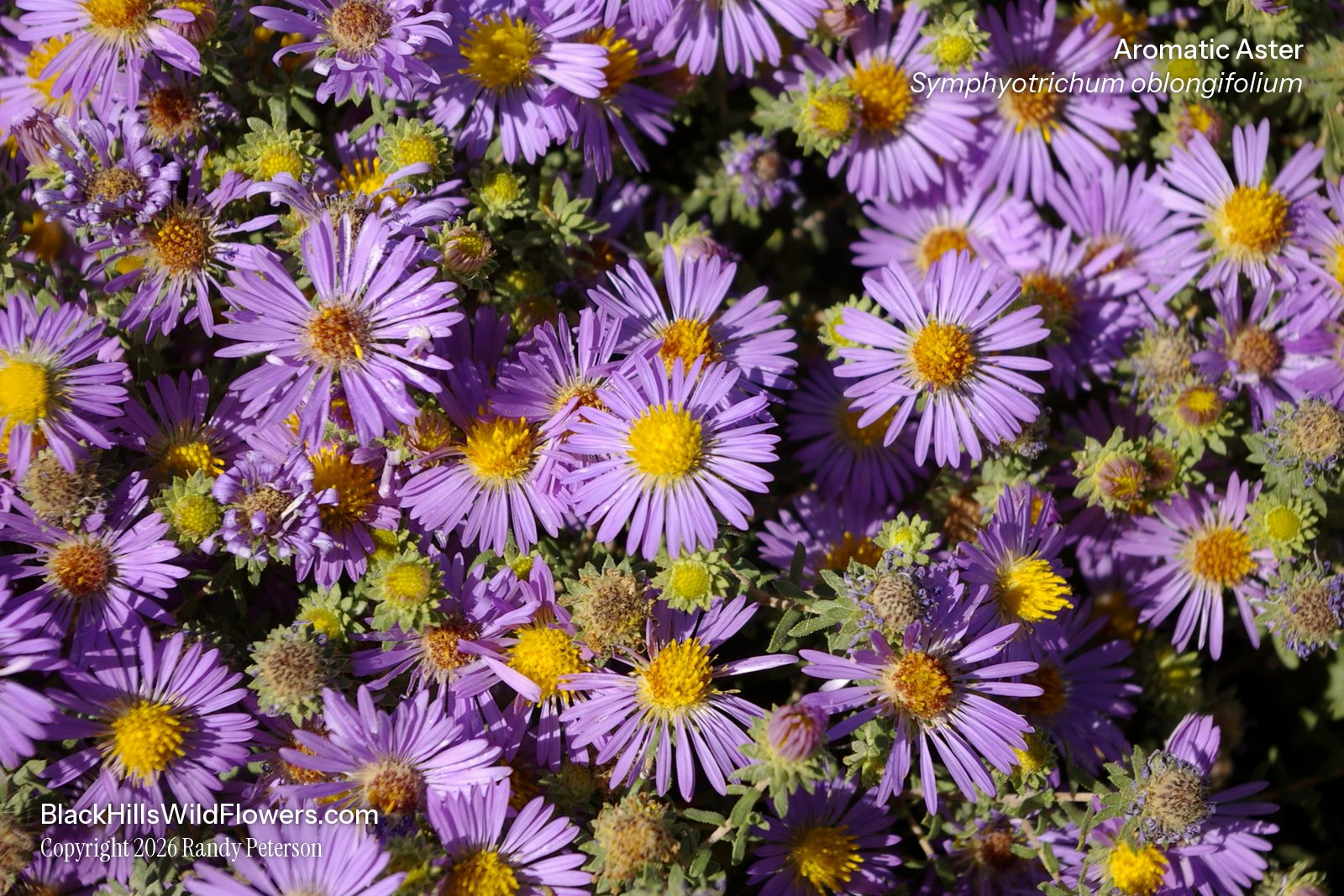
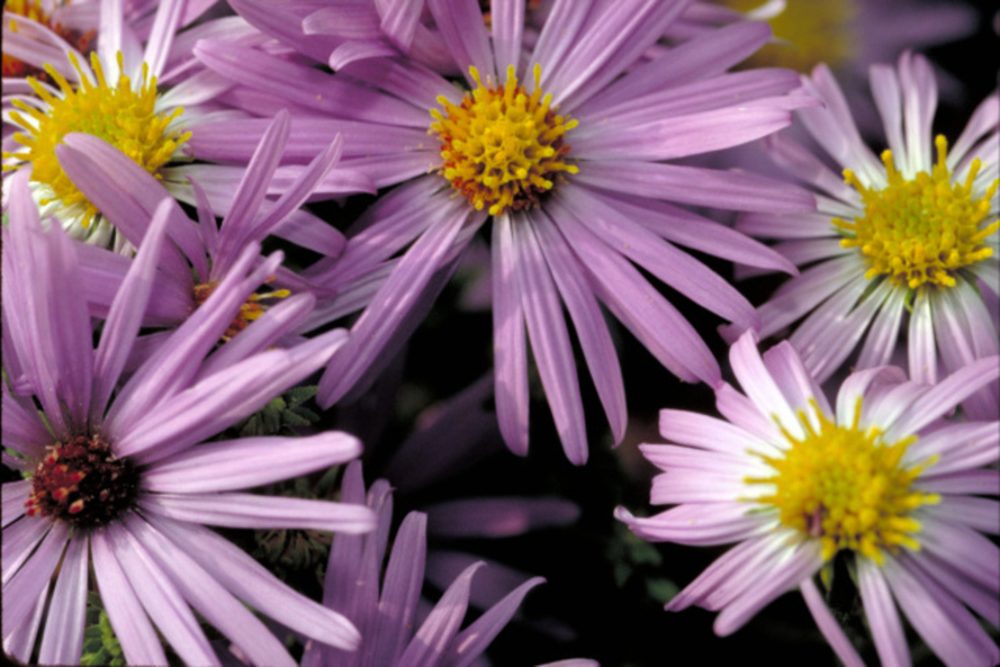
Aromatic Aster (Symphyotrichum oblongifolium) is a native perennial with lavender to deep violet rays around a yellow center that turns reddish with age. Devils Tower National Monument lists it in bloom in August and September, and it favors dry, open, rocky or sandy ground. Photographed in the Black Hills.
Free photos from other sources
| Family | Asteraceae · Aster |
|---|---|
| Status | Native perennial |
| Blooms | August and September |
| Height | 10–80 cm (4–31 in) |
| Where | Dry, open, rocky or sandy ground |
| Also called | Fall Aster, Oblong-leaved Aster |
| Synonym | Aster oblongifolius, Virgulus oblongifolius |
Roots, seeds & germination
Root: A thick, woody base with thin, woody rhizomes (creeping underground stems). It often forms colonies.
Seed: A flat, hairy seed 2 to 2.5 mm long, topped with tawny bristles that carry it on the wind.
Germination: No pretreatment needed.
How do you identify Aromatic Aster?
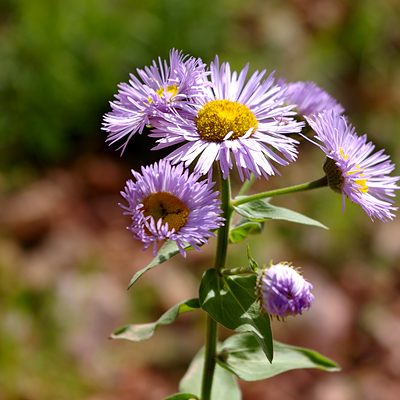
Crush a leaf: the flowers have no scent, but the leaves give off a pleasant smell. Leaves are narrow, stalkless and rough, and the bracts under each head (the small scales that cup it) have gland-tipped hairs and loose, spreading green tips. Each head has about 20 to 35 rays. Threenerve Fleabane has far more, 100 to 150.
When does it bloom?
August and September.
Where does it grow?
Dry, open sites with rocky, sandy or gravelly soil, including prairies, hillsides, bluffs, outcrops and roadsides. Flora of North America includes South Dakota and Wyoming in its range, and it is on Devils Tower's list of wildflowers commonly seen along trails.
Other flowers to compare
Sources: National Park Service, Devils Tower: Wildflowers; Flora of North America: Symphyotrichum oblongifolium; Minnesota Wildflowers: Symphyotrichum oblongifolium (Aromatic Aster); Kansas Wildflowers and Grasses: Symphyotrichum oblongifolium; Wild Ones Front Range: Symphyotrichum oblongifolium; Prairie Moon Nursery: Aromatic Aster.