Black Henbane
Hyoscyamus niger
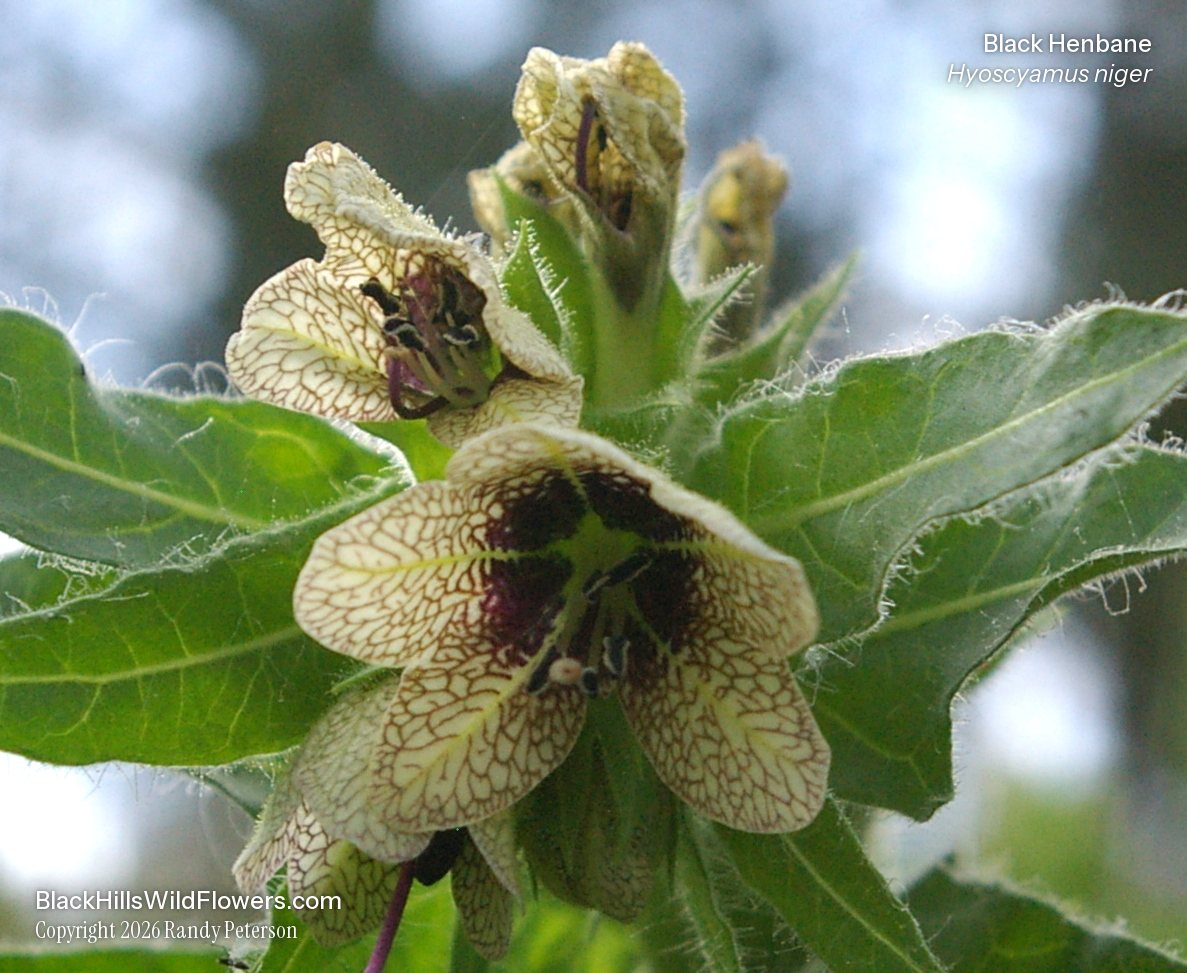
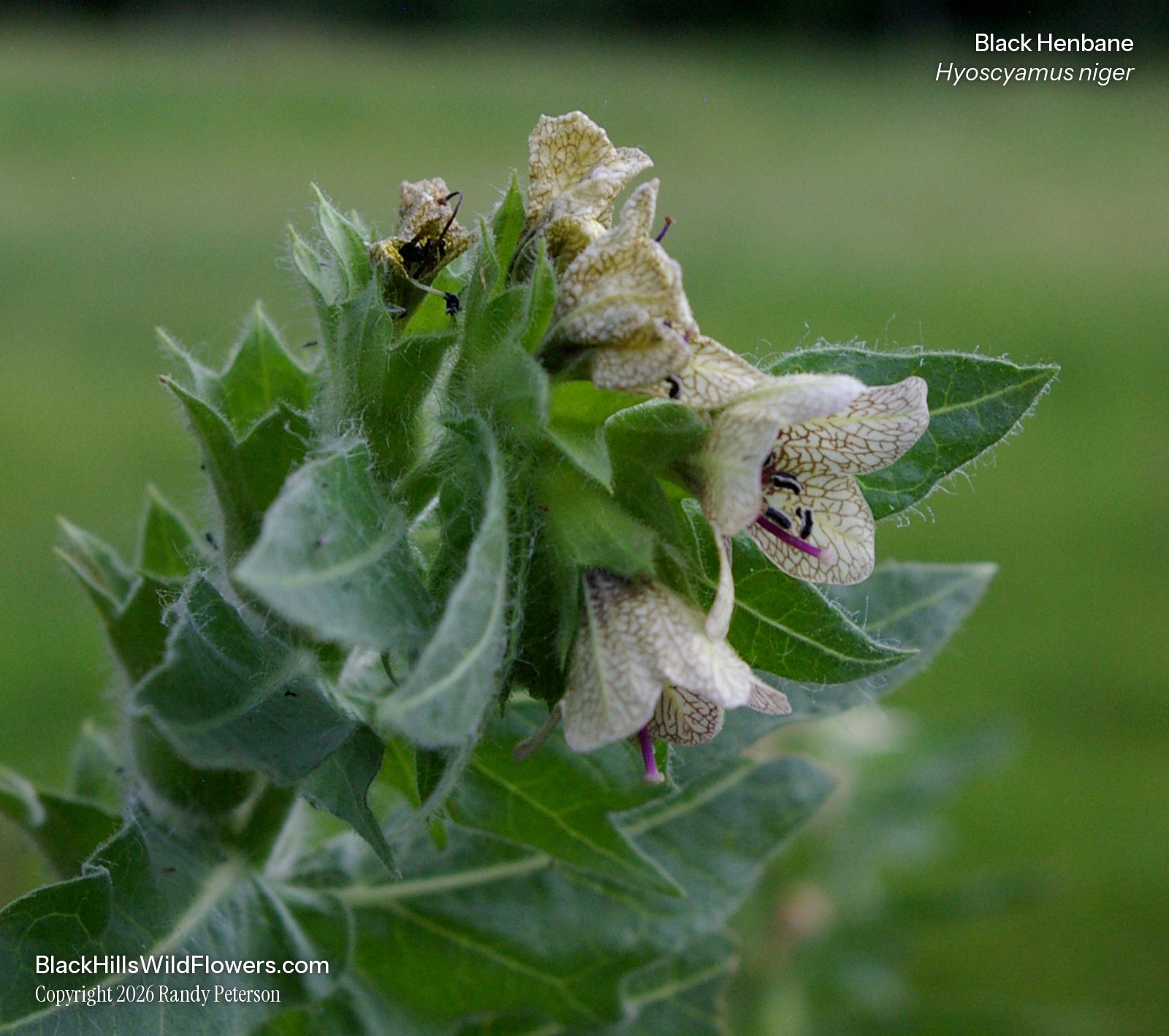
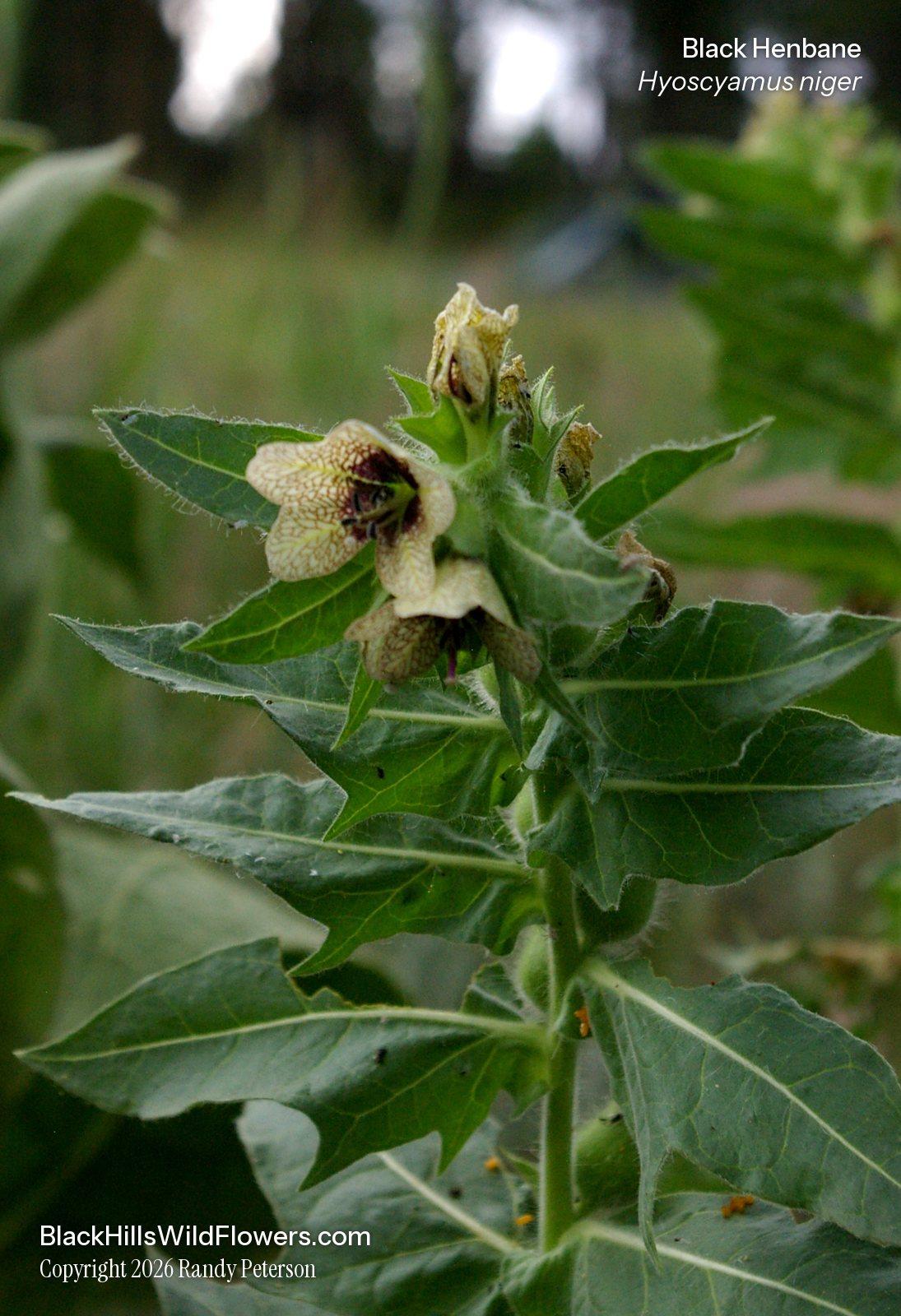
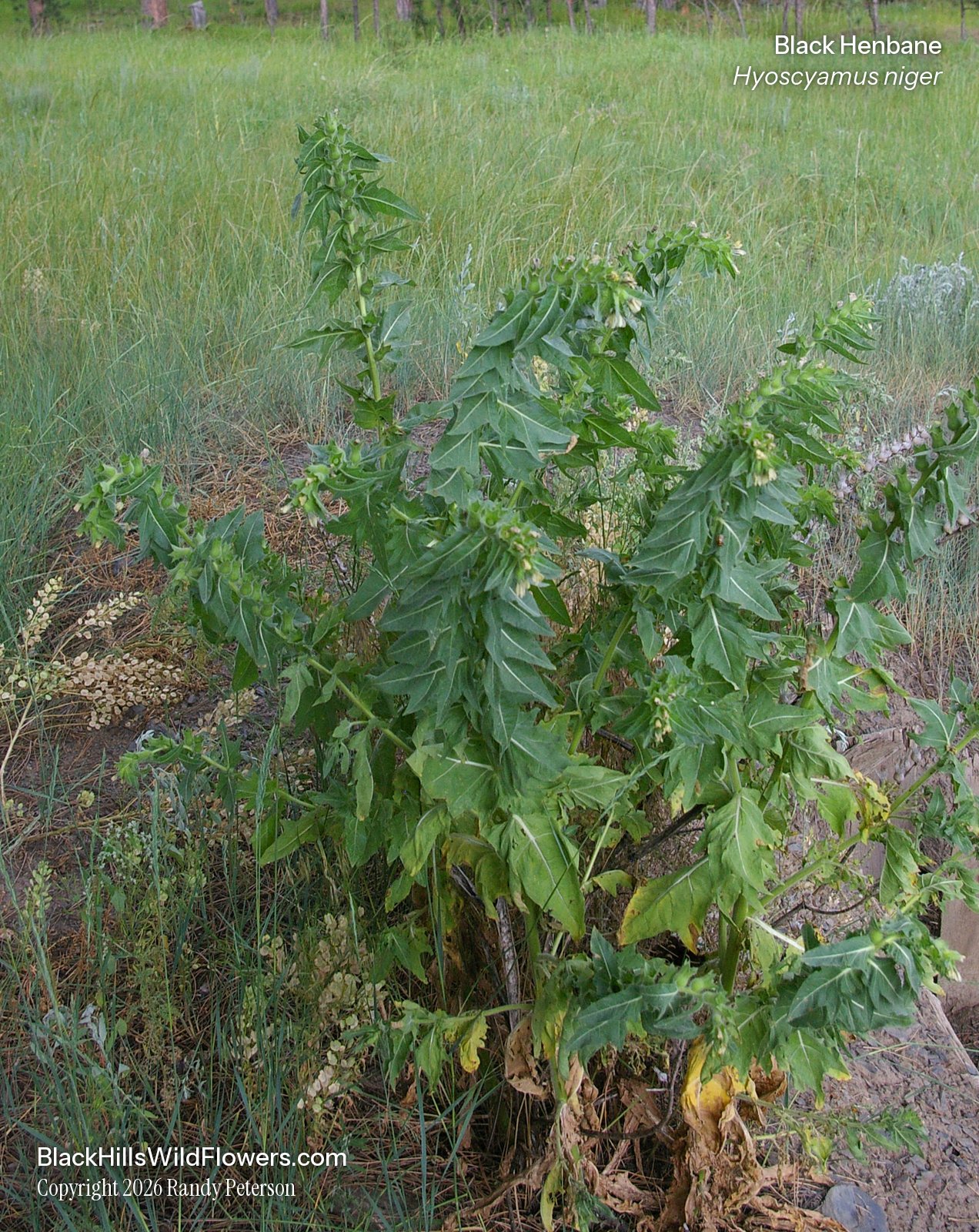
Black Henbane (Hyoscyamus niger) is an introduced annual or biennial weed up to 3 feet tall, with sticky-haired, coarsely toothed leaves and funnel-shaped, pale yellow flowers veined in dark purple. It blooms June into September and grows in isolated patches across the Black Hills National Forest, along roadsides and in pastures, fields and disturbed ground. Photographed in the Black Hills.
| Family | Solanaceae · Nightshade |
|---|---|
| Status | Introduced biennial |
| Blooms | June into September |
| Height | 30–90 cm (12–36 in) |
| Where | Roadsides, pastures, fields and disturbed ground; sandy or well-drained soil |
| Also called | Common Henbane, Stinking Nightshade, Fetid Nightshade |
| Listed | State designated noxious weed in Wyoming, and on Wyoming's prohibited noxious weed seed list (Wyo. Code R. 010-63-3). Locally noxious in Custer County, South Dakota, for 2025–2029 (South Dakota DANR). Not on South Dakota's state noxious weed list. |
| Toxicity | All parts are poisonous to people and livestock. |
| Note | Listed under both White and Yellow, because the pale flowers can read as either. Sources call them pale to brownish yellow, with dark purple veins. |
Roots, seeds & germination
Root: A large, whitish, branched, fleshy taproot.
Seed: One plant can make 10,000 to 500,000 black, pitted seeds. They can stay viable in the soil for about five years.
Germination: Seeds germinate into a rosette (a flat circle of leaves) in late May, according to Montana State University.
How do you identify Black Henbane?
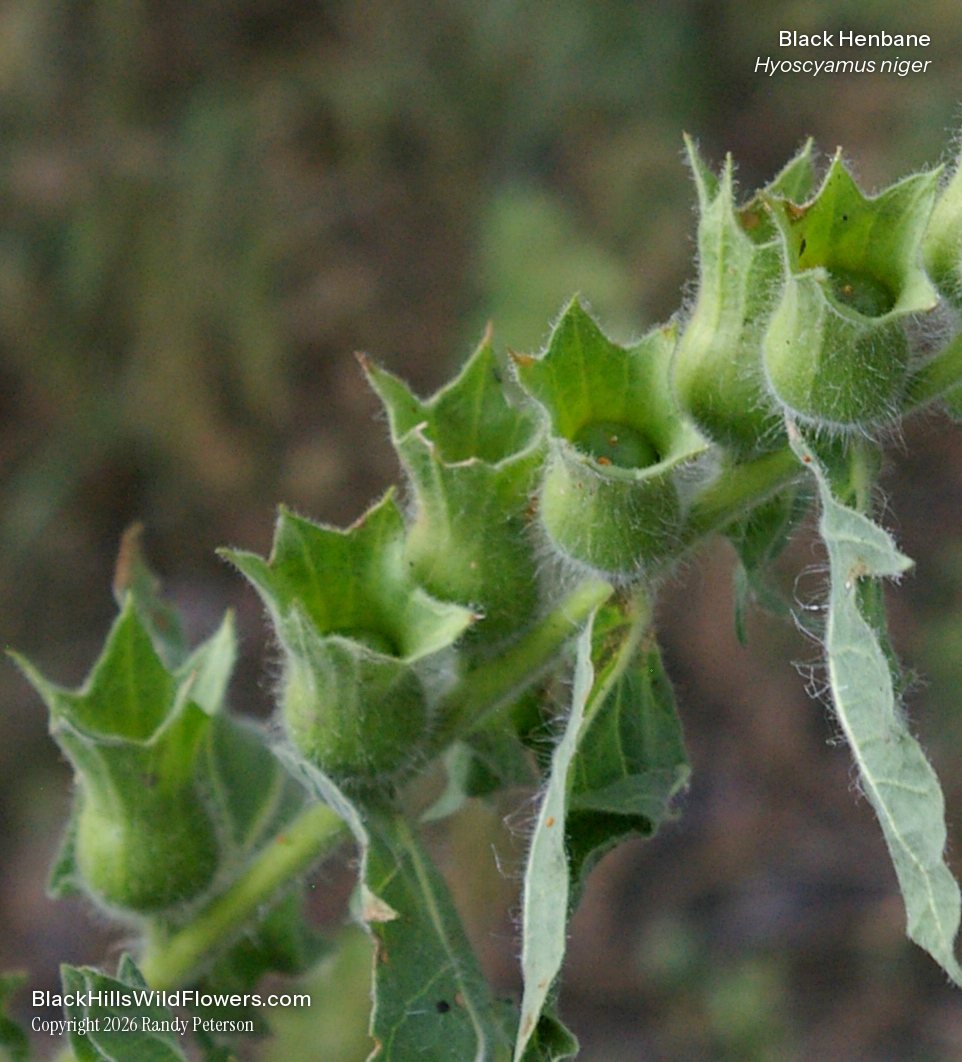
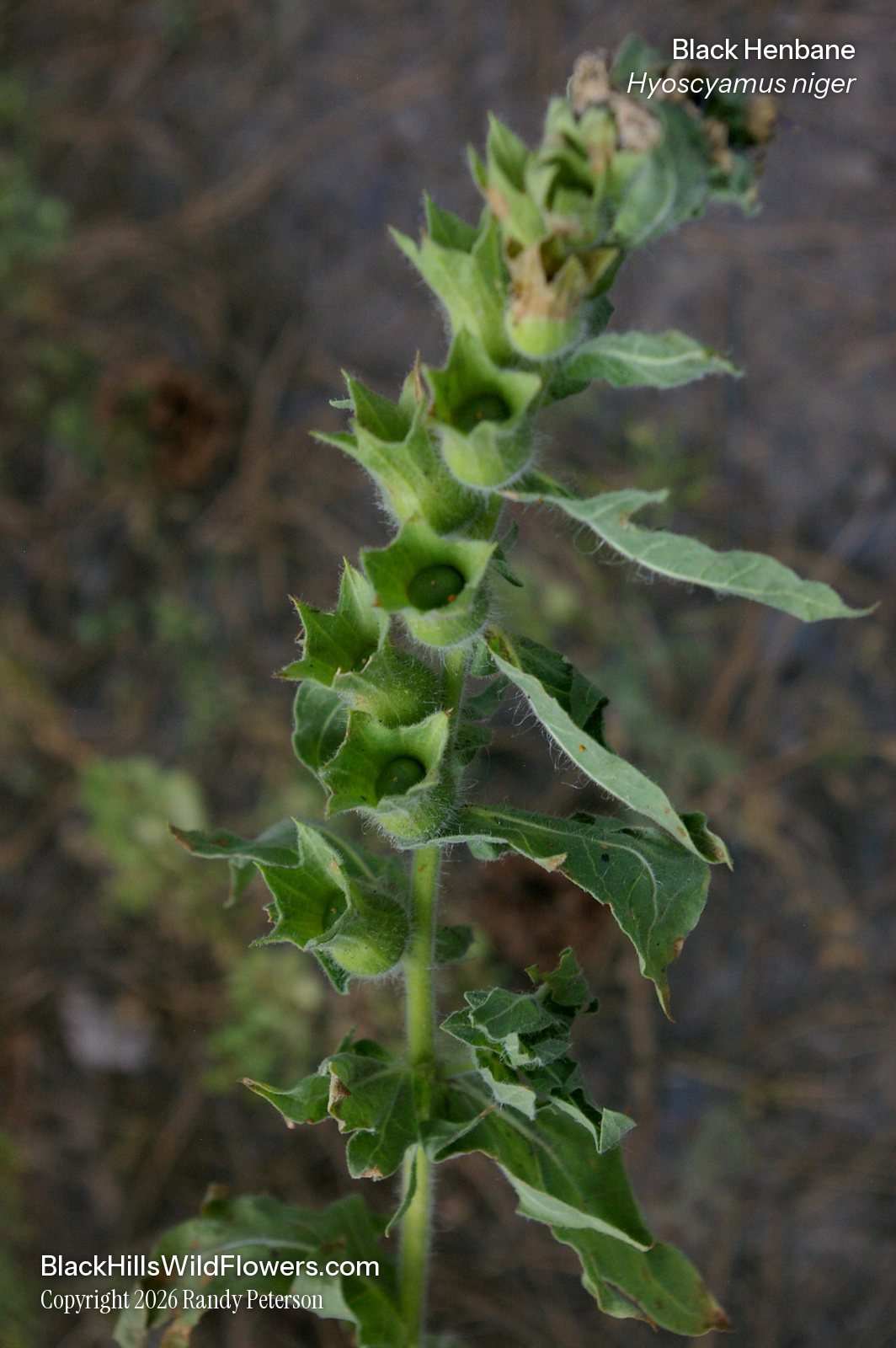
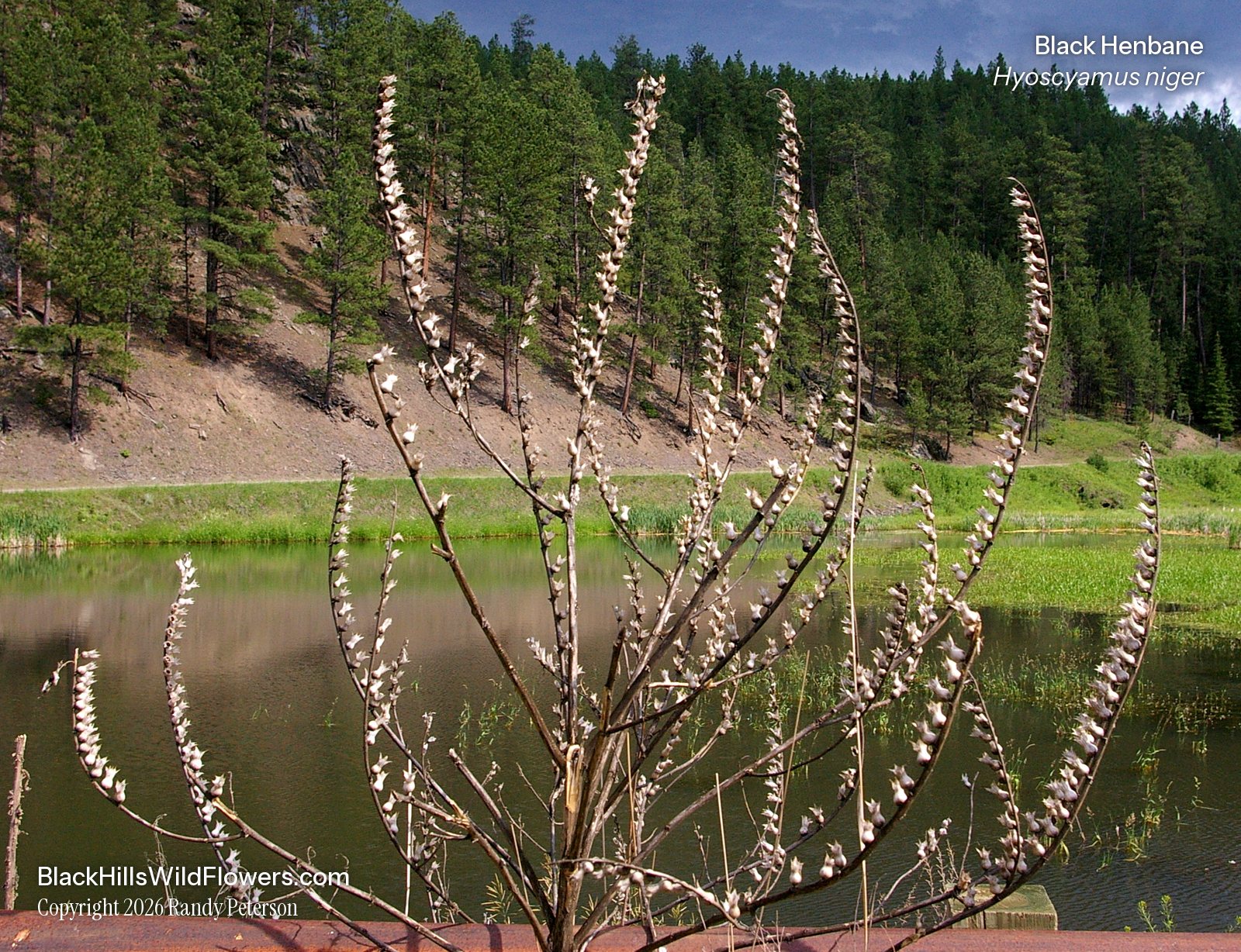
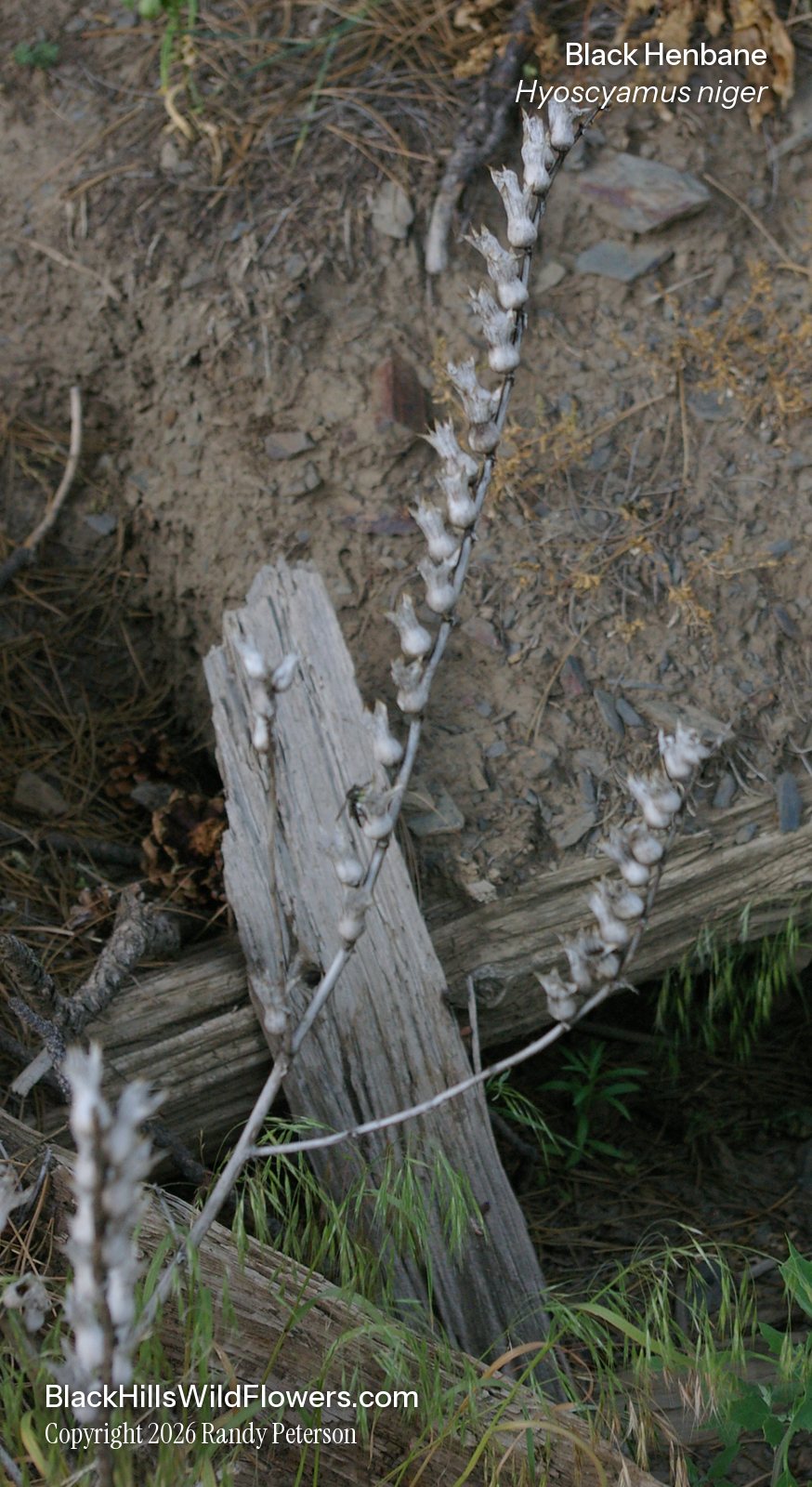
Large, gray-green, coarsely toothed leaves with a pale midvein are covered in sticky hairs and smell foul. Funnel-shaped, five-lobed flowers, pale to brownish yellow with dark purple veins and a purple throat, sit in a long spike-like cluster among the upper leaves. After flowering come two rows of pineapple-shaped capsules about 1 inch long.
When does it bloom?
June into September.
Where does it grow?
Isolated patches across the Black Hills National Forest, along roadsides and in pastures, fields and disturbed areas. It does best in sandy or well-drained soil and doesn't tolerate waterlogged soil.
Other flowers to compare
Sources: Black Hills National Forest: Invasive plants species accounts; Montana State University Extension: Black Henbane; Wyoming Game and Fish: Black Henbane, the 17th century invasive on the WY landscape; Wyoming rule 010-63 Wyo. Code R. 63-3: Prohibited Noxious Weeds; University of Wyoming CAPS: Black Henbane; South Dakota DANR: Locally noxious weeds, updated 2024; South Dakota DANR: State noxious weeds; Custer County Weed & Pest Newsletter 2026; Black Henbane species fact sheet (NPS DataStore).