Yellow Sweetclover
Melilotus officinalis
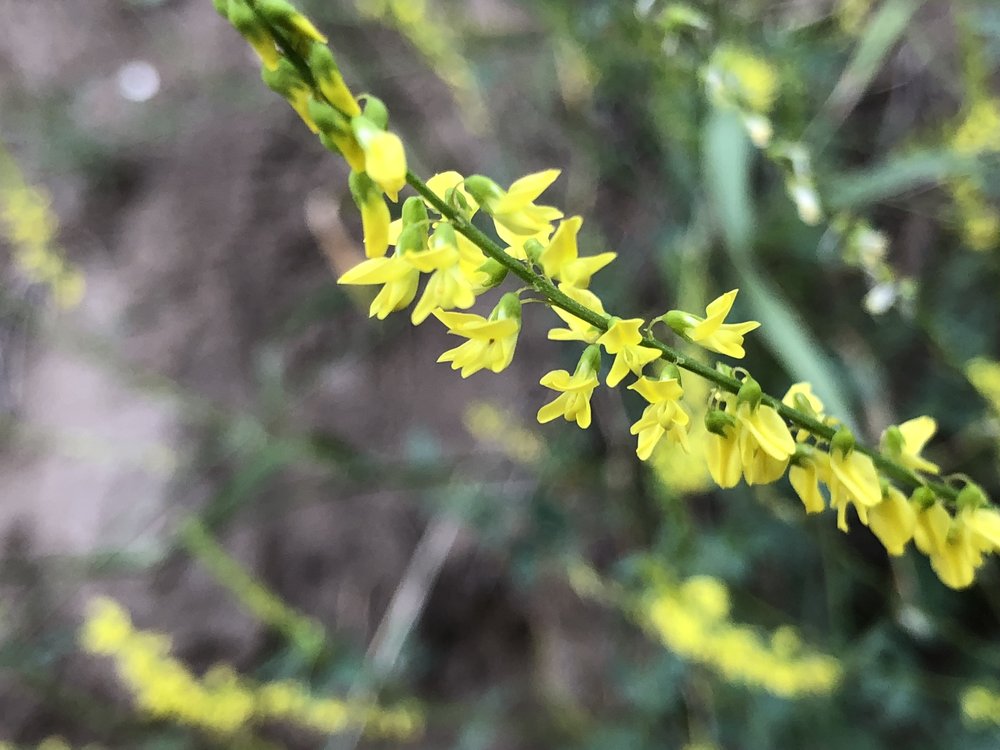
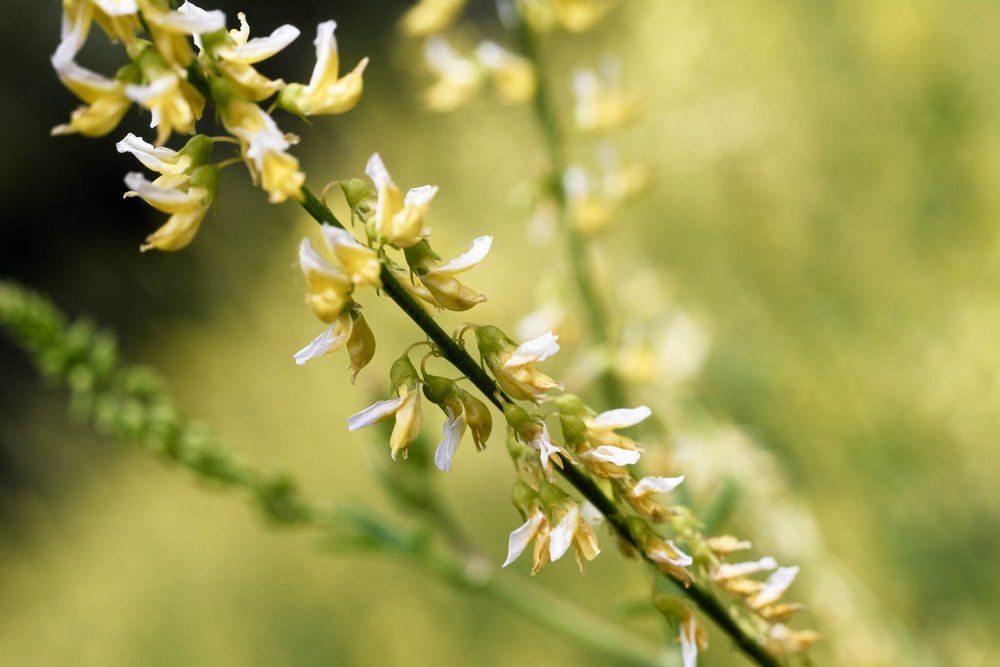
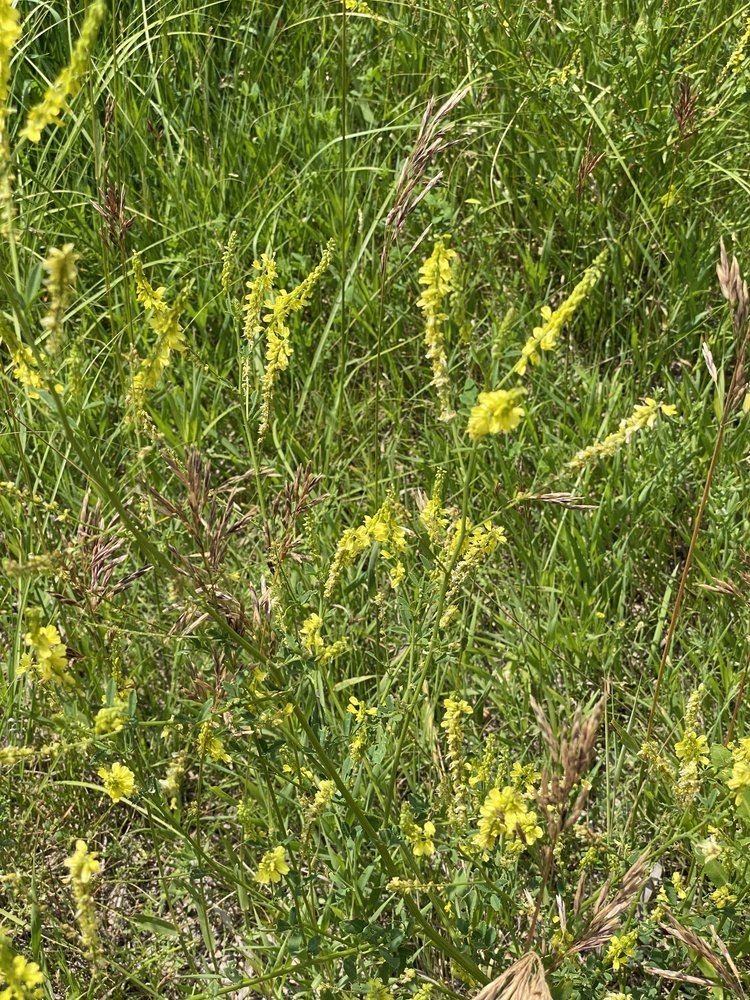
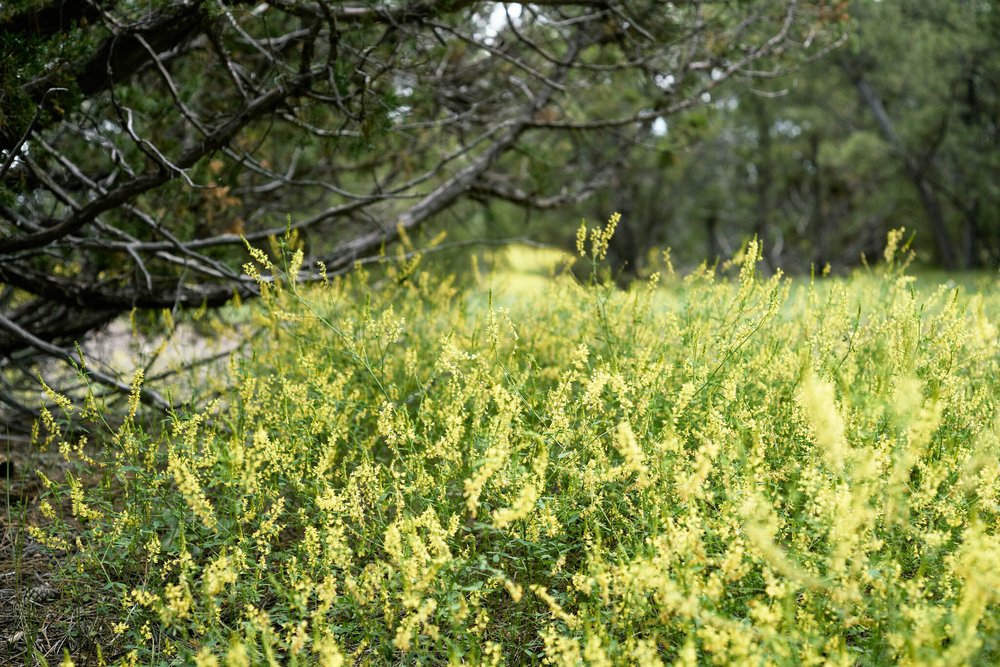
Yellow Sweetclover (Melilotus officinalis) is a tall, sweet-smelling biennial from Europe and Asia, planted across the Plains for hay, pasture and soil building, with slender spikes of tiny yellow pea flowers. It blooms from June into September along roads, in pastures and on other open ground in the Black Hills. White Sweetclover (Melilotus albus), the same plant in almost every way except its white flowers, is covered here too.
Free photos from other sources
| Family | Fabaceae · Pea |
|---|---|
| Status | Introduced biennial |
| Blooms | June through September, a few into October; White Sweetclover from July |
| Height | 60–180 cm (2–6 ft) |
| Where | Roadsides, ditches, pastures, old fields, prairie dog towns, burns and other disturbed open ground |
| Also called | Yellow Melilot, Ribbed Melilot, Field Melilot, Sweet Clover, waȟpé swúla (Lakota) |
| Synonym | Trifolium officinale, Melilotus arvensis |
| Toxicity | Mold turns the plant's coumarin into dicoumarol, a blood thinner, and cattle that eat moldy sweetclover hay can bleed internally, abort or die; livestock eating mostly sweetclover can also bloat. |
| Traditional use | Gilmore (1919) wrote that the Dakota likened its smell to sweetgrass and hung bunches in their houses for the fragrance. |
| Note | This page also covers White Sweetclover (Melilotus albus, written Melilotus alba on older lists). USDA PLANTS lumps both under Melilotus officinalis. |
Roots, seeds & germination
Root: A deep, semi-woody taproot with nitrogen-fixing nodules, measured over 1.2 m (4 ft) deep in the first year. Late in the first summer it stores food and forms crown buds that send up the flowering stems the next spring, and after flowering in the second year the whole plant dies.
Seed: Each small pod, 3–5 mm long, holds one seed about 2 mm long. A large yellow plant can make up to about 100,000 seeds, and many have a hard coat that lets them last for decades in the soil. Seeds travel in water, mud and hay and on animals and vehicles, one reason sweetclover follows roads.
Germination: Soft-coated seeds sprout readily, while hard seeds wait until the coat is scratched, heated or cracked by freezing and thawing. Most seedlings come up in spring, and fire often sets off a burst of seedlings from the seed bank.
How do you identify Yellow Sweetclover?
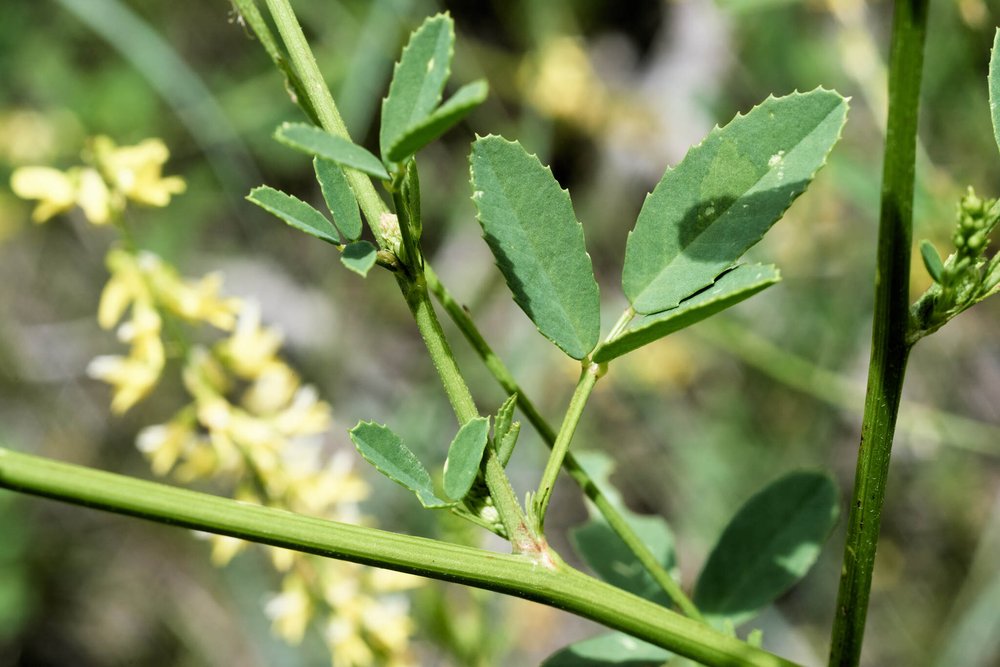
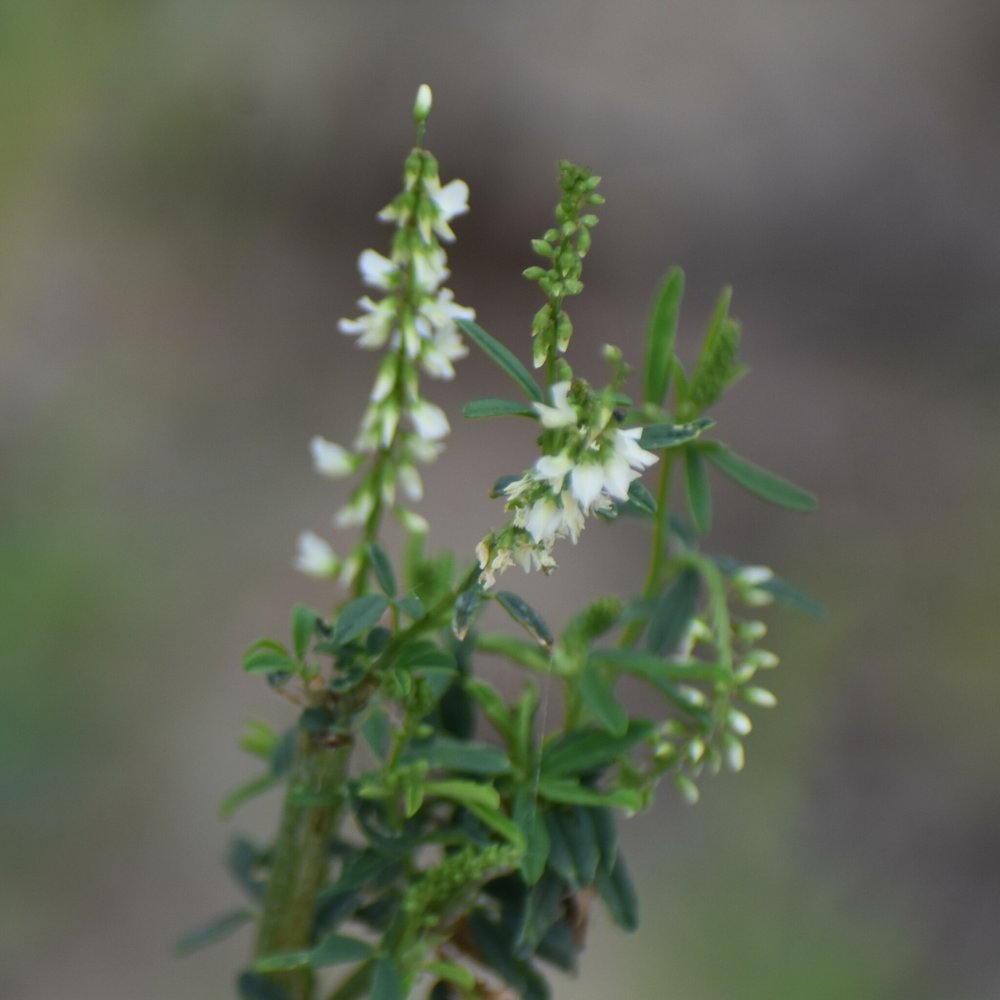
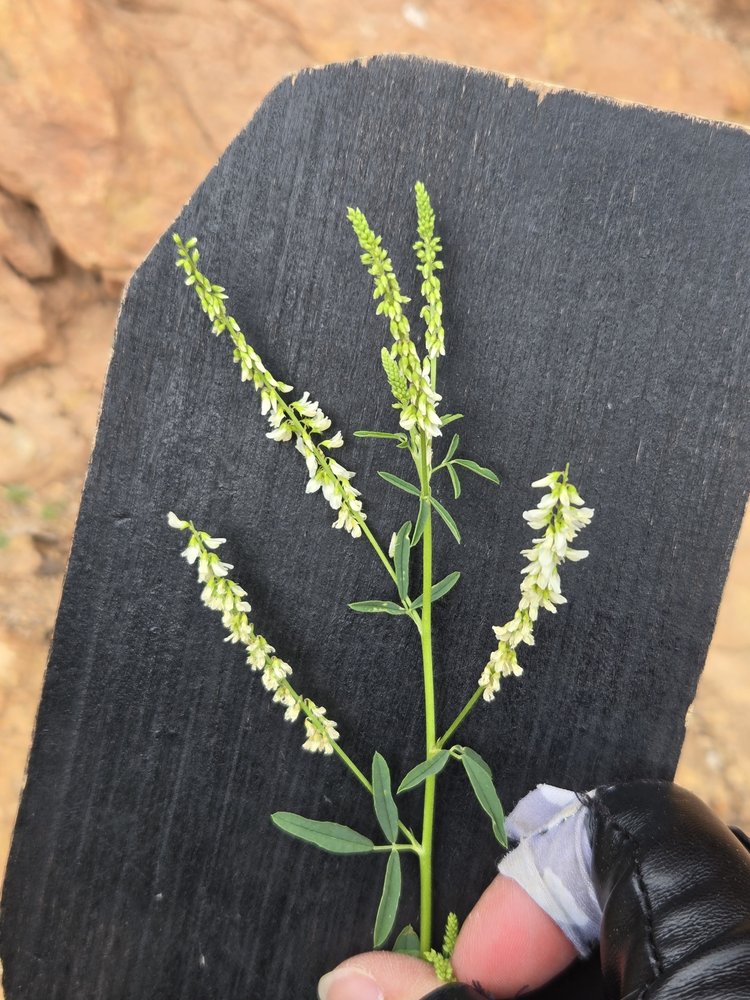
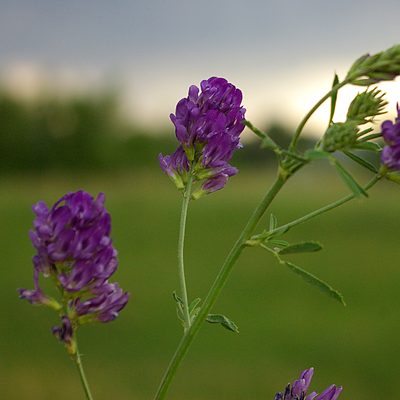
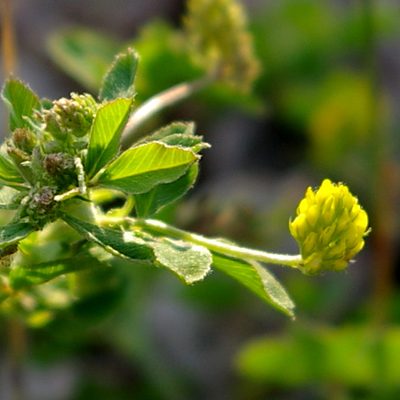
Crush a leaf or flower spike: sweetclover smells sweet, like fresh hay or vanilla. Dozens of tiny pea flowers, each 4–7 mm (¼ in), hang along slender spikes 5–15 cm (2–6 in) long on a tall, airy, much-branched plant, and the three narrow leaflets are toothed along most of the edge. White Sweetclover has white flowers, starts blooming a week or more later and is often taller, and its side petals are clearly shorter than the top petal. Alfalfa has larger flowers in short, rounded clusters, leaflets toothed only near the tip and coiled pods, and Black Medic is low and sprawling, with tiny yellow flowers in round heads.
When does it bloom?
June through September, a few into October; White Sweetclover from July.
Where does it grow?
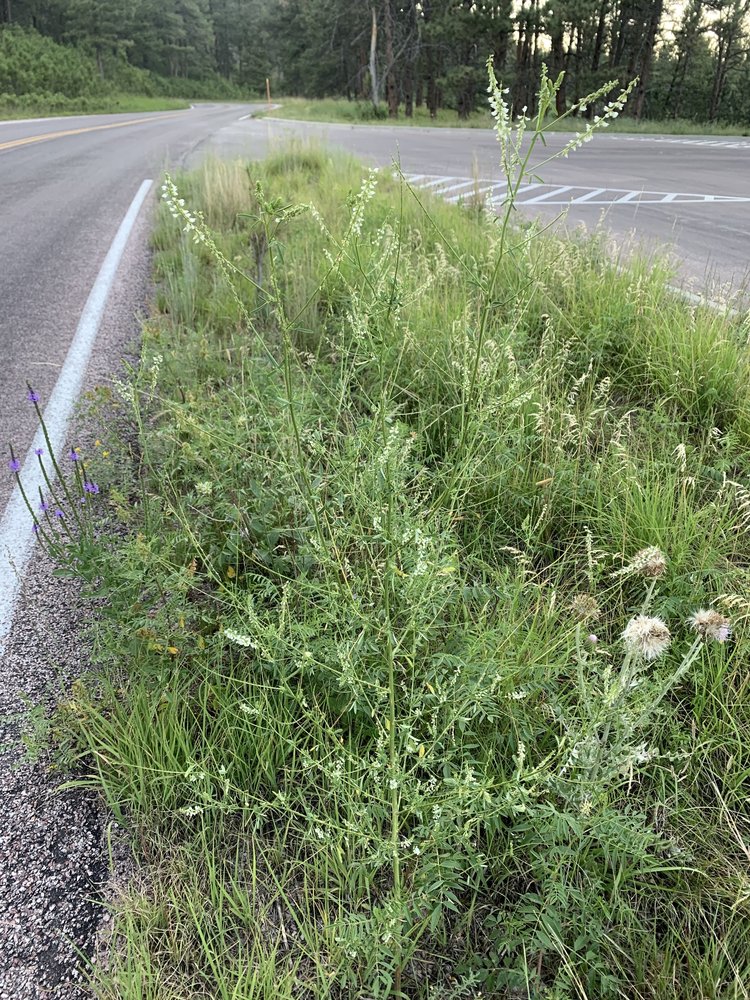
Open, disturbed ground: road shoulders and ditches, railroad beds, pastures and hay meadows, old fields, mine spoil, prairie dog towns, burned areas and stream banks, often on limy or clay soils. A study at Wind Cave National Park found sweetclover tied to roads and trails, with yellow common in prairie dog towns and white on low, recently burned ground. The 1986 plant survey of Jewel Cave National Monument lists both, NPSpecies lists both at Wind Cave, Jewel Cave, Mount Rushmore and Devils Tower, and Black Hills herbarium specimens go back to 1908.
Other flowers to compare
Sources: SDSU Extension: Sweet Clover Poisoning (Olson & Harty, updated 2022); NDSU Extension: Sweet Clover an Excellent Forage With Proper Precautions (2023); USDA Forest Service FEIS: Melilotus alba, M. officinalis (Gucker 2009); USDA Forest Service, Weed of the Week: Yellow Sweetclover (archived); USDA PLANTS Database: Melilotus officinalis (MEOF); Plants of the World Online (Kew): Melilotus officinalis subsp. albus, a synonym of Melilotus albus; World Flora Online: Melilotus albus Medik. (accepted); World Flora Online: Melilotus officinalis (L.) Lam. (accepted, with synonyms); ITIS: Melilotus albus Medik. (TSN 516979, accepted); Minnesota Wildflowers: Yellow Sweet Clover; Minnesota Wildflowers: White Sweet Clover; Minnesota Wildflowers: Alfalfa; Minnesota Wildflowers: Black Medick; Minnesota Wildflowers: Birds-foot Trefoil; Marriott & Hartman 1986, A Survey of the Vegetation of Jewel Cave National Monument; NPSpecies: Wind Cave National Park vascular plants; NPSpecies: Jewel Cave National Monument vascular plants; NPSpecies: Mount Rushmore National Memorial vascular plants; NPSpecies: Devils Tower National Monument vascular plants; Black Elk, L. & Flying By, W. (1998) Culturally Important Plants of the Lakota, Sitting Bull College; Gilmore (1919), Uses of Plants by the Indians of the Missouri River Region, BAE 33rd Annual Report, p. 90–91 (full text); GBIF: Melilotus officinalis preserved specimens, Black Hills area; GBIF: Melilotus albus preserved specimens, Black Hills area; iNaturalist: Yellow Sweetclover observations near the Black Hills; iNaturalist: White Sweetclover observations near the Black Hills; jellenblackhills blog, June 2009 ('Some Clovers', Custer State Park).