Pale Vetchling Lathyrus ochroleucus
Also called Cream Pea, Cream Peavine, Pale Vetchling Peavine, Wild Sweetpea, Creamy Peavine, Pale Pea
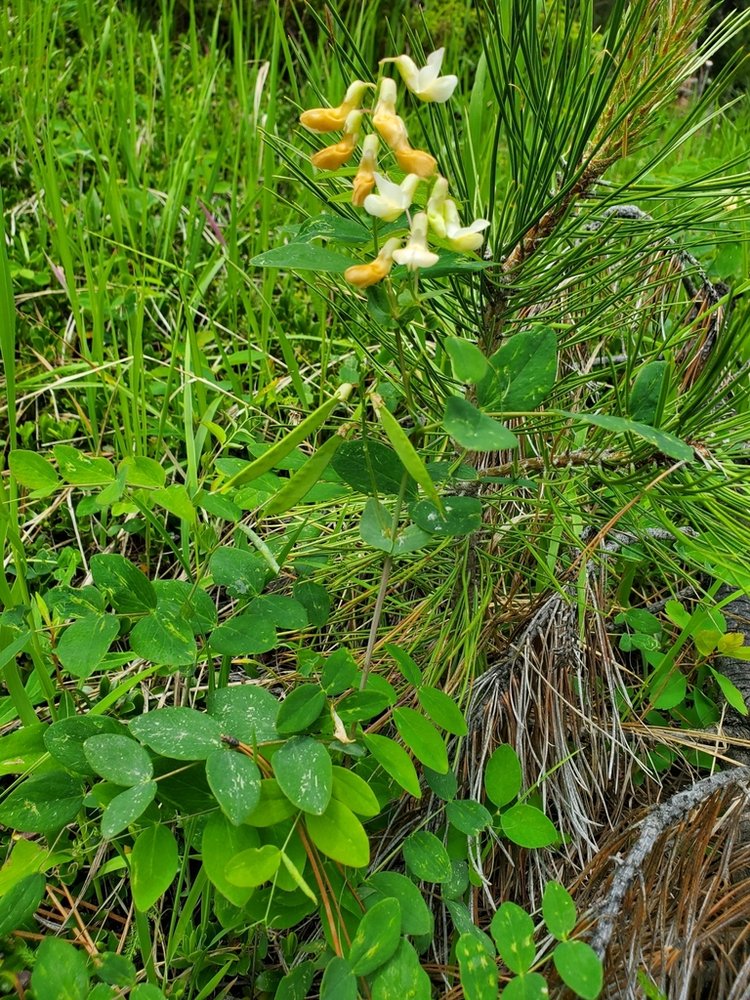
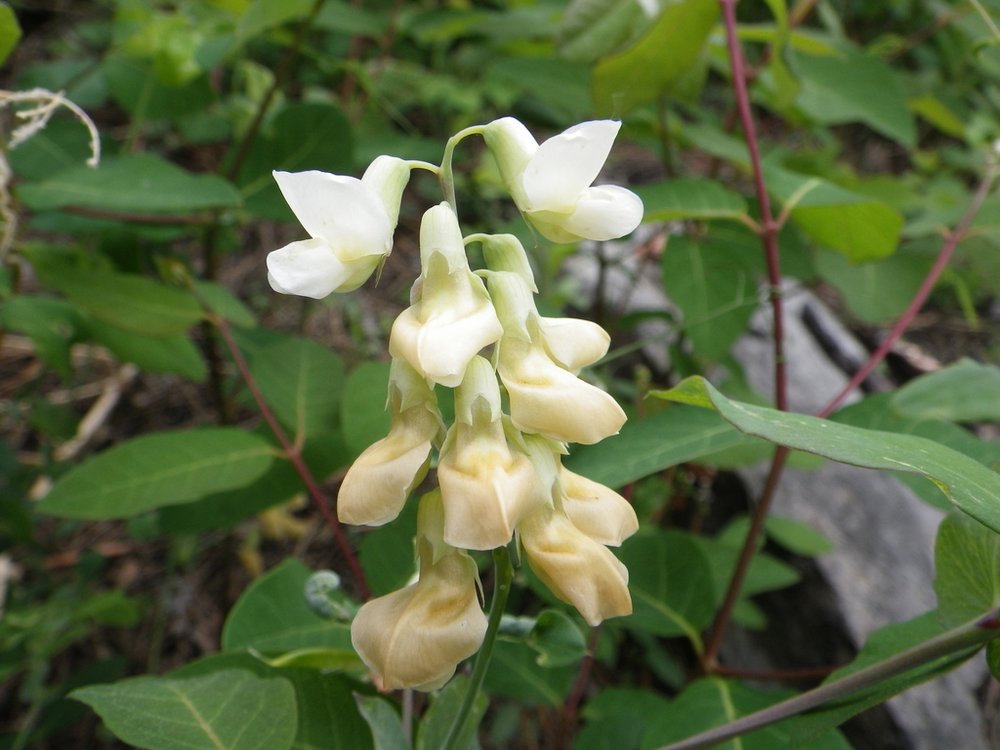
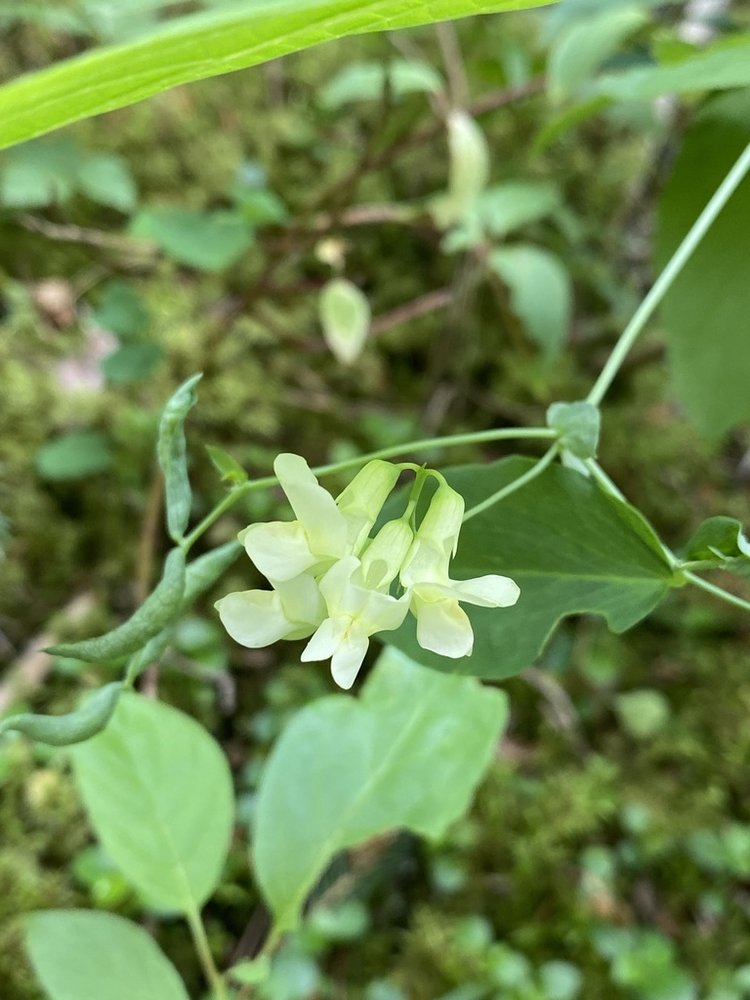
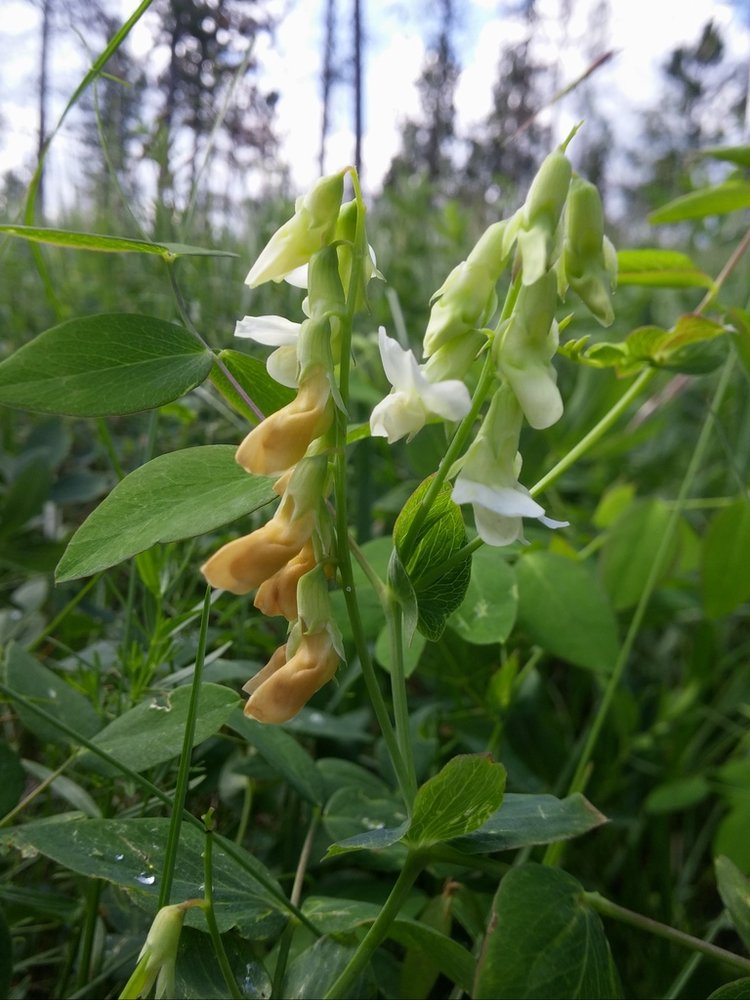
Pale Vetchling (Lathyrus ochroleucus) is a native pea vine of moist Black Hills woods, 30–80 cm (12–32 in) long, that clambers over other plants by tendrils at the leaf tips and carries loose clusters of 5 to 10 creamy white to pale yellow pea flowers, each 1.5–2 cm (½–¾ in) long, from May into July. Its leaves have 3 to 5 pairs of broad oval leaflets and a pair of big leafy flaps at the base, and the National Park Service lists it at Wind Cave, Jewel Cave, Mount Rushmore and Devils Tower.
Free photos from other sources
| Family | Fabaceae · Pea |
|---|---|
| Status | Native perennial |
| Blooms | May into July |
| Height | 30–80 cm (12–32 in) |
| Where | Moist, open woods and thickets: aspen, birch and spruce stands, shaded pine slopes, creek bottoms and forest edges |
| Also called | Cream Pea, Cream Peavine, Pale Vetchling Peavine, Wild Sweetpea, Creamy Peavine, Pale Pea |
| Traditional use | The University of Michigan's CLIMBERS plant pages report that the Ojibwe fed the leaves and roots to ponies before races to make them lively, and ate the seeds and roots. |
Roots, seeds & germination
Root: A perennial with rhizomes (underground stems) and fibrous roots that carry nodules of nitrogen-fixing bacteria, so the plant can draw on nitrogen from the air.
Seed: The pod is flat and hairless, 3–5 cm (1–2 in) long and 4–6 mm wide, and splits into two halves to release the seeds; it opens easily once the seeds are ripe, in British Columbia from early August to early October. The seeds are olive to brown, smooth, about 3 mm long, 61 to the gram.
Germination: A British Columbia seed manual found the seed slow to sprout, with low germination: about a fifth of untreated seed sprouted at 25/15 °C and about a quarter of seed given a cold, moist period, with the first seedlings at 18 days. It germinated better in cool conditions, scoring the seed coat or a cold period helped a little, sowing about 1 cm (⅜ in) deep in fall may work better because winter helps break the dormancy, and seed can lie in the soil for many years before it sprouts.
How do you identify Pale Vetchling?
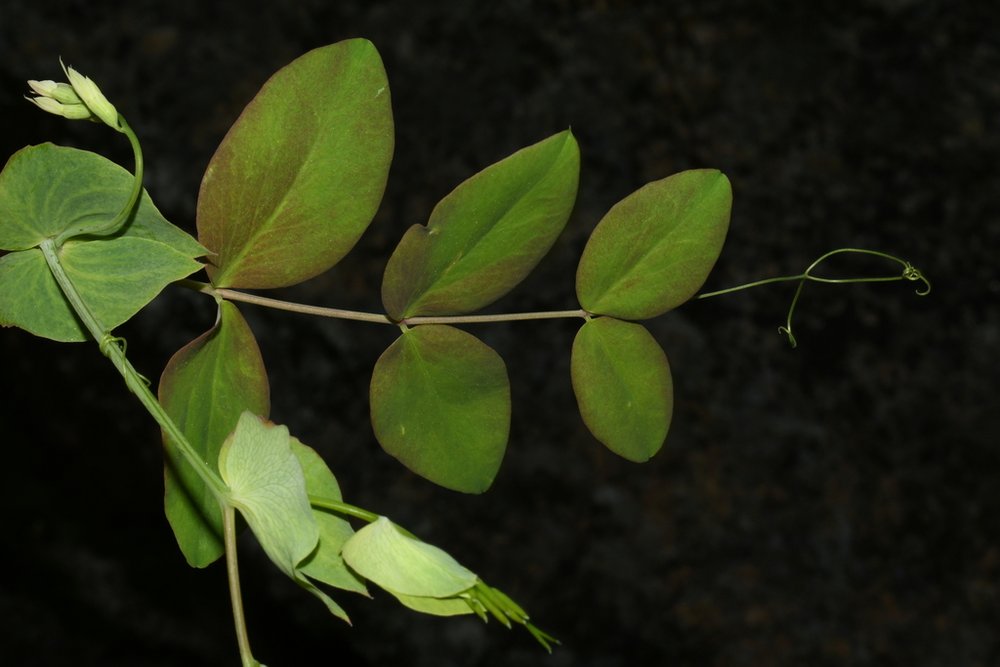
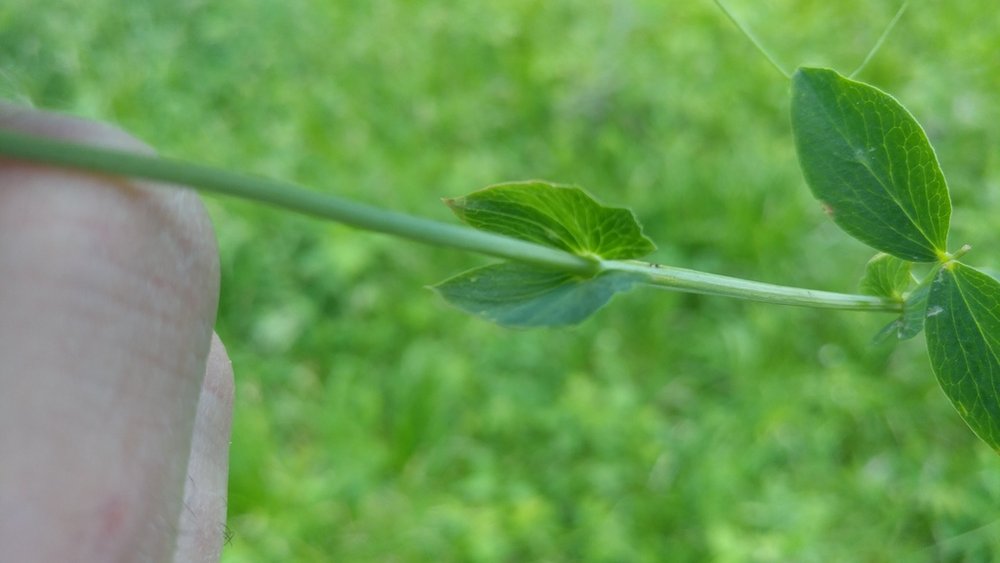
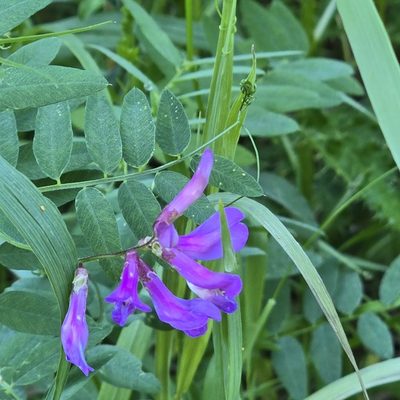
Look for creamy white to pale yellow pea flowers, 5 to 10 in a loose cluster on a bare stalk from a leaf axil, each 1.5–2 cm (½–¾ in) long and sometimes turning orange with age. The leaves are alternate, with 3 to 5 pairs of broad, oval, hairless leaflets 2–6 cm (1–2½ in) long, broader and rounder than on most pea-family vines, and each leaf ends in a branched tendril instead of a last leaflet. The surest check is the pair of big leafy flaps (stipules) at the base of each leaf, 2–3 cm (about 1 in) long and shaped like half a heart with a rounded lobe at the bottom; few pea-family plants have stipules that large. The stem is slender, slightly angled but not winged, hairless and clambering, and the pods are flat and hairless, 3–5 cm (1–2 in) long. American Vetch, a pea vine on all four Black Hills park lists, has pink, purple or blue flowers, 2 to 9 in a cluster, 4 to 8 pairs of narrow leaflets about 6 mm (¼ in) wide, and small stipules with three sharp teeth on the lower half.
When does it bloom?
May into July.
Where does it grow?
Moist to mesic open forest, thickets, meadows and forest edges, especially under aspen, and in the Hills also white spruce bottoms, paper birch and ironwood creek corridors, moist mixed conifer-deciduous forest, shaded pine slopes and forest roadside banks, from about 1,200 to 1,900 m (4,000–6,300 ft). The National Park Service lists it at Wind Cave, Jewel Cave, Mount Rushmore and Devils Tower, the 1986 plant survey of Jewel Cave lists it, and more than a hundred herbarium specimens since 1891 come from Lawrence, Pennington, Custer and Meade counties in South Dakota and Crook and Weston counties in Wyoming, including Custer State Park, the Black Elk Wilderness and the Bear Lodge Mountains.
Other vetches in this guide
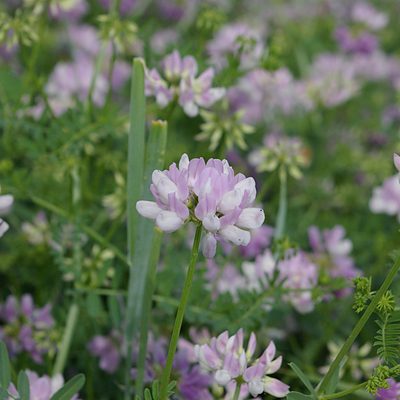
Pea family (Fabaceae): 31 other plants in this guide
- Alfalfa
- Alpine Sweetvetch
- American Vetch
- Barr's Milkvetch
- Black Medic
- Canada Milkvetch
- Canada Tickclover
- Cream Milkvetch
- Crown Vetch
- Drummond's Milkvetch
- Field Locoweed
- Field Milkvetch
- Golden Pea
- Groundplum Milkvetch
- Indian Milkvetch
- Lambert's Crazyweed
- Laxmann's Milkvetch
- Lead Plant
- Missouri Milkvetch
- Prairie Turnip
- Purple Prairie Clover
- Red Clover
- Silktop Dalea
- Silverleaf Scurfpea
- Silvery Lupine
- Slimflower Scurfpea
- Tufted Milkvetch
- White Clover
- White Prairie Clover
- Wild Licorice
- Yellow Sweetclover
Sources: Minnesota Wildflowers: Lathyrus ochroleucus (Cream Pea); Montana Field Guide: Pale Vetchling Peavine, Lathyrus ochroleucus (Montana Natural Heritage Program); Illinois Wildflowers: Pale Vetchling (Lathyrus ochroleucus); Burton & Burton 2003. Lathyrus ochroleucus, creamy peavine. A Manual for Growing and Using Seed from Herbaceous Plants Native to the Northern Interior of British Columbia (BC Ministry of Environment); University of Michigan, CLIMBERS project: Lathyrus ochroleucus; Minnesota Wildflowers: Vicia americana (American Vetch); ITIS: Lathyrus ochroleucus (TSN 25863); NPSpecies checklist, Wind Cave National Park vascular plants; NPSpecies checklist, Jewel Cave National Monument vascular plants; NPSpecies checklist, Mount Rushmore National Memorial vascular plants; NPSpecies checklist, Devils Tower National Monument vascular plants; Marriott & Hartman 1986. A Survey of the Vegetation of Jewel Cave National Monument; GBIF occurrence search: Lathyrus ochroleucus, South Dakota and Wyoming herbarium specimens; Black Elk, L.S. & Flying By, W.D. 1998. Culturally Important Plants of the Lakota (Sitting Bull College) (checked; no Lathyrus entry).