Cream Milkvetch Astragalus racemosus
Also called Creamy Milkvetch, Alkali Milkvetch, Racemose Milkvetch, Creamy Poison-vetch, Alkali Poisonvetch, pȟežúta ská hú (Lakota), šuŋkléža hú (Lakota)
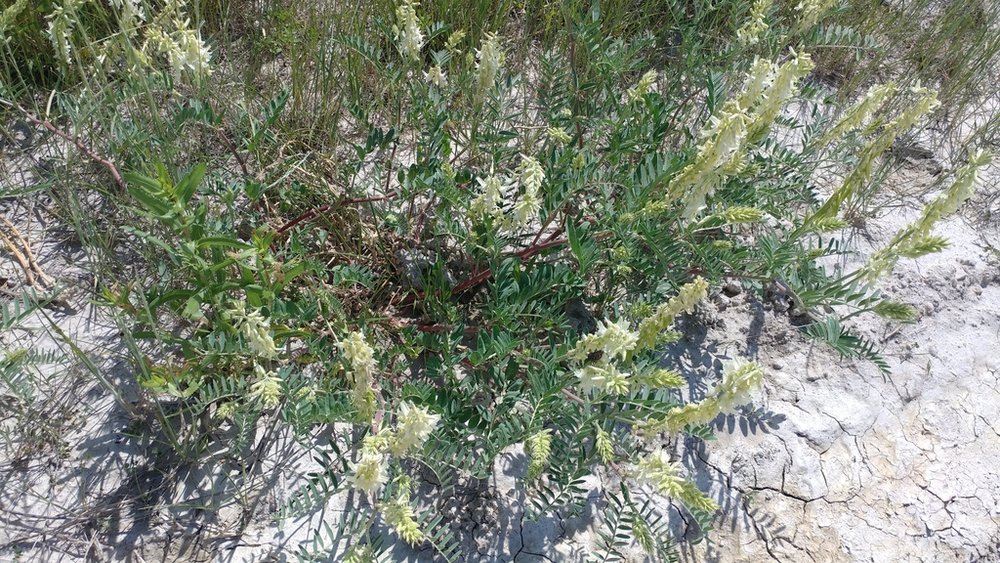
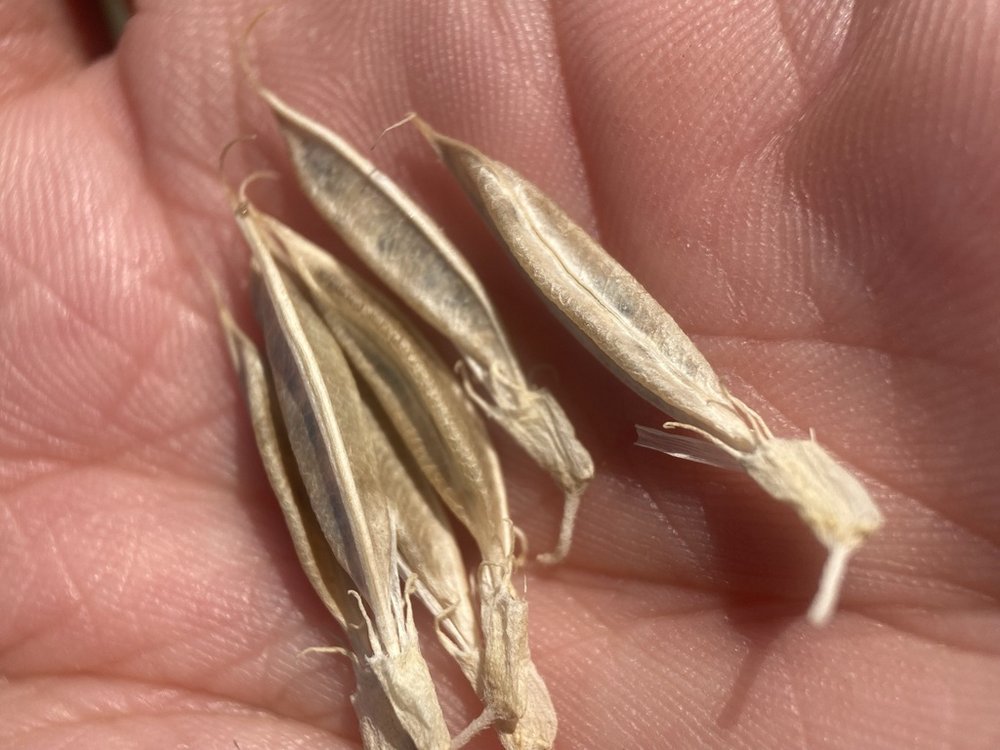
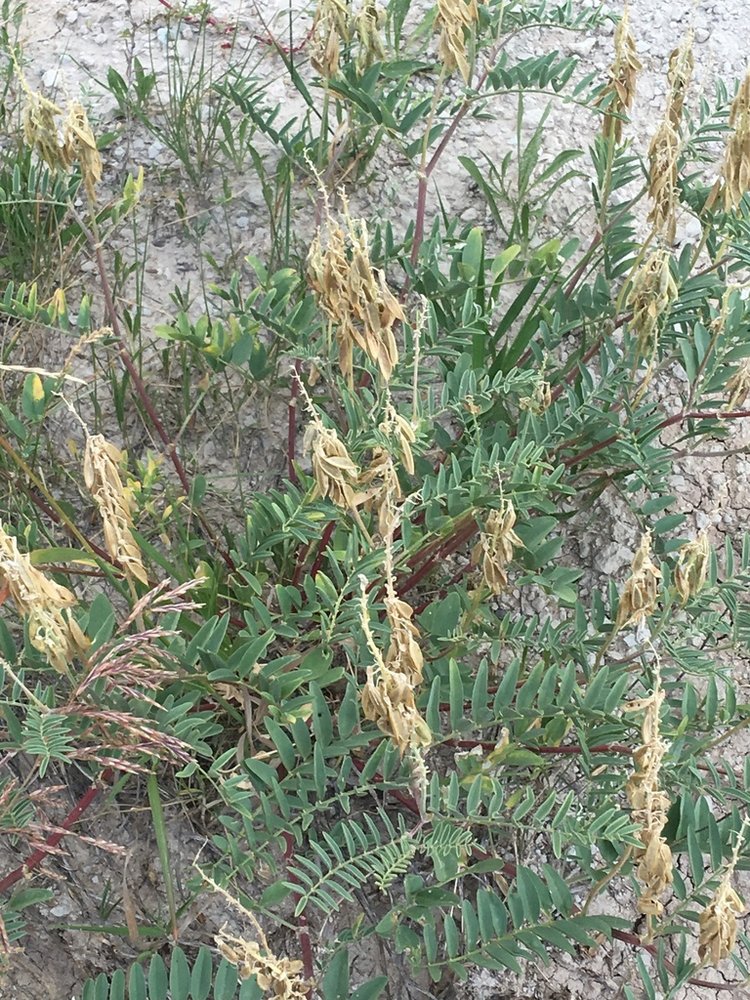
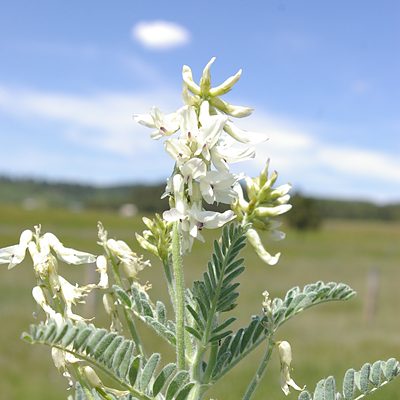
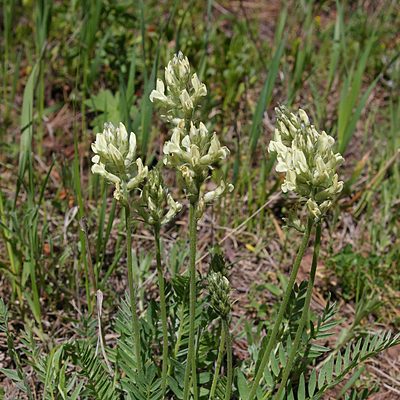
Cream Milkvetch (Astragalus racemosus) is a native perennial with drooping spikes of creamy white, pea-like flowers, blooming from May into July on clay and alkaline soils. It grows on the prairie and clay hills around the Black Hills and in the southern Hills, where herbarium labels from Fall River and Pennington counties record it on roadsides, in open woods and along streams. It takes up selenium from the soil and is poisonous to livestock.
Free photos from other sources
| Family | Fabaceae · Pea |
|---|---|
| Status | Native perennial |
| Blooms | May into July |
| Height | 15–70 cm (6–28 in) |
| Where | Clay and alkaline soils on prairie, hillsides, roadsides, stream valleys and open woods |
| Also called | Creamy Milkvetch, Alkali Milkvetch, Racemose Milkvetch, Creamy Poison-vetch, Alkali Poisonvetch, pȟežúta ská hú (Lakota), šuŋkléža hú (Lakota) |
| Toxicity | It takes up selenium from the soil and is poisonous to livestock, though Kansas Wildflowers says livestock seldom eat it; Black Elk and Flying By (1998) call it poisonous to both people and livestock. |
| Traditional use | Moerman's database cites Rogers (1980) for the Lakota considering this plant poisonous to livestock. Black Elk and Flying By (1998) give two Lakota names for it and say it is poisonous to both people and livestock and not to be confused with other milkvetches. |
| Note | SDSU gives the pod as 3.5–7 cm long; Minnesota Wildflowers and Kansas Wildflowers give up to about 4 cm (1½ in). |
Traditional use: first drafted by Google AI, then checked against the sources on this page.
Roots, seeds & germination
Root: Minnesota Wildflowers says it has a taproot. SDSU says it grows from a branched caudex (the woody base where the stems meet the root).
Seed: The seeds are smooth, dark brown, kidney-shaped and 2–3 mm long, spotted with purple according to Kansas Wildflowers. SDSU says to collect the pods in summer when they turn tan and the seeds turn dark brown.
Germination: SDSU says to sow in fall, or in early spring while the ground is still cold.
How do you identify Cream Milkvetch?
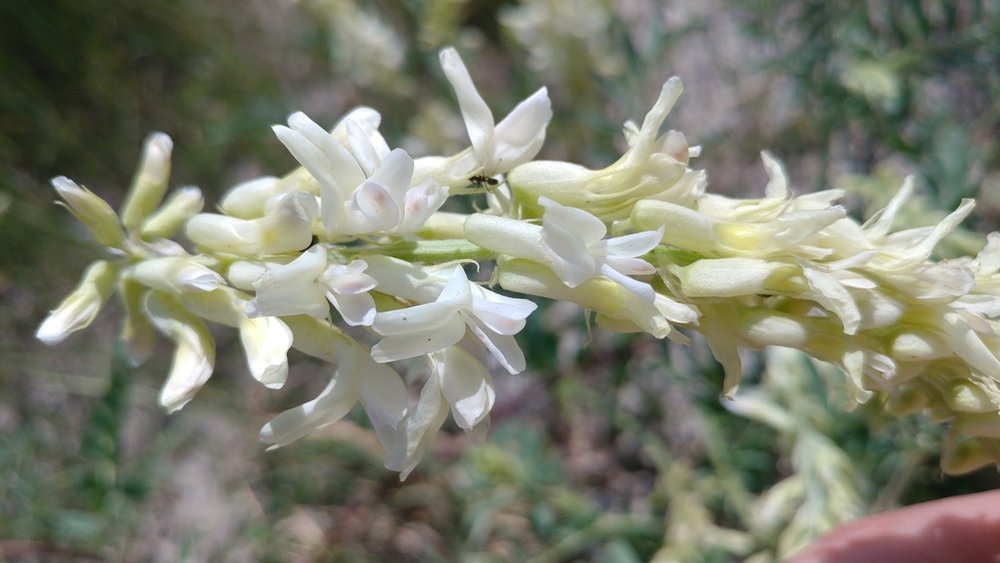
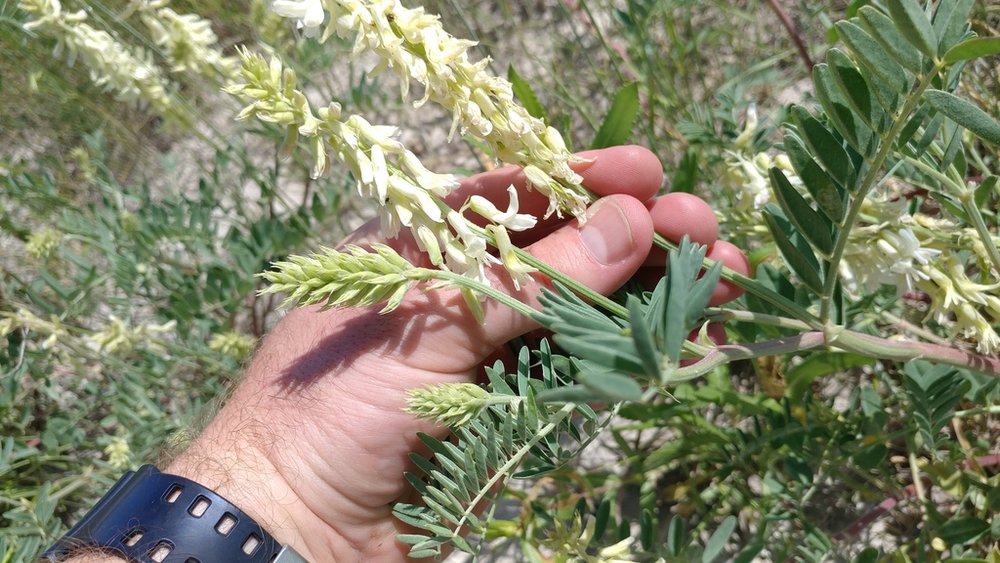
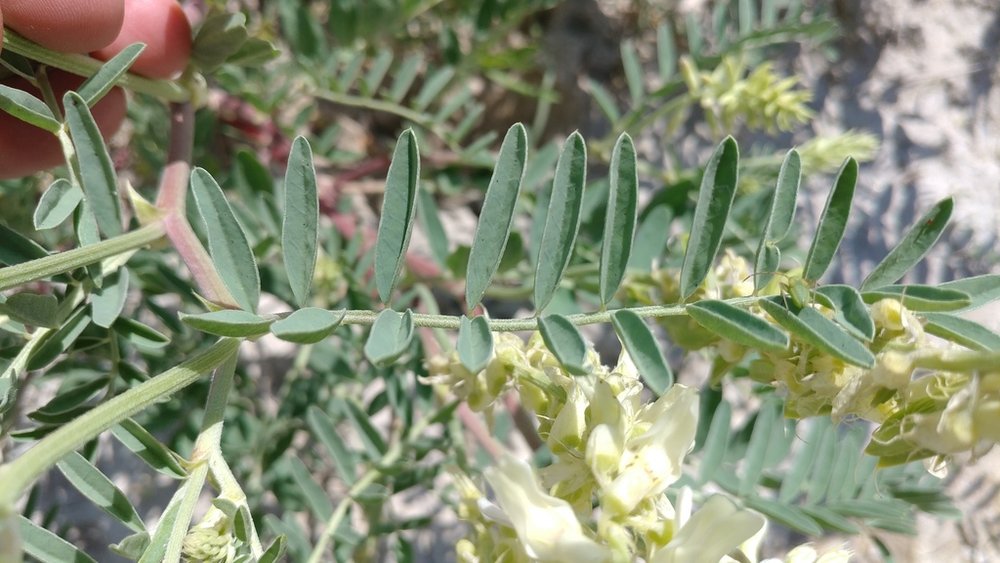
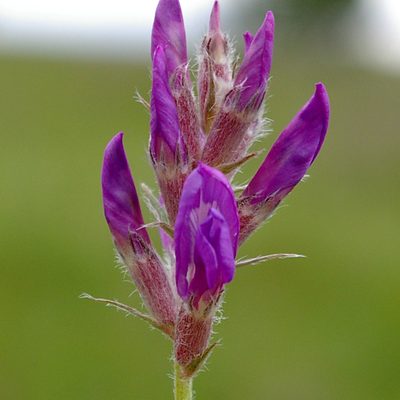
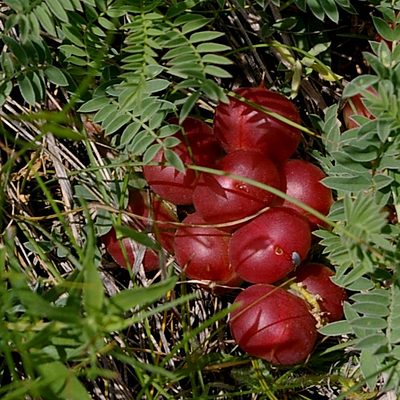
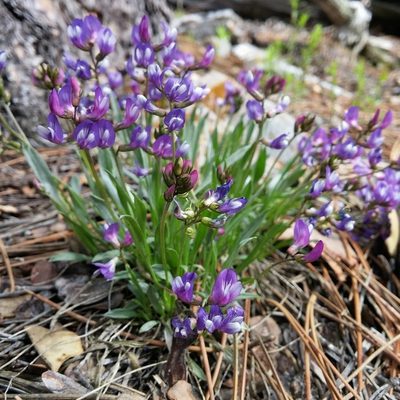
Look for clumps of upright to sprawling, branched stems, often red near the base, with feathery compound leaves of 11 to 31 narrow leaflets. Loose, drooping spikes of 15 to 70 pea flowers rise from the leaf joints on stalks longer than the leaves. Each flower is 12–19 mm (½–¾ in) long, white to cream, sometimes with purplish tips or streaks, with a bell-shaped calyx (the green cup under the flower) covered in white hairs. The pods are smooth, flattened and drooping, with a pointed tail. Minnesota Wildflowers separates it from Canada Milkvetch (Astragalus canadensis), which has stalkless, tightly packed flowers, an erect two-chambered pod and spreads by rhizomes, where Cream Milkvetch has loose, drooping flowers and a taproot. Black Elk and Flying By (1998) warn not to confuse it with other milkvetches, because this one is poisonous.
When does it bloom?
May into July.
Where does it grow?
Clay and alkaline soils on prairie, hillsides, roadsides, stream valleys and open woods. Herbarium labels from the Black Hills region include a 1929 specimen from open woods and a 1953 label for mixed ponderosa pine forest and grassland, both in Fall River County, a 1941 roadside specimen from the southern Black Hills, a 1911 specimen along a stream in Fall River County, a 1914 specimen on a creek floodplain in Pennington County and a 1968 specimen along a road in Pennington County. Most other specimens come from clay prairie and badlands east and south of the Hills, from Fall River, Pennington, Butte, Meade and Custer counties, South Dakota, and Weston County, Wyoming. It is not on the Wind Cave, Jewel Cave, Mount Rushmore or Devils Tower plant lists.
Other milkvetches and locoweeds in this guide
Compare all 12 milkvetches and locoweeds side by side
Barr's Milkvetch
Astragalus barrii
Canada Milkvetch
Astragalus canadensis
Drummond's Milkvetch
Astragalus drummondii
Field Locoweed
Oxytropis campestris
Field Milkvetch
Astragalus agrestis
Groundplum Milkvetch
Astragalus crassicarpus
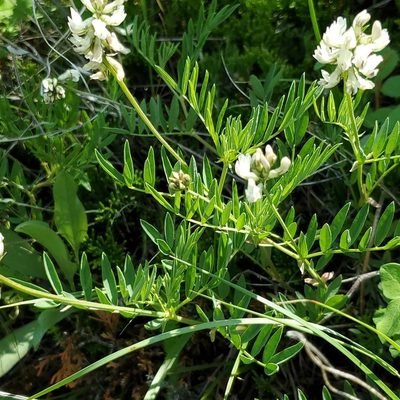
Indian Milkvetch
Astragalus australis
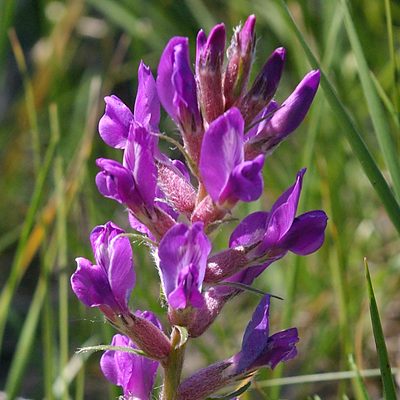
Lambert's Crazyweed
Oxytropis lambertii
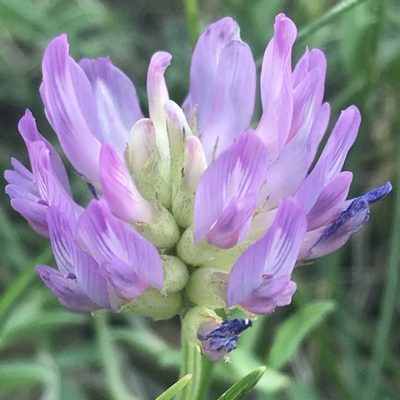
Laxmann's Milkvetch
Astragalus laxmannii var. robustior
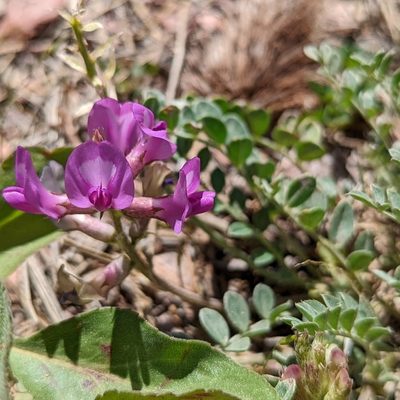
Missouri Milkvetch
Astragalus missouriensis
Tufted Milkvetch
Astragalus spatulatus
Pea family (Fabaceae): 31 other plants in this guide
- Alfalfa
- Alpine Sweetvetch
- American Vetch
- Barr's Milkvetch
- Black Medic
- Canada Milkvetch
- Canada Tickclover
- Crown Vetch
- Drummond's Milkvetch
- Field Locoweed
- Field Milkvetch
- Golden Pea
- Groundplum Milkvetch
- Indian Milkvetch
- Lambert's Crazyweed
- Laxmann's Milkvetch
- Lead Plant
- Missouri Milkvetch
- Pale Vetchling
- Prairie Turnip
- Purple Prairie Clover
- Red Clover
- Silktop Dalea
- Silverleaf Scurfpea
- Silvery Lupine
- Slimflower Scurfpea
- Tufted Milkvetch
- White Clover
- White Prairie Clover
- Wild Licorice
- Yellow Sweetclover
Sources: SDSU Open PRAIRIE: Fabaceae: Astragalus racemosus (R. Neil Reese); Minnesota Wildflowers: Astragalus racemosus (Cream Milkvetch); Kansas Wildflowers and Grasses: Astragalus racemosus (creamy milk-vetch); USDA PLANTS Database: Astragalus racemosus (ASRA2), cream milkvetch; GBIF specimen 3412832322: Fall River County SD, open woods, 6 July 1929; GBIF specimen 2573385360: Fall River County SD, ponderosa pine forest and grassland, 28 June 1953; GBIF specimen 3023456833: southern Black Hills, Fall River County SD, 14 June 1941; GBIF specimen 3412832318: Fall River County SD, along a stream, 29 July 1911; GBIF specimen 2575125906: Pennington County SD, floodplain, 29 June 1914; GBIF specimen 2575125790: Pennington County SD, along a road, 18 June 1968; GBIF specimen 240488872: Weston County WY, 12 June 1974; Native American Ethnobotany Database (BRIT): Astragalus racemosus; Culturally Important Plants of the Lakota (Black Elk and Flying By, 1998), entry 48.