Cow Parsnip
Heracleum maximum
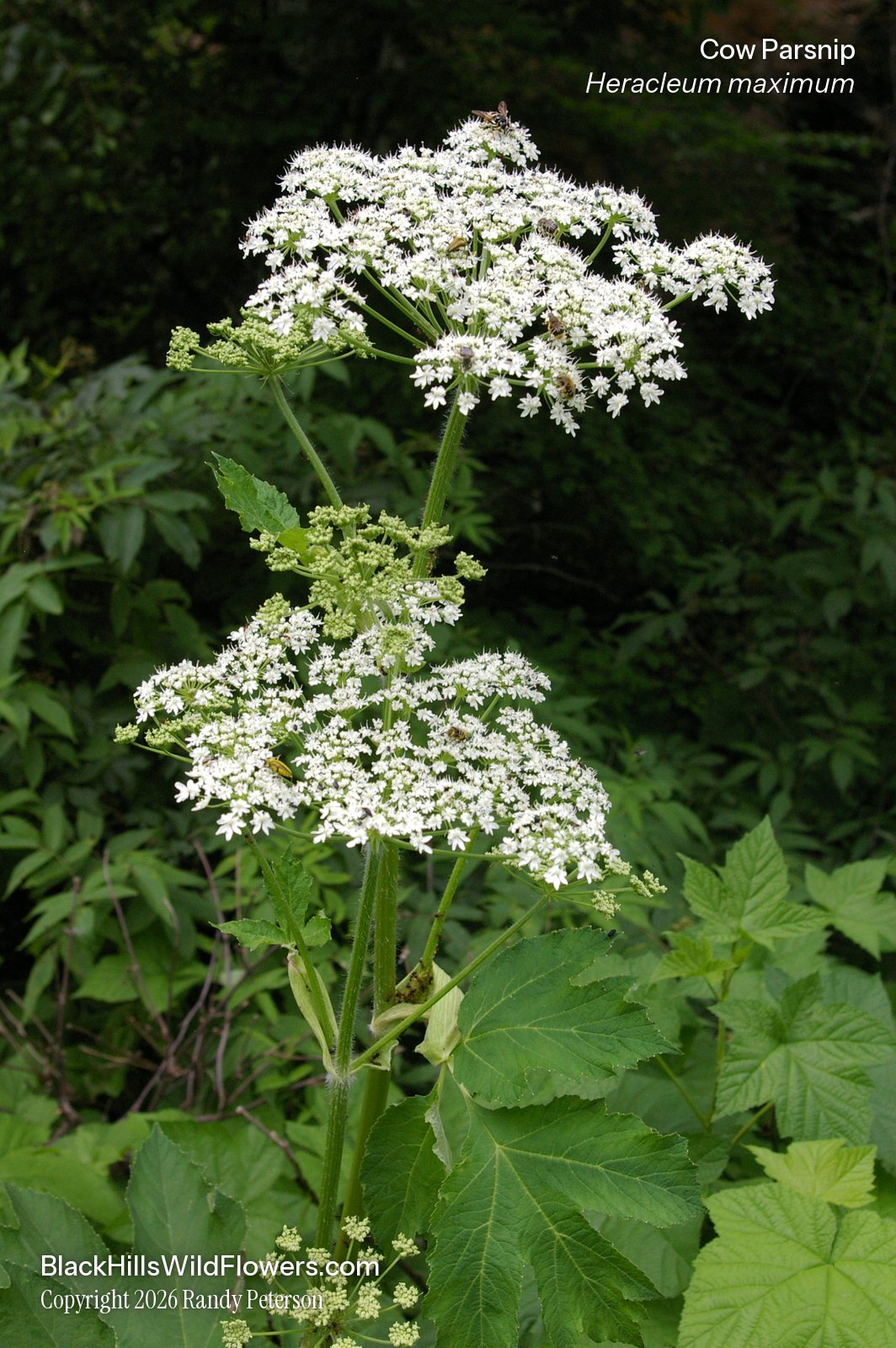
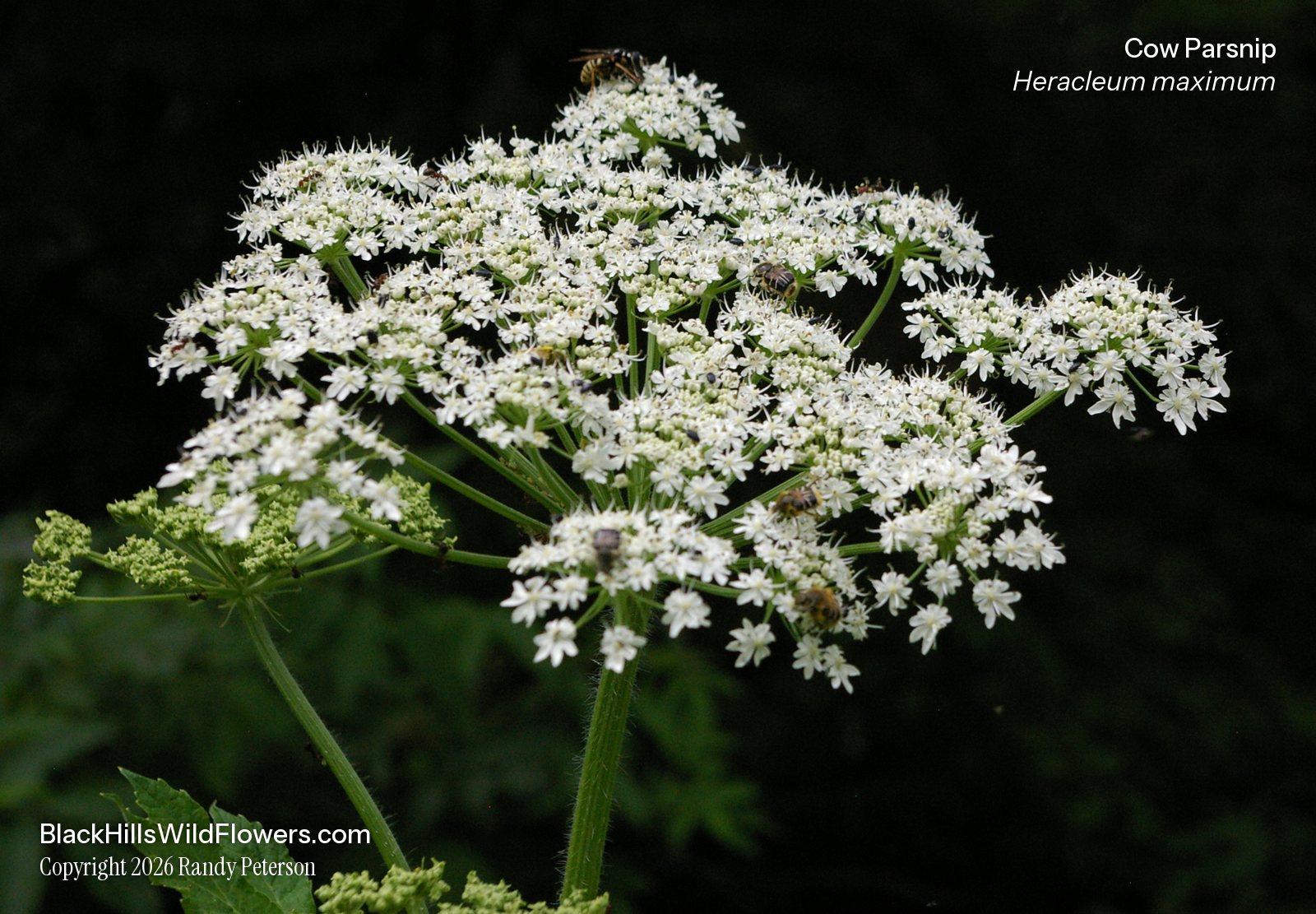
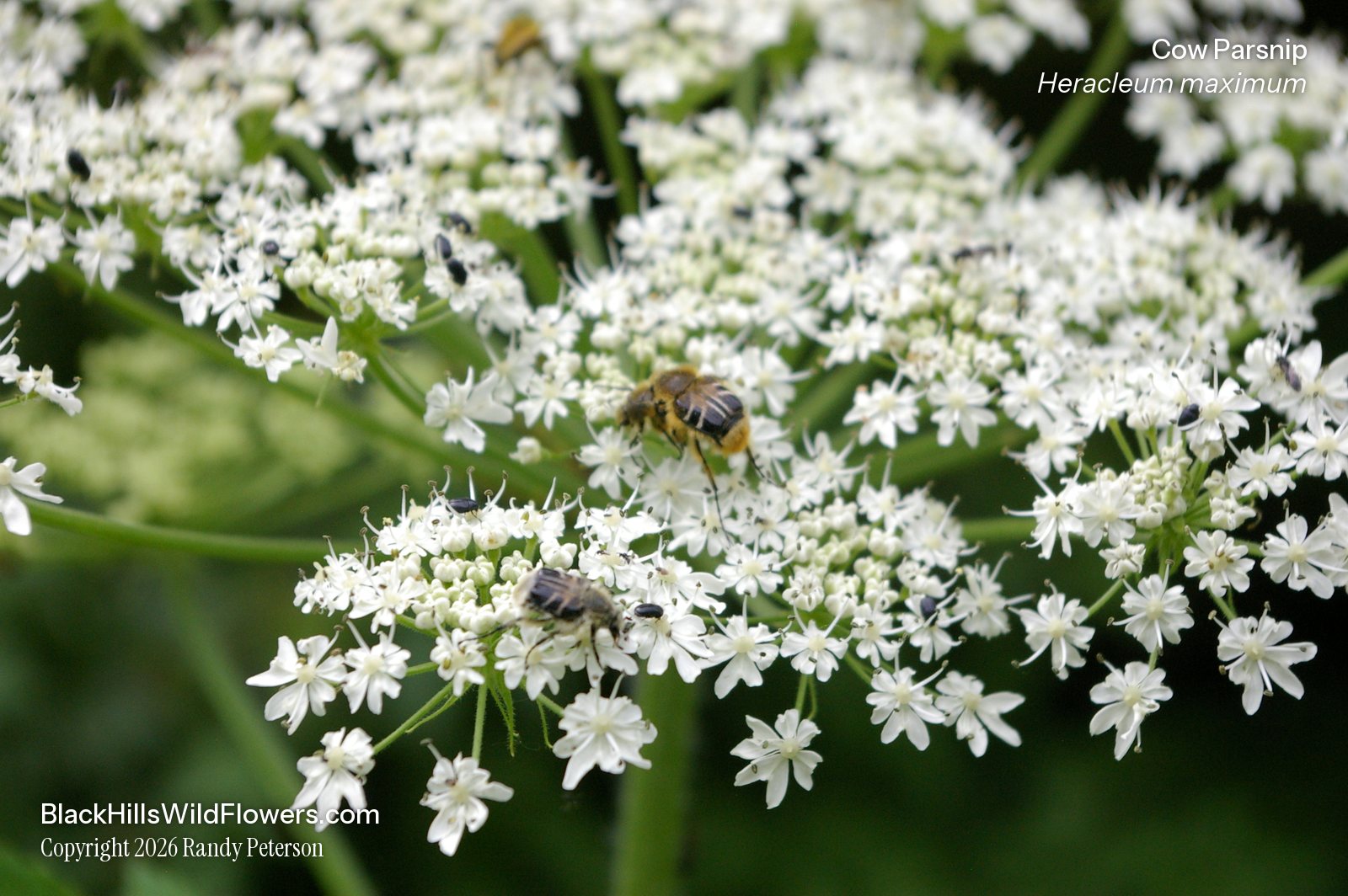
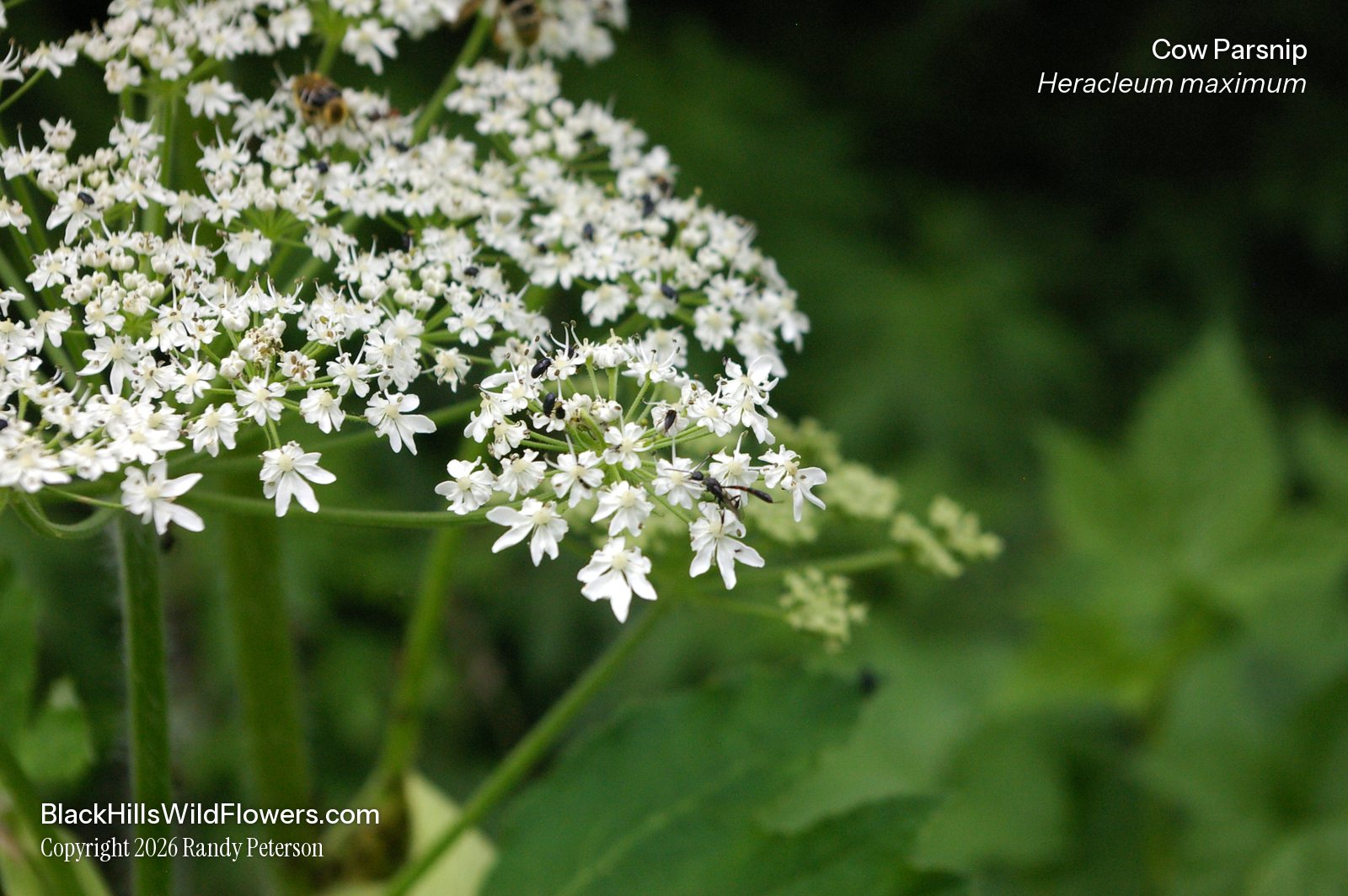
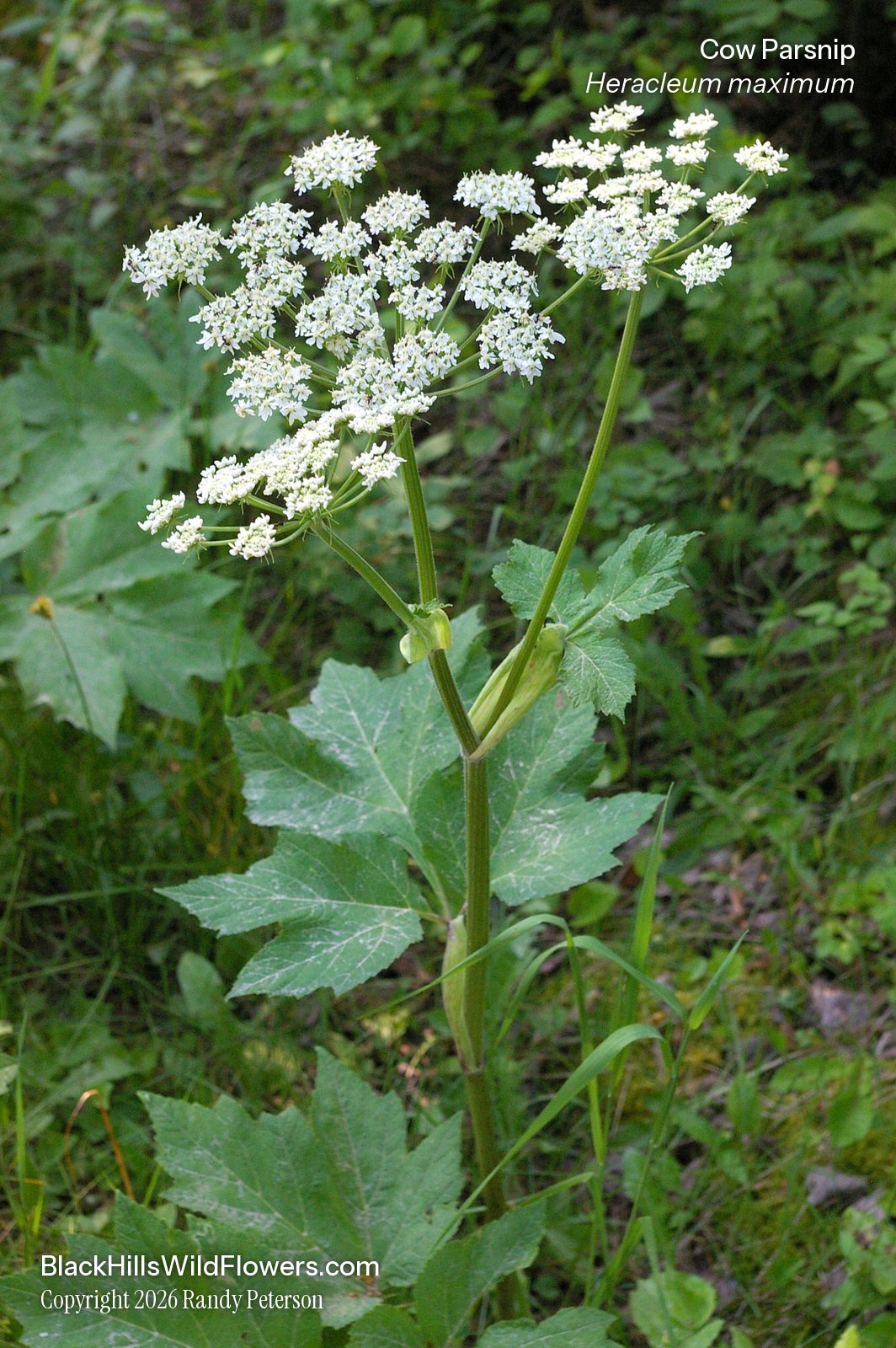
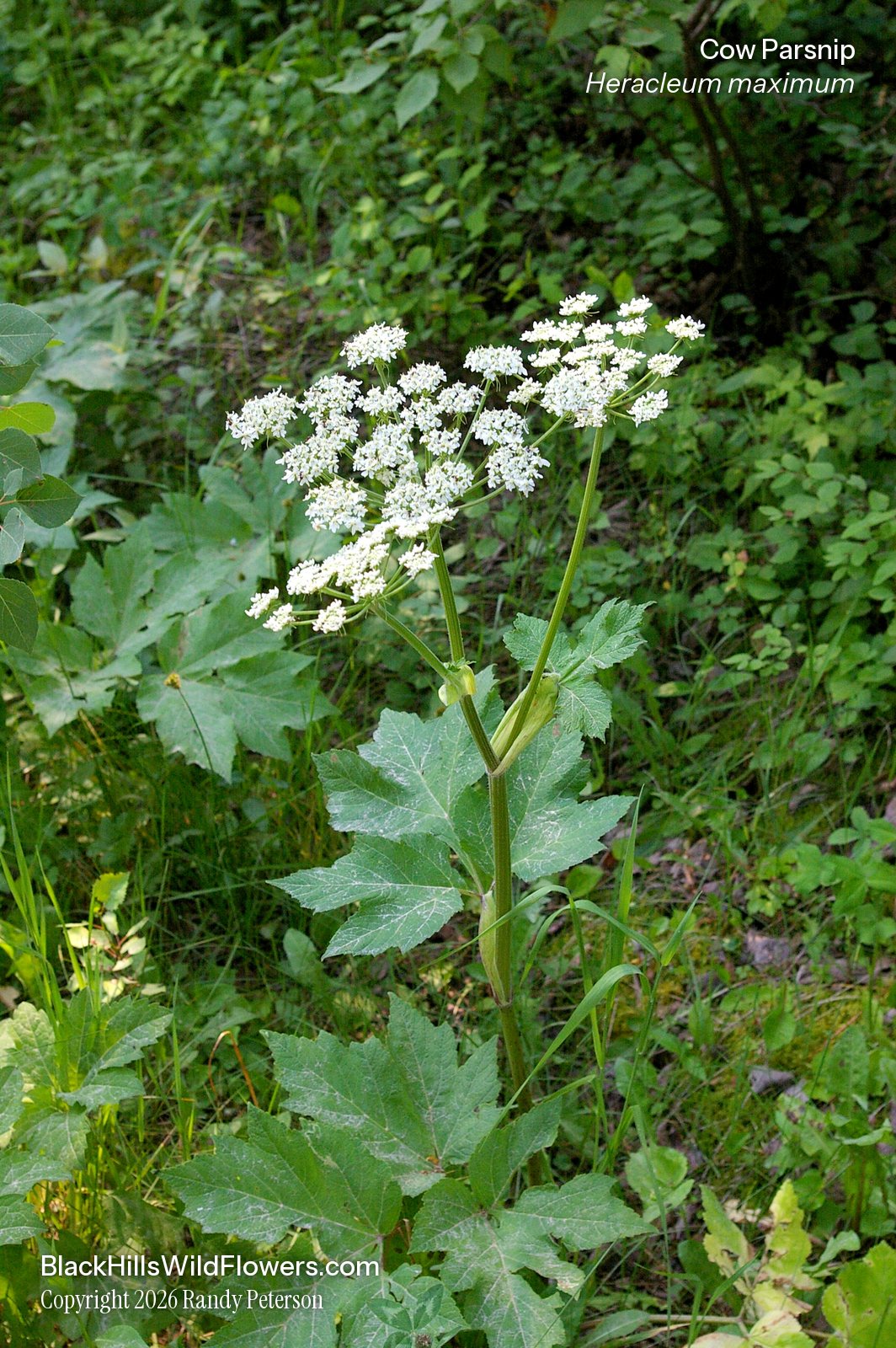
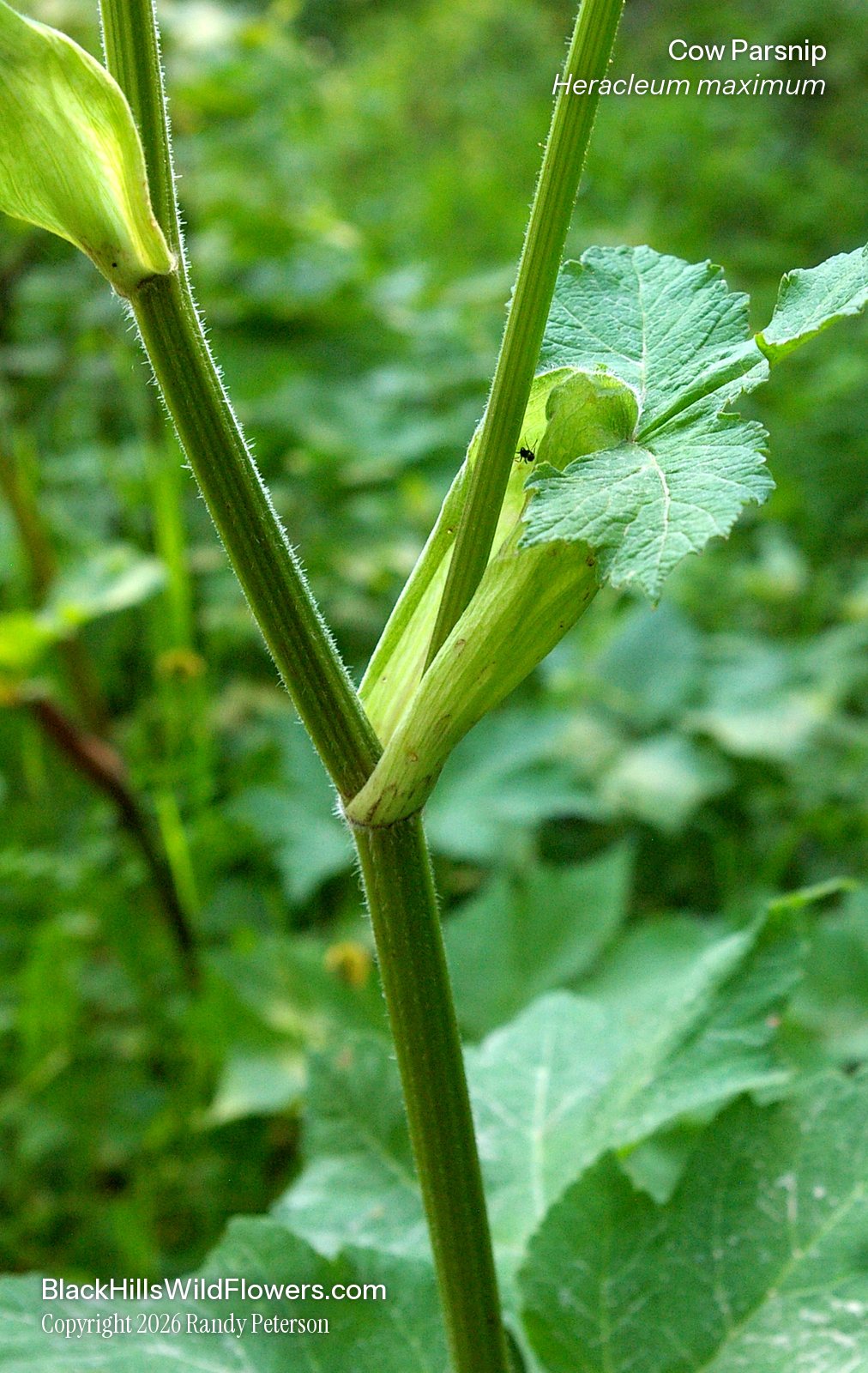
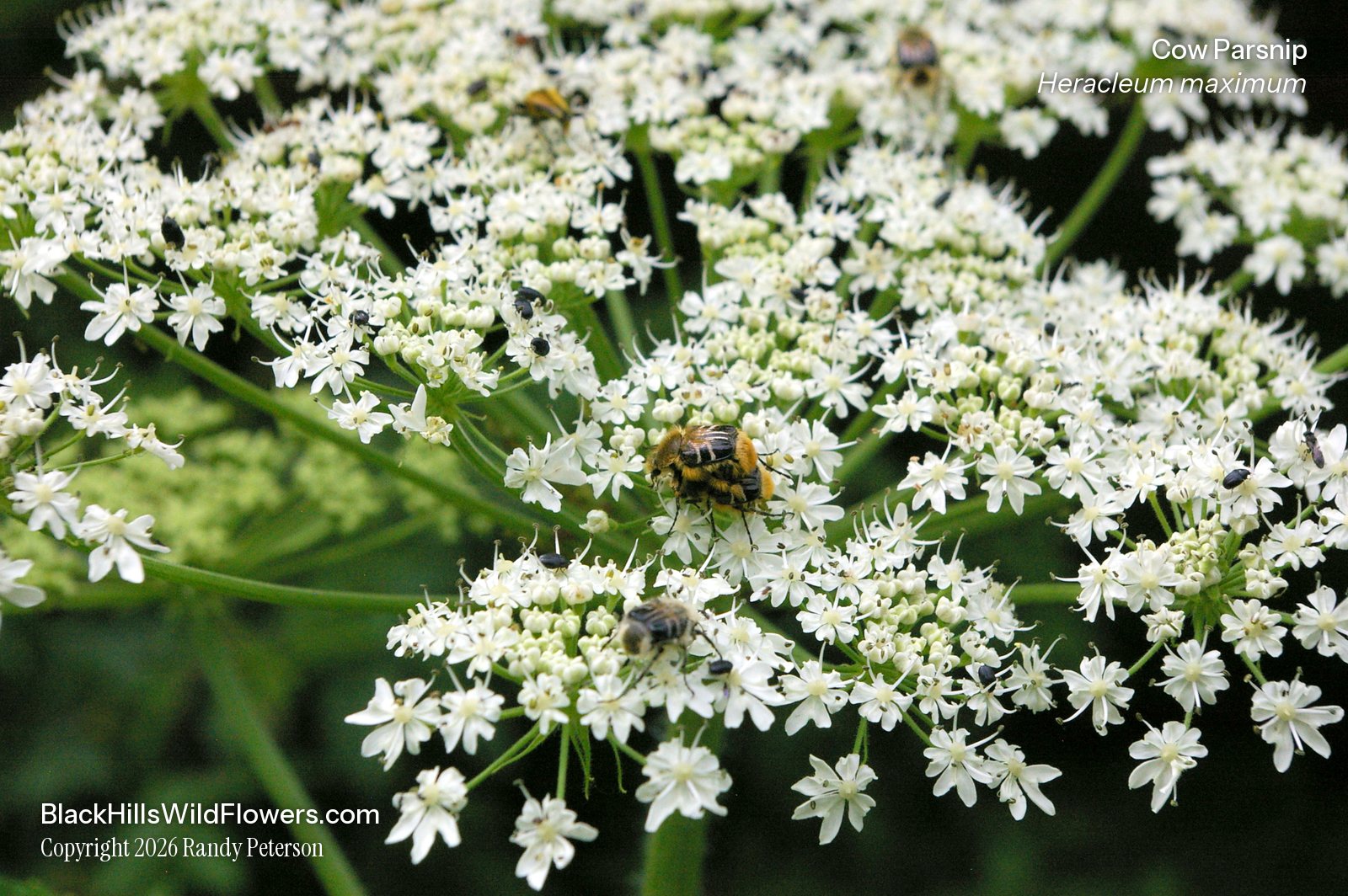
Cow Parsnip (Heracleum maximum) is a native perennial, up to 3 m (10 feet) tall, with hollow, hairy stems, huge three-part leaves and flat white flower clusters up to 30 cm (12 inches) across. It grows in moist, rich woods in the Black Hills, usually along streams, and blooms in June and July. Photographed in the Black Hills.
| Family | Apiaceae · Carrot |
|---|---|
| Status | Native perennial |
| Blooms | June and July |
| Height | 1–3 m (3–10 ft) |
| Where | Moist, rich woods, usually along streams; thickets |
| Also called | Common Cow Parsnip, American Cow-parsnip |
| Synonym | Heracleum lanatum, Heracleum sphondylium subsp. montanum, Heracleum sphondylium var. lanatum |
| Toxicity | Sap can cause a burn-like, blistering rash on skin that is then exposed to sunlight. |
Roots, seeds & germination
Seed: The flat, oval to heart-shaped fruit, ¼–½ inch long, ripens to brown and splits into 2 seeds. Oils inside give off a strong orange smell.
Germination: Seeds are dormant and need warm, then cold, then warm treatments to sprout. Sown in late summer, some germinate late the following spring.
How do you identify Cow Parsnip?
Look for a stout, hollow, hairy stem, leaves split into three large toothed leaflets with a sheath where the stalk clasps the stem, and flat-topped clusters of small white flowers with notched petals. Giant Hogweed is much larger, up to 20 feet tall with leaves 3 to 10 feet wide.
When does it bloom?
June and July.
Where does it grow?
Moist, rich woods in the Black Hills, usually along streams. In South Dakota it also grows in thickets in the east and west of the state, and it needs very moist sites.
Other flowers to compare
Sources: Black Hills National Forest: Black Hills native plants; SDSU Open PRAIRIE: Heracleum maximum; Minnesota Wildflowers: Heracleum maximum; USDA NRCS Plant Guide: Cow Parsnip; Lady Bird Johnson Wildflower Center: Heracleum maximum; Conservation Assessment for Great-spurred Violet in the Black Hills National Forest; Fire Effects Information System: Heracleum maximum; National Park Service, Devils Tower National Monument: Native Plants.