Silverleaf Scurfpea
Pediomelum argophyllum
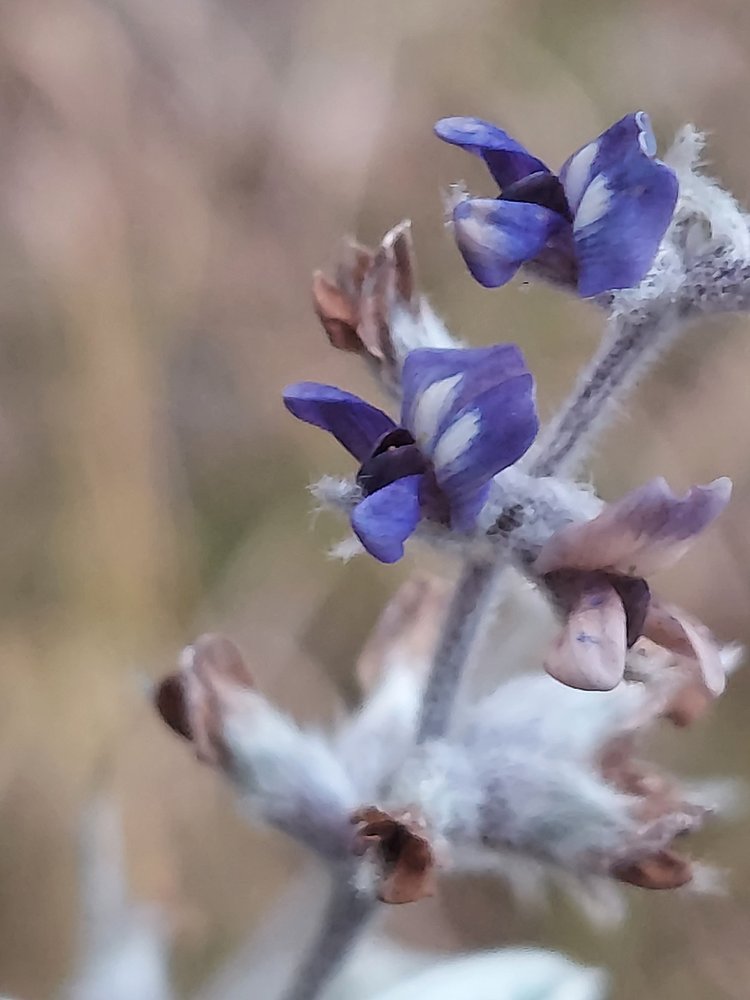
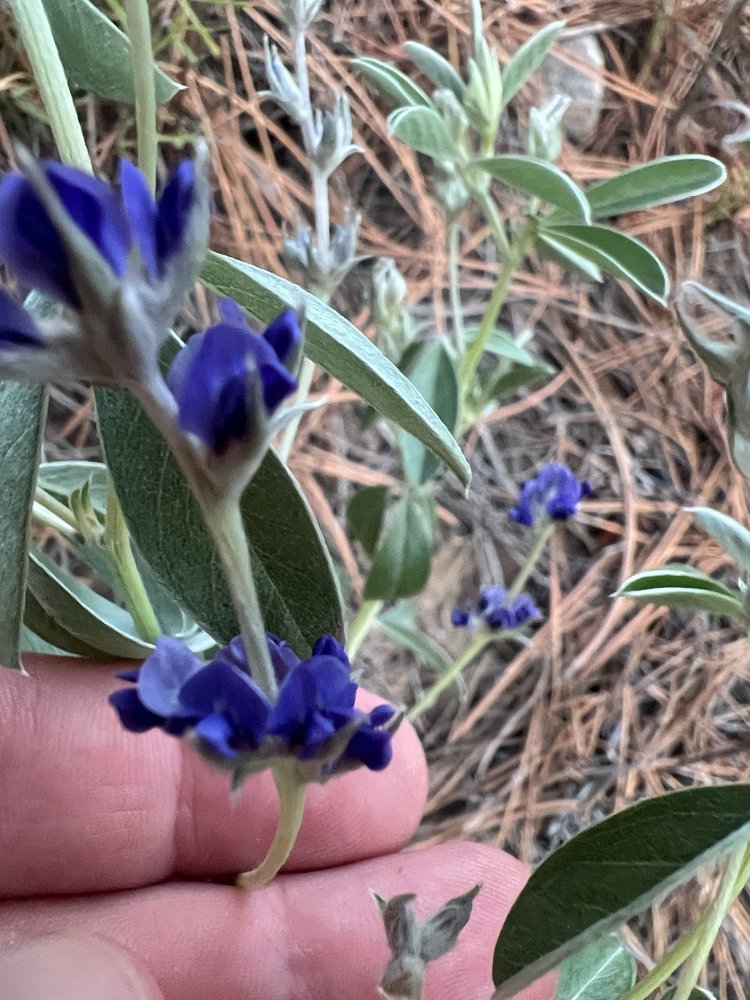
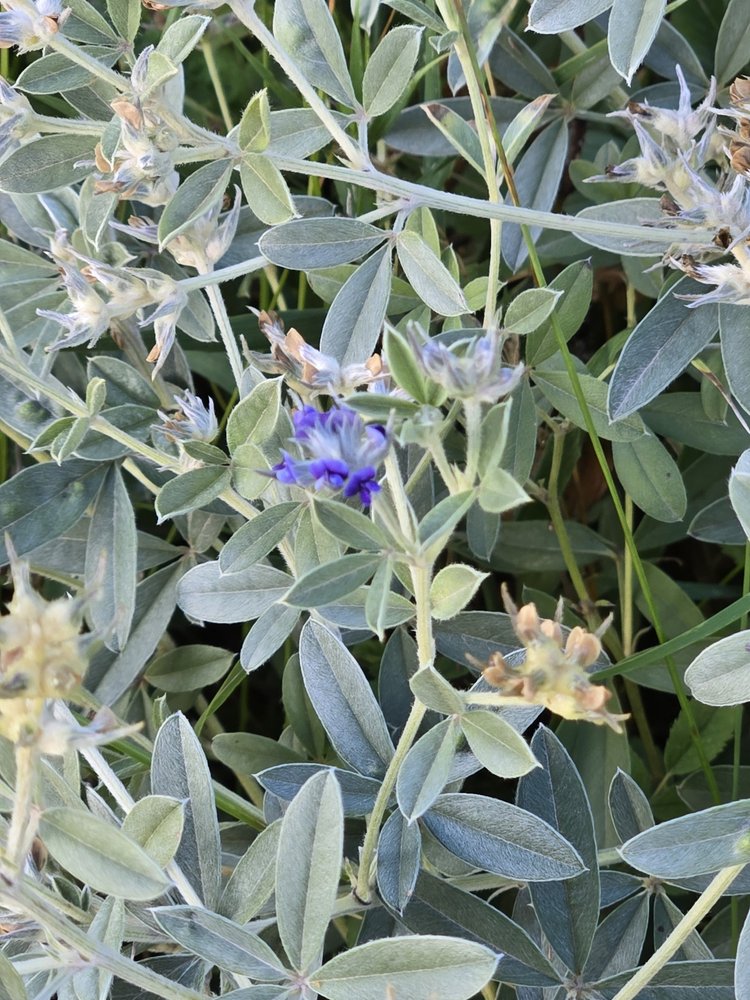
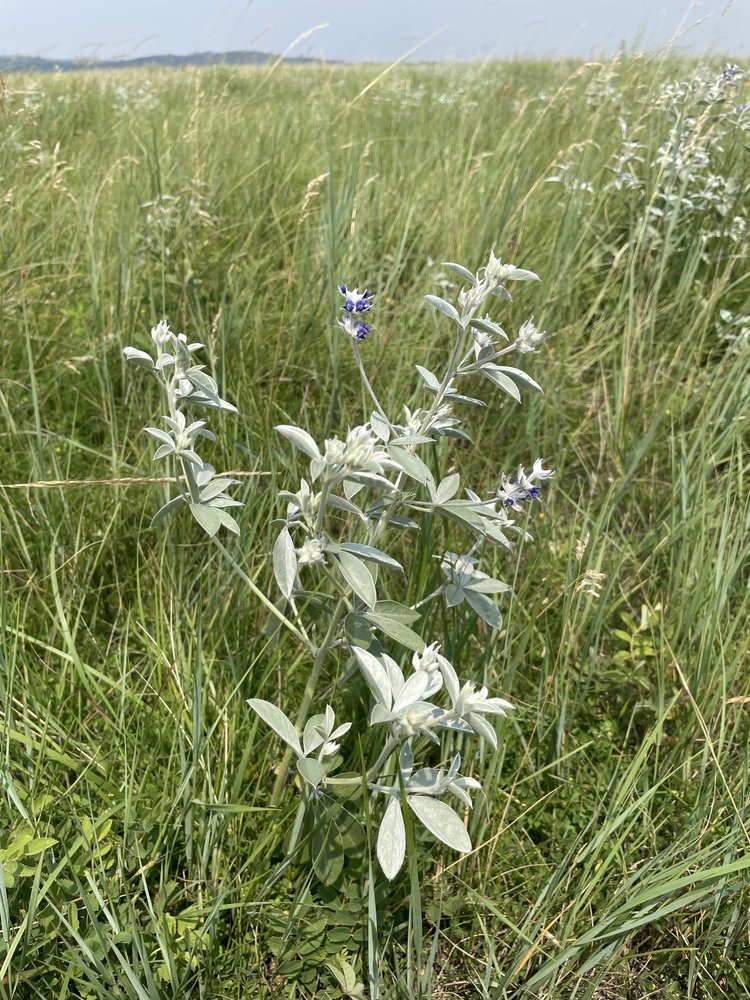
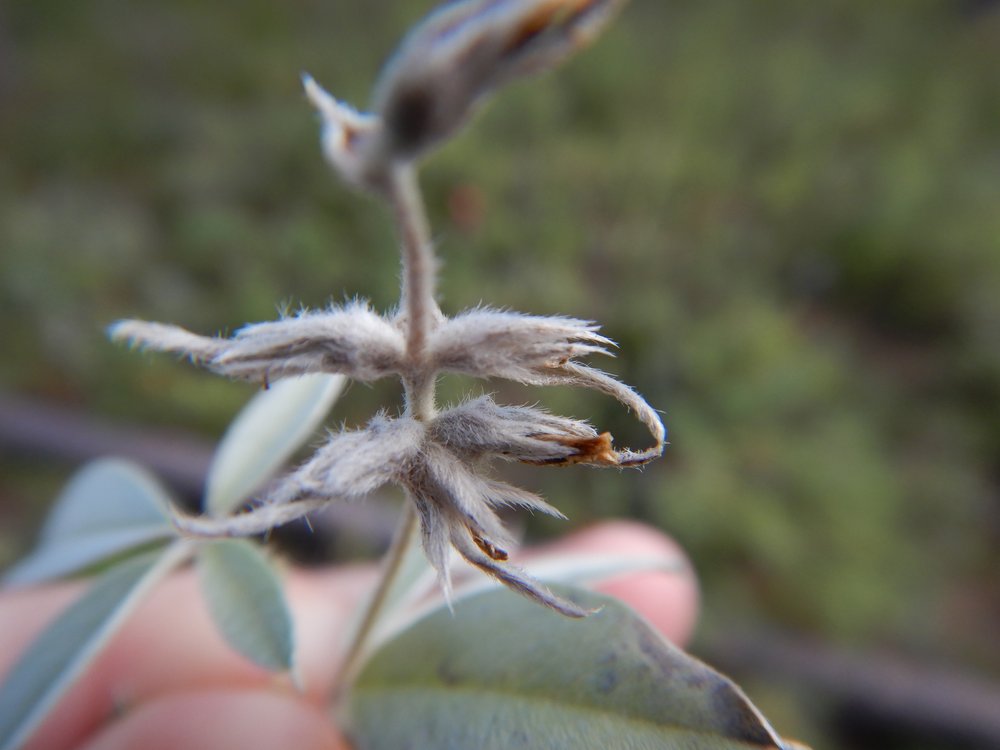
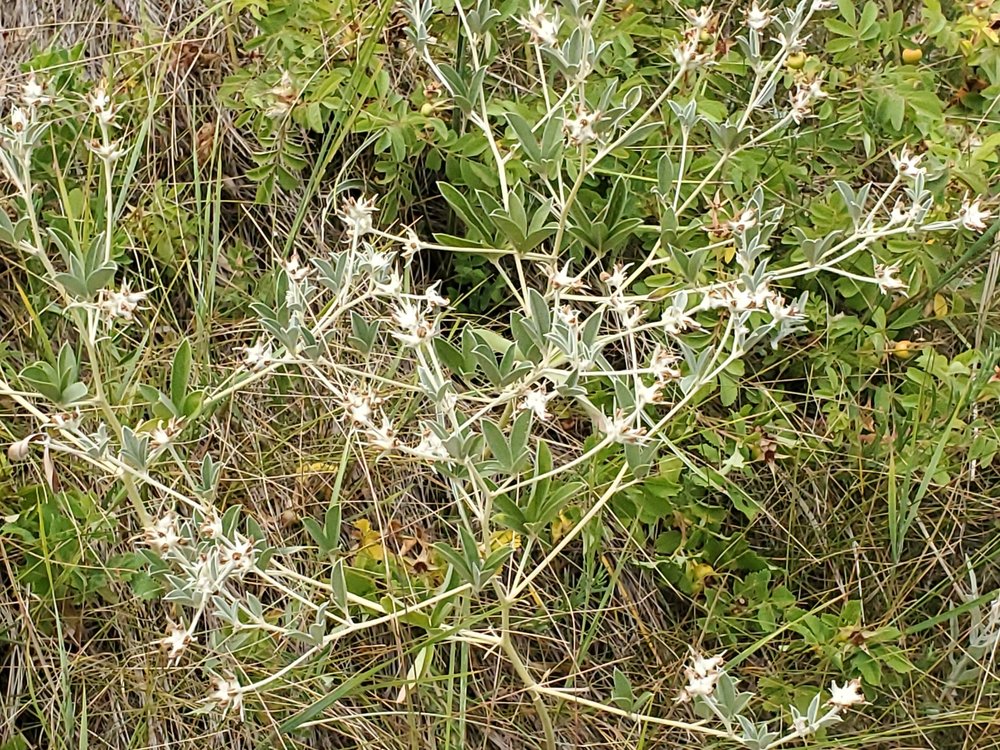
Silverleaf Scurfpea (Pediomelum argophyllum) is a native perennial of the pea family, a bushy, branching plant so thickly covered in silky hairs that it looks silvery-white, with small, deep-blue pea flowers. It blooms from late June into August on prairie, grassy hillsides and open pine woods, and the National Park Service lists it at Wind Cave, Jewel Cave, Mount Rushmore and Devils Tower. In fall the dry top snaps off and rolls like a tumbleweed.
Free photos from other sources
| Family | Fabaceae · Pea |
|---|---|
| Status | Native perennial |
| Blooms | Late June into August, peaking in July, a few into September |
| Height | 20–80 cm (8–30 in) |
| Where | Mixed-grass prairie, grassy and rocky hillsides and open pine woodland, in full sun |
| Also called | Silver-leaf Scurf-pea, Silvery Scurfpea, Silver-leaf Psoralea, matȟó tȟathíŋpsila (Lakota), thíčaničahu (Lakota) |
| Synonym | Psoralea argophylla, Psoralidium argophyllum, Lotodes argophyllum, Psoralea incana, Psoralea collina |
| Toxicity | Kansas Wildflowers and the Eloise Butler garden call it poisonous to livestock, though cattle seldom eat it. |
| Traditional use | Black Elk and Flying By (1998) and Rogers (1980) say the Lakota fed the roots to tired horses as a stimulant and wove the tough green stems into baskets to carry meat home. Grinnell recorded that the Cheyenne used a tea or salve of the leaves and stems for high fever. |
Roots, seeds & germination
Root: Unlike Prairie Turnip, it has no starchy, turnip-like root. It grows from a slender taproot topped by a woody crown and sends out creeping rhizomes (underground stems), so it often forms loose colonies.
Seed: Each flower makes a tiny, hairy, beaked pod, 7–9 mm (about ⅓ in) long, mostly hidden in the hairy calyx and holding one smooth, brown, kidney-shaped seed. Seeds ripen and drop in August and September. The Echinacea Project in Minnesota found seed set can be very poor and says the plant spreads mostly by rhizomes.
Germination: The hard seed coat keeps water out, so the seed must be scarified, rubbed with sandpaper or nicked, or sown in fall so winter softens it. Baskin and Baskin found scarified seed sprouted at about 24 °C (75 °F), in light or dark. Plants usually take 2–3 years to flower.
How do you identify Silverleaf Scurfpea?
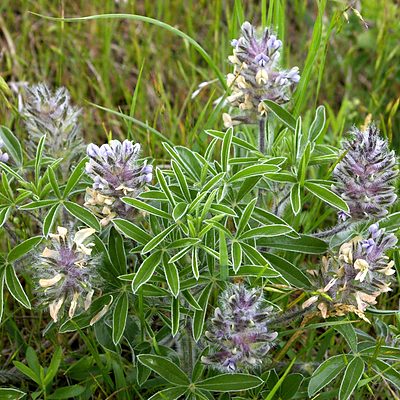
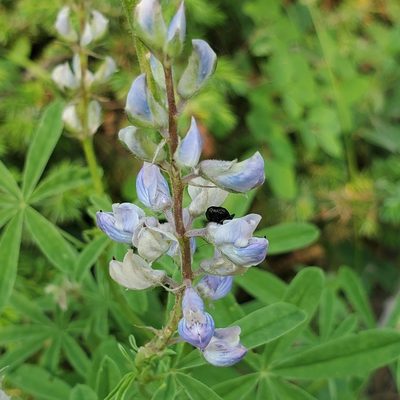
Look for a knee-high, bushy, much-branched plant that stands out silver-white against green grass. Each leaf has 3 to 5 leaflets spreading like fingers from the tip of a short stalk, 1–4 cm (½–1½ in) long and silky-silver on both sides. The small dark blue to blue-violet pea flowers, under 1 cm, sit in 1 to 5 separate whorls spaced along slender spikes from the upper leaf axils. Prairie Turnip is shorter, usually one stem, with leaflets green on top and one dense spike of paler flowers that blooms earlier, May to early July. Silvery Lupine has 5 to 9 leaflets and bigger flowers packed in a showy spike at the stem tip.
When does it bloom?
Late June into August, peaking in July, a few into September.
Where does it grow?
Dry to moderately moist mixed-grass prairie, grassy and rocky hillsides, open ponderosa pine woodland, meadow edges and stream valleys, in full sun. The 1986 Jewel Cave survey lists it as Psoralea argophylla, and the National Park Service records it at Wind Cave, Jewel Cave, Mount Rushmore and Devils Tower. Herbarium specimens come from all seven Black Hills counties in South Dakota and Wyoming, from about 800 m (2,600 ft) on the surrounding plains up to about 1,965 m (6,450 ft) in the central Hills.
Other flowers to compare
Sources: Culturally Important Plants of the Lakota (Black Elk & Flying By, Sitting Bull College, 1998), entry 244, PDF p. 35; SDSU Open PRAIRIE: Fabaceae: Pediomelum argophyllum (R. Neil Reese); SDSU Open PRAIRIE: Fabaceae: Pediomelum esculentum; Native American Ethnobotany Database (BRIT): Pediomelum argophyllum, 9 use records (Rogers 1980; Grinnell; Densmore; Smith; Blankinship); Gilmore 1919, Uses of Plants by the Indians of the Missouri River Region (BAE 33rd Annual Report), Biodiversity Heritage Library; Marriott & Hartman 1986, A Survey of the Vegetation of Jewel Cave National Monument; NPSpecies, Wind Cave National Park (WICA) species list; NPSpecies, Jewel Cave National Monument (JECA) species list; NPSpecies, Mount Rushmore National Memorial (MORU) species list; NPSpecies, Devils Tower National Monument (DETO) species list; GBIF occurrence search: Pediomelum argophyllum preserved specimens, South Dakota and Wyoming; USDA PLANTS Database: Pediomelum argophyllum (PEAR6); Minnesota Wildflowers: Silverleaf Scurfpea; Kansas Wildflowers and Grasses: Pediomelum argophyllum; Kansas Wildflowers and Grasses: Pediomelum esculentum; The Echinacea Project: Psoralea argophylla (Other species of interest); The Echinacea Project field guide: Silverleaf Scurfpea; Friends of the Eloise Butler Wildflower Garden: Silvery Scurfpea; NYBG World Flora monographs: Pediomelum argophyllum (after Gleason & Cronquist 1991); Native Plant Network propagation protocol: Pediomelum argophyllum (Baskin & Baskin 2002); blackhillsflowers.com: Prairie Turnip (existing site page); iNaturalist: Pediomelum argophyllum observations within 90 km of the central Black Hills.