Indian Milkvetch Astragalus australis
Also called Aboriginal Milkvetch
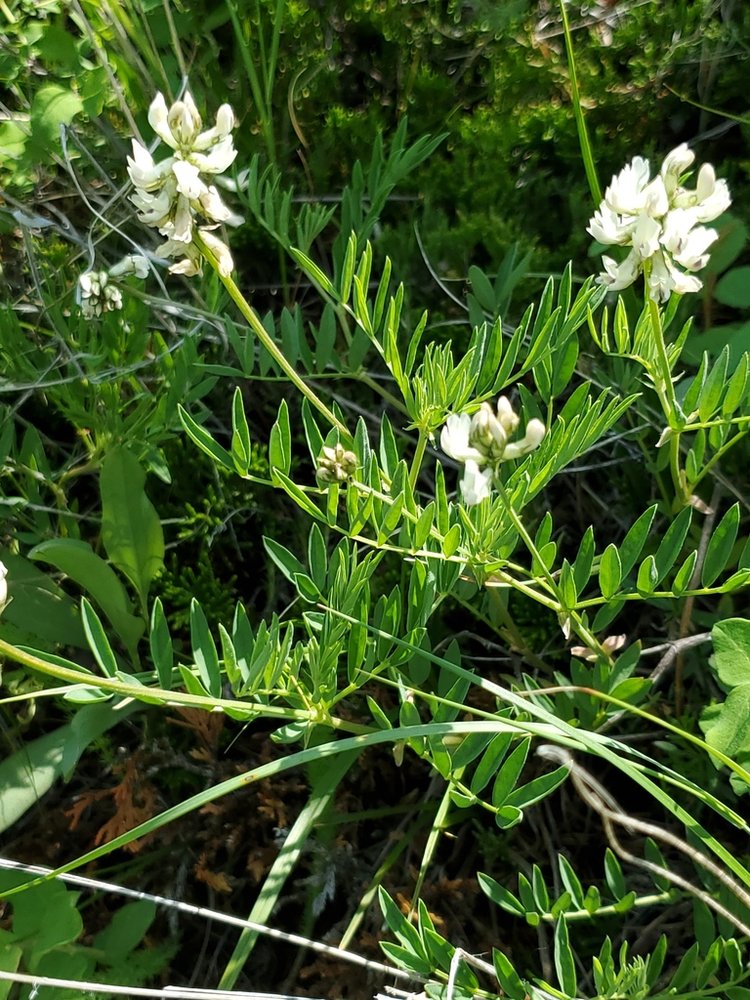
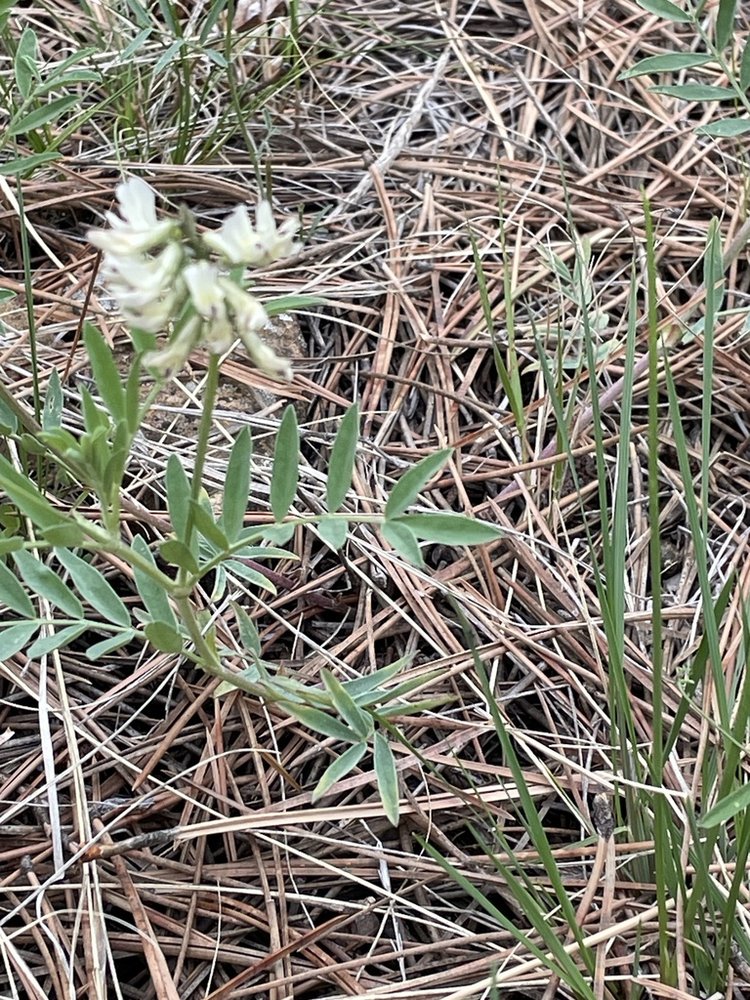
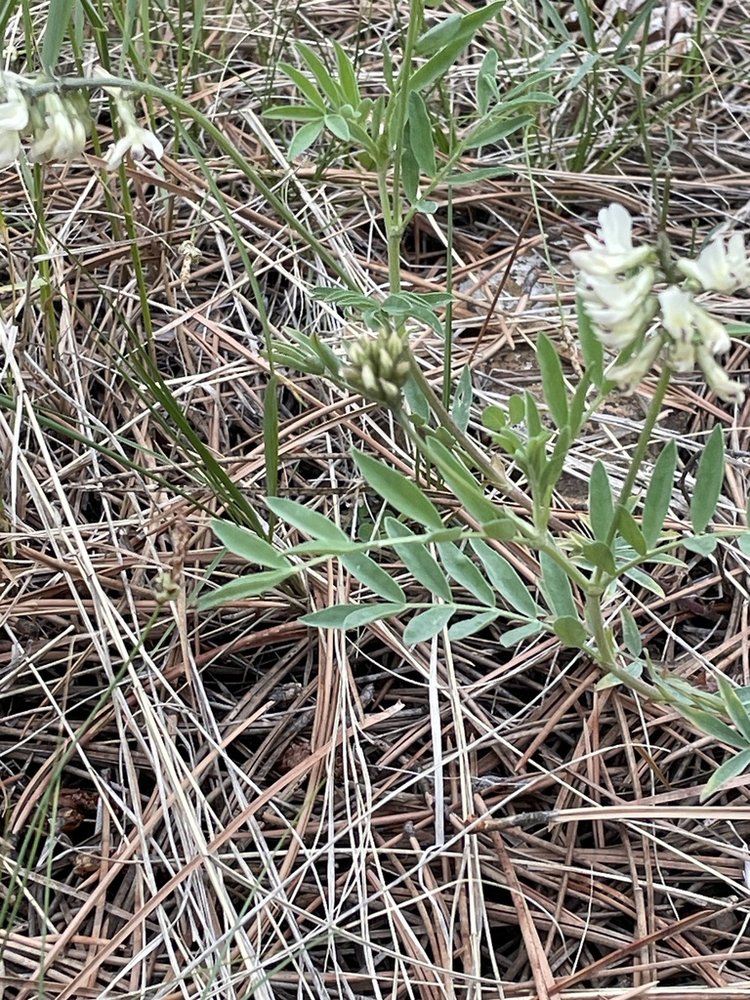
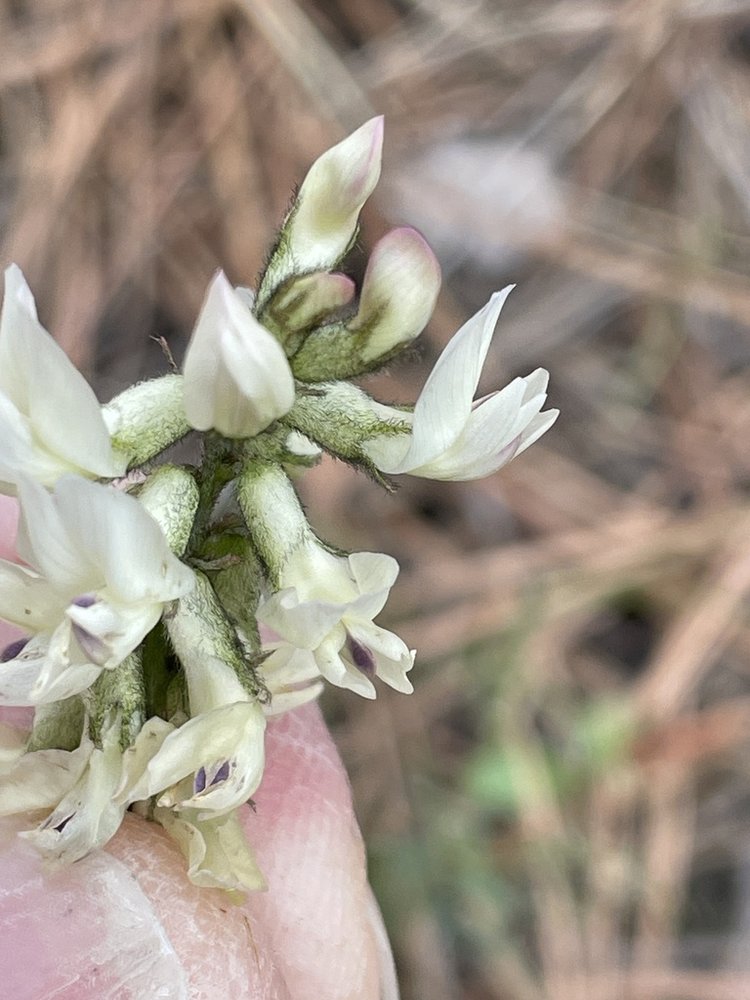
Indian Milkvetch (Astragalus australis) is a native perennial with clusters of white pea flowers whose keels (the lowest petals) are tipped with purple, on low, spreading stems with leaves of many narrow leaflets, blooming from May into July. In the Black Hills it grows in open ponderosa pine woods and on grassy ridges and slopes, and the plant lists of Jewel Cave National Monument and Mount Rushmore National Memorial record its variety glabriusculus as aboriginal milkvetch.
Free photos from other sources
| Family | Fabaceae · Pea |
|---|---|
| Status | Native perennial |
| Blooms | May into July |
| Height | 6–40 cm (2–16 in) |
| Where | Open ponderosa pine woods, grassy slopes and stony ground |
| Also called | Aboriginal Milkvetch |
| Synonym | Astragalus aboriginorum, Astragalus australis var. glabriusculus |
| Traditional use | The Lady Bird Johnson Wildflower Center says it was reputedly gathered by the Cree and the Stone First Nations as a spring vegetable. |
Roots, seeds & germination
Root: A woody taproot (E-Flora BC), with the stems spreading or rising from a branched caudex (a woody stem base at ground level) (Montana Field Guide).
Seed: The fruit is a crescent-shaped, flattened, hairless pod 1–2 cm (⅜–¾ in) long that hangs on a short stalk (Montana Field Guide).
How do you identify Indian Milkvetch?
Look for a low perennial with long, soft hairs, its stems 6–40 cm (2–16 in) long, spreading or rising from a branched woody base. Each leaf has 7 to 15 narrow leaflets 5–25 mm (¼–1 in) long, and the stipules (small leafy flaps where the leaf joins the stem) of the lower leaves are joined (Montana Field Guide; E-Flora BC). Clusters of 5 to 25 white flowers spread or droop on stalks from the leaf joints. Each flower has a calyx (the cup of sepals behind it) covered in short black hairs, an upturned banner (the upper petal) 7–10 mm (about ⅜ in) long, and a keel 5–8 mm (about ¼ in) long with a purple tip (Montana Field Guide; E-Flora BC also gives the black-haired calyx, the purple tips and flower clusters from the leaf joints). The pod is crescent-shaped, flattened from side to side, 1–2 cm (⅜–¾ in) long, hairless, and hangs on a stalk 2–8 mm (about ⅛–⅓ in) long (Montana Field Guide). The Lady Bird Johnson Wildflower Center gives the height as up to about 50 cm (20 in). Montana Field Guide says the Montana plants are variety glabriusculus, the variety the Jewel Cave and Mount Rushmore plant lists name.
When does it bloom?
May into July.
Where does it grow?
Sparsely vegetated, stony soil on grasslands and exposed slopes, from plains and valleys up to alpine ground (Montana Field Guide). The plant lists of Jewel Cave National Monument and Mount Rushmore National Memorial record it as Astragalus australis var. glabriusculus, and the 1986 survey of Jewel Cave's vegetation lists it as Astragalus aboriginum, an older spelling of a name USDA PLANTS gives as a synonym. GBIF holds 19 preserved specimens from the Black Hills counties: Lawrence 8, Custer 3 and Pennington 2 in South Dakota, and Crook 5 and Weston 1 in Wyoming, collected from 1969 to 2010, all in June, plus 6 older South Dakota sheets (1887 to 1913) labeled with Black Hills places but no county, collected in June and July. The labels give open ponderosa pine forest, a roadside cut along a creek, an open upland grassland on a ridge, a dry ridgetop of ponderosa pine and steep slopes of ponderosa pine and bur oak with bands of limestone; the 2010 specimens from Lawrence and Crook counties were collected from 5 to 8 June in flower, some already in fruit; a 2015 specimen from Bennett County, South Dakota, was in flower on 19 May. iNaturalist has 5 research-grade records from the Black Hills and its foothills, dated May to July. It isn't on South Dakota's state noxious weed list or its locally noxious (county) list, or on Wyoming's state designated weed list or weed-seed lists.
Other milkvetches and locoweeds in this guide
Compare all 12 milkvetches and locoweeds side by side
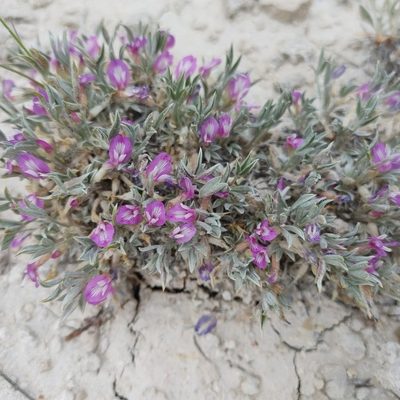
Barr's Milkvetch
Astragalus barrii
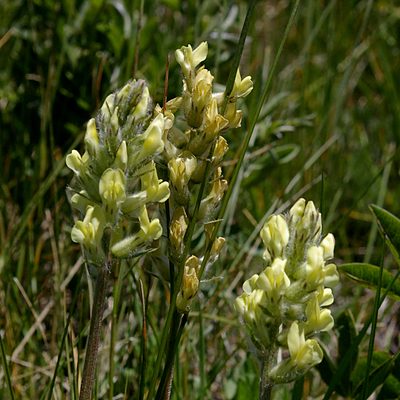
Canada Milkvetch
Astragalus canadensis
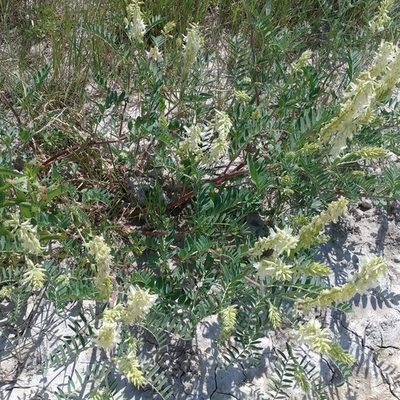
Cream Milkvetch
Astragalus racemosus
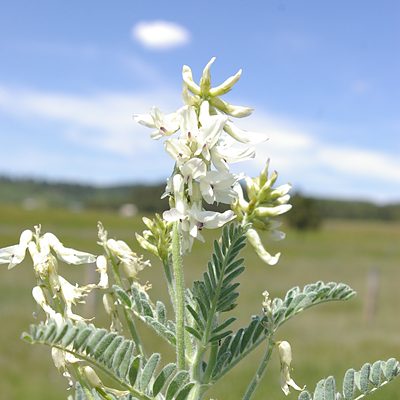
Drummond's Milkvetch
Astragalus drummondii
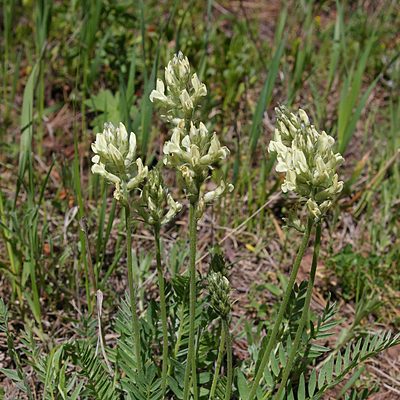
Field Locoweed
Oxytropis campestris
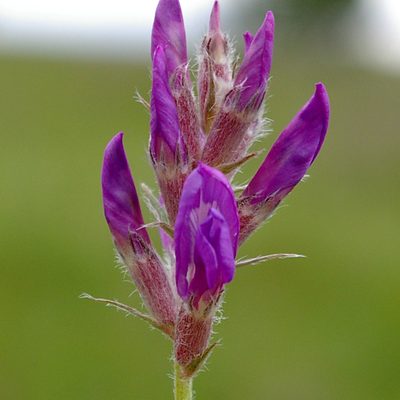
Field Milkvetch
Astragalus agrestis
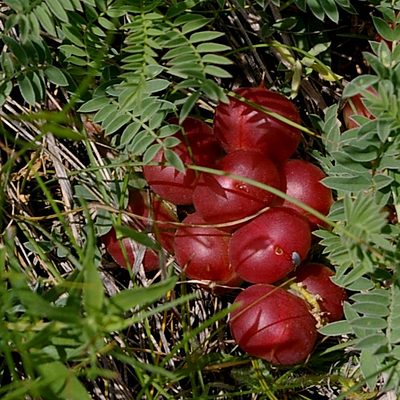
Groundplum Milkvetch
Astragalus crassicarpus
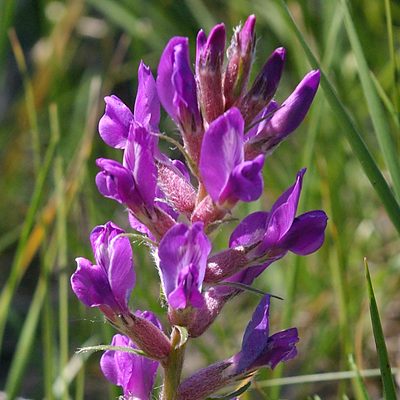
Lambert's Crazyweed
Oxytropis lambertii
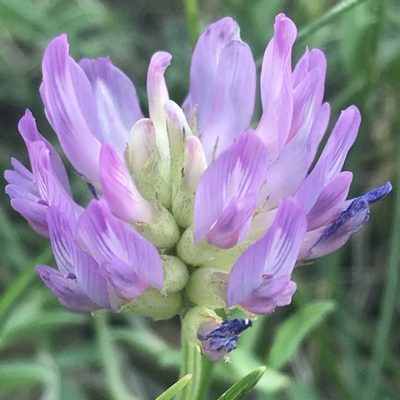
Laxmann's Milkvetch
Astragalus laxmannii var. robustior
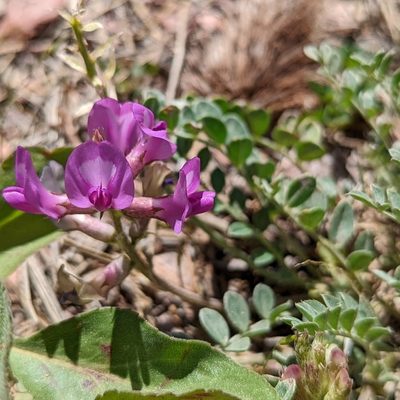
Missouri Milkvetch
Astragalus missouriensis
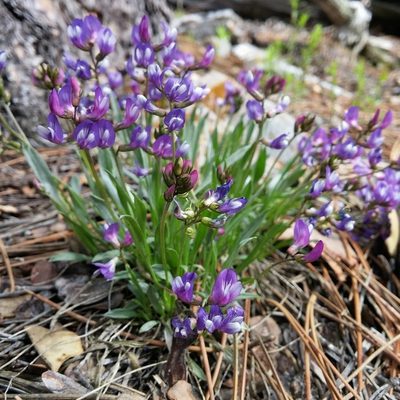
Tufted Milkvetch
Astragalus spatulatus
Pea family (Fabaceae): 31 other plants in this guide
- Alfalfa
- Alpine Sweetvetch
- American Vetch
- Barr's Milkvetch
- Black Medic
- Canada Milkvetch
- Canada Tickclover
- Cream Milkvetch
- Crown Vetch
- Drummond's Milkvetch
- Field Locoweed
- Field Milkvetch
- Golden Pea
- Groundplum Milkvetch
- Lambert's Crazyweed
- Laxmann's Milkvetch
- Lead Plant
- Missouri Milkvetch
- Pale Vetchling
- Prairie Turnip
- Purple Prairie Clover
- Red Clover
- Silktop Dalea
- Silverleaf Scurfpea
- Silvery Lupine
- Slimflower Scurfpea
- Tufted Milkvetch
- White Clover
- White Prairie Clover
- Wild Licorice
- Yellow Sweetclover
Sources: Montana Field Guide: Indian Milkvetch (Astragalus australis), citing Lesica et al. 2012, Manual of Montana Vascular Plants; E-Flora BC (University of British Columbia): Astragalus australis, from The Illustrated Flora of British Columbia; Lady Bird Johnson Wildflower Center: Astragalus australis (Indian Milkvetch); USDA PLANTS Database: Astragalus australis (ASAU4), Indian milkvetch, native in the lower 48 states; USDA PLANTS Database: synonyms of Astragalus australis (ASAU4); NPSpecies checklist, Jewel Cave National Monument (vascular plants); NPSpecies checklist, Mount Rushmore National Memorial (vascular plants); A Survey of the Vegetation of Jewel Cave National Monument (Marriott and Hartman, University of Wyoming, 1986); GBIF occurrence search: Astragalus australis, preserved specimens, South Dakota (21) and Wyoming (10); iNaturalist: Astragalus australis research-grade observations in the Black Hills; South Dakota DANR: State Noxious Weed and Pest List; South Dakota DANR: Locally Noxious Weed and Pest List (county designations, PDF); Wyoming Weed and Pest Council: Identify Weeds (state designated weeds); Wyoming rule 010-63 Wyo. Code R. 63-3: Prohibited Noxious Weeds (weed-seed list); Wyoming rule 010-63 Wyo. Code R. 63-4: Restricted Noxious Weeds (weed-seed list).