Purple Prairie Clover
Dalea purpurea
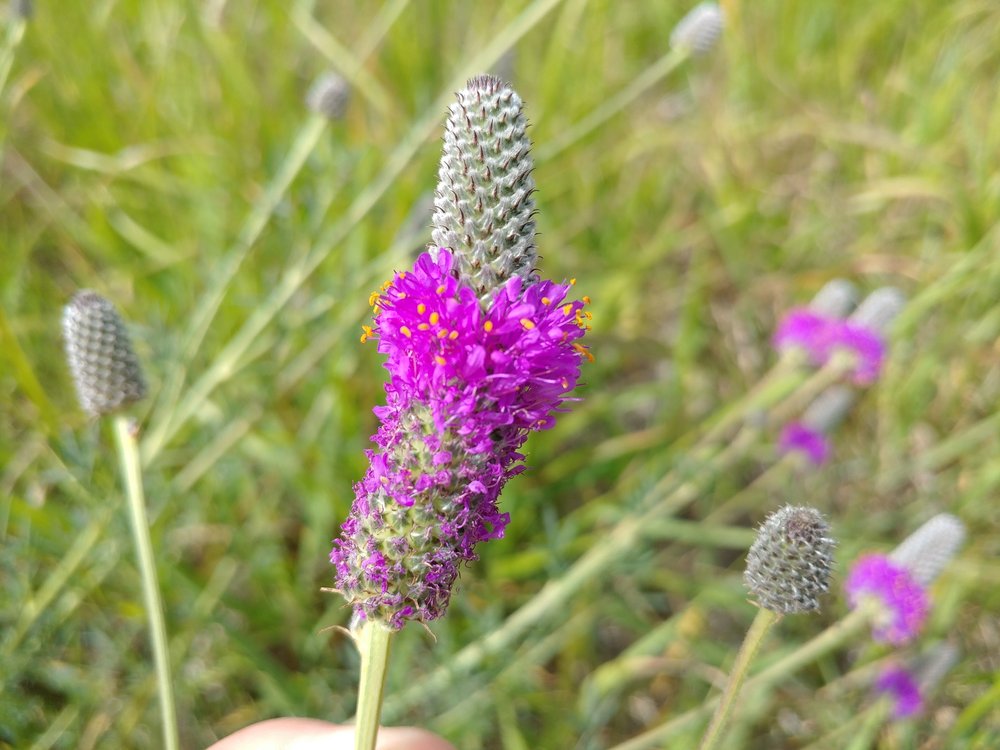
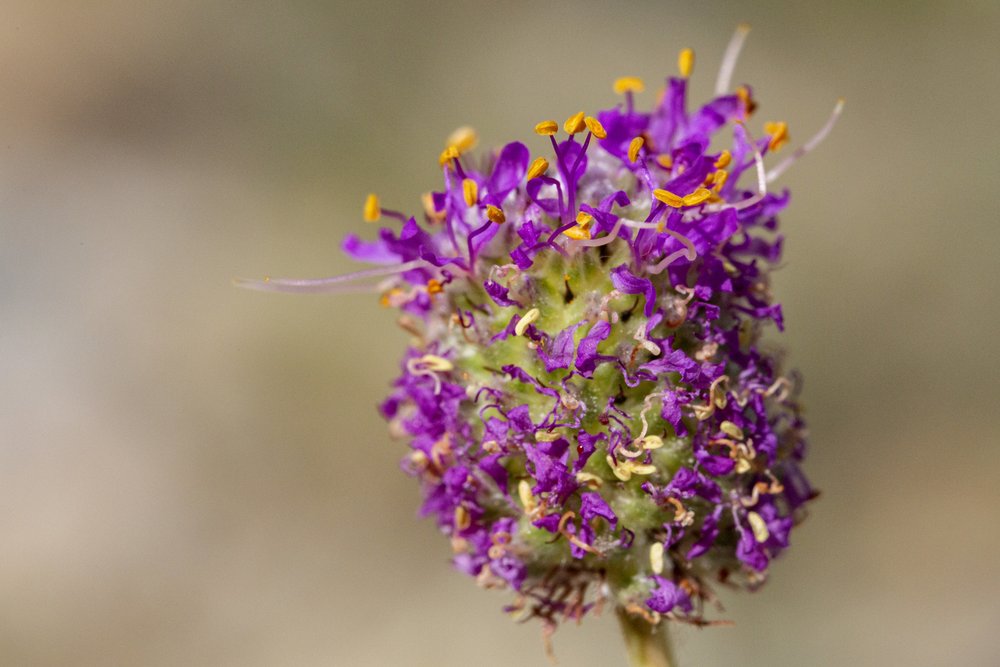
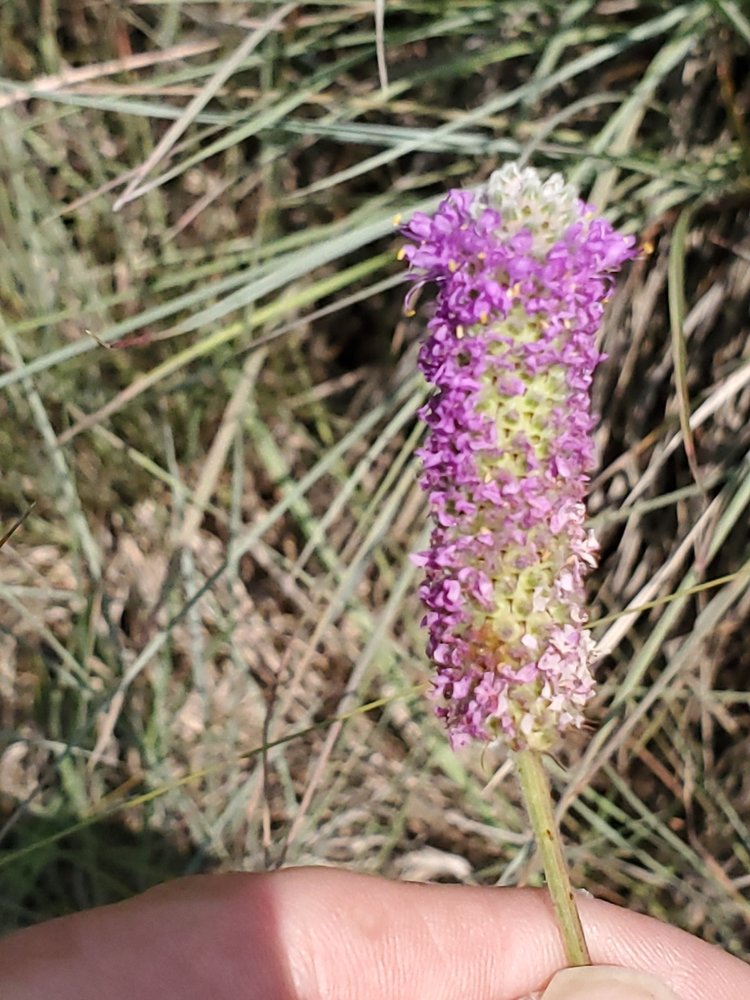
Purple Prairie Clover (Dalea purpurea) is a native perennial of the pea family with feathery leaves and thimble-shaped heads, where a ring of small magenta flowers with orange anthers opens around the bottom of the head and climbs upward. It blooms from late June into August, peaking in July, on dry, sunny prairie and open pine hillsides in the Black Hills.
Free photos from other sources
| Family | Fabaceae · Pea |
|---|---|
| Status | Native perennial |
| Blooms | Late June into August, with a few into early September |
| Height | 20–90 cm (8–36 in) |
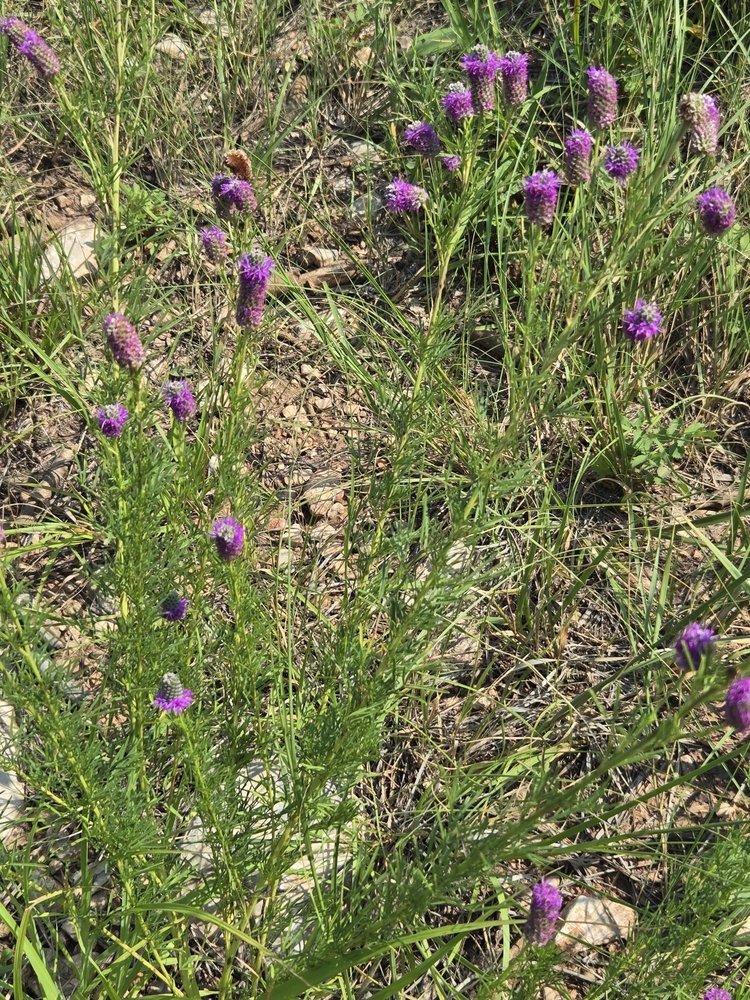
| Where | Dry, sunny prairie, grassy foothills, rocky slopes, roadsides and open pine parks |
| Also called | Violet Prairie Clover, Purple Prairieclover, Violet Dalea, Red Tassel Flower, Thimbleweed, tȟokȟála tȟapȟéžuta hú wíŋyela (Lakota) |
| Synonym | Petalostemon purpureum, Petalostemon purpureus, Petalostemon mollis, Petalostemon violaceus, Kuhnistera purpurea, Dalea violacea, Psoralea purpurea |
| Toxicity | It may cause bloat in grazing livestock. |
| Traditional use | Sitting Bull College's 1998 Culturally Important Plants of the Lakota says the Lakota chewed the peeled roots for their sweetness, and made a leaf tea for diarrhea, a leaf-and-flower tea for heart trouble and a root decoction for measles. Gilmore (1919) adds that the Pawnee made brooms from the tough stems. |
Roots, seeds & germination
Root: A deep, woody taproot that can reach about 2 m (6.5 ft), with side roots in the top 30 cm (1 ft), under a woody crown that sends up the stems each year. Like other legumes it carries nitrogen-fixing bacteria in root nodules, and the deep root makes it drought-tolerant.
Seed: Each tiny flower makes a one-seeded pod about 2–2.5 mm long inside the hairy calyx, holding a yellowish-green to brown seed 1.5–2 mm long. Seed ripens in July and August, when the heads turn brown.
Germination: Much of the seed is hard-coated, so it germinates poorly unless scarified, for example rubbed lightly between sheets of sandpaper. SDSU says seed sprouts from fall or spring sowing once the papery fruit is removed. Seed stores well: a USDA lot kept cool and dry still germinated 77% after 26 years.
How do you identify Purple Prairie Clover?
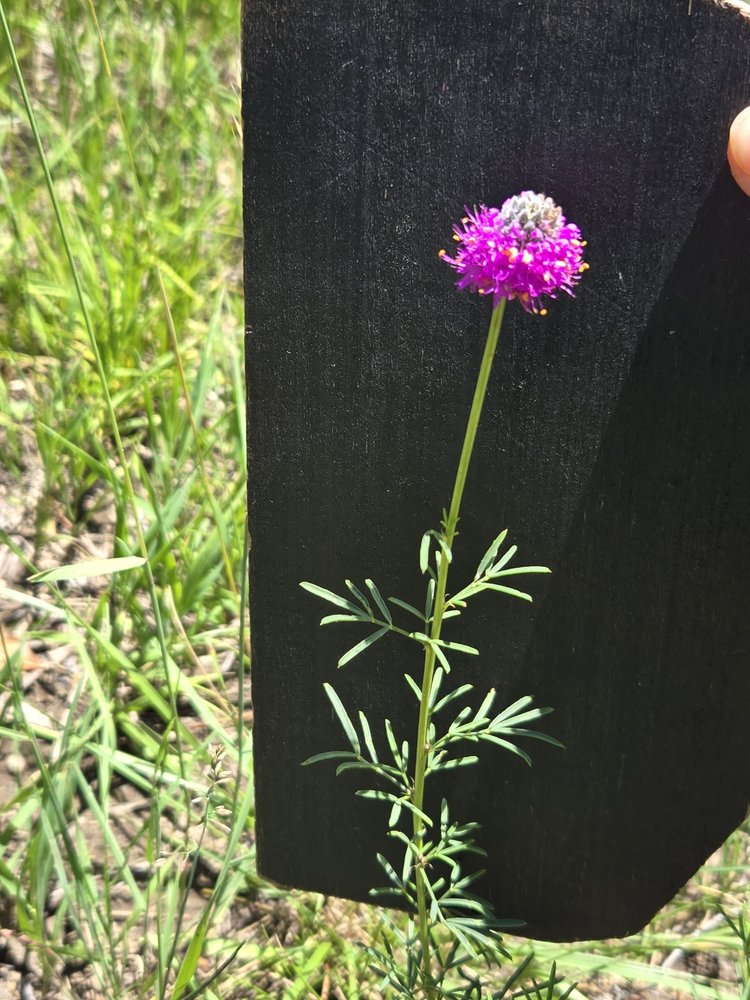
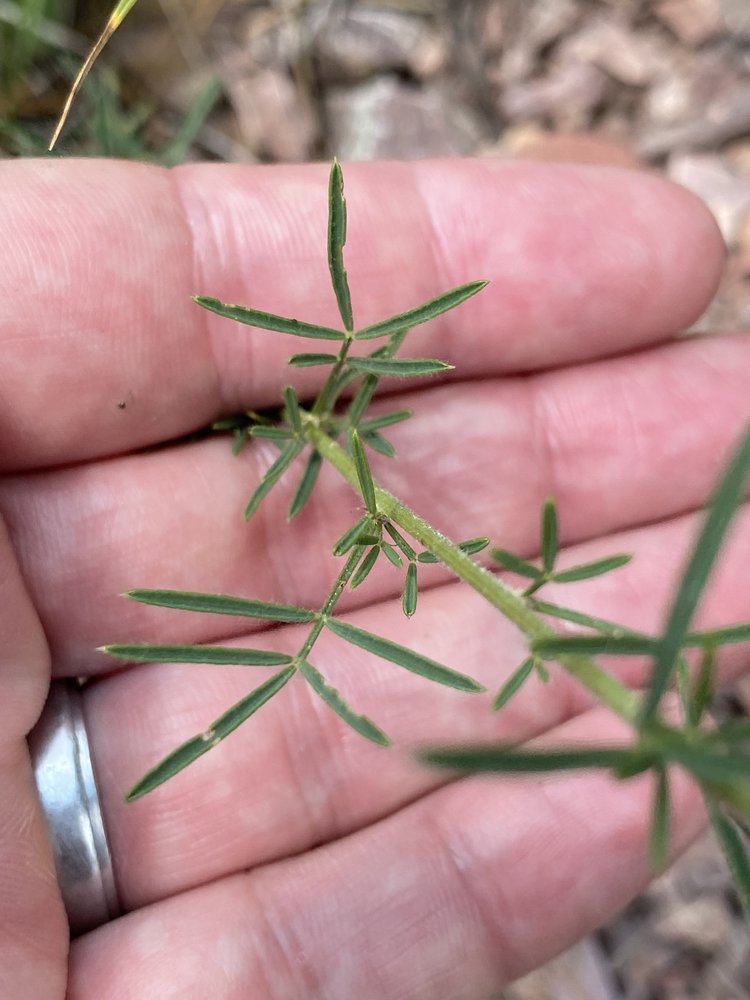
Look for a dense, thimble-shaped head 1–6 cm (½–2½ in) long on top of each stiff stem, where tiny rose-purple to magenta flowers with orange-tipped stamens open in a ring around the bottom first. The ring climbs as the season goes on, leaving faded flowers below and gray, woolly buds above. Each leaf has 3–7, usually 5, almost needle-like leaflets under 2 mm wide with in-rolled edges, which give the plant a fine, feathery look. White Prairie Clover has the same heads and climbing ring but white flowers and broader, flat leaflets, and it blooms a few weeks earlier. Brown, cylinder-shaped seed heads stay on into fall.
When does it bloom?
Late June into August, with a few into early September.
Where does it grow?
Dry to medium, well-drained prairie in full sun, including rocky hillsides, grassy foothills, open pine parks and roadsides. It does best on limy soils and declines where pastures are overgrazed, because livestock eat it eagerly. The 1986 Jewel Cave survey lists it as Petalostemon purpureum, National Park Service lists record it at Wind Cave, Jewel Cave, Mount Rushmore and Devils Tower, and herbarium specimens come from all seven Black Hills counties.
Other flowers to compare
Sources: Marriott and Hartman 1986, A Survey of the Vegetation of Jewel Cave National Monument; NPS, Mount Rushmore National Memorial: Wildflowers; NPSpecies checklist, Wind Cave National Park vascular plants; NPSpecies checklist, Jewel Cave National Monument vascular plants; NPSpecies checklist, Mount Rushmore National Memorial vascular plants; NPSpecies checklist, Devils Tower National Monument vascular plants; Culturally Important Plants of the Lakota (Black Elk and Flying By, Sitting Bull College, 1998), filed with the South Dakota PUC; Gilmore 1919, Uses of Plants by the Indians of the Missouri River Region (Internet Archive); USDA NRCS Plant Guide: Purple Prairie Clover, Dalea purpurea; USDA PLANTS Database: Dalea purpurea (DAPU5); SDSU Open PRAIRIE: Fabaceae: Dalea purpurea (R. Neil Reese); SDSU Extension: Prairie Clovers of South Dakota; Minnesota Wildflowers: Dalea purpurea (Purple Prairie Clover); Minnesota Wildflowers: Dalea candida (White Prairie Clover); Kansas Wildflowers and Grasses: Purple Prairie Clover; Prairie Moon Nursery: Dalea purpurea; ITIS: Dalea purpurea Vent. (TSN 26642); Plants of the World Online (Kew): Dalea purpurea Vent.; GBIF occurrence search: Dalea purpurea, preserved specimens, South Dakota; iNaturalist: Dalea purpurea research-grade observations near the Black Hills; Wikipedia: Dalea purpurea (synonyms, pollinators).