Dotted Gayfeather
Liatris punctata
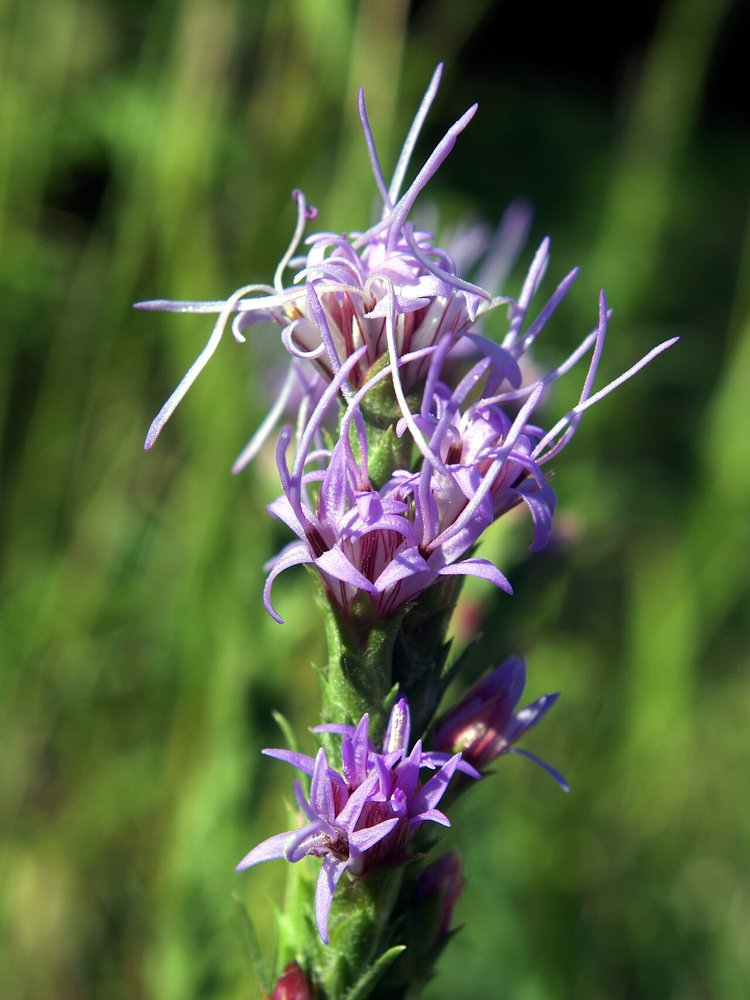
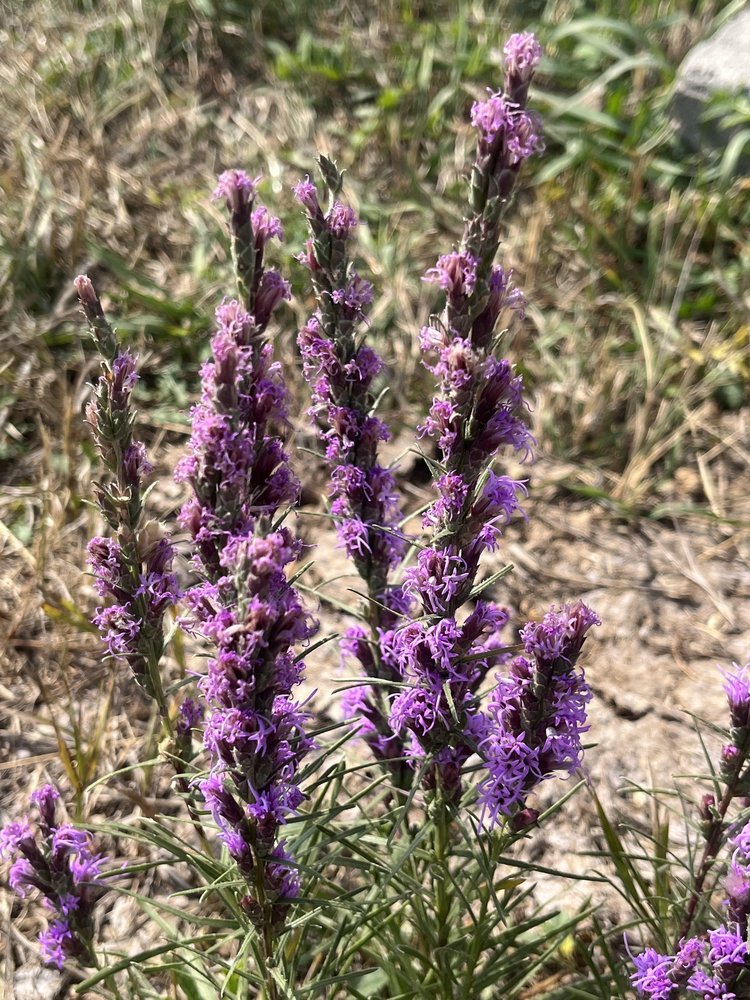
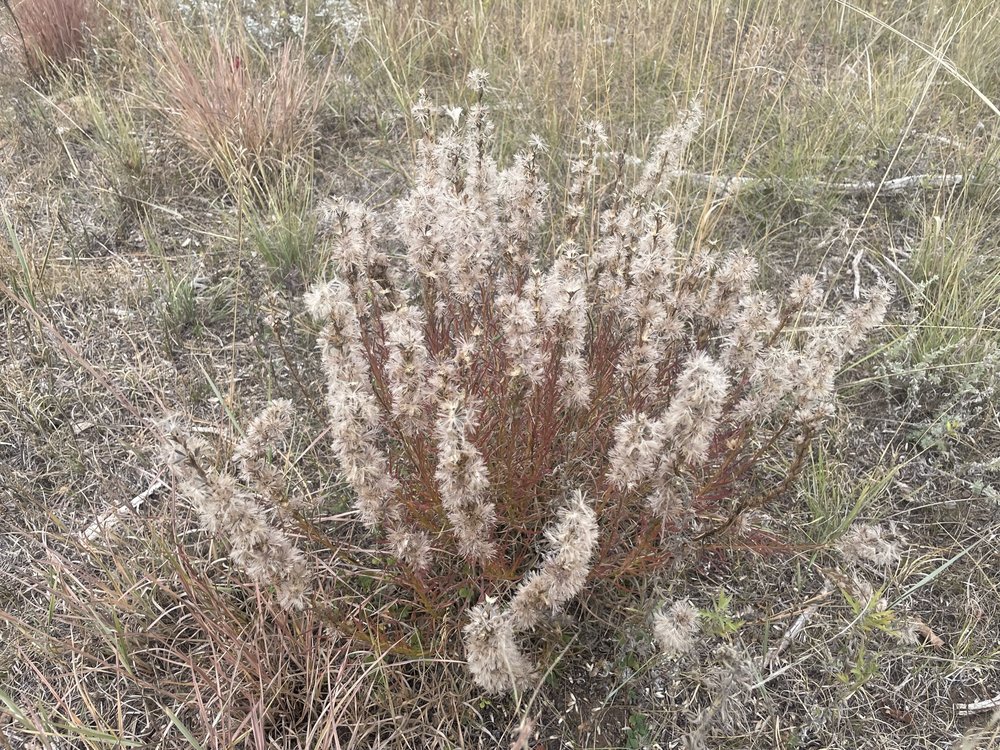
Dotted Gayfeather (Liatris punctata), also called Dotted Blazing Star, is a native perennial of the aster family whose stiff, leafy stems end in dense spikes of small rose-purple flower heads that open from the top down. It blooms in late summer, mostly in August, on dry, open prairie, rocky slopes and grassy pine openings throughout the Black Hills foothills and lower Hills.
Free photos from other sources
| Family | Asteraceae · Aster |
|---|---|
| Status | Native perennial |
| Blooms | Late July into September, peaking in August |
| Height | 15–85 cm (6–33 in) |
| Where | Dry, open prairie, rocky slopes and ridges, and grassy openings in ponderosa pine |
| Also called | Dotted Blazing Star, Blazing Star, Plains Gayfeather, Nebraska Blazing Star, Button Snakeroot, tȟatéte čhaŋnúŋǧa (Lakota) |
| Synonym | Lacinaria punctata, Liatris punctata var. nebraskana, Liatris densispicata, Liatris punctata var. coloradensis |
| Traditional use | Sitting Bull College's 1998 Culturally Important Plants of the Lakota says the pounded roots were eaten to improve the appetite and in times of famine, gathered in early spring before they turn woody. |
Roots, seeds & germination
Root: A woody, corm-like crown sits on a very deep taproot. Prairie root studies cited by USDA found the roots fill the top 2.5 m (8 ft) of soil and sometimes reach 5 m (16 ft), which helps the plant stay green through drought.
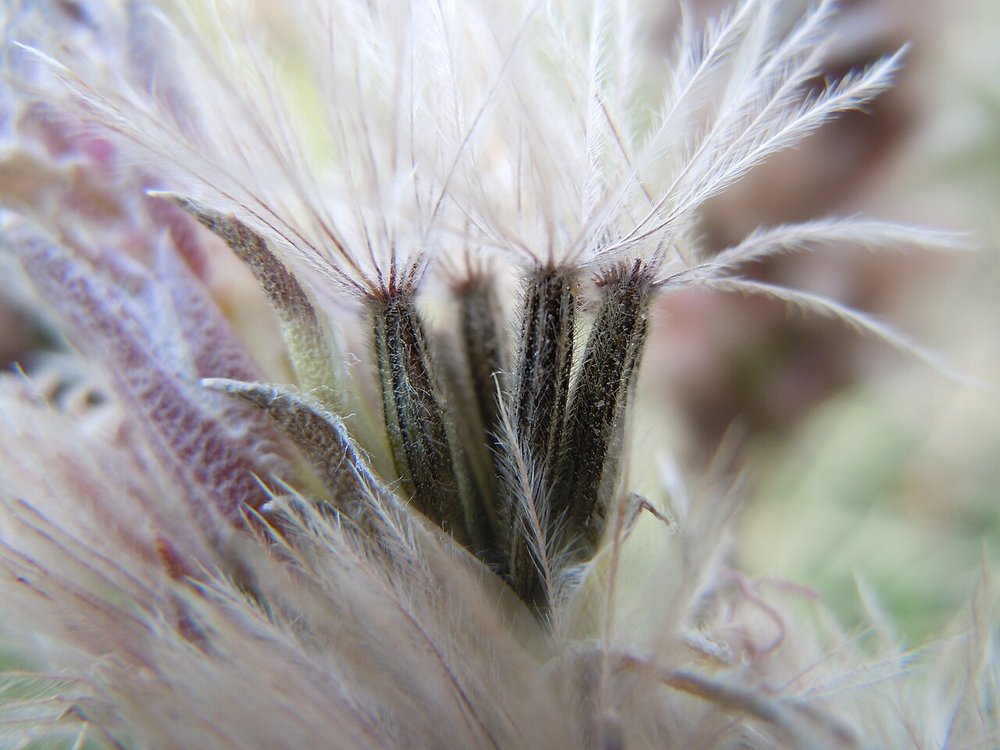
Seed: Each head ripens 4–8 slender, ten-ribbed, dark achenes 6–8.5 mm (¼–⅓ in) long, each with a tuft of feathery tan bristles that carries it on the wind. They ripen from late summer into fall, when the heads turn brown.
Germination: The seed needs a cold, moist period to sprout reliably: SDSU recommends 60 days of cold, moist stratification or sowing in fall, and a Nebraska study cited by USDA got 96% germination after two weeks of moist chilling. Seedlings put their energy into roots first, so a midsummer seedling only 12 cm (5 in) tall may already have a taproot about 1 m (3 ft) long.
How do you identify Dotted Gayfeather?
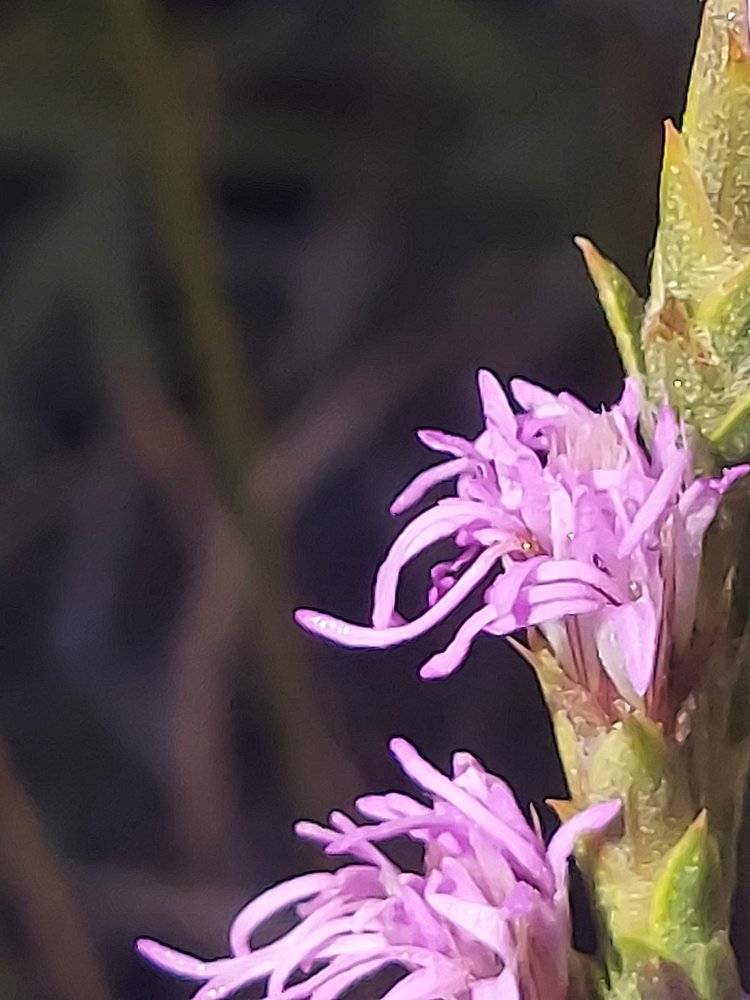
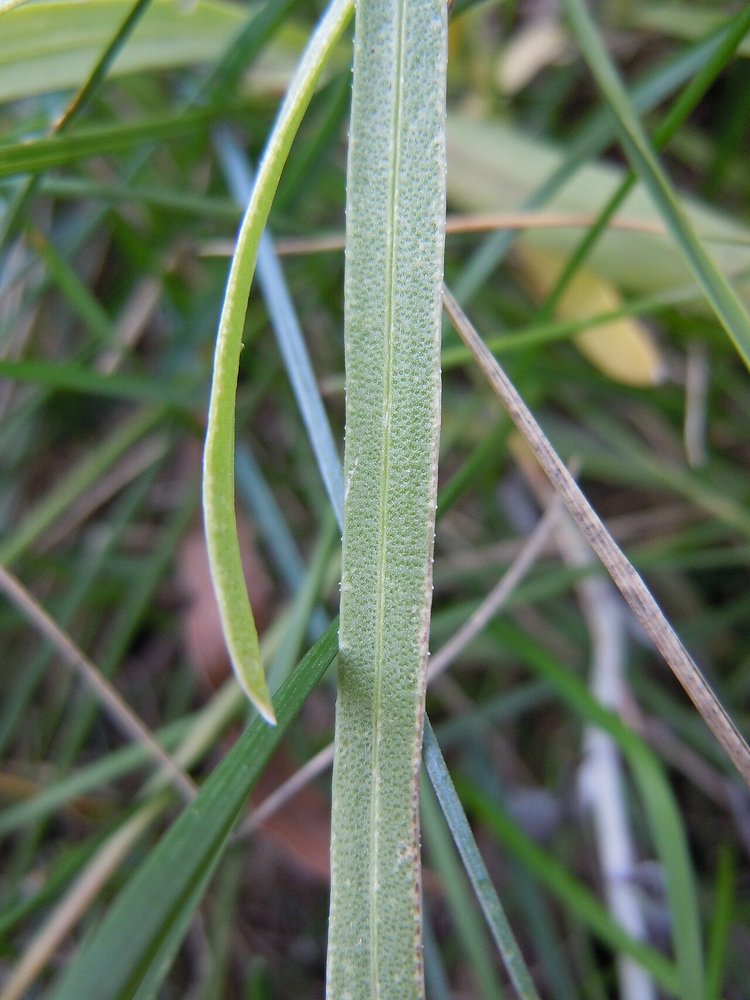
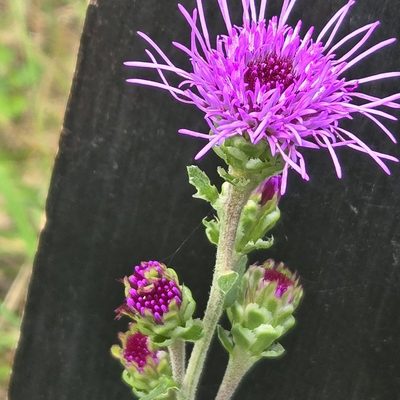
Look for a tight clump of stiff stems, each topped by a dense spike of small, stalkless, rose-purple heads packed so closely they hide the stem. Each head is only 1–2 cm (½–¾ in) tall with 4–8 florets, and its green bracts overlap like shingles and end in sharp points. The many narrow, grass-like leaves, 1–5 mm wide, carry tiny resin dots you can see against the light. Rocky Mountain Blazing Star has fewer, much bigger and rounder heads, mostly on short stalks, with rounded bracts edged in papery purple. After bloom the spikes turn into tan, fluffy columns of seed that stand into fall.
When does it bloom?
Late July into September, peaking in August.
Where does it grow?
Dry, open, well-drained ground in full sun: mixed-grass prairie, rocky and gravelly slopes and ridges, roadsides and grassy openings in ponderosa pine, on granite, limestone and sandstone soils. It is common throughout the foothills and the lower and middle Hills. The 1986 Jewel Cave survey lists it, National Park Service lists record it at Wind Cave, Jewel Cave, Mount Rushmore and Devils Tower, and about 135 herbarium specimens come from the Black Hills area.
Other flowers to compare
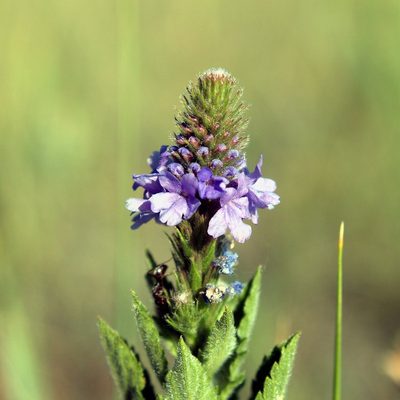


Sources: NPSpecies checklist, Wind Cave National Park vascular plants; NPSpecies checklist, Jewel Cave National Monument vascular plants; NPSpecies checklist, Devils Tower National Monument vascular plants; NPSpecies checklist, Mount Rushmore National Memorial vascular plants; Marriott and Hartman 1986, A Survey of the Vegetation of Jewel Cave National Monument; GBIF occurrence search: Liatris punctata herbarium specimens, Black Hills area; iNaturalist: Liatris punctata research-grade observations near the Black Hills; Flora of North America Vol. 21: Liatris punctata; Flora of North America Vol. 21: Liatris punctata var. punctata; Flora of North America Vol. 21: Liatris ligulistylis; USDA NRCS Plant Guide: Dotted Gayfeather, Liatris punctata (Wynia, Manhattan PMC); USDA PLANTS Database: Liatris punctata (LIPU); SDSU Open PRAIRIE: Asteraceae: Liatris punctata (R. Neil Reese); Culturally Important Plants of the Lakota (Black Elk and Flying By, Sitting Bull College, 1998), filed with the South Dakota PUC; Native American Ethnobotany Database (BRIT): Liatris punctata; Gilmore 1919, Uses of Plants by the Indians of the Missouri River Region (Internet Archive); Kansas Wildflowers and Grasses: Dotted Gayfeather; Minnesota Wildflowers: Northern Plains Blazing Star (Liatris ligulistylis); Minnesota Board of Water and Soil Resources, Featured Plant: Dotted Blazing Star (Feb. 2021).