Rocky Mountain Blazing Star
Liatris ligulistylis
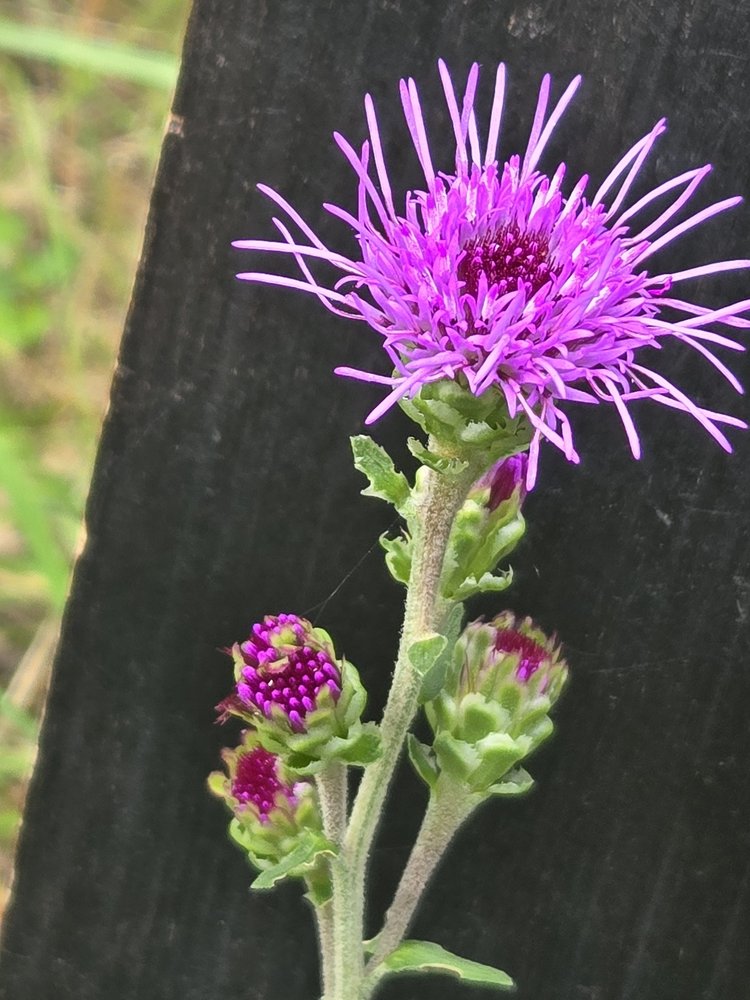
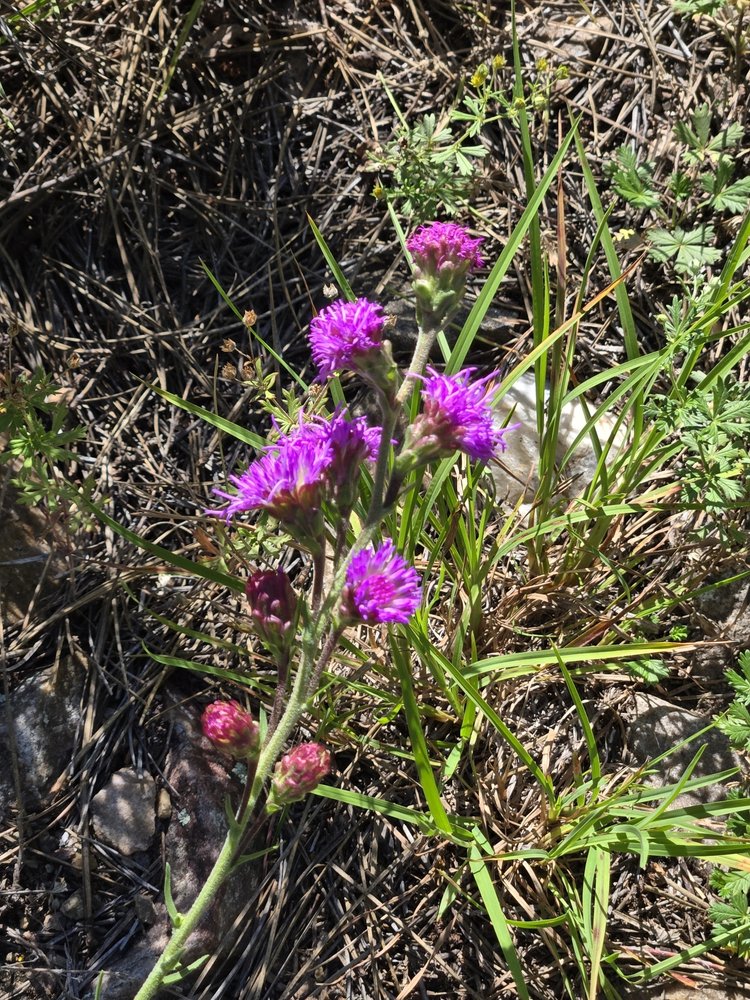
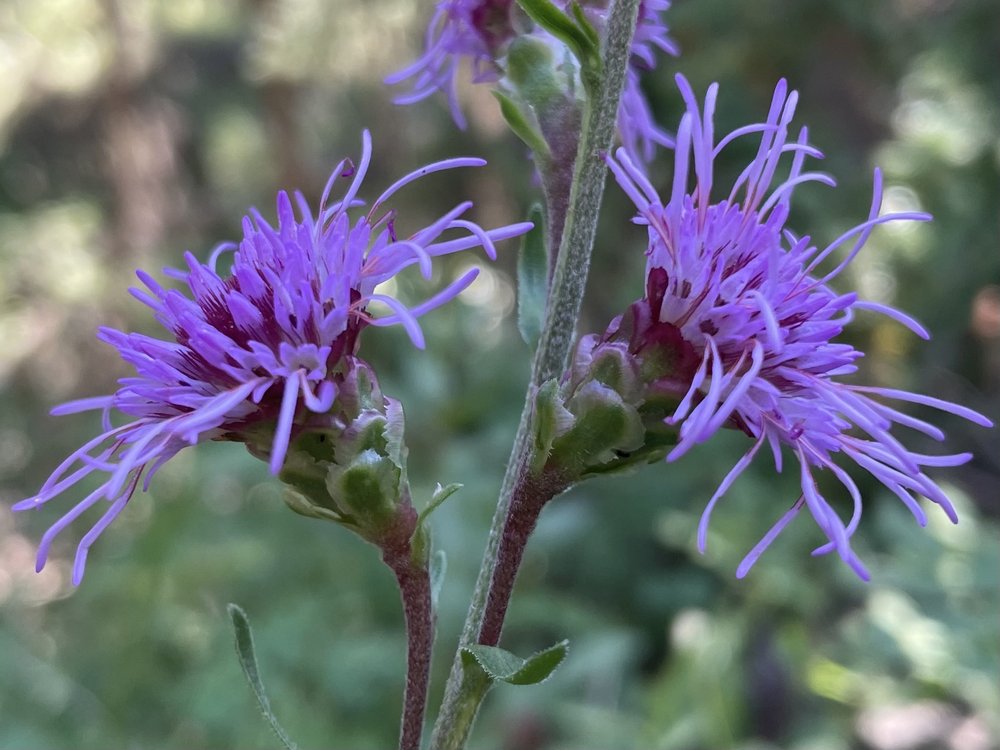
Rocky Mountain Blazing Star (Liatris ligulistylis), also called Meadow Blazing Star, is a native perennial of the aster family with a loose row of a few large, round, purple flower heads on short stalks along each stem. It blooms from late July into September in open pine woods, meadows and grassy hillsides, mostly in the central and northern Black Hills.
Free photos from other sources
| Family | Asteraceae · Aster |
|---|---|
| Status | Native perennial |
| Blooms | Late July into September, peaking in August |
| Height | 20–100 cm (8–39 in) |
| Where | Open pine woods, grassy hillsides, meadows and creek banks, mostly in the central and northern Hills |
| Also called | Meadow Blazing Star, Northern Plains Blazing Star, Northern Plains Gayfeather, Rocky Mountain Gayfeather, Strap-style Gayfeather, Showy Gayfeathers |
| Synonym | Lacinaria ligulistylis |
Roots, seeds & germination
Root: A roundish, often knobby corm (a swollen underground stem base) with a dense mass of fibrous roots.
Seed: Each seed is an achene 5–7 mm (about ¼ in) long, topped with a tuft of light brown, finely barbed bristles that carry it on the wind. Goldfinches and other birds eat the seeds in fall.
Germination: The seeds need about two months of cold, moist conditions before they sprout, so they are sown outdoors in fall or kept cold and damp for 60 days. Seedlings look like grass blades with a distinct central line, and plants usually flower in their second or third year.
How do you identify Rocky Mountain Blazing Star?
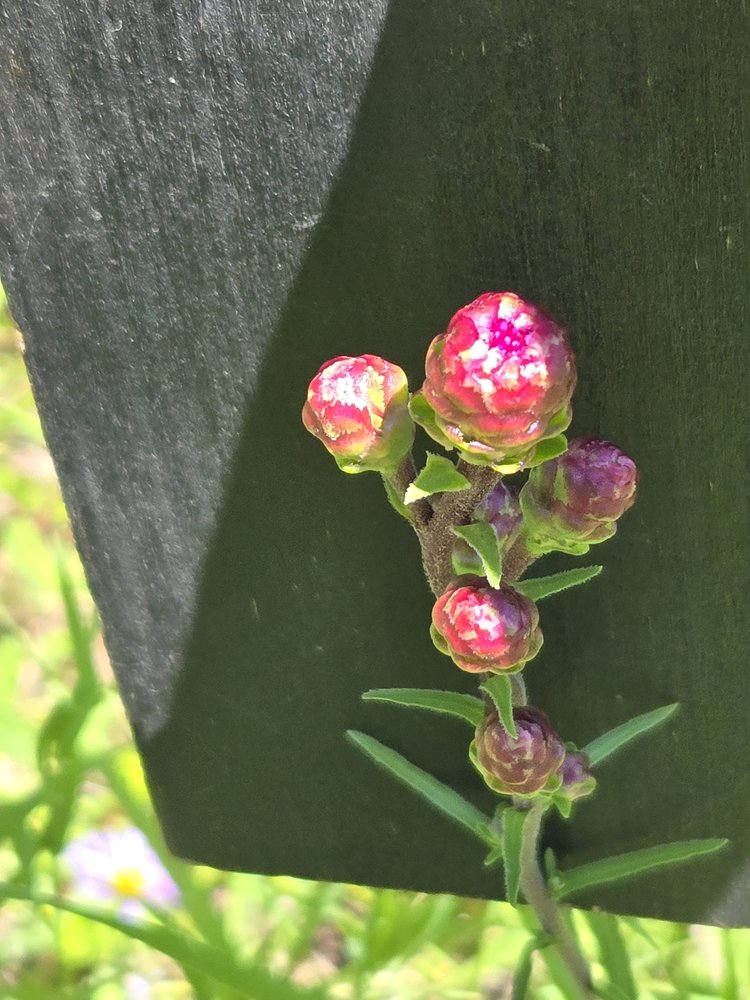
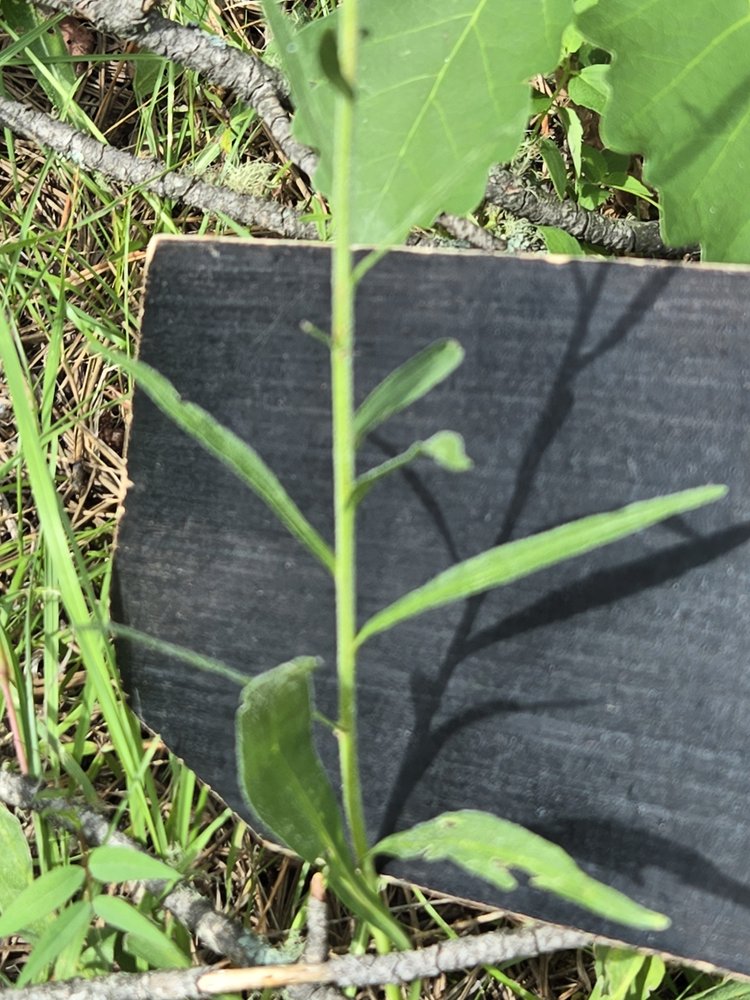
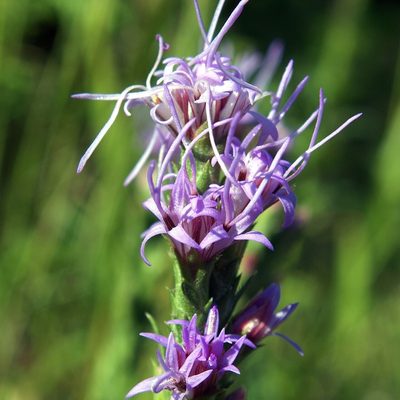
Look for a few large, round heads, usually 3–10, spaced along the top of a single, often reddish, finely hairy stem, most of them on short stalks so you can see stem between them. Each head is about 2–2.5 cm (¾–1 in) across, with 30–70 or more rose-purple florets and long, thread-like styles that give it a shaggy look. The bracts around the head are broad and rounded, with a thin, papery, often purple, ragged edge. Dotted Gayfeather is usually shorter, 30–60 cm (1–2 ft), tolerates drier, sandier soil, and has narrower, resin-dotted leaves and bracts with long white hairs that lie flat against the head.
When does it bloom?
Late July into September, peaking in August.
Where does it grow?
Moist to average soil in sun: prairies, meadows, stream banks, roadsides and ditches, and clearings in aspen and pine woods. Black Hills herbarium specimens, from about 1,250 to 2,070 m (4,100–6,800 ft), come mostly from open ponderosa pine woods and grassy hillsides, often on dry, rocky or granite-gravel soil, and from meadows and creek banks, in the central and northern Hills and the Bear Lodge Mountains. The 1986 Jewel Cave survey lists it as showy gayfeathers, Jewel Cave's wildflower page features it, and the National Park Service lists it at Mount Rushmore.
Other flowers to compare
Sources: Wildflowers, Jewel Cave National Monument (National Park Service); Marriott and Hartman 1986, A Survey of the Vegetation of Jewel Cave National Monument; NPSpecies checklist, Jewel Cave National Monument vascular plants; NPSpecies checklist, Mount Rushmore National Memorial vascular plants; GBIF occurrence search: Liatris ligulistylis, Black Hills area; iNaturalist: Liatris ligulistylis research-grade observations near the Black Hills; Flora of North America Vol. 21: Liatris ligulistylis; USDA PLANTS Database: Liatris ligulistylis, Rocky Mountain blazing star (LILI); Xerces Society, Monarch Nectar Plants: Northern Plains (2017); Monarch Joint Venture, 10 favorite fall blooms (2025); Minnesota Board of Water and Soil Resources, Featured Plant: Meadow Blazing Star (Sept. 2019); Minnesota Wildflowers: Northern Plains Blazing Star (Liatris ligulistylis); Prairie Moon Nursery: Liatris ligulistylis, Meadow Blazing Star; Wild Ones Front Range: Liatris ligulistylus propagation sheet.