Hoary Vervain
Verbena stricta
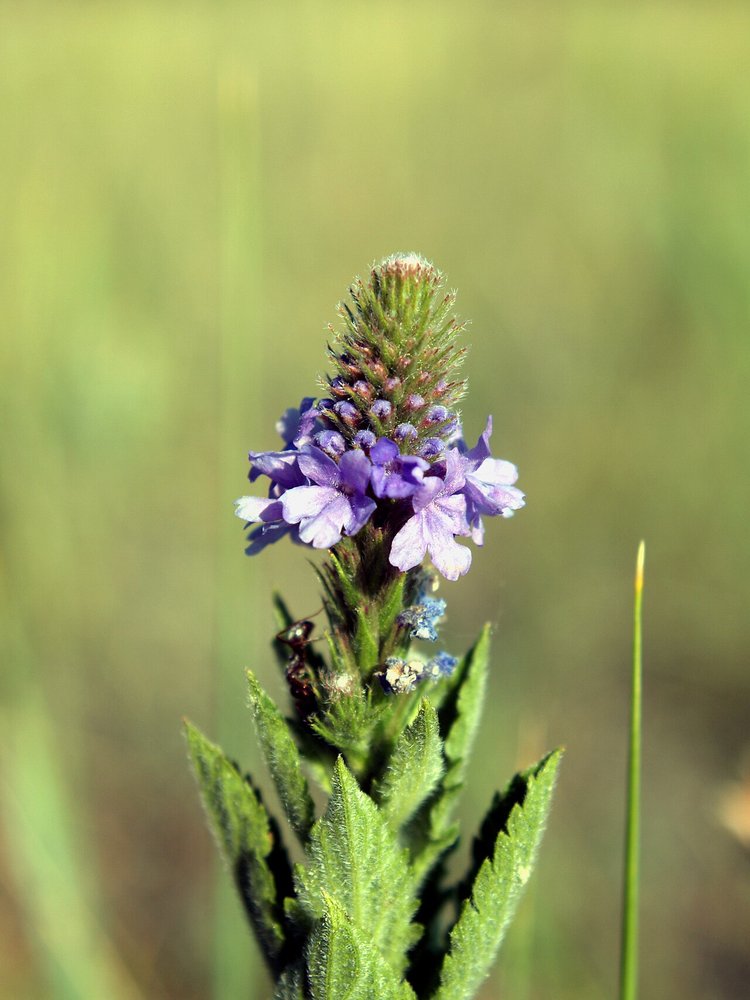
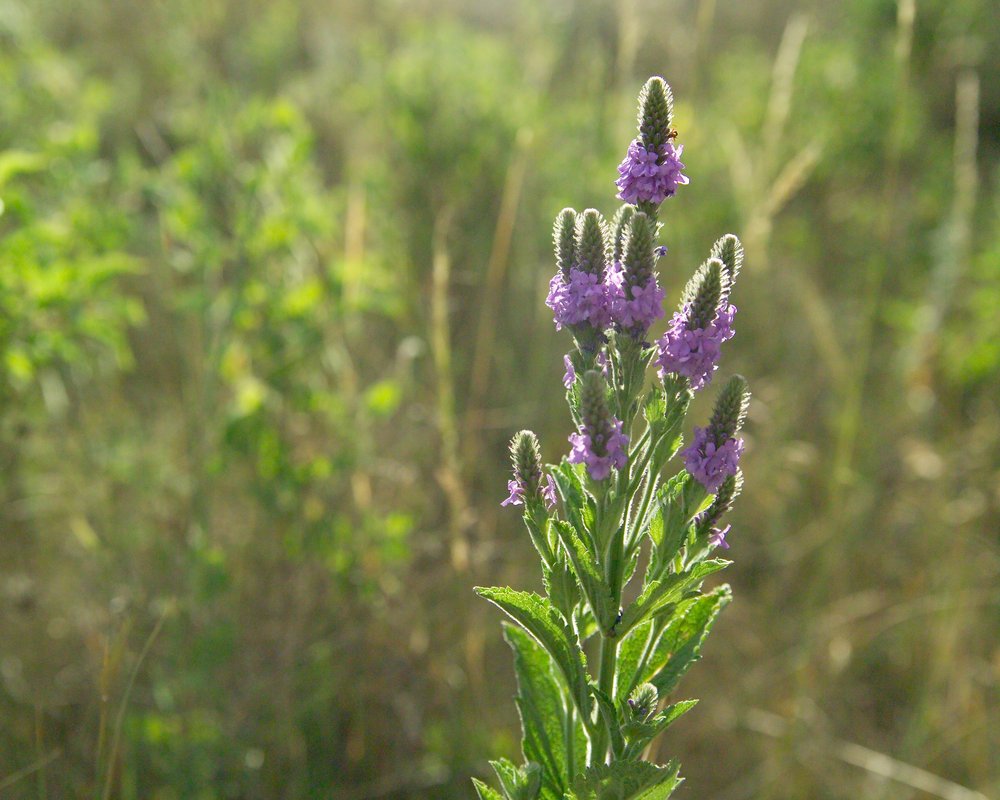
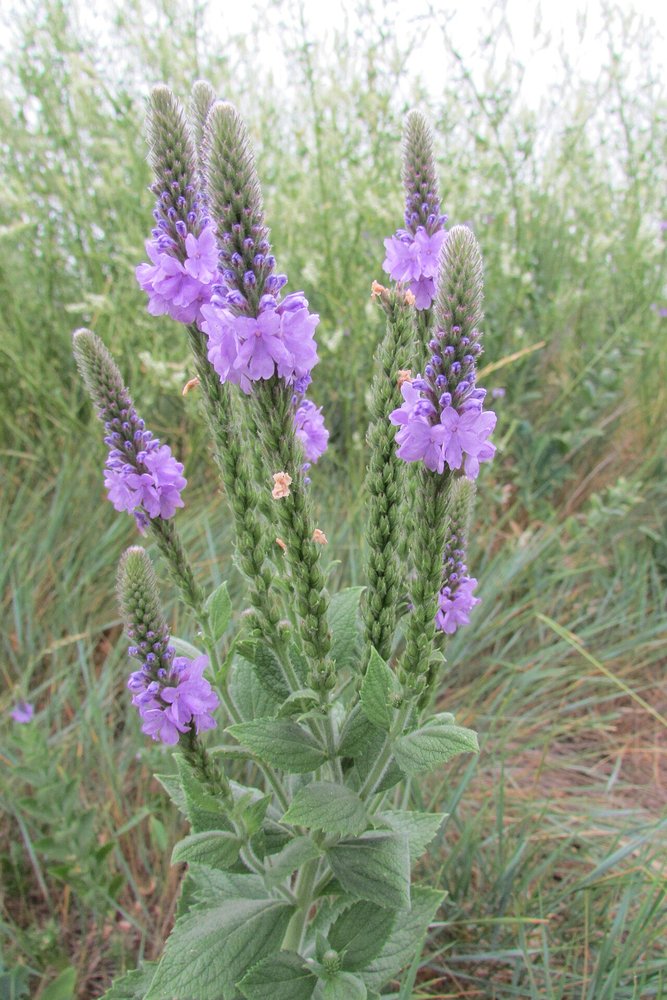
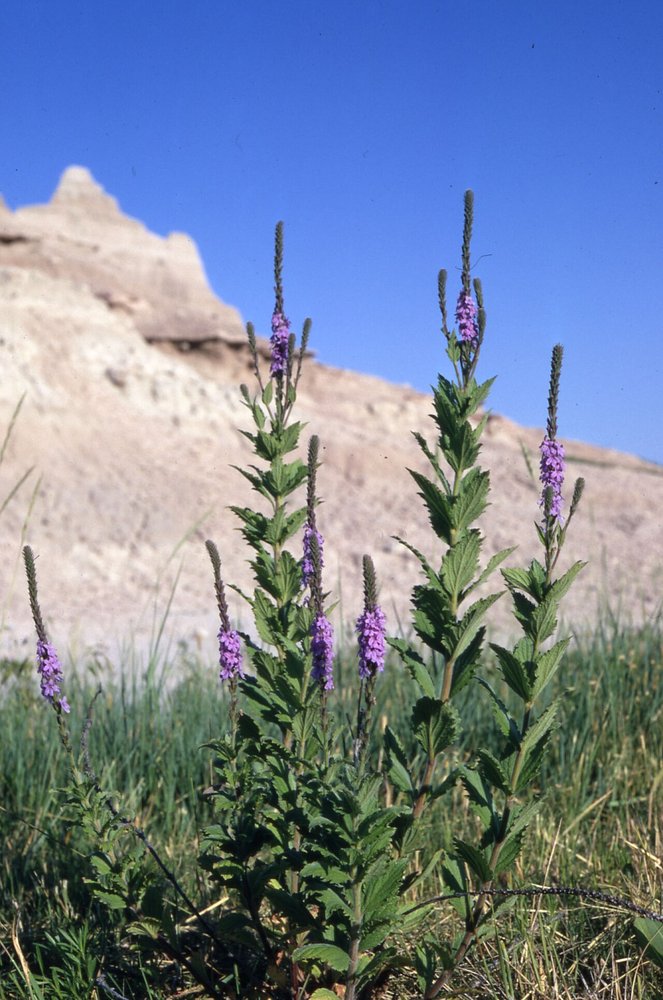
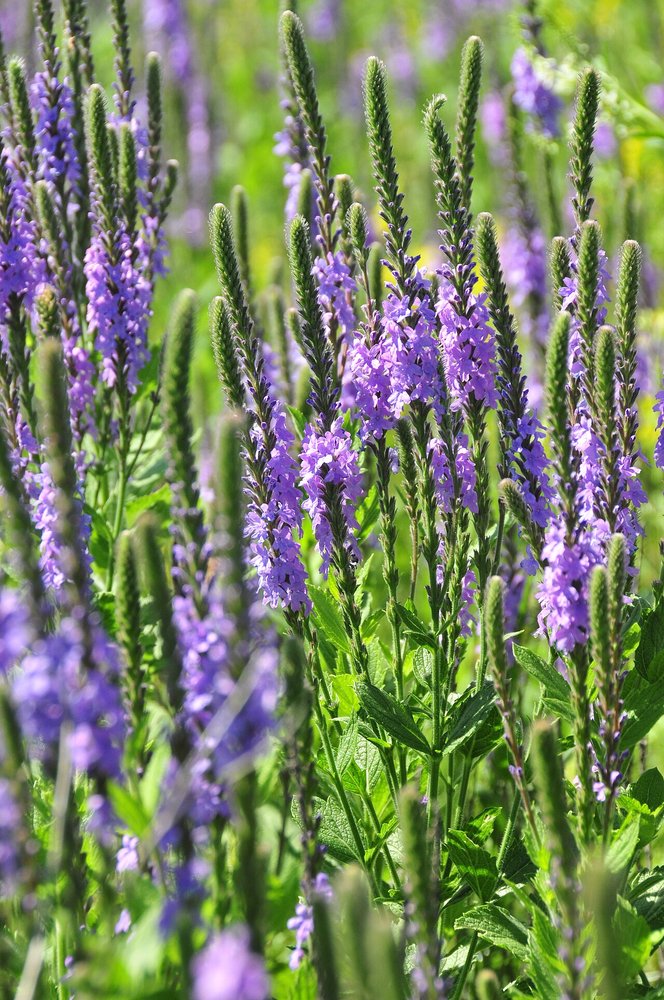
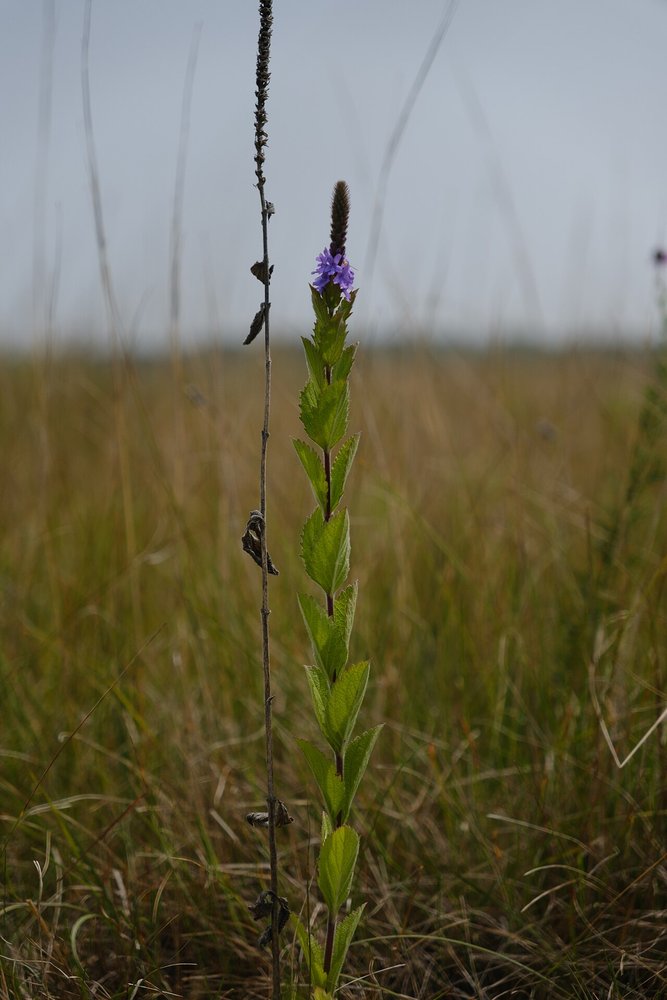
Hoary Vervain (Verbena stricta), also called Woolly Verbena, is a native perennial of the vervain family with stiff, gray-green, fuzzy stems that end in long, pencil-thin spikes. A ring of small purple flowers climbs each spike from June into September, and in the Black Hills it grows on dry, open ground around the foothills, in lower canyons and in open parks.
Free photos from other sources
| Family | Verbenaceae · Vervain |
|---|---|
| Status | Native perennial |
| Blooms | June into September, peaking in July and August |
| Height | 20–120 cm (8–47 in) |
| Where | Dry, open prairie, pastures, roadsides and disturbed ground in the foothills and open parks |
| Also called | Woolly Verbena, Woolly Vervain, Hoary Verbena, Tall Vervain, Hairy Verbena, tȟopȟéstola (Lakota), tȟó pȟestóla (Lakota) |
| Synonym | Verbena rigens, Verbena mollis, Verbena cuneifolia |
| Traditional use | Sitting Bull College's 1998 Culturally Important Plants of the Lakota says the Lakota drank a tea of the leaves and roots for fever and stomachaches. Gilmore (1913) recorded that the Dakota drank a leaf tea for stomachache and the Omaha made a hot, tea-like drink from the leaves. |
Roots, seeds & germination
Root: Kansas Wildflowers says the roots can reach about 3.7 m (12 ft) deep, which helps the plant survive drought. Plants are short-lived, usually three or four years, but reseed readily.
Seed: Each flower makes four small, grayish-brown, finely bumpy nutlets 2.5–3 mm (about ⅛ in) long, held in the hairy calyx, with no fluff for the wind. The spikes are ready to collect when the fruit turns brown. Songbirds, prairie chickens and small mammals eat the seeds.
Germination: The seed needs a cold, moist period before it sprouts. SDSU recommends 60 days of cold-moist treatment before spring planting, or sowing outdoors in fall. It does best on open ground and tends to fade out of thick prairie plantings.
How do you identify Hoary Vervain?
Look for stiff, pencil-thin spikes up to about 30 cm (12 in) long with a ring of small purple to blue-violet flowers, about 8–9 mm (⅓ in) across, that moves up the spike: buds above, open flowers in the middle and green to brown fruit below. The leaves are opposite, nearly stalkless, oval to almost round, coarsely toothed and soft-fuzzy on both sides, which gives the plant its gray-green, hoary look. Blue Vervain grows in wet places and has many slender, candelabra-like spikes and narrow, lance-shaped leaves that aren't woolly. Bracted Vervain is a low, sprawling mat with tiny flowers hidden among leafy bracts. Dry brown spikes stand into winter.
When does it bloom?
June into September, peaking in July and August.
Where does it grow?
Dry, open, sunny ground with loamy, sandy or gravelly soil: mixed-grass prairie, pastures, roadsides, old fields and other disturbed ground. Cattle avoid its bitter leaves, so it increases with heavy grazing. In the Black Hills it grows around the foothills and in lower canyons and open parks. The 1986 Jewel Cave survey lists it as Woolly Verbena, National Park Service lists record it at Wind Cave and Mount Rushmore, and herbarium specimens come from all seven Black Hills counties, including Custer State Park.
Other flowers to compare


Sources: Marriott and Hartman 1986, A Survey of the Vegetation of Jewel Cave National Monument; NPS, Jewel Cave National Monument: Wildflowers; NPS, Mount Rushmore National Memorial: Wildflowers; NPS, Devils Tower National Monument: Native Plants; NPSpecies checklist, Wind Cave National Park vascular plants; NPSpecies checklist, Jewel Cave National Monument vascular plants; NPSpecies checklist, Mount Rushmore National Memorial vascular plants; NPSpecies checklist, Devils Tower National Monument vascular plants; NPGallery: Woolly Verbena, Wind Cave National Park; GBIF occurrence search: Verbena stricta herbarium specimens, Black Hills area (lat 43.3-44.8, long -104.6 to -103.0); Culturally Important Plants of the Lakota (Black Elk and Flying By, Sitting Bull College, 1998), filed with the South Dakota PUC; Native American Ethnobotany Database: Verbena stricta (Gilmore 1913, Dakota and Omaha uses); SDSU Open PRAIRIE: Verbenaceae: Verbena stricta (R. Neil Reese); Kansas Wildflowers and Grasses: Woolly Verbena; Minnesota Wildflowers: Verbena stricta (Hoary Vervain); Minnesota Wildflowers: Verbena hastata (Blue Vervain); Minnesota Wildflowers: Verbena bracteata (Big-bract Verbena); Prairie Moon Nursery: Hoary Vervain (Verbena stricta); Prairie Moon Nursery: Germination Codes and Seed Starting Basics; USDA PLANTS Database: Verbena stricta Vent. (VEST); GBIF Backbone Taxonomy: Verbena stricta Vent. (synonyms); Indiana Plant Atlas: Verbena ×rydbergii [V. hastata × V. stricta]; Wikipedia: Verbena stricta.