Slimflower Scurfpea Psoralidium tenuiflorum
Also called Scurfy Pea, Slenderleaf Scurfpea, Few-flowered Scurfpea, Wild Alfalfa, thíčaničahu tȟáŋka (Lakota), waȟpé pȟeží (Lakota), waȟpókiŋžate (Lakota)
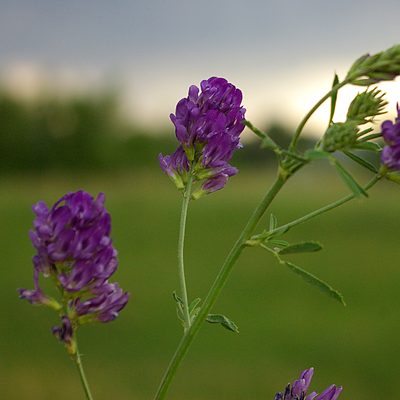
Slimflower Scurfpea (Psoralidium tenuiflorum) is a many-branched native perennial 30–90 cm (1–3 ft) tall with narrow gland-dotted leaflets in sets of 3 or 5 and loose clusters of small blue-violet pea flowers that bloom from June into August. In the Black Hills, herbarium specimens come from prairie, grassland and meadows, red clay and red shale soils, and open pine, and the National Park Service lists it at Wind Cave, Jewel Cave and Mount Rushmore.
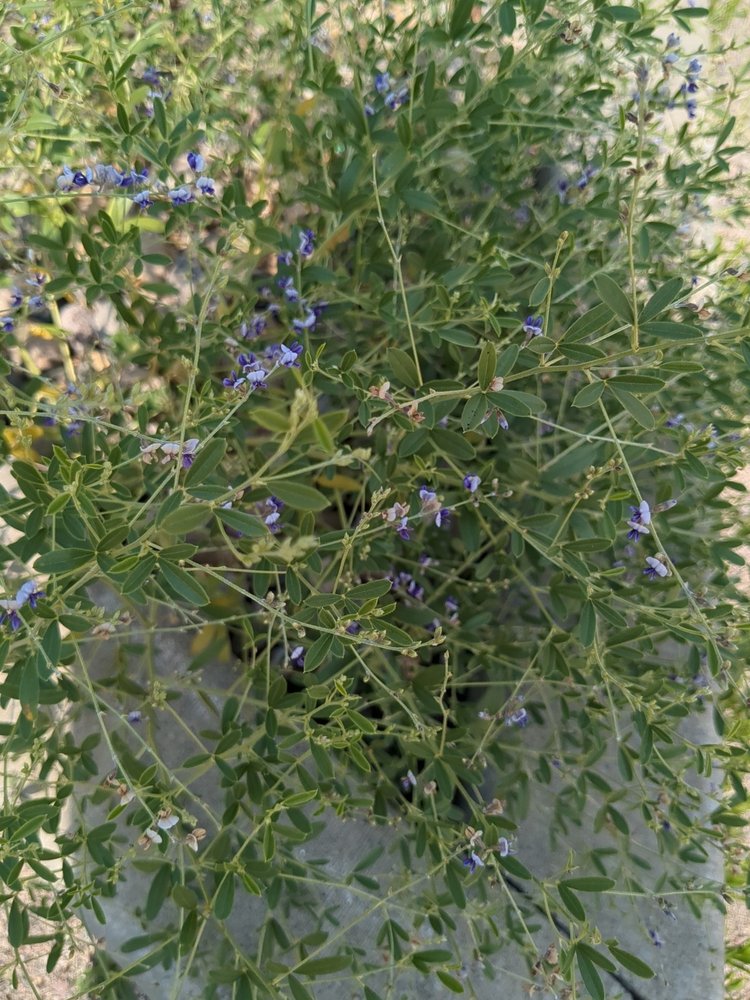
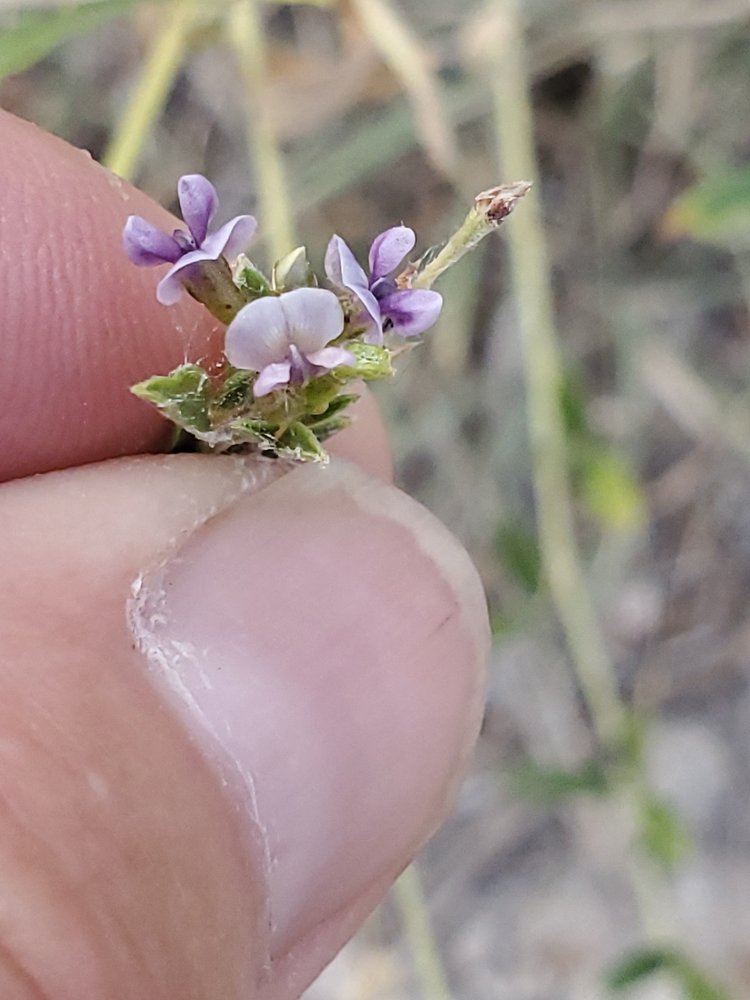
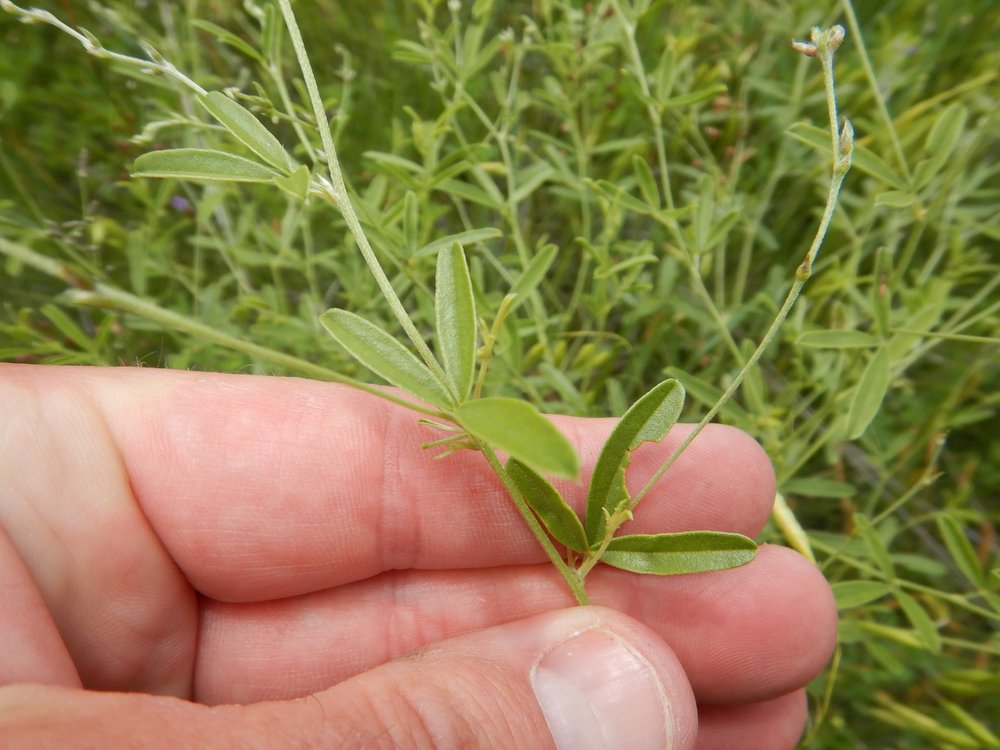
Free photos from other sources
| Family | Fabaceae · Pea |
|---|---|
| Status | Native perennial |
| Blooms | June into August, judging by the dates on flowering herbarium specimens from western South Dakota |
| Height | 30–90 cm (1–3 ft) |
| Where | Dry sandy or rocky soil in prairie, badlands and open pine woodland |
| Also called | Scurfy Pea, Slenderleaf Scurfpea, Few-flowered Scurfpea, Wild Alfalfa, thíčaničahu tȟáŋka (Lakota), waȟpé pȟeží (Lakota), waȟpókiŋžate (Lakota) |
| Synonym | Pediomelum tenuiflorum, Psoralea tenuiflora |
| Traditional use | Black Elk and Flying By's 1998 Culturally Important Plants of the Lakota gives three Lakota names for slimflower scurfpea (thíčaničahu tȟáŋka, waȟpé pȟeží and waȟpókiŋžate) and records that an infusion of the dried roots was used for headaches, that the whole plant could be burned to repel insects, and that the stems were woven into a hat to shade the head from the sun. |
Roots, seeds & germination
Seed: The fruit is a slightly flattened, oval pod 6–8 mm (¼–⅓ in) long with a short beak, densely dotted with glands (Minnesota Wildflowers); Montana Field Guide gives the pod as 7–8 mm long and glandular.
How do you identify Slimflower Scurfpea?
Look for a many-branched perennial 30–90 cm (1–3 ft) tall, with stems that are erect, rising or sprawling and covered in white hairs. The leaves are alternate and palmately compound (the leaflets spread from one point), typically with 5 leaflets on the main stem and 3 on the branches. The leaflets are narrow, 1.3–5 cm (½–2 in) long and up to 1.3 cm (½ in) wide, toothless, with the upper surface dotted with glands (easiest to see on dry leaves) and nearly hairless, and the lower surface densely covered in flat white hairs. The pea-shaped flowers, light blue to purple to deep blue-violet and about 6 mm (¼ in) long, grow in loose clusters of 1 to 4 along the tips of the branching stems, above a hairy, gland-dotted calyx that is green to dark purple. The pod is slightly flattened, oval, 6–8 mm (¼–⅓ in) long, with a short beak, and densely gland-dotted (Minnesota Wildflowers; Montana Field Guide). Minnesota Wildflowers says it is most easily recognized by the gland-dotted leaves, calyx and pod, the overall hairiness, and leaves divided in 3s or 5s. Silverleaf Scurfpea (Pediomelum argophyllum) has silvery foliage and stems from a dense covering of silvery hairs, broader leaflets in 3s, 4s or 5s, and stalkless, deep blue-violet flowers, and it is not gland-dotted. Alfalfa (Medicago sativa) has blue-green leaves that are sparsely hairy and always in 3s, and coiling pods that are not gland-dotted (Minnesota Wildflowers).
When does it bloom?
June into August, judging by the dates on flowering herbarium specimens from western South Dakota.
Where does it grow?
Dry sandy or rocky soil, bluff prairie and sandy and rocky prairie (Minnesota Wildflowers); sandy soil in grasslands and pine woodlands on the plains (Montana Field Guide). GBIF holds 41 preserved specimens from the Black Hills counties of South Dakota (Fall River 16, Pennington 15, Custer 9, Meade 1), collected from 1891 to 2013. Those from the Black Hills and their edges name mixed grass and forb communities, short grassland and meadows, rocky red soil prairie, red silty shale with gravel, red clay grassland with scattered ponderosa pine, and dryish open forest; the rest come from the Badlands and the plains, with labels such as badlands, grassland on clay soils and dry sandy soil. The 14 labels that give an elevation run from 755 to 1,341 m (2,500–4,400 ft). The National Park Service lists it as present at Wind Cave, Jewel Cave and Mount Rushmore, and the 1986 Jewel Cave plant survey lists it for the monument. iNaturalist has 67 research-grade records from the Black Hills area, June to September.
Other flowers to compare
Pea family (Fabaceae): 31 other plants in this guide
- Alfalfa
- Alpine Sweetvetch
- American Vetch
- Barr's Milkvetch
- Black Medic
- Canada Milkvetch
- Canada Tickclover
- Cream Milkvetch
- Crown Vetch
- Drummond's Milkvetch
- Field Locoweed
- Field Milkvetch
- Golden Pea
- Groundplum Milkvetch
- Indian Milkvetch
- Lambert's Crazyweed
- Laxmann's Milkvetch
- Lead Plant
- Missouri Milkvetch
- Pale Vetchling
- Prairie Turnip
- Purple Prairie Clover
- Red Clover
- Silktop Dalea
- Silverleaf Scurfpea
- Silvery Lupine
- Tufted Milkvetch
- White Clover
- White Prairie Clover
- Wild Licorice
- Yellow Sweetclover
Sources: Minnesota Wildflowers: Psoralidium tenuiflorum (Slenderleaf Scurfpea); Montana Field Guide: Few-flowered Scurfpea (Psoralidium tenuiflorum), after Lesica et al. 2012, Manual of Montana Vascular Plants; Lady Bird Johnson Wildflower Center: Psoralidium tenuiflorum (PSTE5), Slimflower Scurfpea; USDA PLANTS Database: Psoralidium tenuiflorum (PSTE5), slimflower scurfpea; ITIS: Psoralidium tenuiflorum (TSN 504646), with its synonyms; NPSpecies checklist, Wind Cave National Park (vascular plants); NPSpecies checklist, Jewel Cave National Monument (vascular plants); NPSpecies checklist, Mount Rushmore National Memorial (vascular plants); Marriott and Hartman 1986, A Survey of the Vegetation of Jewel Cave National Monument; GBIF occurrence search: Pediomelum tenuiflorum (Psoralidium tenuiflorum), preserved specimens, South Dakota; iNaturalist: Pediomelum tenuiflorum research-grade observations in the Black Hills; Culturally Important Plants of the Lakota (Black Elk and Flying By, Sitting Bull College, 1998), entry 246; South Dakota Natural Heritage Program: Rare Plants of South Dakota; Black Hills National Forest Revised Forest Assessment: At-Risk Species (October 2023).