Small-flowered Columbine
Aquilegia brevistyla
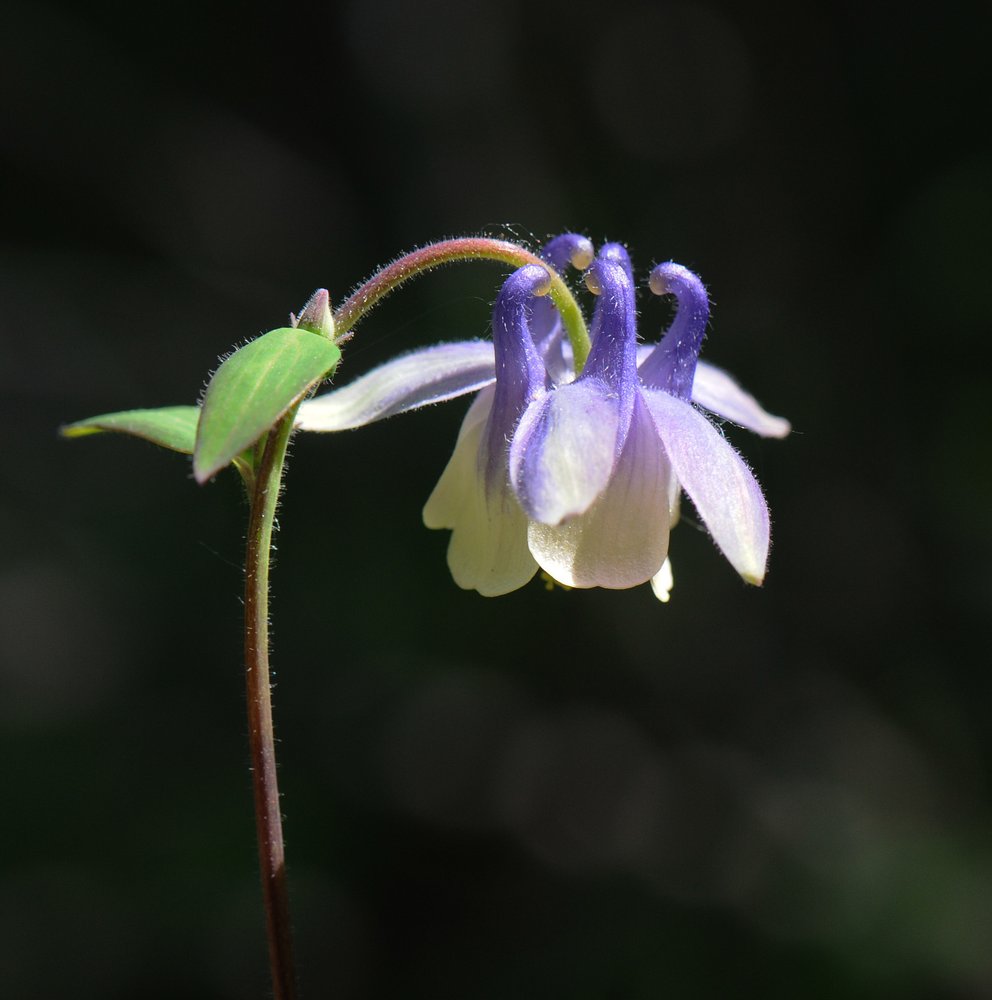
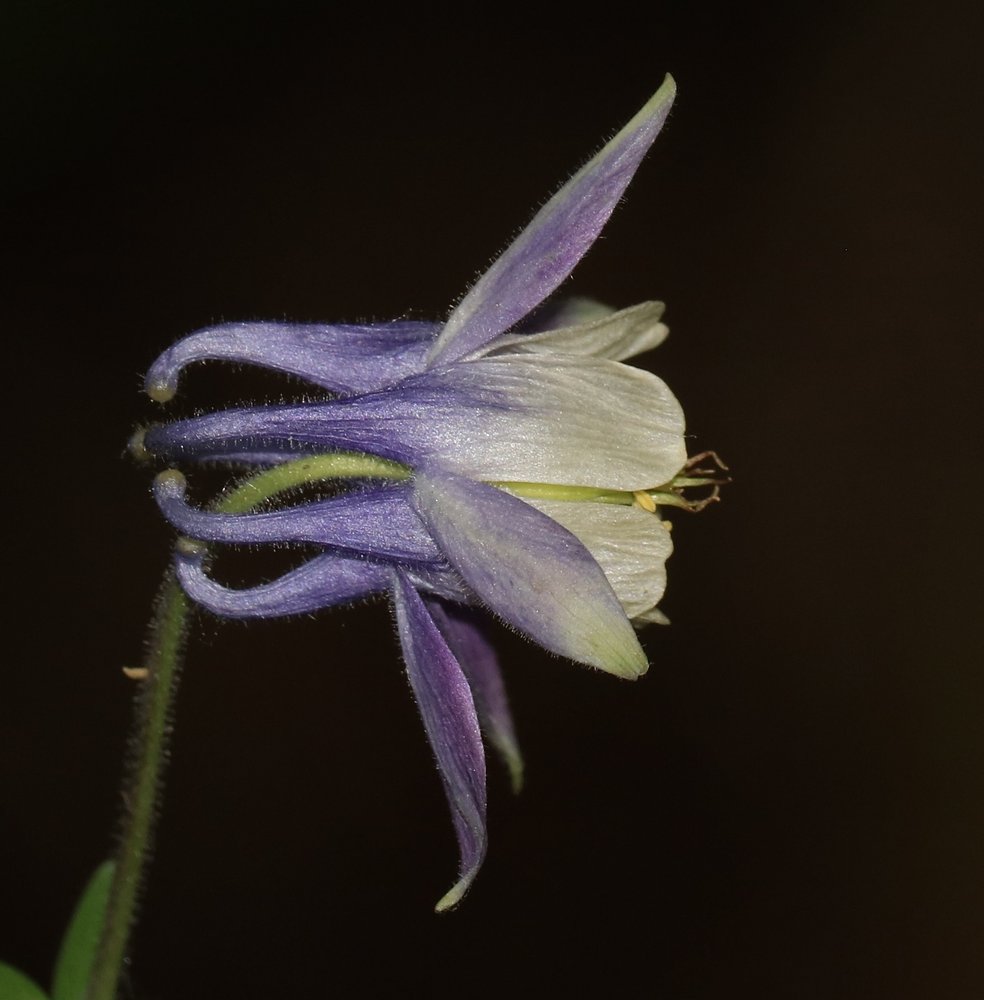
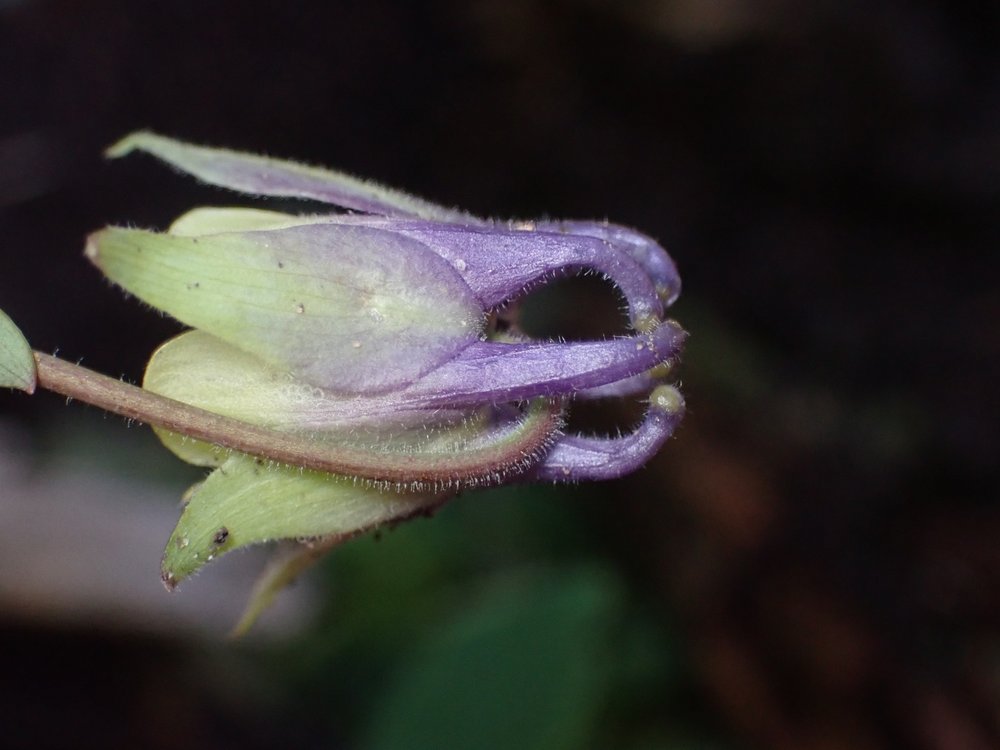
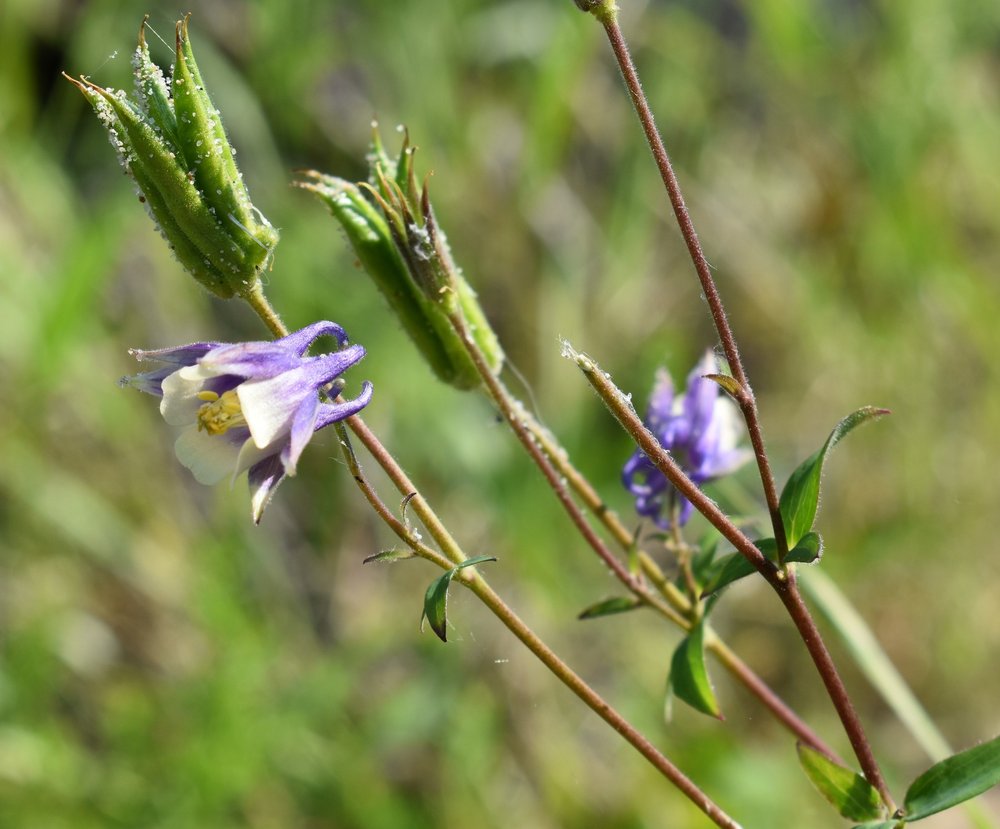
Small-flowered Columbine (Aquilegia brevistyla) is a native perennial of the buttercup family and the Blue Columbine of the Black Hills, with small nodding flowers of blue sepals, cream petal tips and short blue spurs hooked inward at the tip. A northern plant of Canada and Alaska, it grows here as an isolated outlier in cool, shaded canyons of the northern and central Hills. It blooms from late May into July, mostly in June.
Free photos from other sources
| Family | Ranunculaceae · Buttercup |
|---|---|
| Status | Native perennial |
| Blooms | Late May into July, mostly in June |
| Height | 20–80 cm (8–31 in) |
| Where | Cool, shaded canyon slopes and creek bottoms under spruce, birch and aspen |
| Also called | Blue Columbine, Smallflower Columbine, Small-flower Columbine, Short-styled Columbine |
| Synonym | Aquilegia vulgaris var. brevistyla, Aquilegia brevistyla var. altior, Aquilegia brevistyla var. patula |
| Listed | NatureServe ranks it S4 (apparently secure) in South Dakota and S1 (critically imperiled) in Wyoming. |
| Note | Called Blue Columbine in the Black Hills. It is not the Colorado Blue Columbine (Aquilegia coerulea), which isn’t native to South Dakota. |
Roots, seeds & germination
Root: A stout taproot and thin, somewhat woody rhizomes. SDSU Extension notes it spreads by its rhizomes as well as by seed.
Seed: Each flower becomes a cluster of five upright, finely hairy pods 15–25 mm (⅝–1 in) long, each with a short beak only 3–4 mm long. The pods ripen from about mid-July and open to release many small black seeds about 1.5 mm long.
Germination: A University of Washington student protocol, based mostly on general columbine advice, recommends keeping the seed cold and dry in a refrigerator for 3–6 weeks, then sowing it under a thin layer of sieved soil in shade, with seedlings in 1–2 weeks and flowers in the second season.
How do you identify Small-flowered Columbine?
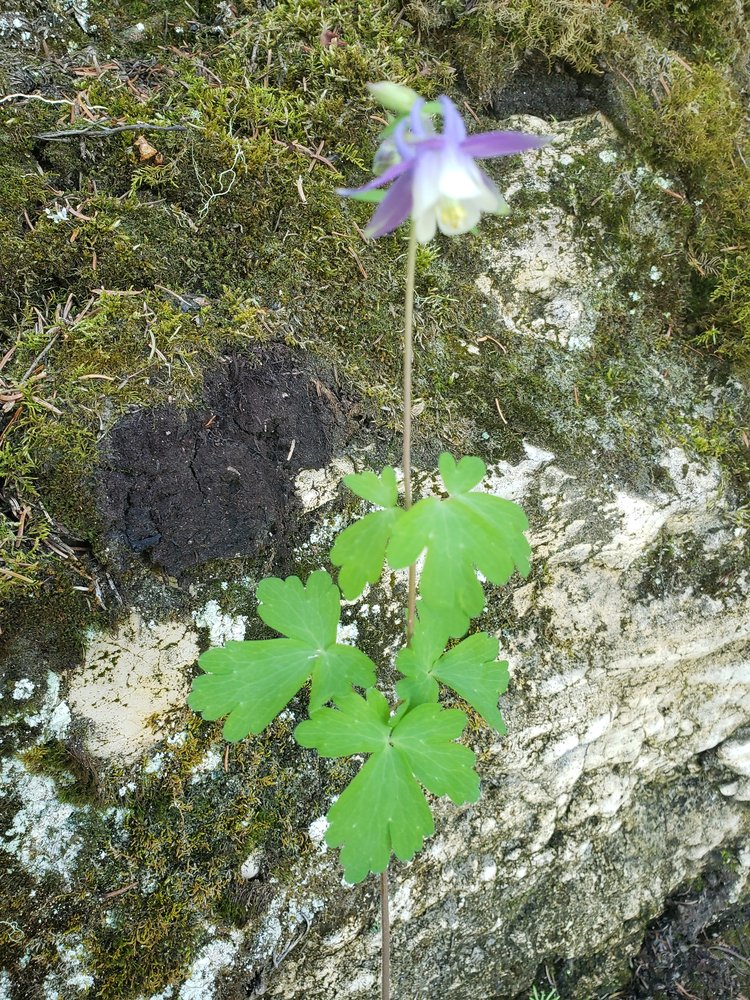
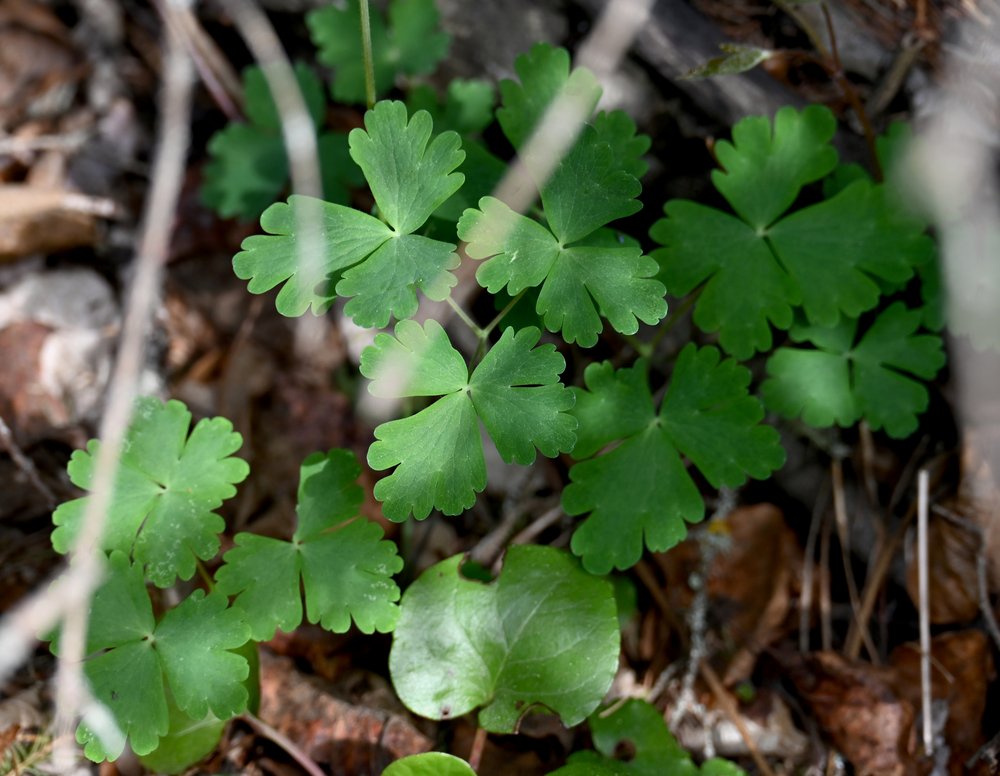
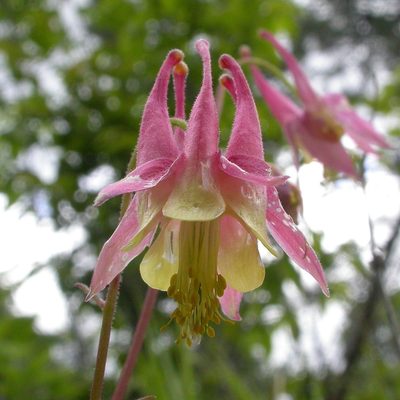
Look for small nodding flowers about 1.5–2.5 cm (⅝–1 in) long, one or two at the branch tips, with blue to blue-violet sepals, a short cup of cream or white petal tips, and stout blue spurs 5–10 mm (¼–⅜ in) long that hook inward at the tip. The leaves, mostly at the base, are divided in threes and threes again into rounded, lobed leaflets. Colorado Blue Columbine, which isn’t native to South Dakota, has much larger, upward-facing flowers with long, straight spurs 28–72 mm long, and Red Columbine has red-and-yellow flowers with long, straight red spurs.
When does it bloom?
Late May into July, mostly in June.
Where does it grow?
Cool, damp, shaded north- and east-facing canyon slopes and creek bottoms under white spruce, paper birch, quaking aspen and ponderosa pine, often on mossy boulders, damp limestone talus and cliff faces. SDSU Extension notes it also grows on granite and organic soils in the central Hills. Herbarium specimens from 1892 to 2024 come mostly from Lawrence and Pennington counties, with a few from Custer and Meade counties, at about 1,380–1,935 m (4,520–6,350 ft). The 1986 Jewel Cave survey lists it as Blue Columbine, and Wyoming lists it from Weston County.
Other flowers to compare
Sources: Flora of North America Vol. 3: Aquilegia brevistyla (efloras.org); Flora of North America Vol. 3: Aquilegia coerulea (efloras.org); Flora of North America Vol. 3: Aquilegia canadensis (efloras.org); Flora of North America Vol. 3: Aquilegia vulgaris (efloras.org); Flora of North America Vol. 3: Aquilegia, key to species (efloras.org); USDA Forest Service, Celebrating Wildflowers: Small-flower Columbine (Aquilegia brevistyla); SDSU Extension: Native Plants to Know: Small-Flowered Columbine (Aquilegia brevistyla); NatureServe Explorer: Aquilegia brevistyla, Small-flower Columbine (G5; SD S4, WY S1?, MT S2S3); Wyoming Natural Diversity Database species list via BLM Wyoming (Aquilegia brevistyla: S1, Weston Co., USFS R2 Sensitive); USDA PLANTS Database: Aquilegia brevistyla Hook., smallflower columbine; University of Washington ESRM 412 Native Plant Propagation Protocol: Aquilegia brevistyla (2021); Minnesota Seasons: Smallflower Columbine; Marriott, H. & R. Hartman. 1986. Vegetation of Jewel Cave National Monument (lists "Blue Columbine, Aquilegia brevistyla"); NPSpecies: Jewel Cave National Monument species list (Aquilegia brevistyla, Present); NPSpecies: Wind Cave National Park species list (checked; only A. canadensis); GBIF occurrence records: Aquilegia brevistyla, Black Hills area (lat 43.0–44.9, long −105.0 to −102.8); iNaturalist: Small-flower Columbine observations in the Black Hills; Black Elk, L. & W. Flying By. 1998. Culturally Important Plants of the Lakota (checked; columbine not listed); Native American Ethnobotany Database (searched; no uses for A. brevistyla).