Red Columbine
Aquilegia canadensis
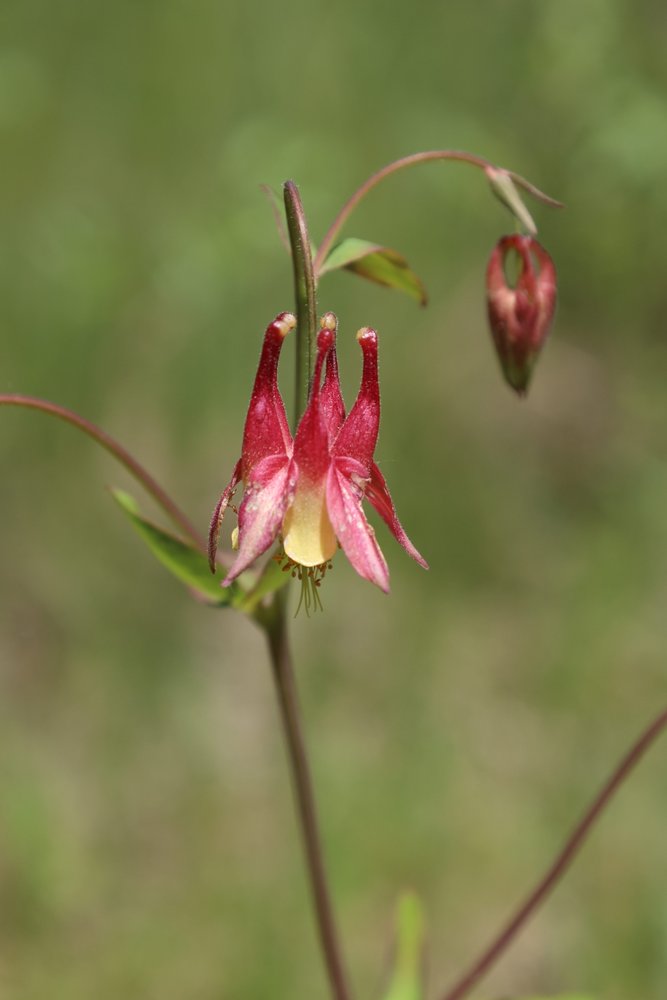
Red Columbine (Aquilegia canadensis) is a native perennial of the buttercup family, with nodding red-and-yellow flowers that each carry five long, straight red spurs. In the Black Hills it blooms from late May through June on shaded rock ledges and in wooded canyon bottoms, mostly in the eastern Hills, at about the western edge of its range.
Free photos from other sources
| Family | Ranunculaceae · Buttercup |
|---|---|
| Status | Native perennial |
| Blooms | Late May through June, with a few into early July |
| Height | 30–80 cm (12–30 in) |
| Where | Shaded, rocky canyon walls, ledges and wooded canyon bottoms, often on limestone |
| Also called | Wild Columbine, Eastern Red Columbine, Canada Columbine, American Columbine, Rock-bell |
| Synonym | Aquilegia latiuscula, Aquilegia canadensis var. latiuscula, Aquilegia canadensis var. hybrida, Aquilegia canadensis var. eminens, Aquilegia australis, Aquilegia coccinea, Aquilegia phoenicantha |
| Toxicity | Illinois Wildflowers calls the foliage toxic, and livestock find the plant unpalatable. |
| Traditional use | Melvin Gilmore’s 1919 study of plant use along the Missouri River says the Omaha and Ponca, especially bachelors, crushed the seeds for a perfume, and the Pawnee used them as perfume and a love charm and drank an infusion of the crushed seeds for fever and headache. |
Roots, seeds & germination
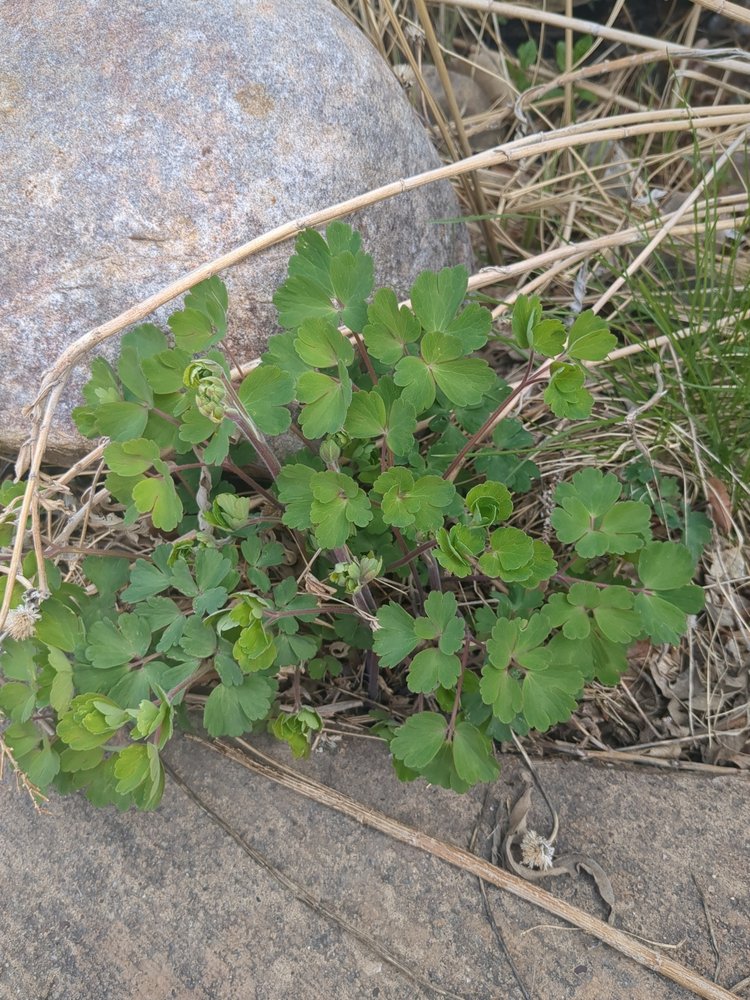
Root: A short, upright underground stem, or caudex, with short-lived fibrous roots. The plant dies back to this crown each fall, grows again from it in spring, and can resprout from it after a fire.
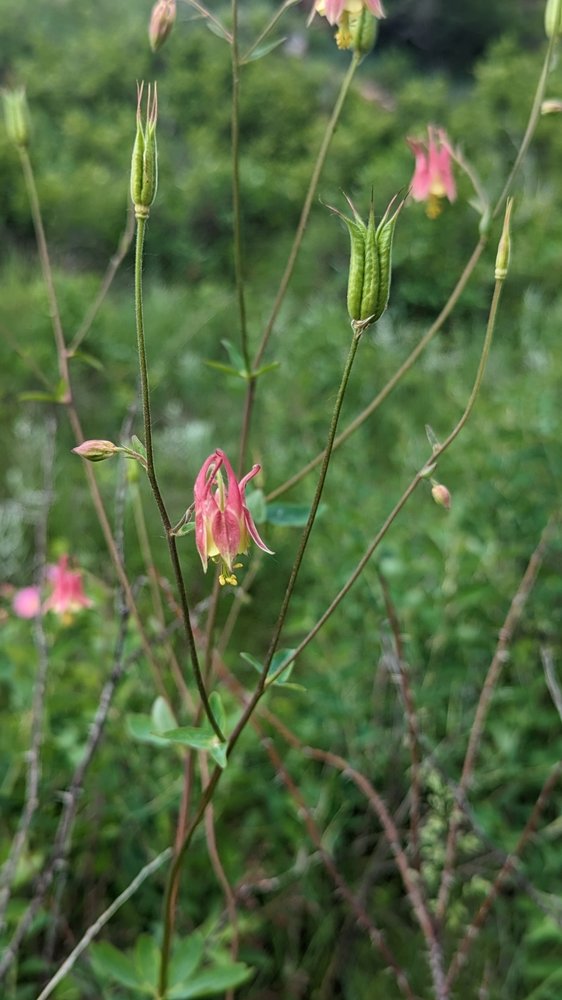
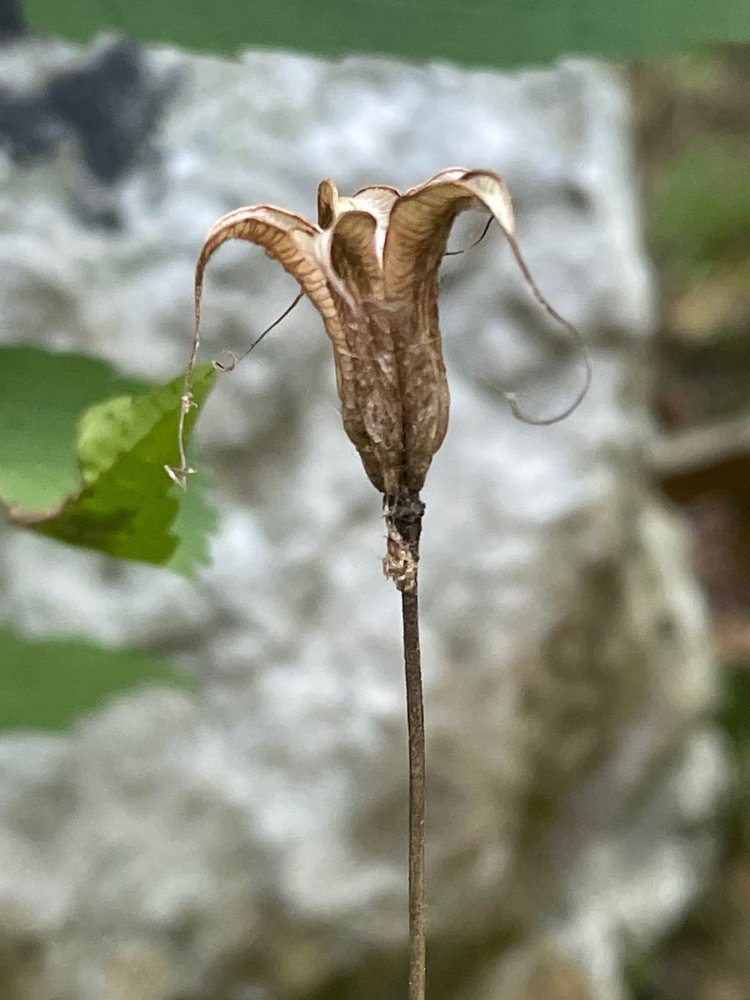
Seed: Each flower becomes five upright, beaked pods about 1.5–3 cm (½–1¼ in) long that split down one side to release many small, shiny black seeds. They ripen in mid to late summer, when they turn black.
Germination: Seeds sprout readily. Prairie Moon gives about 60 days of cold, moist stratification, or fall sowing outdoors, and the USDA plant guide says 3–4 weeks of moist chilling speeds germination, with seedlings in 3–4 weeks at 21–24 °C (70–75 °F). Plants usually bloom in their second year.
How do you identify Red Columbine?
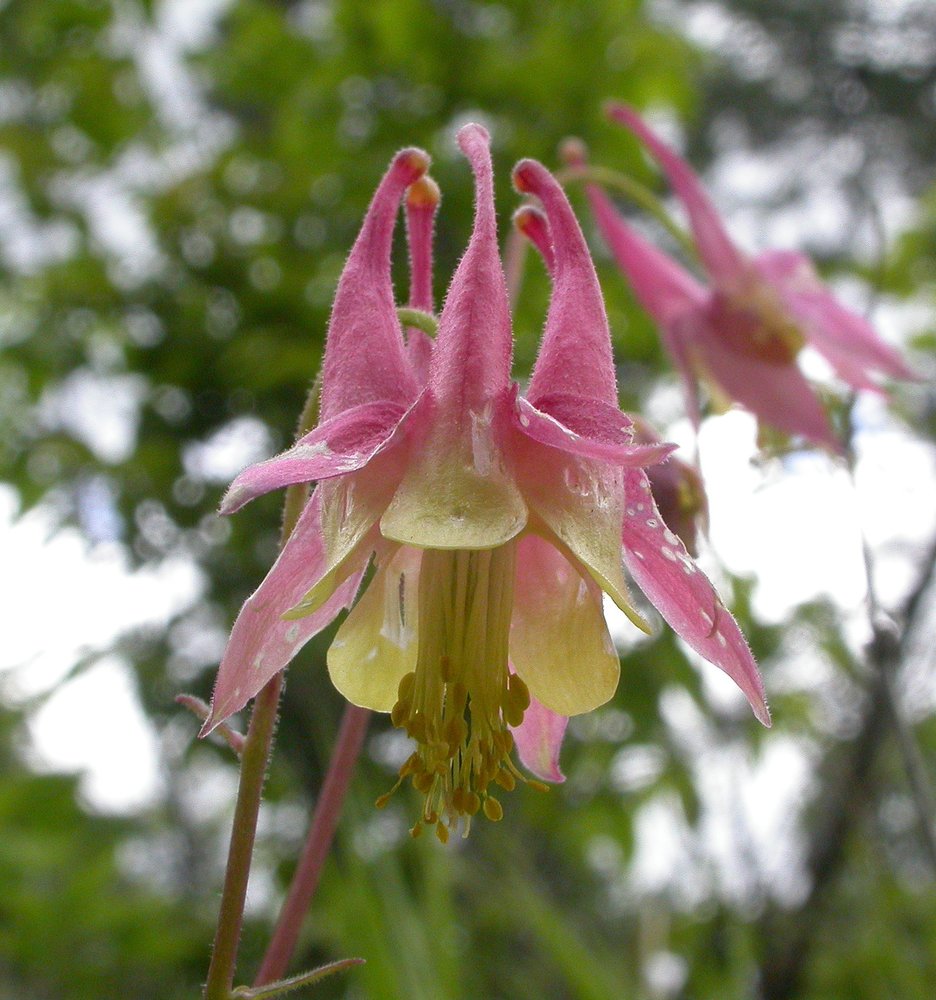
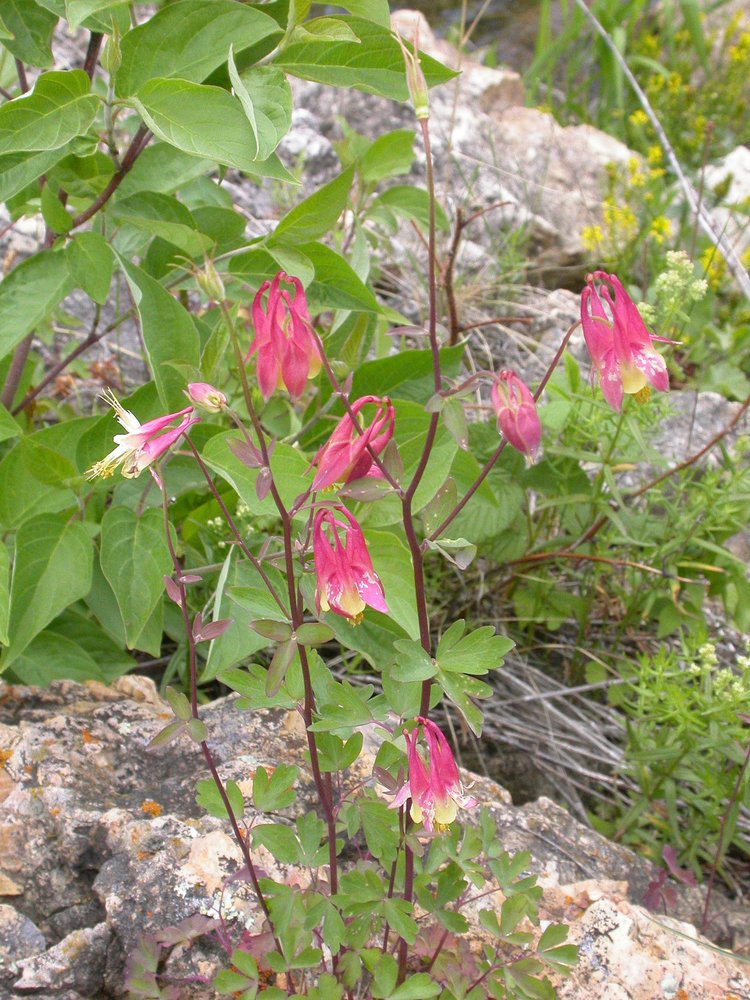
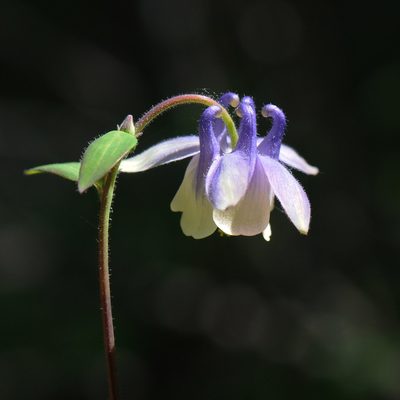
Look for nodding flowers 2.5–5 cm (1–2 in) long hanging from slender, branched stems. Five spreading red sepals alternate with five petals, each with a short yellow blade at the mouth that runs back into a straight red spur about 2–2.5 cm (1 in) long, and a tuft of yellow stamens hangs well below. The leaves are mostly at the base, divided into threes and threes again, with round-lobed, often bluish-green leaflets. Small-flowered Columbine, which grows in cool, moist spruce and birch woods of the northern Hills, has blue flowers with cream petal tips, about half the size, with short spurs hooked at the tip and stamens that barely stick out. Leaves alone are hard to tell apart, so wait for flowers.
When does it bloom?
Late May through June, with a few into early July.
Where does it grow?
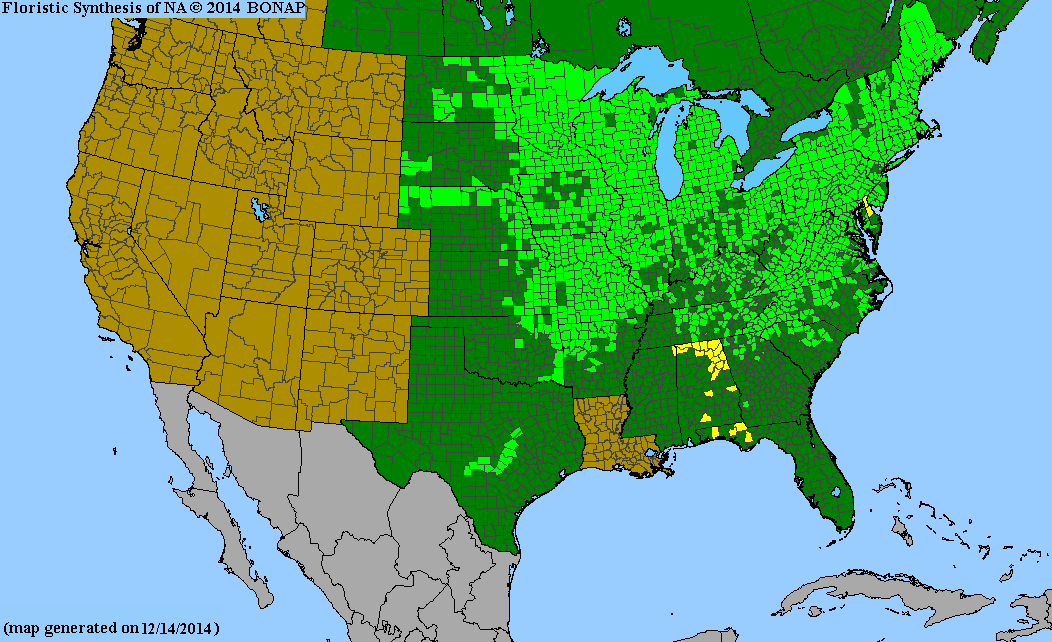
Shaded or partly shaded rocky sites: limestone and schist ledges, rock slides, road cuts, and the floors of narrow canyons under oak, paper birch, hophornbeam and cottonwood, with a few at ponderosa pine edges. In the Black Hills most records come from the eastern and northeastern canyons, such as Rapid Creek, Little Elk Creek and Boxelder Creek, from about 1,140 to 1,750 m (3,750–5,750 ft). Wind Cave National Park’s species list includes it, and specimens since 1887 come from Lawrence, Pennington, Custer and Meade counties. The Black Hills are at the western edge of its range, and no Wyoming records are known.
Other flowers to compare
Sources: USDA PLANTS Database: Aquilegia canadensis L., red columbine; USDA NRCS Plant Guide: Red Columbine, Aquilegia canadensis (Wennerberg, 2004/2006; archived copy); USDA Forest Service Fire Effects Information System: Aquilegia canadensis; USDA Forest Service, Celebrating Wildflowers: Red Columbine (Aquilegia canadensis); USDA Forest Service, Celebrating Wildflowers: Small-flower Columbine (Aquilegia brevistyla); Kansas Wildflowers and Grasses: Wild Columbine, Aquilegia canadensis; Minnesota Wildflowers: Aquilegia canadensis (Red Columbine); Illinois Wildflowers: Wild Columbine; Minnesota Seasons: Smallflower Columbine (Aquilegia brevistyla); Prairie Moon Nursery: Aquilegia canadensis; Gilmore, M.R. 1919. Uses of Plants by the Indians of the Missouri River Region (33rd Annual Report, Bureau of American Ethnology), p. 43; Black Elk, L. & W. Flying By. 1998. Culturally Important Plants of the Lakota (checked; columbine not listed); Marriott, H. & R. Hartman. 1986. Vegetation of Jewel Cave National Monument (checked; lists only Blue Columbine, A. brevistyla); NPSpecies: Wind Cave National Park species list (Aquilegia canadensis, Present); GBIF occurrence records: Aquilegia canadensis, Black Hills area (lat 43.0-44.9, long -105.0 to -102.8); BONAP North American Plant Atlas county map: Aquilegia canadensis; iNaturalist: Red Columbine observations in the Black Hills.