Slender Beardtongue
Penstemon gracilis
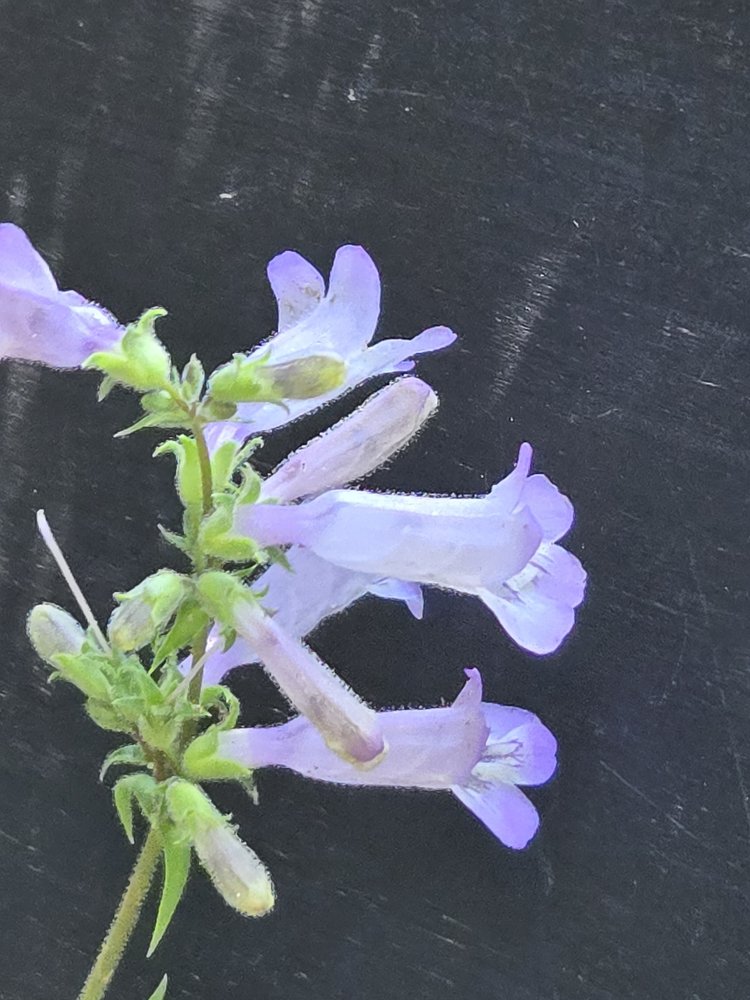
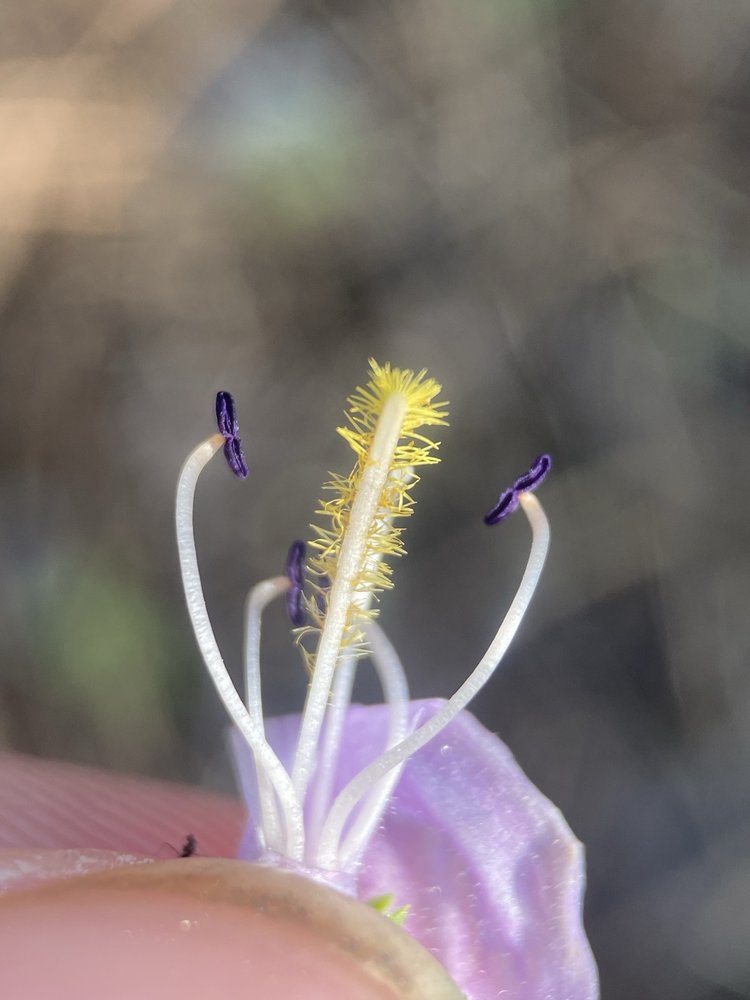
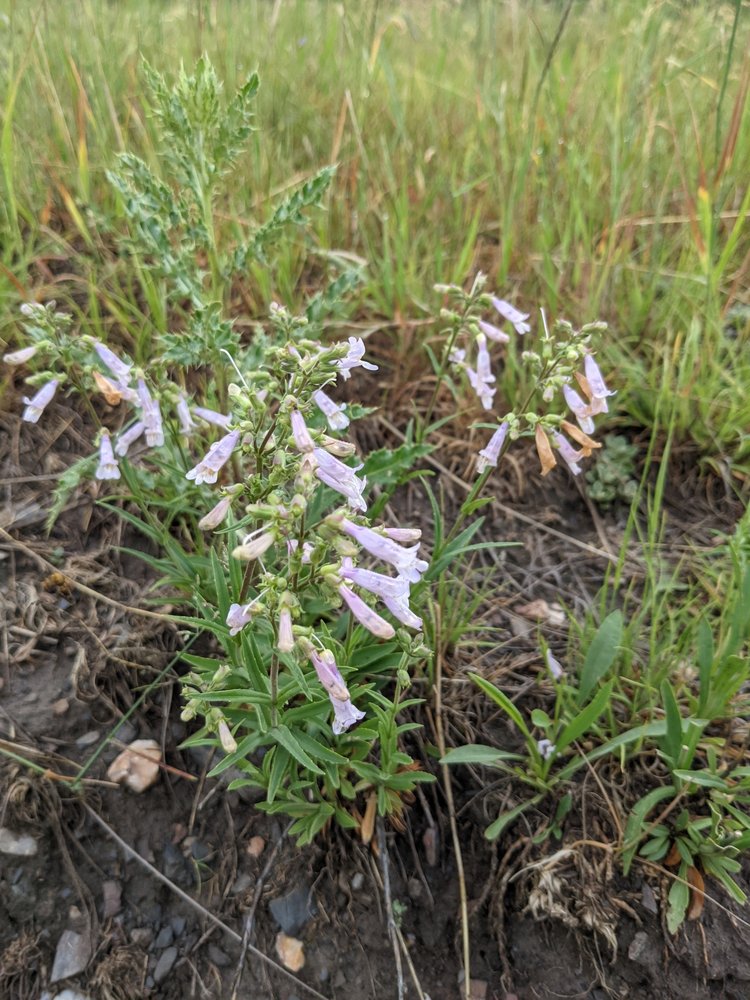
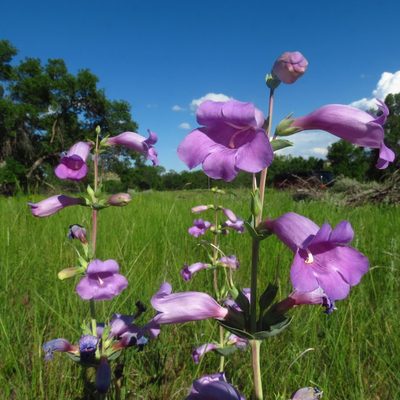
Slender Beardtongue (Penstemon gracilis), also called Lilac Beardtongue, is a small native perennial with slim stems of pale lilac, tubular flowers, each with a dense golden beard on the sterile stamen in its throat. It blooms from June through July, with a few into August, in grassy meadows and open ponderosa pine across the Black Hills.
Free photos from other sources
| Family | Plantaginaceae · Plantain |
|---|---|
| Status | Native perennial |
| Blooms | June and July, with a few into August |
| Height | 20–50 cm (8–20 in) |
| Where | Grassy meadows, open ponderosa pine woods, rocky open hillsides and prairie |
| Also called | Lilac Beardtongue, Lilac Penstemon, Slender Penstemon, zuzéča tȟapȟéžuta (Lakota), uŋ huŋkálowaŋpi iyéčheča (Lakota) |
| Synonym | Chelone gracilis, Penstemon pubescens var. gracilis, Penstemon digitalis var. gracilis, Penstemon glaucus |
| Listed | NatureServe ranks it S3 (vulnerable) in Wyoming; it is unranked in South Dakota. |
| Traditional use | Sitting Bull College's 1998 Culturally Important Plants of the Lakota says the roots were rubbed on the skin to keep snakes away, and a 2011 USDA NRCS brochure records the Lakota using the root as a snakebite medicine. |
Roots, seeds & germination
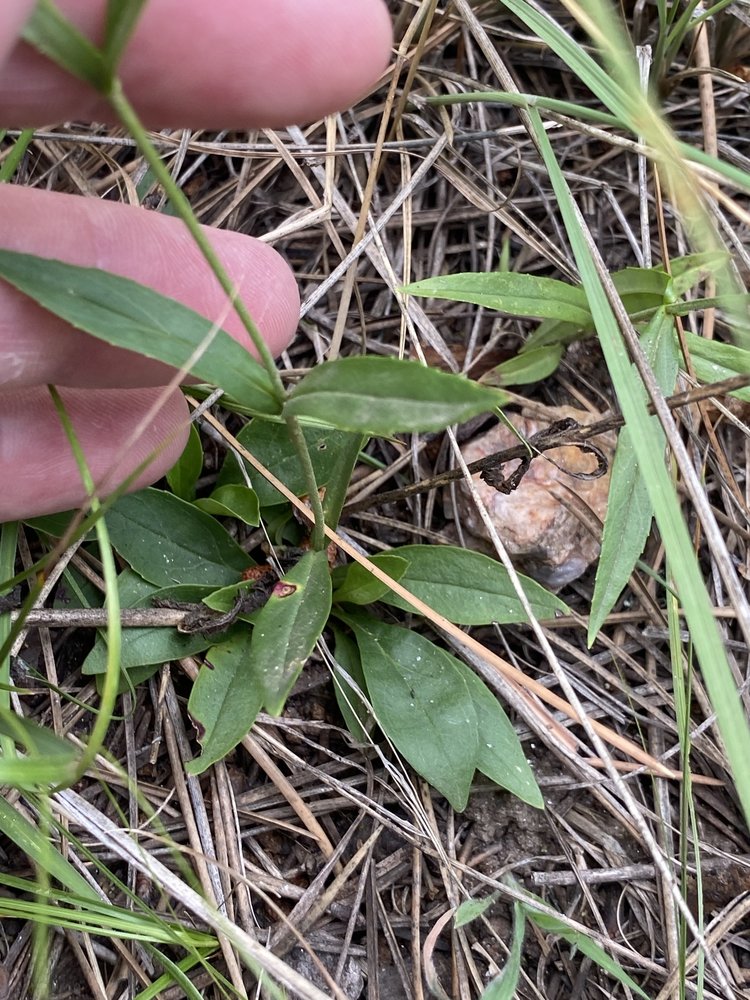
Root: A taproot topped by a short, slender crown that is only a little woody, sending up one to four stems, so plants usually stand as a small, loose clump.
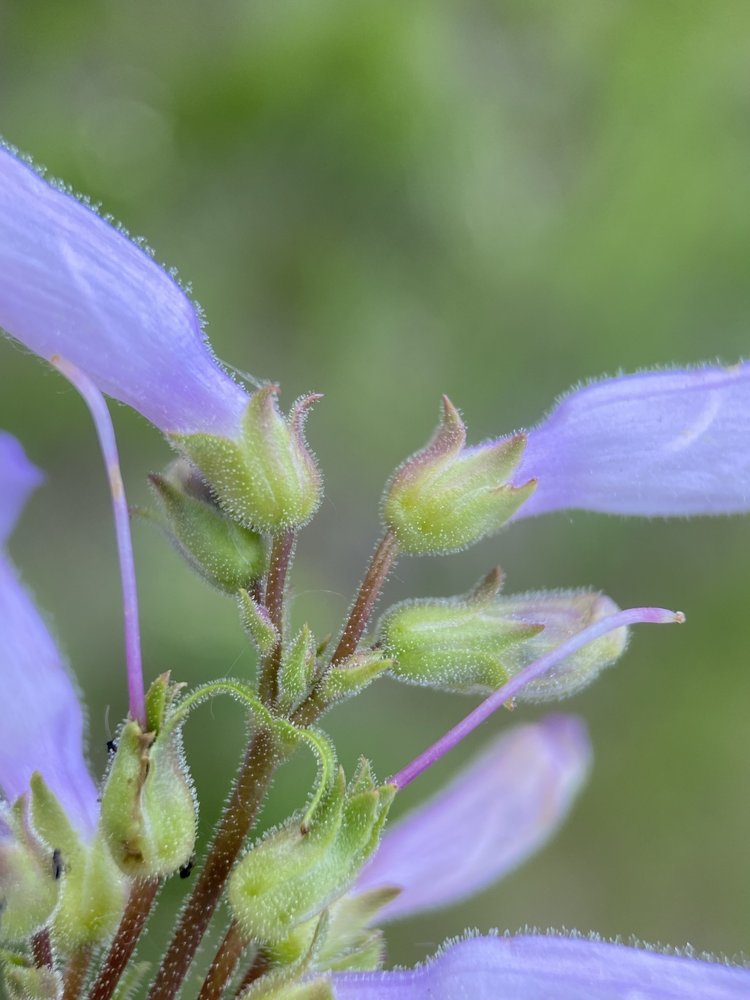
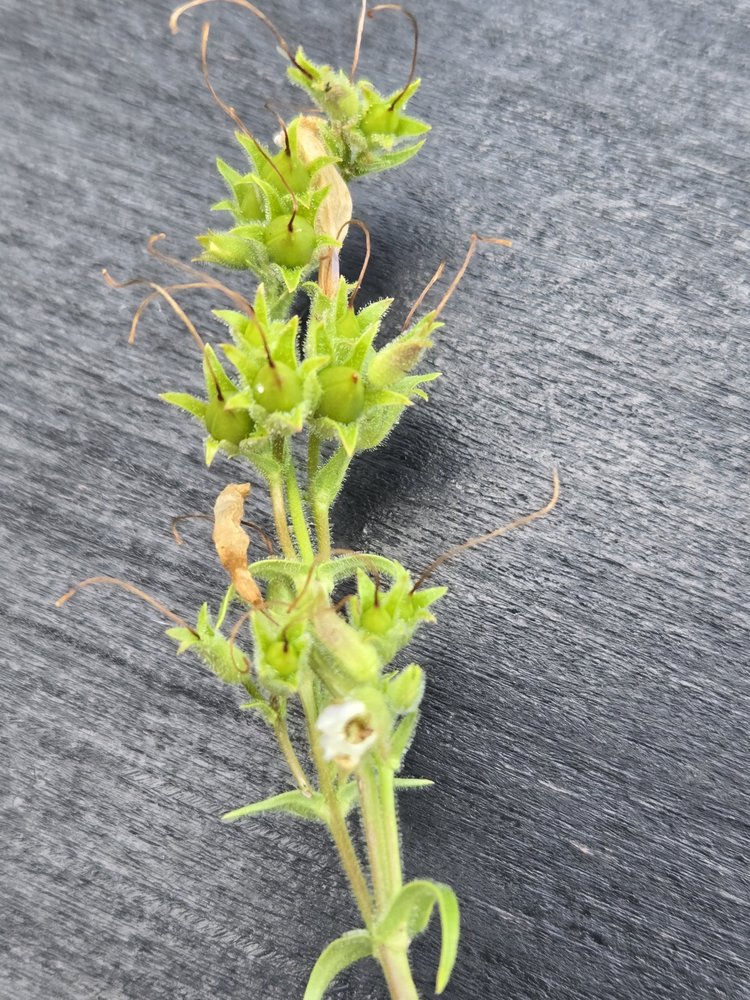
Seed: A small, egg-shaped capsule 6–8 mm (¼–⅓ in) long sits inside the sticky calyx, turns brown and splits at the top in mid to late summer. Each holds many tiny, angular, dark brown seeds only 0.6–0.8 mm long.
Germination: The seed needs about 60 days of cold, moist stratification, so SDSU recommends sowing outdoors from late fall into early spring and letting winter do the work. Once established the plant is quite drought tolerant.
How do you identify Slender Beardtongue?
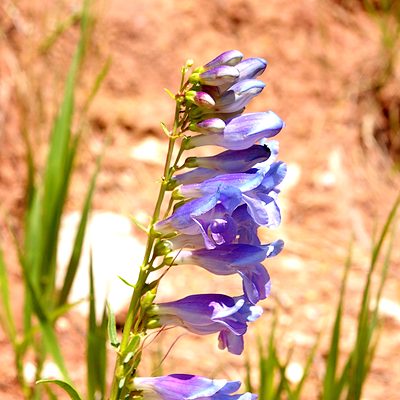
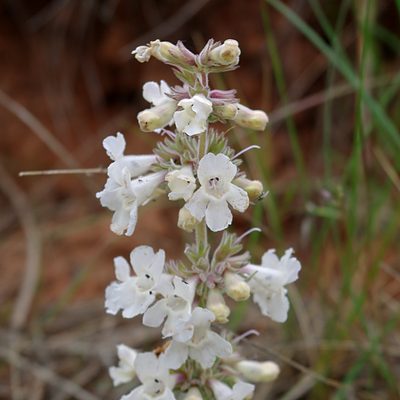
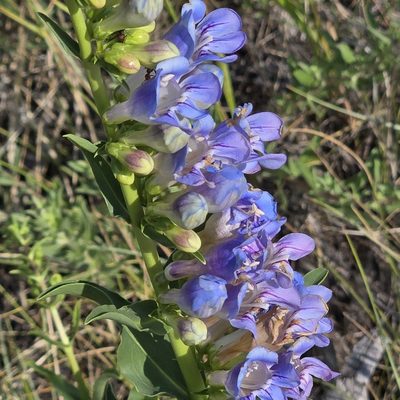
Look into the mouth of the small, pale lilac flower, 1.5–2.2 cm (⅝–⅞ in) long: the sterile fifth stamen lies along the floor of the throat, its tip densely covered in golden-yellow hairs, an easy yellow brush against the lilac petals. The flower stalks, calyx and outside of the flower are covered in short, sticky glandular hairs. The flowers stand in 3–7 pairs of small clusters along slim, upright stems with thin, green leaves. Narrowleaf Beardtongue also has a golden beard, but the whole plant is hairless, with thick, waxy, blue-gray leaves and usually sky-blue flowers. White Beardtongue is just as sticky but has white flowers.
When does it bloom?
June and July, with a few into August.
Where does it grow?
Grassy meadows, open ponderosa pine woods and their edges, rocky and gravelly open slopes, and mixed-grass prairie in the foothills, in sandy, gravelly or rocky, well-drained soil and full sun to light shade, from about 1,070 to 1,830 m (3,500–6,000 ft). National Park Service lists record it at Wind Cave, Mount Rushmore and Devils Tower, and more than 150 herbarium specimens come from the Black Hills counties, including Custer State Park and open pine meadows of the Black Hills National Forest.
Other flowers to compare
Sources: NPSpecies checklist, Wind Cave National Park vascular plants; NPSpecies checklist, Mount Rushmore National Memorial vascular plants; NPSpecies checklist, Devils Tower National Monument vascular plants; NPSpecies checklist, Jewel Cave National Monument vascular plants (P. gracilis not listed); Marriott and Hartman 1986, A Survey of the Vegetation of Jewel Cave National Monument (P. gracilis not listed); GBIF occurrence search: Penstemon gracilis, South Dakota preserved specimens; GBIF occurrence search: Penstemon gracilis, Wyoming preserved specimens; Culturally Important Plants of the Lakota (Black Elk and Flying By, Sitting Bull College, 1998), filed with the South Dakota PUC; SDSU Open PRAIRIE: Scrophulariaceae: Penstemon gracilis; USDA NRCS, Wildflowers of North Dakota and their Medicinal Uses, Part II (2011, archived); USDA PLANTS Database: Penstemon gracilis (PEGR5); NatureServe Explorer: Penstemon gracilis; Minnesota Wildflowers: Slender Beardtongue; Minnesota Wildflowers: White Beardtongue; UW–Eau Claire Putnam Park Wildflowers: Penstemon gracilis notes; Wikipedia: Penstemon gracilis (summarizes Flora of North America 2020); Flora of North America: Penstemon angustifolius; Flora of North America: Penstemon glaber; GBIF species: Penstemon gracilis Nutt. (synonyms).