Large Beardtongue
Penstemon grandiflorus
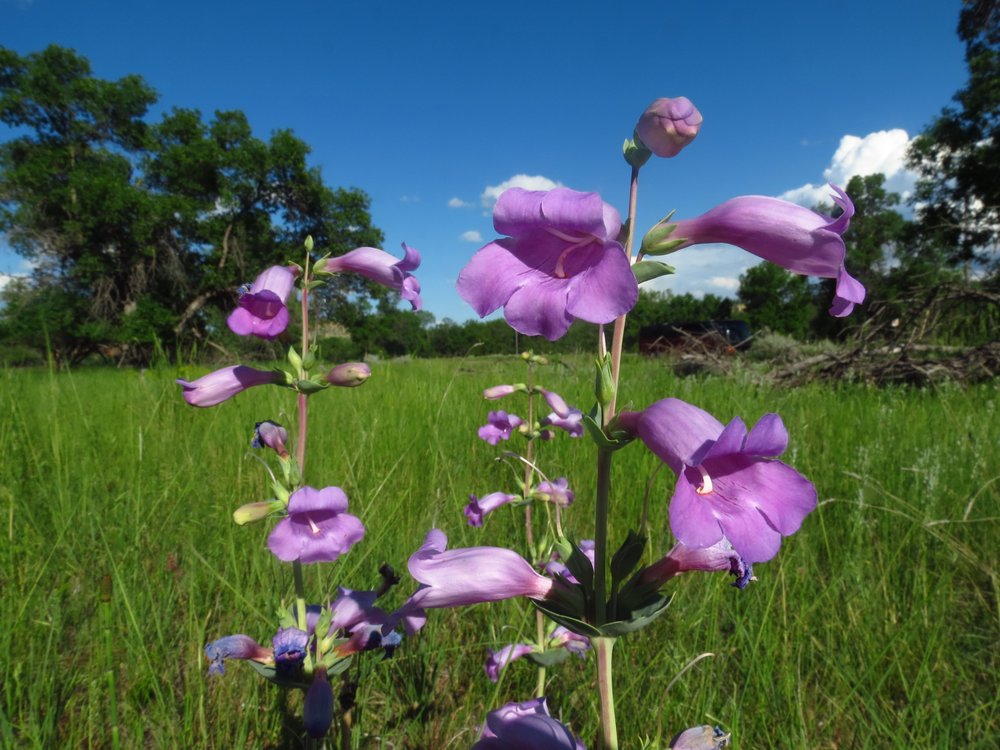
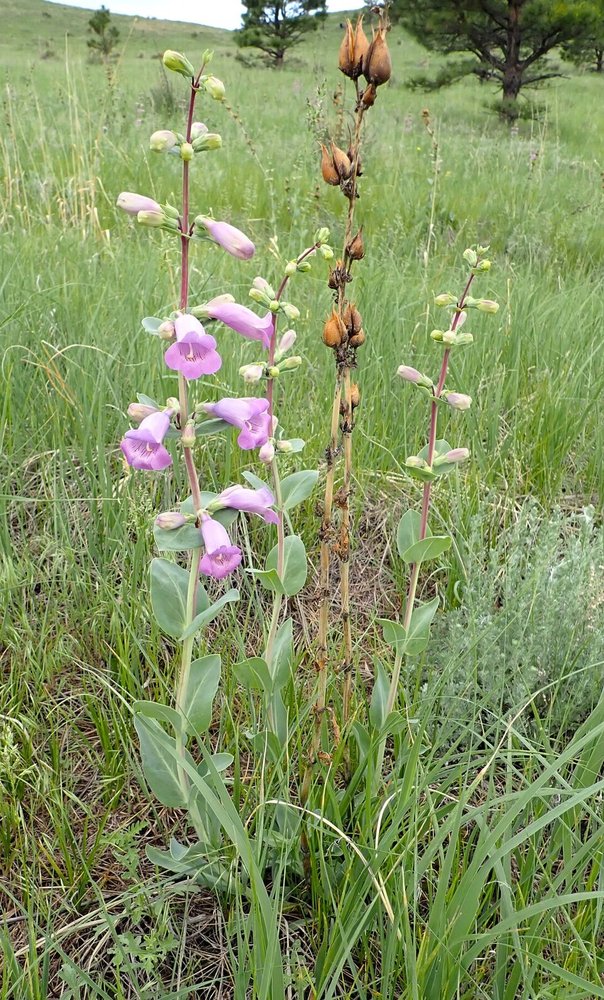
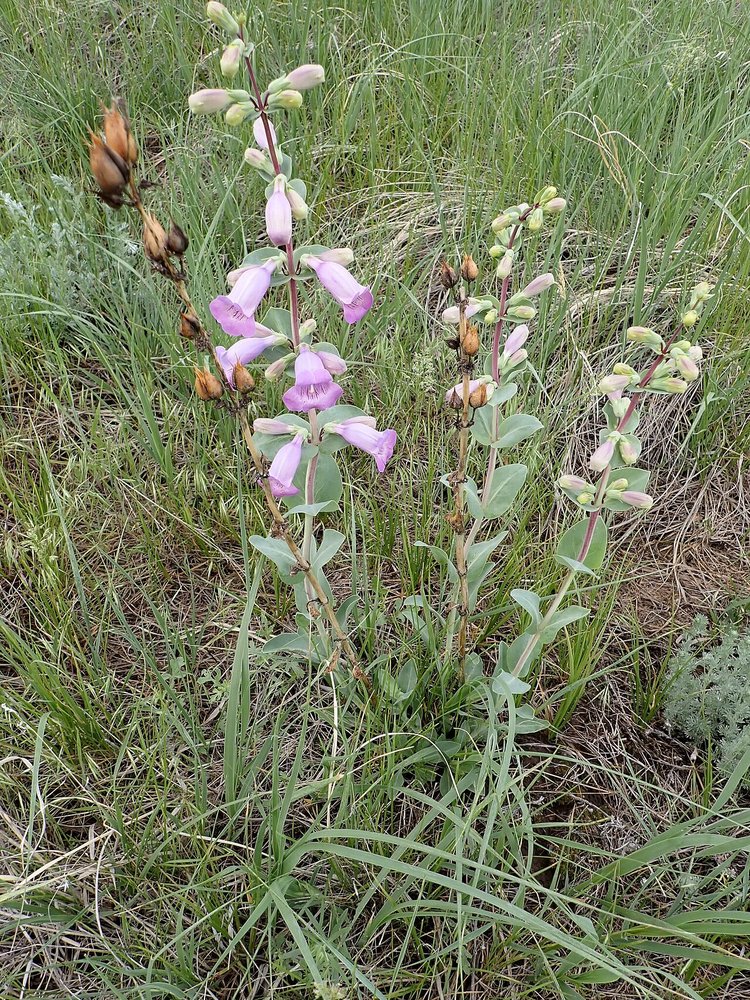
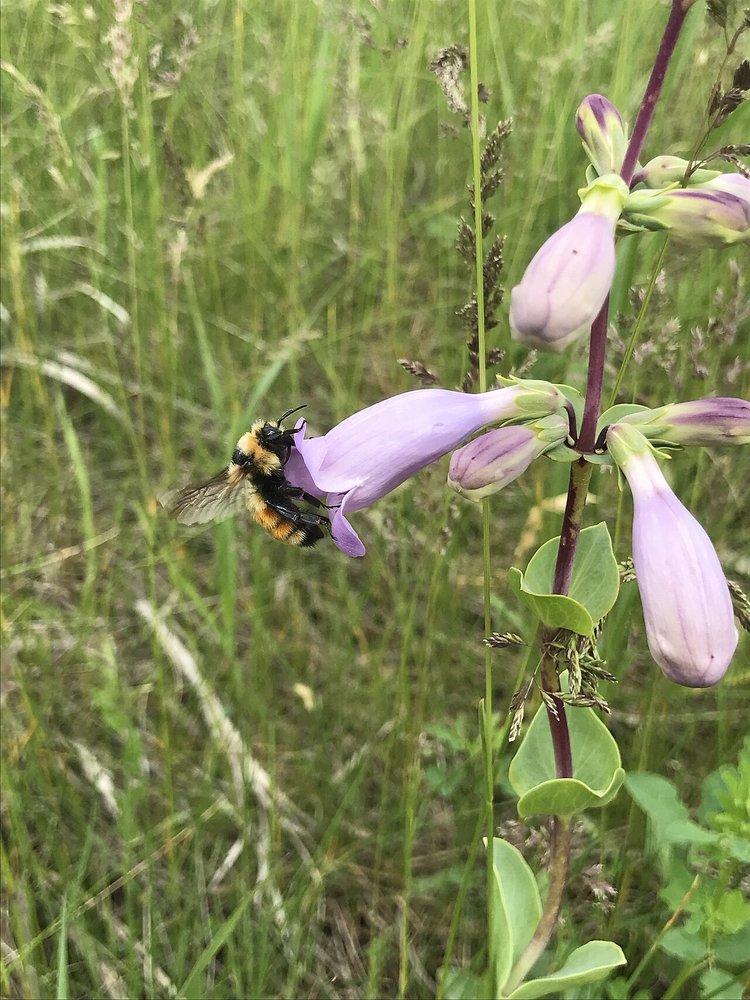
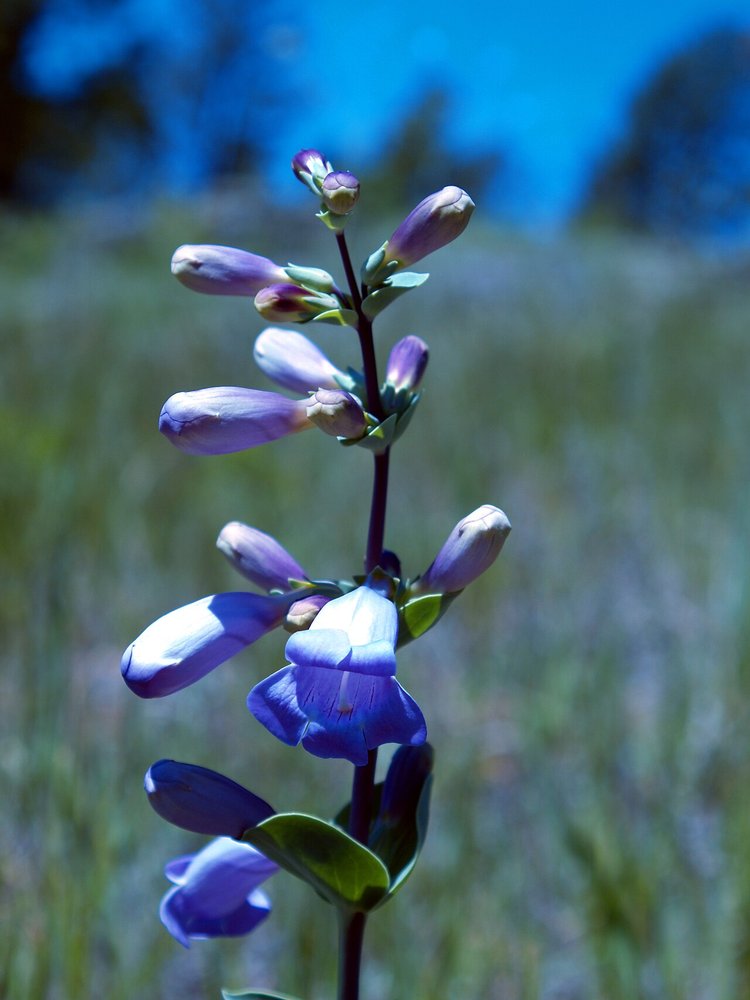
Large Beardtongue (Penstemon grandiflorus), also called Shell-leaf Penstemon, is a native perennial and the showiest penstemon in the Black Hills, with big lavender-pink tubular flowers and round, waxy, blue-gray leaves that wrap the stem. It blooms from late May through June on sandy, gravelly and rocky prairie in the foothills and open pine country.
Free photos from other sources
| Family | Plantaginaceae · Plantain |
|---|---|
| Status | Native perennial |
| Blooms | Late May through June, with a few into early July |
| Height | 30–100 cm (12–40 in) |
| Where | Dry sandy, gravelly or rocky prairie, foothills, limestone rims and open pine edges |
| Also called | Shell-leaf Penstemon, Shell-leaf Beardtongue, Large-flowered Beardtongue, Large-flowered Penstemon, Prairie Penstemon, kimímila tȟawánaȟča (Lakota) |
| Synonym | Penstemon bradburyi, Penstemon grandiflorum |
| Traditional use | Sitting Bull College's 1998 Culturally Important Plants of the Lakota says a decoction of the leaves was taken for chills and fever, and a decoction of the root for chest pain. |
Roots, seeds & germination
Root: A stout, deep taproot topped by a woody crown that sends up one to a few stems. Plants are short-lived, usually 2 to 5 years, and the population carries on by reseeding.
Seed: A hard, egg-shaped capsule 1.6–2.5 cm (⅝–1 in) long turns dark brown and splits at the top in mid to late summer, holding many small, angular, brown to black seeds 2.5–4 mm long. The empty capsules often stay on last year's dead stalks into the next flowering season.
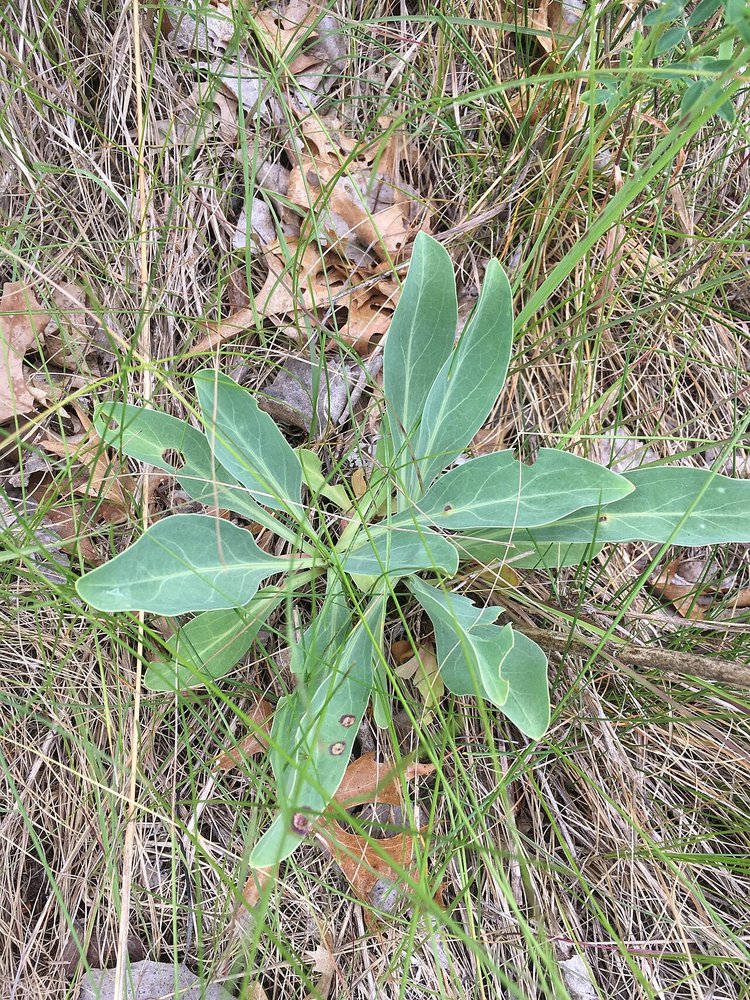
Germination: The seed needs a short cold, moist period, about 30 days, and SDSU calls sowing outdoors in fall, or in early spring while the ground is still cold, the easiest method. First-year plants make only a rosette of leaves, so flowers come no sooner than the second year. It needs full sun and good drainage.
How do you identify Large Beardtongue?
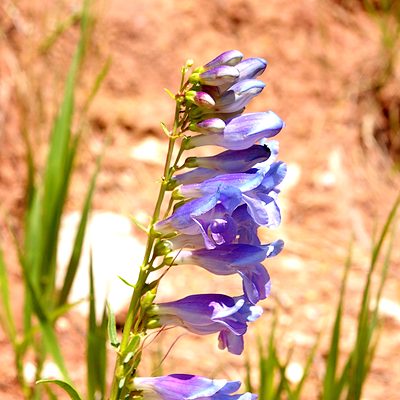
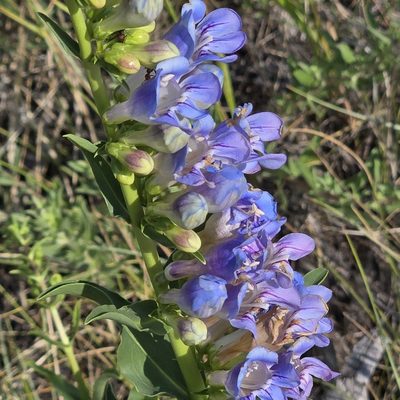
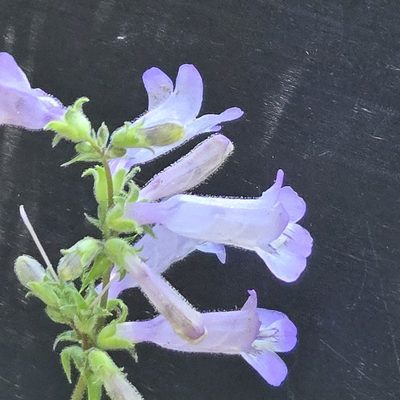
The leaves are the best mark: thick, smooth and blue-gray with a waxy bloom, round to broadly egg-shaped, in 4–8 opposite pairs whose bases clasp the stem like a pair of shells. The lavender to pink-lavender flowers are 3.5–4.8 cm (1⅜–1⅞ in) long, the largest of any Black Hills penstemon, with a short tube that swells into a wide, open throat, hairless inside and out. They stand in 3–7 spaced whorls above pairs of round, leafy bracts. Narrowleaf Beardtongue shares the blue-gray leaves, but they are narrow and its flowers are only 1.3–2.2 cm (½–⅞ in) long. Smooth Beardtongue has deep blue to violet flowers crowded to one side of the stalk and green, lance-shaped leaves.
When does it bloom?
Late May through June, with a few into early July.
Where does it grow?
Dry, open, sunny ground with sandy, gravelly or rocky, well-drained soil: mixed-grass prairie in the foothills, red-soil valleys, limestone rims and ledges, grassy openings in ponderosa pine and bur oak woods, and road cuts. National Park Service lists record it at Wind Cave, Mount Rushmore and Devils Tower. About 100 herbarium specimens have been collected across the Hills since 1887, including Custer State Park and the Wyoming Black Hills.
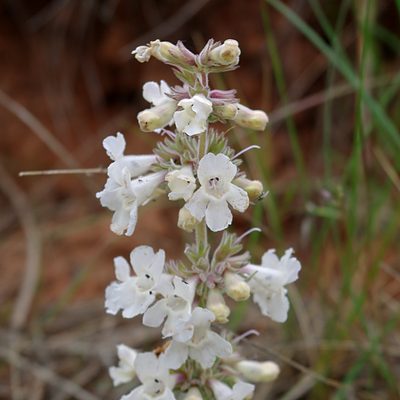
Other flowers to compare


Sources: NPSpecies checklist, Wind Cave National Park vascular plants; NPSpecies checklist, Mount Rushmore National Memorial vascular plants; NPSpecies checklist, Devils Tower National Monument vascular plants; NPSpecies checklist, Jewel Cave National Monument vascular plants (P. grandiflorus not listed); NPS, Devils Tower National Monument: Native Plants; NPGallery: Shell-leaf penstemon, Devils Tower National Monument; Marriott and Hartman 1986, A Survey of the Vegetation of Jewel Cave National Monument (P. grandiflorus not listed); GBIF occurrence search: Penstemon bradburyi / P. grandiflorus, South Dakota preserved specimens; GBIF occurrence search: Penstemon bradburyi / P. grandiflorus, Wyoming preserved specimens; Culturally Important Plants of the Lakota (Black Elk and Flying By, Sitting Bull College, 1998), filed with the South Dakota PUC; SDSU Open PRAIRIE: Scrophulariaceae: Penstemon grandiflorus; USDA NRCS Plant Guide: Large Beardtongue, Penstemon grandiflorus; USDA Forest Service, Celebrating Wildflowers: Large Beardtongue (Charlie McDonald); Flora of North America: Penstemon grandiflorus; Flora of North America: Penstemon glaber; Flora of North America: Penstemon angustifolius; Plants of the World Online (Kew): Penstemon bradburyi Pursh; Botanically Inclined: The superfluous Penstemon grandiflorus (2025); Illinois Wildflowers: Large-Flowered Beardtongue; Minnesota Wildflowers: Large Beardtongue; Minnesota Wildflowers: Slender Beardtongue; Minnesota Wildflowers: White Beardtongue; Prairie Moon Nursery: Large-flowered Beardtongue.