Oregon Grape
Mahonia repens
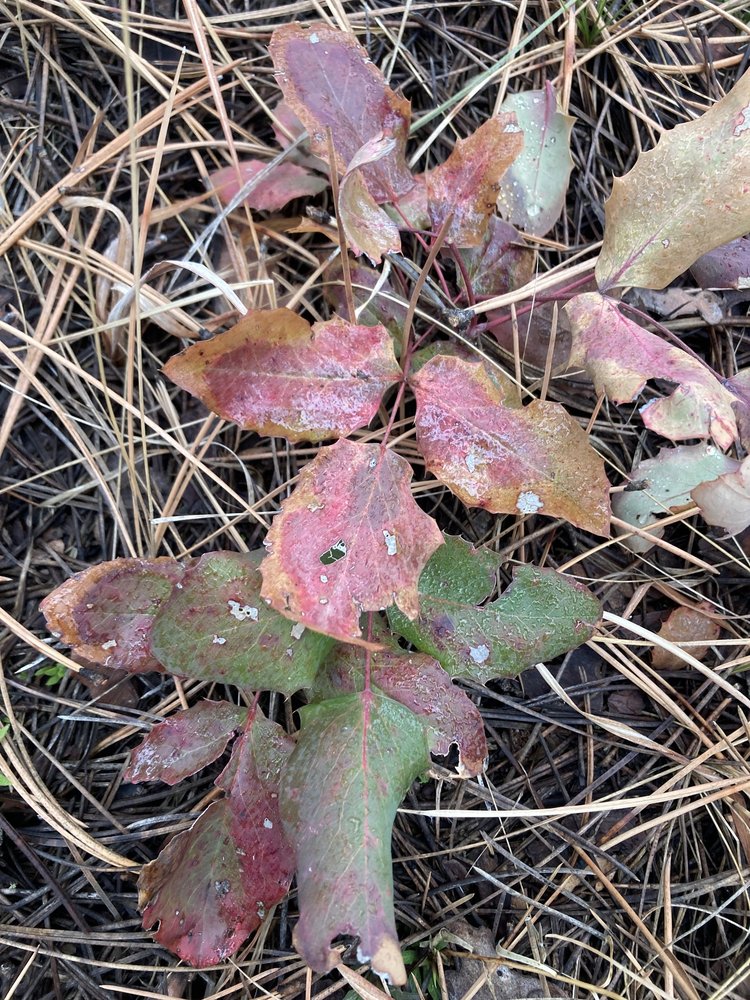
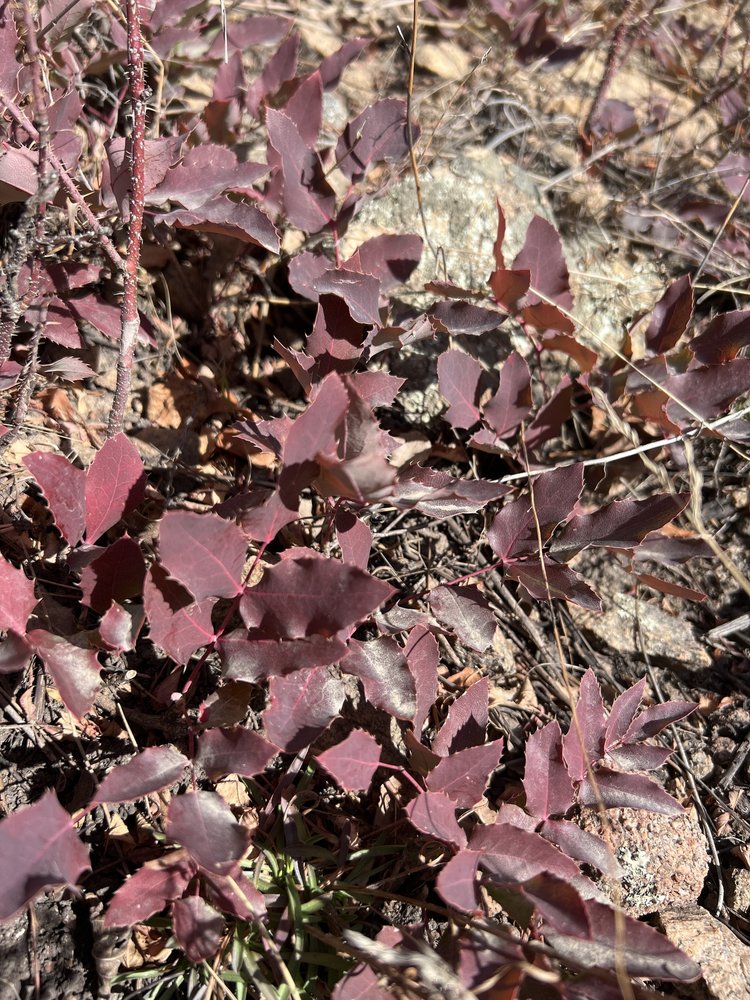
Oregon Grape (Mahonia repens) is a native evergreen shrub that creeps along the forest floor, rarely more than a foot tall, with spiny, holly-like leaves that turn red and purple in winter. It blooms from late April into July with dense clusters of fragrant yellow flowers, followed by tart, dusty-blue berries, and it is common under ponderosa pine across the Black Hills.
Free photos from other sources
| Family | Berberidaceae · Barberry |
|---|---|
| Status | Native shrub |
| Blooms | Late April into July, mostly May and June |
| Height | 10–30 cm (4–12 in) |
| Where | Shady to part-sun ponderosa pine and pine-oak forest floors, rocky slopes and aspen stands |
| Also called | Creeping Mahonia, Creeping Barberry, Creeping Oregon Grape, Holly Grape, Mountain Holly, húte zí (Lakota) |
| Synonym | Berberis repens, Berberis aquifolium var. repens, Odostemon repens |
| Toxicity | The roots, bark and leaves contain the alkaloid berberine; NC State Extension rates its poison severity as low, with vomiting or diarrhea if eaten, and the Forest Service calls the foliage slightly poisonous to livestock. |
| Traditional use | Sitting Bull College's 1998 Culturally Important Plants of the Lakota, which lists Oregon grape under Mahonia aquifolium, says the root and whole plant were used for stomach and digestive trouble, lung and other infections, and psoriasis. Johnston (1987) records that the Blackfoot used the roots to make a yellow dye. |
Roots, seeds & germination
Root: Rhizomes run 1.5–5 cm (½–2 in) below the soil surface and send up new stems as they go, and roots can reach about 1.8 m (6 ft) deep. The plant sprouts again from its rhizomes after a fire, but a severe fire that burns off the duff can kill it.
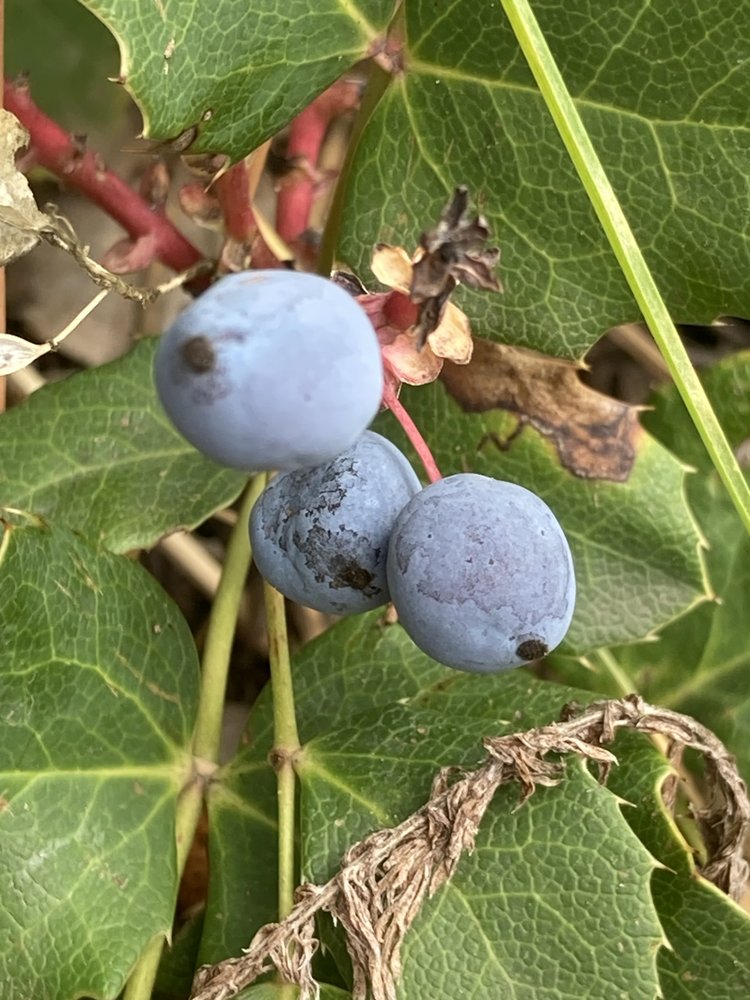
Seed: Each berry is about 6–10 mm (¼–⅜ in) long and holds 1–4 small seeds. Berries ripen around August and are spread by birds and mammals.
Germination: The seed is dormant and needs a long moist treatment. A Glacier National Park protocol gave 2 months warm and moist, then 5 months cold and moist, for 55–80 percent germination; sowing outdoors in fall chills the seed naturally. It can also be started from hardwood cuttings taken in early spring or by dividing the rhizomes.
How do you identify Oregon Grape?
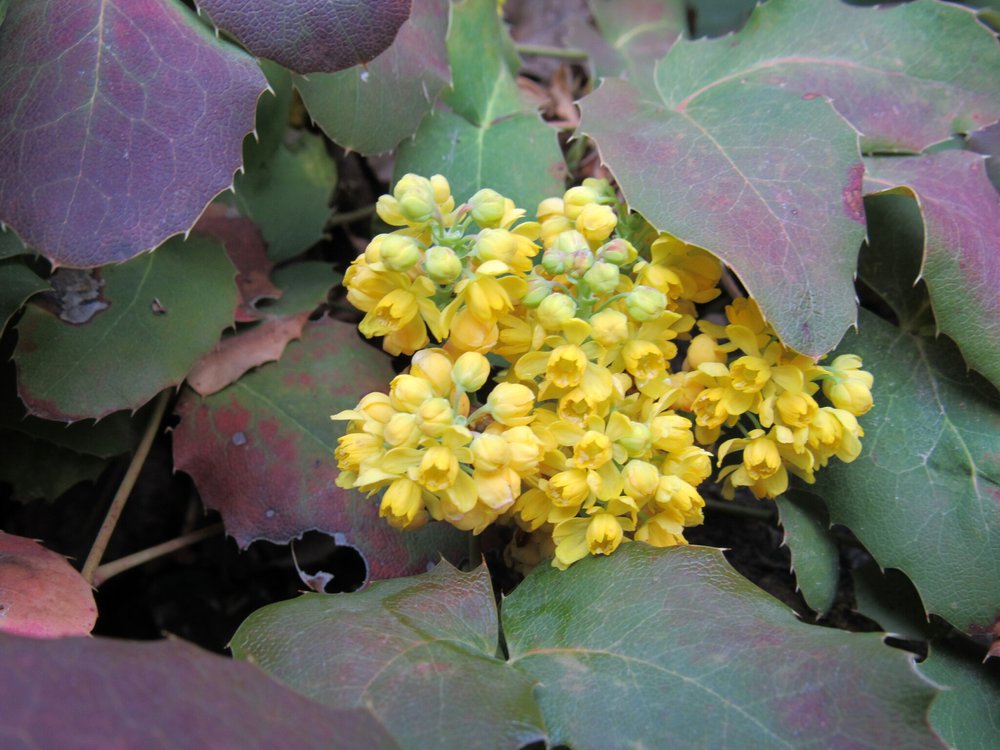
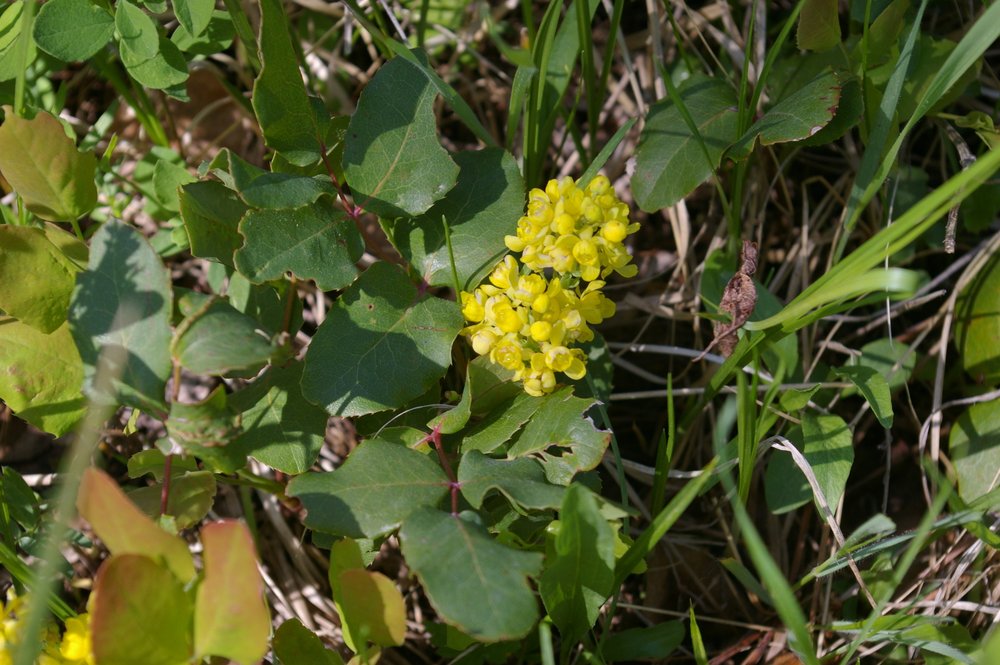
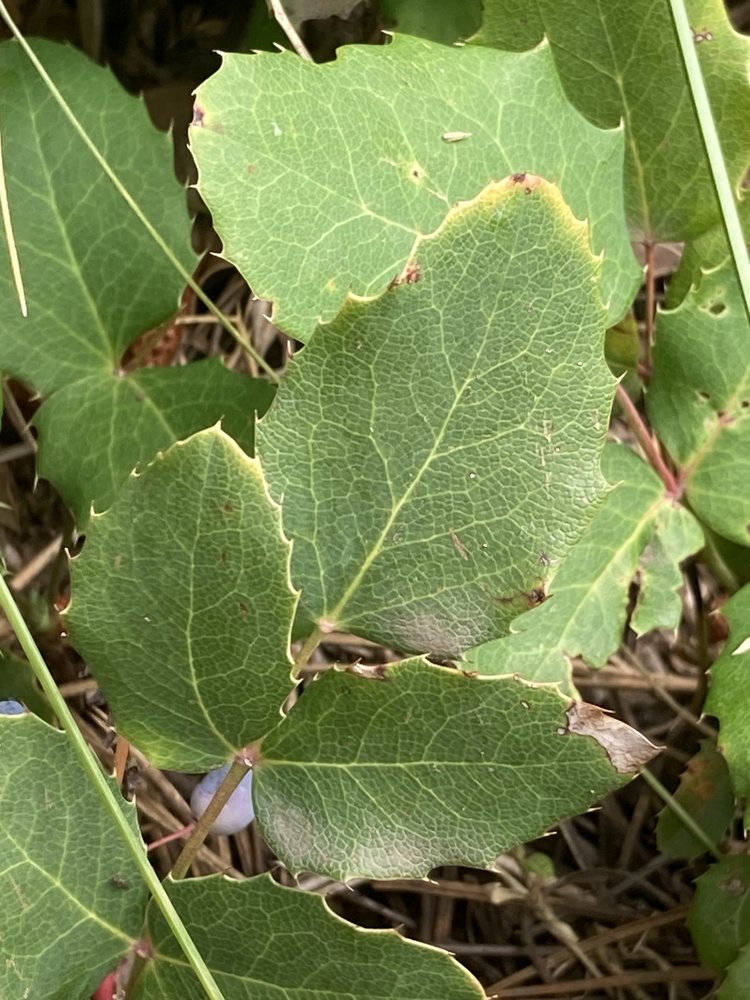
Look low, for mats of evergreen leaves 10–30 cm (4–12 in) tall under the pines. Each leaf has 3–7 leathery leaflets, usually 5 to 7, edged with small spine-tipped teeth like holly, dull blue-green on top and paler beneath; they stay on all winter and turn red or purple in the cold. Dense clusters of small, bright yellow, fragrant flowers open in spring, and late-summer berries are dark blue with a whitish, waxy bloom.
When does it bloom?
Late April into July, mostly May and June.
Where does it grow?
Dry to moist forest floors, mostly in partial shade under ponderosa pine, pine and bur oak, and aspen, and on rocky, often north-facing slopes and canyon sides. The 1986 plant survey of Jewel Cave National Monument lists it, NPSpecies lists it at Wind Cave, Jewel Cave and Devils Tower, and about 218 herbarium specimens come from all seven Black Hills counties, most from Lawrence County. SDSU says that in South Dakota it is found mainly in the Black Hills.
Other flowers to compare
Sources: USDA PLANTS Database: Mahonia repens (MARE11), creeping barberry; Plants of the World Online (Kew): Mahonia repens (Lindl.) G.Don, synonym of Berberis repens; USDA Forest Service Fire Effects Information System (FEIS): Mahonia repens; Reese, R.N. 2015. Berberidaceae: Mahonia repens. South Dakota Native Plant Research, SDSU Open PRAIRIE; Black Elk, L. & Flying By, W. 1998. Culturally Important Plants of the Lakota (entry 182, Oregon grape root, húte zí); Marriott, H. & Hartman, R.L. 1986. A Survey of the Vegetation of Jewel Cave National Monument; NPSpecies checklist, Wind Cave National Park vascular plants; NPSpecies checklist, Jewel Cave National Monument vascular plants; NPSpecies checklist, Devils Tower National Monument vascular plants; GBIF occurrence search: Mahonia repens, preserved specimens, South Dakota and Wyoming; Luna, T., Wick, D. & Hosokawa, J. 2001. Propagation protocol for Mahonia repens, Glacier National Park. Native Plant Network (RNGR); Fitzgerald, W. 2026. Plant Propagation Protocol for Mahonia repens. ESRM 412, University of Washington; SEINet flora portal: Berberis repens description; Native American Ethnobotany Database (BRIT): Mahonia repens uses; Arapaho Language Project, Rocky Mountain National Park plants: Oregon grape; Utah State University Extension, Center for Water-Efficient Landscaping: Creeping Barberry; NC State Extension Plant Toolbox: Berberis repens; iNaturalist: Berberis repens (taxon 133104).