Western Poison Ivy
Toxicodendron rydbergii
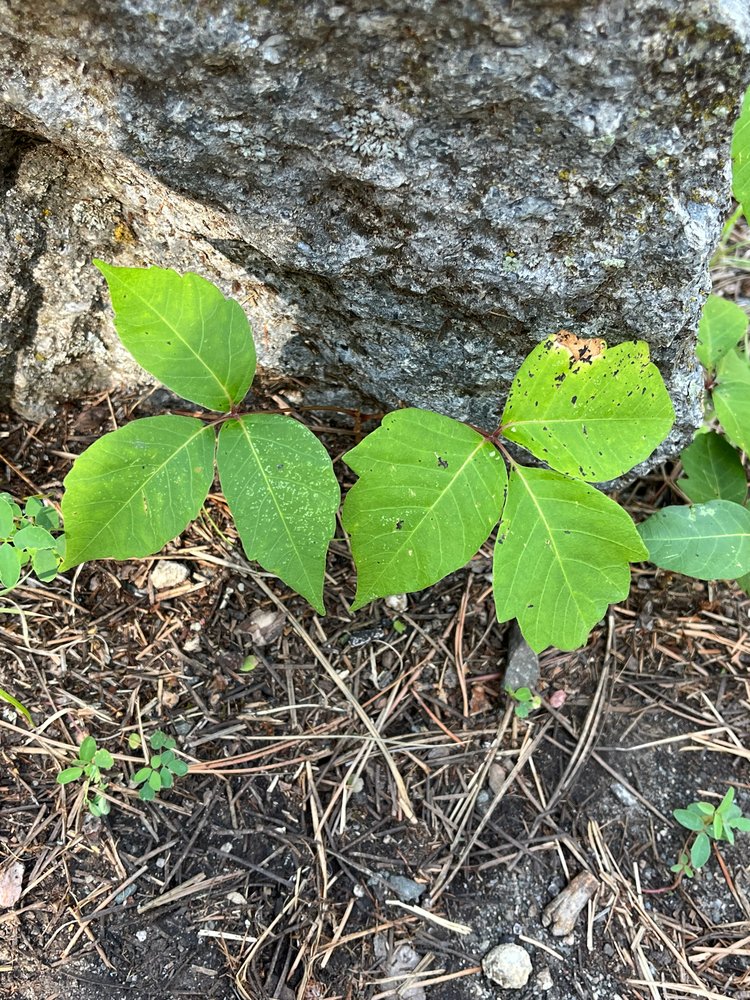
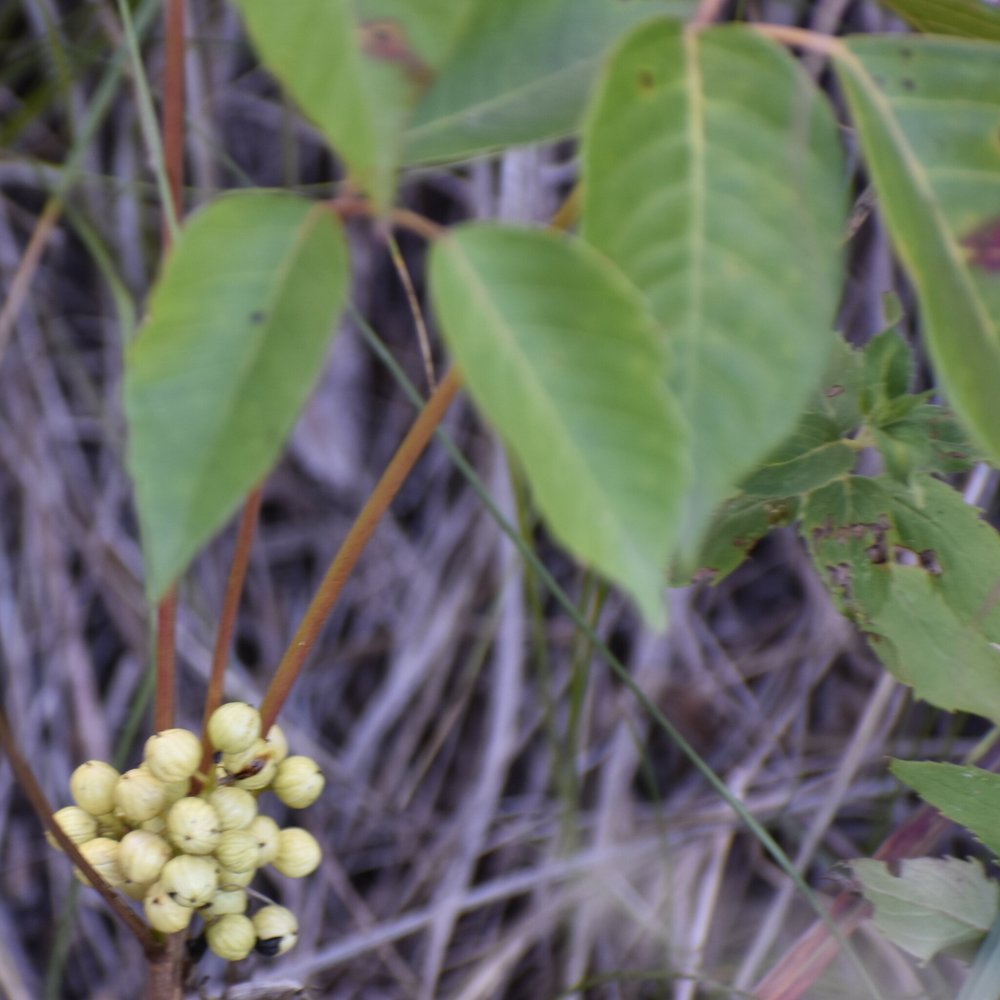
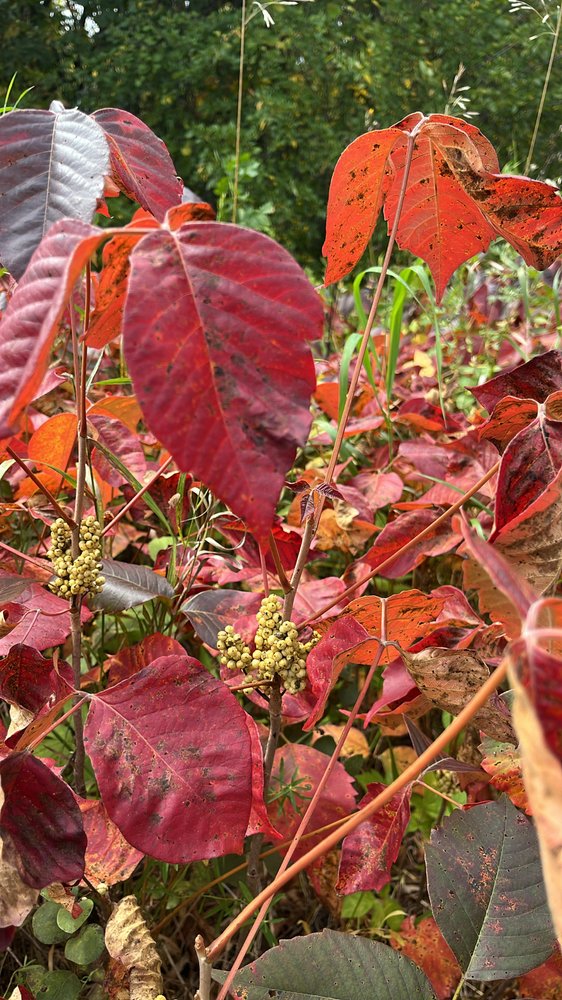
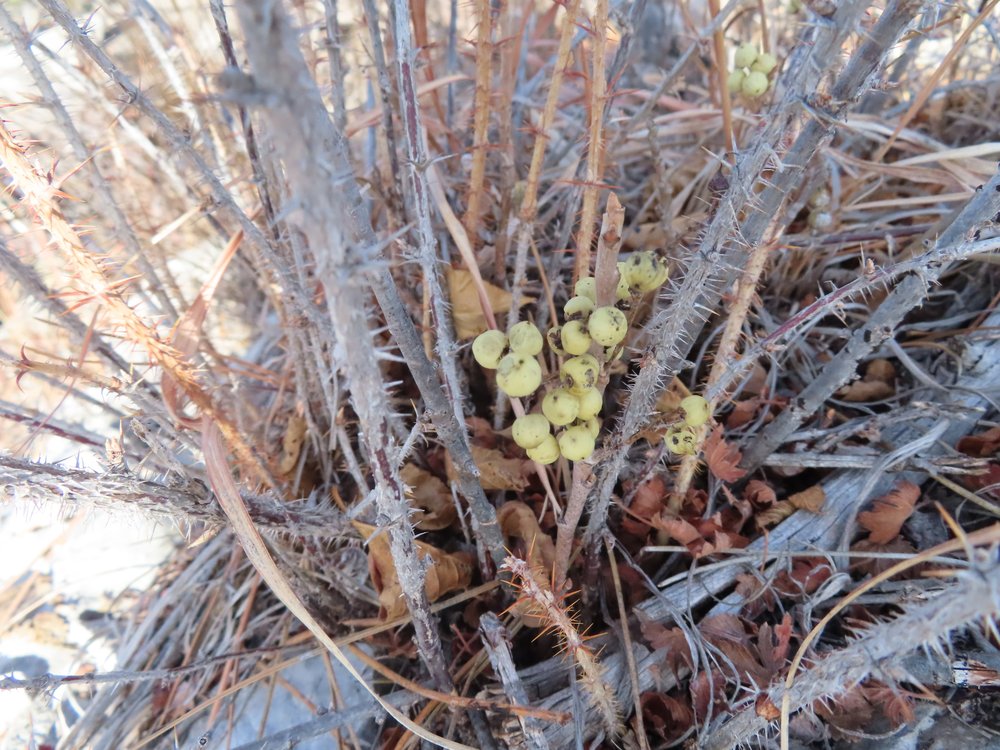
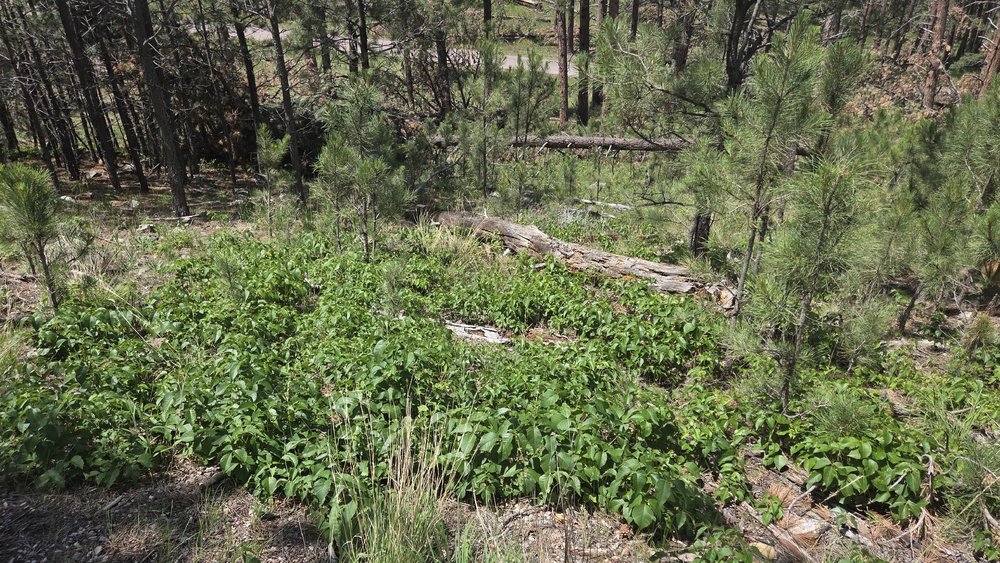
Western Poison Ivy (Toxicodendron rydbergii) is a native, low, woody shrub that spreads by underground stems into patches along trails, canyon bottoms and rocky slopes in the Black Hills. Each leaf has three shiny leaflets that turn yellow to red in fall, small greenish-white flowers open from late May into July, and clusters of dull white berries hang on into winter.
Free photos from other sources
| Family | Anacardiaceae · Cashew |
|---|---|
| Status | Native shrub |
| Blooms | Late May into July |
| Height | 10–60 cm (4–24 in) |
| Where | Canyon bottoms, stream banks, rocky slopes, cliff bases and open woods |
| Also called | Poison Ivy, Rydberg's Poison Ivy, wikȟóška pȟežúta (Lakota) |
| Synonym | Rhus radicans var. rydbergii, Rhus rydbergii, Toxicodendron radicans var. rydbergii, Toxicodendron radicans subsp. rydbergii |
| Toxicity | Every part of the plant, alive or dead, carries an oil called urushiol that causes an itchy, blistering rash in 80 to 90% of adults. |
| Traditional use | Sitting Bull College's 1998 Culturally Important Plants of the Lakota says the Lakota knew it for its long-lasting rash and avoided it, and treated the rash with a poultice made from an oak bark decoction. Gilmore found in 1919 that the Omaha and Ponca dreaded its poison, and he learned of no use for it. |
Roots, seeds & germination
Root: Long, branching underground stems run mostly 10–15 cm (4–6 in) below the surface and send up new stems as they go, so a patch may be one plant or several. Fibrous roots can reach 3.7 m (12 ft) deep, and plants sprout back from the underground stems after fire.
Seed: Each white berry holds one hard seed about 3–4 mm across, and only female plants fruit. Grouse, wild turkeys and at least 75 kinds of birds, plus deer, squirrels and mice, eat the fruit, which matters most to them in winter, and seeds that pass through a bird can still sprout.
Germination: The seed has a hard coat and a dormant embryo and usually needs scratching, as a bird's gut provides, or 3–4 months of cold, moist stratification, or both. In one test, stratified seed from five places germinated at only 0–3%; in another, seed that had passed through sharp-tailed grouse germinated at 86% after warm and then cold stratification.
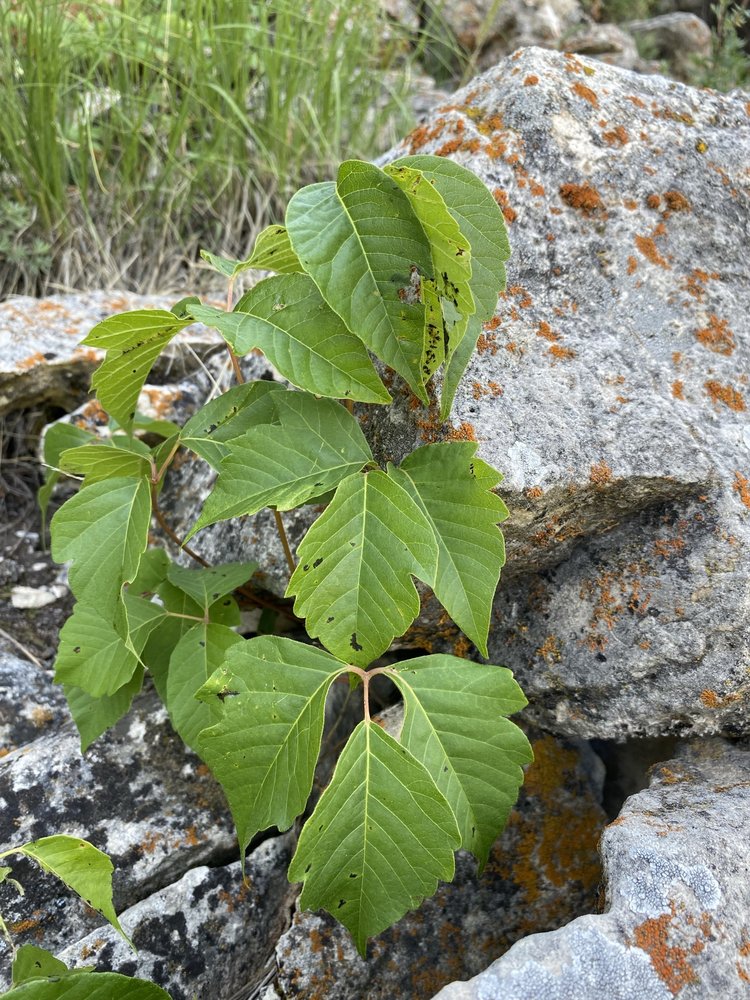
How do you identify Western Poison Ivy?
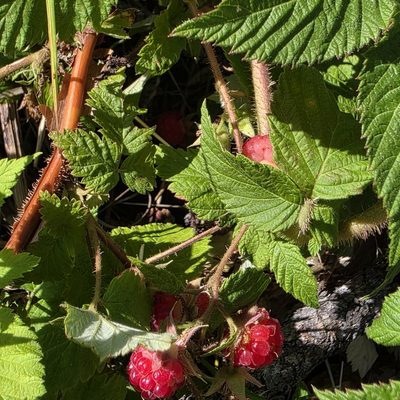
Look for a low patch of single, upright woody stems, usually knee-high or less, each topped by a few long-stalked leaves of three leaflets. The end leaflet sits on its own stalk and is usually the largest, and the two side leaflets are stalkless or nearly so. Leaflets may be toothless or have a few large teeth, sometimes on one side only. The woody stem is hairless, and this western species never climbs. Dull white berries stay on the bare stems through winter. Skunkbush Sumac has three stalkless, coarsely toothed leaflets, wedge-shaped at the base, that smell when bruised, and red, hairy berries.
When does it bloom?
Late May into July.
Where does it grow?
Rocky places with some moisture and light: canyon floors and rocky creek terraces, the bases and ledges of limestone cliffs, around granite boulders, open ponderosa pine and bur oak woods, riparian cottonwoods, and trail and road edges. The Forest Service's Fire Effects review says western poison ivy generally grows in more alkaline soils than eastern poison ivy. The 1986 Jewel Cave plant survey lists it, it is on the Wind Cave, Mount Rushmore and Devils Tower species lists, and about 37 herbarium specimens from 1892 to 2020 come from all seven Black Hills counties, including Spearfish Canyon.
Other plants to compare
Sources: Innes, R.J. 2012. Toxicodendron radicans, T. rydbergii; eastern poison-ivy, western poison-ivy. USDA Forest Service Fire Effects Information System (FEIS); CDC / NIOSH: Poisonous Plants and Work; FDA Consumer Update: Outsmarting Poison Ivy and Other Poisonous Plants (2008, archived); Pandian, V., M. Renz & A. Pearce. 2020. Poison Ivy (XHT1272). University of Wisconsin-Madison Extension; Orloff, N. 2022. Identifying Montana Plants that Cause Skin Irritation. MSU Extension LILA newsletter; Oklahoma State University Extension: Poison Ivy, Poison Oak and Similar Plant Identification; USDA Forest Service Celebrating Wildflowers: Western Poison-ivy (W. Fertig); Minnesota Wildflowers: Western Poison Ivy; USDA NRCS Plant Guide: Skunkbush Sumac, Rhus trilobata; USDA Forest Service FEIS: Rhus trilobata (skunkbush sumac); POWO: Toxicodendron rydbergii (Small ex Rydb.) Greene; Marriott, H. & R. Hartman. 1986. Vegetation of Jewel Cave National Monument (plant list); NPSpecies checklist: Wind Cave National Park vascular plants; NPSpecies checklist: Jewel Cave National Monument vascular plants; NPSpecies checklist: Devils Tower National Monument vascular plants; NPSpecies checklist: Mount Rushmore National Memorial vascular plants; Black Elk, L. & W. Flying By. 1998. Culturally Important Plants of the Lakota (Sitting Bull College), as filed in SD PUC docket HP14-001; Gilmore, M.R. 1919. Uses of Plants by the Indians of the Missouri River Region; Rydberg, P.A. 1896. Flora of the Black Hills of South Dakota. Contributions from the U.S. National Herbarium 3(8); GBIF occurrence search: Toxicodendron rydbergii, preserved specimens; iNaturalist: Toxicodendron rydbergii observations in the Black Hills.