Red Raspberry
Rubus idaeus subsp. strigosus
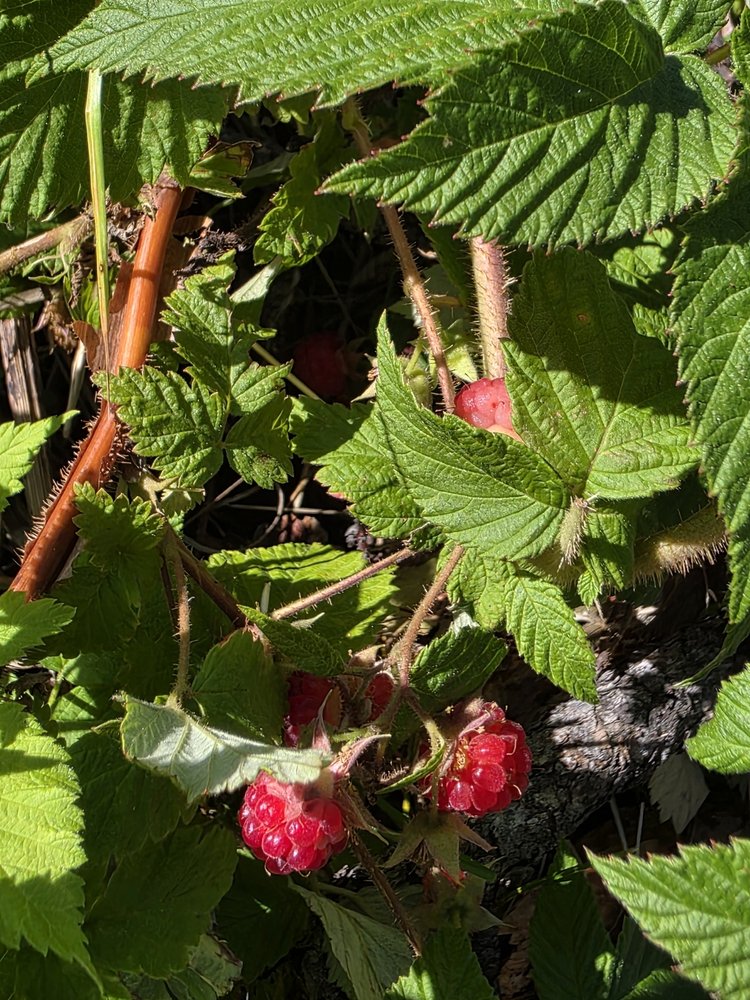
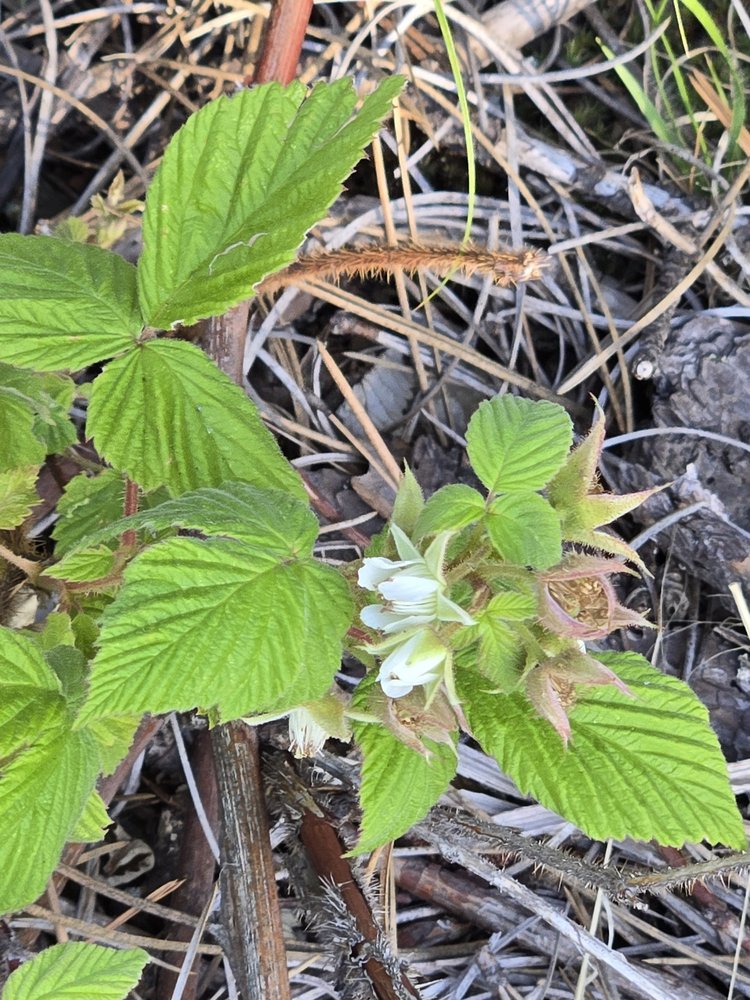
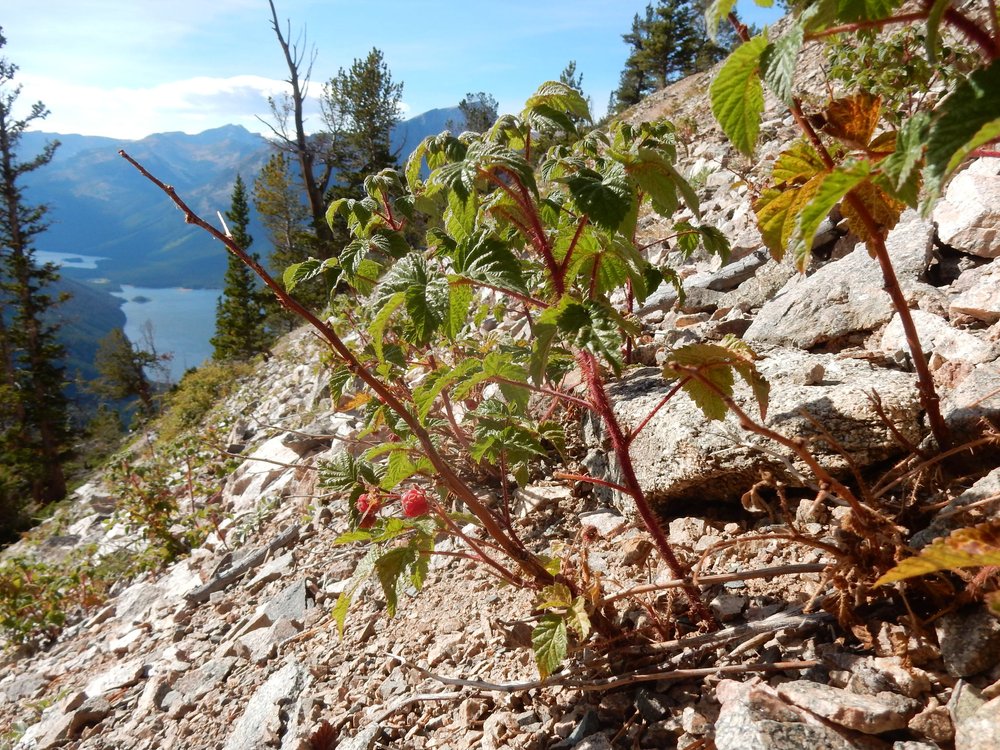
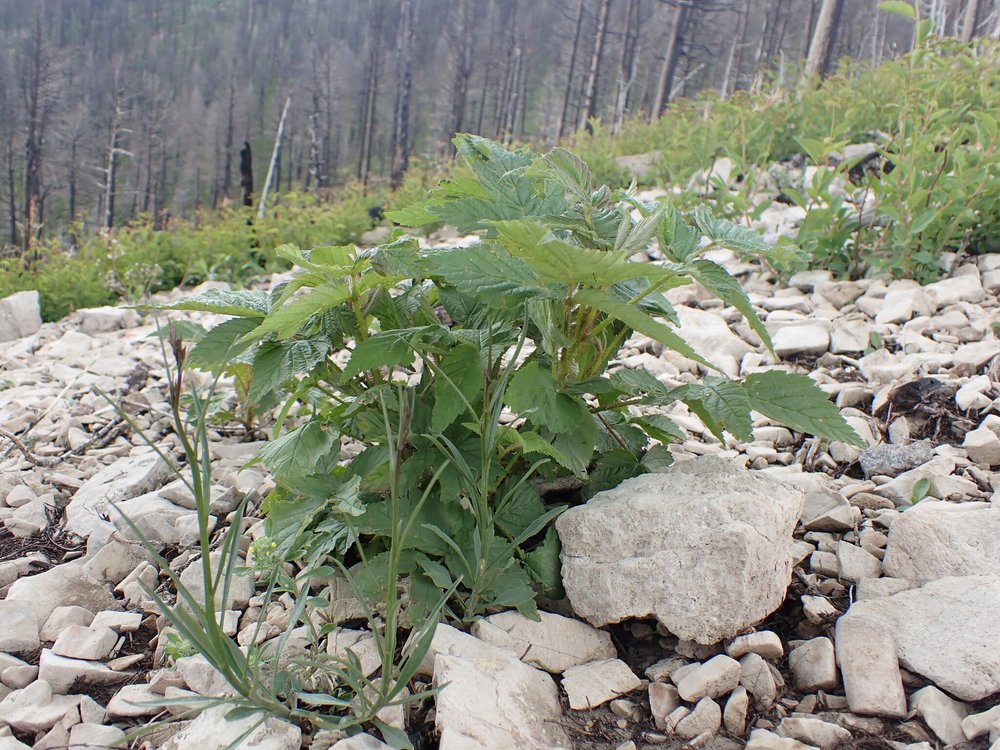
Red Raspberry (Rubus idaeus subsp. strigosus) is a native shrub whose prickly, bristly canes each live just two years. In the Black Hills it forms patches on talus and rocky slopes, along trails and stream banks, and thickly in burned or logged forest, blooming June into July with small, nodding white flowers, and its sweet red berries ripen from mid-July through August.
Free photos from other sources
| Family | Rosaceae · Rose |
|---|---|
| Status | Native shrub |
| Blooms | June into July, a few from late May |
| Height | 0.5–3 m (1½–10 ft) |
| Where | Talus, rocky slopes, trailsides, stream banks and burned or logged forest |
| Also called | American Red Raspberry, Wild Red Raspberry, Wild Raspberry, Grayleaf Red Raspberry |
| Synonym | Rubus strigosus, Rubus idaeus var. strigosus, Rubus idaeus subsp. sachalinensis, Rubus sachalinensis var. sachalinensis, Rubus idaeus var. aculeatissimus, Rubus idaeus var. melanolasius, Rubus melanolasius, Batidaea strigosa |
Roots, seeds & germination
Root: A long-lived, branching root system with a woody crown sits fairly shallow in the soil. Buds along the roots send up new shoots every year, so one seedling becomes a spreading patch, and the plant resprouts fast when fire or cutting kills the canes.
Seed: Each small segment of the berry holds one hard-coated seed. Birds, bears, chipmunks and mice spread the seeds, which build up in forest soil and can stay alive for 60–100 years, waiting for a fire or logging to open the canopy.
Germination: Slow and hard to get: the seed has a thick coat and a dormant embryo. FEIS gives about 90 days of warm, moist stratification followed by 90 days cold; the USDA Plant Guide and SDSU say to sow cleaned seed in fall, or give 1–2 months of cold, moist treatment before spring sowing. Most growers divide root suckers instead.
How do you identify Red Raspberry?
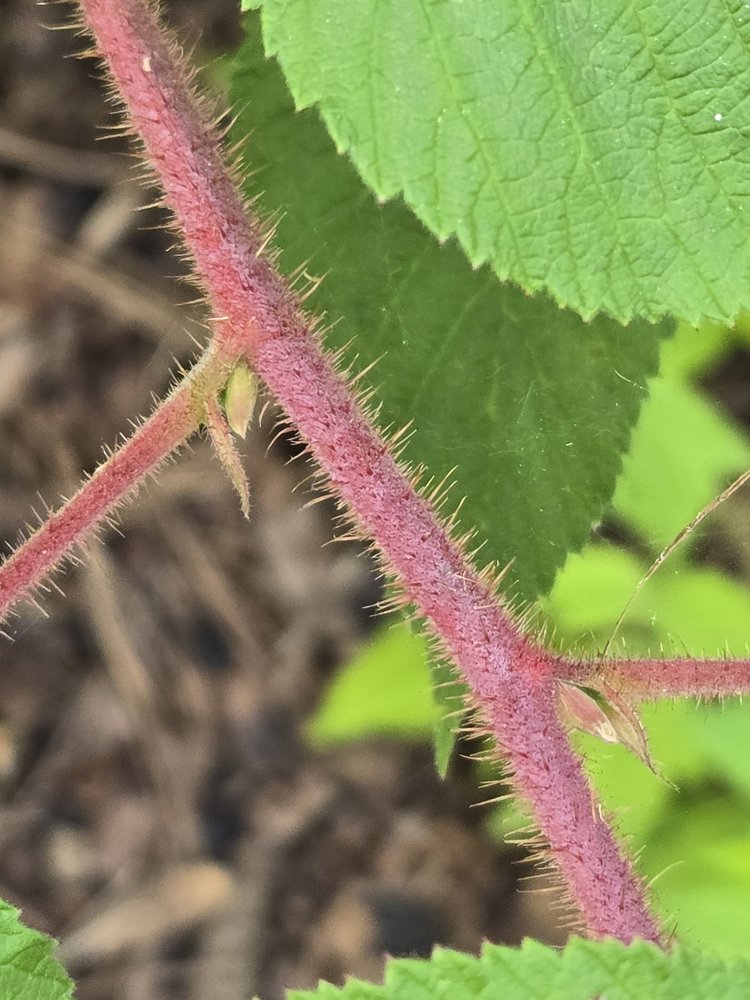
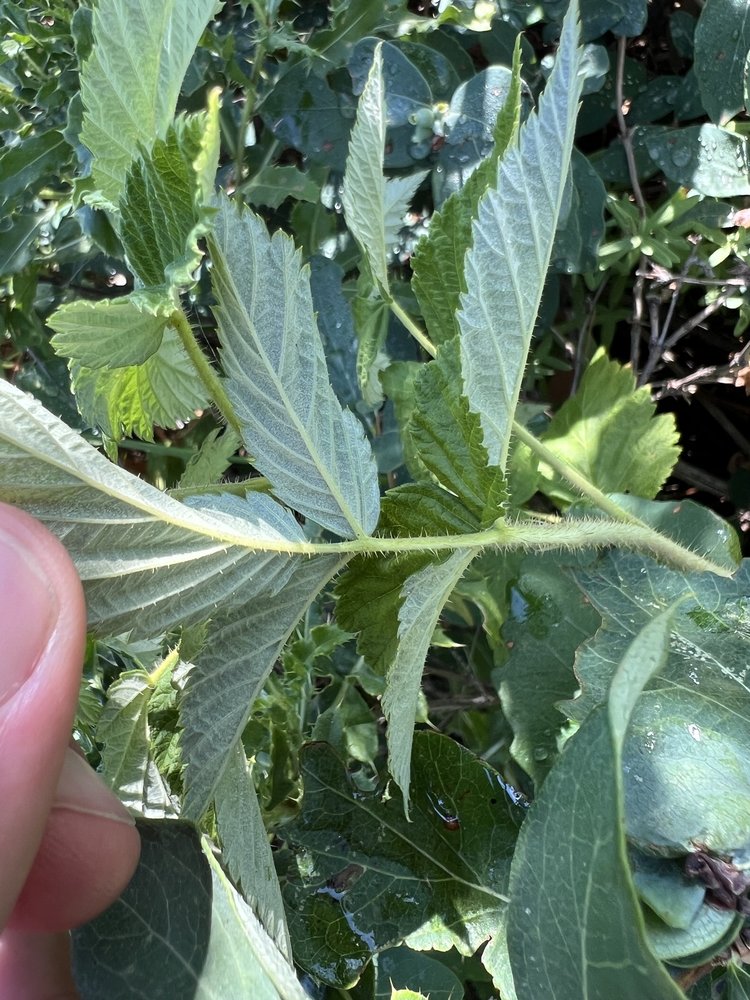
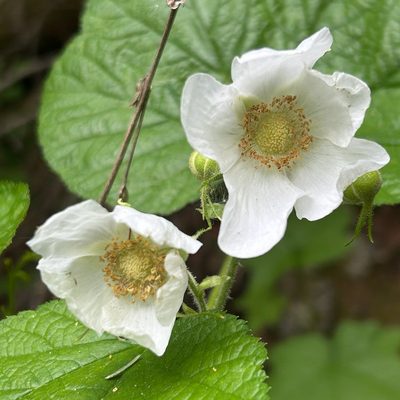
Look for a patch of upright to arching canes, knee- to chest-high, densely covered with fine, straight bristles and small prickles. The leaves have three or five toothed leaflets, and the underside is white to silvery-gray and felty, the single best field mark. The small white flowers, about 1 cm (⅜ in) across, hang down from short side shoots, with narrow petals that soon fall. The ripe red berry slides off its white core as a hollow cap. Thimbleberry has no prickles, large maple-shaped leaves that are green on both sides, and much bigger flowers, 3–5 cm (1¼–2 in) across.
When does it bloom?
June into July, a few from late May.
Where does it grow?
Talus and boulder slopes, canyon walls, trailsides, roadsides, forest openings and stream banks, in birch, aspen and ponderosa pine stands, at about 1,190–2,175 m (3,900–7,140 ft). It booms after a hot fire or logging, when seed stored for decades in the soil sprouts; in the southern Black Hills, hot crown fires in ponderosa pine produced dense raspberry stands within five years. The 1986 Jewel Cave plant survey lists it as wild raspberry, it is on the Wind Cave, Mount Rushmore and Devils Tower species lists, and about 80 herbarium specimens come from six of the seven Black Hills counties.
Other plants to compare
Sources: USDA Forest Service FEIS: Tirmenstein, D. 1990. Rubus idaeus (American red raspberry); USDA NRCS Plant Guide: American Red Raspberry, Rubus idaeus L.; Reese, R.N. 2015. Rosaceae: Rubus idaeus ssp. strigosus. South Dakota Native Plant Research, SDSU Open PRAIRIE; Plants of the World Online (Kew): Rubus idaeus subsp. strigosus (Michx.) Focke, accepted; Plants of the World Online (Kew): Rubus strigosus Michx., synonym of R. idaeus subsp. strigosus (following Flora of North America); ITIS web service: Rubus idaeus ssp. strigosus (TSN 524636), accepted name given as Rubus sachalinensis var. sachalinensis; Go Botany (Native Plant Trust): Rubus idaeus; USDA Forest Service FEIS: Rubus parviflorus (thimbleberry); Rocky Mountains Flora: Wild Raspberry; Black Elk, L. & Flying By, W. 1998. Culturally Important Plants of the Lakota (entry 261, Rubus occidentalis, tȟakȟáŋhečala hú); Gilmore, M.R. 1919. Uses of Plants by the Indians of the Missouri River Region. 33rd Annual Report of the Bureau of American Ethnology (Internet Archive scan); Riggs, S.R. 1890. A Dakota-English Dictionary (ed. J.O. Dorsey). Contributions to North American Ethnology vol. 7 (Internet Archive scan): takaŋheča, takaŋheča-hu; Marriott, H. & Hartman, R.L. 1986. A Survey of the Vegetation of Jewel Cave National Monument; NPSpecies checklist, Wind Cave National Park vascular plants; NPSpecies checklist, Jewel Cave National Monument vascular plants; NPSpecies checklist, Mount Rushmore National Memorial vascular plants; NPSpecies checklist, Devils Tower National Monument vascular plants; GBIF occurrence search: Rubus idaeus, preserved specimens, South Dakota and Wyoming; GBIF occurrence search: Rubus occidentalis, South Dakota; iNaturalist: Rubus idaeus (taxon 54436).