Kinnikinnick
Arctostaphylos uva-ursi
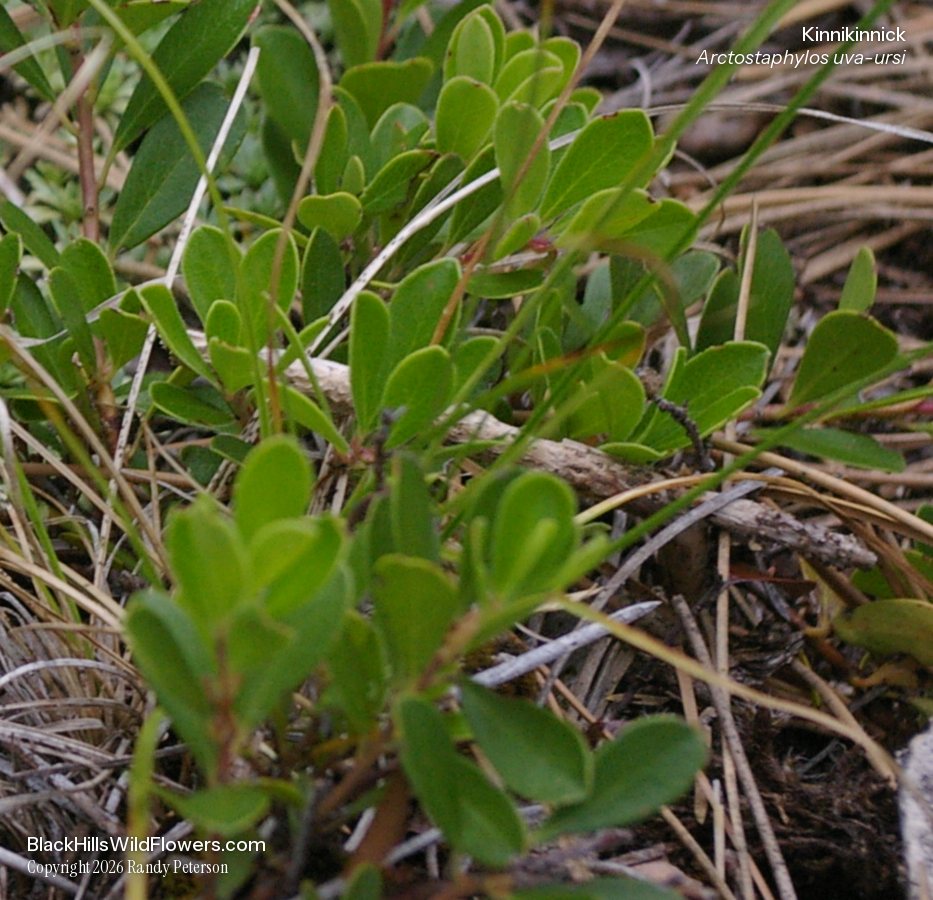
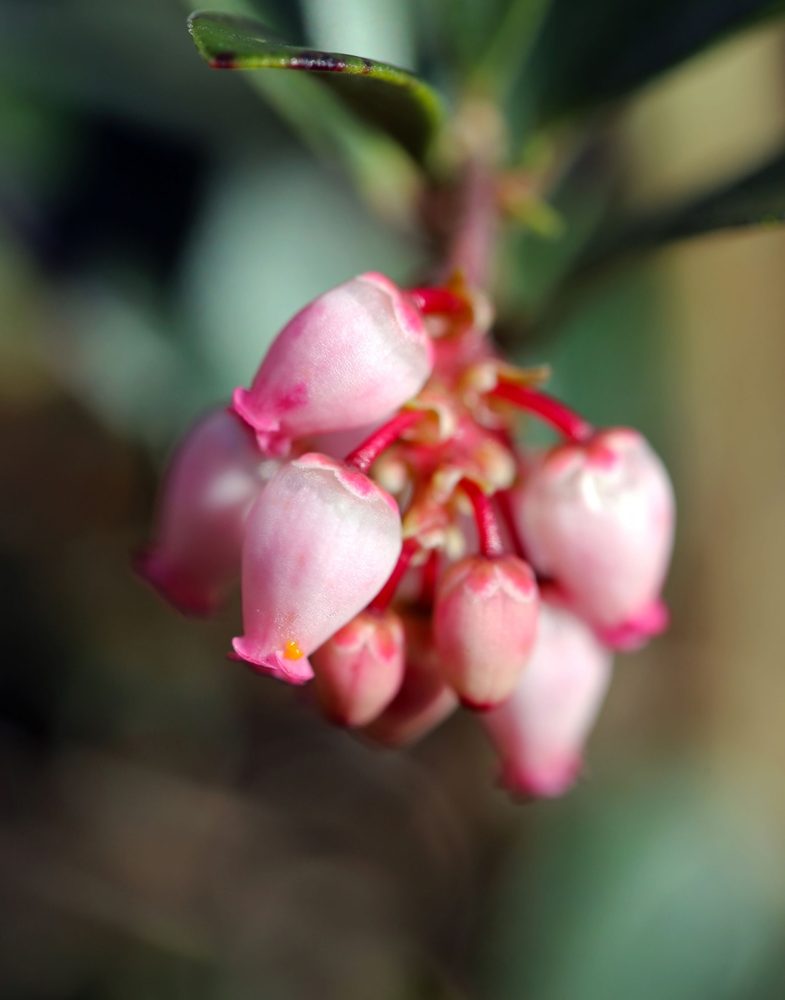
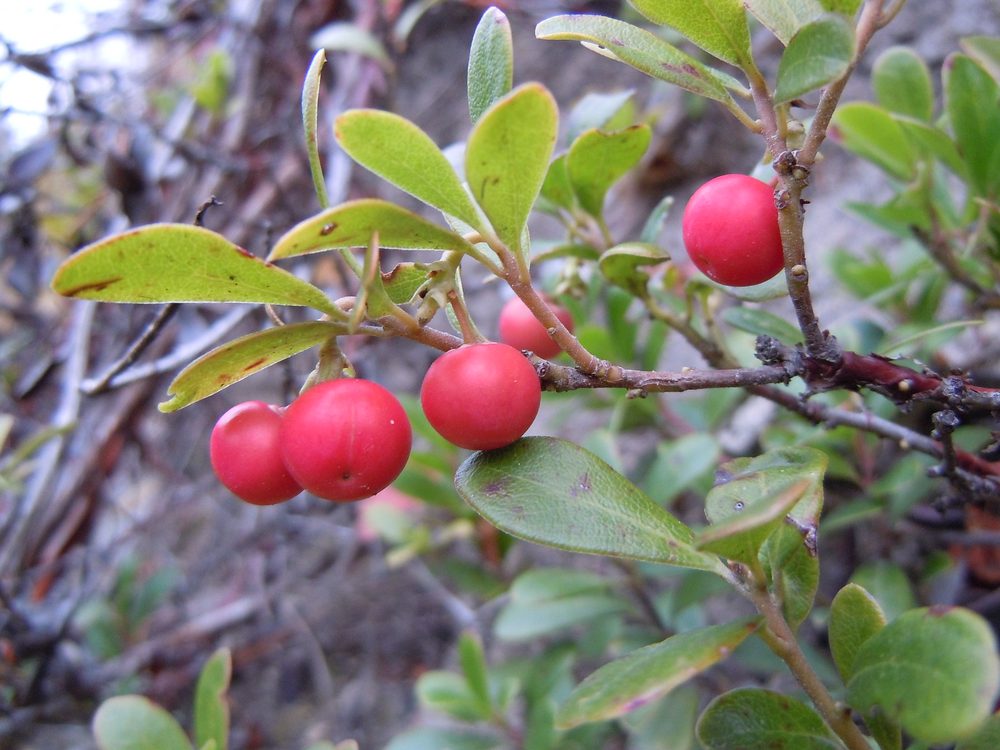
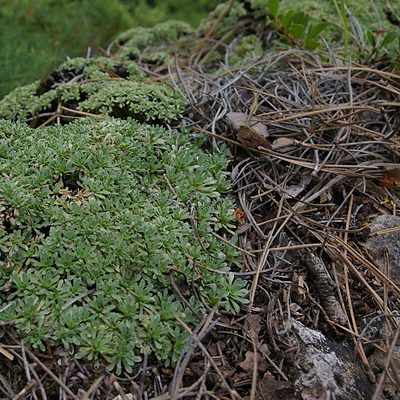
Kinnikinnick (Arctostaphylos uva-ursi), also called bearberry, is a mat-forming native evergreen shrub with shiny, leathery leaves, white to pink urn-shaped flowers and pea-sized red berries. It blooms May into July and is a common understory plant in open pine forest in the Black Hills. Photographed in the Black Hills.
Free photos from other sources
| Family | Ericaceae · Heath |
|---|---|
| Status | Native shrub |
| Blooms | May into July |
| Height | 10–20 cm (4–8 in) |
| Where | Open pine forest; rocky to sandy soil |
| Also called | Bearberry, Sandberry, Kinnikinnik, Mountain Box, Hog Crawberry, čhaŋlí wápe (Lakota) |
| Traditional use | Sitting Bull College's 1998 Culturally Important Plants of the Lakota records the fruit as trail food and a whole-plant infusion for coughs, colds and back pain. SDSU notes that the dried leaves were the main ingredient in traditional smoking mixes called kinnikinnick. |
Roots, seeds & germination
Root: Trailing stems put down feeding roots at the nodes that seldom go deeper than the duff, while the main roots reach into mineral soil.
Seed: Each red fruit, 4–10 mm across, holds five bony, one-seeded nutlets. Fruit hangs on through winter, and animals and gravity scatter it. Good seed crops come every 1 to 5 years.
Germination: Seeds have hard coats and dormant embryos. SDSU recommends acid scarification followed by warm and cold stratification, or sowing outdoors in fall and allowing up to two years.
How do you identify Kinnikinnick?
Look for trailing stems that form mats, reddish when young and pale and peeling when older, and leathery, shiny, alternate evergreen leaves, ½–1 inch long and round-oval with smooth edges. Flowers hang in short clusters at the branch tips and are urn-shaped, narrower at the opening than at the base. The red berries hold 5 nutlets.
When does it bloom?
May into July.
Where does it grow?
A common understory plant in open pine forest in the Black Hills, on rocky to sandy, acidic soil. A Forest Service classification names ponderosa pine with kinnikinnick as its own forest type, with kinnikinnick covering 10 to 85 percent of the undergrowth.
Other plants to compare
Sources: Black Hills National Forest: Black Hills Native Plants; SDSU Open PRAIRIE: Arctostaphylos uva-ursi; Forest Service, Fire Effects Information System: Arctostaphylos uva-ursi; Minnesota Wildflowers: Bearberry; Forest Service: Forest Vegetation of the Black Hills National Forest, A Habitat Type Classification (RM-276); Marriott and Hartman 1986, A Survey of the Vegetation of Jewel Cave National Monument; Culturally Important Plants of the Lakota (Black Elk and Flying By, Sitting Bull College, 1998), filed with the South Dakota PUC.