Bunchberry
Cornus canadensis
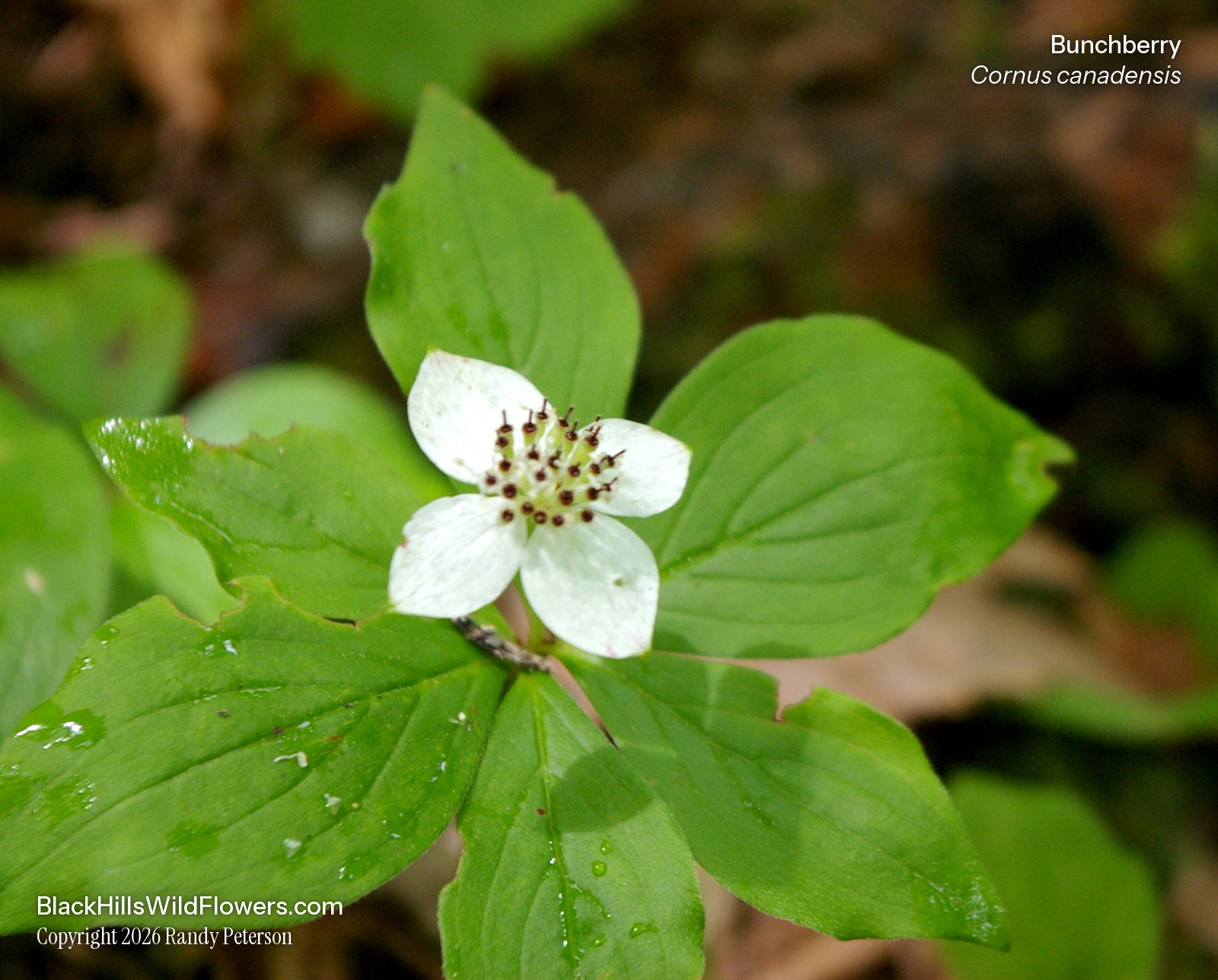
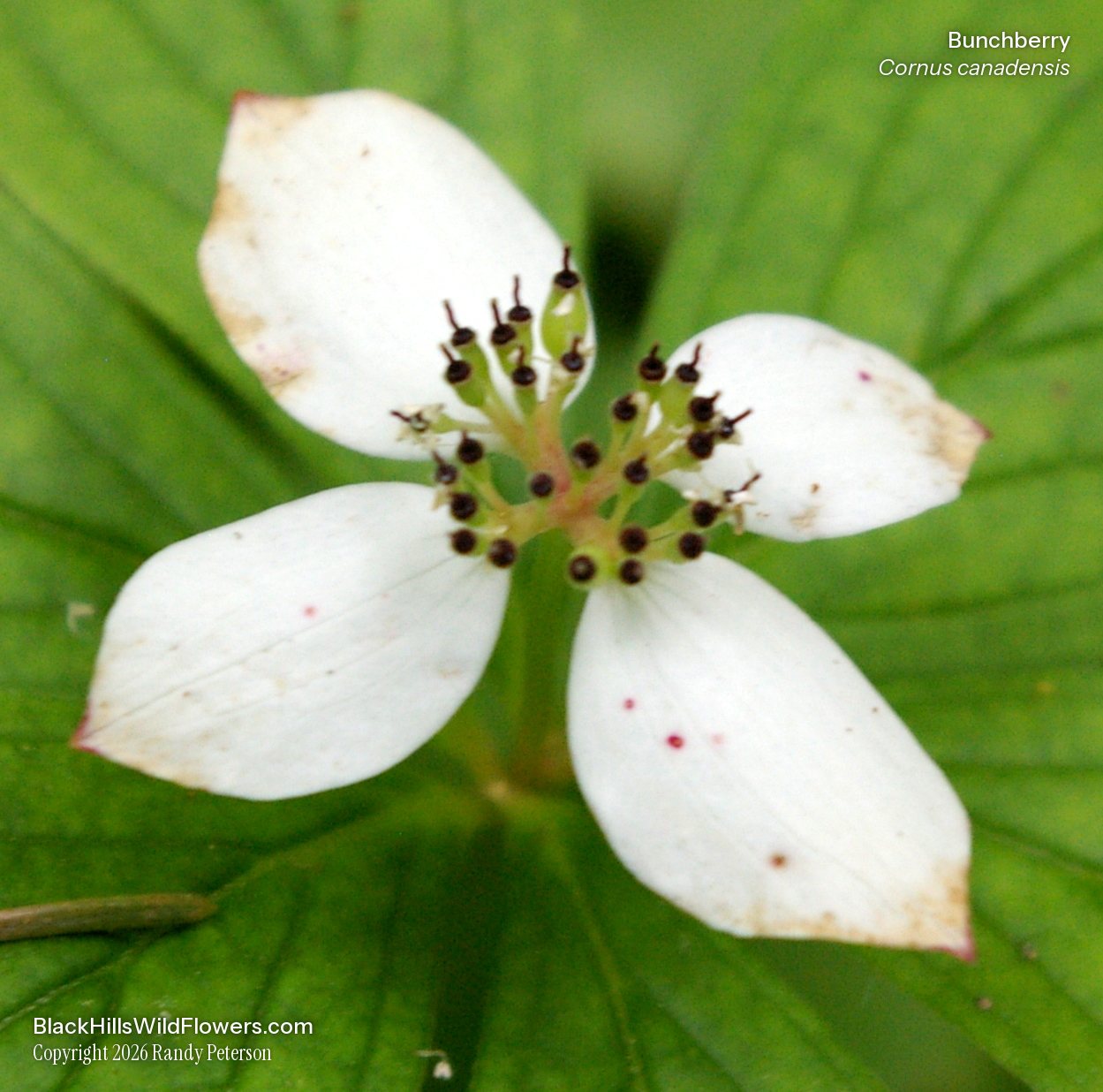
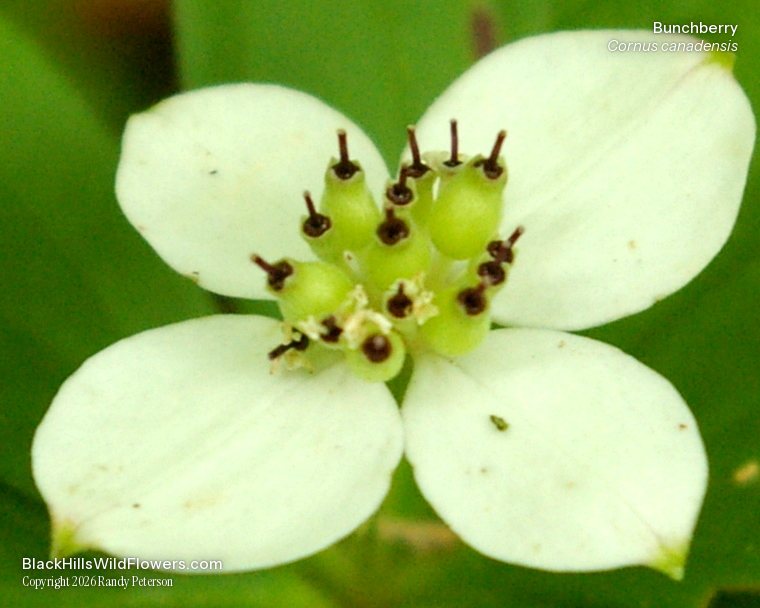
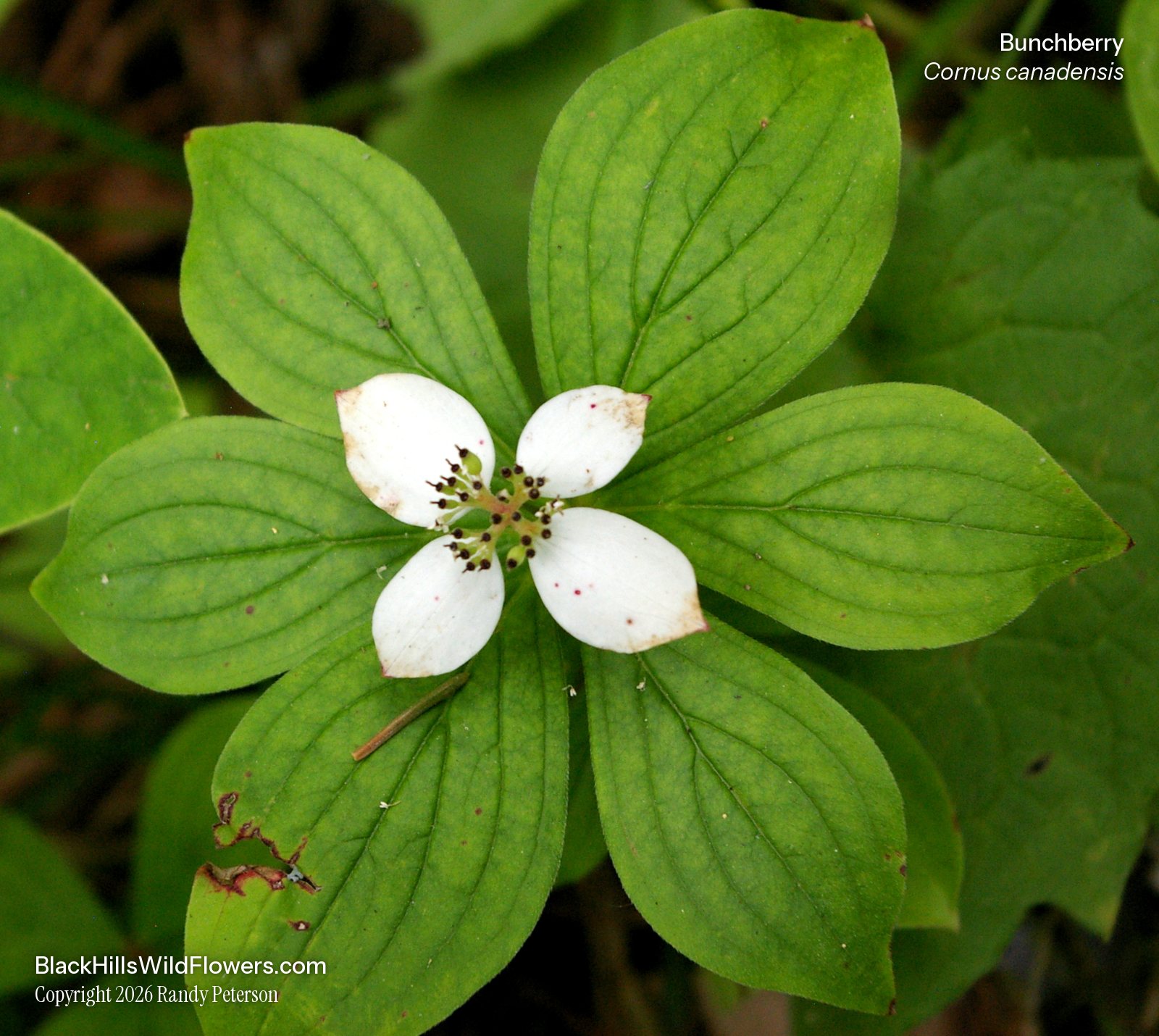
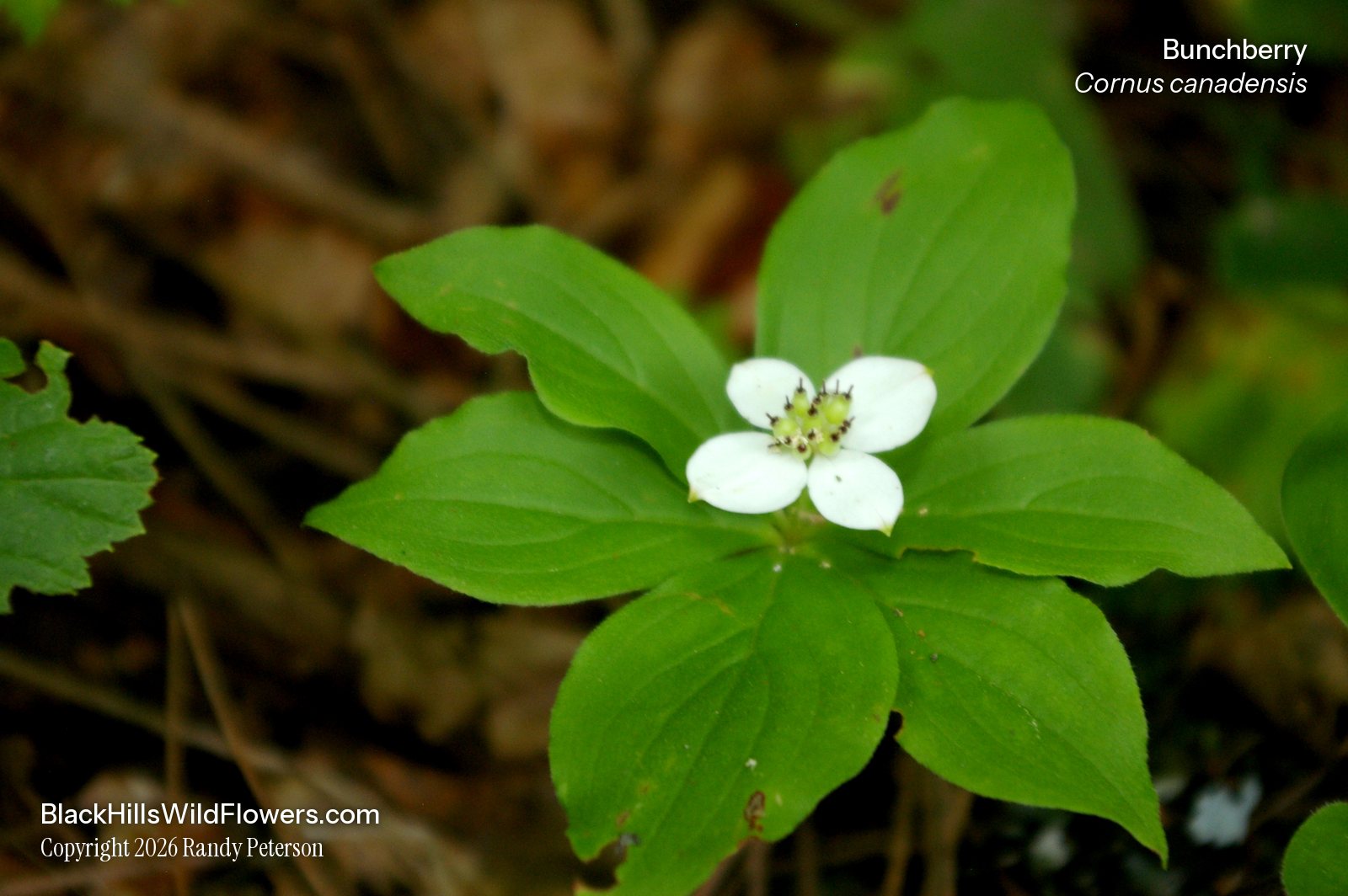
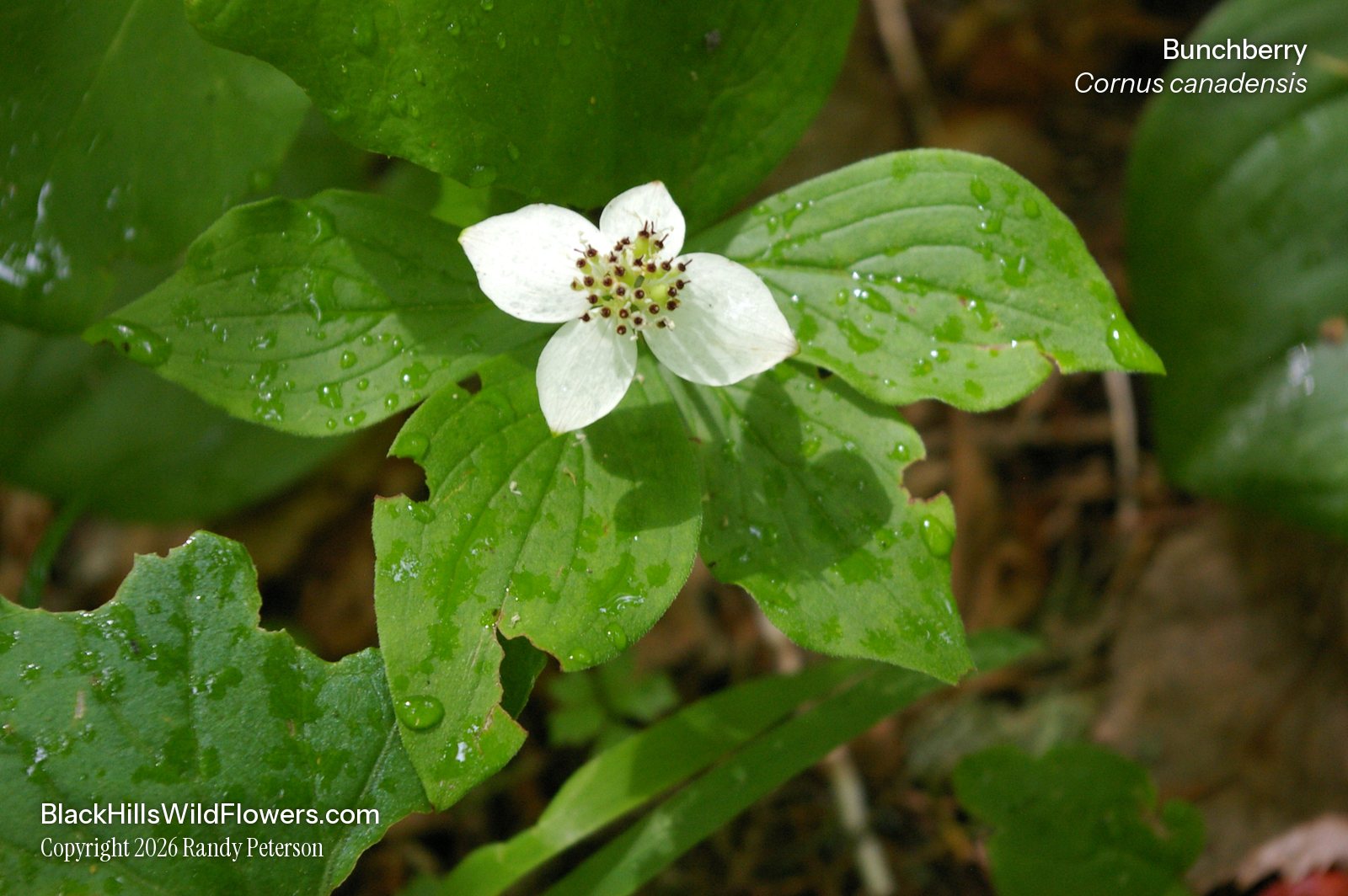
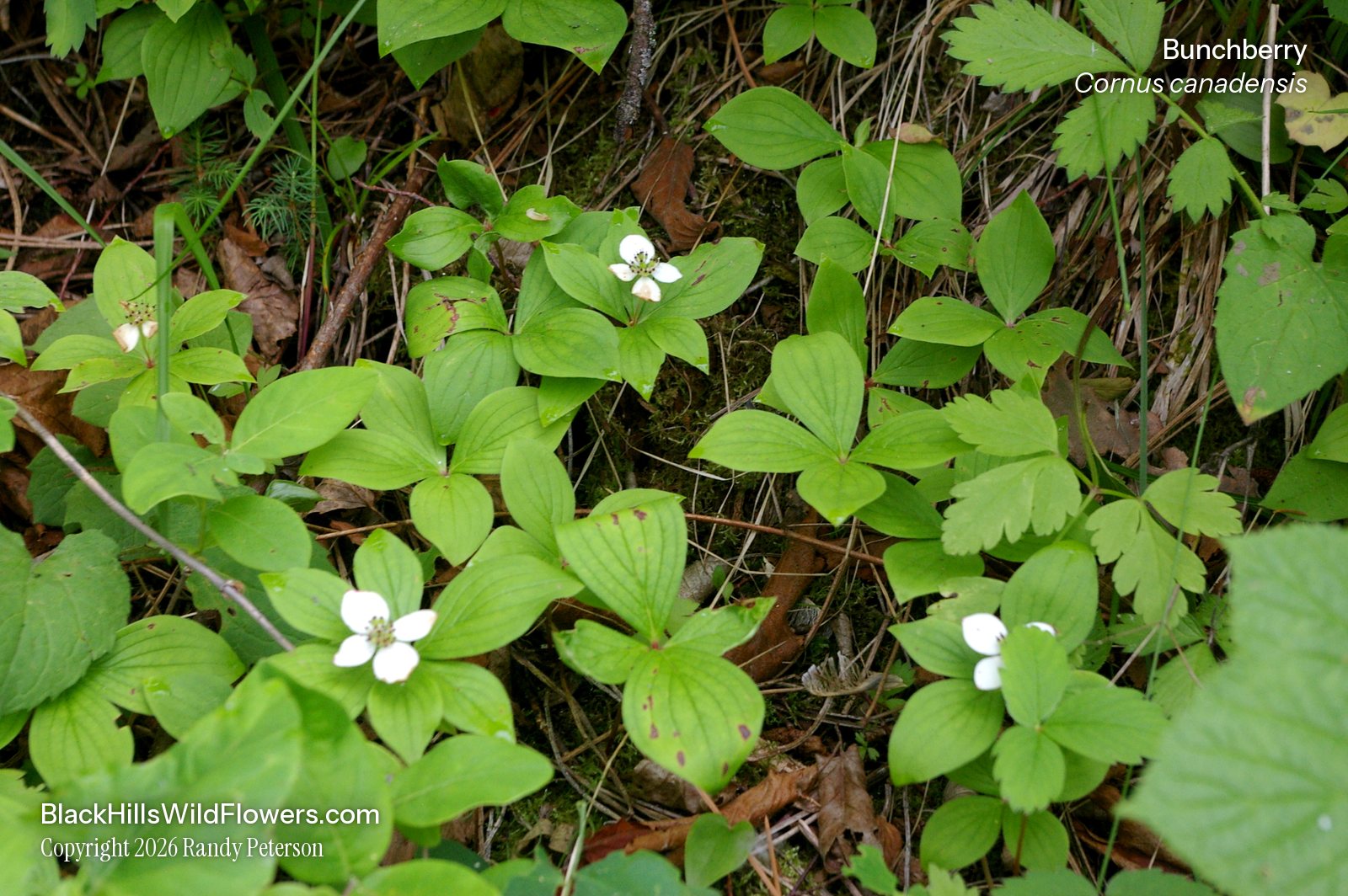
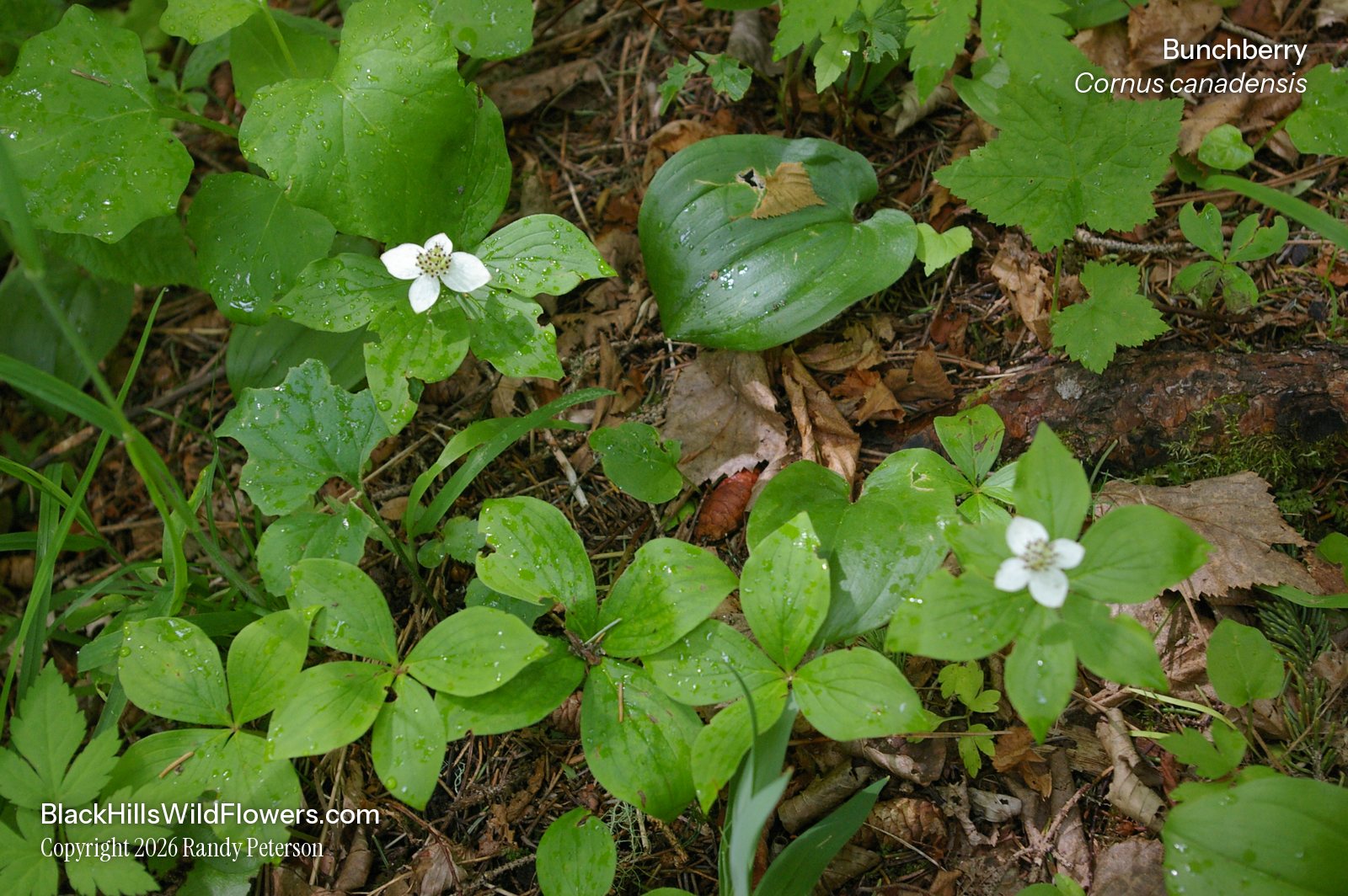
Bunchberry (Cornus canadensis) is a low native perennial with what looks like one white flower, really four white bracts (petal-like leaves) around a cluster of tiny flowers, above a whorl of 4 to 6 leaves. In the Black Hills it grows in moist aspen, birch and mixed conifer forests at mid to high elevations, blooming by midsummer and bearing bright red fruit in late summer. Photographed in the Black Hills.
| Family | Cornaceae · Dogwood |
|---|---|
| Status | Native perennial |
| Blooms | May into July |
| Height | 10–20 cm (4–8 in) |
| Where | Moist aspen, birch and mixed conifer forests at mid to high elevations |
| Also called | Bunchberry Dogwood, Creeping Dogwood |
| Synonym | Chamaepericlymenum canadense |
Roots, seeds & germination
Root: Creeping, woody rhizomes (underground stems), most of them 4–13 cm deep, that can grow up to 30 cm a year. It resprouts from them after a fire kills the top.
Seed: Berry-like fruits, 5–8 mm, each with 2 seeds. Seed can stay viable in the soil for at least 3 years.
Germination: Seed is dormant when ripe and won't germinate without cold stratification (a long cold, moist spell). It does best in light with alternating temperatures, and it germinated poorly under 1 cm of litter.
How do you identify Bunchberry?
Four broad white bracts that taper to a soft point surround a central cluster of tiny greenish to creamy flowers. Just below sit 4 or 6 toothless leaves that look like a whorl. Stems are low and unbranched. The fruit is a tight bunch of round, bright red berries.
When does it bloom?
May into July.
Where does it grow?
Moist aspen, birch and mixed conifer forests at mid to high elevations in the Black Hills. Forest Service assessments there record it with hazelnut, birch-leaved spiraea, grouseberry and dense moss in the understory.
Other flowers to compare
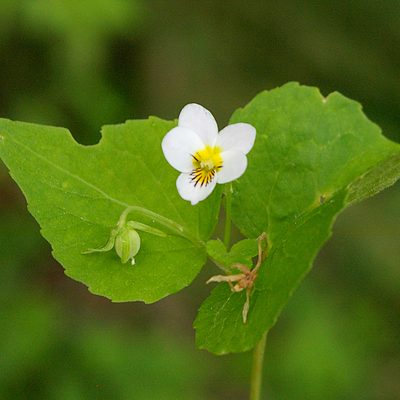
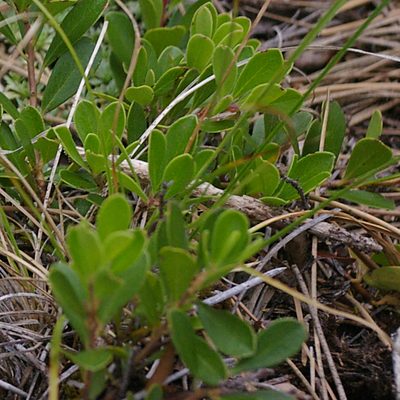
Sources: Black Hills National Forest: Black Hills native plants; Forest Service, Fire Effects Information System: Cornus canadensis; Minnesota Wildflowers: Cornus canadensis; Conservation Assessment for Groundcedar and Stiff Clubmoss in the Black Hills; Conservation Assessment for Great-spurred Violet in the Black Hills National Forest.