Canada Violet
Viola canadensis
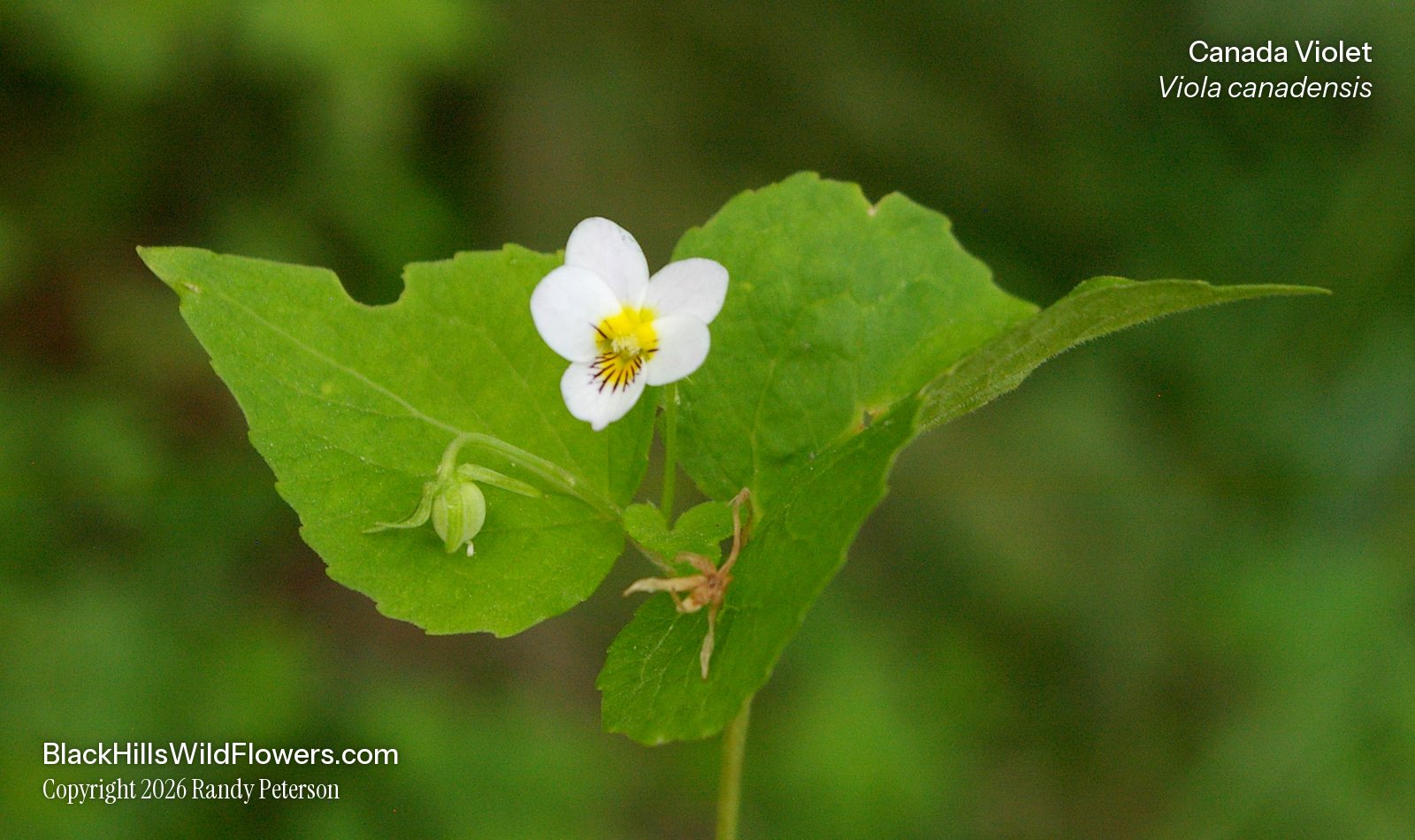
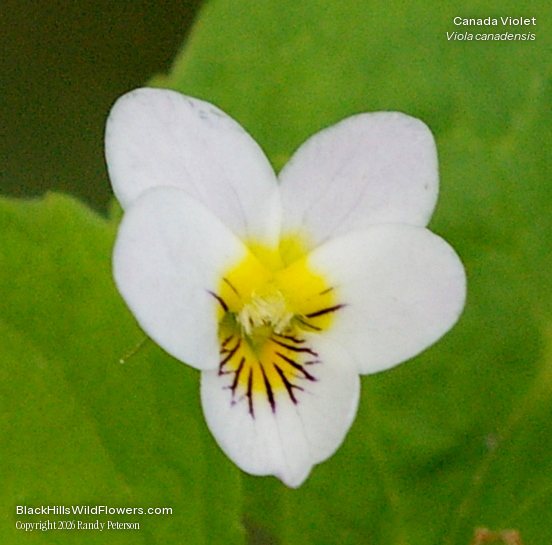
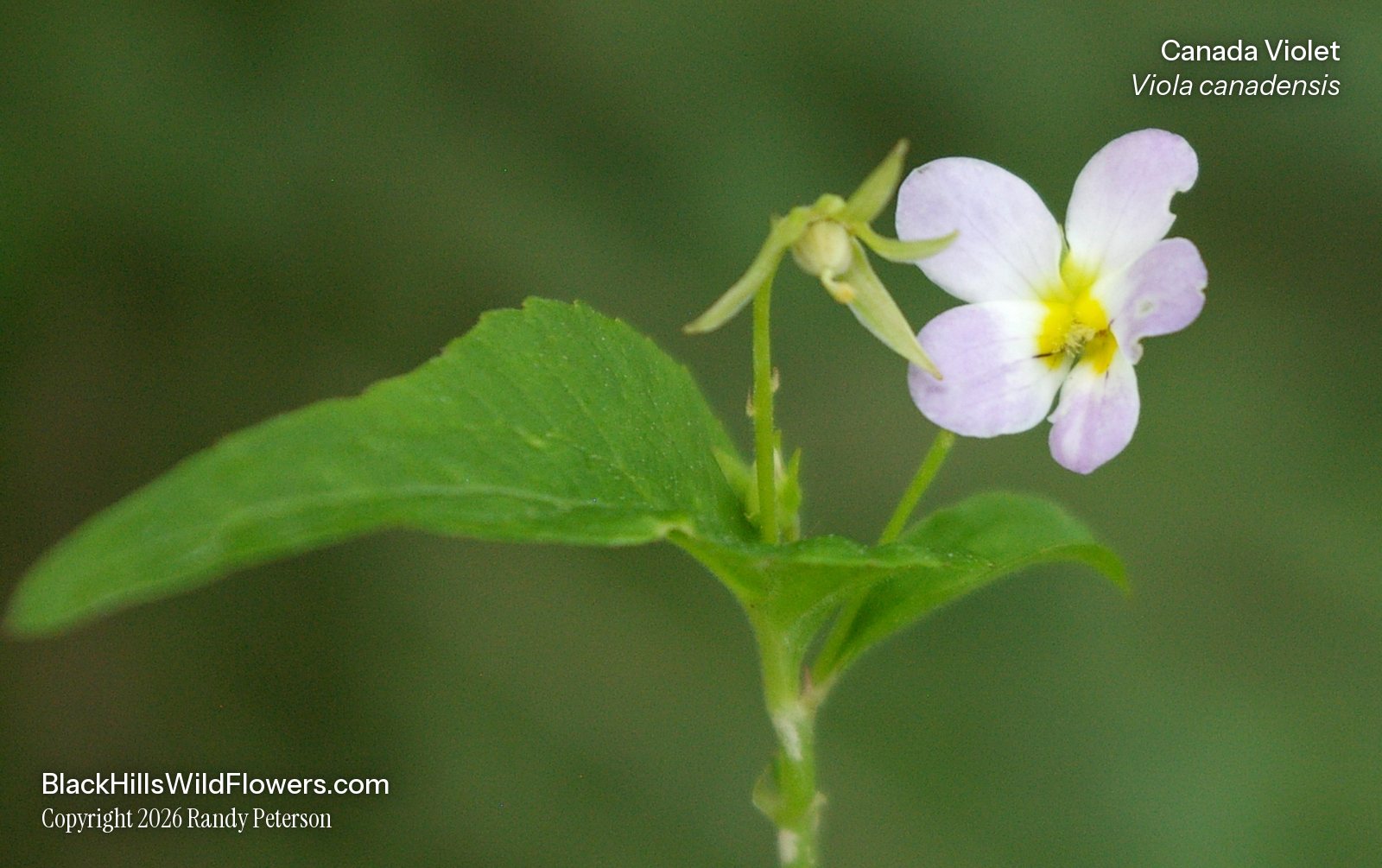
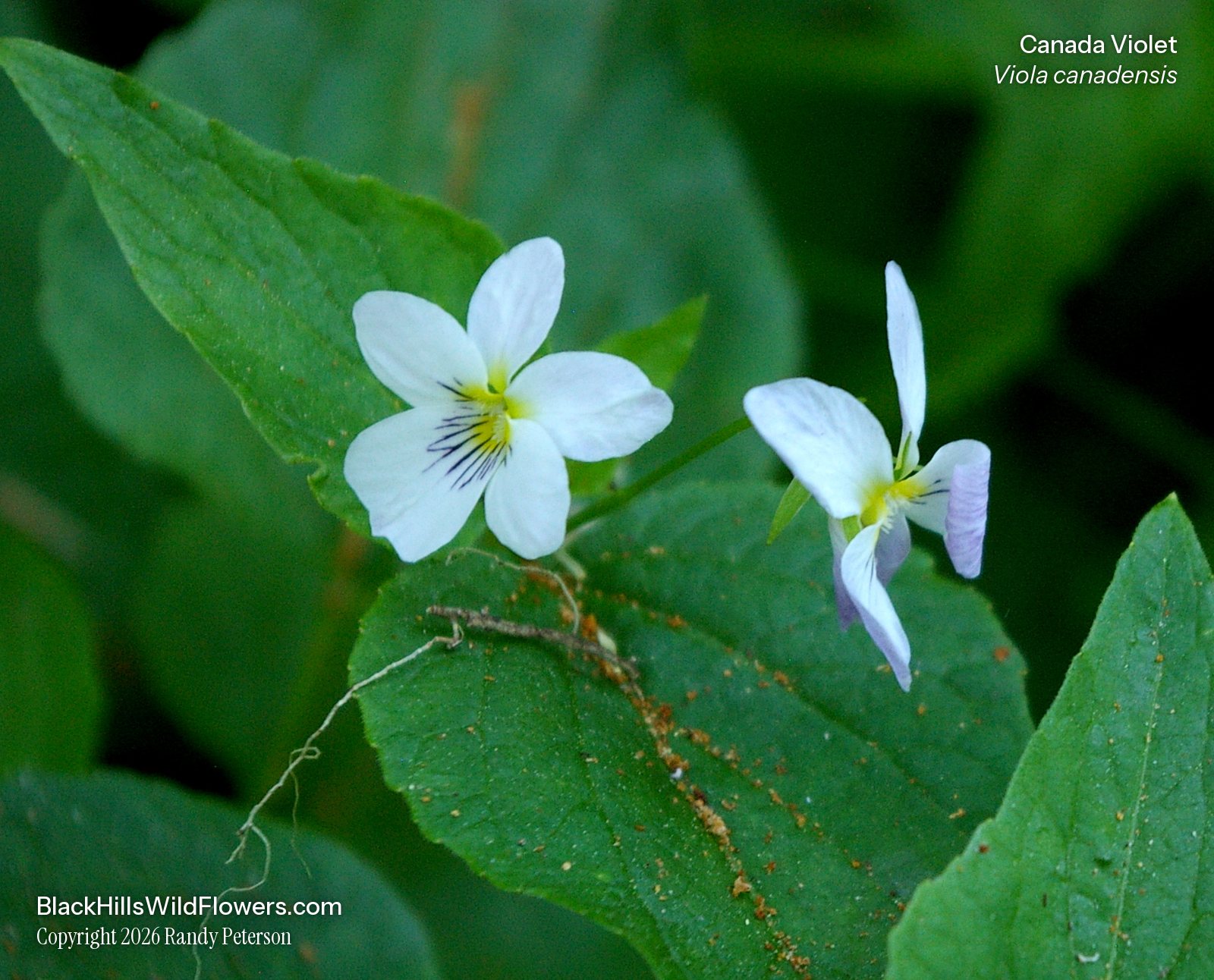
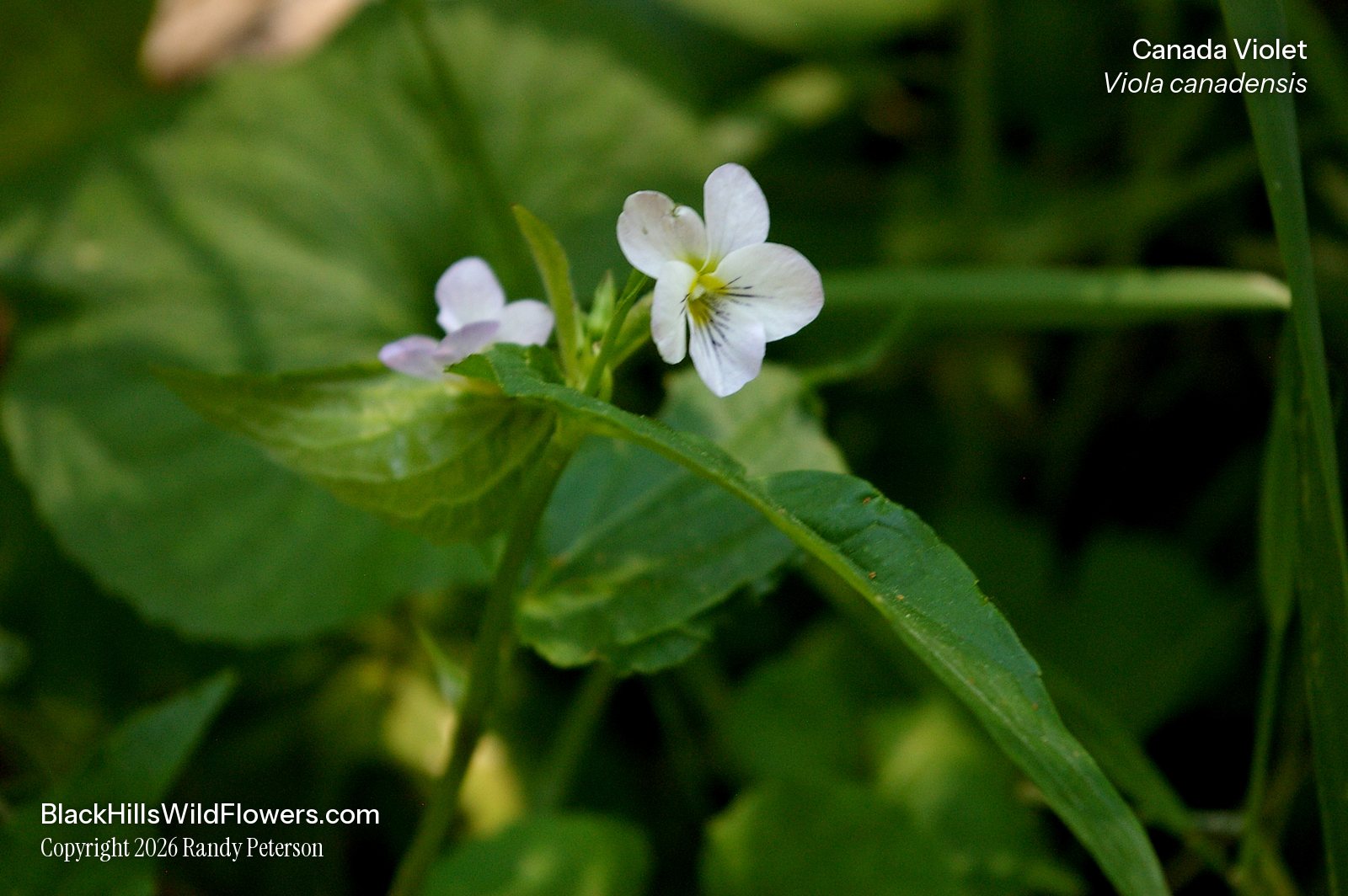
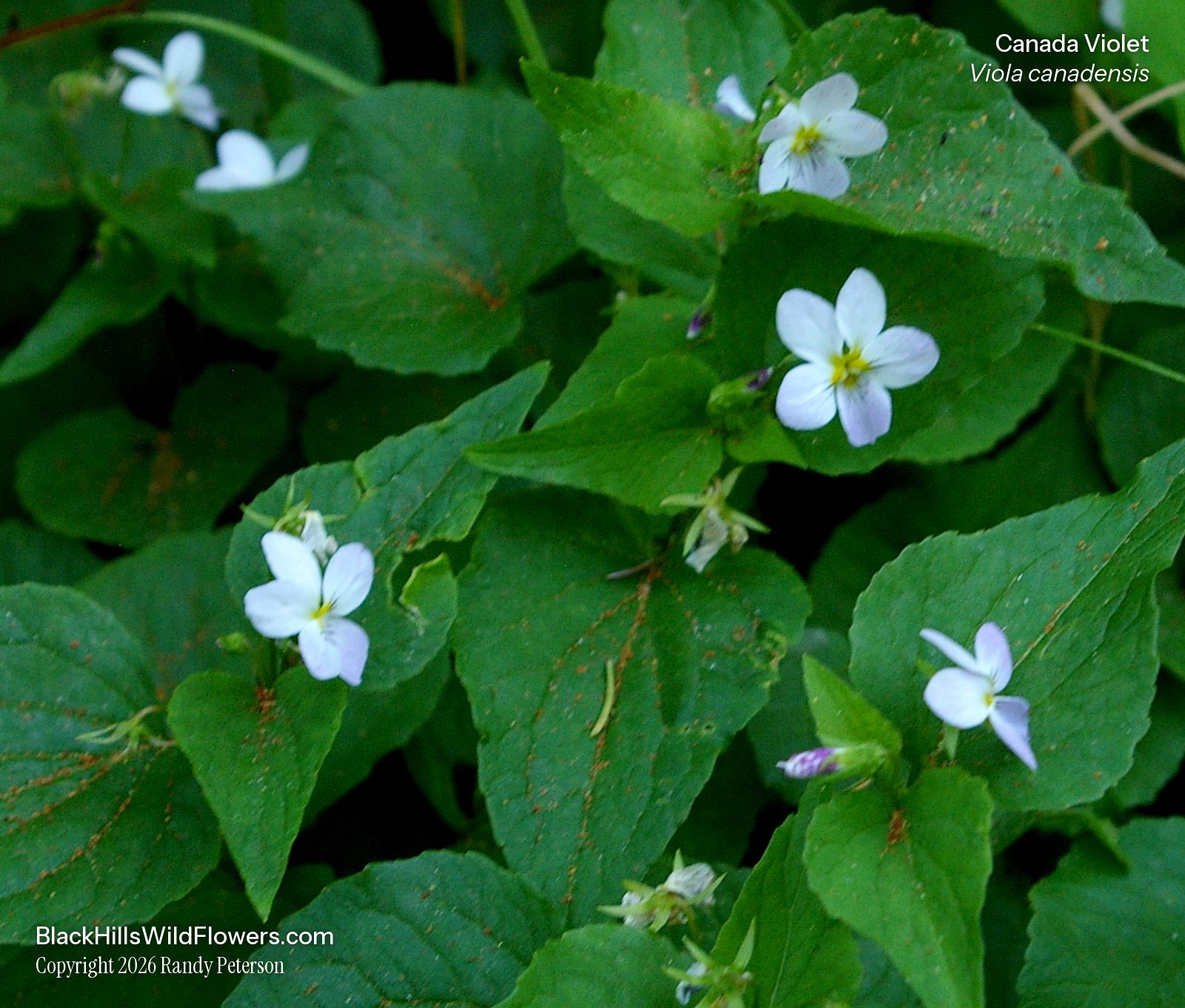
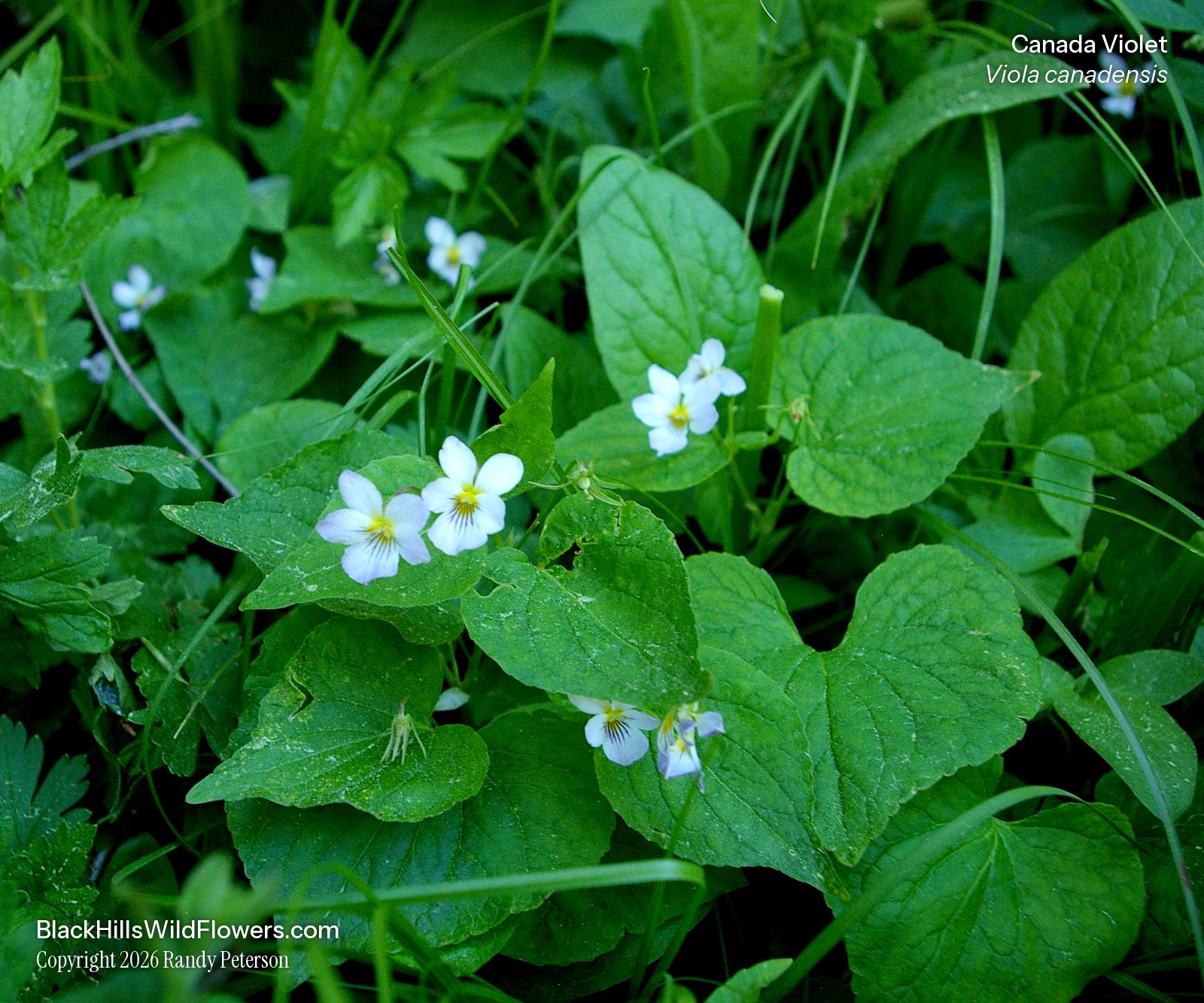
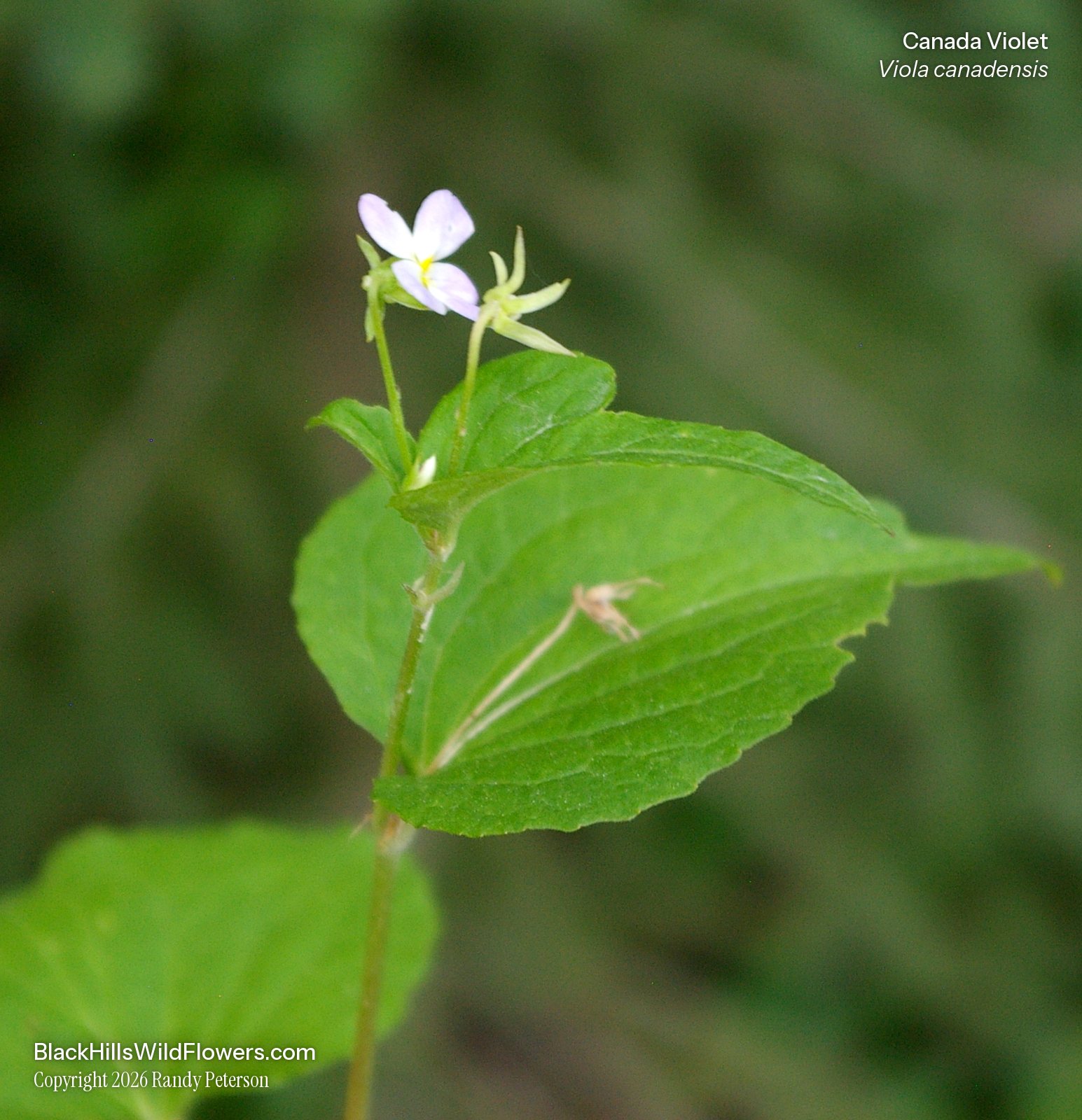
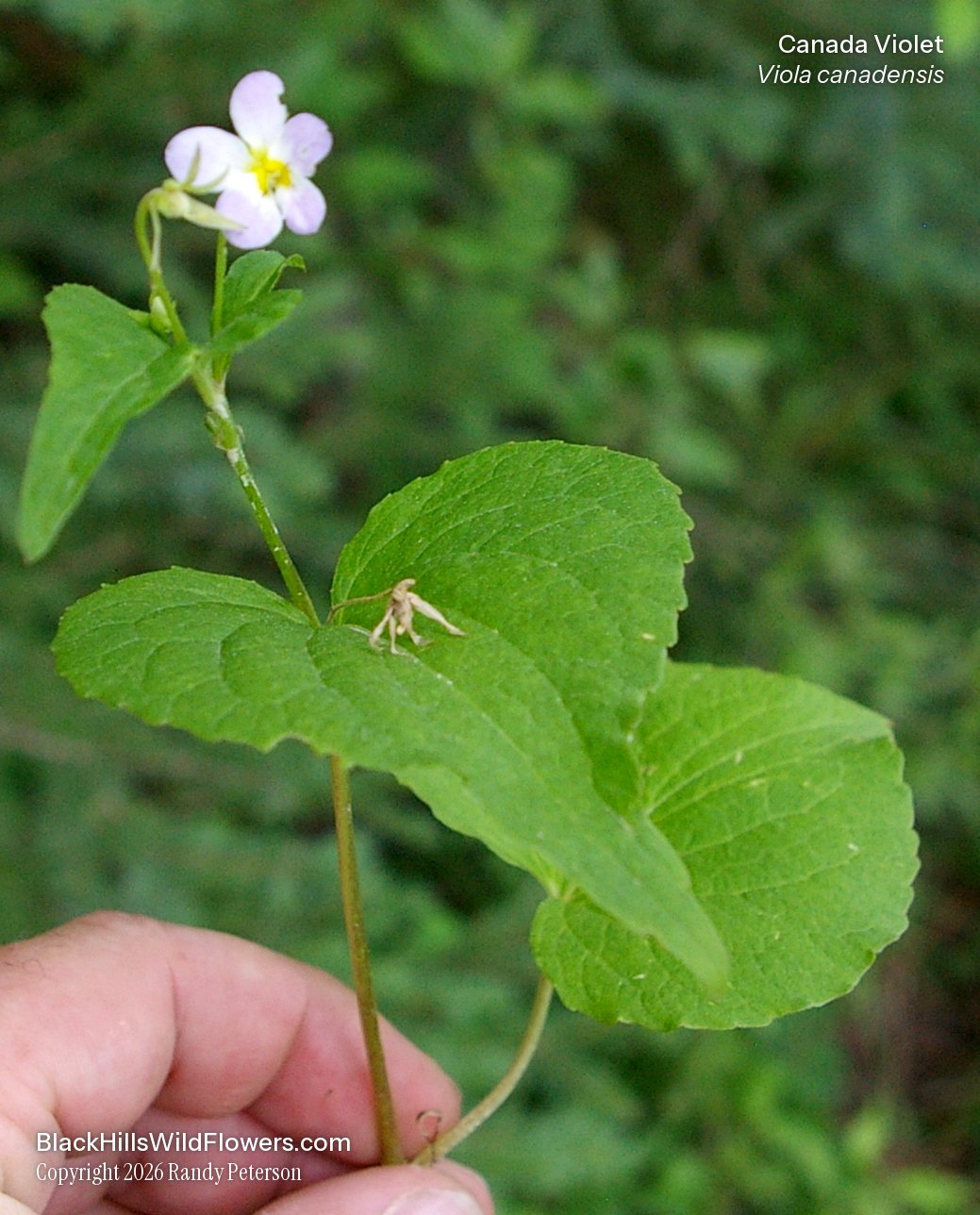
Canada Violet (Viola canadensis) is a native perennial, 20 to 40 cm (8 to 16 inches) tall, with heart-shaped leaves on leafy stems and white flowers that have yellow centers and purplish backs. It blooms May into August in shaded woods, and in the Black Hills it is recorded in aspen and beaked hazelnut woods. Photographed in the Black Hills.
| Family | Violaceae · Violet |
|---|---|
| Status | Native perennial |
| Blooms | May into August |
| Height | 20–40 cm (8–16 in) |
| Where | Shaded woods, ravines and creek banks |
| Also called | Canadian White Violet, Western Canada White Violet, Great Plains White Violet |
| Synonym | Viola canadensis var. rugulosa, Viola rugulosa |
Roots, seeds & germination
Root: Colony-forming plants spread by long, creeping rhizomes (underground stems) or stolons that root into new plants at the tips.
Seed: Capsules, 6–10 mm long, throw the seeds out explosively when ripe.
Germination: Fall sowing works best. For spring planting, seeds need 90 days of cold, moist stratification.
How do you identify Canada Violet?
It has a leafy stem, with flowers borne one at a time in the upper leaf axils. Petals are white inside with a yellow base and purplish on the back, and the lower and two side petals have purple lines near the base. Leaves are heart-shaped with shallow teeth. Forms that spread into colonies by long creeping stems and have hairy foliage are var. rugulosa, which some botanists treat as a separate species.
When does it bloom?
May into August.
Where does it grow?
Shady woods, ravines, creek banks and floodplains. In the Black Hills, a Forest Service classification lists it in aspen and beaked hazelnut woods, and a 1986 plant survey there recorded var. rugulosa. SDSU says it grows in woodlands in eastern and northwestern South Dakota.
Other flowers to compare
Sources: SDSU Open PRAIRIE: Viola canadensis; Flora of North America: Viola canadensis var. rugulosa; Forest Service: Forest Vegetation of the Black Hills National Forest, A Habitat Type Classification (RM-276); Conservation Assessment for Great-spurred Violet in the Black Hills National Forest; Lady Bird Johnson Wildflower Center: Viola canadensis; Harvey Ballard: Viola canadensis; Harvey Ballard: Viola rugulosa; Minnesota Wildflowers: Viola rugulosa; A Survey of the Vegetation of Jewel Cave National Monument, with vascular plant checklist (Marriott and Hartman, 1986).