Northern Bog Violet
Viola nephrophylla
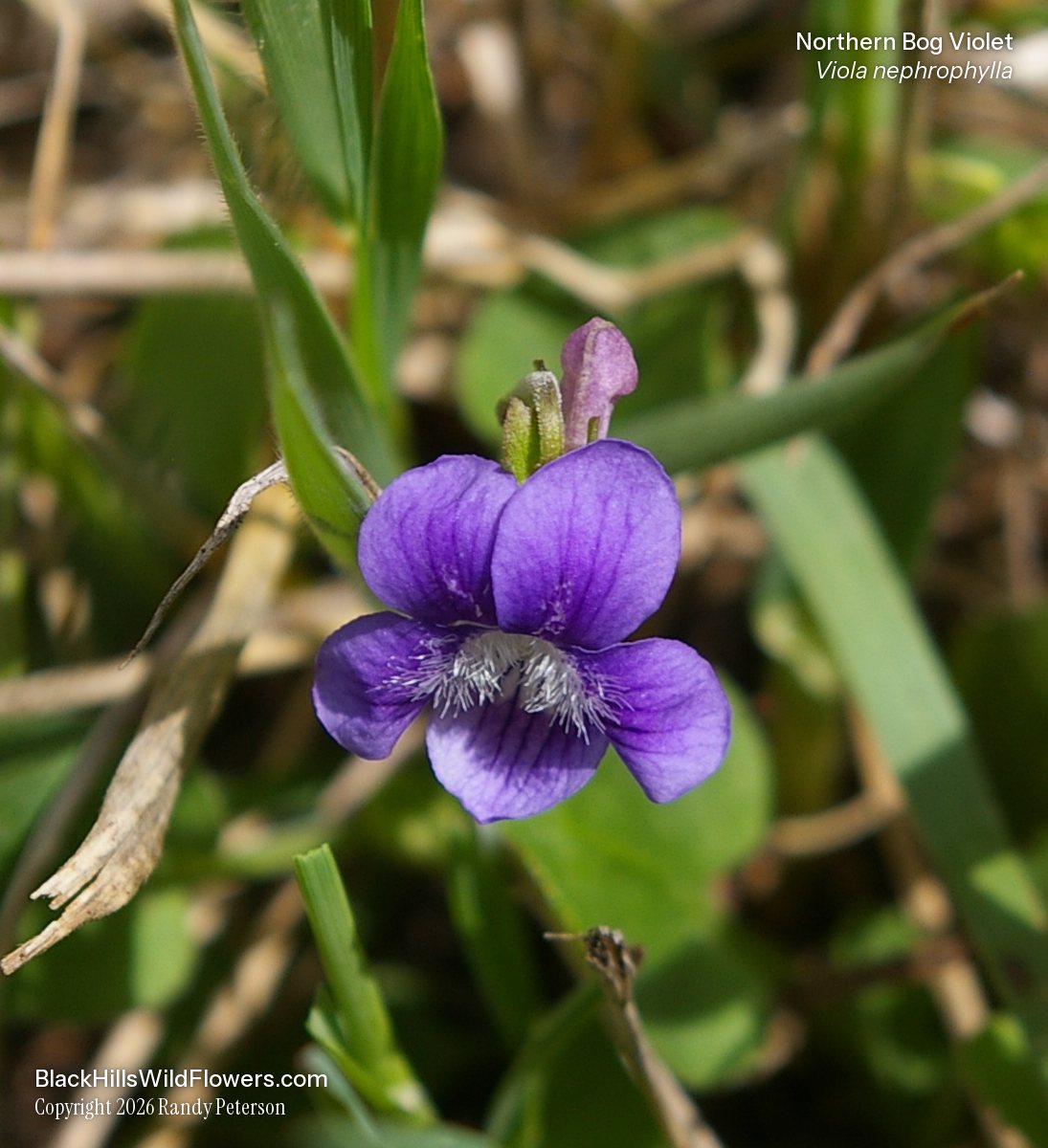
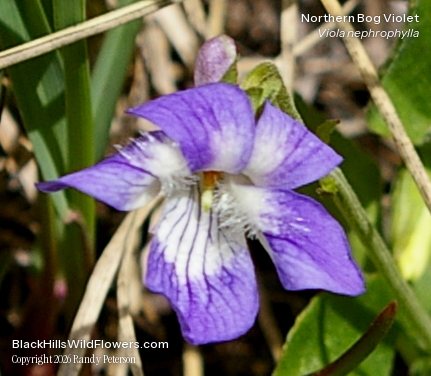
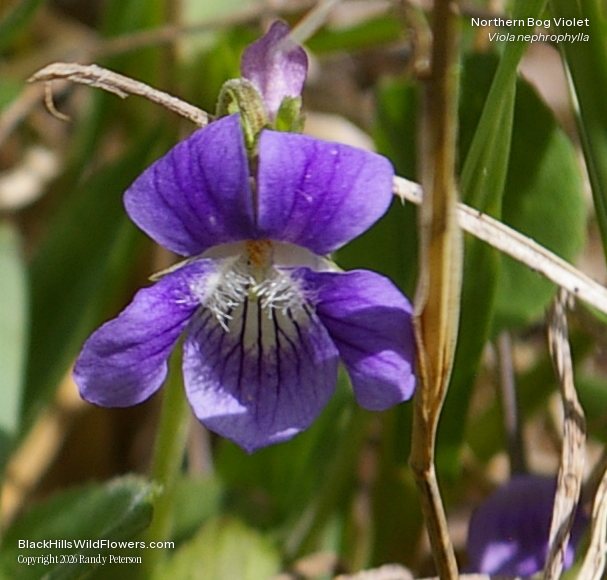
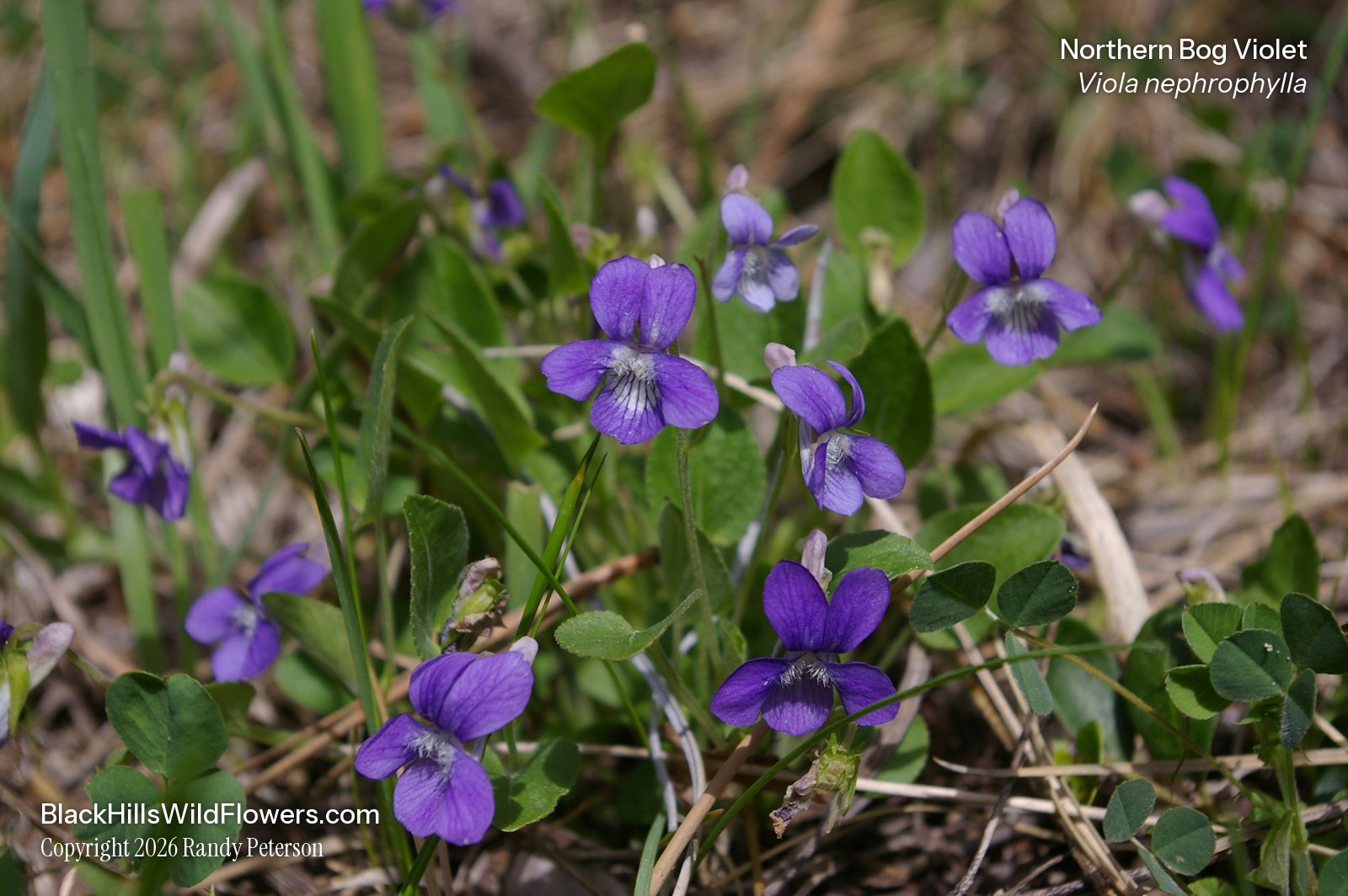
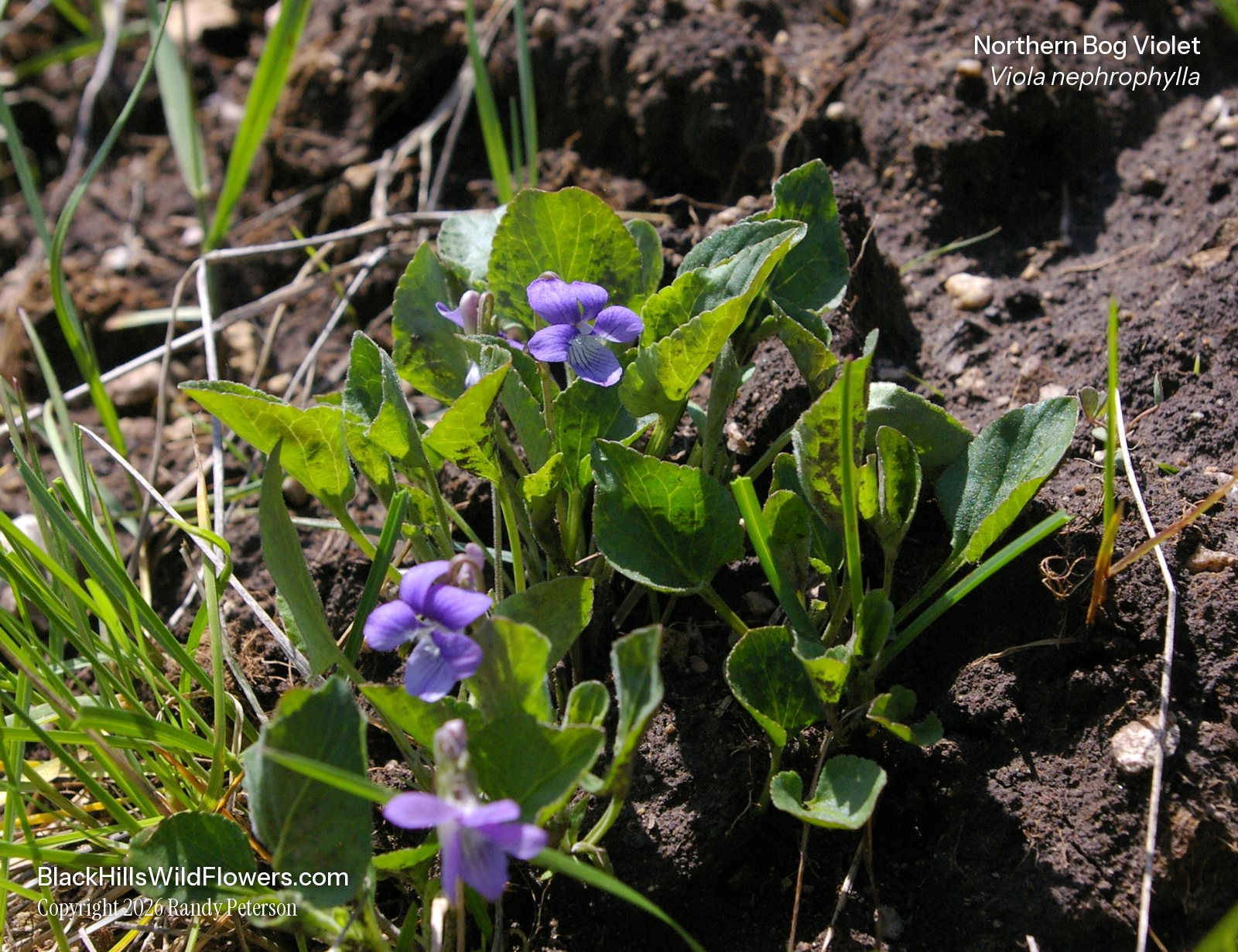
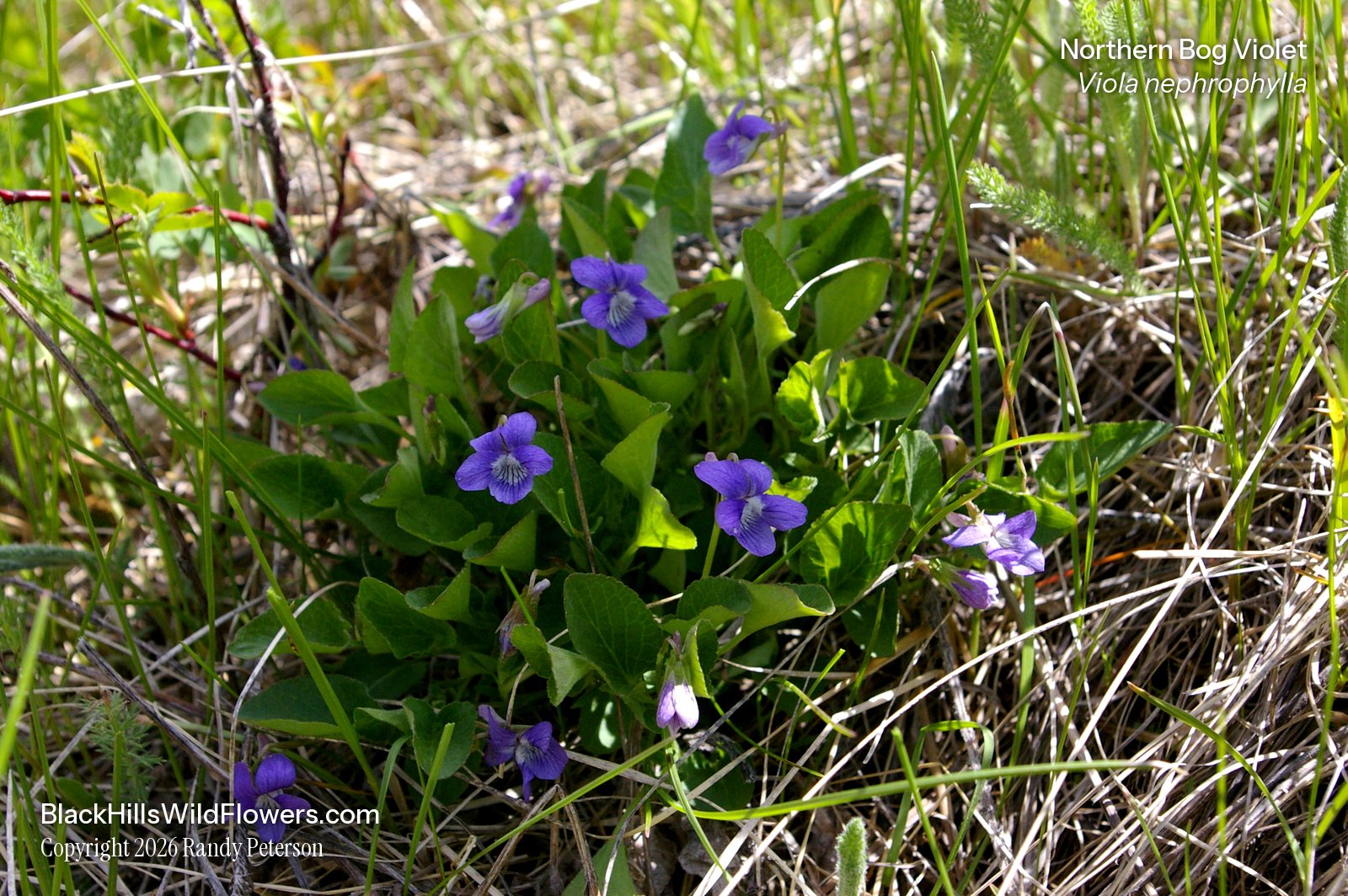
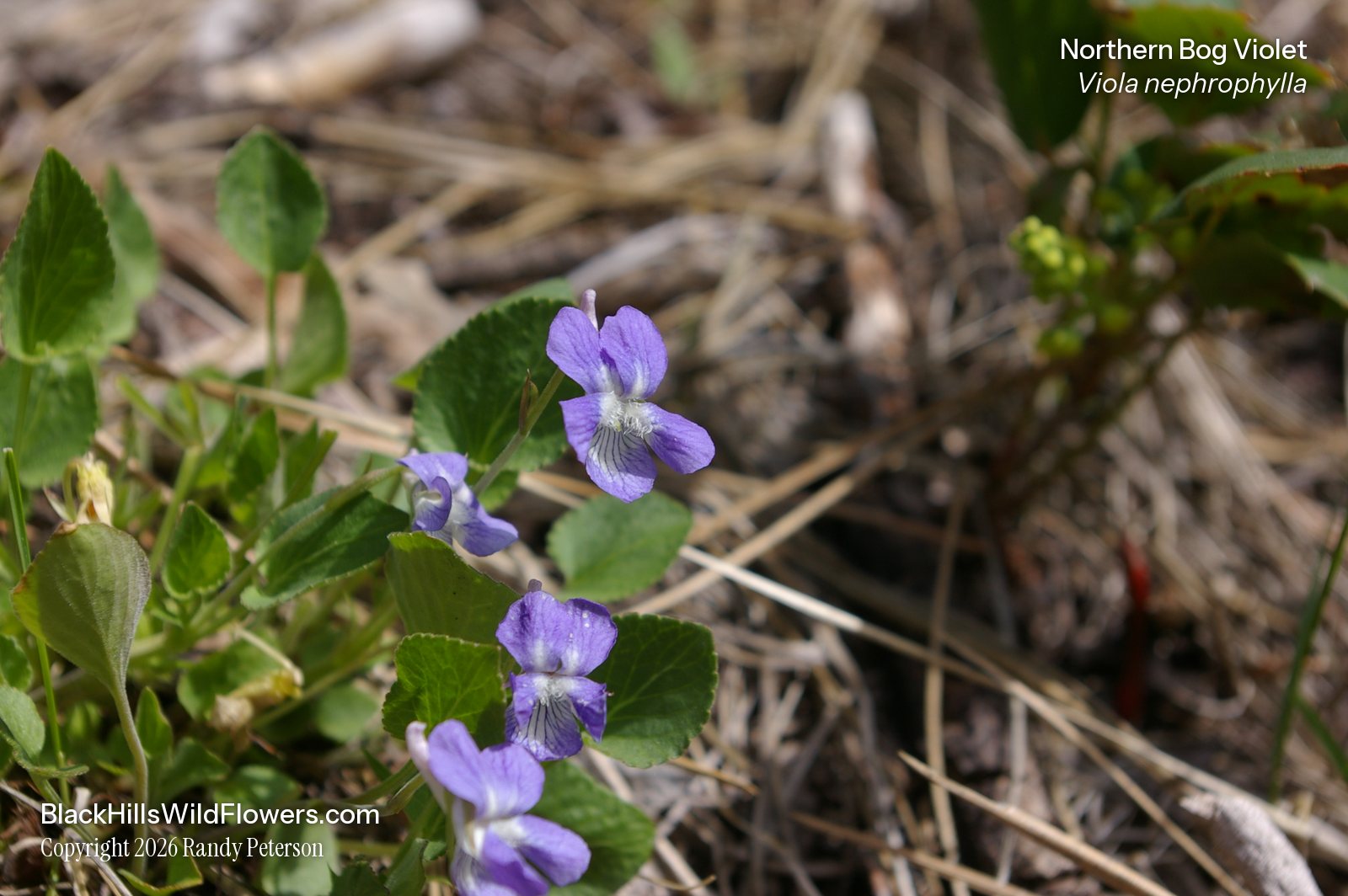
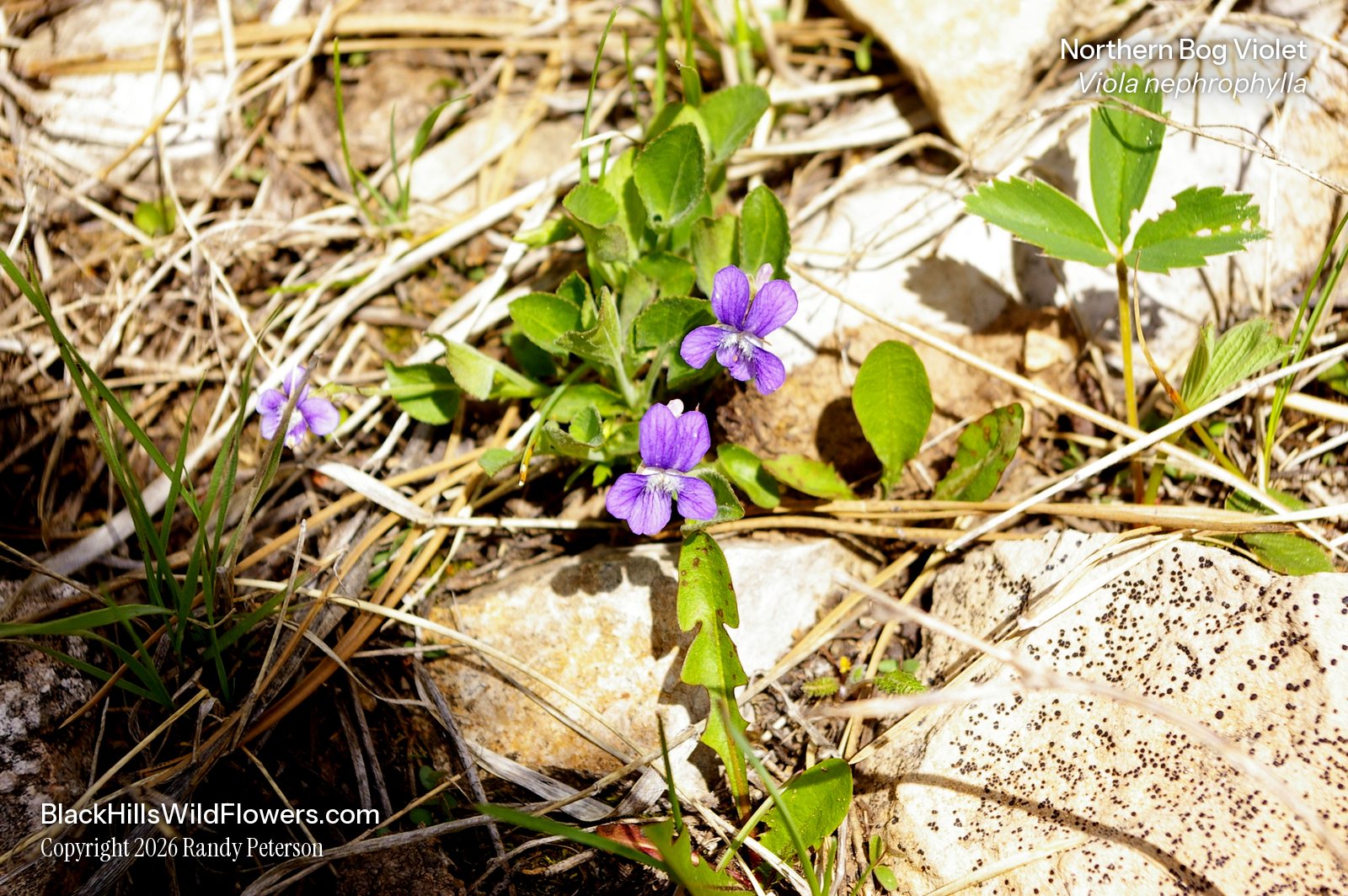
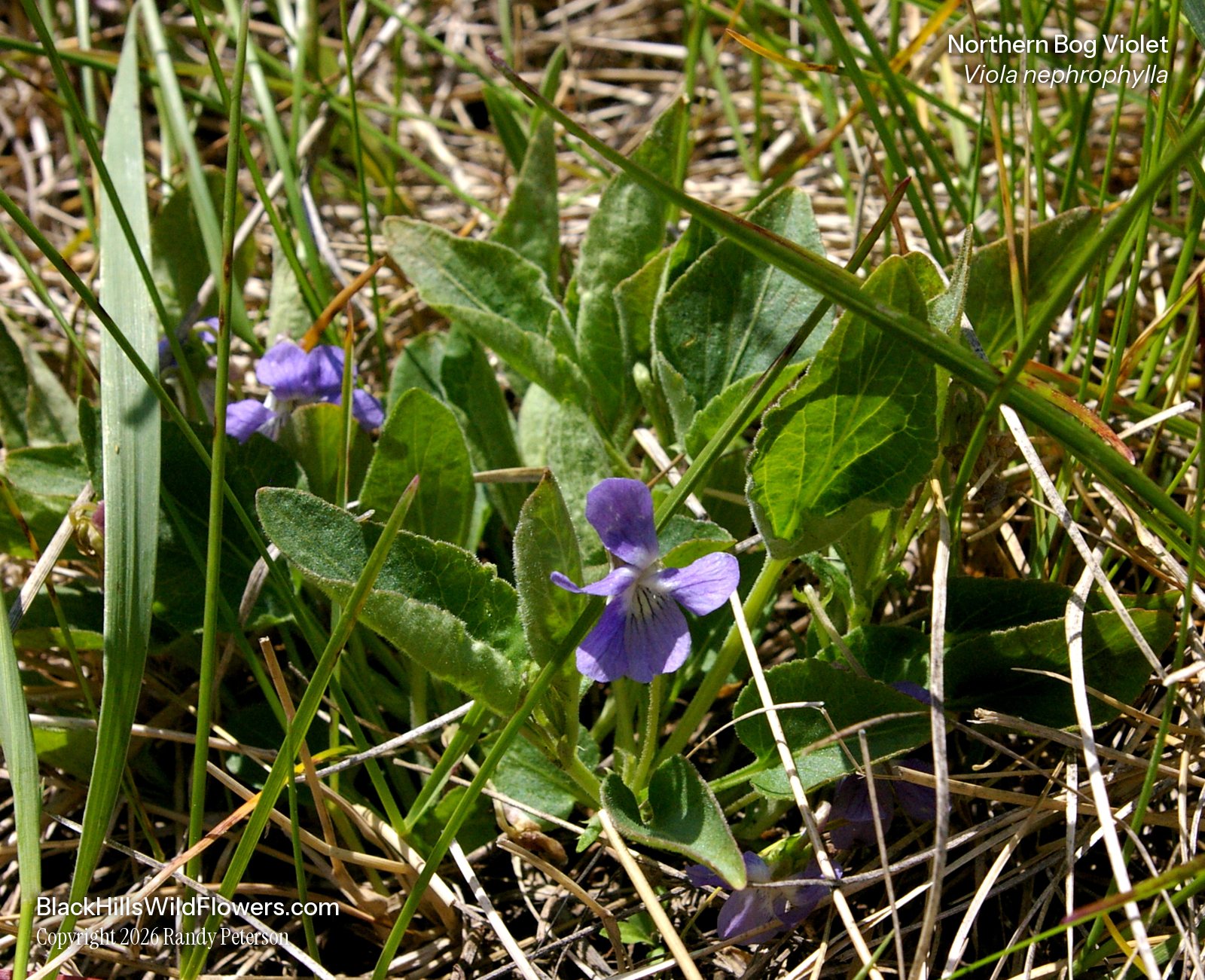
Northern Bog Violet (Viola nephrophylla) is a stemless native perennial with heart- to kidney-shaped leaves and blue to deep violet flowers on their own stalks. In South Dakota it blooms in May and June on moist prairies and along streams and lakes, in every region except the center of the state. Photographed in the Black Hills.
| Family | Violaceae · Violet |
|---|---|
| Status | Native perennial |
| Blooms | May and June |
| Height | 5–15 cm (2–6 in) |
| Where | Wet meadows, moist prairies, and stream and lake shores |
| Synonym | Viola arizonica, Viola austiniae, Viola cognata, Viola crassula, Viola galacifolia, Viola lunellii, Viola mccabeiana, Viola peramoena, Viola pratincola, Viola prionosepala, Viola retusa, Viola subjuncta, Viola vagula |
Roots, seeds & germination
Root: A slender rhizome (creeping underground stem) that turns thick and fleshy with age.
Seed: A smooth capsule 5 to 10 mm long that shoots out its seeds when ripe. Seeds are beige to dark brown, 1.5 to 2.5 mm. Small flowers that never open, on separate stalks, also set seed.
Germination: Fall sowing works best. For spring planting, seed needs 90 days of cold, moist treatment.
How do you identify Northern Bog Violet?
The two side petals have beards of white hairs at the base, and the lower petal is white at the base with dark violet veins and a short spur. All the leaves rise from the base, with scalloped edges, and they are sometimes purplish underneath. Marsh Blue Violet is the closest look-alike; it has short, club-shaped hairs on its side petals.
When does it bloom?
May and June.
Where does it grow?
Wet, saturated soil in prairies, pastures, bogs, fens and sedge meadows, and on rocky stream and lake shores. In South Dakota it grows on moist prairies and along streams and lakes.
Other flowers to compare
Sources: SDSU Open PRAIRIE: Viola nephrophylla; Flora of North America: Viola nephrophylla; Minnesota Wildflowers: Viola nephrophylla (Northern Bog Violet).