Plains Prickly Pear
Opuntia polyacantha
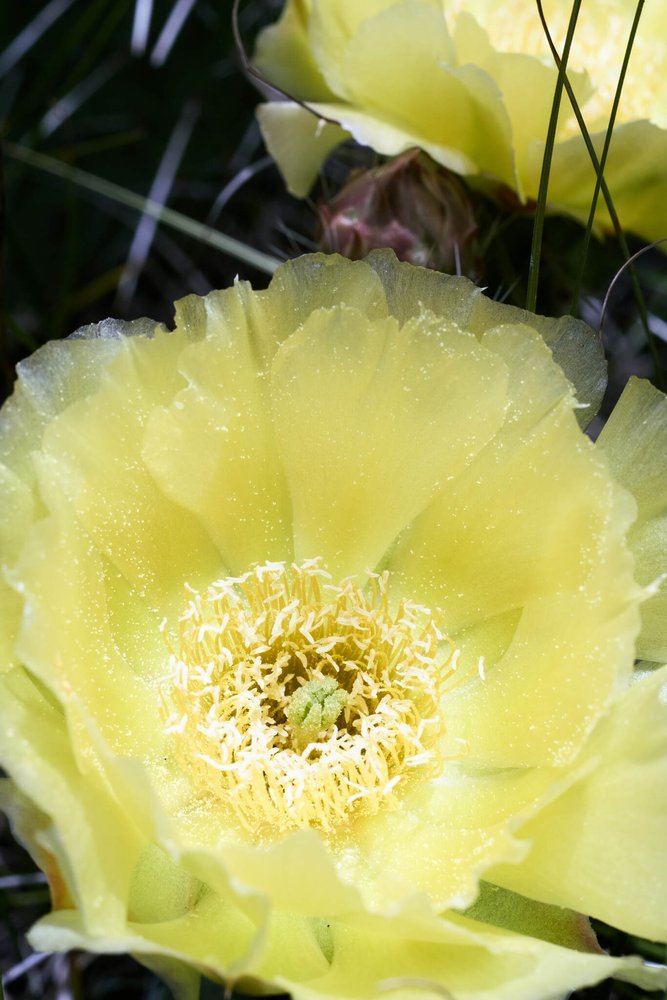
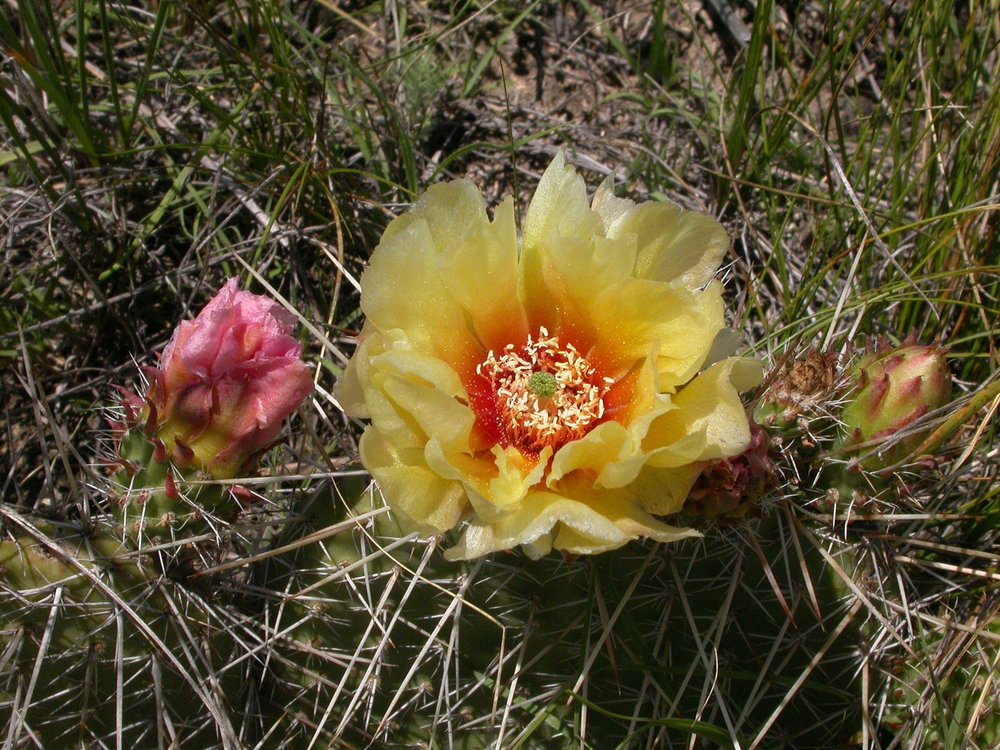
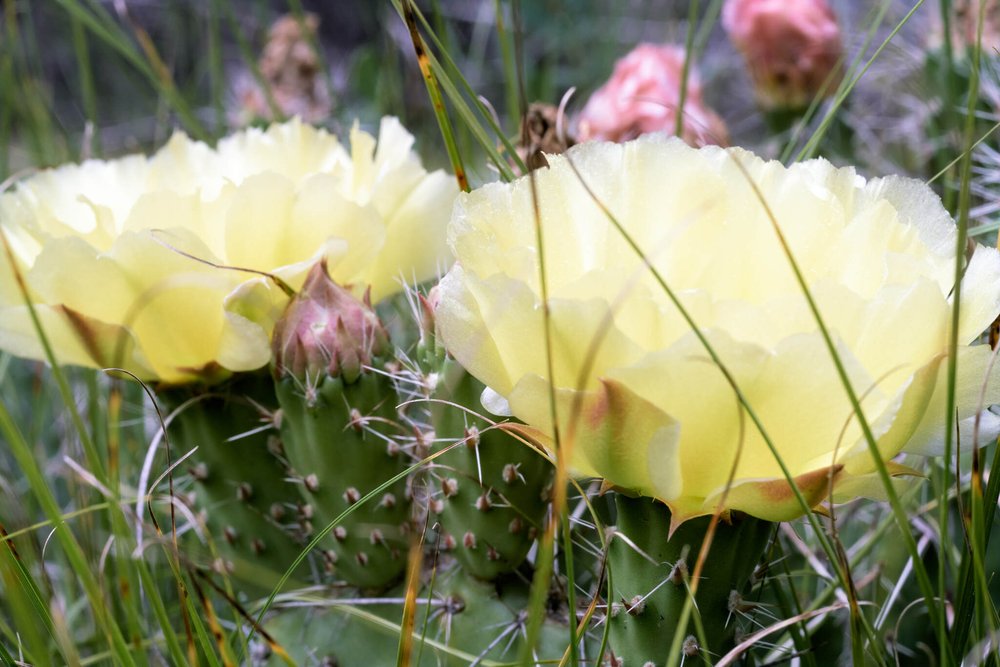
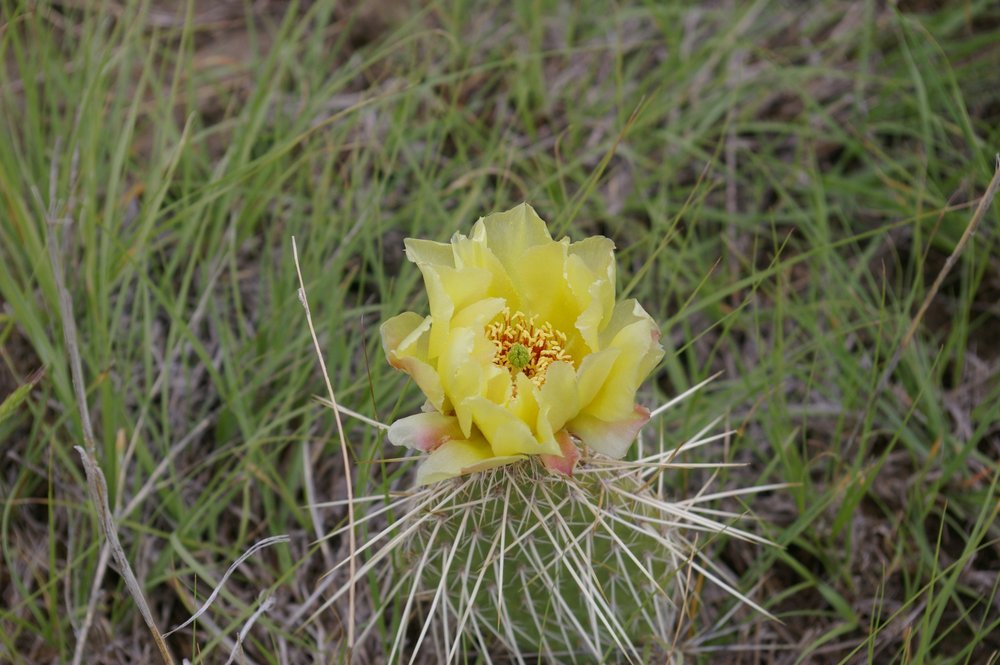
Plains Prickly Pear (Opuntia polyacantha) is a low, native cactus that spreads in mats of flat, spiny pads. It blooms in June with big yellow flowers, sometimes peach to red, on dry prairie and rocky slopes around the Black Hills, and the 1986 plant survey of Jewel Cave National Monument lists it.
Free photos from other sources
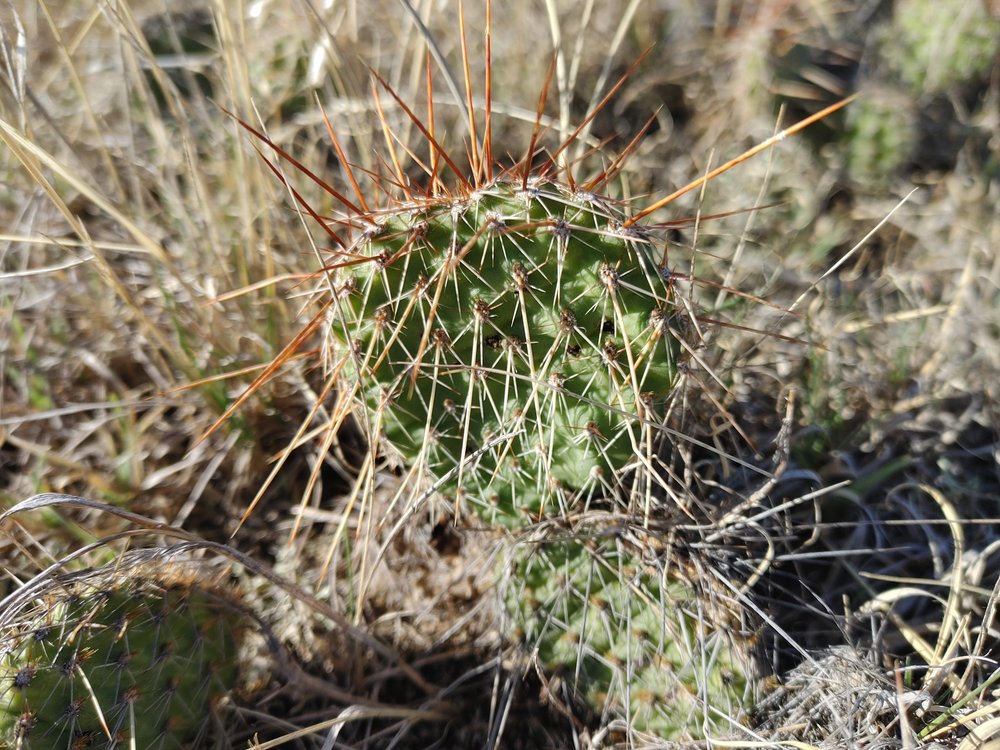
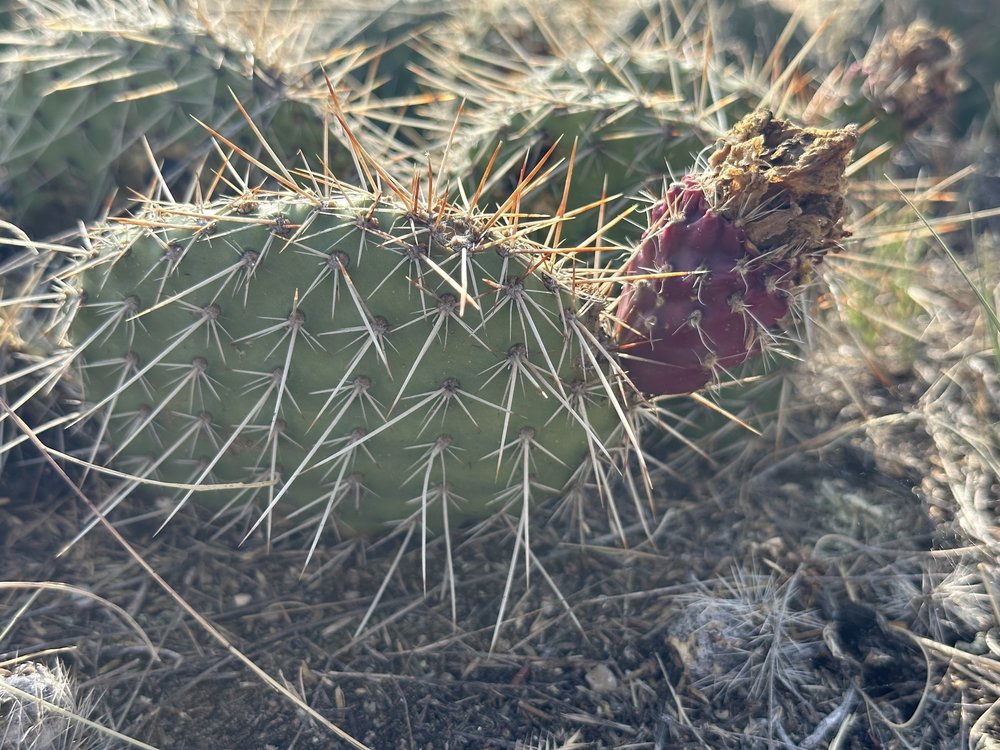
| Family | Cactaceae · Cactus |
|---|---|
| Status | Native perennial |
| Blooms | June, sometimes from late May into early July |
| Height | 10–30 cm (4–12 in) |
| Where | Dry, open prairie, rocky slopes and pine-savanna openings in full sun |
| Also called | Plains Pricklypear, Hairspine Pricklypear, Hairspine Cactus, Prairie Pricklypear, uŋkčéla blaská (Lakota) |
| Toxicity | The glochids, tiny barbed bristles in every spine cluster, lodge in the skin, where they are hard to find and remove, and cause painful skin and eye irritation. |
| Traditional use | Sitting Bull College's 1998 Culturally Important Plants of the Lakota says the fruits were eaten raw or dried for later and the pads eaten once the spines were removed, a tea of the pads was taken for diarrhea, and a root tea for urinary trouble. |
Roots, seeds & germination
Root: A shallow root system that spreads sideways just under the surface; a clump about 30 cm (1 ft) across can have roots spreading 1.2–1.8 m (4–6 ft) wide. New plants also start where pads touch the ground or break off and take root.
Seed: The fruit is dry and spiny when ripe, about 2–4 cm (¾–1½ in) long, and holds anywhere from none to more than 70 flat, tan to whitish seeds, ripe around September. Animals that eat the fruit or brush against its barbed spines carry the seeds away.
Germination: Slow. The seed coat is hard, and fall-sown seed usually takes about two years to sprout. SDSU notes that carefully filing the seed coat speeds it up. A pad set in sand roots in about three weeks.
How do you identify Plains Prickly Pear?
Look for a low cactus of flat, round to oval pads about 5–12 cm (2–5 in) long that stay firmly attached. Spine clusters cover the whole face of the pad, the longest spines at least 2.5 cm (1 in) and on older pads long, white and hair-like, and each cluster also holds a tuft of glochids, tiny barbed bristles. The flowers are 5–9 cm (2–3½ in) across, with many silky petals, usually yellow but sometimes peach, pink or red, or yellow with a reddish center, and the ripe fruit is dry and spiny. Brittle Prickly Pear has small, thick, egg-shaped pads under about 5 cm (2 in) that snap off at a touch, and shorter spines.
When does it bloom?
June, sometimes from late May into early July.
Where does it grow?
Dry, sunny, open ground: mixed-grass prairie, rocky and gravelly slopes, eroded banks and openings in ponderosa pine savanna, mostly in the foothills and lower elevations around the Hills. The 1986 Jewel Cave survey lists it, NPSpecies lists it at Wind Cave and Devils Tower, and herbarium specimens come from Lawrence, Pennington, Custer and Fall River counties in South Dakota and Crook and Weston counties in Wyoming.
Other flowers to compare
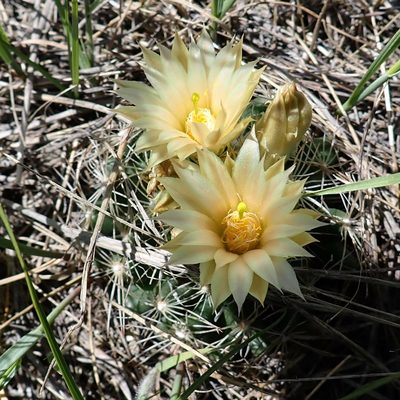
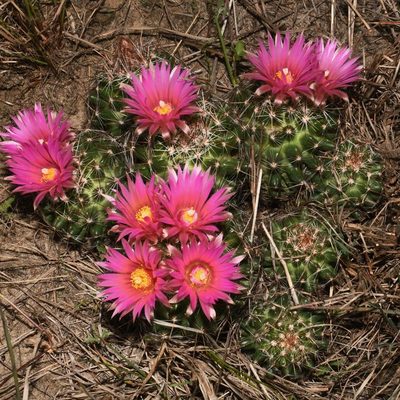
Sources: Culturally Important Plants of the Lakota (Black Elk & Flying By, Sitting Bull College, 1998), filed with the SD PUC; Gilmore, M. R. 1919. Uses of Plants by the Indians of the Missouri River Region (33rd Annual Report, Bureau of American Ethnology), p. 104; Johnson, K. A. 2000. Opuntia polyacantha. Fire Effects Information System, USDA Forest Service; USDA NRCS Plant Guide: Plains Pricklypear (2014, archived); SDSU Open PRAIRIE: Native Plant Profile, Cactaceae: Opuntia polyacantha; Marriott & Hartman. 1986. A Survey of the Vegetation of Jewel Cave National Monument; NPS Devils Tower National Monument: Native Plants (bloom list); NPSpecies checklist, Wind Cave National Park (vascular plants); NPSpecies checklist, Devils Tower National Monument (vascular plants); NPSpecies profile: Opuntia polyacantha var. polyacantha, Devils Tower; GBIF preserved specimens of Opuntia polyacantha, Black Hills bounding box; iNaturalist research-grade observations, Black Hills (80 km radius); Flora of the Pacific Northwest, revised Opuntia treatment (key separating O. fragilis and O. polyacantha); Minnesota Wildflowers: Brittle Prickly Pear (Opuntia fragilis); Kansas Wildflowers and Grasses: Opuntia macrorhiza; Lady Bird Johnson Wildflower Center: Opuntia polyacantha; Univ. of Washington ESRM 412 propagation protocol: Opuntia polyacantha (2011); South Dakota Magazine: The Joys of Cactus (Michael Melius); South Dakota Magazine: Eating Wild Cactus (Ruth Steil).