Spinystar
Pelecyphora vivipara
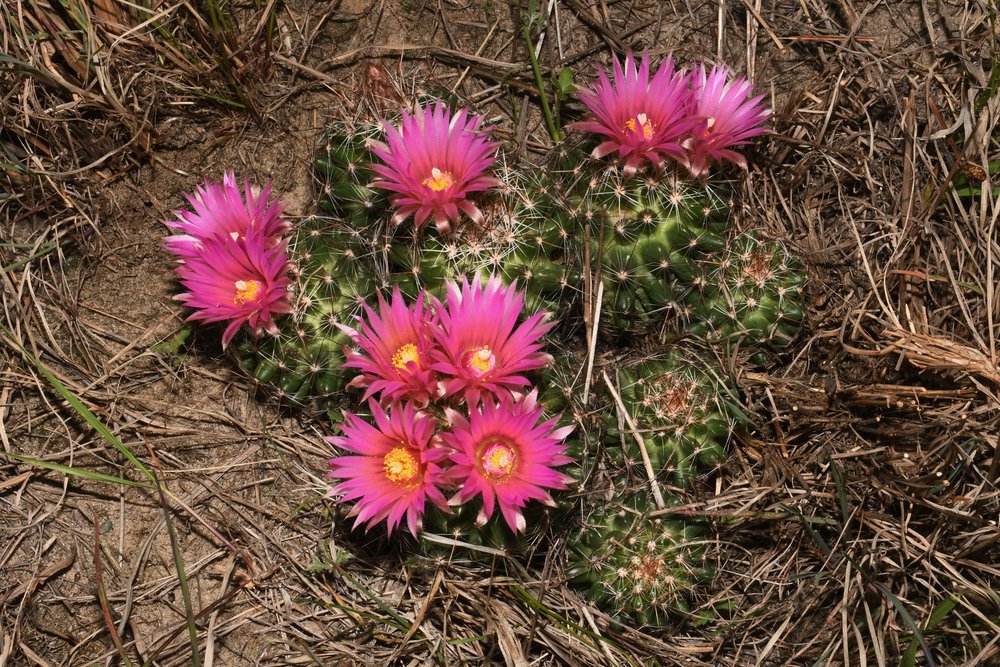
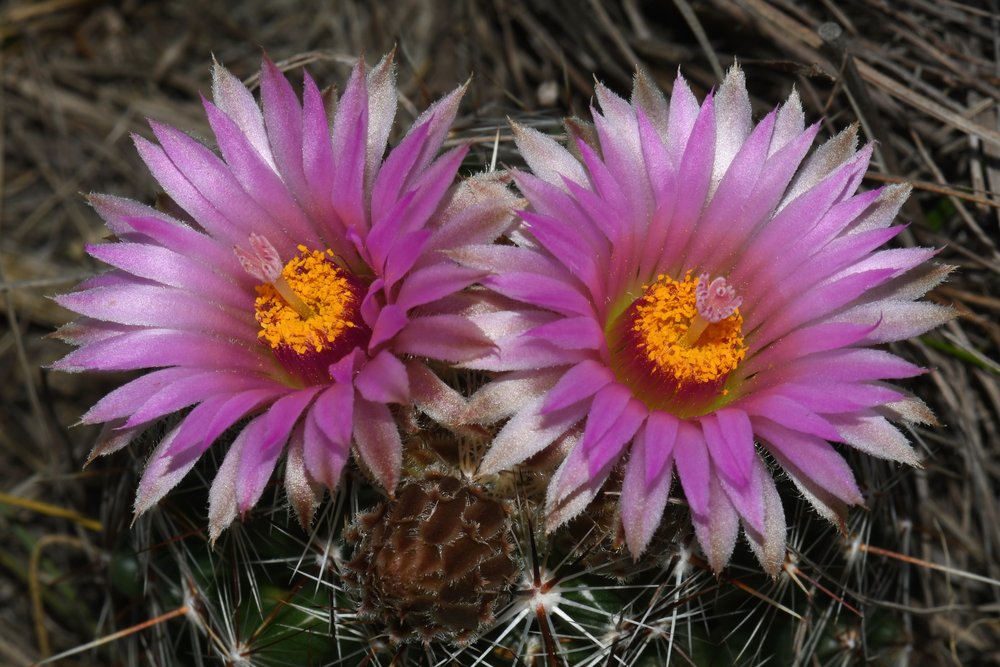
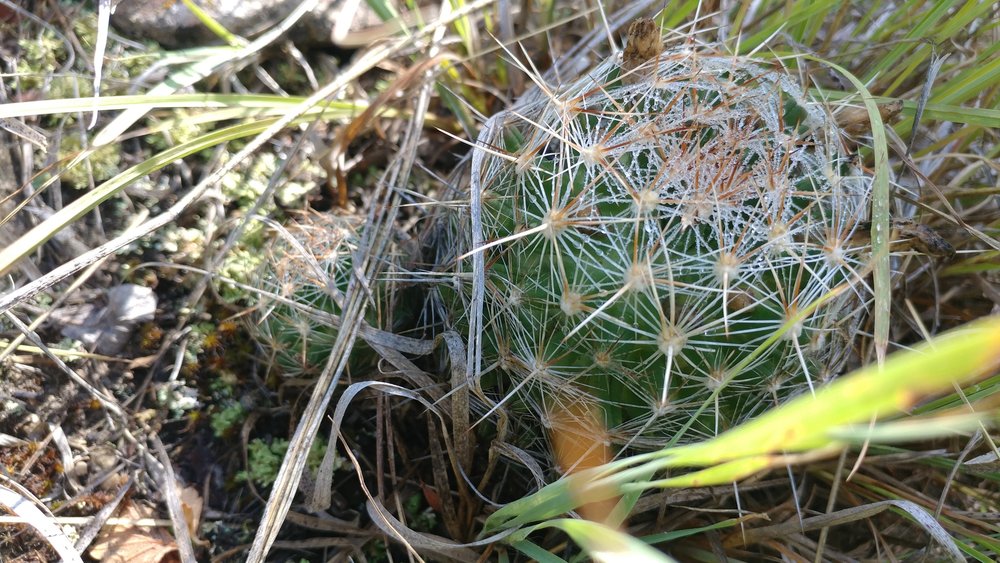
Spinystar (Pelecyphora vivipara) is a small native cactus, a spiny green ball usually no bigger than a fist, that blooms in June with one to several bright magenta, many-petaled flowers on top. Out of bloom it hides in the grass, and in the Black Hills it is recorded mostly in the dry southern foothills, in Custer, Fall River and Pennington counties.
Free photos from other sources
| Family | Cactaceae · Cactus |
|---|---|
| Status | Native perennial |
| Blooms | June, from late May into July, a few into August |
| Height | 2.5–13 cm (1–5 in) |
| Where | Dry, sunny grassland, rocky and gravelly slopes and pine-savanna openings |
| Also called | Pincushion Cactus, Ball Cactus, Beehive Cactus, Viviparous Foxtail Cactus, Pink Pincushion Cactus |
| Synonym | Escobaria vivipara, Coryphantha vivipara, Mammillaria vivipara, Neomammillaria vivipara, Cactus viviparus |
| Listed | Wyoming ranks it S3 (vulnerable). South Dakota doesn't rank it. |
| Traditional use | Hellson (1974) records that the Blackfoot ate the fruit as a sweet, and Hart (1981) that the Northern Cheyenne boiled the fruit, fresh or dried, and ate it. |
Roots, seeds & germination
Root: Fibrous and shallow, with thin spreading roots and no big taproot. Older plants make side buds at the base and slowly build a small clump; the name vivipara, "bearing live young," probably refers to these offsets.
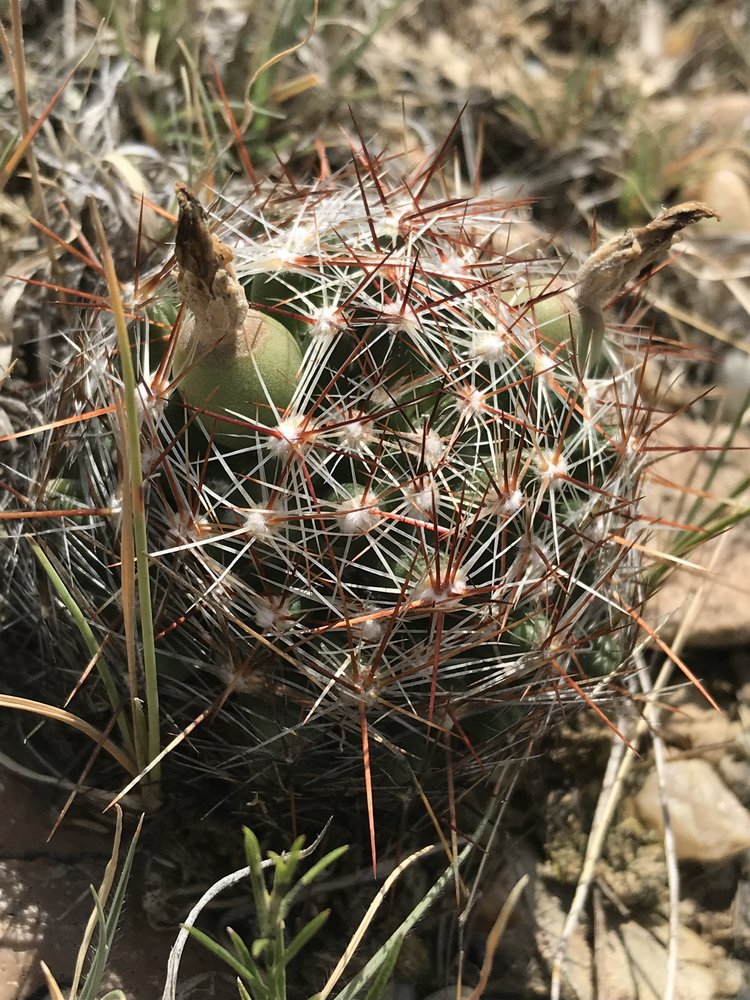
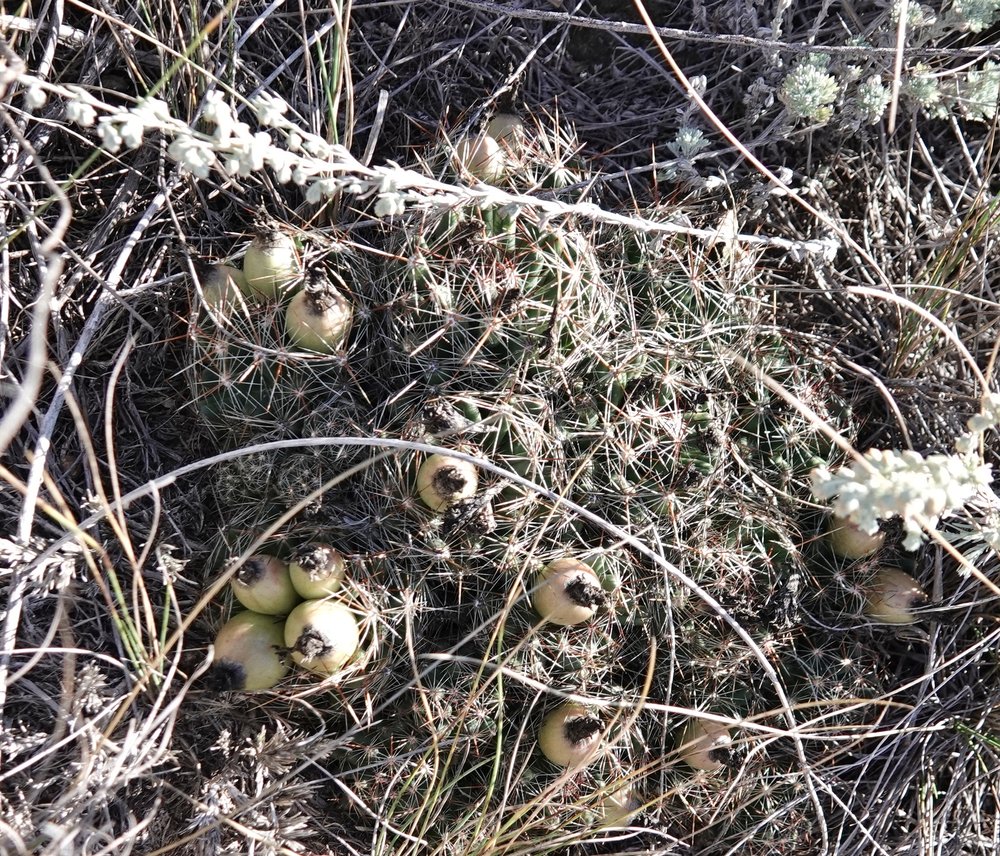
Seed: The fruit is a juicy green berry, egg-shaped and about 1.2–2.8 cm (½–1 in) long, topped by the dried flower, and it ripens mostly in August and September. Each one holds roughly 50–100 reddish-brown, comma-shaped seeds about 1.3–2.4 mm long.
Germination: Little is published for wild Plains seed. A University of Washington propagation protocol reports low germination with no special pretreatment, sown after the last spring frost, and offsets cut from the base root more reliably than seed.
How do you identify Spinystar?
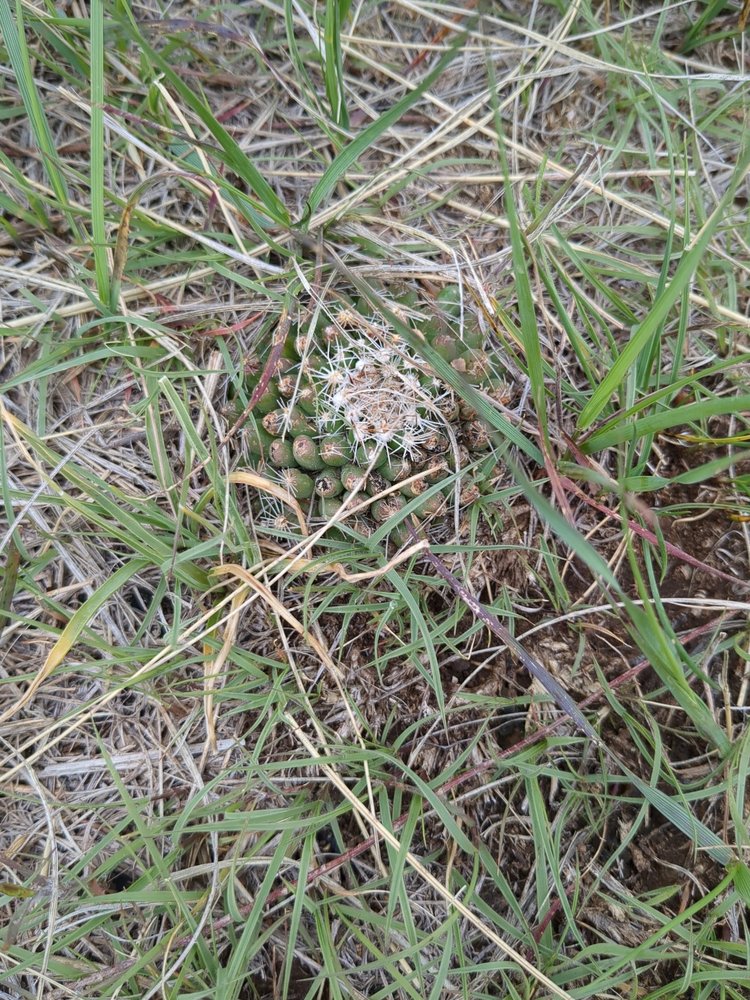
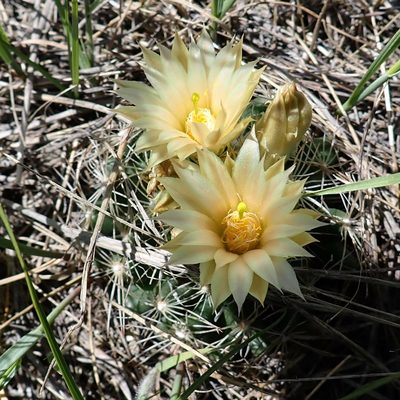
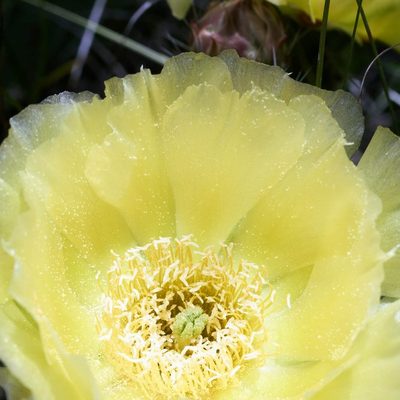
Look for a round to egg-shaped green stem 4–8 cm (1½–3 in) across, alone or in a small clump, covered in nipple-like bumps that each end in a star of 10–40 thin white spines spread flat, plus several stouter tan to reddish-brown central spines. The magenta to rose-pink flowers are 2.5–6 cm (1–2½ in) across, with many narrow, pointed petals around a ring of yellow-orange anthers. Missouri Foxtail Cactus has pale greenish-yellow flowers, fewer and paler spines with one central spine or none, and small, shiny scarlet berries in spring, while Spinystar's fruit is a larger green berry. Prickly pears are made of jointed pads with tufts of tiny barbed bristles and have yellow flowers.
When does it bloom?
June, from late May into July, a few into August.
Where does it grow?
Dry, sunny, open ground: mixed-grass and shortgrass prairie, rocky or gravelly hillsides, limestone and shale outcrops, sandy spots and grassy openings in ponderosa pine savanna. It often grows in short or grazed grass, where it is hard to see out of flower. Herbarium specimens from 1909 to 1992 come from Custer, Fall River and Pennington counties, including a 1924 specimen from Custer State Park and a 1910 one from the Black Hills National Forest. iNaturalist records add Wind Cave National Park and a few from Meade County and the Wyoming side of the Hills.
Other flowers to compare
Sources: Plants of the World Online (Kew): Pelecyphora vivipara; Sánchez, D. et al. 2022. Phylogenetic relationships in Coryphantha and implications on Pelecyphora and Escobaria. PhytoKeys 188: 115–165; GBIF species: Pelecyphora vivipara (accepted; Escobaria and Coryphantha vivipara as synonyms); USDA PLANTS Database: Escobaria vivipara, spinystar (ESVI2); ITIS: Escobaria vivipara, TSN 502456 (accepted; synonym list); Flora of North America Vol. 4: Coryphantha vivipara (Zimmerman & Parfitt); Flora of North America Vol. 4: Coryphantha missouriensis (Missouri foxtail cactus); Minnesota Wildflowers: Pincushion Cactus (Coryphantha vivipara); USDA Forest Service Celebrating Wildflowers: Spinystar (Escobaria vivipara); Native American Ethnobotany Database (BRIT): Escobaria vivipara var. vivipara uses; Native American Ethnobotany Database (BRIT): Escobaria missouriensis uses (Crow); Univ. of Washington ESRM 412 propagation protocol: Escobaria vivipara (2022); NatureServe Explorer: Escobaria vivipara (G5; state ranks); NPSpecies checklist, Badlands National Park (vascular plants); NPSpecies checklist, Wind Cave National Park (vascular plants); NPSpecies checklist, Jewel Cave National Monument (vascular plants); NPSpecies checklist, Devils Tower National Monument (vascular plants); Marriott & Hartman. 1986. A Survey of the Vegetation of Jewel Cave National Monument; GBIF preserved specimens of Pelecyphora vivipara, South Dakota; iNaturalist research-grade observations of Escobaria vivipara, Black Hills (80 km radius); Special Areas Board (Alberta): Not A Weed Wednesday, Ball Cactus (fruit taste); Culturally Important Plants of the Lakota (Black Elk & Flying By, Sitting Bull College, 1998), filed with the SD PUC (checked; species not listed); Gilmore, M. R. 1919. Uses of Plants by the Indians of the Missouri River Region (checked; only prickly pear covered).