Missouri Foxtail Cactus
Pelecyphora missouriensis
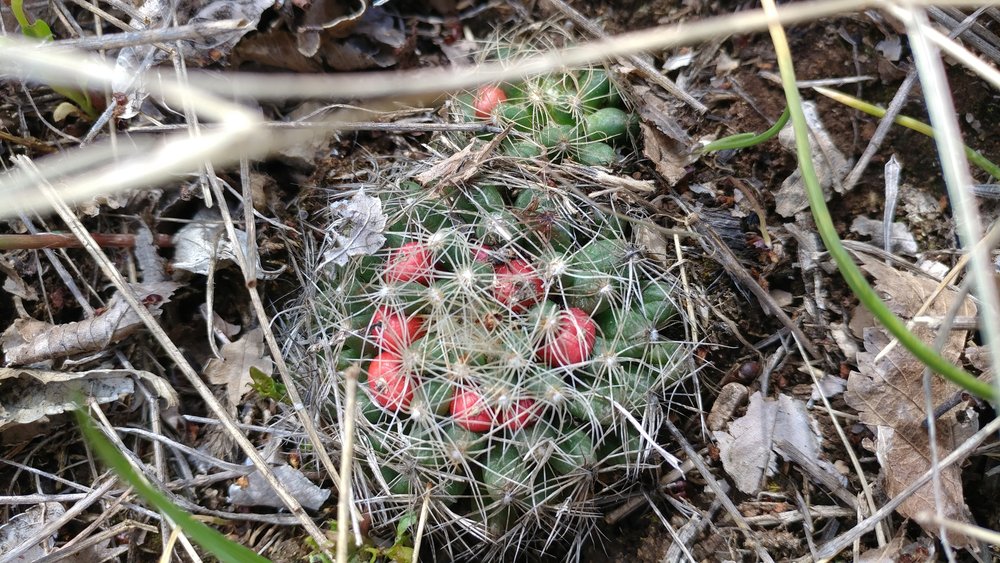
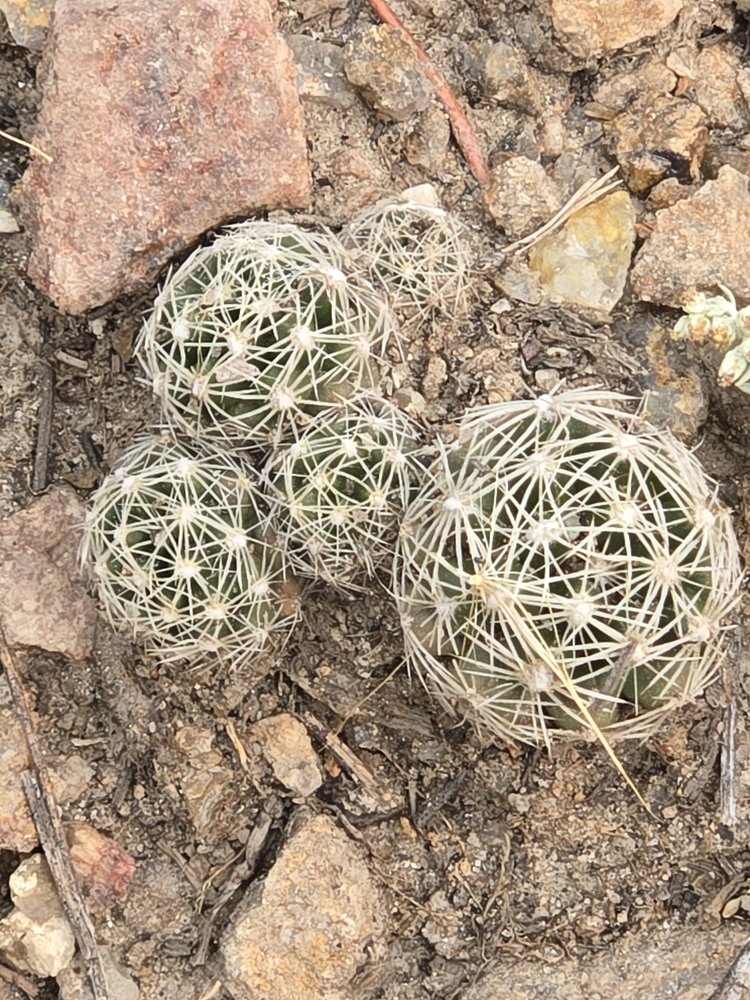
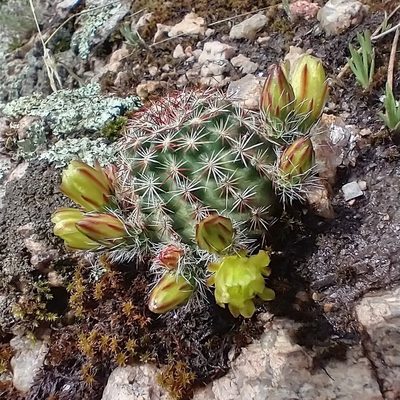
Missouri Foxtail Cactus (Pelecyphora missouriensis) is a small native cactus, a spiny ball often half buried in the ground, that blooms in May and June with pale yellow-green flowers. Its shiny red berries hang on through the winter and are easiest to spot the next spring. In the Black Hills it grows on dry prairie and stony hillsides, and the 1986 plant survey of Jewel Cave National Monument lists it.
Free photos from other sources
| Family | Cactaceae · Cactus |
|---|---|
| Status | Native perennial |
| Blooms | May and June |
| Height | 2–8 cm (¾–3 in) |
| Where | Dry, sunny prairie, stony grassland and openings in ponderosa pine, often on limestone or other sedimentary rock |
| Also called | Missouri Pincushion, Nipple Cactus, Missouri Corycactus |
| Synonym | Escobaria missouriensis, Coryphantha missouriensis, Mammillaria missouriensis, Neobesseya missouriensis |
| Listed | Wyoming ranks it S2 (imperiled). South Dakota does not rank it. |
| Traditional use | Blankinship (1905) records that the Crow ate the ripe red fruit. |
Roots, seeds & germination
Root: Spread-out fibrous roots or a short taproot, and clumps can root from the base of side branches. The stem sits deep in the soil and pulls down in winter until its flat top is nearly level with the ground.
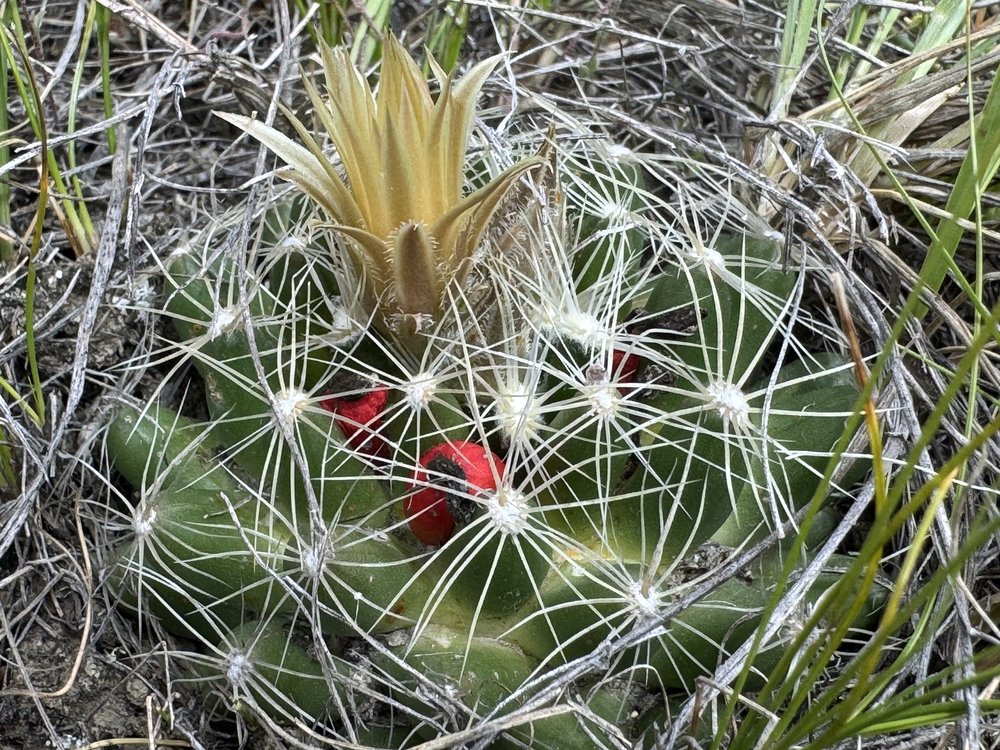
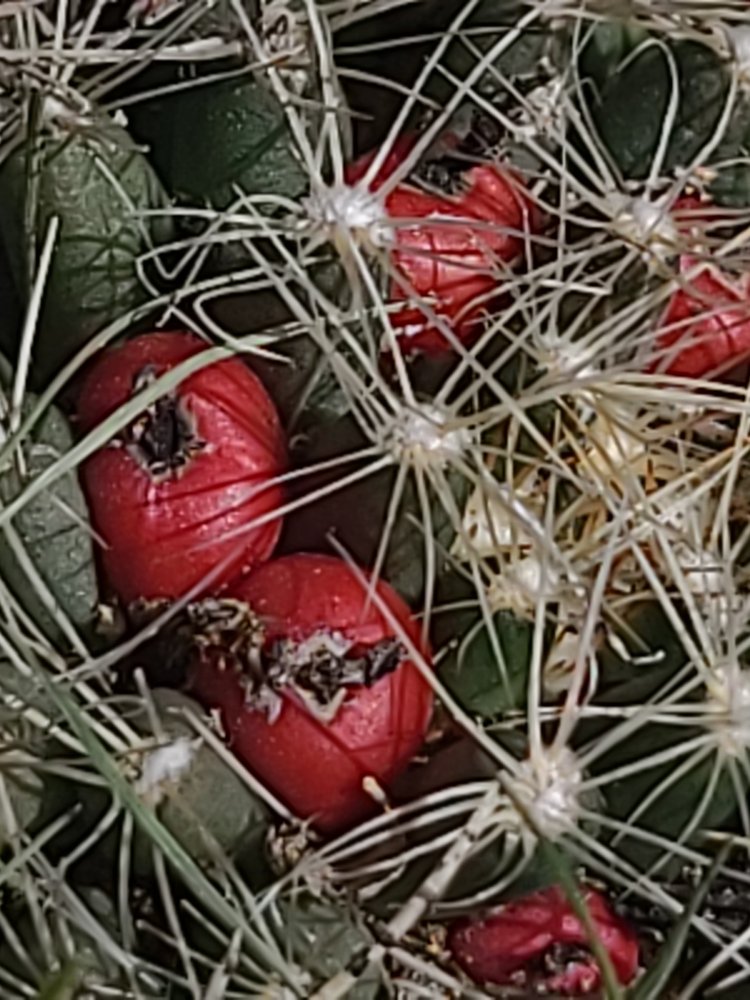
Seed: The fruit is a small, firm, orange-red to scarlet berry 6.5–10 mm (¼–⅜ in) long. It forms in summer but stays on the plant over winter and ripens to its brightest red in late winter and spring. The seeds inside are black, 1.4–2.2 mm, and deeply pitted.
Germination: No study of wild Plains seed was found. A cactus growers' reference reports that the seed has no dormancy and sprouts best at about 25 °C (77 °F) on gritty, well-drained soil kept humid for the first couple of weeks. Seedlings grow slowly.
How do you identify Missouri Foxtail Cactus?
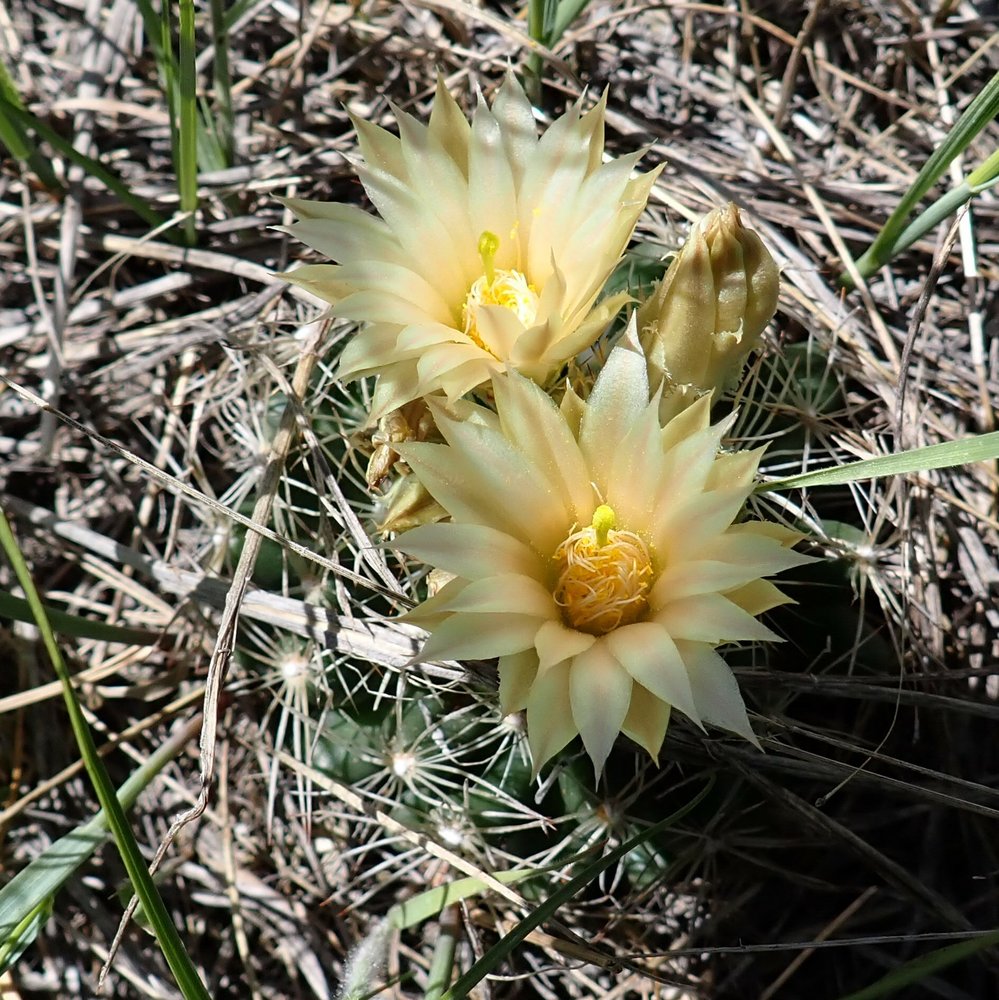
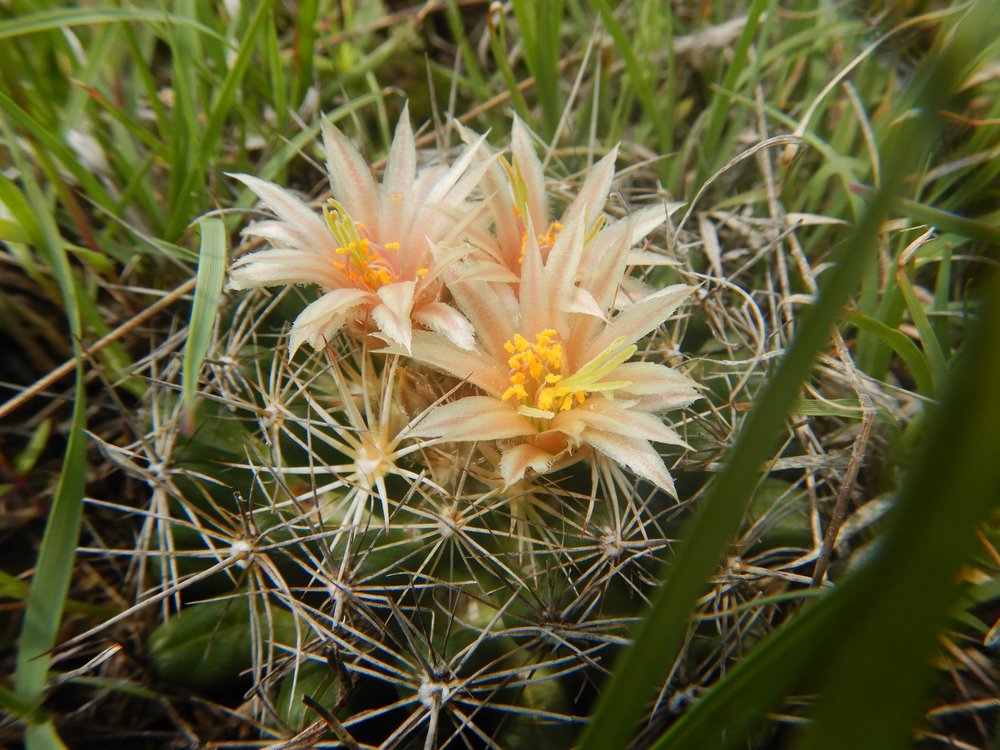
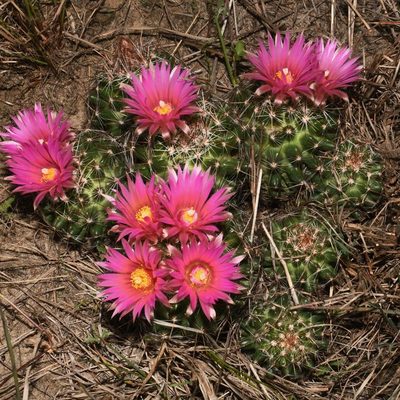
Look for a single low, green ball or flat-topped stem, sometimes a small clump, 2–7.5 cm (¾–3 in) across and nearly flush with the ground. Each bump ends in a flat, star-shaped cluster of 6–20 thin white to pale tan spines lying close against the stem, usually with no central spine, so the plant looks like a green ball under a loose white net. The flowers are pale greenish-yellow, often with a green, pink or brown stripe down each petal, and the small scarlet berries last through winter. Spinystar has bright magenta to rose-pink flowers, stout central spines sticking out of each cluster, and green fruit that ripens in late summer.
When does it bloom?
May and June.
Where does it grow?
Dry, sunny, open ground: shortgrass and mixed-grass prairie, stony hillsides and grassy openings in ponderosa pine woodland, often on limestone, sandstone or shale rather than granite. NPSpecies lists it at Wind Cave, Jewel Cave and Devils Tower. Herbarium specimens come from Pennington, Lawrence, Fall River and Meade counties in South Dakota and Crook County, Wyoming, and Custer State Park and Wind Cave hold many photo records.
Other flowers to compare
Sources: Flora of North America Vol. 4: Coryphantha missouriensis, Missouri foxtail cactus (Zimmerman & Parfitt); USDA PLANTS Database: Escobaria missouriensis, Missouri foxtail cactus (ESMI3); ITIS: Escobaria missouriensis, TSN 502451; GBIF species: Pelecyphora missouriensis (accepted; Escobaria missouriensis as synonym); Sánchez, D. et al. 2022. Phylogenetic relationships in Coryphantha and implications on Pelecyphora and Escobaria. PhytoKeys 188: 115–165; Wikipedia: Pelecyphora missouriensis (naming history); Kansas Wildflowers and Grasses: Nipple cactus (Coryphantha missouriensis); Native American Ethnobotany Database (BRIT): Escobaria missouriensis (Crow); LLIFLE Encyclopedia of Cacti: Escobaria missouriensis (cultivation and seed); NatureServe Explorer: Escobaria missouriensis (G5; state ranks); Marriott & Hartman. 1986. A Survey of the Vegetation of Jewel Cave National Monument; NPSpecies checklist, Wind Cave National Park (vascular plants); NPSpecies checklist, Jewel Cave National Monument (vascular plants); NPSpecies checklist, Devils Tower National Monument (vascular plants); NPSpecies checklist, Badlands National Park (vascular plants); GBIF preserved specimens of Pelecyphora missouriensis, South Dakota; GBIF preserved specimens of Pelecyphora missouriensis, Wyoming; iNaturalist research-grade observations of Escobaria missouriensis, Black Hills (80 km radius); Culturally Important Plants of the Lakota (Black Elk & Flying By, Sitting Bull College, 1998), filed with the SD PUC (checked; species not listed); Gilmore, M. R. 1919. Uses of Plants by the Indians of the Missouri River Region (checked; only prickly pear covered).