Green-flowered Hedgehog Cactus
Echinocereus viridiflorus
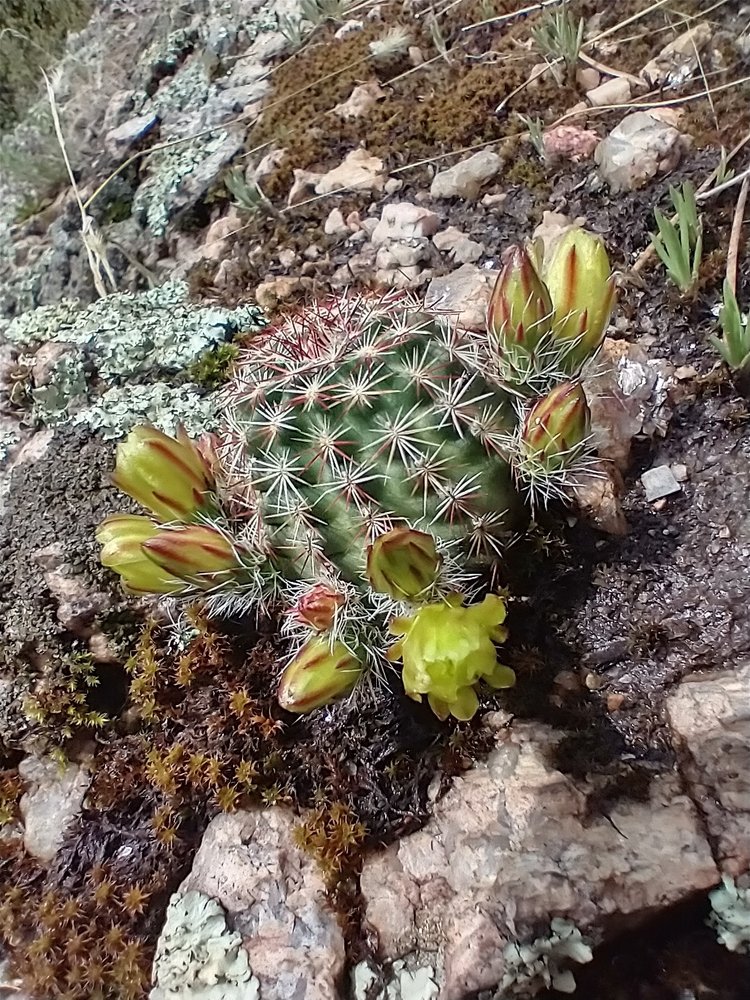
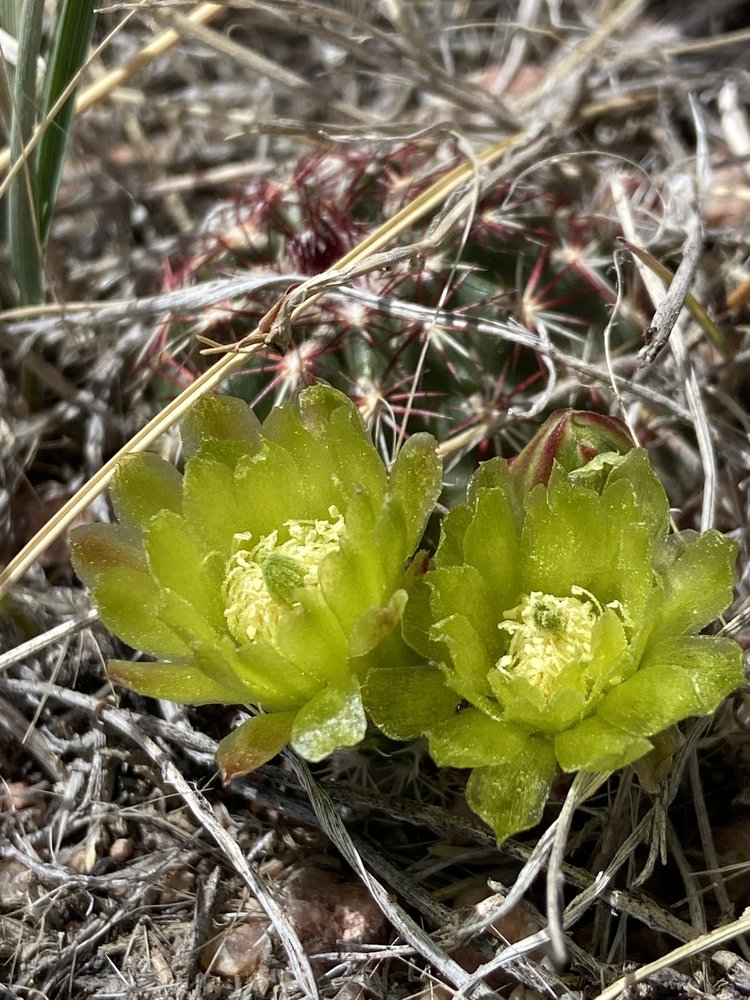
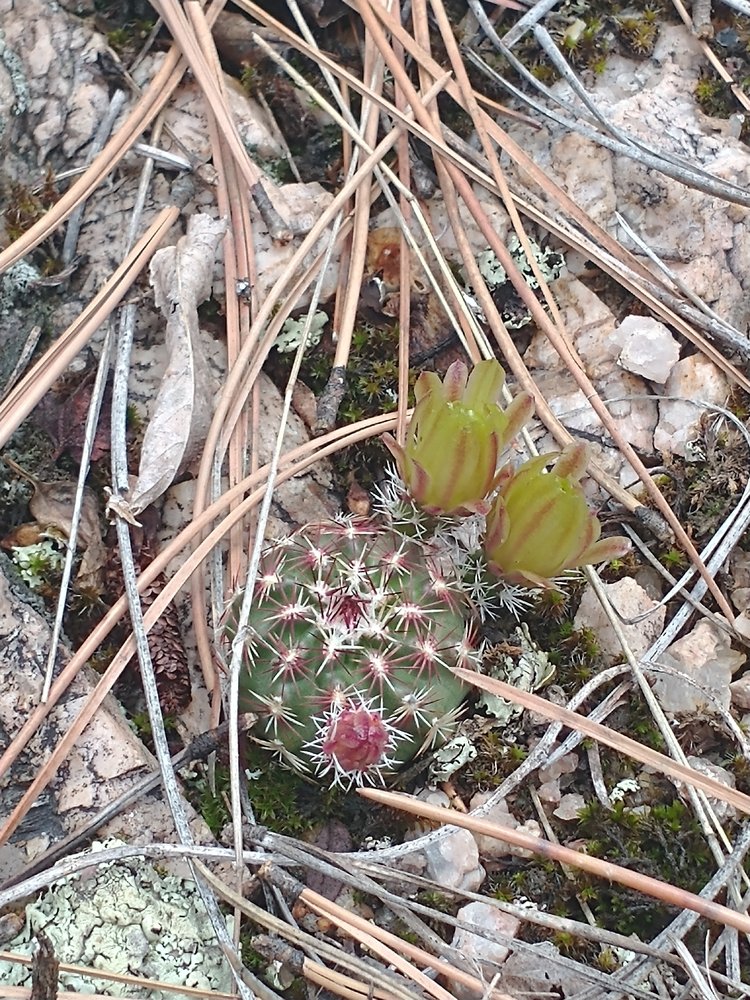
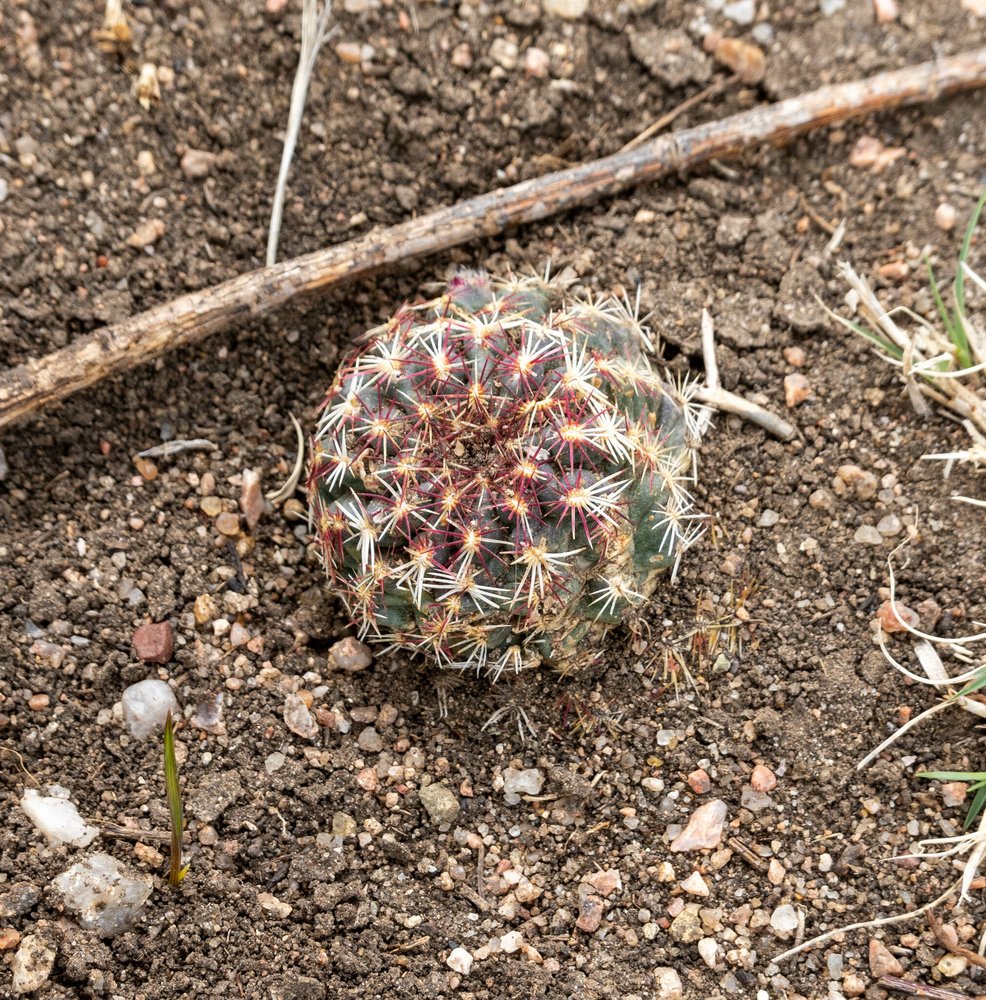
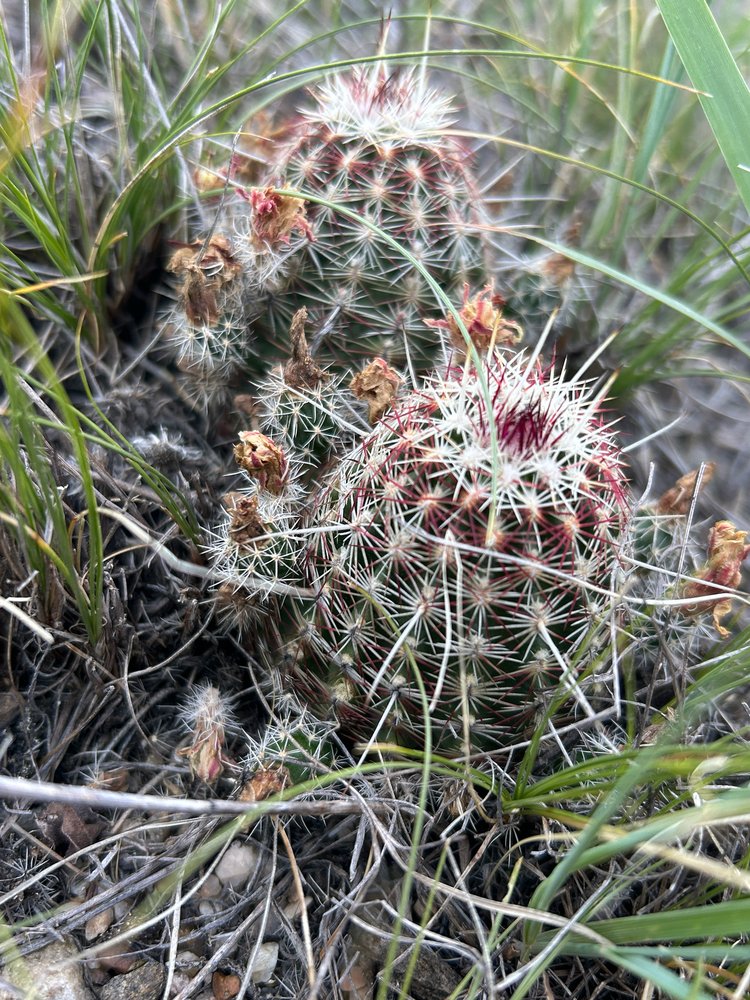
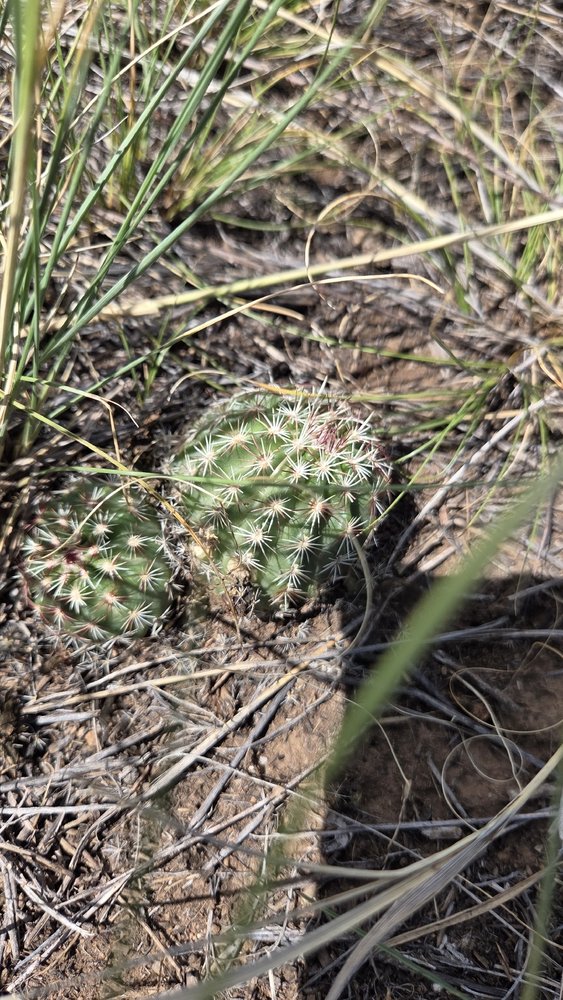
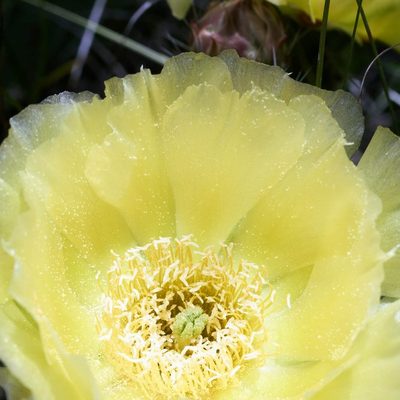
Green-flowered Hedgehog Cactus (Echinocereus viridiflorus) is a small native cactus: a short, ribbed green cylinder, usually smaller than a fist, wrapped in comb-like spines that often run in bands of red and white. In May and June it opens yellow-green flowers from the sides of the stem, and in the Black Hills it is a rare plant of the southern grasslands, listed at Wind Cave National Park.
Free photos from other sources
| Family | Cactaceae · Cactus |
|---|---|
| Status | Native perennial |
| Blooms | May and June, with a few into July |
| Height | 3–35 cm (1–14 in) |
| Where | Dry, sunny mixed-grass prairie, rocky and gravelly slopes and pine-savanna openings in the southern Hills |
| Also called | Nylon Hedgehog Cactus, Green-flower Hedgehog Cactus, Small-flowered Hedgehog Cactus, Hedgehog Cactus |
| Listed | On the South Dakota Game, Fish and Parks rare plant list, ranked S3 (vulnerable) in South Dakota; NatureServe ranks it S2 (imperiled) in Wyoming. |
Roots, seeds & germination
Root: Little has been published on its roots. Most plants stay single-stemmed or make only a few side branches, and clumps of a dozen stems or more are rare.
Seed: The fruit is a small, spiny berry, round to egg-shaped, 6–17 mm (¼–⅝ in) long, green to dark purple, with white pulp, ripening mostly in July and August. The seeds are black, about 1–2 mm long, with a bumpy surface.
Germination: No wild-seed study for this species was found. Cactus growers sow hedgehog-cactus seed on fine grit and keep it warm, about 30 °C (86 °F), moist and in bright light, with no cold treatment.
How do you identify Green-flowered Hedgehog Cactus?
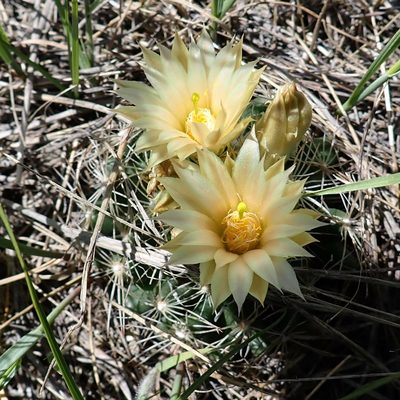
Look for one short, upright green cylinder or egg-shaped stem, or a few side by side, 3–9 cm (1¼–3½ in) thick, with 10–20 vertical ribs running top to bottom and spine clusters spaced along each rib. The short spines lie flat and spread like a comb, white, pink, red or gray, often in bands. The yellow-green to chartreuse flowers, 2–3.5 cm (¾–1⅓ in) long, have narrow petals often with a darker stripe down the middle and come out from the sides of the stem, not the top. Missouri Foxtail Cactus has the same size, habitat and pale flowers, but its stem is covered in separate round bumps with no ribs, its flowers sit on top and its spines are gray-white without red bands.
When does it bloom?
May and June, with a few into July.
Where does it grow?
Dry, sunny, open ground: mixed-grass and shortgrass prairie, rocky and gravelly hillsides, rock outcrops and grassy openings in ponderosa pine savanna. In the Black Hills it grows only in the southern grasslands and foothills. Wind Cave National Park’s species list includes it, South Dakota Game, Fish and Parks notes it in the native grasslands of the southern Black Hills, and herbarium specimens since 1892 come from Custer and Fall River counties. Flora of North America puts the northern edge of its range in southwestern South Dakota, and no Wyoming Black Hills records are known.
Other flowers to compare
Sources: Flora of North America Vol. 4: Echinocereus viridiflorus (Blum, Lange & Parfitt); Plants of the World Online (Kew): Echinocereus viridiflorus subsp. viridiflorus; USDA PLANTS Database: Echinocereus viridiflorus, nylon hedgehog cactus (ECVI2); GBIF species: Echinocereus viridiflorus Engelm. (accepted; synonyms); NatureServe Explorer: Echinocereus viridiflorus (G5; SD S3, WY S2); South Dakota Game, Fish and Parks: Rare Plants of South Dakota; NPSpecies checklist, Wind Cave National Park (vascular plants); NPSpecies checklist, Jewel Cave National Monument (vascular plants; species not listed); NPSpecies checklist, Devils Tower National Monument (vascular plants; species not listed); Kansas Wildflowers and Grasses: Green-flower hedgehog cactus; Lady Bird Johnson Wildflower Center: Echinocereus viridiflorus; Colorado Wildbuds: Echinocereus viridiflorus ssp. viridiflorus; Cactus-art.biz: Echinocereus viridiflorus (flower scent, hardiness); British Cactus & Succulent Society: Cultivation notes on Echinocereus; GBIF preserved specimens of Echinocereus viridiflorus, South Dakota; GBIF preserved specimens of Echinocereus viridiflorus, Wyoming; iNaturalist research-grade observations of Echinocereus viridiflorus, Black Hills (80 km radius); Culturally Important Plants of the Lakota (Black Elk & Flying By, Sitting Bull College, 1998), filed with the SD PUC (checked; species not listed); Native American Ethnobotany Database (BRIT): Echinocereus search (checked; no entry for this species).