Canada Thistle
Cirsium arvense
Canada Thistle (Cirsium arvense) is an introduced perennial from Eurasia, despite its name, and one of South Dakota's state noxious weeds. It blooms from July into September with many small pink to purple heads, and it spreads by creeping roots into dense patches along roads, springs and forest openings in the Black Hills. This page also covers two other introduced thistles common in the Hills, Musk Thistle and Bull Thistle.
Free photos from other sources
| Family | Asteraceae · Aster |
|---|---|
| Status | Introduced perennial |
| Blooms | July through September, a few into October |
| Height | 30–120 cm (12–47 in) |
| Where | Disturbed, sunny ground: roadsides, pastures, stream banks, springs and forest openings |
| Also called | Creeping Thistle, Field Thistle |
| Synonym | Serratula arvensis, Carduus arvensis, Breea arvensis, Cirsium setosum, Cirsium incanum |
| Listed | A South Dakota state noxious weed and a Wyoming designated noxious weed. Musk Thistle is also a Wyoming designated noxious weed, and Musk and Bull Thistle are locally noxious in some South Dakota counties. |
| Note | This page also covers Musk Thistle (Carduus nutans) and Bull Thistle (Cirsium vulgare). |
Roots, seeds & germination
Root: Seedlings start with a taproot, then send out horizontal roots that can grow about 6 m (20 ft) in one season, with buds every 6–12 cm (2½–5 in) that send up new shoots. A piece of root only 8 mm (⅓ in) long can sprout, so tilling can spread it. Bull Thistle grows from a single taproot that doesn't spread, and Musk Thistle is an annual or biennial that starts as a rosette.
Seed: Plants are male or female, and a patch grown from one plant is all one sex, so it makes no seed and spreads only by roots. A plant averages about 1,500 seeds, light brown and 2–4 mm long, each with a feathery white to grayish pappus up to about 2.5 cm (1 in) long, and some seeds stay alive in the soil for about 20 years.
Germination: Fresh seed sprouts readily, with 50–95% germination reported, best at about 20–30 °C (68–86 °F). Shoots from the roots come up in spring once the soil reaches about 5 °C (41 °F).
How do you identify Canada Thistle?
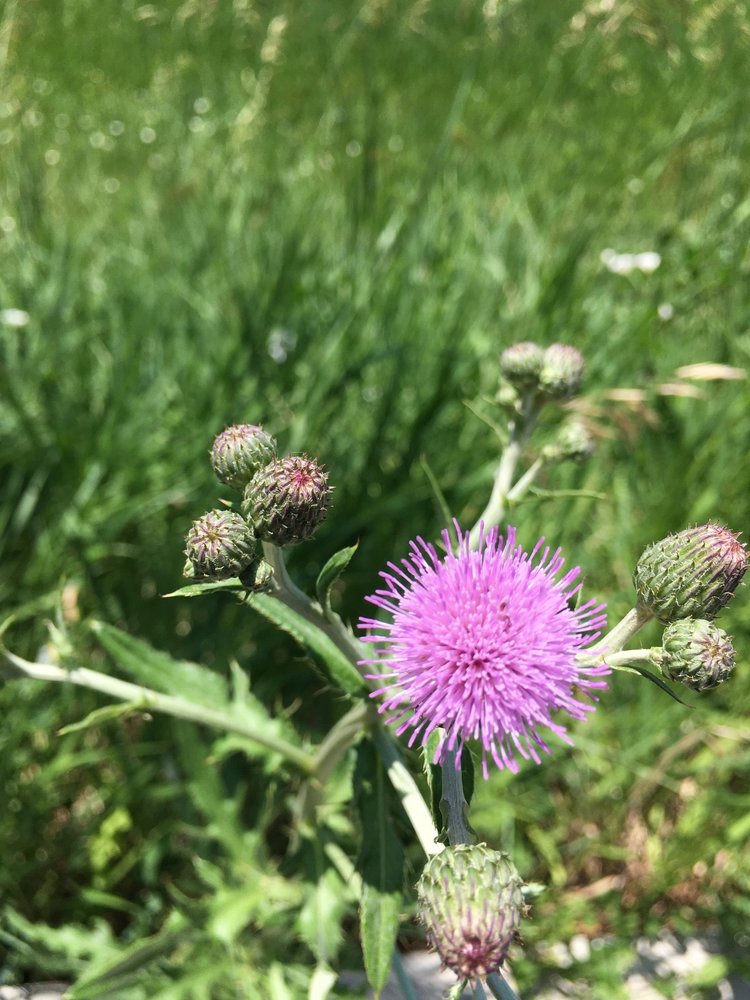
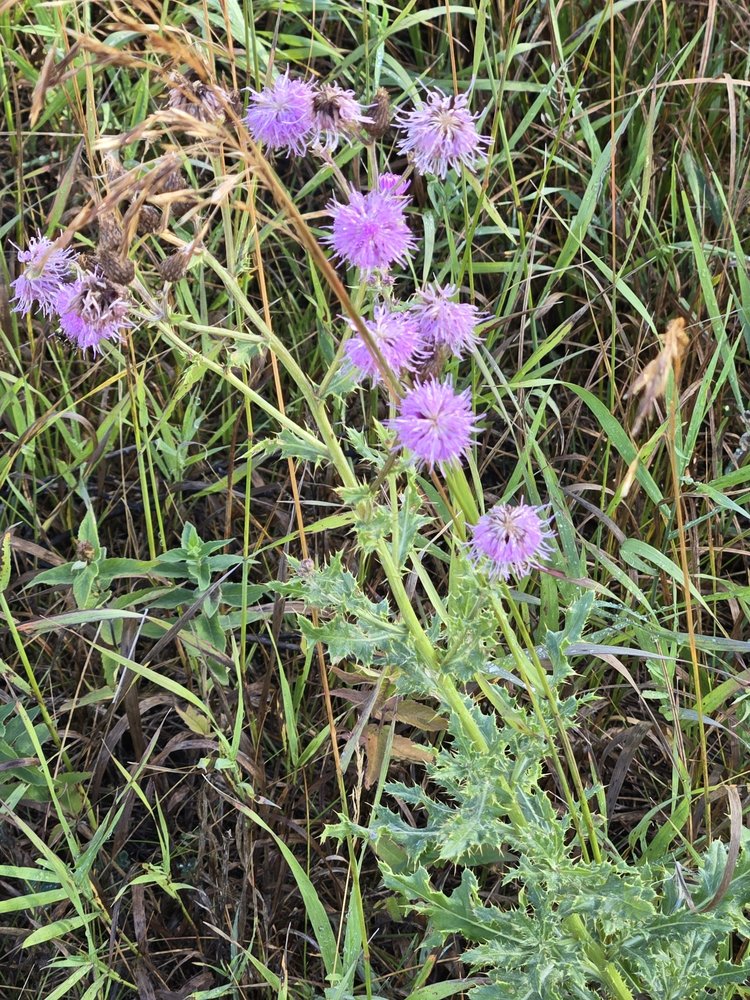
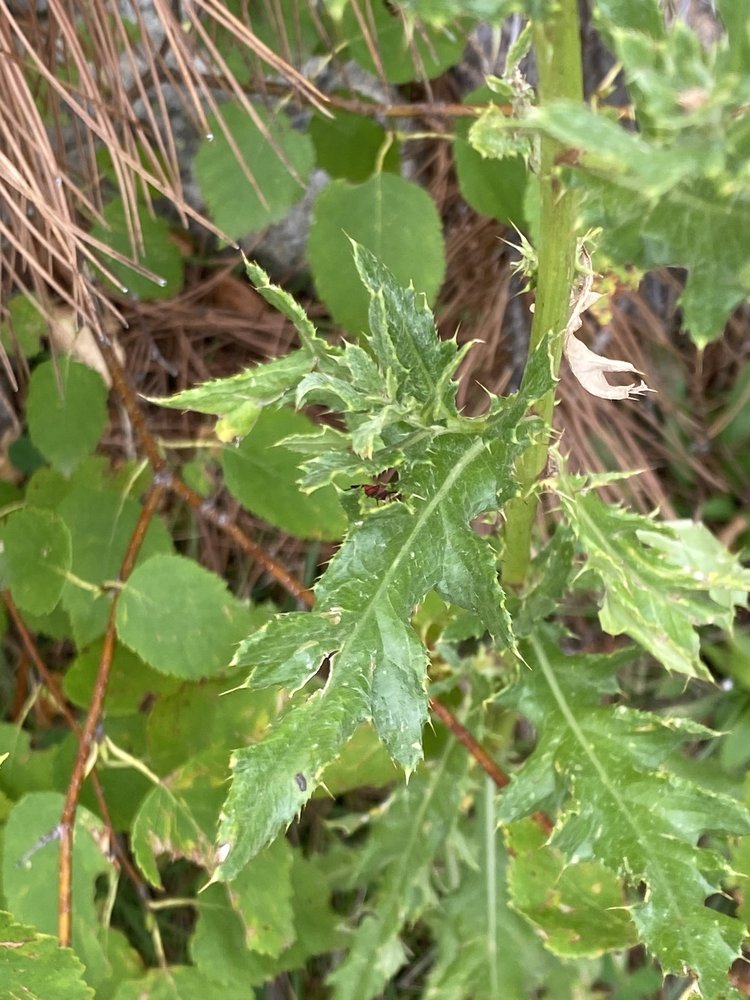
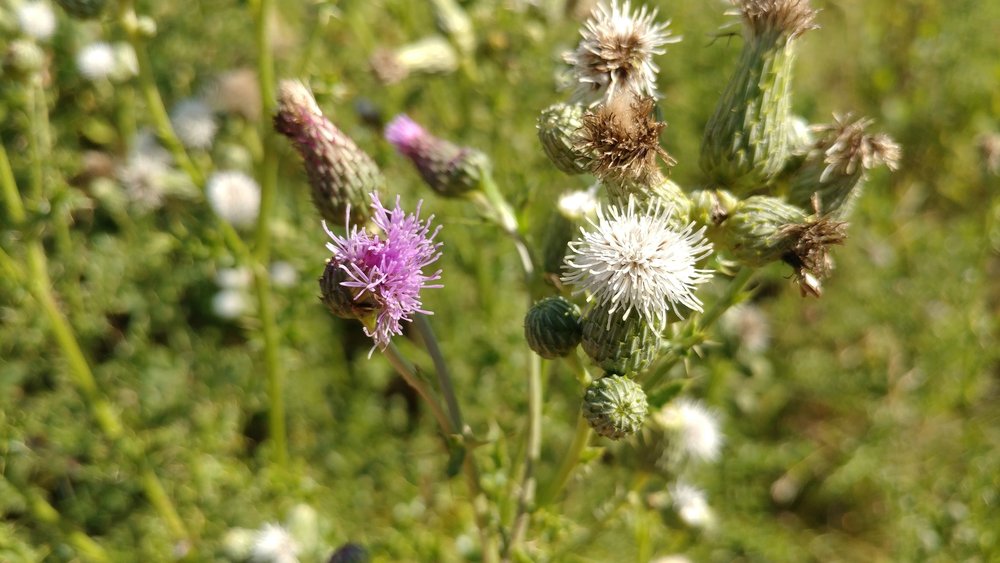
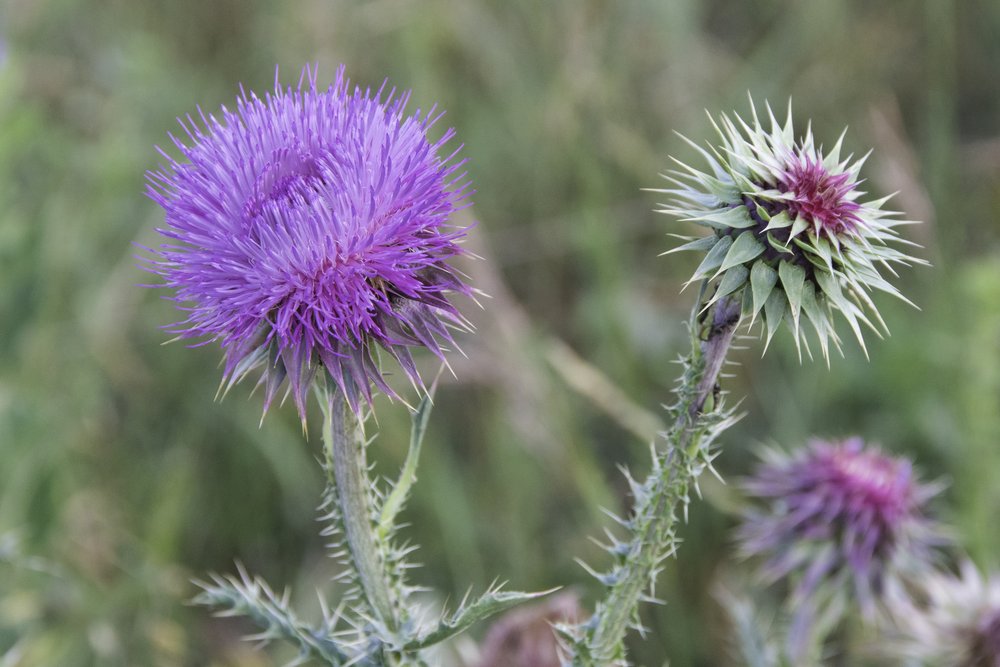
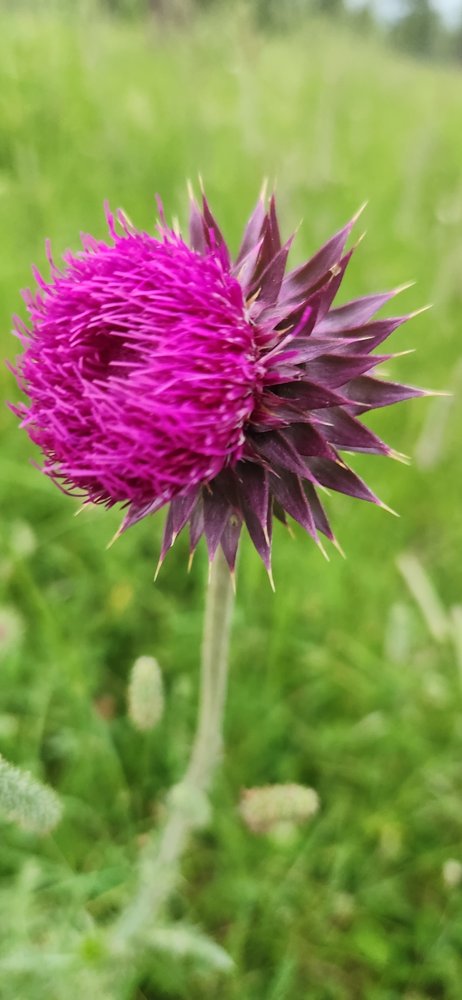
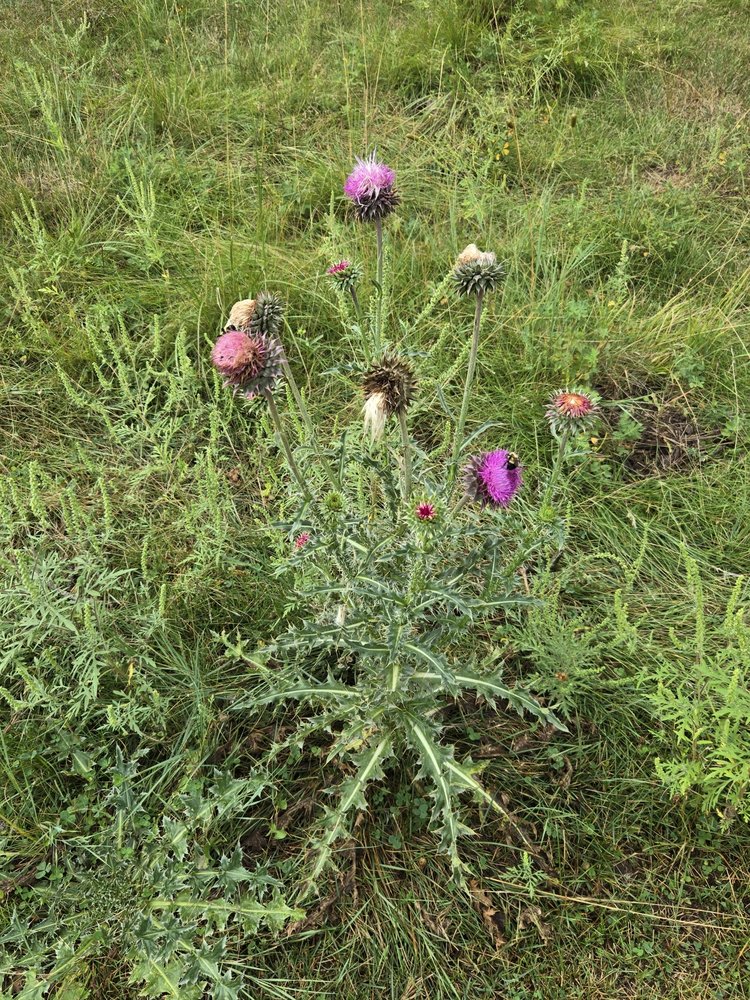
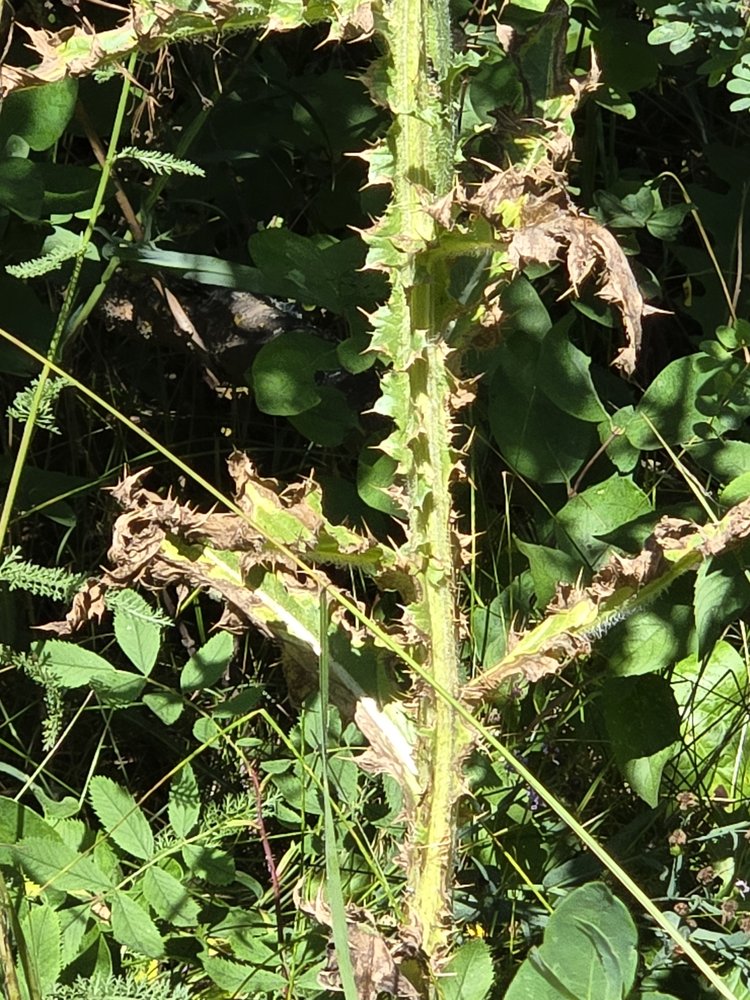
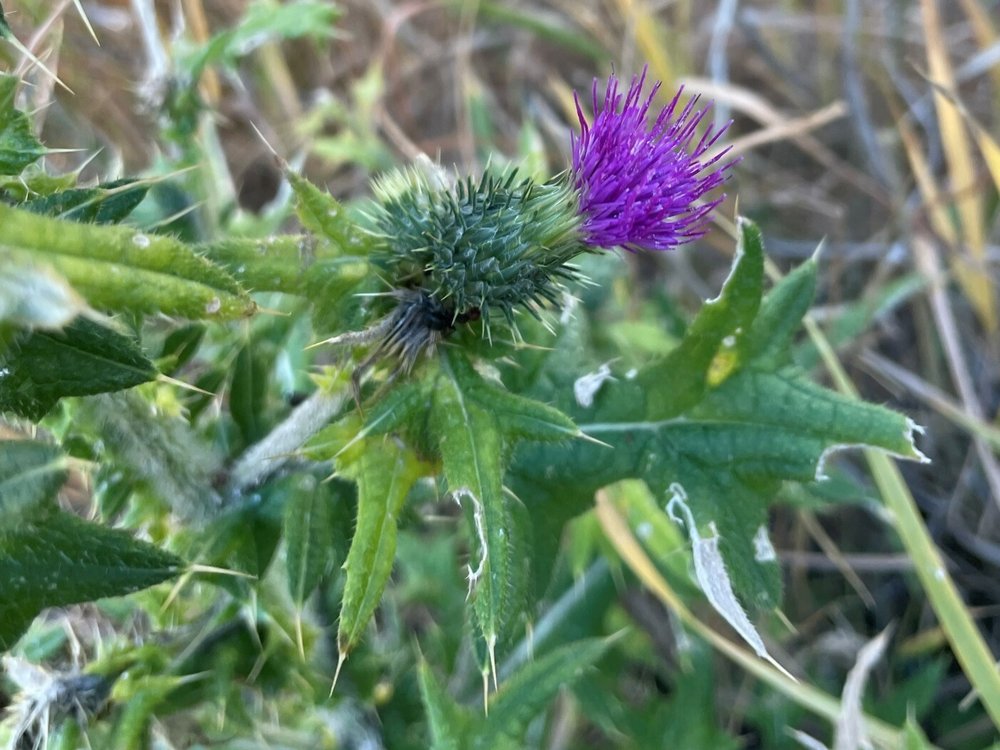
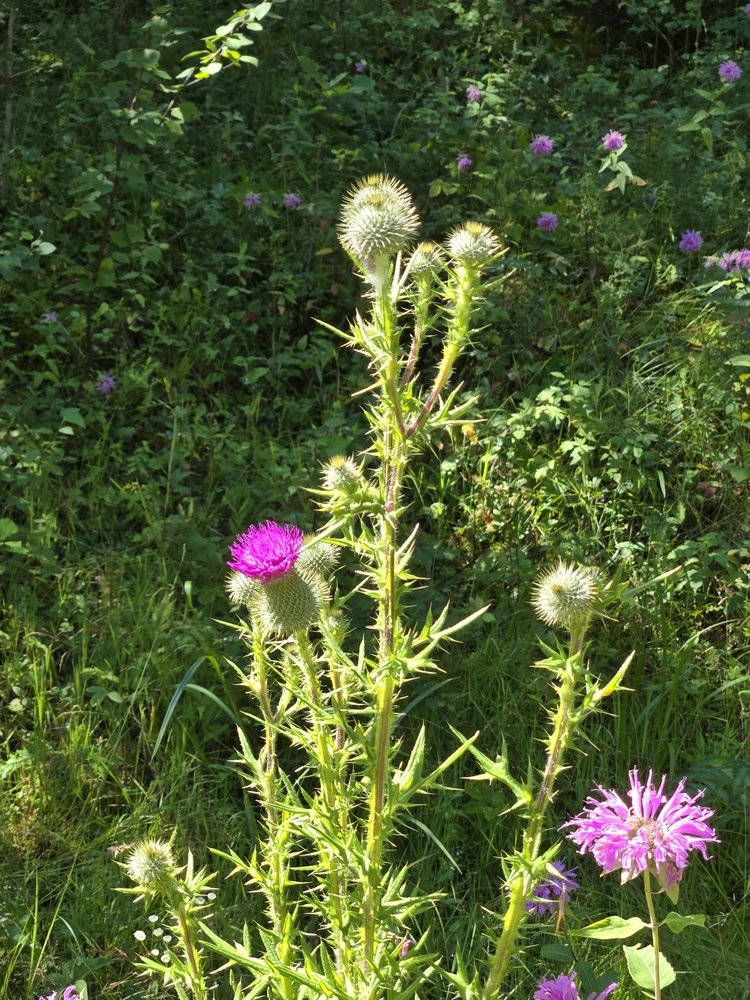
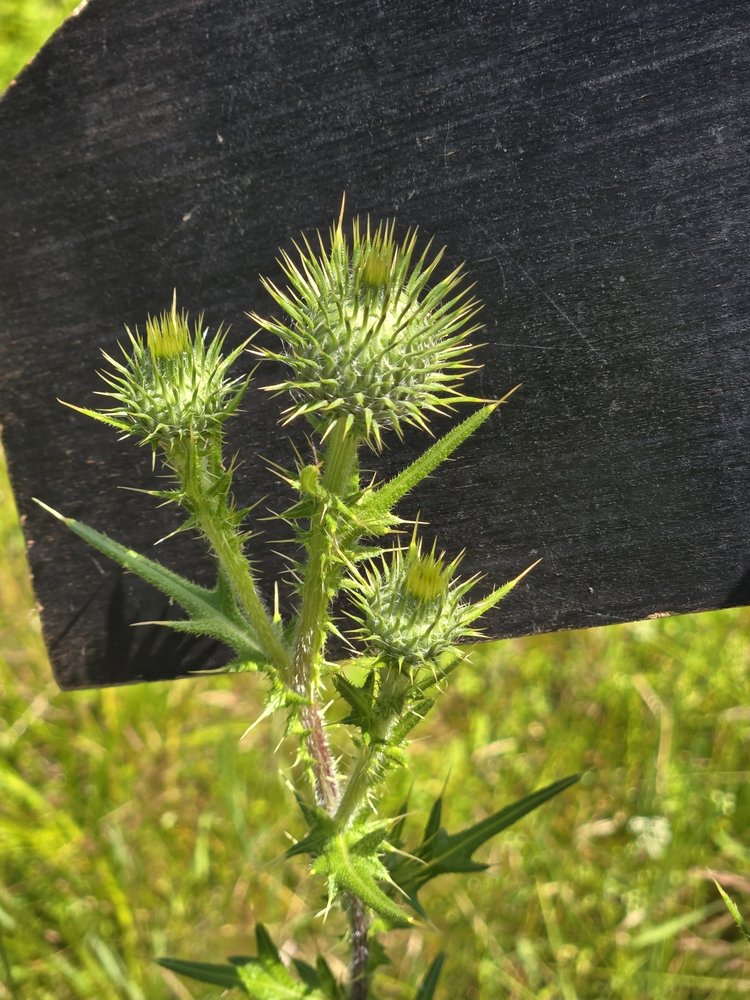
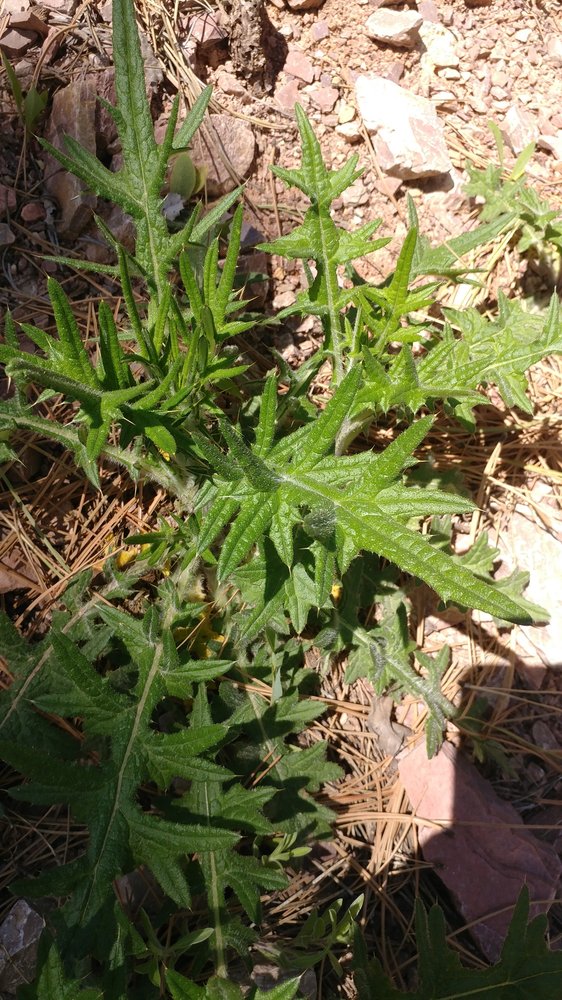
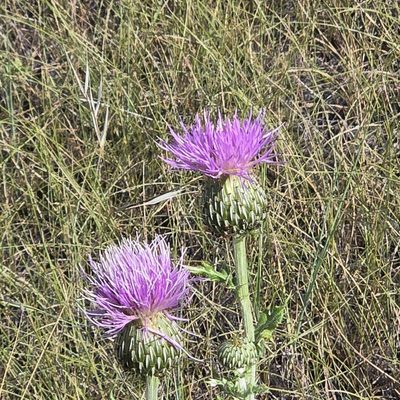
Canada Thistle grows in dense patches of many stems joined by roots, with many small pink to purple heads, about 1–2 cm (½–¾ in) tall, in loose, branched clusters. The bracts under each head end in tiny spines no more than 1 mm long, and its leaves clasp the stem or run only a short way down it, without long spiny wings. Musk Thistle (Carduus nutans) has single big red-purple heads, 2–7 cm (¾–2¾ in) across, often nodding on long stalks that are bare near the top, with broad, spine-tipped bracts that spread or bend back. Bull Thistle (Cirsium vulgare) has heads wrapped in many narrow, spine-tipped bracts, and the upper side of its leaves is covered with short, bristly spines, the only North American thistle with that mark. Musk and Bull Thistle have spiny-winged stems, while native Wavyleaf Thistle has gray-woolly stems and leaf undersides, a few large heads and leaves that clasp the stem without long wings.
When does it bloom?
July through September, a few into October.
Where does it grow?
Disturbed, sunny ground where the soil holds some moisture: roadsides, ditches, stream banks, springs and seeps, pastures, meadows and forest openings. It doesn't tolerate shade, so it stays out of dense forest. The 1986 plant survey of Jewel Cave found it scattered near springs, seeps and culverts, and the National Park Service lists it at Wind Cave, Jewel Cave, Devils Tower and Mount Rushmore. Herbarium specimens come from Lawrence, Custer, Pennington, Butte and Fall River counties in South Dakota and Crook and Weston counties in Wyoming.
Other flowers to compare
Sources: Flora of North America: Cirsium arvense; Flora of North America (eFloras): Cirsium vulgare; Flora of North America (eFloras): Carduus nutans; Flora of North America (eFloras): Cirsium undulatum (for the native lookalike); South Dakota DANR: State Noxious Weeds; South Dakota DANR: Locally Noxious Weed Pest List (updated 2024); Black Hills National Forest: Invasive plant species accounts and BHIPP priority list; EDDMapS: Wyoming Noxious Weeds list (Wyoming Dept. of Agriculture, 2018); USGS Northern Prairie Wildlife Research Center: Species Abstracts of Highly Disruptive Exotic Plants, Cirsium arvense; Washington State Noxious Weed Control Board: Cirsium arvense written findings; USDA Forest Service Fire Effects Information System: Cirsium vulgare; Bugwood Wiki: Carduus nutans; Minnesota Wildflowers: Nodding Thistle (Carduus nutans); Kansas Wildflowers and Grasses: Carduus nutans; Marriott, H. & Hartman, R. (1986) Vegetation of Jewel Cave National Monument; NPSpecies checklist, Wind Cave National Park (vascular plants); NPSpecies checklist, Jewel Cave National Monument (vascular plants); NPSpecies checklist, Devils Tower National Monument (vascular plants); NPSpecies checklist, Mount Rushmore National Memorial (vascular plants); GBIF occurrence search: Cirsium arvense specimens, Black Hills box; GBIF occurrence search: Carduus nutans specimens, Black Hills box; GBIF occurrence search: Cirsium vulgare specimens, Black Hills box; GBIF Backbone Taxonomy: Cirsium arvense (synonyms).