Silverweed Argentina anserina
Also called Silverweed Cinquefoil, Common Silverweed, Silver-weed, zuyá pȟežúta (Lakota)
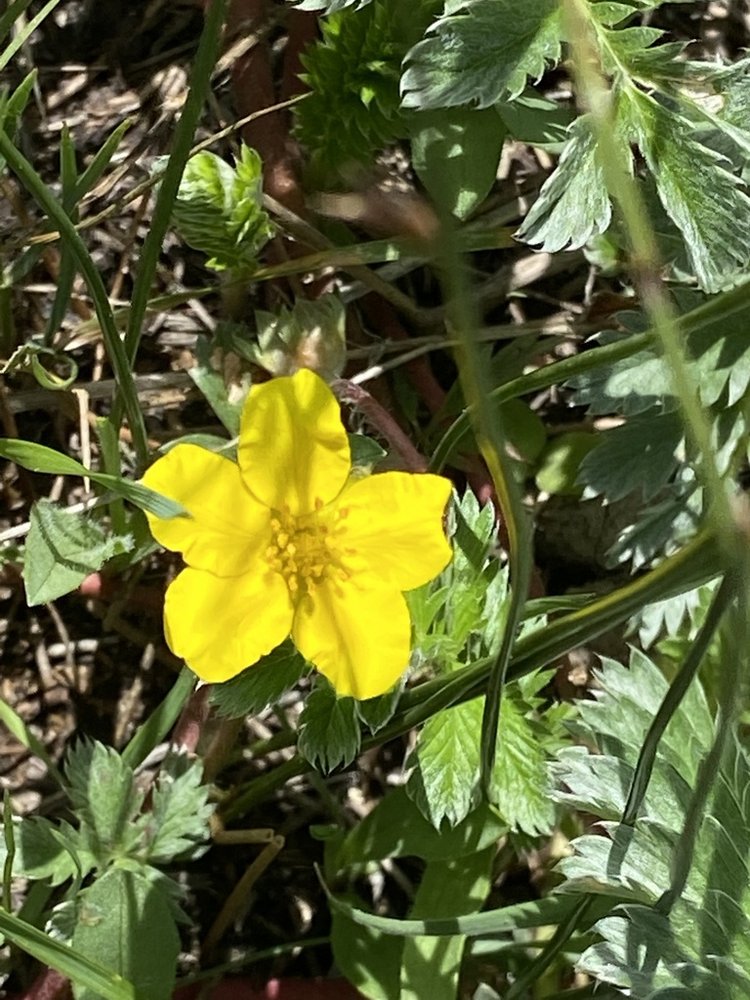
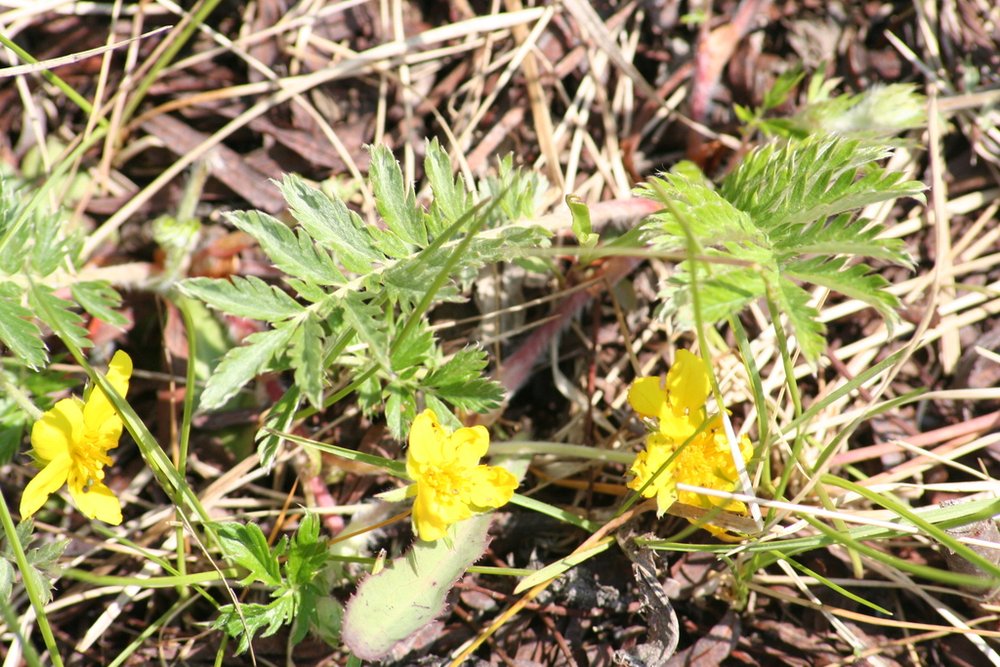
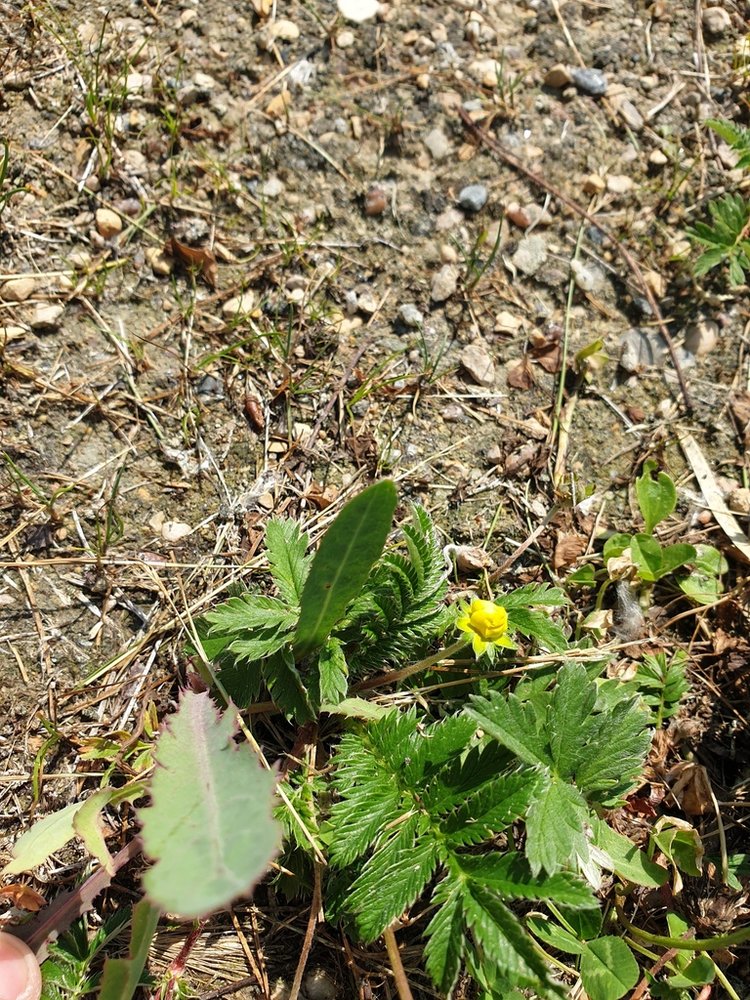
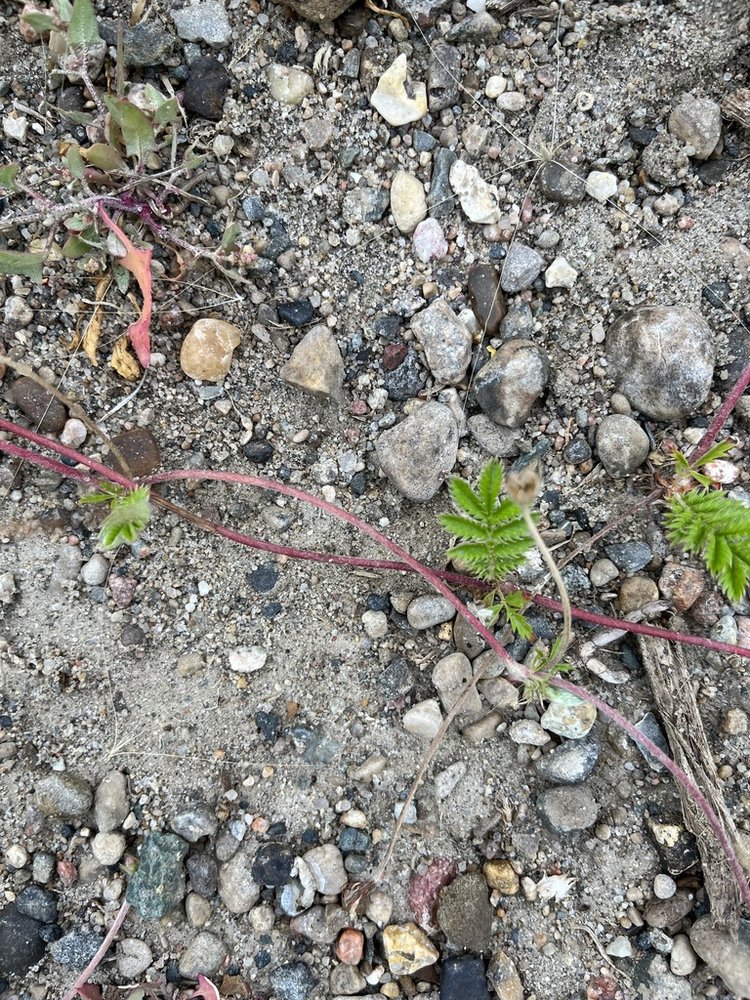
Silverweed (Argentina anserina, also written Potentilla anserina) is a low native perennial of the rose family with a single yellow, five-petaled flower on its own stalk and silvery, feathery leaves, spreading by red runners. In the Black Hills it grows on moist ground along streams and creeks, and the herbarium specimens were collected mostly in June.
Free photos from other sources
| Family | Rosaceae · Rose |
|---|---|
| Status | Native perennial |
| Blooms | June into September |
| Height | 5–20 cm (2–8 in), with runners up to 90 cm (3 ft) long |
| Where | Wet meadows, stream and creek banks, floodplains and muddy shores |
| Also called | Silverweed Cinquefoil, Common Silverweed, Silver-weed, zuyá pȟežúta (Lakota) |
| Synonym | Potentilla anserina |
| Food use | The roots are edible, and the Lady Bird Johnson Wildflower Center says the spring roots have been likened to parsnips, chestnuts and sweet potatoes. |
| Traditional use | Black Elk and Flying By's 1998 list of culturally important plants gives the Lakota name zuyá pȟežúta for it and records the leaves as made into tea, the roots as eaten raw or cooked, and an infusion of the leaves and stems as used for diarrhea. Moerman's ethnobotany database records that the Blackfoot used a poultice of chewed roots on sores and scrapes (Hellson 1974), used the root for diarrhea (McClintock 1909) and tied blankets with the runners, and that the Okanagon used the roots as a principal food (Teit 1928). |
Traditional use: first drafted by Google AI, then checked against the sources on this page.
How do you identify Silverweed?
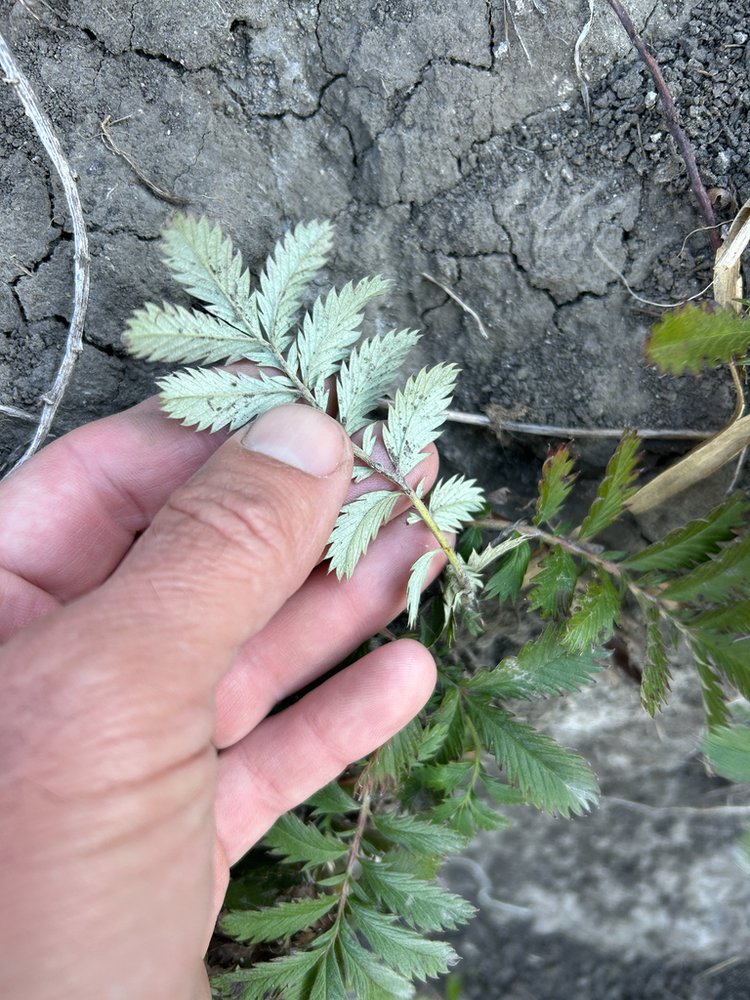
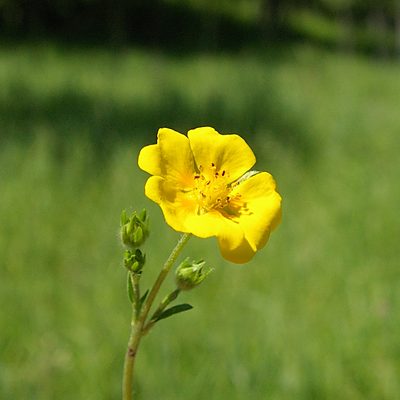
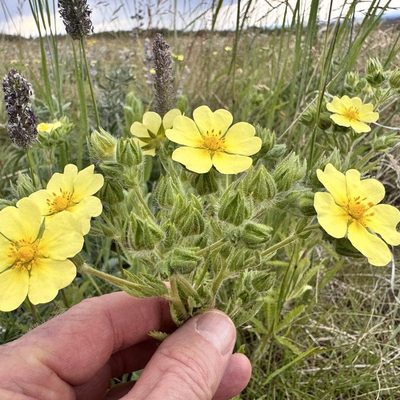
Look for a low, creeping plant that spreads by thin red runners, 30–90 cm (1–3 ft) long, with a cluster of leaves and a flower stalk coming up from some of the nodes. Each leaf is divided into 7 or more sharply toothed leaflets with smaller leaflets between them, and the underside of the leaf is silvery from long white hairs. The flower is yellow, about 2 cm (¾ in) across, with 5 rounded petals, and sits alone at the end of a bare stalk 2.5–15 cm (1–6 in) long, usually separate from the leaves, so it can look as if it grows straight from the ground.
When does it bloom?
June into September.
Where does it grow?
Wet sandy shores and wet meadows (Minnesota), and in the Black Hills area moist or muddy ground beside water. South Dakota herbarium labels from Pennington County describe moist ground along a mountain stream, two creek floodplains, a low creek terrace on organic soil, and a muddy trail on the delta where a creek enters a reservoir. Two Custer specimens from 1892 give an elevation of 4000 to 5000 feet. GBIF has 14 specimens from Pennington and Custer counties, and none from Wyoming's Crook or Weston counties.
Other cinquefoils in this guide
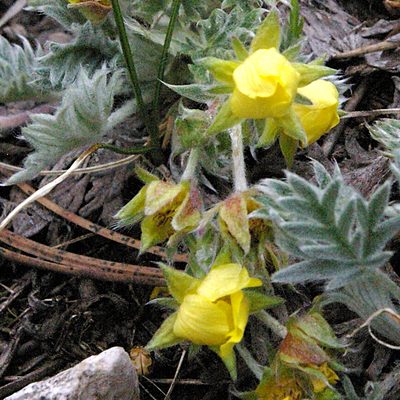
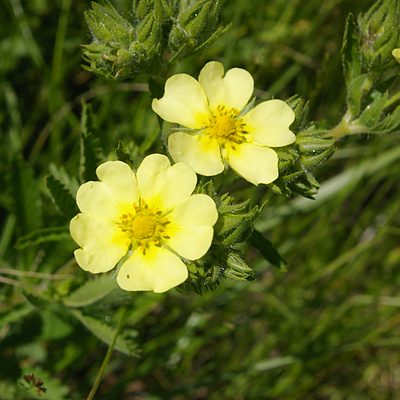
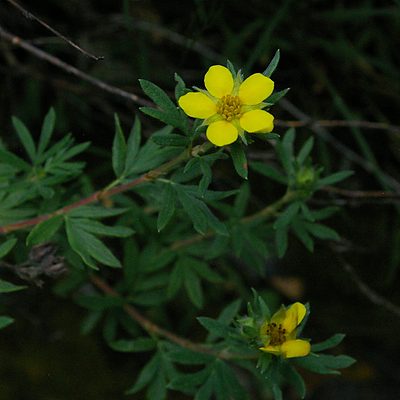
Rose family (Rosaceae): 21 other plants in this guide
- American Plum
- Chokecherry
- Dwarf Raspberry
- Early Cinquefoil
- Leafy Cinquefoil
- Mat Rock Spiraea
- Mountain Mahogany
- Mountain Ninebark
- Pincherry
- Prairie Rose
- Prairie Smoke
- Red Raspberry
- Saskatoon Serviceberry
- Shrubby Cinquefoil
- Slender Cinquefoil
- Sulphur Cinquefoil
- Tall Cinquefoil
- Thimbleberry
- White Avens
- White Spirea
- Wild Strawberry
Sources: Minnesota Wildflowers: Potentilla anserina (Silverweed Cinquefoil); Lady Bird Johnson Wildflower Center: Argentina anserina; USDA PLANTS Database: Argentina anserina (ARAN7); Native American Ethnobotany Database (BRIT): Argentina anserina; Culturally Important Plants of the Lakota (Black Elk and Flying By, 1998), entry 28; GBIF specimen 2512328880 (Pennington County, SD, 2009; creek terrace); GBIF specimen 3454985155 (Pennington County, SD, 1980; muddy trail on a delta); GBIF specimen 1998460450 (Pennington County, SD, 1929; moist ground along a mountain stream); GBIF specimen 2512285724 (Pennington County, SD, 1914; floodplain of a creek); GBIF specimen 5895789217 (Custer County, SD, 1892); GBIF occurrence search: Argentina anserina, preserved specimens, South Dakota.