Dwarf Raspberry Rubus pubescens
Also called Dwarf Red Blackberry, Dwarf Red Raspberry
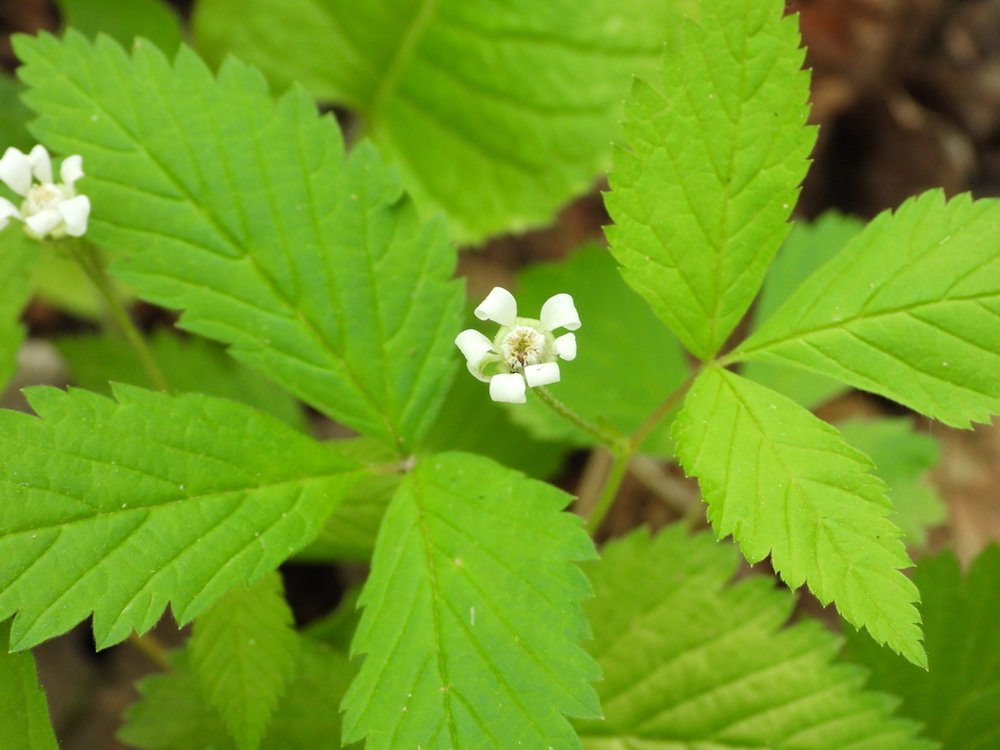
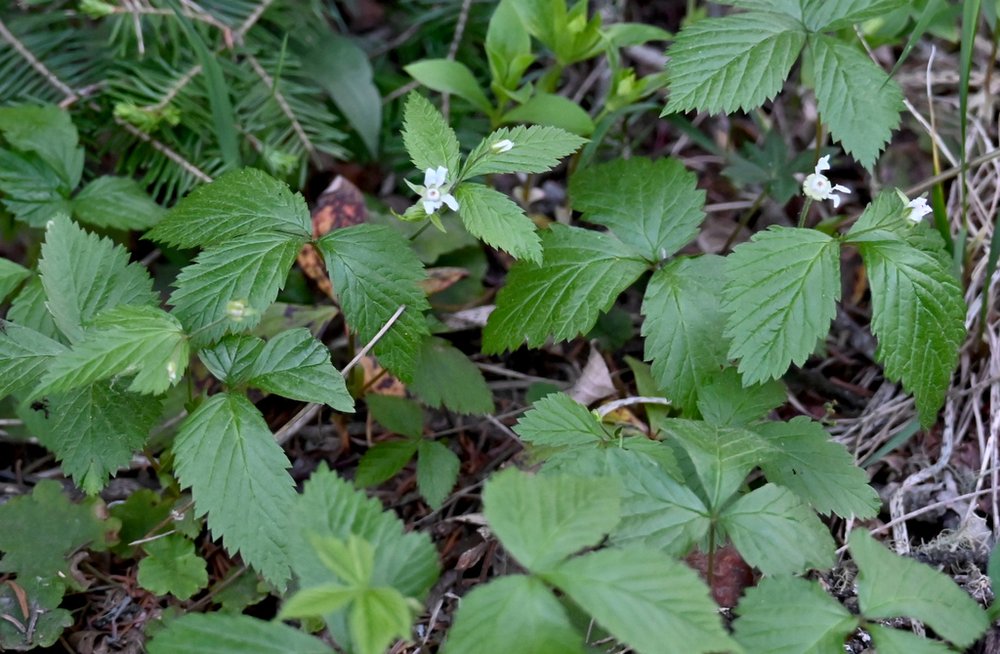
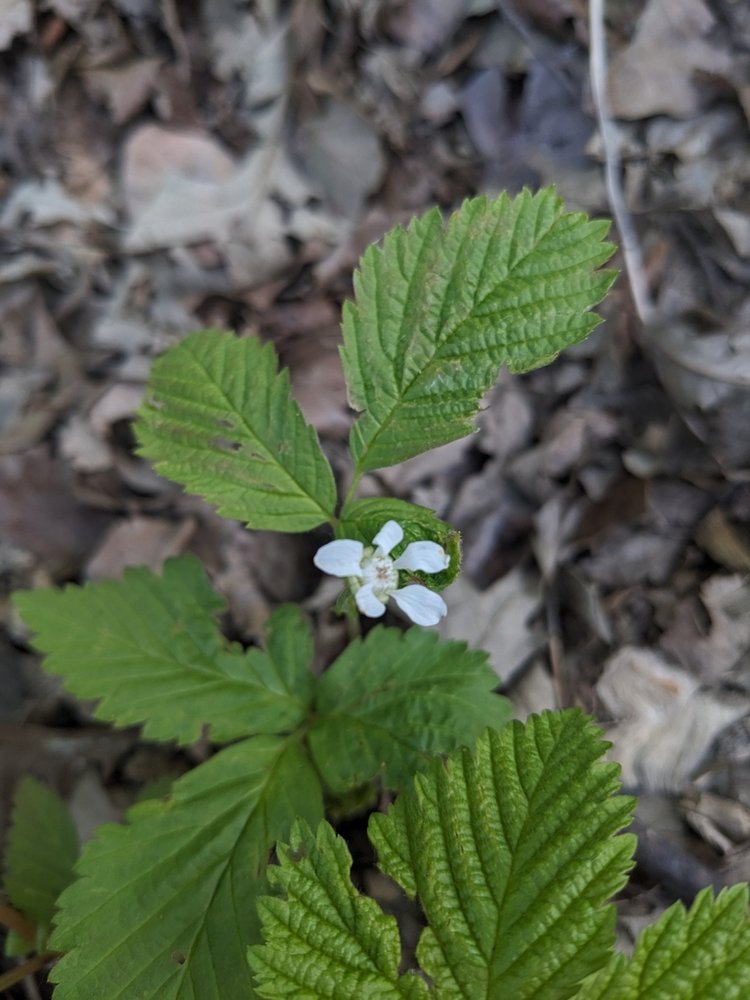
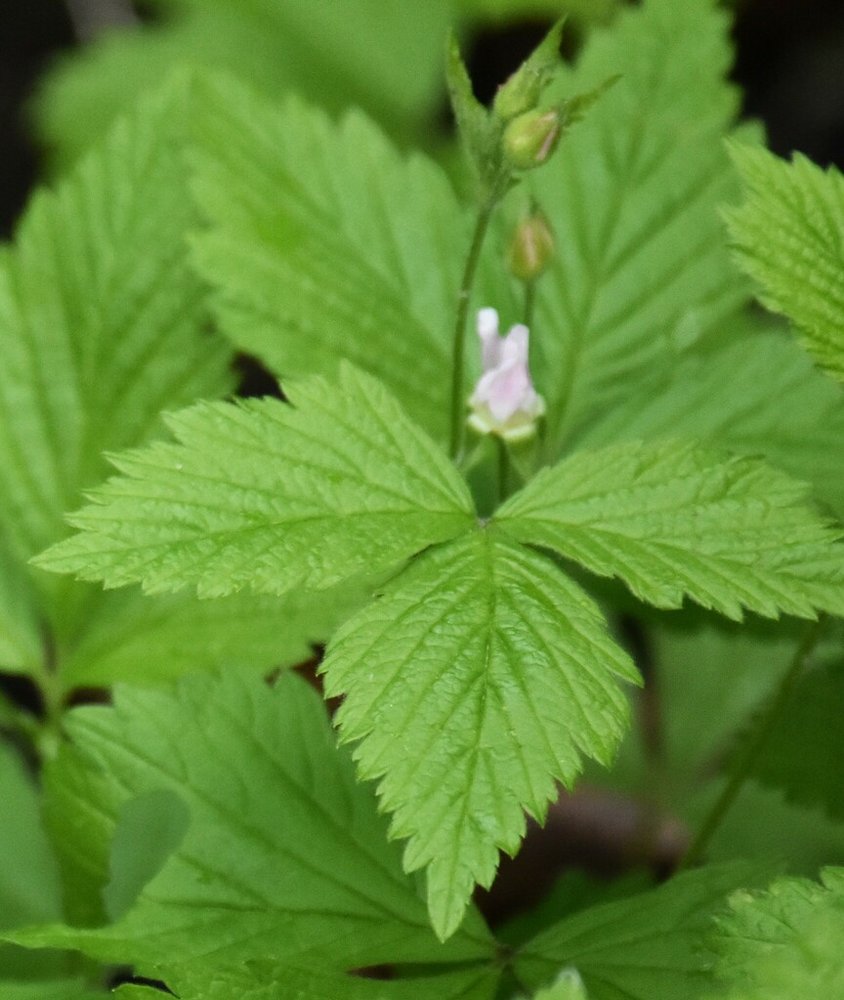
Dwarf Raspberry (Rubus pubescens) is a low, creeping native plant of moist woods with leaves of three toothed leaflets, no prickles, small white five-petaled flowers and a small red, raspberry-like fruit. In the Black Hills it flowers from June into July in moist spruce, pine, birch and aspen woods and along creeks.
Free photos from other sources
| Family | Rosaceae · Rose |
|---|---|
| Status | Native perennial |
| Blooms | June into July |
| Height | 10–30 cm (4–12 in) |
| Where | Moist spruce, pine, birch and aspen woods, creek bottoms and boggy spots |
| Also called | Dwarf Red Blackberry, Dwarf Red Raspberry |
| Food use | Minnesota Wildflowers calls the small red fruit tasty, and the Lady Bird Johnson Wildflower Center says it is reputedly edible but tart, with little pulp. |
| Traditional use | Moerman's ethnobotany database (BRIT) records that the Woods Cree of Saskatchewan ate the fruit fresh (Leighton 1985), the Chippewa used the fruit for food (Gilmore 1933), and the Iroquois ate the fruit and dried it into cakes for storage (Waugh 1916). |
Traditional use: first drafted by Google AI, then checked against the sources on this page.
Roots, seeds & germination
Root: It spreads by slender runners that lie along the ground, up to 2.4 m (8 ft) long, and root at the nodes (the joints), leaving small rooted woody crowns that start new plants the next year. Minnesota Wildflowers says it is rarely found in dense colonies like many other Rubus species.
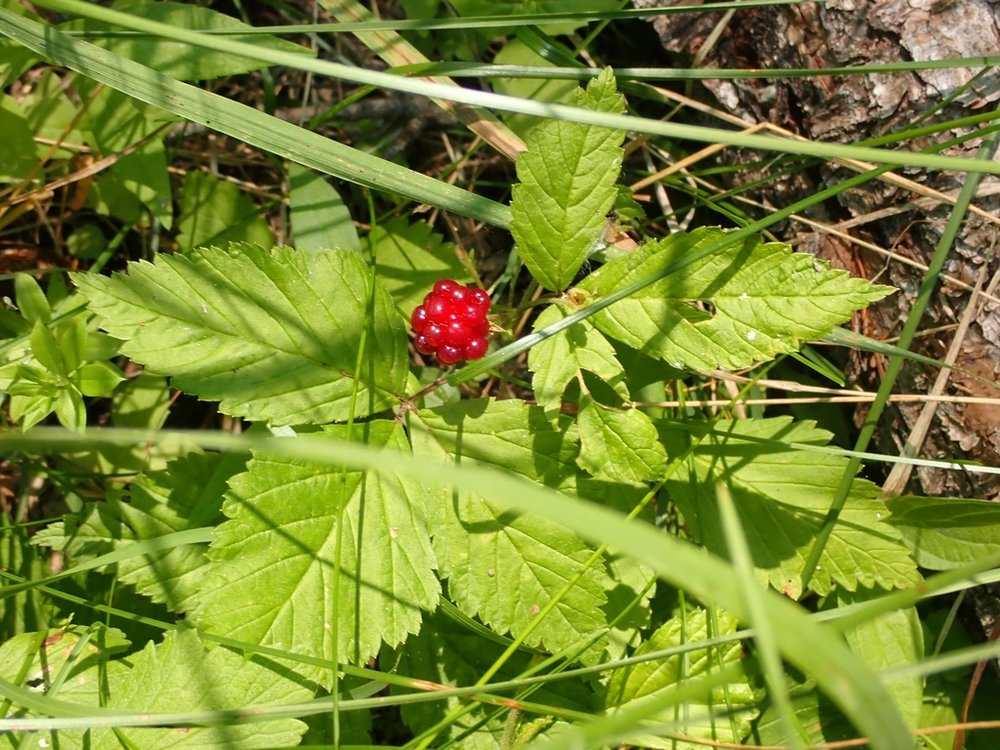
Seed: The fruit is a loose cluster of 5 to 25 red drupelets that fall apart separately or as a unit with the base of the fruit attached, according to Flora of North America.
How do you identify Dwarf Raspberry?
Look for a low, creeping plant with stems that lack prickles or thorns of any kind. The leaves are alternate, each with three (sometimes five) sharply double-toothed leaflets 3–7.5 cm (1¼–3 in) long, with a pair of small leafy stipules at the base of the leaf stalk. One to three white flowers, sometimes light pink, 8–13 mm (⅓–½ in) across, sit on stalks at the stem tips; each has 5 narrow petals and 5 sepals bent back. The fruit is a round cluster of fleshy red drupelets (tiny single-seeded fruits) 6–13 mm (¼–½ in) wide. Minnesota Wildflowers says clumps of leaves can be mistaken for Wild Strawberry (also in this guide), and that the raspberry's leaves are more sharply pointed with double teeth.
When does it bloom?
June into July.
Where does it grow?
Moist, shaded ground: creek bottoms and banks, seeps, boggy spots and moist spruce, ponderosa pine, paper birch and aspen woods, at about 1,250–1,920 m (4,100–6,300 ft). Herbarium specimens from 1892 to 2013 come from Lawrence, Pennington, Custer and Meade counties in South Dakota and Crook County in Wyoming, and the National Park Service lists it for Mount Rushmore. Flora of North America lists it for South Dakota and Wyoming.
Other flowers to compare
Other raspberries and thimbleberries in this guide
Rose family (Rosaceae): 21 other plants in this guide
- American Plum
- Chokecherry
- Early Cinquefoil
- Leafy Cinquefoil
- Mat Rock Spiraea
- Mountain Mahogany
- Mountain Ninebark
- Pincherry
- Prairie Rose
- Prairie Smoke
- Red Raspberry
- Saskatoon Serviceberry
- Shrubby Cinquefoil
- Silverweed
- Slender Cinquefoil
- Sulphur Cinquefoil
- Tall Cinquefoil
- Thimbleberry
- White Avens
- White Spirea
- Wild Strawberry
Sources: Minnesota Wildflowers: Rubus pubescens (Dwarf Raspberry); Flora of North America Vol. 9: Rubus pubescens, eFloras; Lady Bird Johnson Wildflower Center: Rubus pubescens (dwarf red blackberry); USDA PLANTS: Rubus pubescens (RUPU); NPSpecies checklist, Mount Rushmore National Memorial vascular plants; GBIF specimen 2859243361: Isaac 2013, floodplain and coniferous forest, 1,673 m, flowering; GBIF specimen 3454992842: Johnson 1993, Needles Creek, spruce-pine-birch-aspen woods, flowering; GBIF specimen 3454992886: Larson 1993, moist drainage bottom, flowers white to slightly pink; GBIF specimen 3454992888: Rydberg 1892, flowering, 4 July; GBIF specimen 5895858033: Rydberg 1892, flowering, 30 July; GBIF specimen 3454992866: Taylor 1949, 1,920 m, petals white; GBIF specimen 2512288966: Crook County, Wyoming, 2009, moist forest with ponderosa pine and paper birch; Native American Ethnobotany Database (BRIT): Rubus pubescens.