Pincherry Prunus pensylvanica
Also called Pin Cherry, Fire Cherry, Bird Cherry
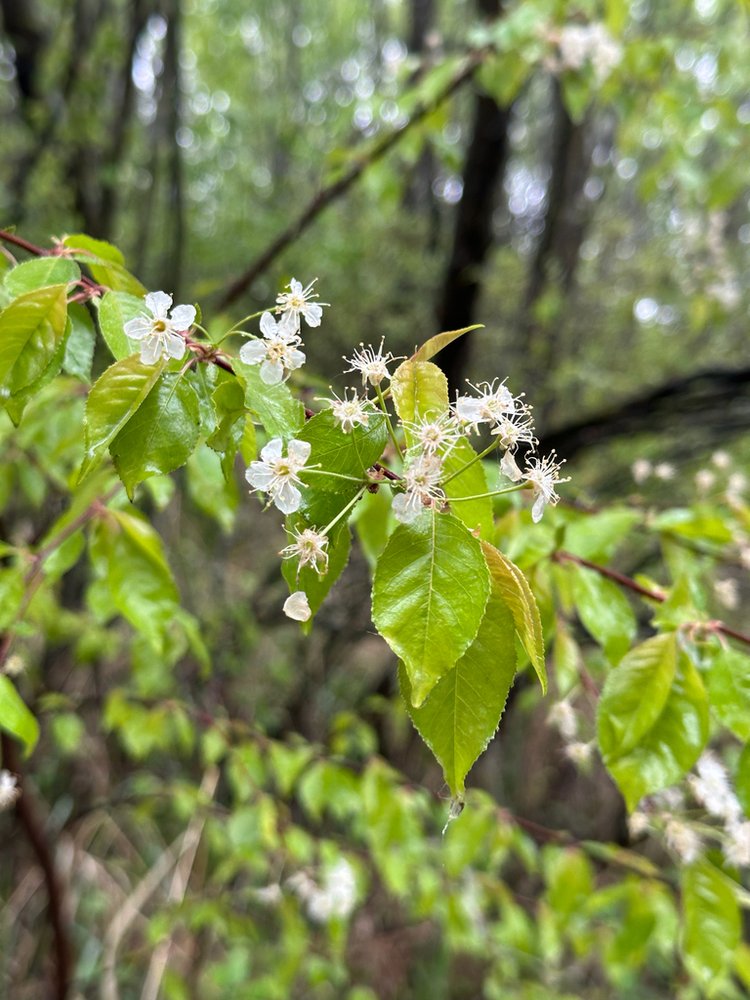
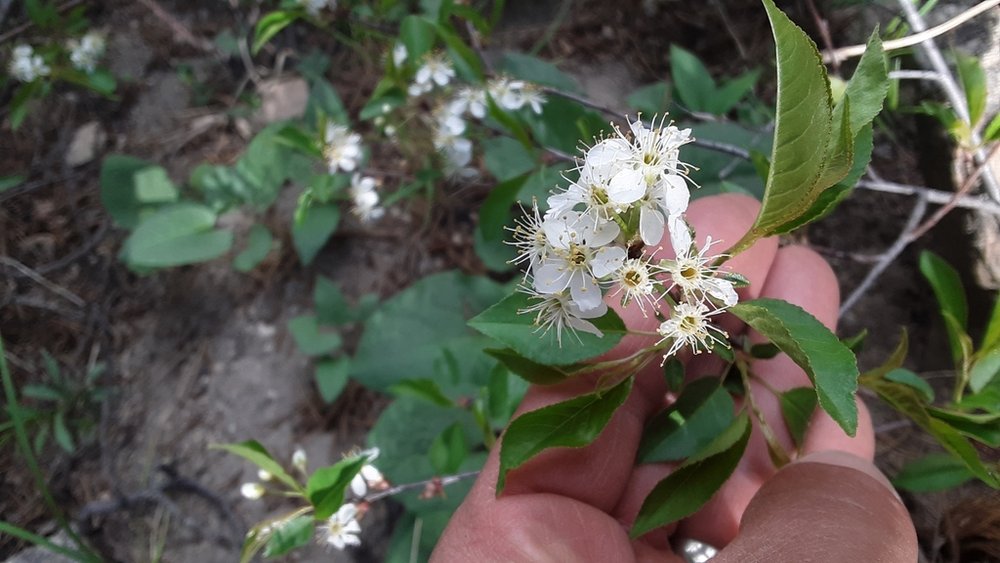
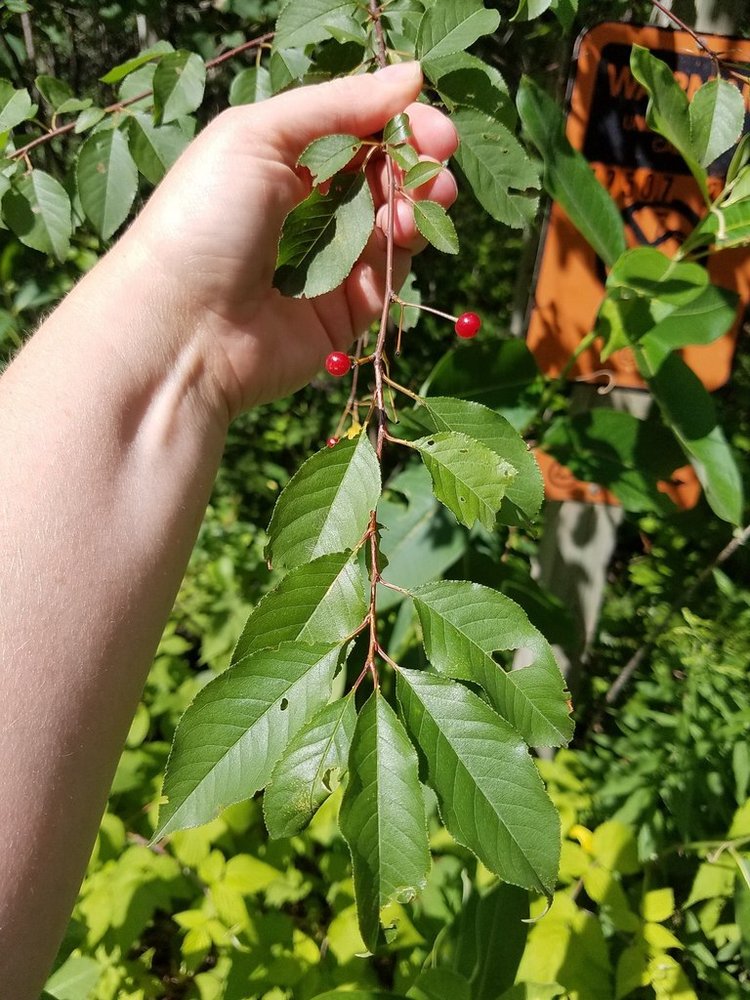
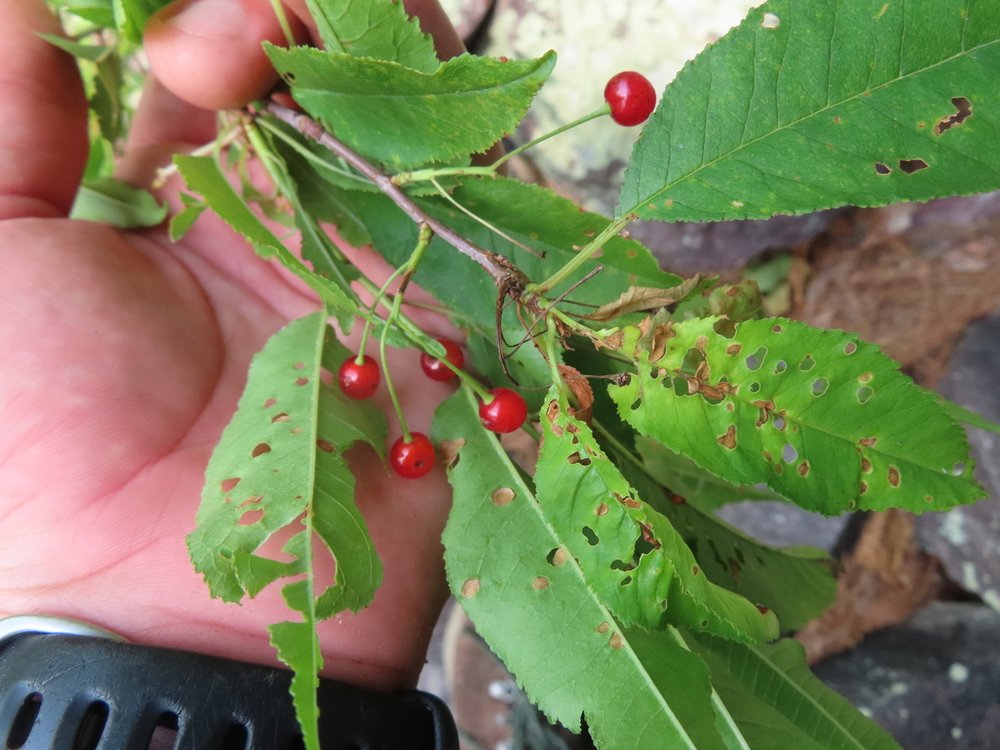
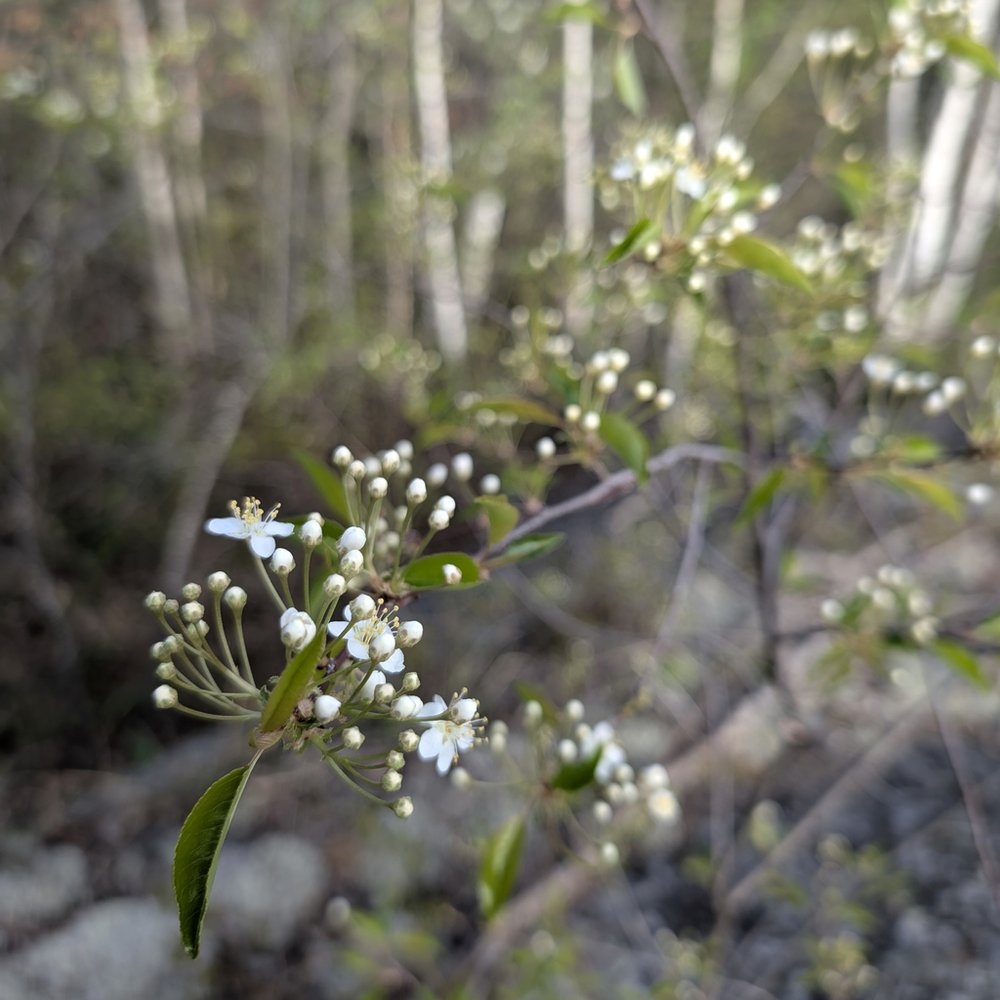
Pincherry (Prunus pensylvanica) is a short-lived native shrub or small tree with glossy red-brown bark, finely toothed leaves and, in May and June, small clusters of white flowers that open as the leaves come out. In the Black Hills it grows in moist ravines, creek bottoms, rocky slopes and clearings, and ripens bright red cherries in summer.
Free photos from other sources
| Family | Rosaceae · Rose |
|---|---|
| Status | Native deciduous shrub or small tree |
| Blooms | May into June, as the leaves open |
| Height | 0.3–6 m (1–20 ft) on Black Hills specimen labels |
| Where | Moist woods and ravines, creek bottoms, rocky slopes, roadsides and clearings in pine, aspen and birch forest |
| Also called | Pin Cherry, Fire Cherry, Bird Cherry |
| Synonym | Prunus corymbulosa, Prunus pensylvanica var. saximontana |
| Toxicity | The Lady Bird Johnson Wildflower Center lists wilted leaves, twigs and seeds as poisonous, with a cyanide-producing compound (amygdalin), and the Forest Service says the leaves contain hydrocyanic acid and livestock browsing them may be poisoned, though it says the leaves are less toxic than those of most other cherries. |
| Food use | The fruit is reportedly used for jelly or syrup, according to the Lady Bird Johnson Wildflower Center. |
| Traditional use | Moerman's ethnobotany database (BRIT) records that the Ojibwe dried the fruit for winter and ground the dried fruit into a flour for soup (Reagan 1928), the Woods Cree made jelly from the juice (Leighton 1985), and the Iroquois mashed the fruit into small cakes and dried them for later use (Waugh 1916). It also records that the Algonquin of southwestern Quebec took an infusion of the bark for coughs (Black 1980). |
Traditional use: first drafted by Google AI, then checked against the sources on this page.
Roots, seeds & germination
Root: The root system is shallow, and after the plant is cut it sprouts from the stump and sends up suckers from its roots, which can make thickets, according to the Forest Service's Fire Effects Information System. It is short-lived, dying off at 20 to 40 years.
Seed: Each cherry holds one hard seed 4–6 mm (about ¼ in) across, which birds and small mammals spread. The seeds build up in the soil and stay alive for many years, so a pincherry stand can come up again after a fire or clearing.
Germination: The seed has a long dormancy: the Fire Effects Information System says the hard seed coat has to age and the soil conditions have to change, such as after a fire or when the canopy is opened, before it will sprout, and seedlings survive mostly in large openings with light and moisture.
How do you identify Pincherry?
Start with the bark and twigs: shiny reddish-brown to gray bark marked with conspicuous horizontal lines of pores (lenticels) that peels in horizontal strips, and smooth, red to reddish-brown twigs. The leaves are simple and alternate, 5–9 cm (2–3½ in) long, shiny dark green, tapering to a point, with shallow, rounded, blunt teeth and a pair of glands on the leaf stalk near the blade. Flora of North America says plants on the northwestern Great Plains are shrubby, with smaller leaves, under 6 cm (2⅛ in) long. In May and June the flowers sit in small flat-topped clusters of 3 to 7, each flower about 12 mm (½ in) across, with 5 white petals. The fruit is a shiny, bright red cherry 6–10 mm (¼–⅜ in) across with one hard stone. Chokecherry, also in this guide, is described by Minnesota Wildflowers with nodding, cylindrical clusters of 20 to 50 flowers, reddish-purple to nearly black fruit and brownish-gray bark. American Plum, also in this guide, has only 1 to 4 flowers in each cluster and gray, peeling bark on mature trees, says Minnesota Wildflowers.
When does it bloom?
May into June, as the leaves open.
Where does it grow?
Open woods, forest edges and clearings, stream bottoms, moist ravines, rocky slopes and roadsides. Herbarium specimens from 1892 to 2013 come from Lawrence, Pennington, Custer and Meade counties in South Dakota and Crook County in Wyoming, at about 1,200–2,000 m (4,000–6,500 ft), in pine-aspen woods, birch and ironwood woods, riparian gulches and limestone ridges. The National Park Service lists it at Mount Rushmore, and the Forest Service's Fire Effects Information System places it in the Black Hills of South Dakota.
Other wild plums and cherries in this guide
Rose family (Rosaceae): 21 other plants in this guide
- American Plum
- Chokecherry
- Dwarf Raspberry
- Early Cinquefoil
- Leafy Cinquefoil
- Mat Rock Spiraea
- Mountain Mahogany
- Mountain Ninebark
- Prairie Rose
- Prairie Smoke
- Red Raspberry
- Saskatoon Serviceberry
- Shrubby Cinquefoil
- Silverweed
- Slender Cinquefoil
- Sulphur Cinquefoil
- Tall Cinquefoil
- Thimbleberry
- White Avens
- White Spirea
- Wild Strawberry
Sources: Minnesota Wildflowers: Prunus pensylvanica (Pin Cherry); Minnesota Wildflowers: Prunus virginiana (Chokecherry); Flora of North America Vol. 9: Prunus pensylvanica, eFloras; USDA Forest Service Fire Effects Information System: Prunus pensylvanica (Anderson 2004); Lady Bird Johnson Wildflower Center: Prunus pensylvanica (pin cherry); USDA PLANTS: Prunus pensylvanica (PRPE2); NPSpecies checklist, Mount Rushmore National Memorial vascular plants; GBIF specimen 2512332451: Bennett 1949, Spearfish Canyon, flowering 8 May; GBIF specimen 3038911564: Thomasson 1978, moist ravine east of Spearfish, flowering 18 May; GBIF specimen 3454989178: Pase 1957, East Gimlet Creek, pine-aspen, 1,692 m, to 5 m tall; GBIF specimen 3414433177: Porter 1956, Spearfish Canyon, open slopes, shrubs and small trees to 15 ft, 1,402 m; GBIF specimen 1998390162: Palmer 1929, near Custer Peak, rocky slopes, low shrubs 3 to 6 dm tall; GBIF specimen 1999269705: Palmer 1929, near Deadwood, small stream, small trees 5 to 6 m tall; GBIF specimen 3454989173: Taylor 1949, limestone ridge, 1,981 m; GBIF specimen 2512287451: Ecological Solutions Group 2011, riparian gulch, fruiting 24 August; GBIF specimen 3454979701: Lehman 2003, riparian draw, southern Black Hills; GBIF specimen 2512284911: Crook County, Wyoming, 2010, open ponderosa pine, flowering; Native American Ethnobotany Database (BRIT): Prunus pensylvanica.