White Avens Geum canadense
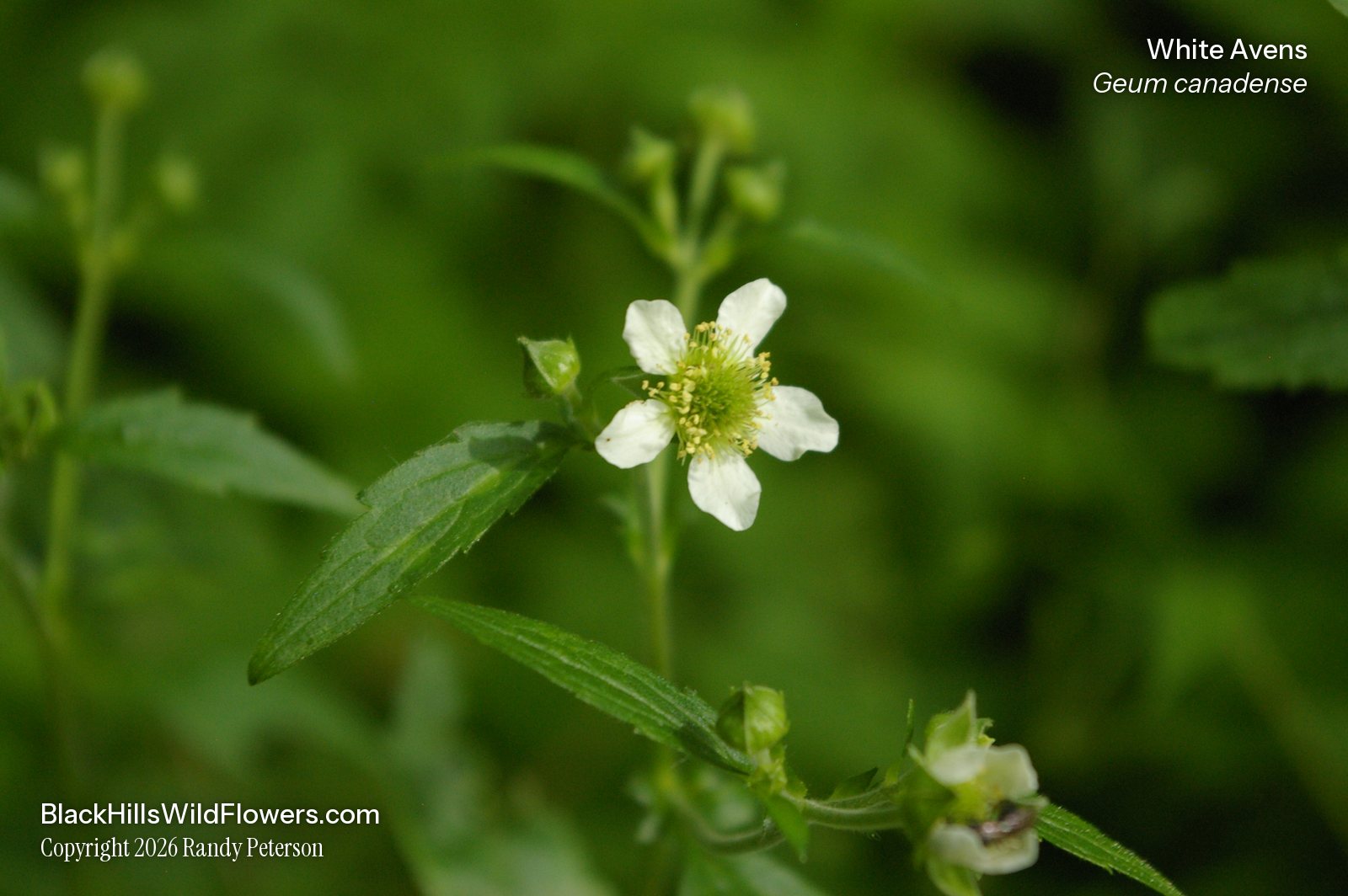
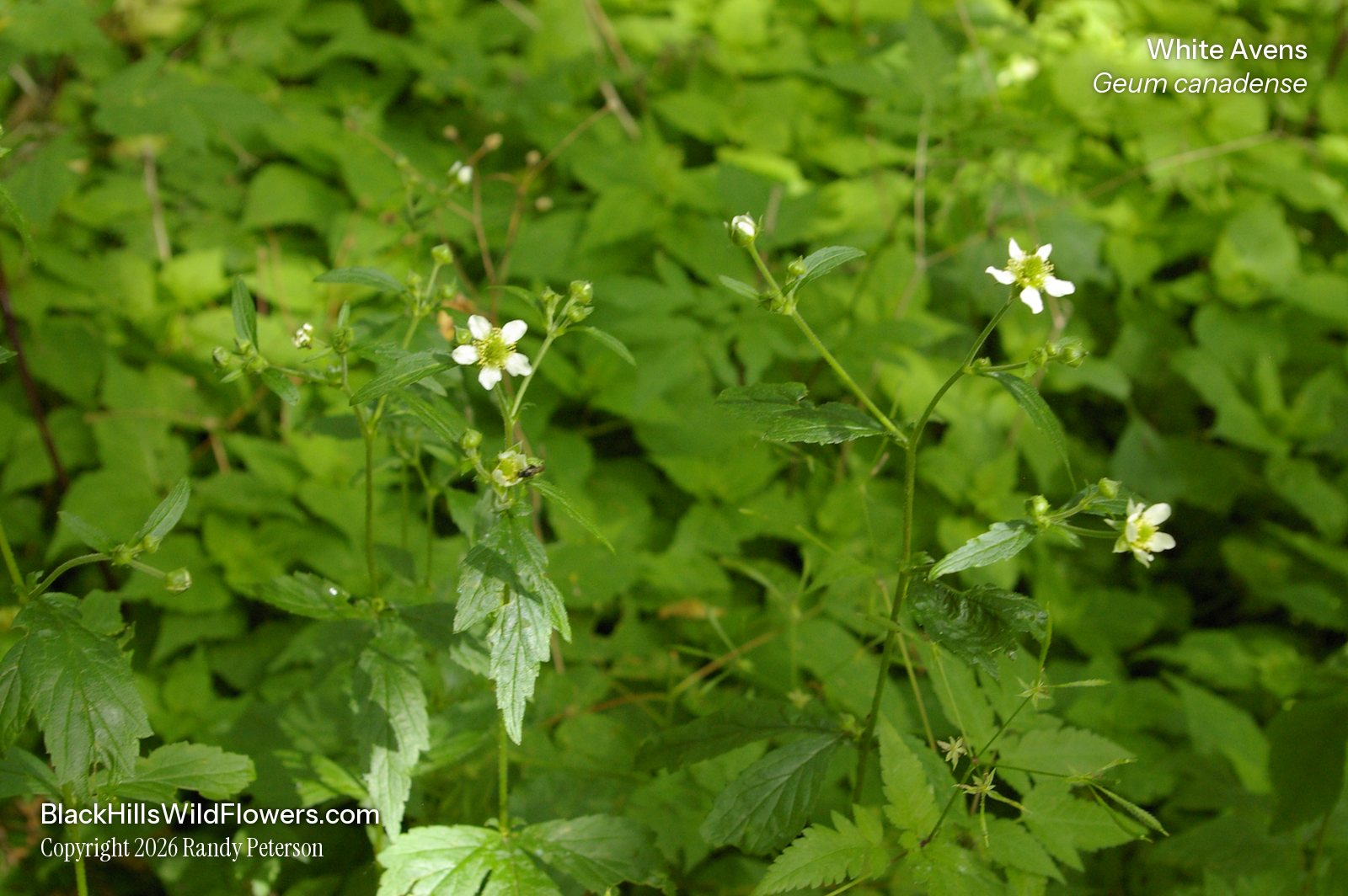
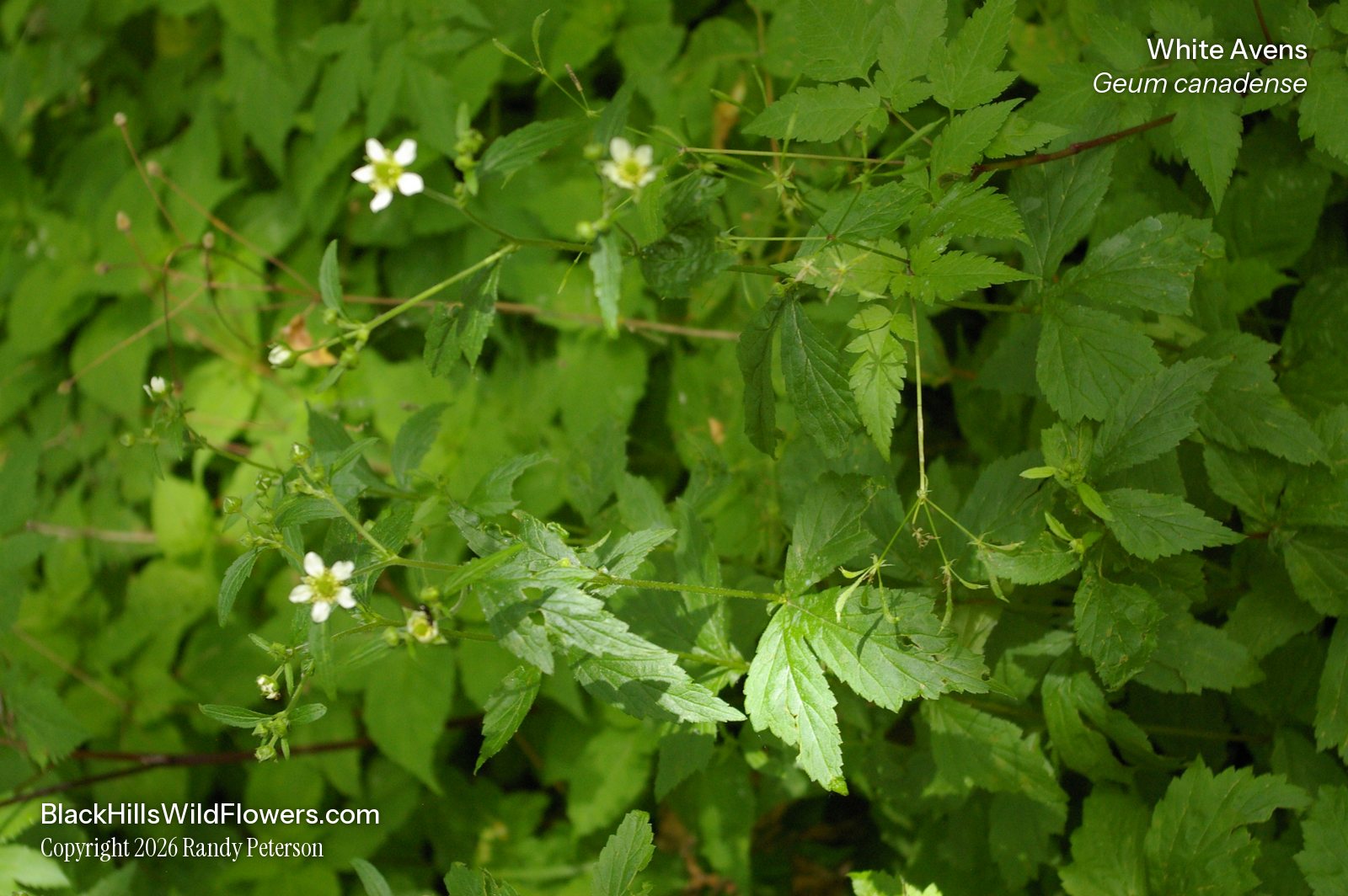
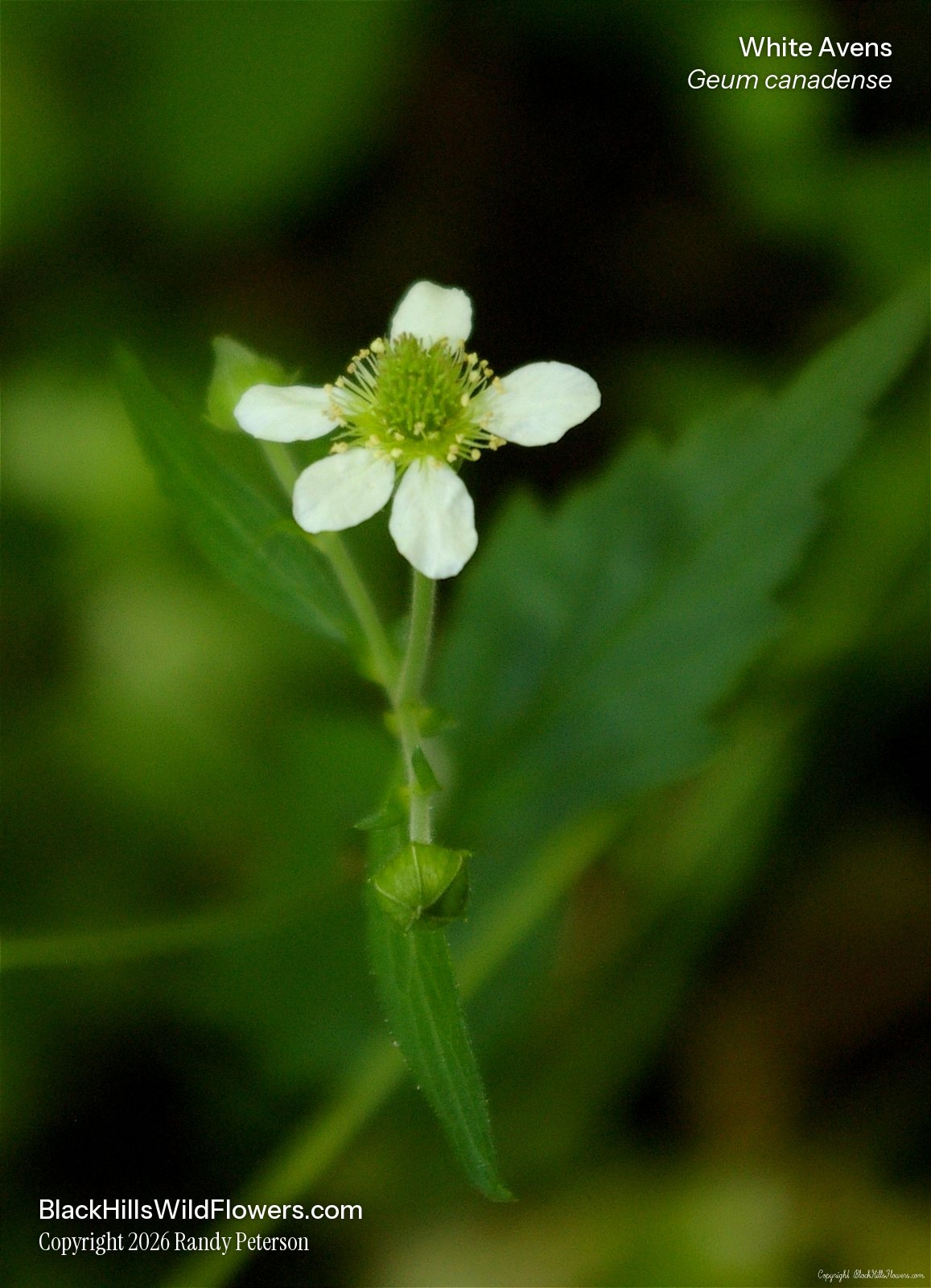
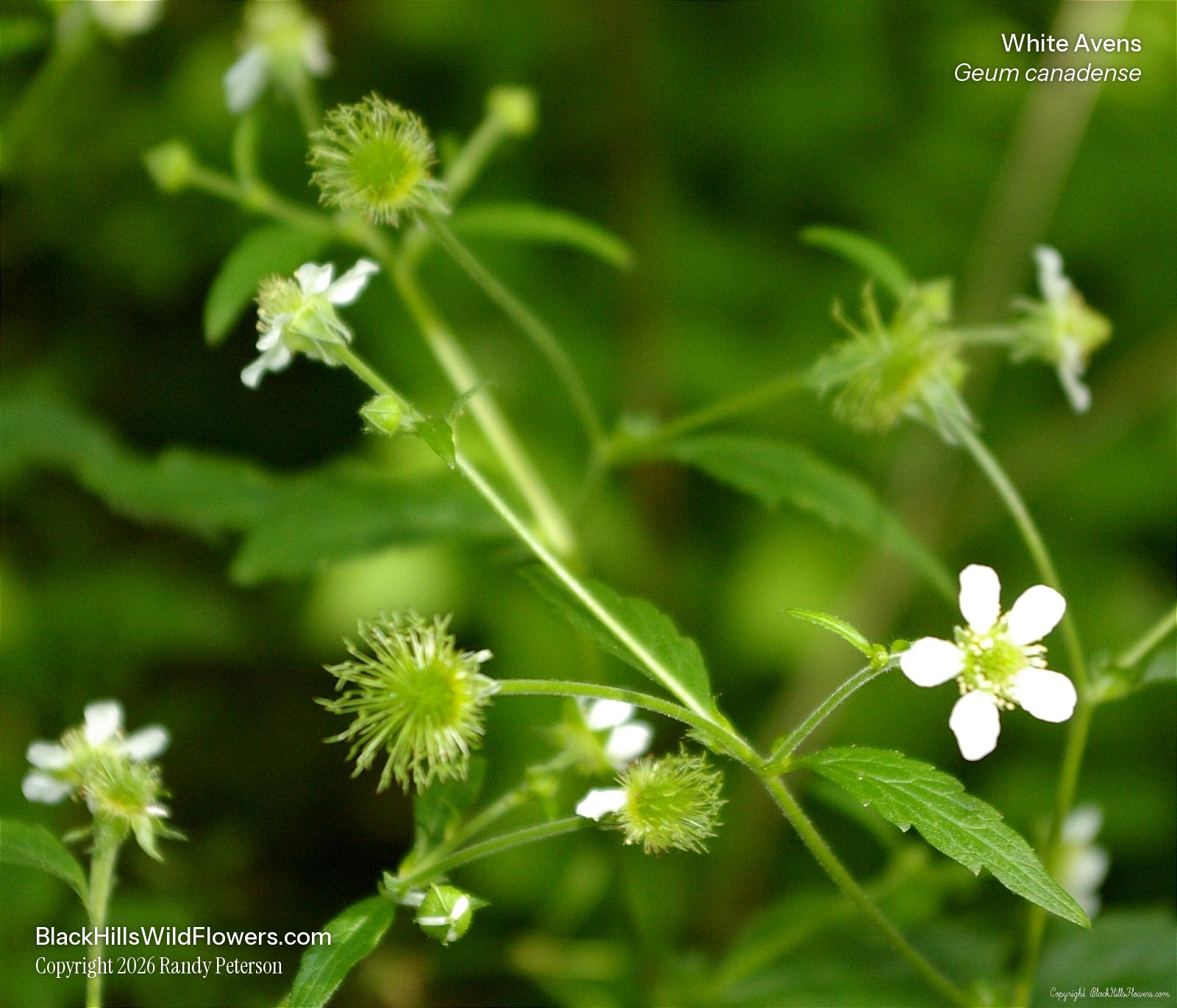
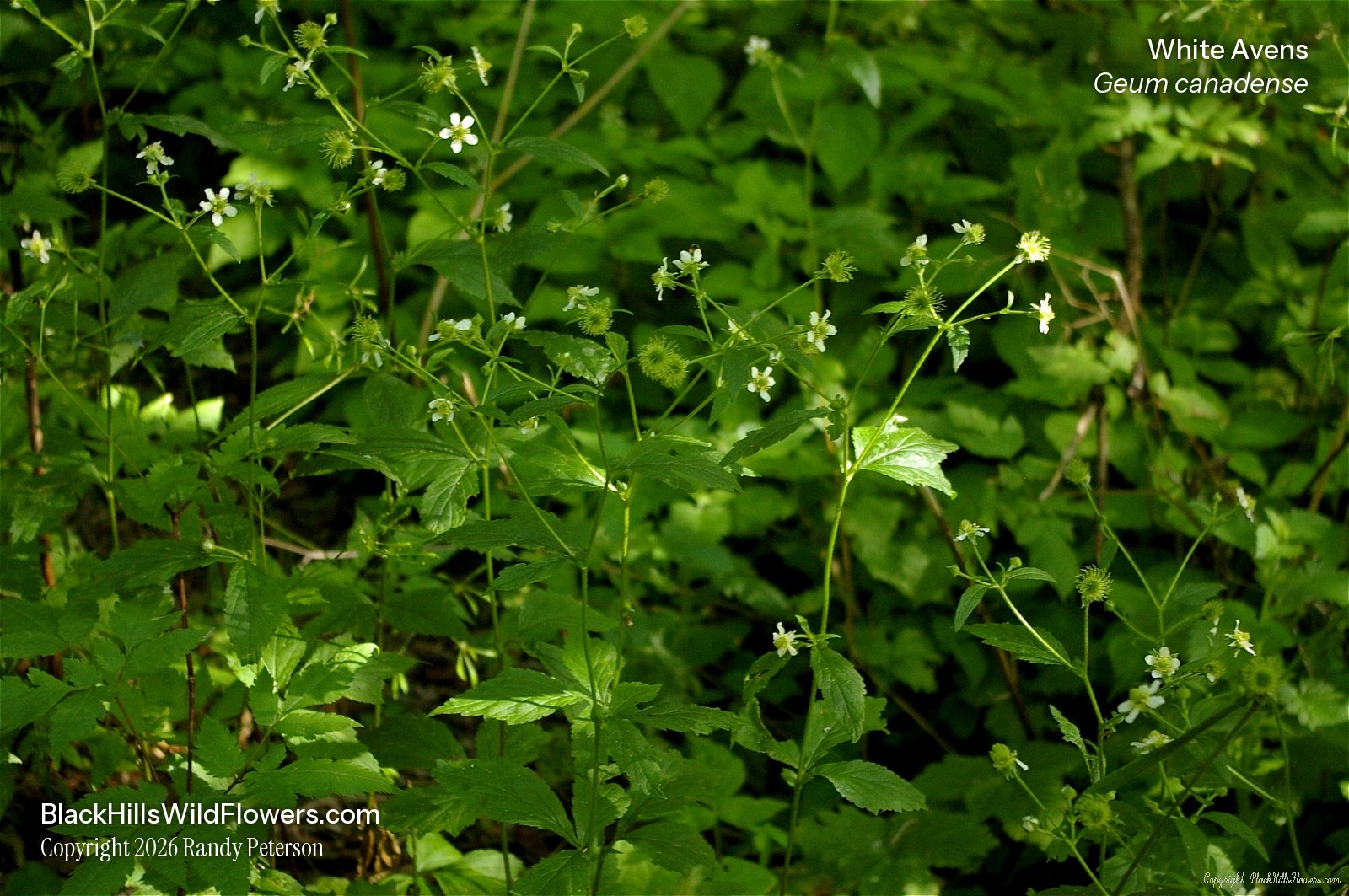
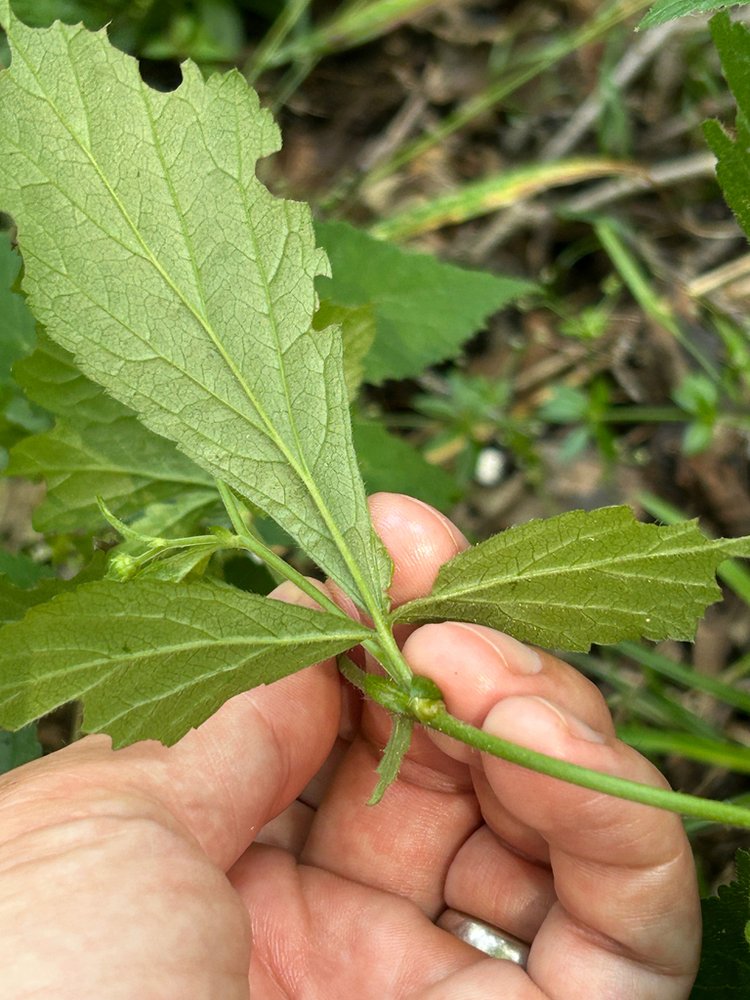
White Avens (Geum canadense) is a native perennial of the rose family with small white five-petaled flowers on long stalks and leaves mostly divided into three coarsely toothed leaflets. It blooms in June and July in moist, shaded woods and thickets, including at Wind Cave, and its round, bristly seed heads hook onto fur and clothing. Photographed in the Black Hills.
Free photos from other sources
| Family | Rosaceae · Rose |
|---|---|
| Status | Native perennial |
| Blooms | June and July |
| Height | 30–100 cm (12–40 in) |
| Where | Moist, shaded woods and thickets along creeks and in drainages |
| Synonym | Geum camporum |
Roots, seeds & germination
Root: A taproot and rhizomes (underground stems). The rhizomes can send up new plants, so it sometimes forms loose colonies.
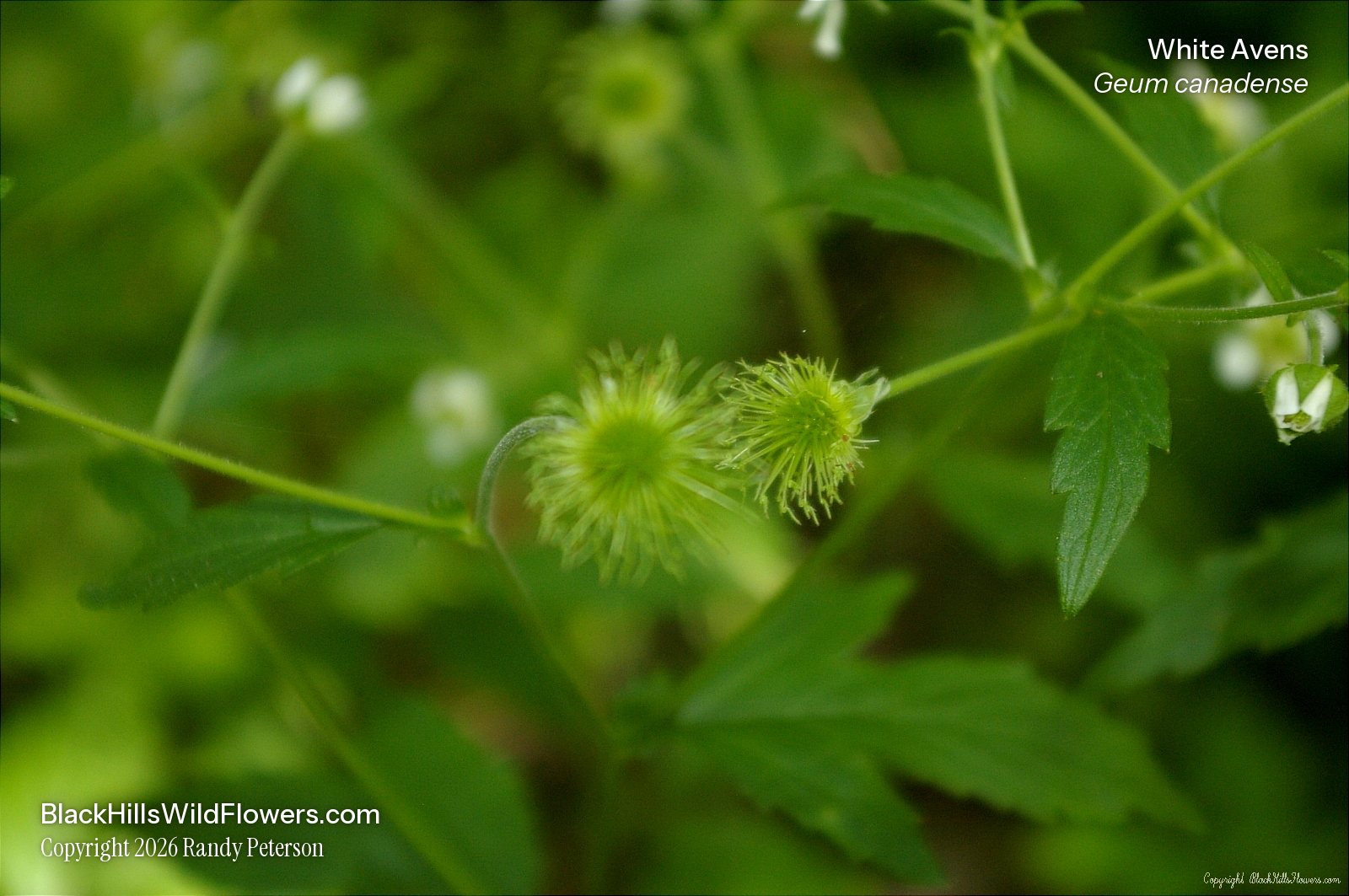
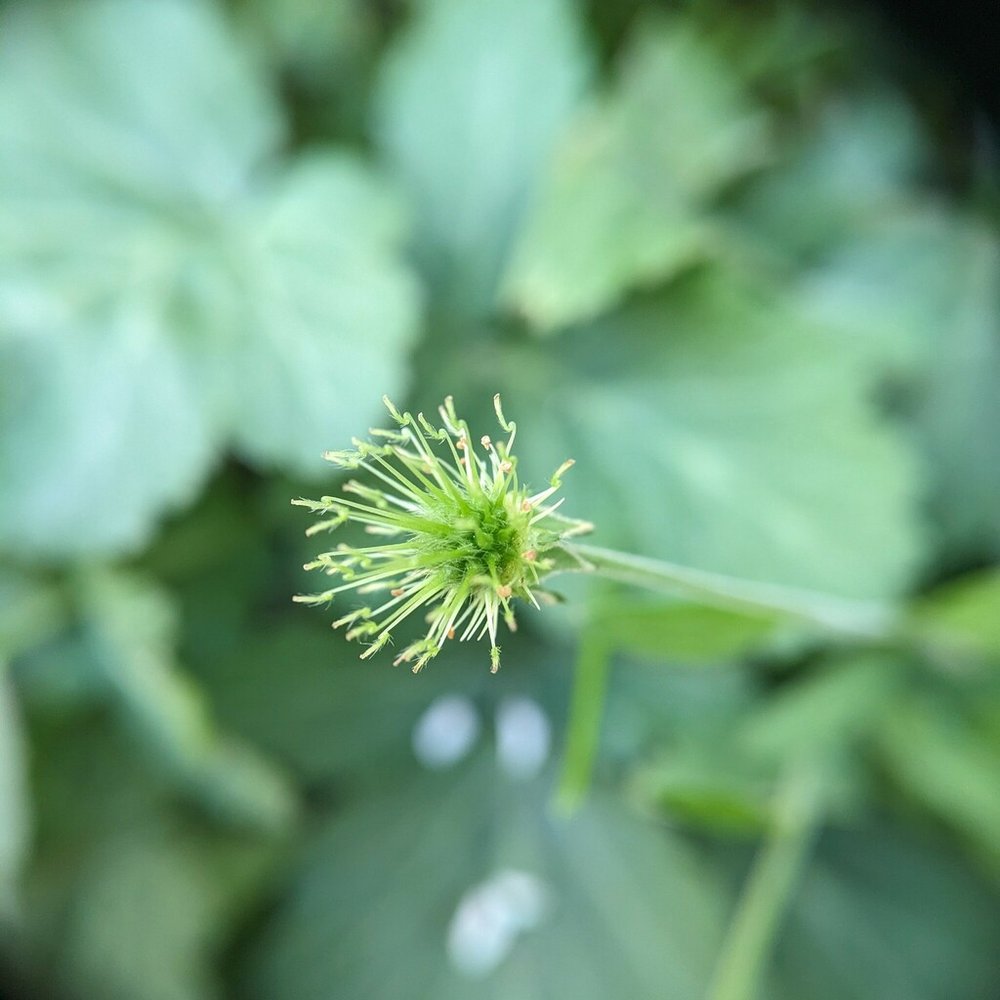
Seed: Each flower becomes a round cluster of small dry seeds about 1.3 cm (½ in) across, green turning brown, each seed carrying a hooked style. The hooks catch on the fur of animals, the feathers of birds and people's clothing, which spreads the seeds.
How do you identify White Avens?
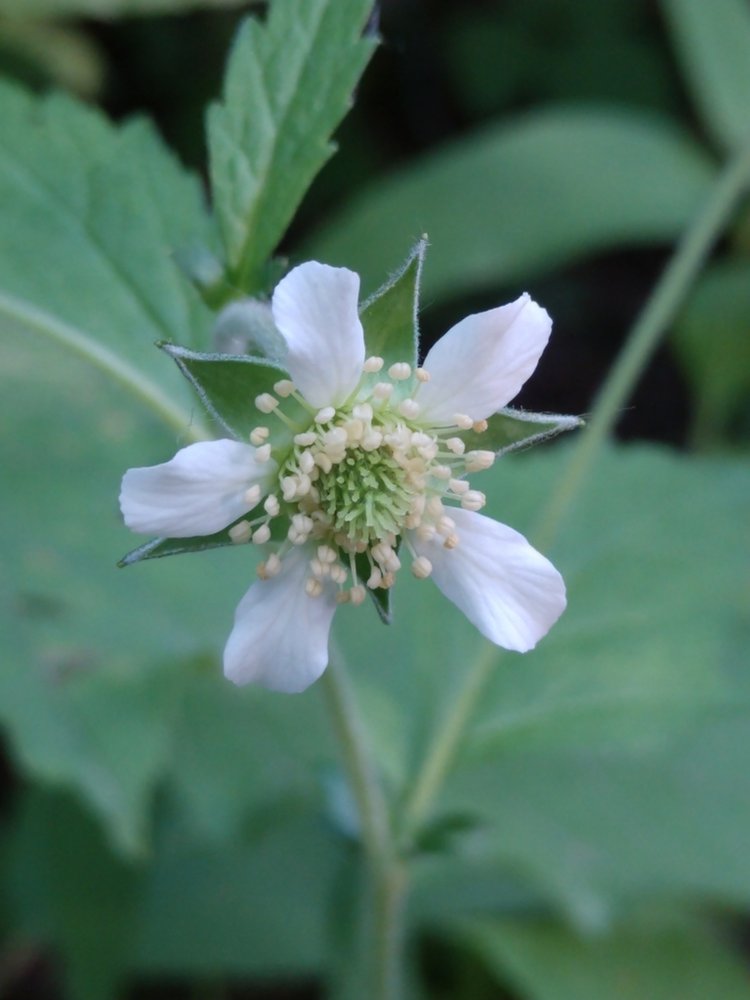
Look for a branching, slightly hairy stem 30–100 cm (12–40 in) tall with flowers about 1.3 cm (½ in) wide on long stalks. Each flower has five rounded white petals, five pointed green sepals between them that are as long as the petals or shorter, and many cream-tipped stamens around a green dome of styles; the sepals soon bend back. The lower stem leaves are divided into three coarsely toothed leaflets, often cut into lobes, with leafy stipules at the base, and the upper ones are simple. After bloom each flower leaves a round, bristly green bur of styles with hooked tips that turns brown. Illinois Wildflowers notes that its bright white petals, as long as the sepals or longer, and its three-part lower stem leaves set it apart from other avens, whose lower stem leaves often have five or more leaflets. Yellow Avens (Geum aleppicum), also found in the Black Hills, has yellow petals.
When does it bloom?
June and July.
Where does it grow?
Moist, shaded woods and thickets: deciduous woods along creeks, chokecherry and plum thickets in draws, floodplain glades, shaded drainages and coves under cliffs. The National Park Service lists it at Wind Cave, and herbarium specimens come from Lawrence, Meade and Fall River counties and from Crook County, Wyoming.
Other avens and prairie smoke in this guide
Rose family (Rosaceae): 21 other plants in this guide
- American Plum
- Chokecherry
- Dwarf Raspberry
- Early Cinquefoil
- Leafy Cinquefoil
- Mat Rock Spiraea
- Mountain Mahogany
- Mountain Ninebark
- Pincherry
- Prairie Rose
- Prairie Smoke
- Red Raspberry
- Saskatoon Serviceberry
- Shrubby Cinquefoil
- Silverweed
- Slender Cinquefoil
- Sulphur Cinquefoil
- Tall Cinquefoil
- Thimbleberry
- White Spirea
- Wild Strawberry
Sources: Flora of North America (efloras.org): Geum canadense; Minnesota Wildflowers: Geum canadense (White Avens); Minnesota Wildflowers: Geum aleppicum (Yellow Avens); Illinois Wildflowers: White Avens (Geum canadense); USDA PLANTS Database: Geum canadense (GECA7); NPSpecies checklist, Wind Cave National Park vascular plants; NPSpecies checklist, Jewel Cave National Monument vascular plants (Yellow Avens); GBIF occurrence search: Geum canadense, South Dakota and Wyoming herbarium specimens.