Wild Strawberry
Fragaria virginiana
Wild Strawberry (Fragaria virginiana) is a low native perennial of the rose family that spreads by red runners, with white five-petaled flowers followed by small, sweet red berries that have their seeds sunk in little pits. It blooms in May and June, the berries ripen from late June into July, and the Black Hills National Forest calls it common throughout the Black Hills.
Free photos from other sources




| Family | Rosaceae · Rose |
|---|---|
| Status | Native perennial |
| Blooms | May and June, sometimes again in fall |
| Height | 5–20 cm (2–8 in) |
| Where | Meadows, open pine and mixed forest, forest edges and roadsides |
| Also called | Virginia Strawberry, Common Strawberry, Mountain Strawberry, Thick-leaved Wild Strawberry, wažúšteča (Lakota) |
| Synonym | Fragaria virginiana var. glauca, Fragaria glauca, Fragaria ovalis, Fragaria virginiana var. ovalis, Fragaria pauciflora |
| Traditional use | Black Elk and Flying By's 1998 Culturally Important Plants of the Lakota (Sitting Bull College) lists wild strawberry under Fragaria vesca and says the Lakota ate the berries fresh or dried them for later. Gilmore (1919) records that the Dakota called June the moon when strawberries are red ripe. |
| Note | Black Hills plants are the western subspecies glauca. |
Roots, seeds & germination
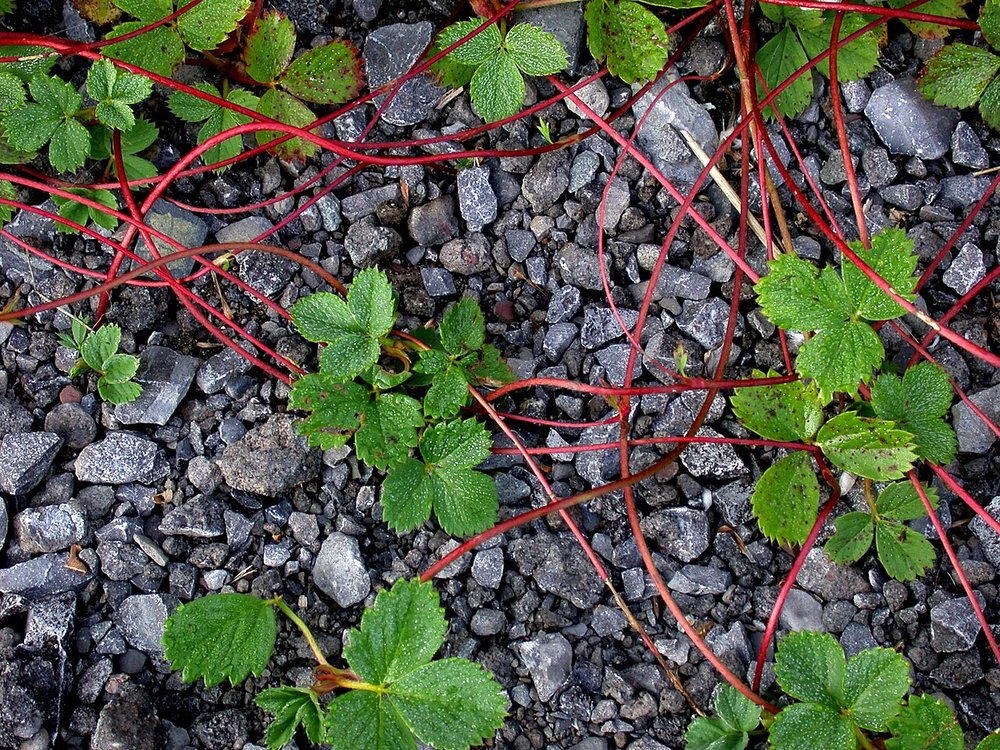
Root: A short crown with short rhizomes and shallow fibrous roots. It spreads mainly by thin, often red runners that root at every second node and start new plants, so one plant can become a patch within a season or two.
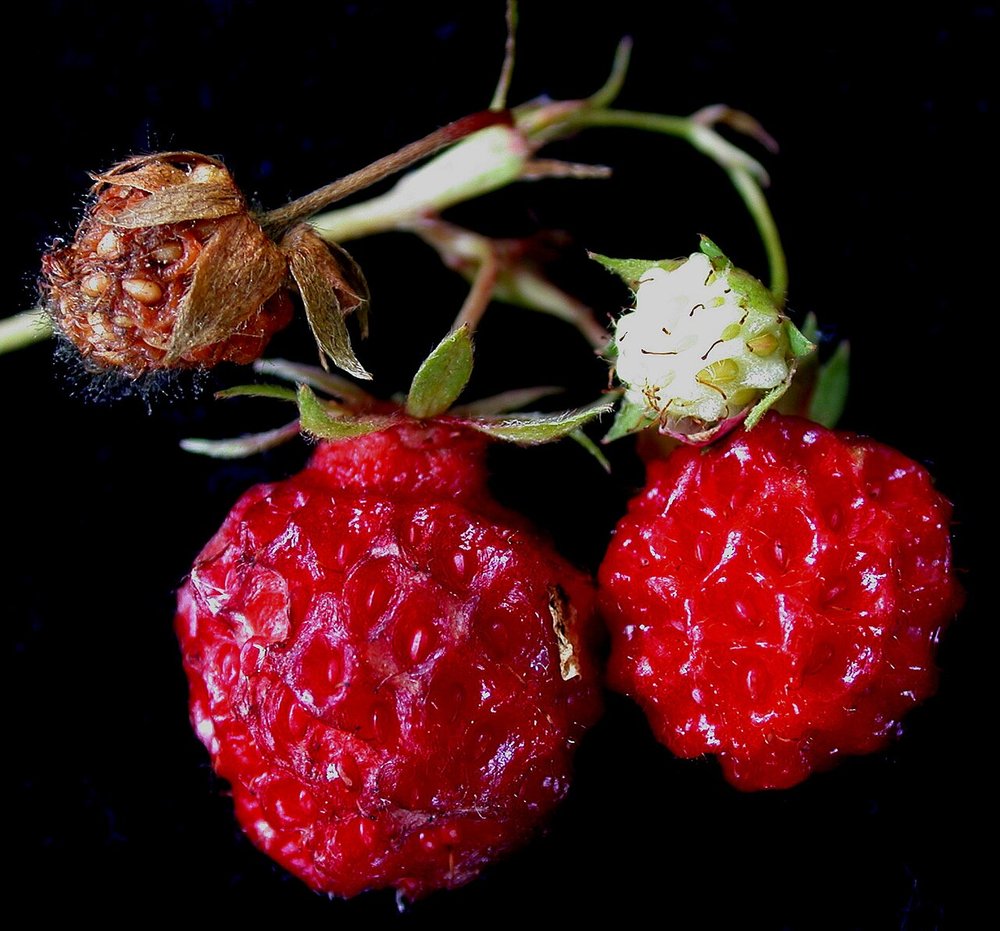
Seed: The true fruits are tiny achenes, 1.2–1.8 mm long, set in pits on the surface of the red berry, which is the swollen flower base. Seed is collected when the berries turn red in midsummer and cleaned by mashing the fruit in water so the pulp floats off.
Germination: The seed needs a cold, moist period before it sprouts: the Glacier National Park nursery protocol recommends at least 85 days, and Prairie Moon uses 60. Light helps, so the seed is barely covered, and most growers start new plants from rooted runners instead.
How do you identify Wild Strawberry?
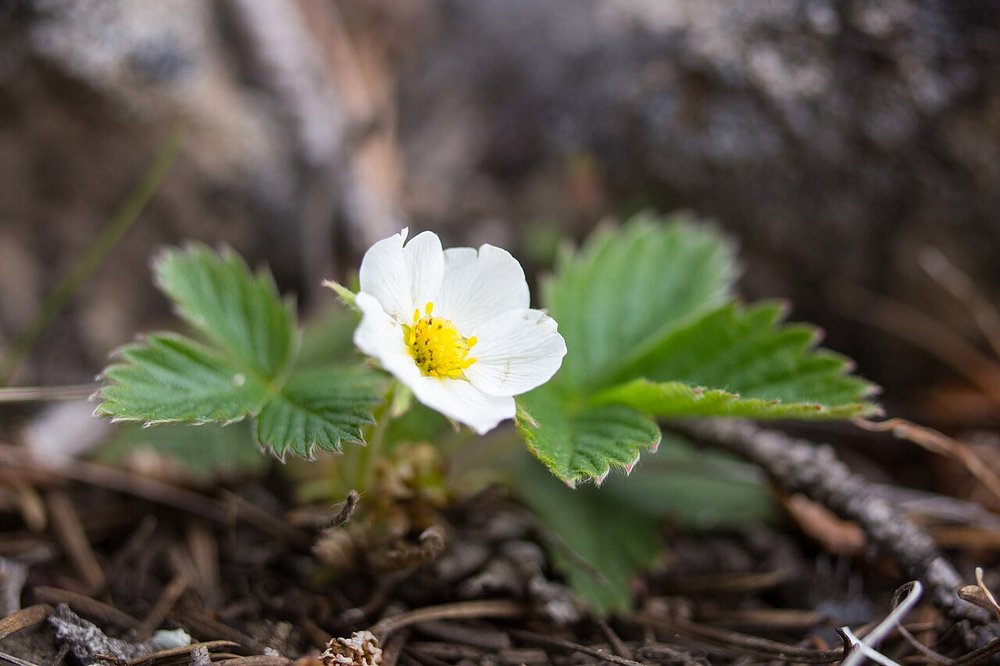
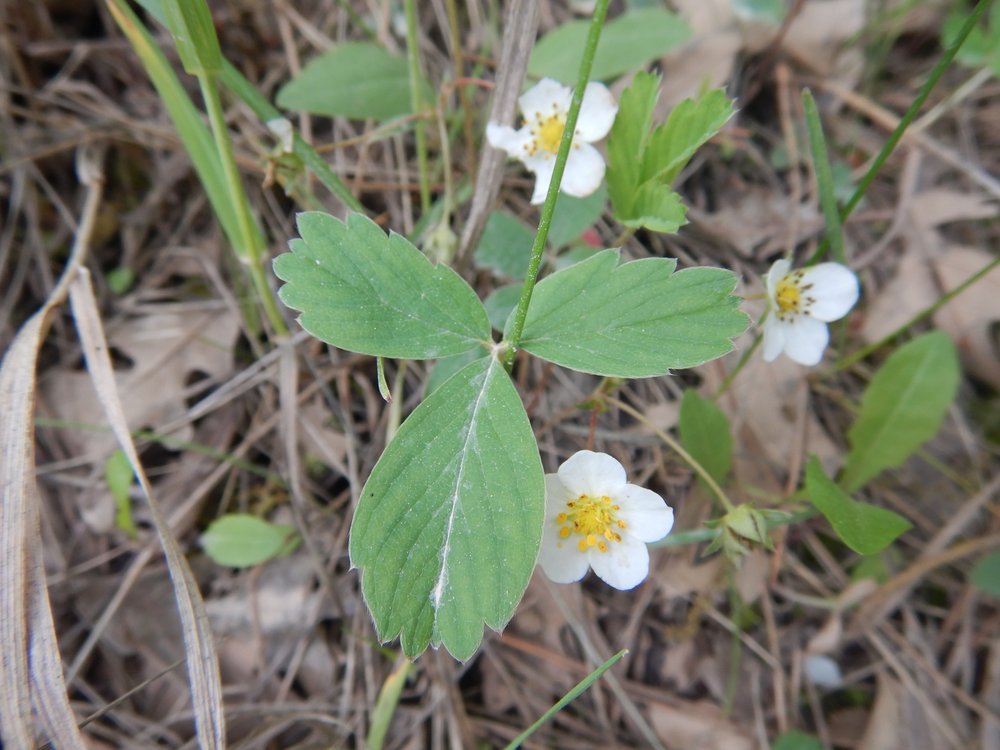
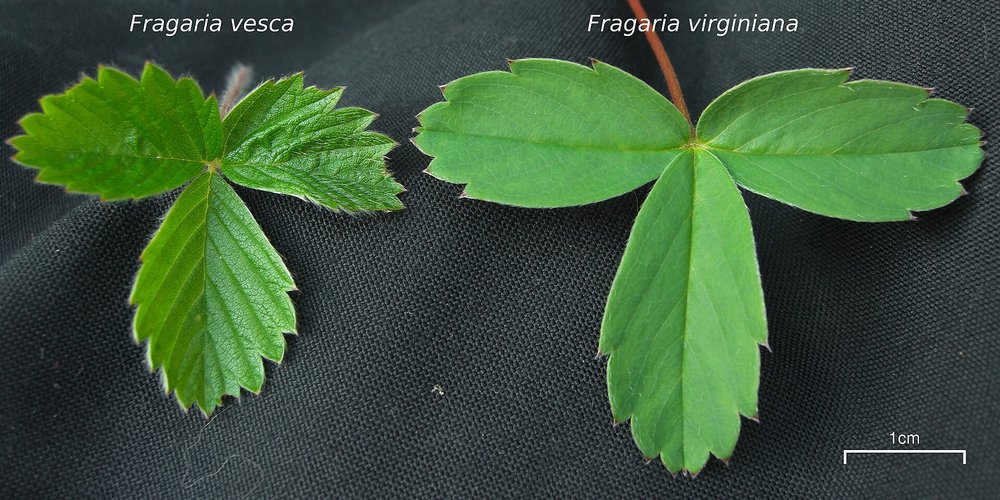
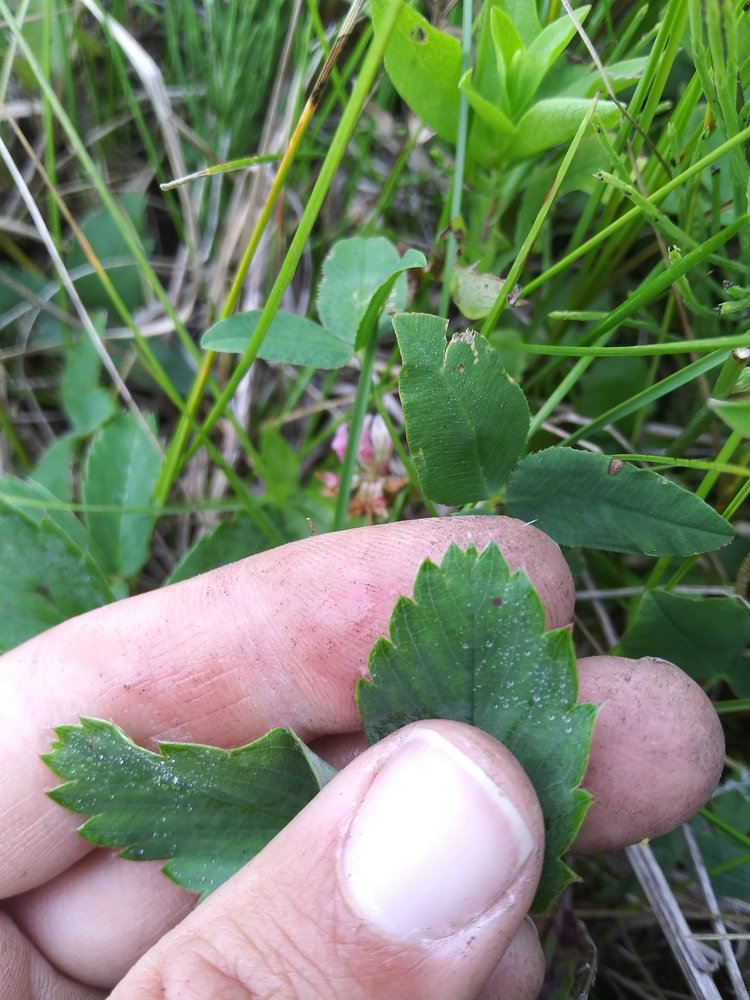
Look for a low plant with three toothed leaflets, each 2.5–4 cm (1–1½ in) long, on hairy stalks, dark green to bluish green and fairly smooth. At the tip of the middle leaflet the end tooth is smaller and shorter than the teeth beside it. White flowers 1.5–2.5 cm (⅝–1 in) across, with five rounded petals around a yellow center, sit on stalks usually shorter than the leaves, and the round red berries have their seeds sunk in small pits. Woodland Strawberry, which also grows in the Hills, has a longer end tooth, thinner, yellow-green, puckered leaves, flower stalks above the leaves, and cone-shaped berries with the seeds on the surface.
When does it bloom?
May and June, sometimes again in fall.
Where does it grow?
Meadows, grassy openings in ponderosa pine and mixed pine, spruce and aspen forest, forest edges, trailsides, roadsides and disturbed ground, in sun to part shade. The Black Hills National Forest calls it common throughout the Black Hills, and GBIF holds 97 specimens, most from Lawrence and Pennington counties, with others from Custer, Fall River and Meade and from Crook and Weston counties in Wyoming. The National Park Service lists it at Wind Cave, Jewel Cave, Mount Rushmore and Devils Tower.
Sources: Black Hills National Forest: Black Hills Native Plants (USDA Forest Service); Devils Tower National Monument: Native Plants (NPS); Marriott & Hartman 1986, Vegetation of Jewel Cave National Monument (npshistory.com); NPSpecies checklist, Wind Cave National Park (vascular plants); NPSpecies checklist, Mount Rushmore National Memorial (vascular plants); NPSpecies (IRMA), park species lists for WICA, JECA, DETO, MORU; GBIF occurrence search: Fragaria virginiana, Black Hills area; GBIF occurrence search: Fragaria vesca, Black Hills area; Flora of North America Vol. 9: Fragaria (genus key; F. × ananassa origin); Flora of North America Vol. 9: Fragaria virginiana; Flora of North America Vol. 9: Fragaria virginiana subsp. glauca; Flora of North America Vol. 9: Fragaria virginiana subsp. virginiana; Flora of North America Vol. 9: Fragaria vesca; Flora of North America Vol. 9: Fragaria vesca subsp. americana; USDA PLANTS: Fragaria virginiana (FRVI); USDA NRCS Plant Guide: Mountain Strawberry, Fragaria virginiana (Anderson & Roderick); ITIS: Fragaria virginiana subsp. glauca (TSN 24641), synonyms; University of Washington ESRM 412 propagation protocol: Fragaria virginiana (2023; Glacier NP / Native Plant Network); University of Washington ESRM 412 propagation protocol: Fragaria virginiana (2008; Rose et al. 1998, Johnson et al. 2008); Prairie Moon Nursery: Fragaria virginiana; Minnesota Wildflowers: Fragaria virginiana (Wild Strawberry); Black Elk & Flying By 1998, Culturally Important Plants of the Lakota (SD PUC docket HP14-001 exhibit), entry 125; Gilmore 1919, Uses of Plants by the Indians of the Missouri River Region, BAE 33rd Annual Report, pp. 57, 84 (Internet Archive); Native American Ethnobotany Database (BRIT): Fragaria (Rogers 1980; Kraft 1990; Gilmore 1919; Johnston 1987; Hart 1981); Hocokatati (Dakota cultural center): Dakota Moons, Ważuṡteca Ṡa Wi "Strawberry Ripening Moon"; St. Joseph's Indian School: Lakota seasons and moon phases; iNaturalist: research-grade Fragaria virginiana within 80 km of the Black Hills.