American Plum Prunus americana
Also called Wild plum, Goose plum, River plum, kȟáŋta (Lakota)
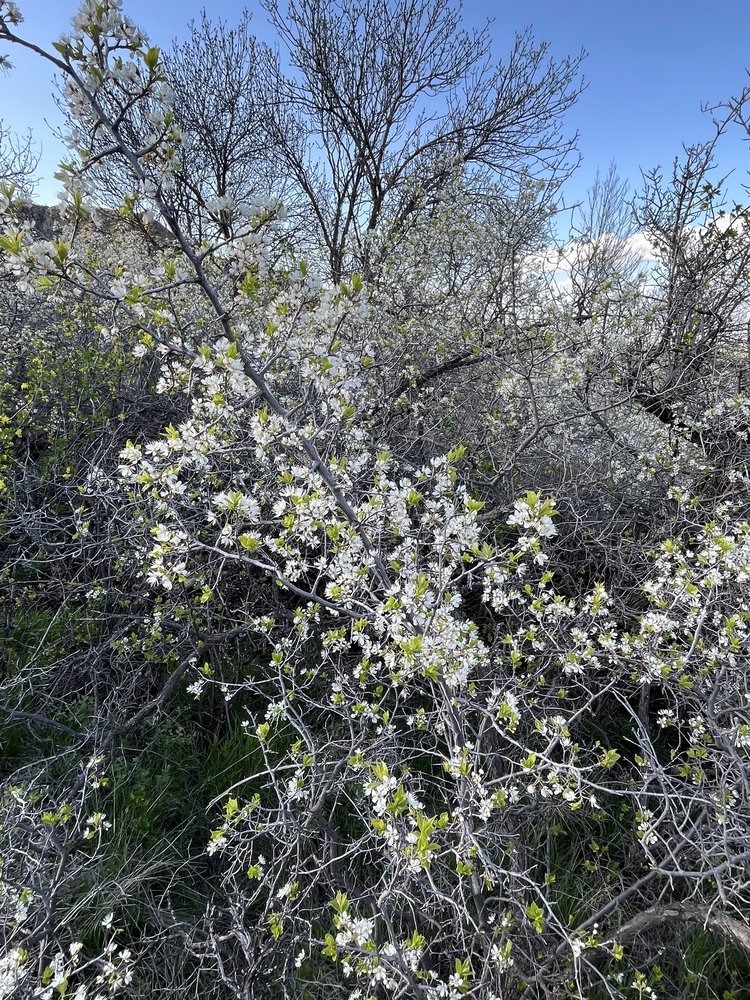
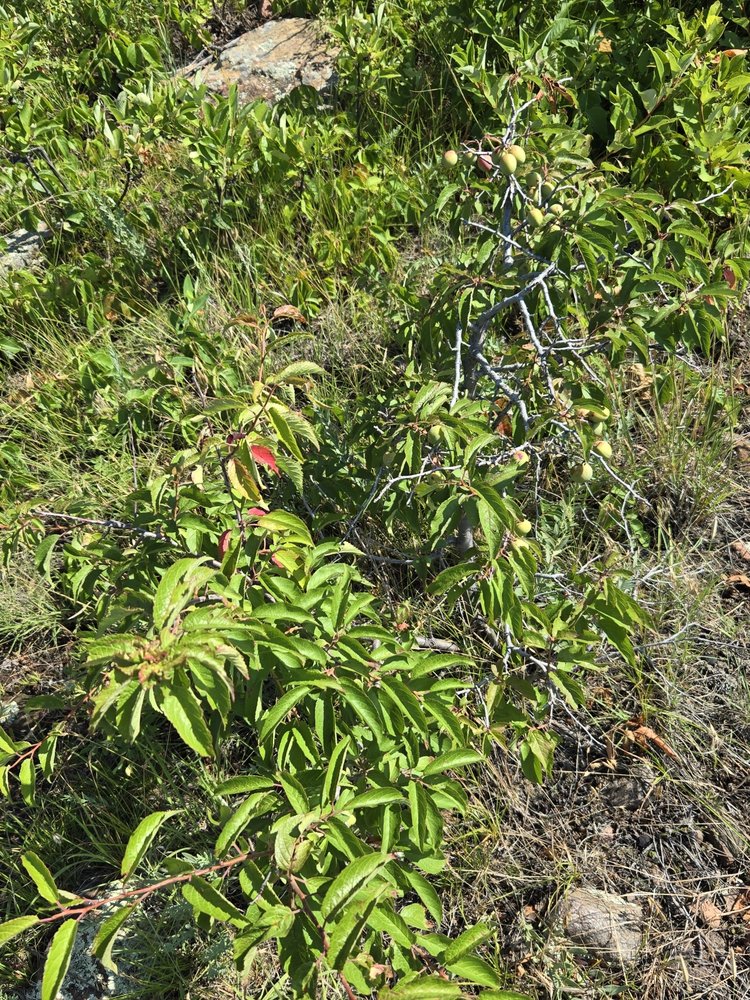
American Plum (Prunus americana) is a native, thorny, thicket-forming shrub or small tree 2–6 m (6–20 ft) tall with white five-petaled flowers in April and May, before or as the leaves open, and red to yellow plums 2–3 cm long that ripen in August and September. In the Black Hills it grows in draws, canyons and along creeks and in the bur oak woods of the foothills, where the National Park Service lists it at Wind Cave and Devils Tower and herbarium specimens go back to 1892.
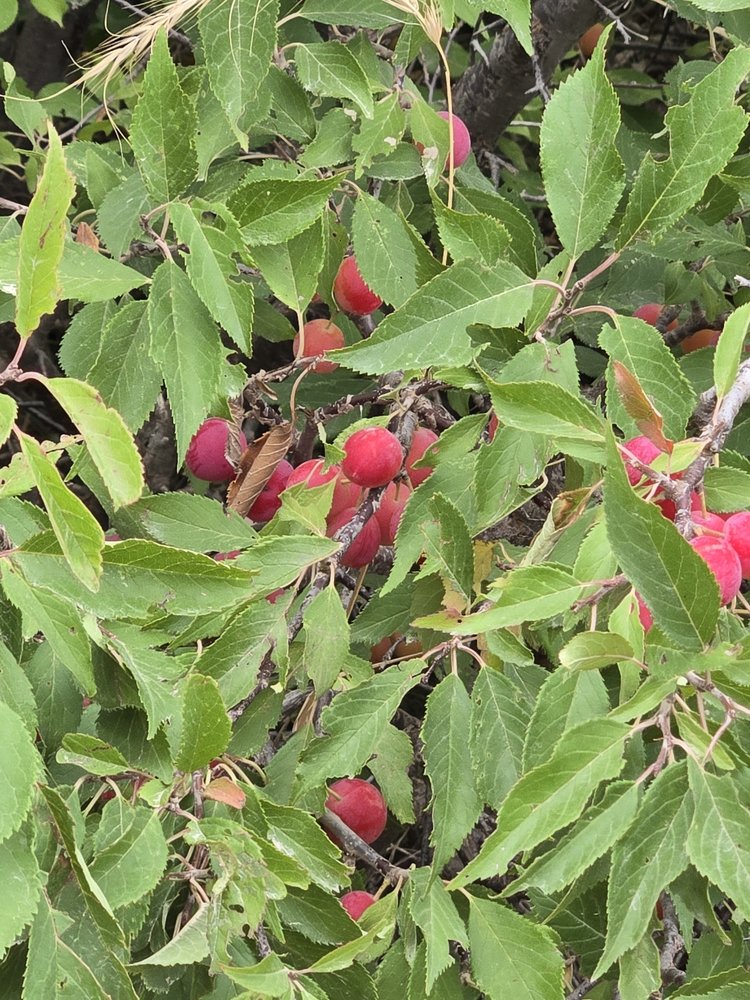
Free photos from other sources
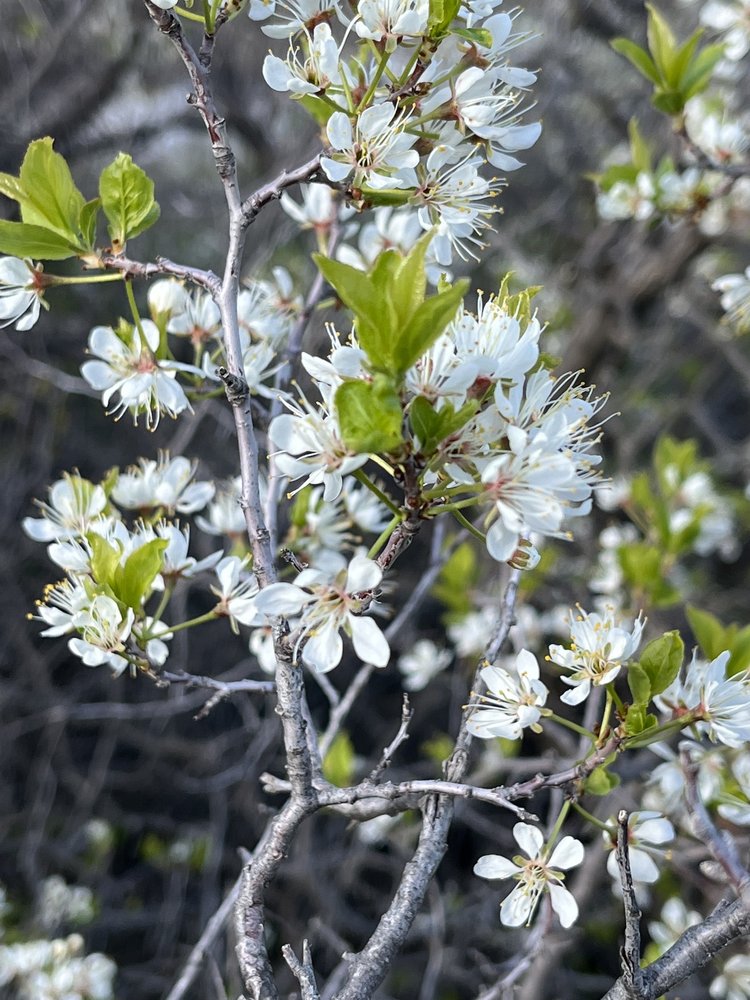
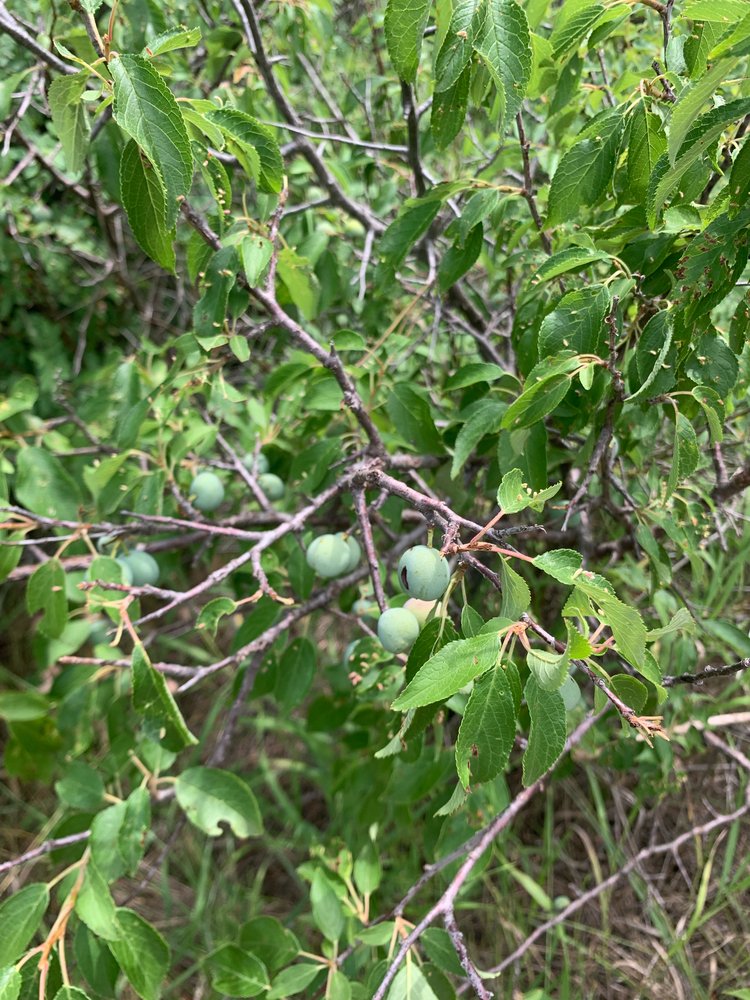
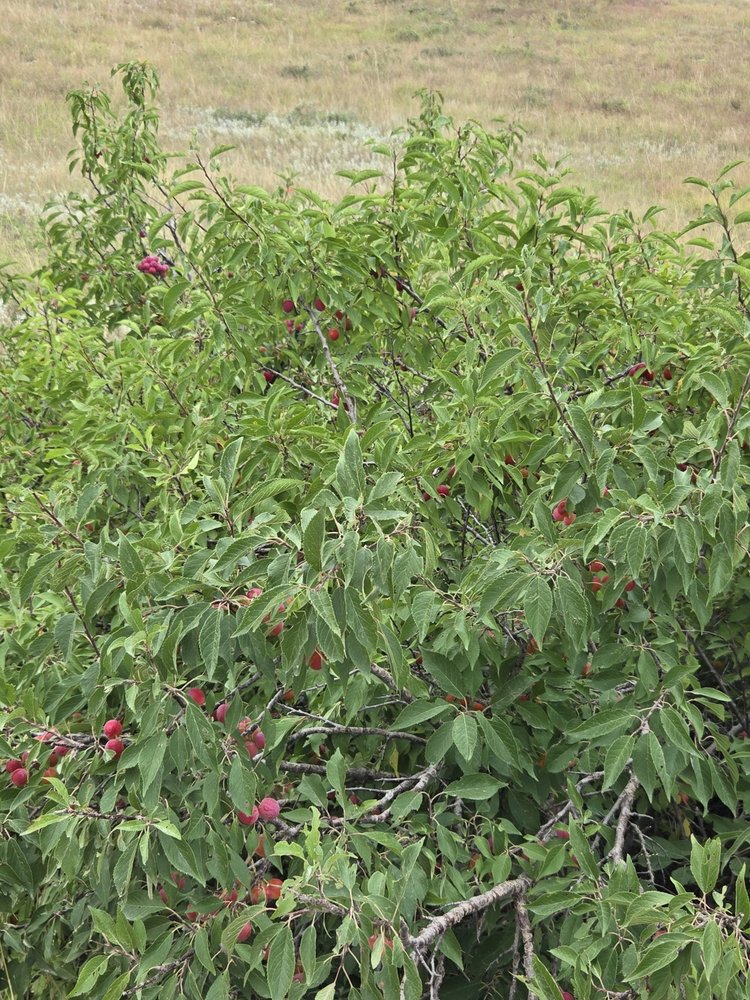
| Family | Rosaceae · Rose |
|---|---|
| Status | Native deciduous shrub |
| Blooms | April and May, before or with the leaves; the plums ripen in August and September |
| Height | 2–6 m (6–20 ft) |
| Where | Thickets in draws, ravines and canyon bottoms, creek banks, woodland edges, pastures, fence rows and roadsides |
| Also called | Wild plum, Goose plum, River plum, kȟáŋta (Lakota) |
| Traditional use | Black Elk and Flying By (1998) record that the Lakota ate the plums raw or dried them for later, used a strong decoction of the twigs to treat asthma and a poultice of the inner bark on open wounds, and added the fruit of all Prunus species, the wild plums and cherries, to dried meat and fat to make wasna. The USDA plant guide, citing Gilmore, adds that the Lakota used a peeled and painted wild plum sprout as the wand in the waunyampi offering, made with prayers for the sick. |
Roots, seeds & germination
Root: Its roots are little studied; a few studies found them shallow and spreading. The shrub sends up root sprouts as far as 3 m (10 ft) from the parent, which is how one plant becomes a thicket that outlives its original stems. A root study in clay prairie soil in North Dakota found 40 percent of the roots in the top 30 cm (1 ft) and a third in the next foot, with the deepest at 2 m (6 ft); a 15-year-old Nebraska shrub had roots 0.8 m (2½ ft) deep and side roots up to 3 m (11 ft) long.
Seed: Each plum holds one strongly flattened oval stone. Good fruit crops come about every other year, and birds, mammals and gravity carry the seed. The stones form a seed bank in the soil and can wait there for many years; in dry storage they stay viable about 5 years.
Germination: The stone needs a long cold, moist rest before it sprouts: 60 to 150 days of moist stratification in the laboratory, or a winter in the seed bank. Germination averages about 70 percent in laboratory studies, and Minnesota seed did best (86 percent) after 60 days at 10 °C (50 °F). SDSU says fall sowing is the easiest way to break dormancy and that plants can also be divided from roots or suckers. Cuttings are hard to root, though hardwood cuttings taken in late January have rooted.
How do you identify American Plum?
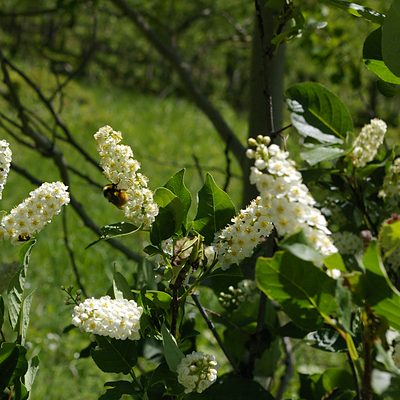
Start with the thorns and the flower clusters. The branches carry stiff thorns, because older side twigs harden into spines up to 7 cm (2¾ in) long, and the plant suckers from its roots into dense thickets. The leaves are alternate, elliptic to obovate (widest above the middle), 5–11 cm (2–4⅓ in) long, with coarse double teeth along the edge and a tip drawn out abruptly to a point. In April and May, before or as the leaves open, the flowers come 2 to 5 together in small umbrella-like clusters, each flower on its own stalk: white, five-petaled, about 2.5 cm (1 in) across, sweet-scented, with 20 to 30 stamens and sepals bent back. The fruit is a plum 2–3 cm (¾–1¼ in) long, red, orange or yellow with a waxy bloom, around a flattened oval stone. Chokecherry is the plant to rule out. Flora of North America's key splits them at its first step, by the flower clusters: Chokecherry's flowers are packed in long racemes of 18 to 64 flowers, 4–11 cm long, while American Plum's come 2 to 5 to a cluster. Its species accounts add that Chokecherry blooms after the leaves open, has no thorns, and has cherries only 6–14 mm across around a stone that isn't flattened, while American Plum blooms before or with the leaves, is thorny, and has plums 15–30 mm long around a flattened stone.
When does it bloom?
April and May, before or with the leaves; the plums ripen in August and September.
Where does it grow?
Thickets on moist ground: draws, ravines and canyon bottoms, creek banks and floodplains, the edges of woods, pastures, fence rows and roadsides, mostly below about 1,450 m (4,750 ft) on herbarium labels. The Fire Effects Information System reports that a 1927 survey found it under the bur oak of the eastern Black Hills foothills, with skunkbush and smooth sumac, where oak woodland runs in bands along the streams between the prairie below and the pine forest above, and that Dorn's Flora of the Black Hills calls it common in canyons here. The National Park Service lists it at Wind Cave National Park and Devils Tower National Monument. Herbarium labels describe thickets in moist draws and along wooded streams, rocky banks and bluffs in canyons, a hillside with oak, elm and ash, a shrubby draw in dry prairie, and riparian bottoms under white spruce and ponderosa pine. They come from Lawrence, Pennington, Custer, Fall River and Meade counties, beginning in 1892, and from Crook County, Wyoming. iNaturalist holds 85 research-grade Black Hills records.
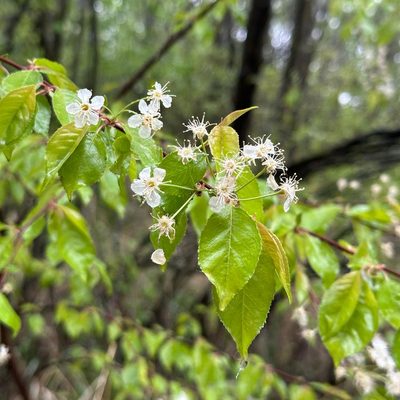
Other wild plums and cherries in this guide
Rose family (Rosaceae): 21 other plants in this guide
- Chokecherry
- Dwarf Raspberry
- Early Cinquefoil
- Leafy Cinquefoil
- Mat Rock Spiraea
- Mountain Mahogany
- Mountain Ninebark
- Pincherry
- Prairie Rose
- Prairie Smoke
- Red Raspberry
- Saskatoon Serviceberry
- Shrubby Cinquefoil
- Silverweed
- Slender Cinquefoil
- Sulphur Cinquefoil
- Tall Cinquefoil
- Thimbleberry
- White Avens
- White Spirea
- Wild Strawberry
Sources: Flora of North America Vol. 9: Prunus americana, eFloras; Flora of North America Vol. 9: Prunus virginiana, eFloras; Flora of North America Vol. 9: genus Prunus, key and discussion, eFloras; USDA Forest Service Fire Effects Information System: Prunus americana (Fryer 2010); USDA NRCS Plant Guide: Wild Plum, Prunus americana; SDSU Open PRAIRIE: Rosaceae: Prunus americana (R. Neil Reese); Montana Field Guide: American Plum, Prunus americana; NPSpecies checklist, Wind Cave National Park vascular plants; NPSpecies checklist, Devils Tower National Monument vascular plants; GBIF occurrence search: Prunus americana, South Dakota and Wyoming herbarium specimens; GBIF specimen 3454980249: Custer County, SD, 1892, 1,219 m; GBIF specimen 3061021720: Pennington County, SD, 1982, "shrubby draw in dry, open prairie"; GBIF specimen 1269708037: Crook County, WY, 1984, "draw with bur oak, hawthorne, wild plum"; iNaturalist: research-grade Prunus americana observations in the Black Hills; Black Elk and Flying By 1998, Culturally Important Plants of the Lakota (entry 241), filed with the South Dakota PUC.