Autumn Willow Salix serissima
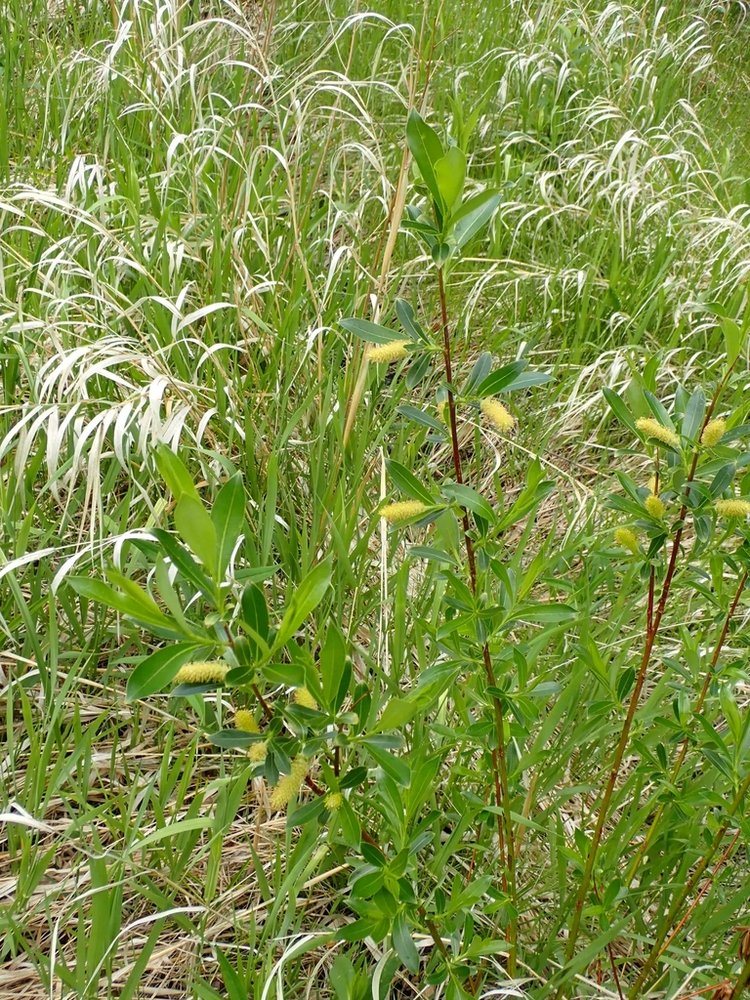
Autumn Willow (Salix serissima) is a native shrub 1–4 m (3–13 ft) tall with glossy, hairless, finely toothed leaves that taper to a point and carry pairs of tiny glands on the leaf stalk. Its catkins open with the leaves in June and early July, but its hairless seed capsules do not ripen until late summer, later than other willows, and the fruiting catkins often hang on through winter. It grows in cold, often lime-rich fens (spring-fed peat wetlands) and sedge meadows, and in the Black Hills it grows in spring-fed fens at about 1,600–1,830 m (5,200–6,000 ft).

Free photos from other sources
| Family | Salicaceae · Willow |
|---|---|
| Status | Native deciduous shrub |
| Blooms | Catkins in June and early July, with the leaves; the fruit ripens in late summer and often hangs on into winter |
| Height | 1–4 m (3–13 ft) |
| Where | Cold, permanently saturated fens and sedge meadows with peaty soil, fed by springs and seeps |
| Synonym | Salix lucida var. serissima |
| Note | The Forest Service lists Autumn Willow as a Region 2 sensitive plant in the Black Hills (2005) and as a species of conservation concern in its 2023 draft assessment, and South Dakota ranks it S1, critically imperiled. This page gives no locations. |
Roots, seeds & germination
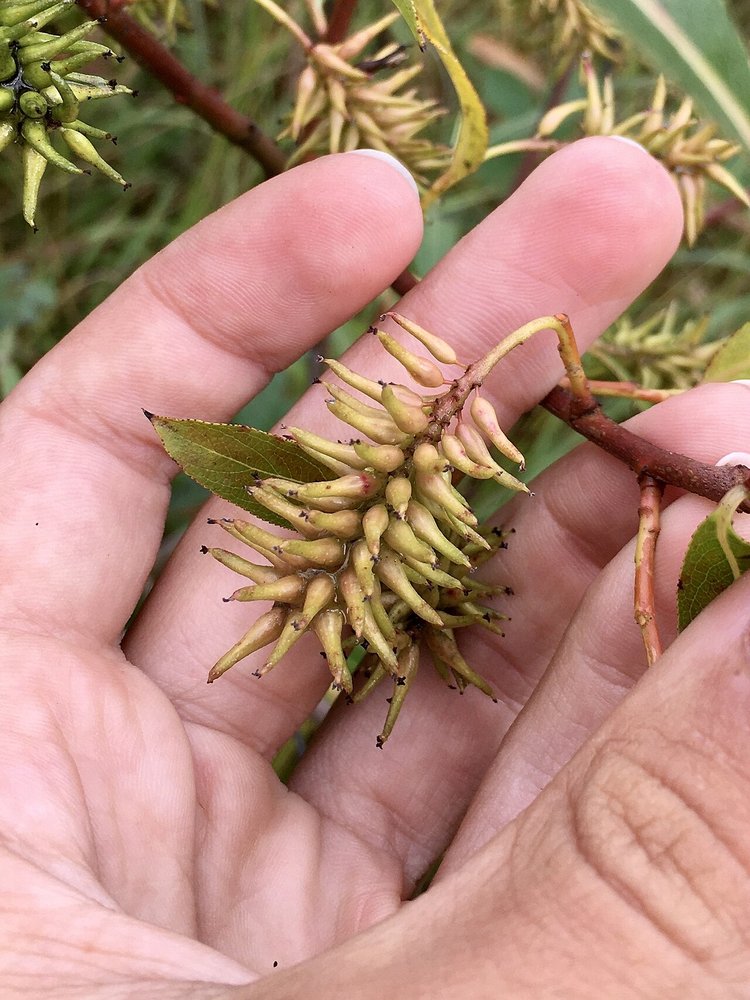
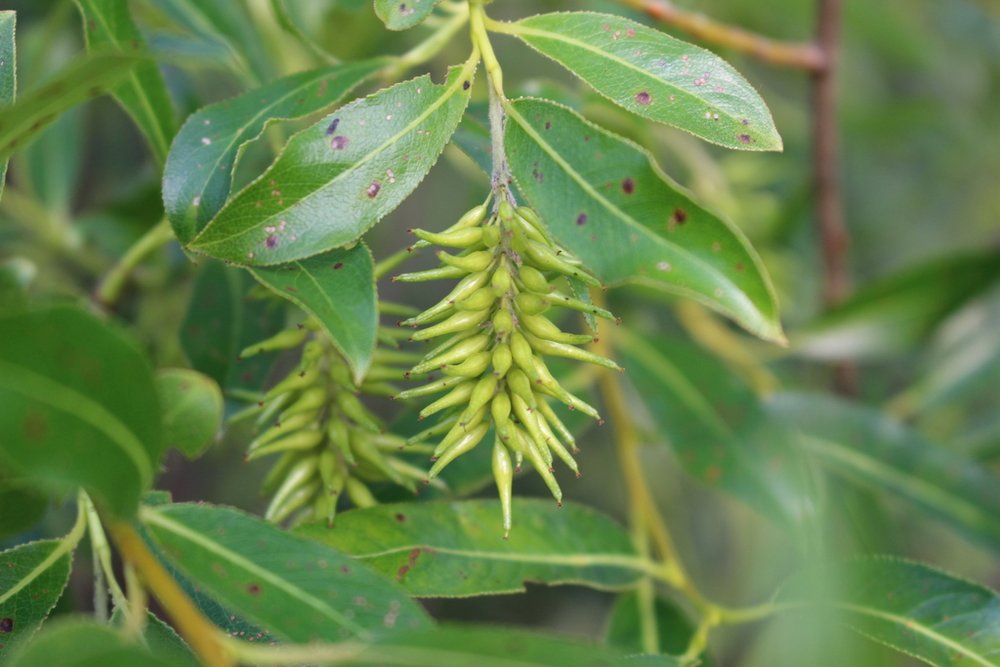
Seed: The seed capsules are 7–12 mm long, hairless and pear-shaped, on short stalks, each holding 12 to 16 ovules (future seeds). They ripen in late summer, and the fruiting catkins often stay on the shrub through the winter.
Germination: The seeds stay dormant through the winter and sprout in spring, which lets the seedlings get going before the sedges and grasses grow tall enough to shade them out. Most willows need bare mineral soil to sprout, but this one takes hold on undisturbed peat: in the Black Hills, rooted cuttings set in saturated hay bales grew, and new plants came up in sedge peat.
How do you identify Autumn Willow?
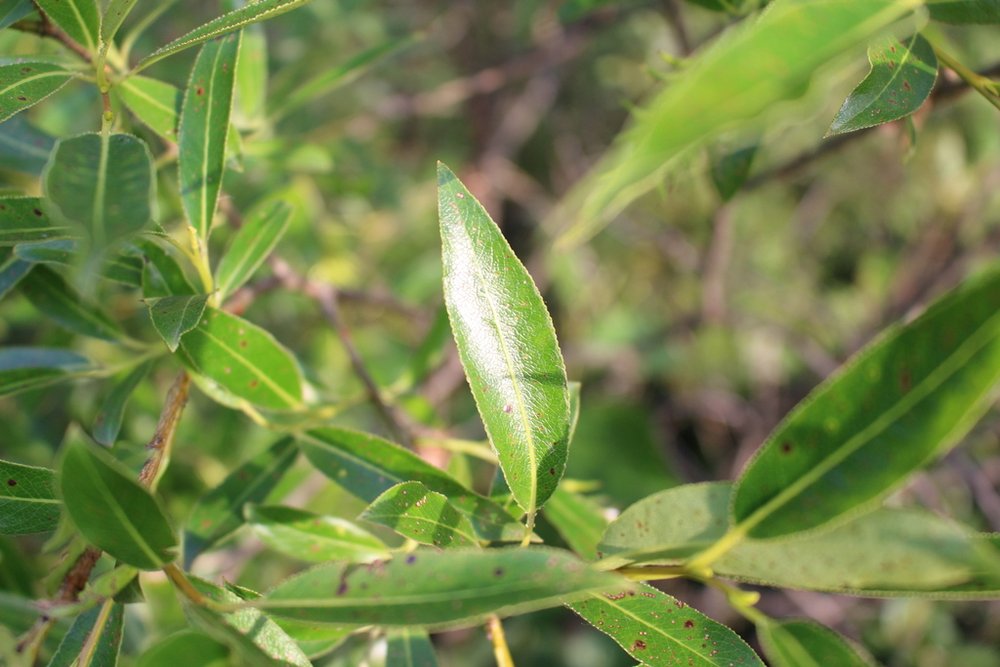
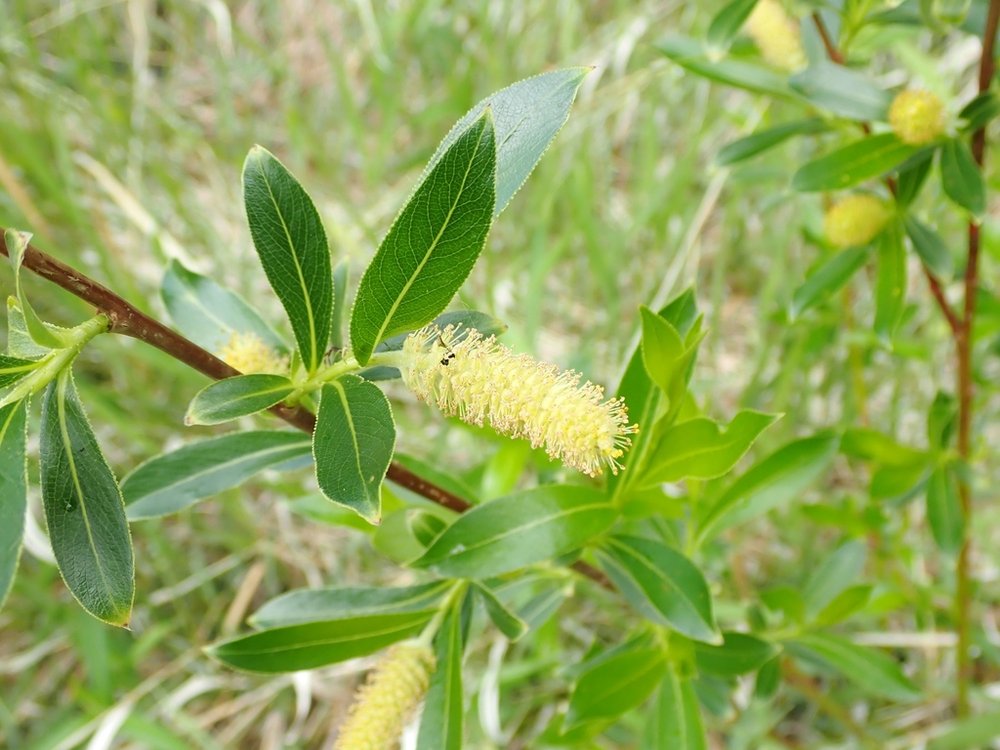
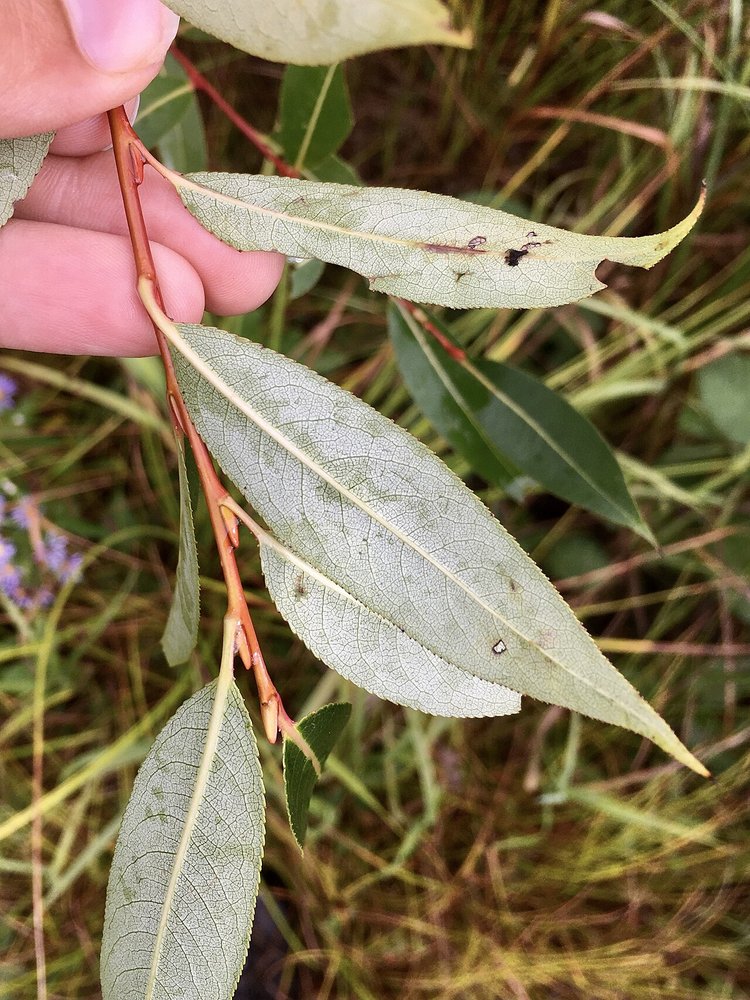
Look for a shrub of wet peat with leaves that shine on top: 4–11 cm (2–4 in) long, lance-shaped, tapering to a point, with fine teeth along a flat edge and no hairs on either side, paler and sometimes faintly whitened underneath. Check the leaf stalk for pairs of tiny round glands by the blade, and note that there are no stipules (leaf-like flaps) at its base, or only tiny ones. Twigs are glossy and hairless, yellow-brown to red-brown. Each male flower has 3 to 9 stamens. The hairless seed capsules are 7–12 mm long and ripen in late summer, later than other willows, and often stay on the shrub over winter. Shining Willow, a close relative that is even rarer in the Black Hills, has longer-tapered leaf tips and shorter capsules, 4–6.5 mm, that usually shed their seed by the end of June. Bebb Willow, which grows with it in the same fens, has dull or slightly glossy leaves with a sunken network of veins on top and usually hairs underneath, and long-beaked capsules 5–9 mm long; its catkins open from April into June.
When does it bloom?
Catkins in June and early July, with the leaves; the fruit ripens in late summer and often hangs on into winter.
Where does it grow?
Cold, permanently saturated fens and sedge meadows with peaty soil, where springs and seeps keep the water table high, at about 1,600–1,830 m (5,200–6,000 ft). It usually grows among sedges and other willows. Across its range it is a plant of fens, wet thickets, bogs and marly lakeshores, and the Black Hills plants are isolated far to the south and west of its main range.
Other willows in this guide
Willow family (Salicaceae): 4 other plants in this guide
Sources: Flora of North America Vol. 7: Salix serissima, eFloras; Flora of North America Vol. 7: Salix bebbiana, eFloras; USDA PLANTS: Salix serissima (SASE2); Conservation Assessment for the Autumn Willow (Hornbeck, Sieg and Reyher, 2003), USDA Forest Service; Phase II Amendment Final Environmental Impact Statement, chapter 3-3.2 Flora (2005), USDA Forest Service; Revised Forest Assessment: At-Risk Species, draft October 2023, USDA Forest Service; South Dakota Game, Fish and Parks: Rare Plants of South Dakota; Minnesota Wildflowers: Salix serissima (Autumn Willow).