Quaking Aspen
Populus tremuloides
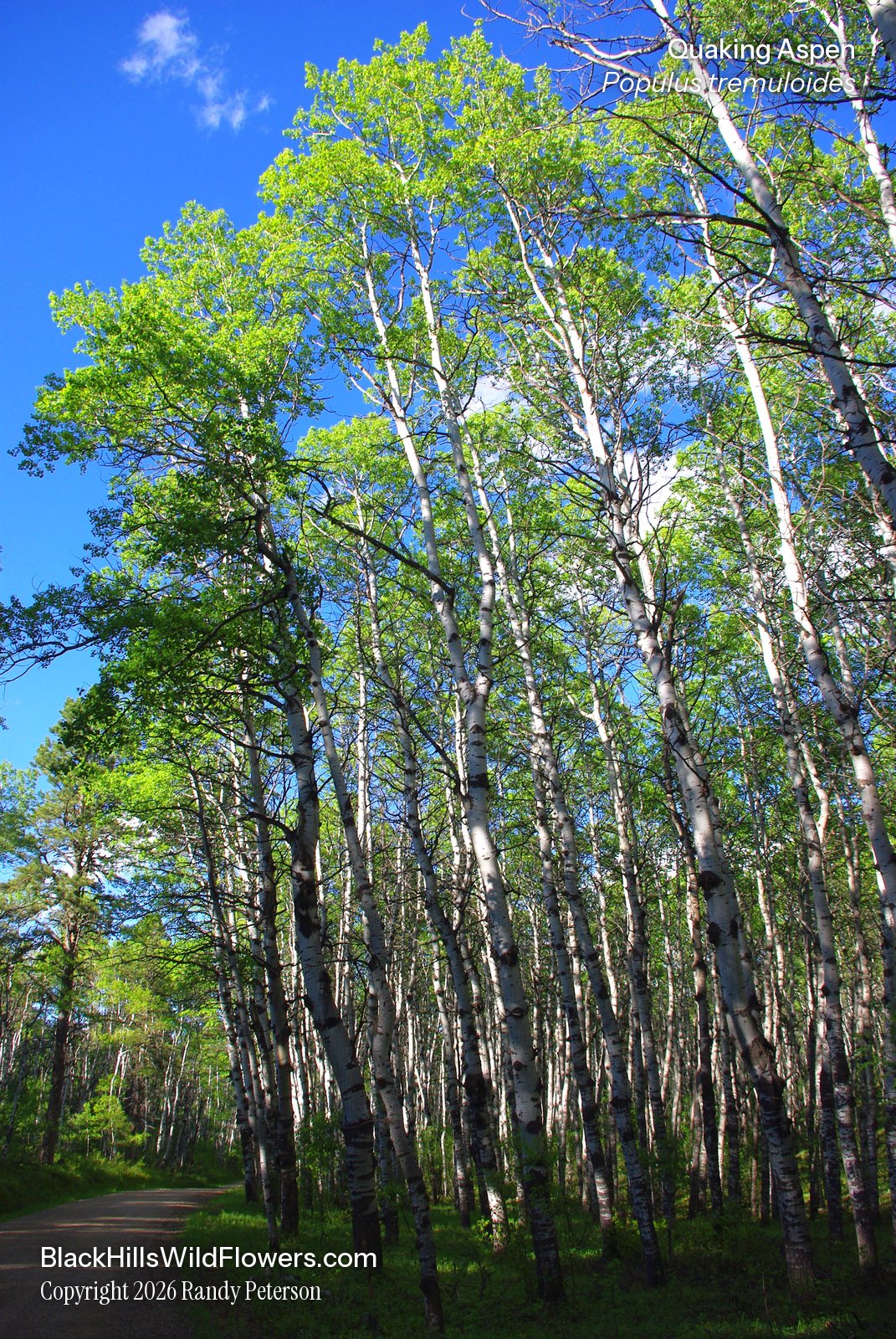
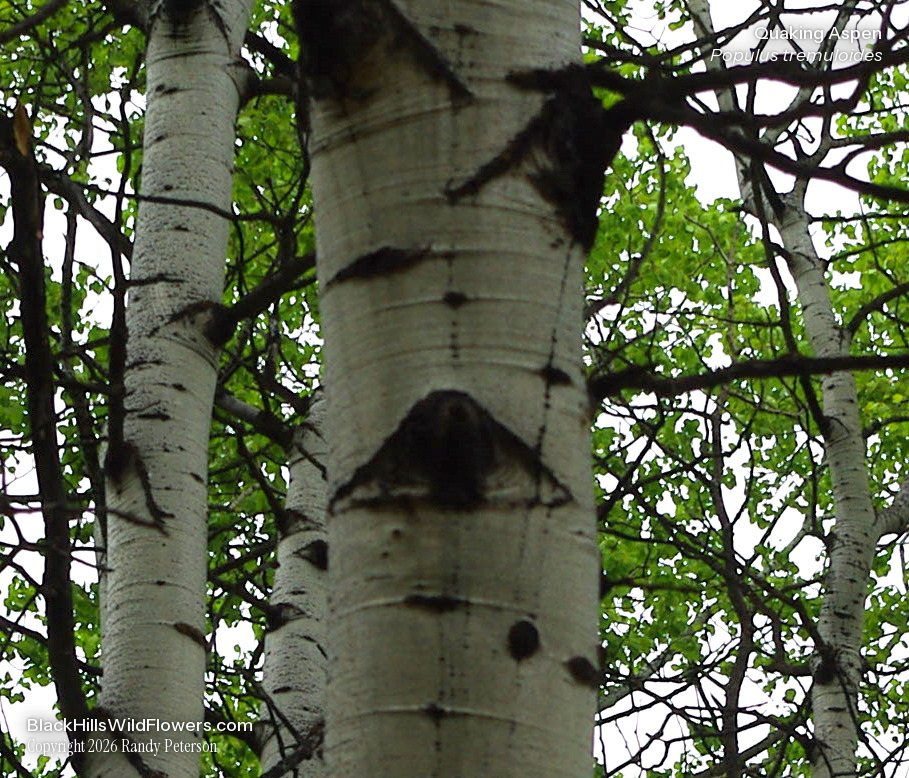
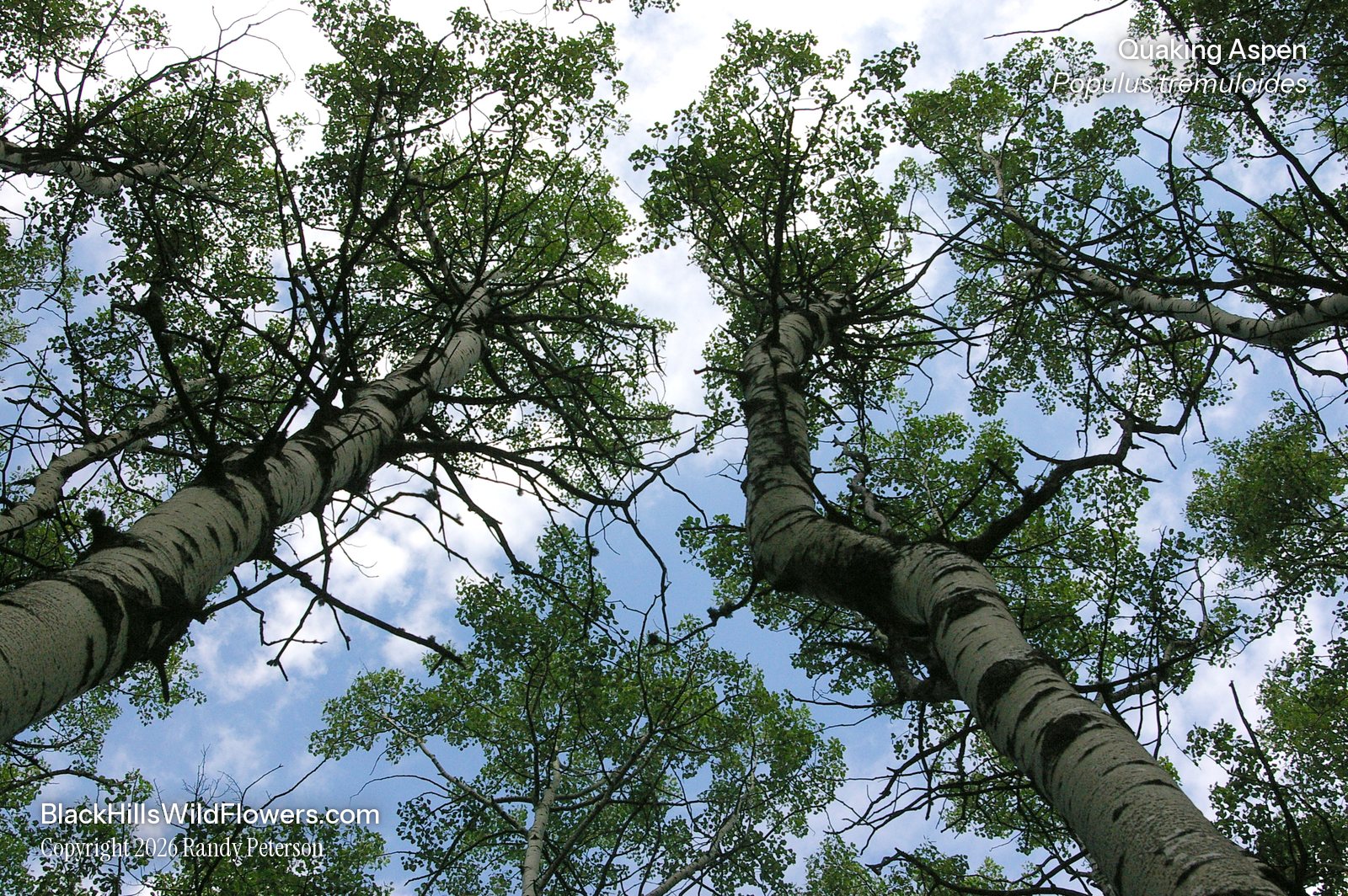
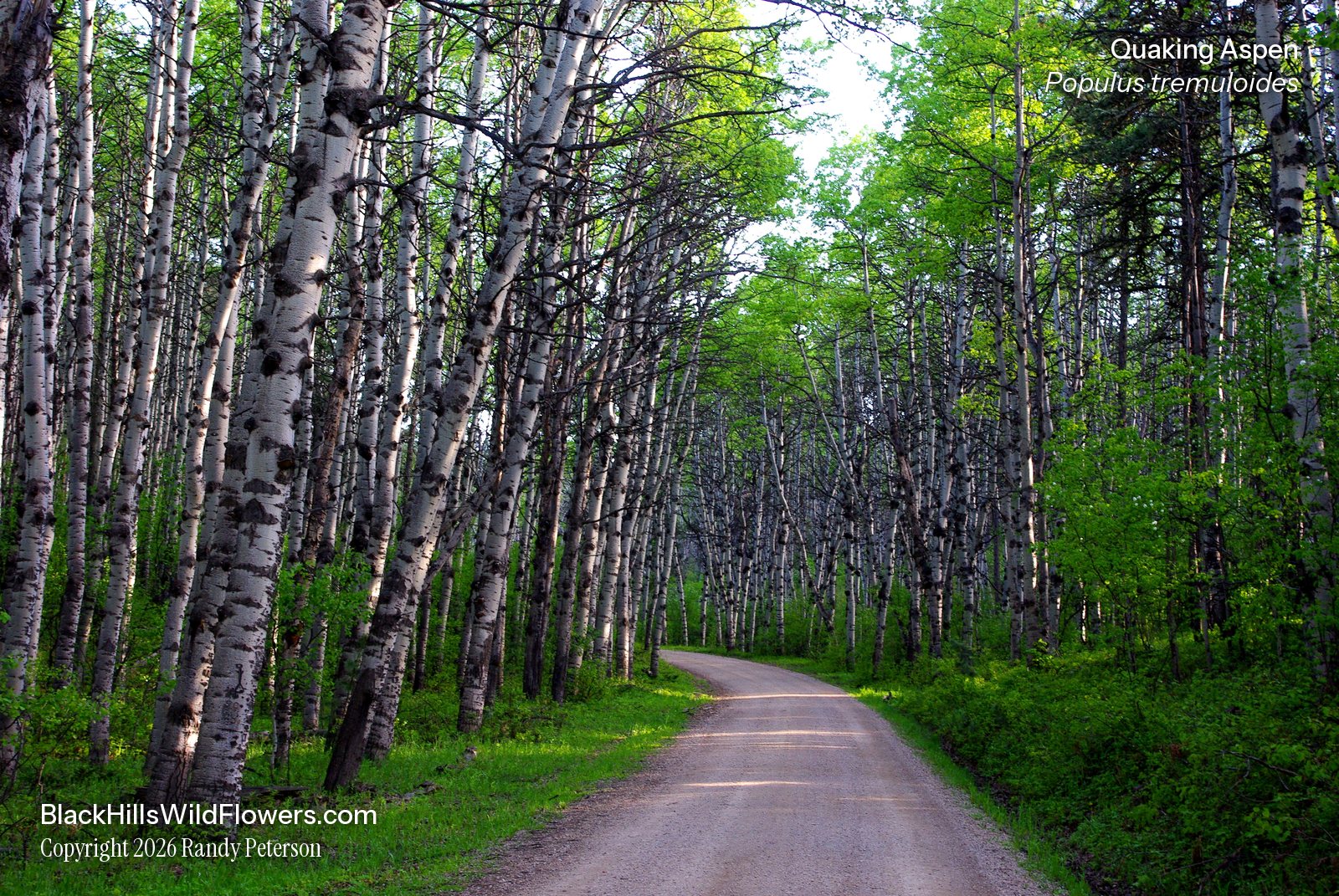
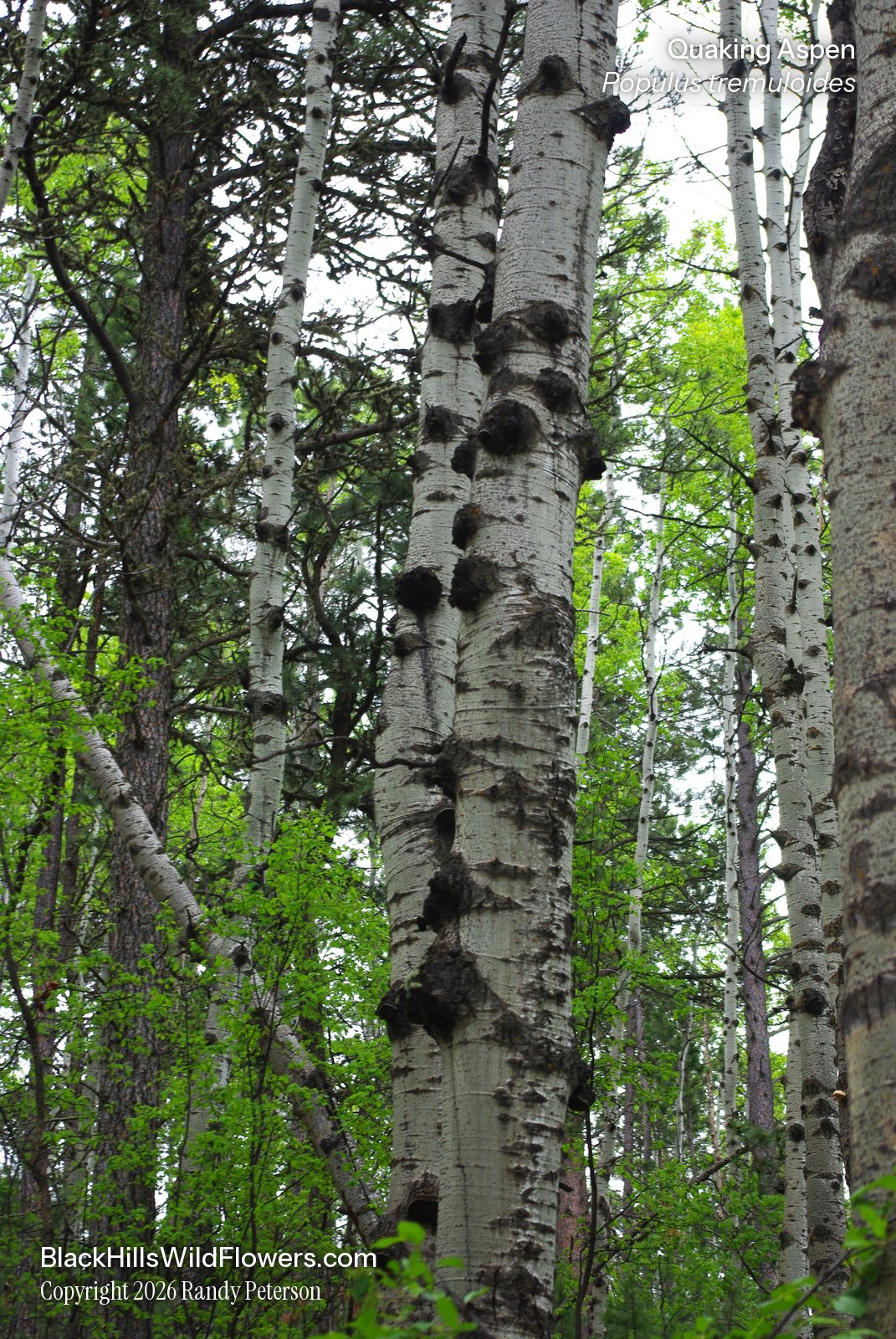
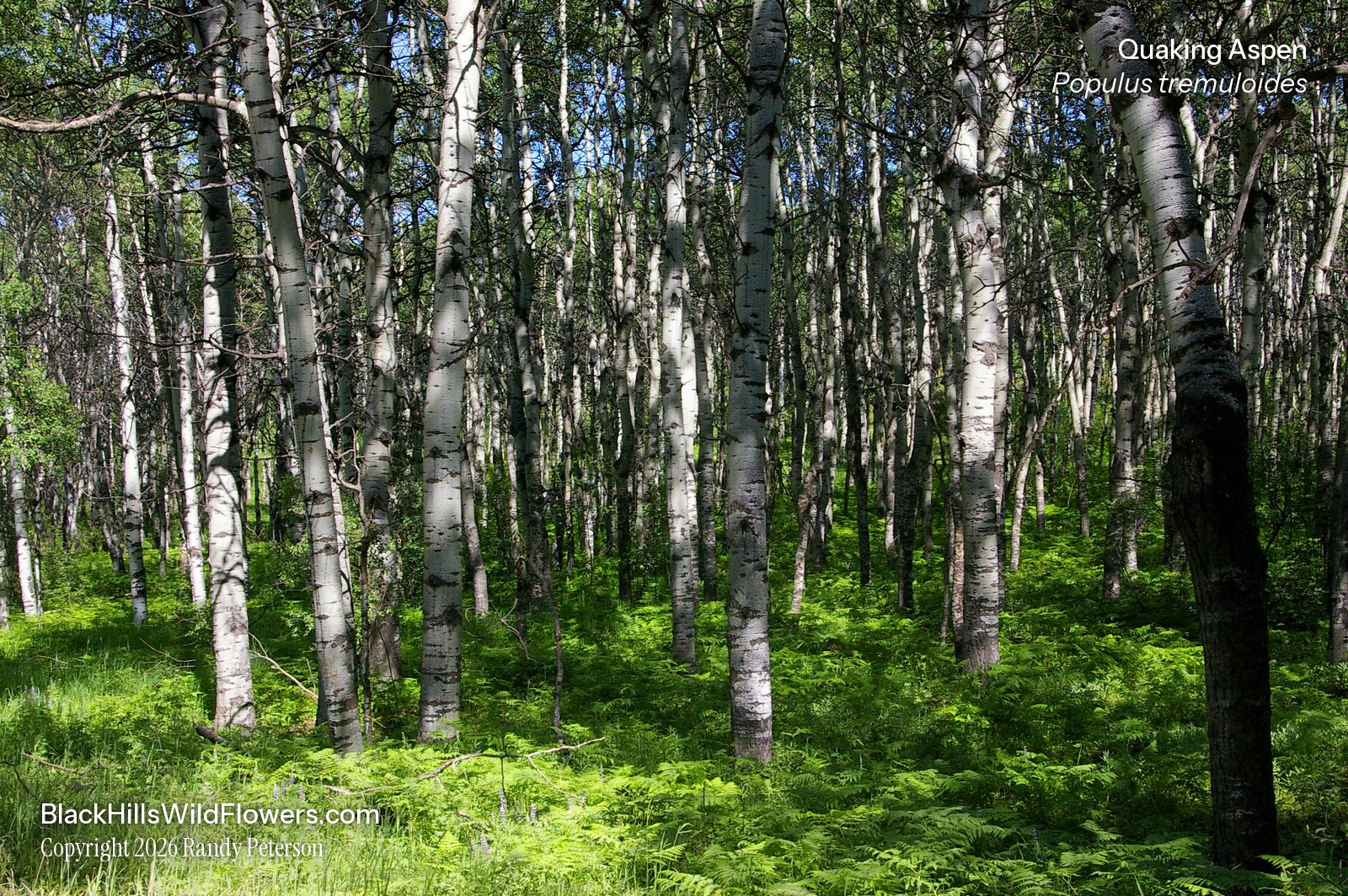
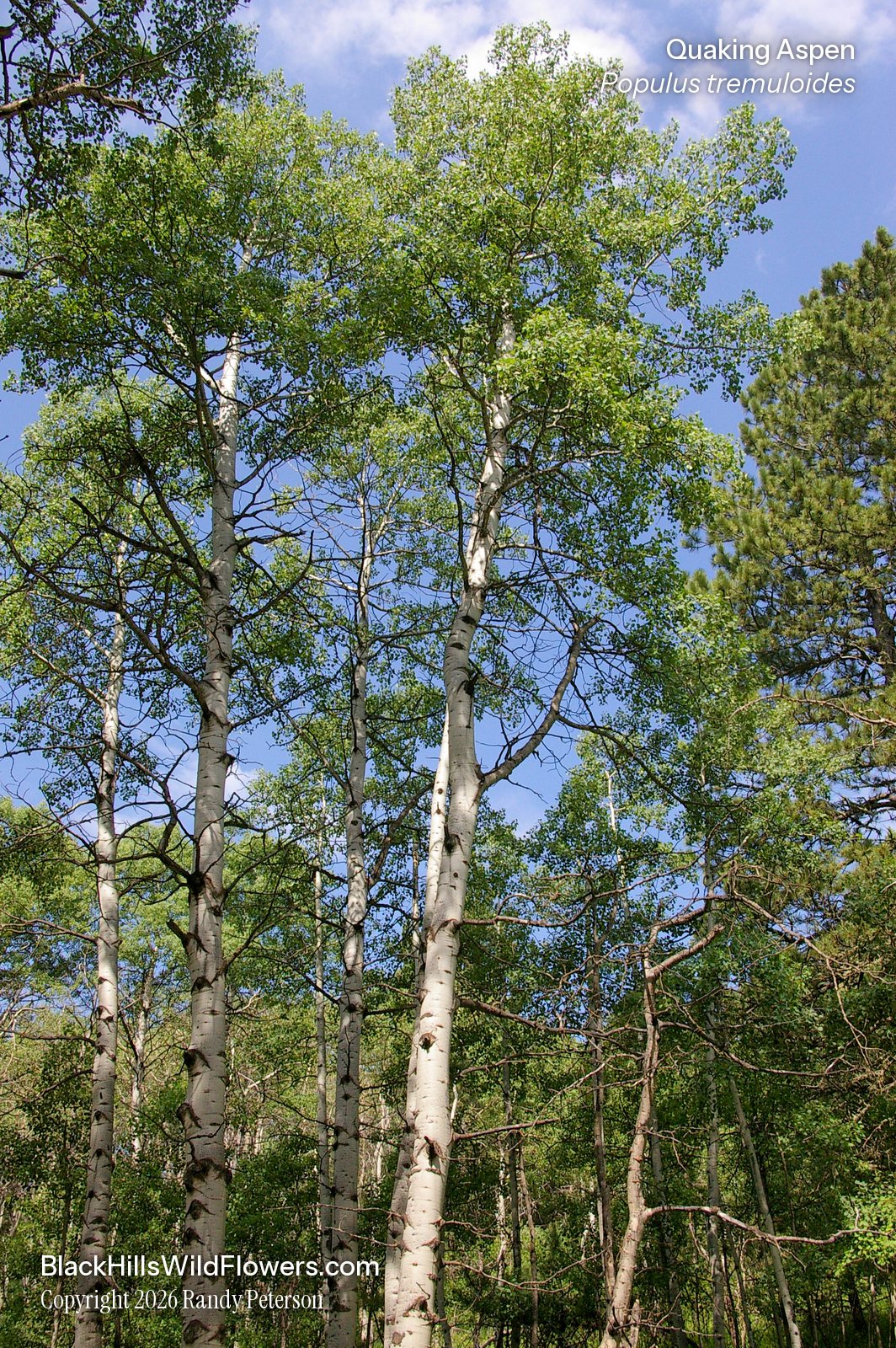
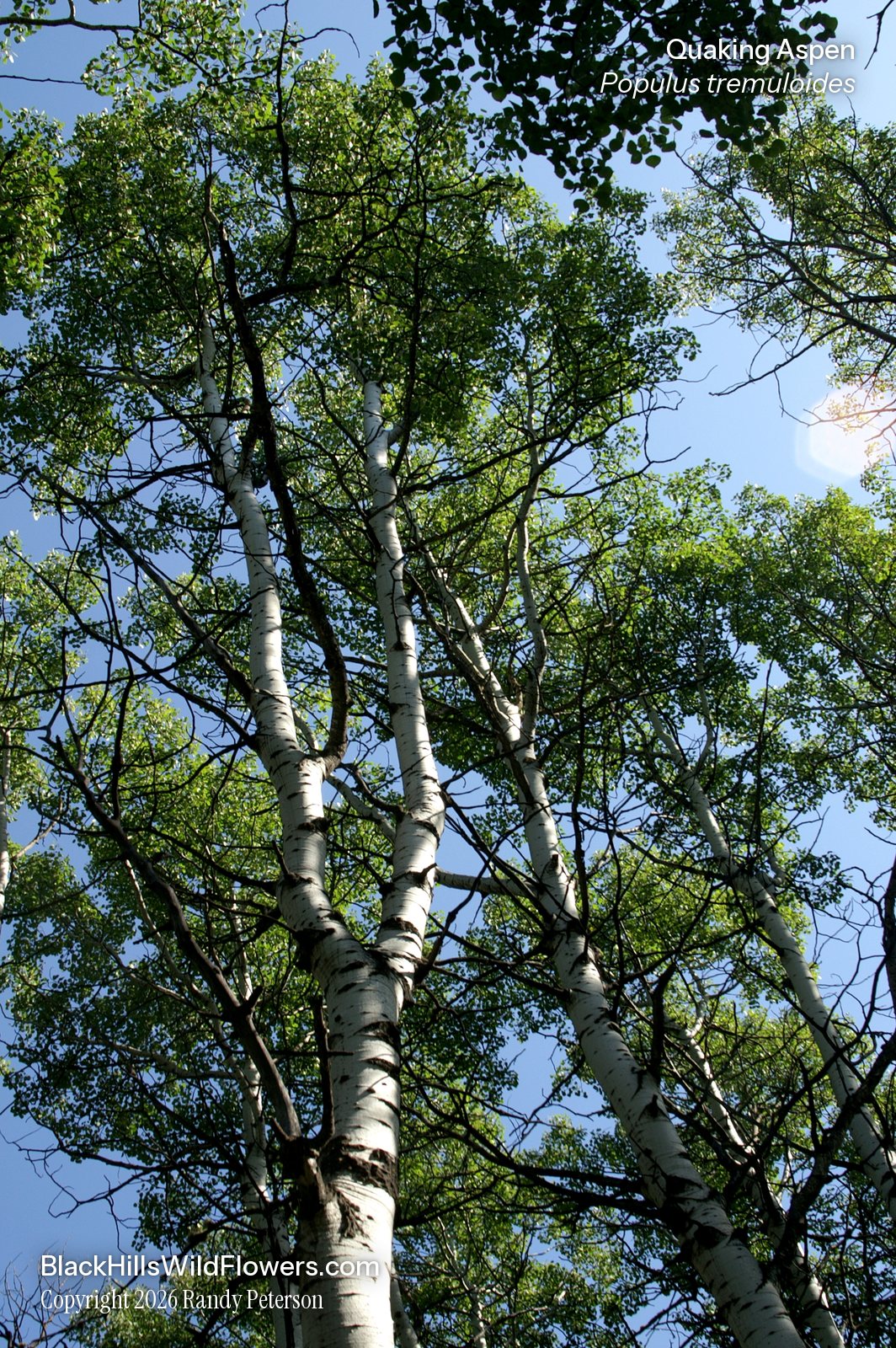
Quaking Aspen (Populus tremuloides) is a native tree with smooth, pale greenish-white bark and nearly round leaves on flat stalks that make them tremble in the wind. Its catkins come out before the leaves, in April and May, and in the Black Hills it grows in small groves on mountain slopes and in canyon-bottom woodlands. Photographed in the Black Hills.
| Family | Salicaceae · Willow |
|---|---|
| Status | Native tree |
| Blooms | April and May |
| Height | 15–25 m (50–80 ft) |
| Where | Mountain slopes beside grassy parks, canyon bottoms and upland woods |
| Also called | Trembling Aspen |
Roots, seeds & germination
Root: A shallow, wide-spreading root system, with side roots that can run over 30 m (100 ft). New trees sprout from these roots, so one tree can become a stand covering acres.
Seed: Male and female catkins grow on separate trees. Capsules 5–10 mm long split to release tiny seeds with cottony hairs that travel on the wind. Large seed crops begin at 10 to 20 years of age.
Germination: Fresh seed germinates fast, often within 12 to 48 hours on moist soil, with no cold treatment, but it stays viable only 2 to 4 weeks, even when kept cool and dry. Burned or scarified soil makes an excellent seedbed.
How do you identify Quaking Aspen?
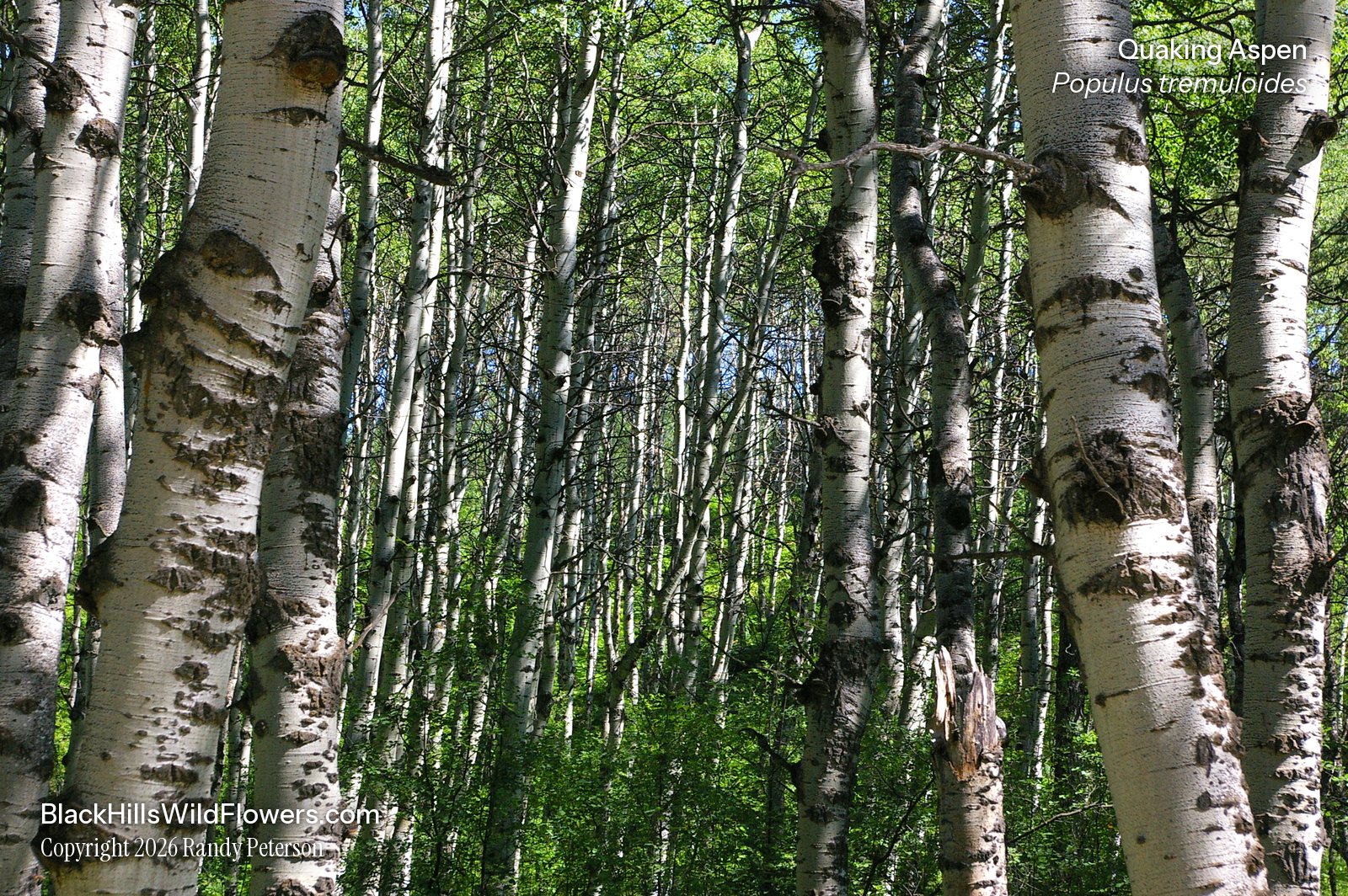
Look for thin, smooth bark, creamy greenish white to nearly white, turning dark gray and furrowed at the base of old trunks. Leaves are 1¼–3 inches long and broadly oval to nearly round, with a pointed tip and fine, rounded teeth, and the flat leaf stalk makes them flutter. Trees often stand in groups sprouted from the same roots.
When does it bloom?
April and May.
Where does it grow?
In the Black Hills it often grows in small groves or strips between conifer forest on mountain slopes and nearby grassy parks, and in canyon-bottom woodlands with birch and boxelder. A Forest Service classification says it covers only about 5 percent of the Black Hills, and it names an aspen and beaked hazelnut forest type.
Sources: SDSU Open PRAIRIE: Populus tremuloides; Forest Service, Fire Effects Information System: Populus tremuloides; Minnesota Wildflowers: Quaking Aspen; Forest Service: Forest Vegetation of the Black Hills National Forest, A Habitat Type Classification (RM-276); Marriott and Hartman 1986, A Survey of the Vegetation of Jewel Cave National Monument; Thoreson 1988, A Comparative Study of Riparian Vegetation in Two Drainage Areas of the Black Hills (SDSU thesis).