Sageleaf Willow Salix candida
Also called Hoary Willow, Sage Willow, Sage-leaved Willow, Hairy Willow, čhoȟáŋ waŋžíča šašá (Lakota)
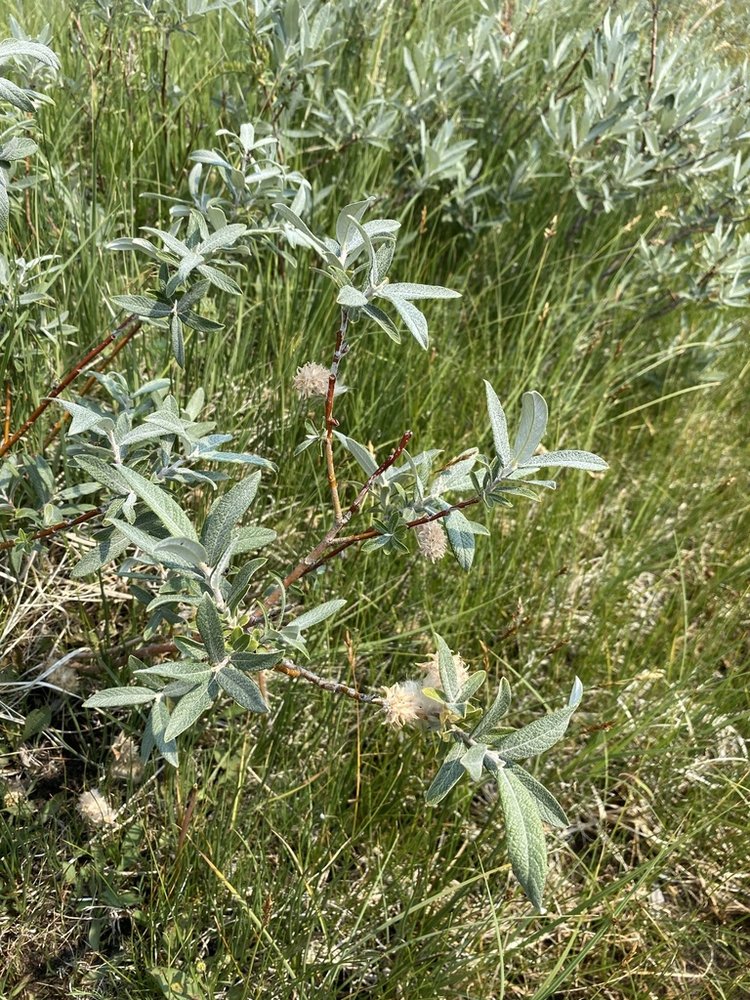
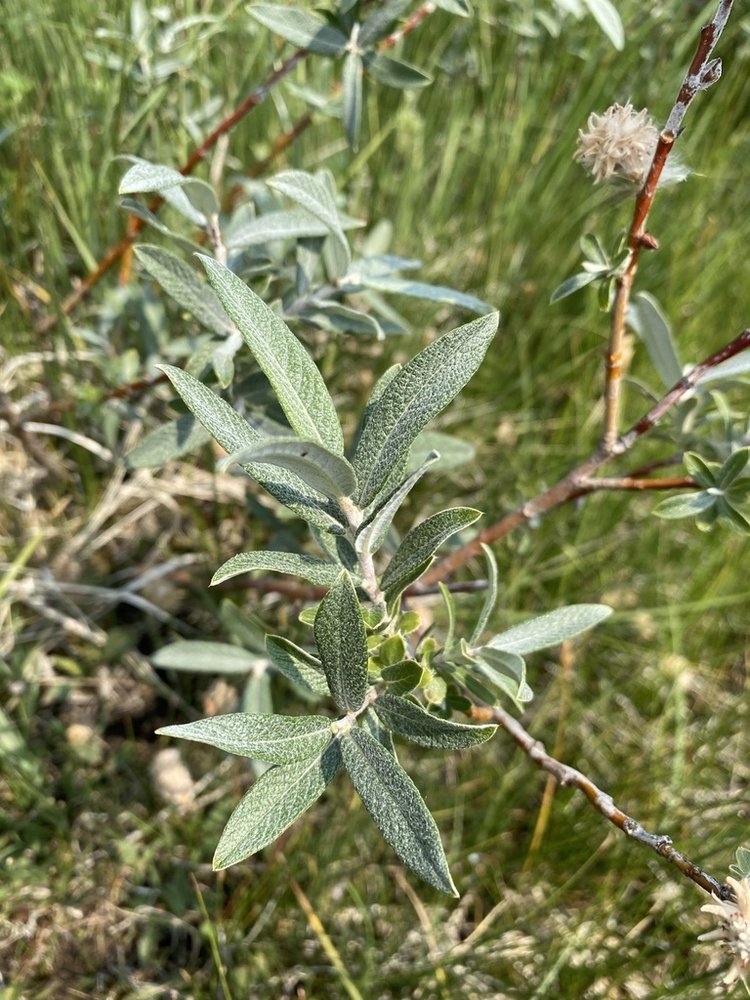
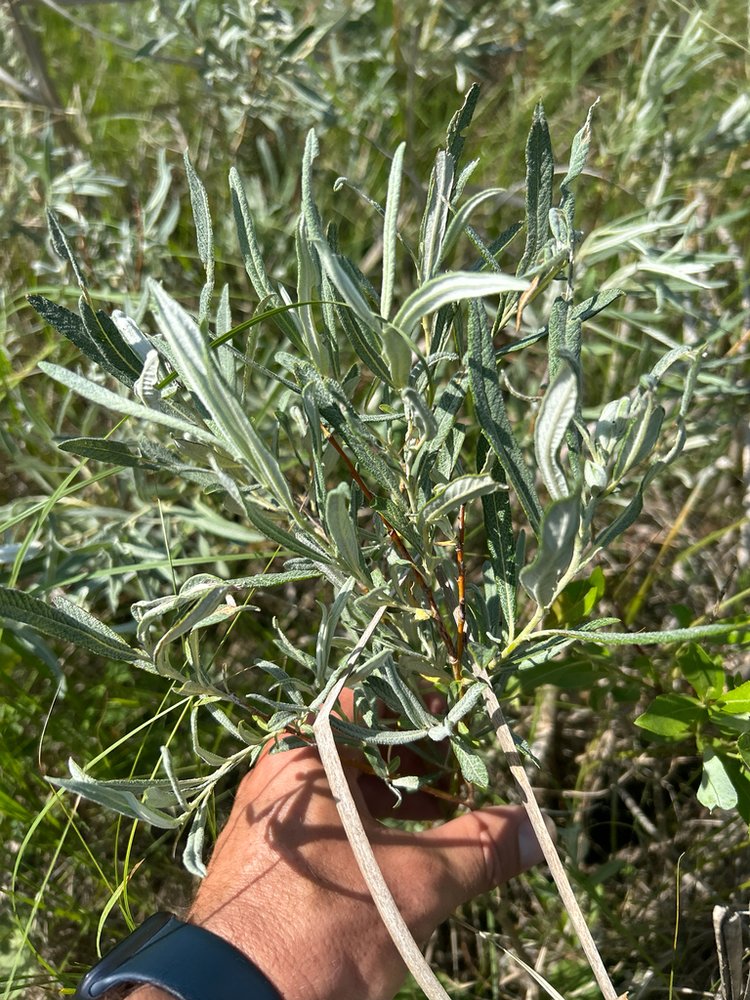
Sageleaf Willow (Salix candida) is a low native shrub, 0.3–1.5 m (1–5 ft) tall or sometimes taller, whose narrow, toothless leaves are dark green on top and so densely white-woolly underneath that the whole bush looks sage-gray. Its catkins open with the leaves in May and into June. It grows in lime-rich fens (spring-fed peat wetlands) across Canada and the northern states, and in the Black Hills it grows in open, spring-fed fen meadows.
Free photos from other sources
| Family | Salicaceae · Willow |
|---|---|
| Status | Native deciduous shrub |
| Blooms | Catkins in May and into June, as the leaves come out |
| Height | 0.3–1.5 m (1–5 ft), sometimes to 3 m (10 ft) |
| Where | Open, spring-fed fen meadows on saturated, lime-rich peat |
| Also called | Hoary Willow, Sage Willow, Sage-leaved Willow, Hairy Willow, čhoȟáŋ waŋžíča šašá (Lakota) |
| Synonym | Salix candida var. denudata |
| Traditional use | A 1998 list of culturally important Lakota plants, which calls it hairy willow, gives its Lakota name as čhoȟáŋ waŋžíča šašá and says it is burned to repel insects. |
| Note | The Forest Service lists Sageleaf Willow as a Region 2 sensitive plant in the Black Hills (2005) and as a species of conservation concern in its 2023 draft assessment, and South Dakota ranks it S1, critically imperiled. This page gives no locations. |
Roots, seeds & germination
Root: The shrub often forms a clone by layering: a branch that touches the ground takes root and becomes a new plant. Willows cut by beavers sprout again from the rootstock, and this one is expected to recover the same way. It reportedly needs soil at least 46 cm (18 in) deep for its roots.
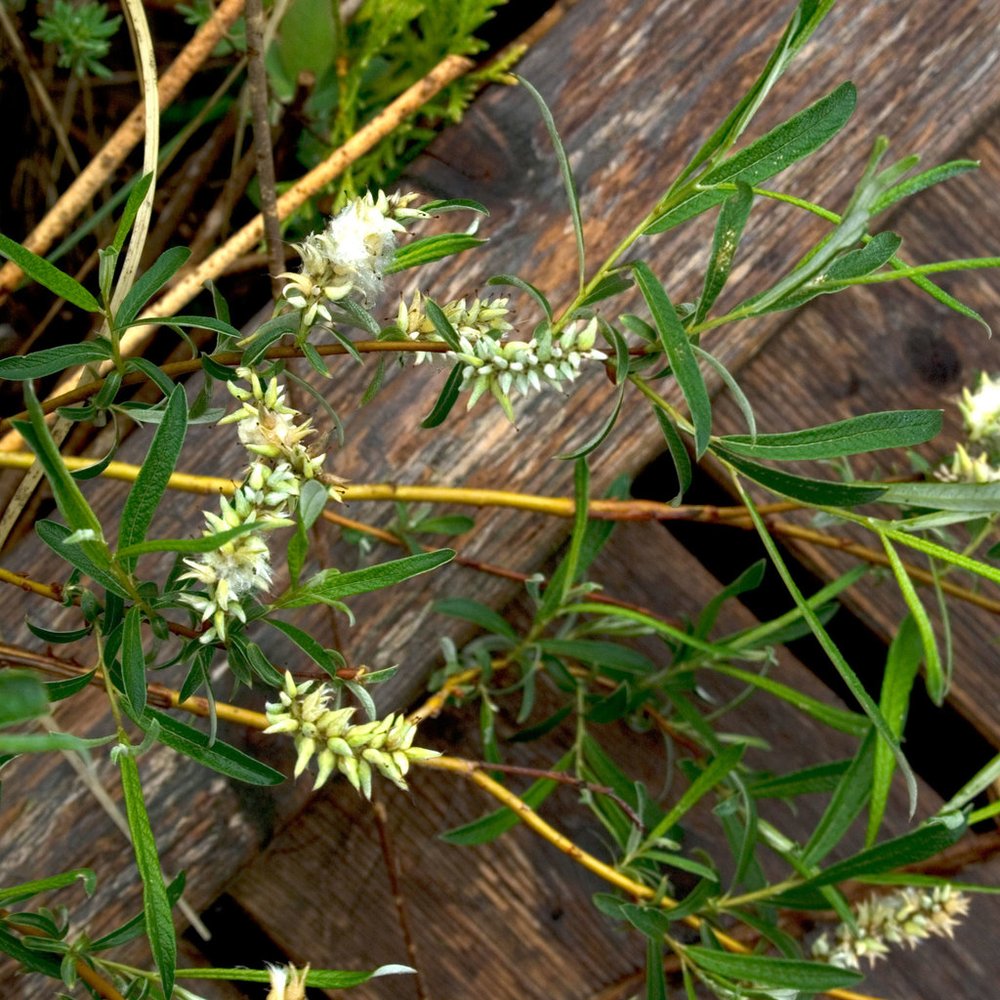
Seed: The female catkins are 2–6.5 cm (1–2.5 in) long. Each woolly capsule, 4–6 mm long, splits in two to release seeds carried on cotton. The Forest Service reports low seed production, a slow seed spread rate and weak seedlings.
Germination: The seed needs no cold period to sprout. Seedlings are thought to be at risk when the water table drops, and the shrub needs a shallow water table and saturated soil.
How do you identify Sageleaf Willow?
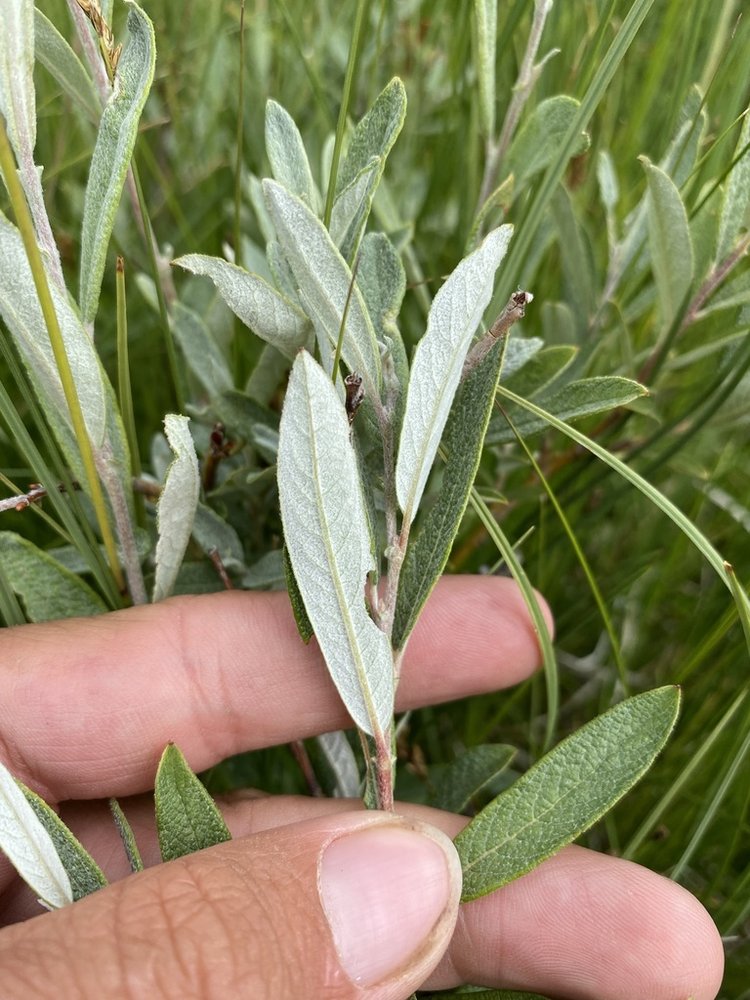
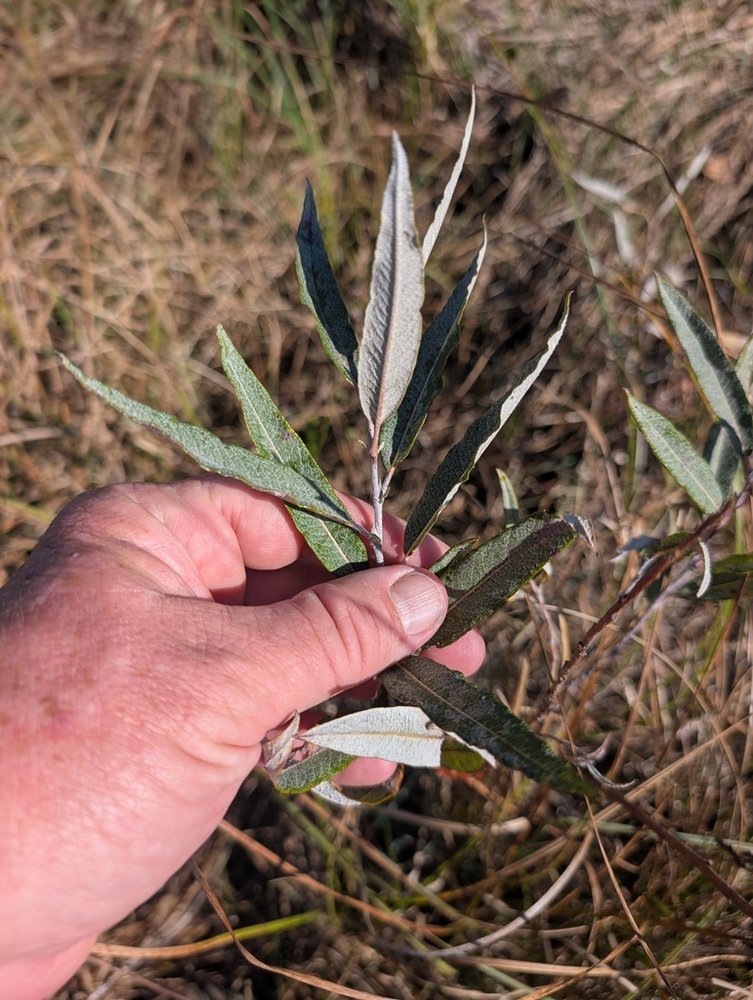
Turn a leaf over: the underside is silvery white with dense, crinkled wool, while the top is dark green with a network of sunken veins. The leaves are narrow, about 5–10 cm (2–4 in) long and under 2 cm wide, with no teeth and edges rolled under, and small hairy stipules (leaf-like flaps) sit at the base of the leaf stalk. New twigs are white-woolly as well. Catkins open as the leaves emerge, the male ones with purple anthers that turn yellow, the female ones with woolly seed capsules 4–6 mm long. The Forest Service says the dense wool on its twigs and leaves sets it apart from other Black Hills willows. Bebb Willow, which grows with it in the same fens, has leaves with white or gray, silky to sparse hairs underneath, sometimes almost none, and long-beaked capsules 5–9 mm long.
When does it bloom?
Catkins in May and into June, as the leaves come out.
Where does it grow?
Open fen meadows fed by springs and seeps, on saturated, lime-rich peat, in full sun among sedges and other willows. Across its range it grows mainly on lime-rich ground: floodplains, marl bogs, fens and wet meadows. The Black Hills plants are an isolated outlier, likely left from the last ice age.
Other willows in this guide
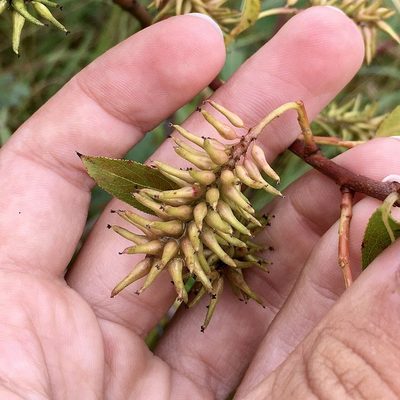
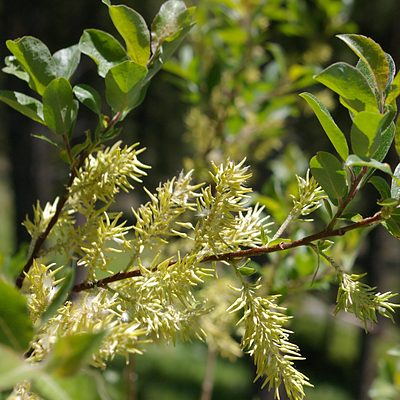
Willow family (Salicaceae): 4 other plants in this guide
Sources: Flora of North America Vol. 7: Salix candida, eFloras; Flora of North America Vol. 7: Salix bebbiana, eFloras; USDA PLANTS: Salix candida (SACA4); Conservation Assessment of Hoary Willow (Glisson, 2003), USDA Forest Service; Phase II Amendment Final Environmental Impact Statement, chapter 3-3.2 Flora (2005), USDA Forest Service; Revised Forest Assessment: At-Risk Species, draft October 2023, USDA Forest Service; South Dakota Game, Fish and Parks: Rare Plants of South Dakota; Minnesota Wildflowers: Salix candida (Sage-leaved Willow); Culturally Important Plants of the Lakota (Black Elk and Flying By, 1998), entry 268.