Bebb Willow Salix bebbiana
Also called Bebb's Willow, Beaked Willow, Long-beaked Willow, Gray Willow, Diamond Willow
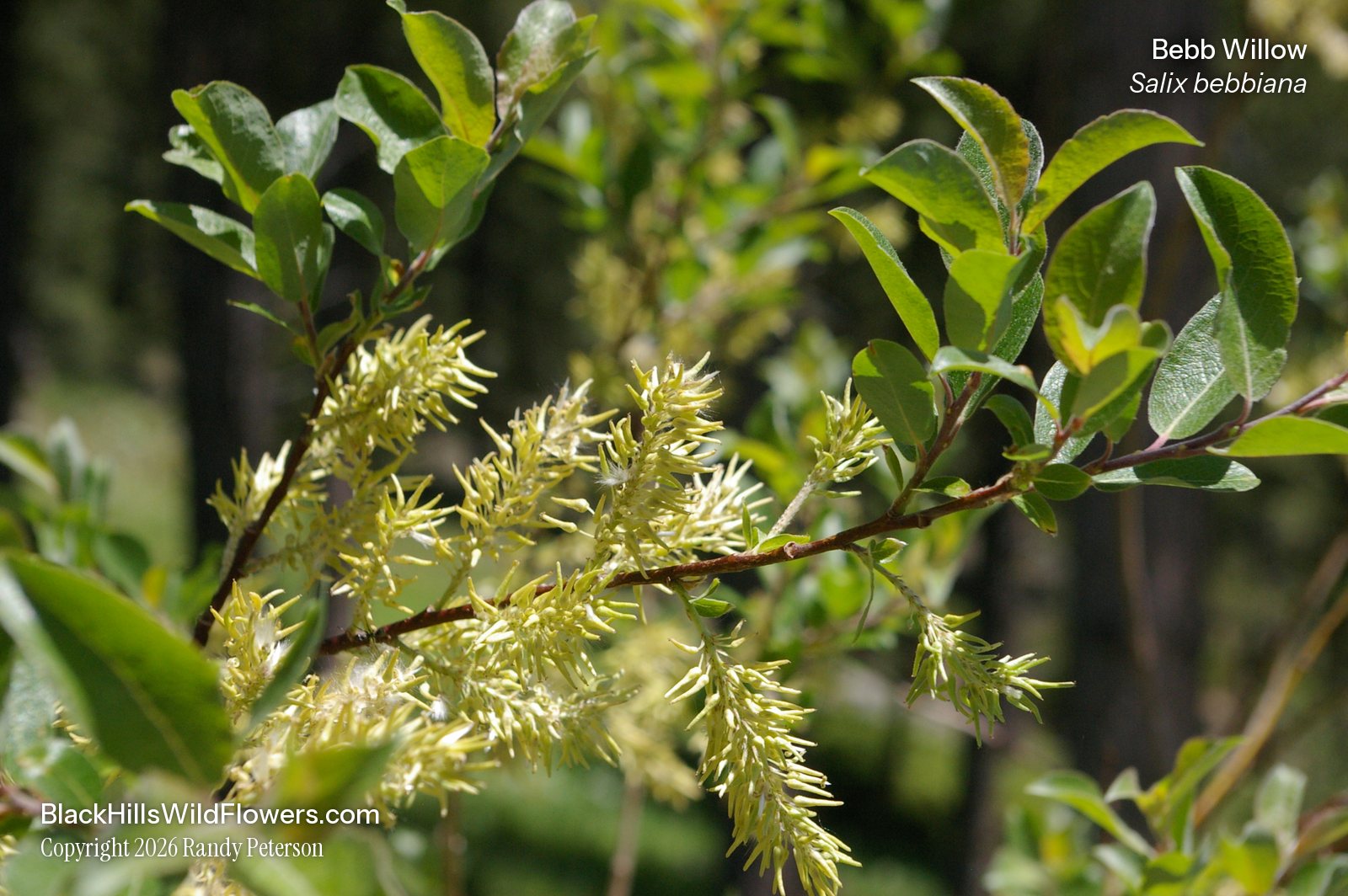
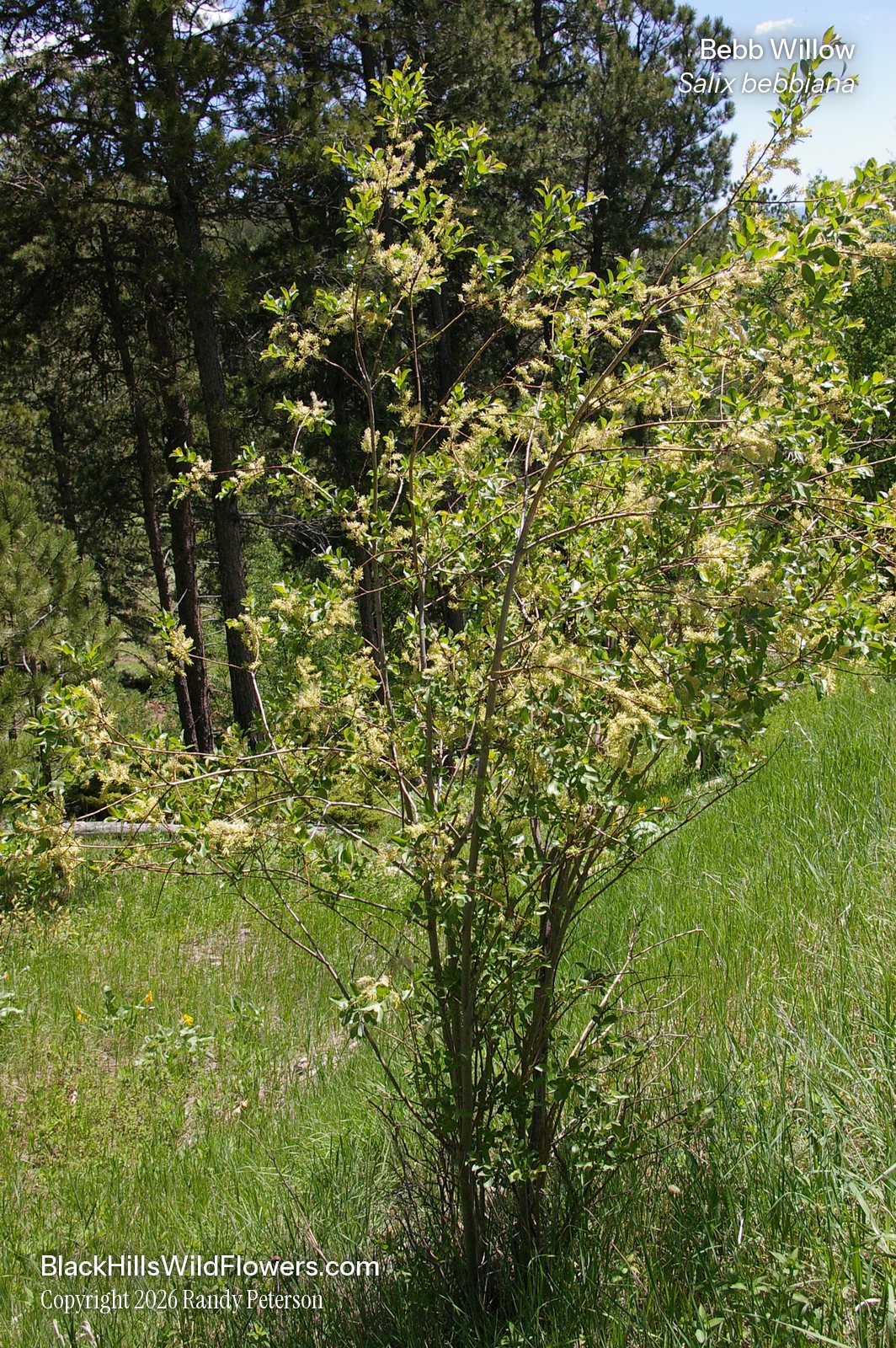
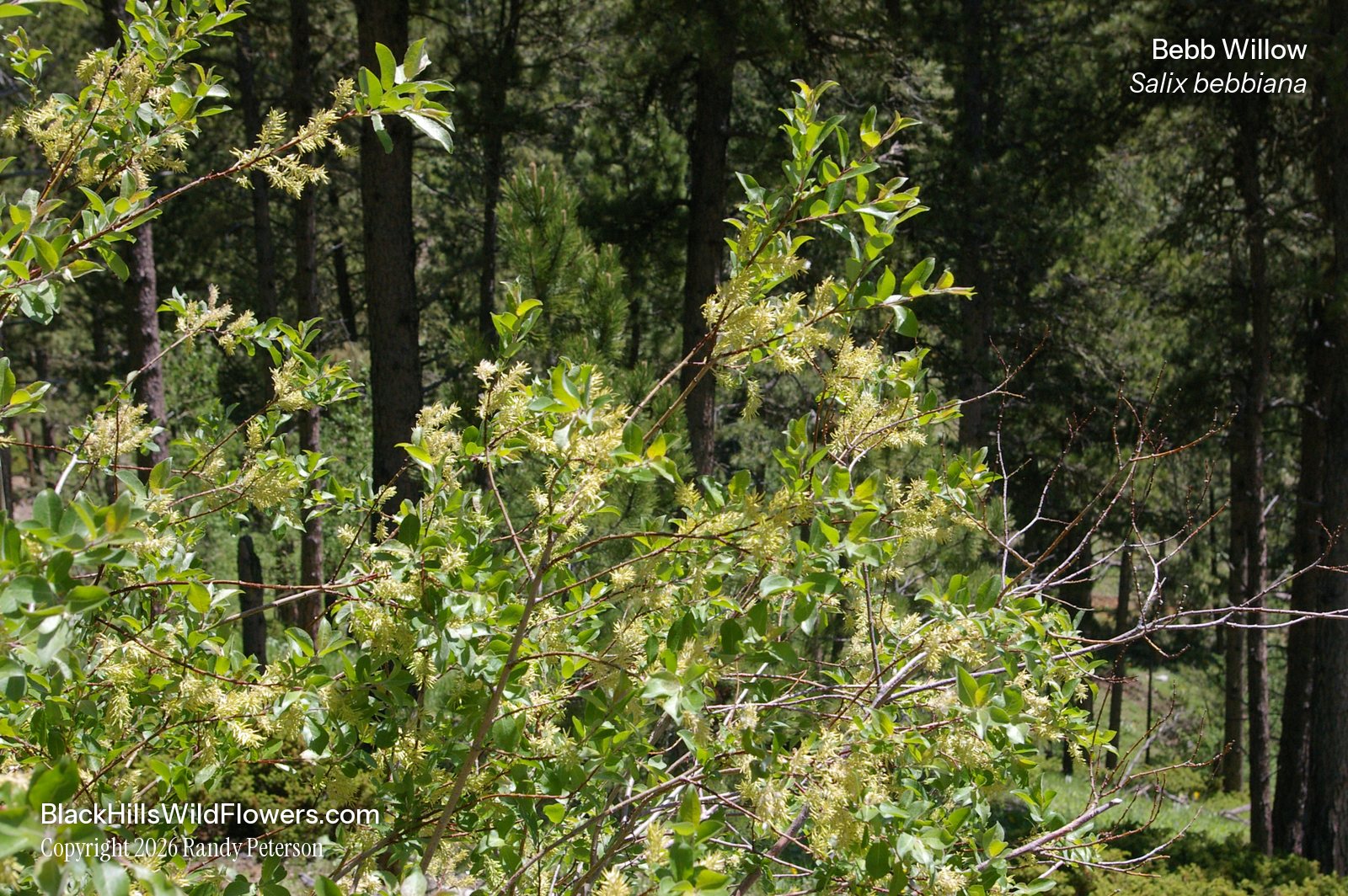
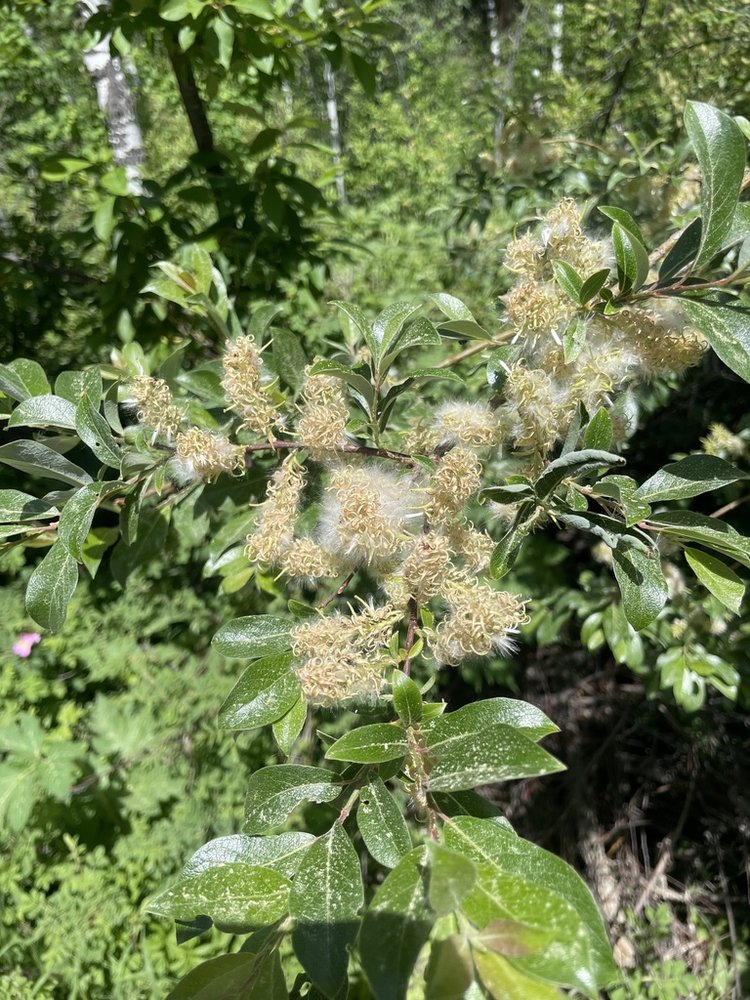
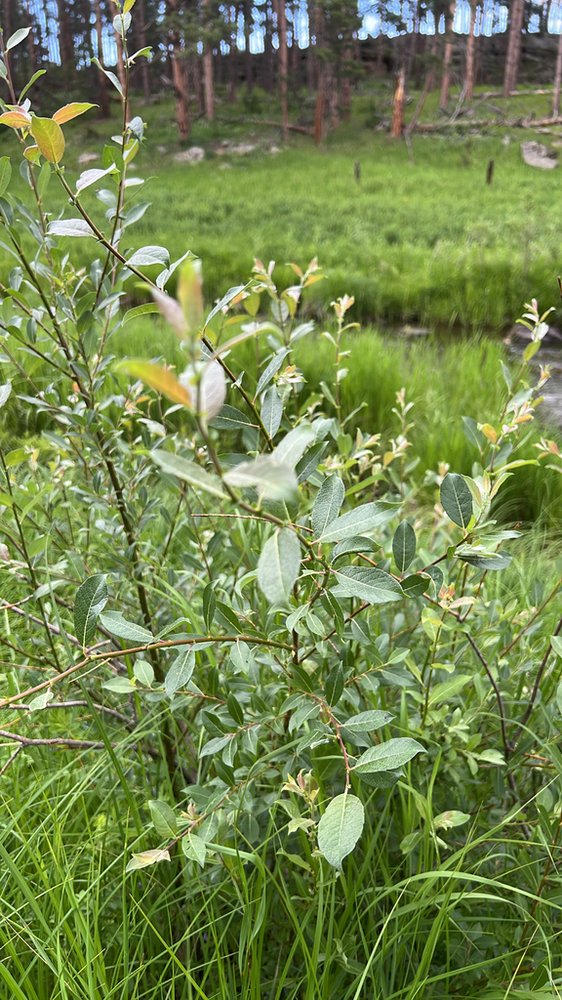
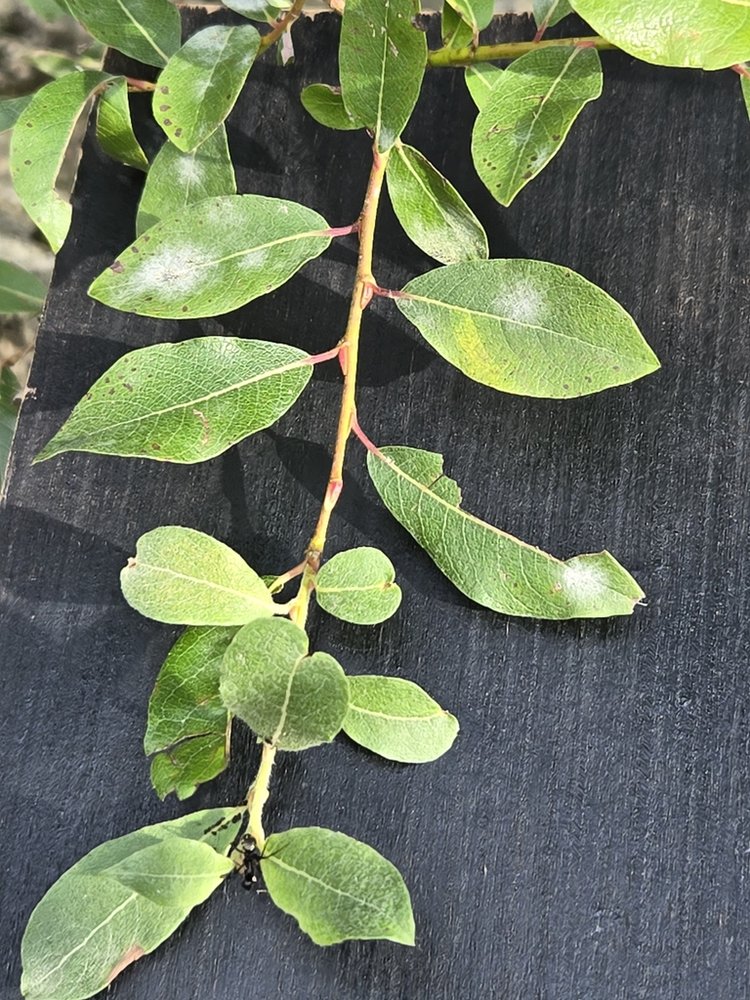
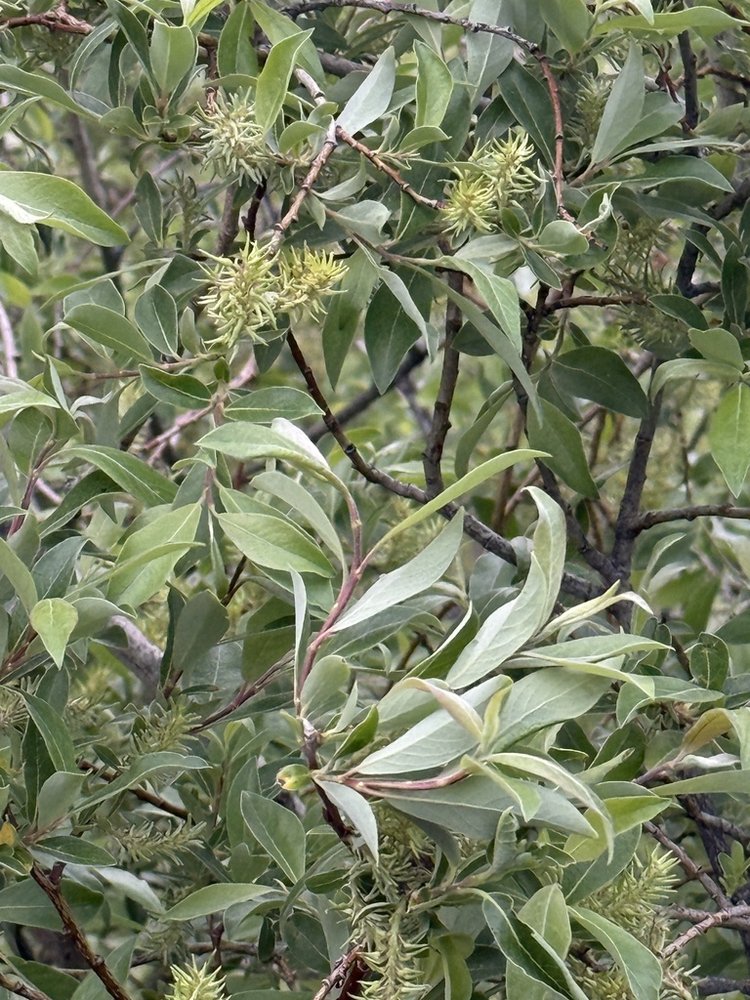
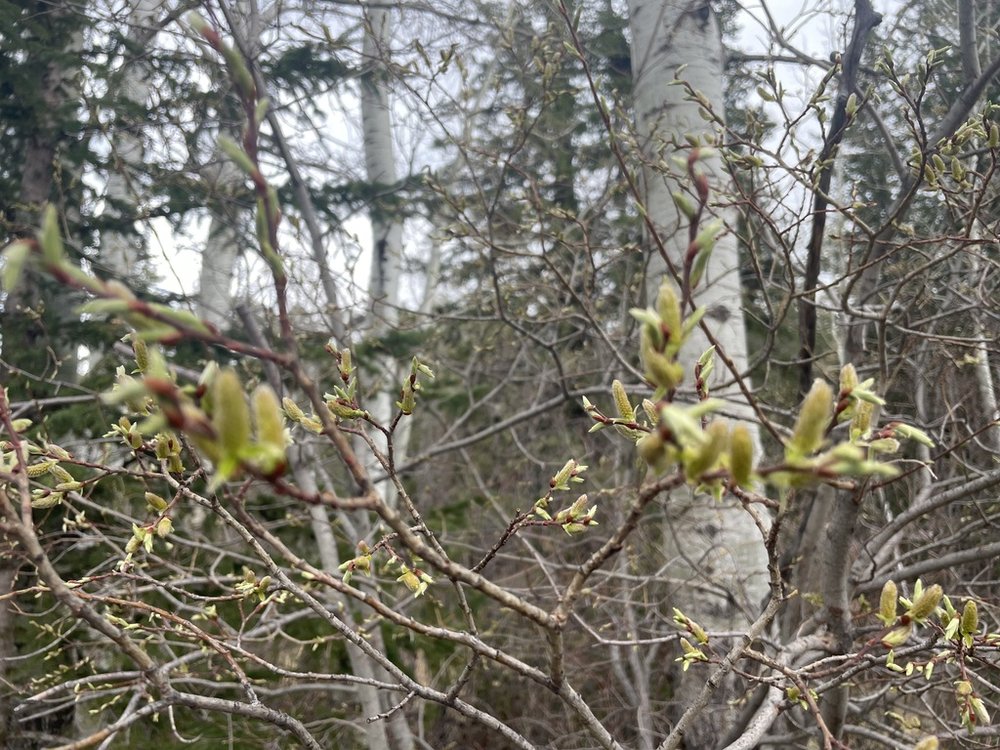
Bebb Willow (Salix bebbiana) is a native shrub or small tree of creek banks, wet meadows and lake shores in the Black Hills, usually a clump of several gray-barked stems 1.2–7.6 m (4–25 ft) tall. Its catkins open from April into June, just before or with the dull, strongly veined leaves, and its stems are the main source of the carved wood called diamond willow. The National Park Service lists it at Wind Cave and Mount Rushmore. Photographed in the Black Hills.
Free photos from other sources
| Family | Salicaceae · Willow |
|---|---|
| Status | Native deciduous shrub or small tree |
| Blooms | Catkins from April into June, just before or with the leaves |
| Height | 1.2–7.6 m (4–25 ft) |
| Where | Creek banks and floodplains, streamside thickets, wet meadows and fens, lake shores, and meadow edges in pine and aspen forest |
| Also called | Bebb's Willow, Beaked Willow, Long-beaked Willow, Gray Willow, Diamond Willow |
| Synonym | Salix rostrata, Salix bebbiana var. perrostrata, Salix bebbiana var. capreifolia, Salix bebbiana var. projecta |
| Traditional use | The BRIT ethnobotany database records that the Woods Cree made fishing nets and tying cord from the bark and used the stems for bows and arrows (Leighton 1985), and that the Okanagan-Colville twisted the bark or branches into rope and laid damp inner bark over a broken bone (Turner and others 1980). |
| Note | This page stands for the willows as a group. Bebb Willow has more Black Hills herbarium specimens and iNaturalist records than any other willow; Sandbar and Peachleaf Willow are described under identification. Sageleaf Willow and Autumn Willow, two rare Black Hills willows, have their own pages. |
Traditional use: first drafted by Google AI, then checked against the sources on this page.
Roots, seeds & germination
Root: The roots are shallow and dense. It spreads by root suckers and by sprouts from the base of the stem: cut or damaged stems send up many sprouts from the stem base or root collar, buried pieces of stem or root take root in moist soil, and branches that get buried take root.
Seed: Male and female catkins grow on separate plants, which start flowering at 2 to 10 years old. Seed is shed in spring with a tuft of cottony hairs, about 2 to 3 million seeds to the pound, and it stays alive only a few days; stored seed keeps four to six weeks at most, and its germination drops off fast after about ten days at room temperature.
Germination: The seed needs no dormancy period; the USDA plant guide says willow seed sprouts within 12 to 24 hours of landing on moist ground. Seedlings need a moist, bare mineral surface in full sun, such as fresh silt or gravel along a stream; in an Alaska study, 90 to 100 percent of seed germinated at 5–25 °C (41–77 °F). The same guide says hardwood cuttings are usually taken from November through March and that willow cuttings root at 90 to 100 percent.
How do you identify Bebb Willow?
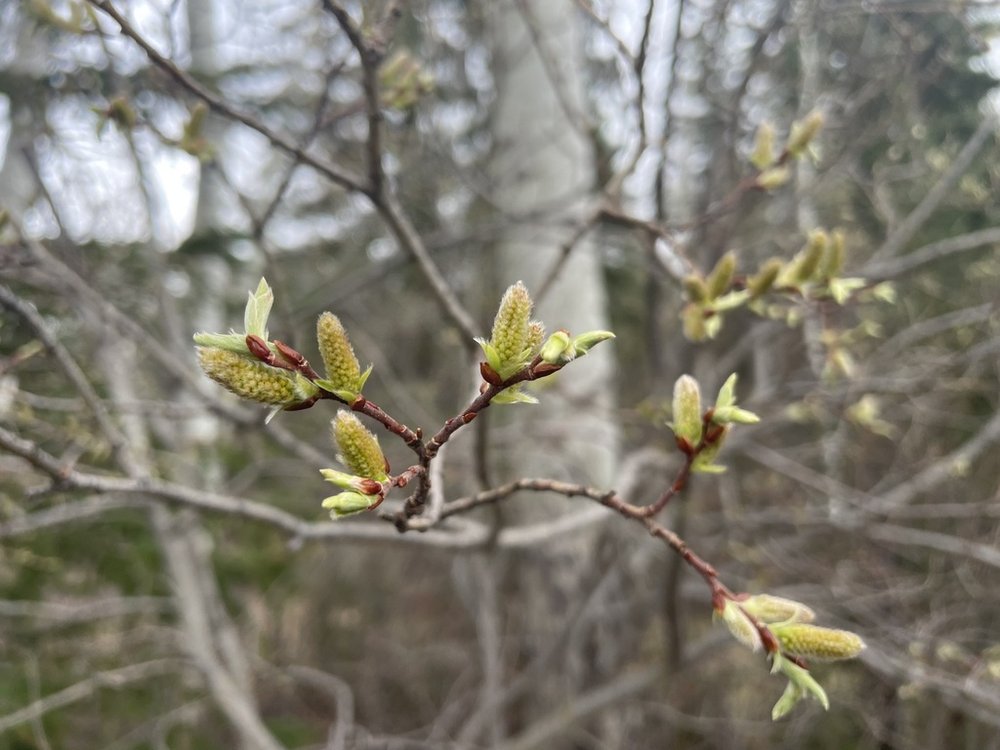
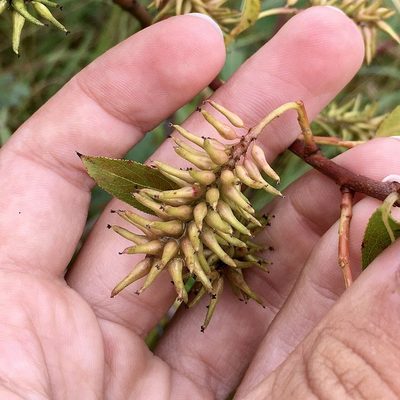
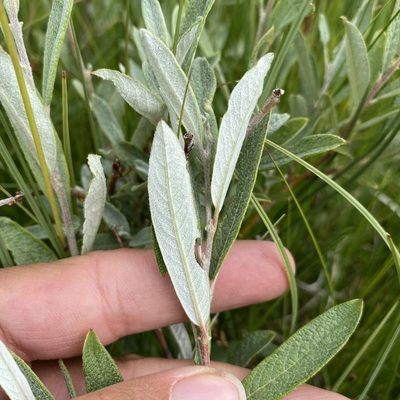
Look for a tight clump of several stems with thin, smooth gray bark when young and dark, furrowed bark on old trunks, and hairy twigs that branch off at wide angles. The leaves are 2–9 cm (1–3½ in) long, oval to narrowly oblong with a pointed tip, toothless or with shallow rounded teeth, dull green above with a sunken network of veins, and pale gray-green and hairy below. Male catkins open just before the leaves and female ones with them; each capsule in the loose, hairy female catkin is 5–9 mm long with a long slender beak (beaked willow is another of its names). Older stems can carry diamond-shaped sunken patches where fungi attack at a branch junction, and Bebb Willow is the main source of the carved diamond willow. After Bebb Willow, the willows with the most Black Hills iNaturalist records are Sandbar Willow and Peachleaf Willow. Sandbar Willow (Salix interior) spreads by root suckers into dense stands on sandy floodplains, creek banks and shores and has very narrow leaves, 6–16 cm (2½–6 in) long and only 4–11 mm wide, about the same green on both sides, and it keeps flowering into July. Peachleaf Willow (Salix amygdaloides) grows as a tree 4–20 m (13–65 ft) tall with hairless twigs and hairless, finely toothed, lance-shaped leaves that taper to a long tip and are pale blue-green beneath. Pussy Willow has similar fruits, but its floral bracts are blackish and densely hairy, its flower stalks are 3 mm or shorter, it blooms earlier, and its leaves lack the strong veining.
When does it bloom?
Catkins from April into June, just before or with the leaves.
Where does it grow?
Creek banks and floodplains, streamside thickets, wet meadows and fens, lake shores, and the edges of meadows in pine and aspen forest, from about 1,070 to 2,175 m (3,500–7,100 ft) on herbarium labels. The National Park Service lists it at Wind Cave and Mount Rushmore, and more than 300 herbarium specimens come from Lawrence, Pennington, Custer, Meade and Fall River counties in South Dakota and Crook and Weston counties in Wyoming, the oldest from 1892. Sandbar Willow is on the Wind Cave and Mount Rushmore lists, and Peachleaf Willow is on those and the Devils Tower list.
Other willows in this guide
Willow family (Salicaceae): 4 other plants in this guide
Sources: Flora of North America Vol. 7: Salix bebbiana (G. W. Argus), eFloras; Flora of North America Vol. 7: Salix interior (sandbar willow), eFloras; Flora of North America Vol. 7: Salix amygdaloides (peachleaf willow), eFloras; USDA Forest Service Fire Effects Information System: Salix bebbiana (Tesky 1992); USDA NRCS Plant Guide: Bebb Willow, Salix bebbiana (Favorite, 2002); USDA PLANTS Database: Salix bebbiana (SABE2); Minnesota Wildflowers: Salix bebbiana (Bebb's Willow); Minnesota Wildflowers: Salix interior (Sandbar Willow); Minnesota Wildflowers: Salix amygdaloides (Peach-leaved Willow); NPSpecies checklist, Wind Cave National Park vascular plants; NPSpecies checklist, Mount Rushmore National Memorial vascular plants; NPSpecies checklist, Devils Tower National Monument vascular plants; GBIF occurrence search: Salix bebbiana, South Dakota and Wyoming herbarium specimens; iNaturalist: research-grade Salix bebbiana observations in the Black Hills; iNaturalist: research-grade willow (Salix) observations in the Black Hills, by species; Culturally Important Plants of the Lakota (Black Elk and Flying By, 1998), filed with the South Dakota PUC (checked; Salix bebbiana not listed); BRIT Native American Ethnobotany Database: Salix bebbiana.