Black Hills Spruce
Picea glauca var. densata
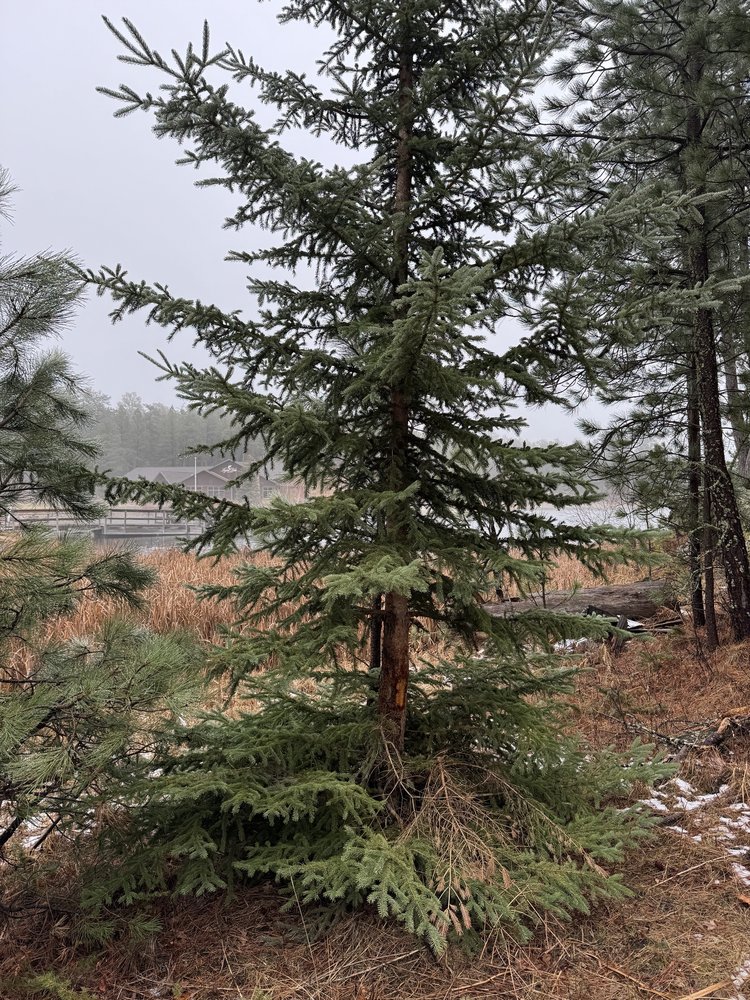
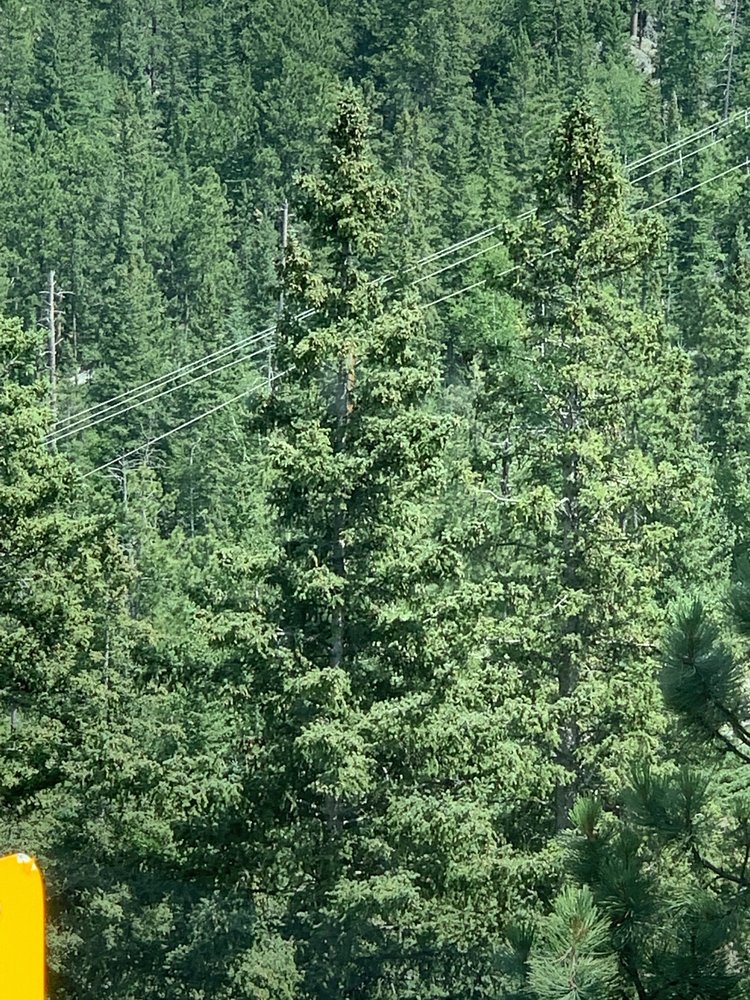
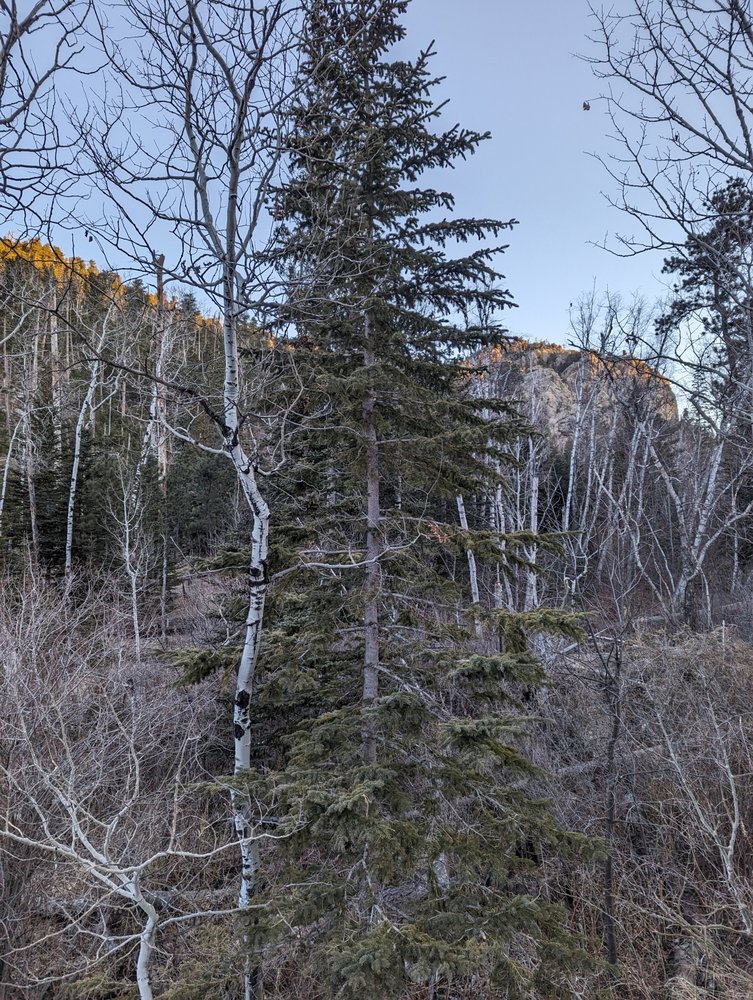
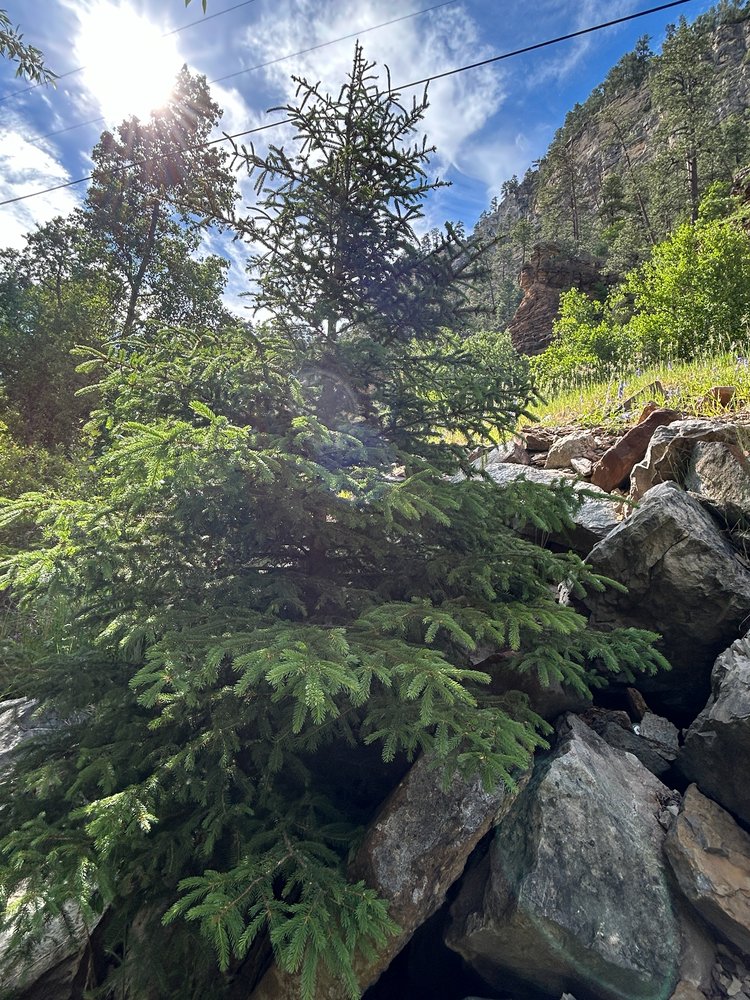
Black Hills Spruce (Picea glauca var. densata) is the dense, dark, slow-growing form of white spruce that grows wild in the Black Hills, and it has been South Dakota's state tree since 1947. This native evergreen forms tight, dark green spires on cool north slopes, in cool canyon bottoms and in the high country of the central and northern Hills, and it sheds its pollen in May and June.
Free photos from other sources
| Family | Pinaceae · Pine |
|---|---|
| Status | Native tree |
| Blooms | Pollen in May and June; cones ripen September into October |
| Height | 9–18 m (30–60 ft) |
| Where | Cool north slopes, cool canyon bottoms and the high country |
| Also called | White Spruce, Black Hills White Spruce, wazíȟčaka (Lakota) |
| Synonym | Picea glauca |
| Traditional use | Sitting Bull College's 1998 Culturally Important Plants of the Lakota records that young shoots were gathered in spring and boiled as emergency food, hardened sap was chewed as gum, dried and powdered inner bark was mixed with flour for bread, and an infusion of the needles was drunk for coughs, colds, influenza and tuberculosis. |
| Note | South Dakota law names the state tree the Black Hills Spruce, Picea glauca densata. Many botanists now treat it as plain white spruce, Picea glauca. |
Roots, seeds & germination
Root: A shallow root system that spreads sideways, with most roots in the top 15–30 cm (6–12 in) of soil and a few sinker roots down to about 3 m (10 ft). It blows down more easily than pine and doesn't tolerate packed soil or flooding.
Seed: Tiny winged seeds ride the wind out of the opened cones from late summer into winter. Big seed crops come only every few years, and trees seldom bear much seed before about age 30.
Germination: The seed has a mild, conditional dormancy. SDSU recommends 3–6 weeks of cold, moist stratification and sowing under a dusting of sand or soil, about 1.5 mm (1/16 in); sprouts come up in 2–4 weeks. In the wild, seedlings do best on bare mineral soil or a thin organic layer, and they can also start on moist rotting logs.
How do you identify Black Hills Spruce?
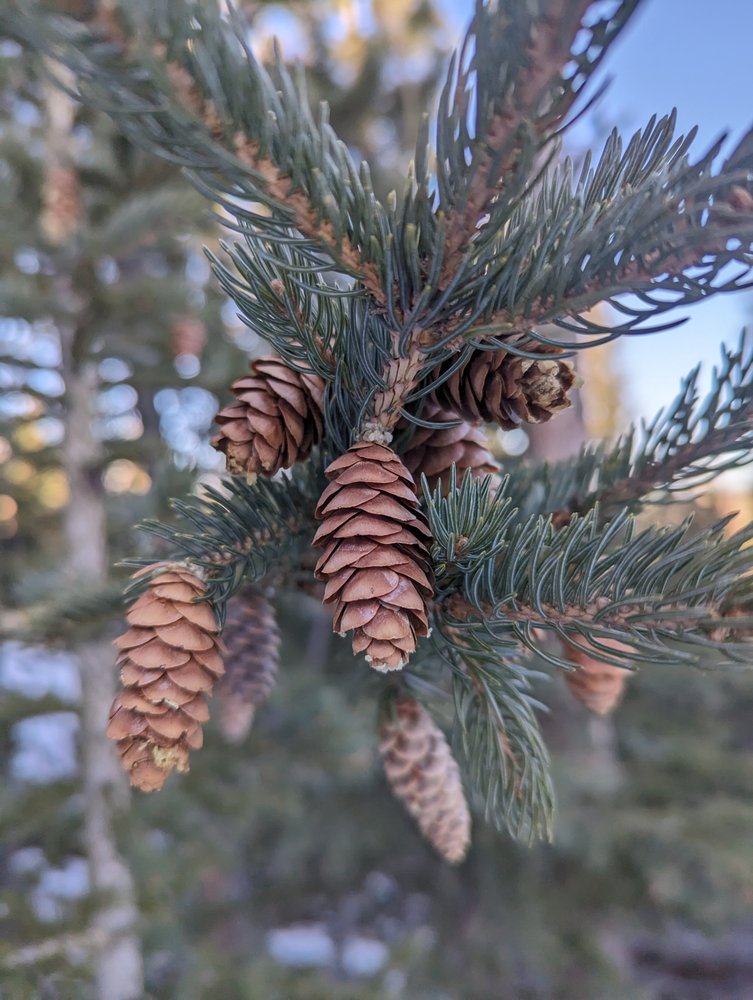
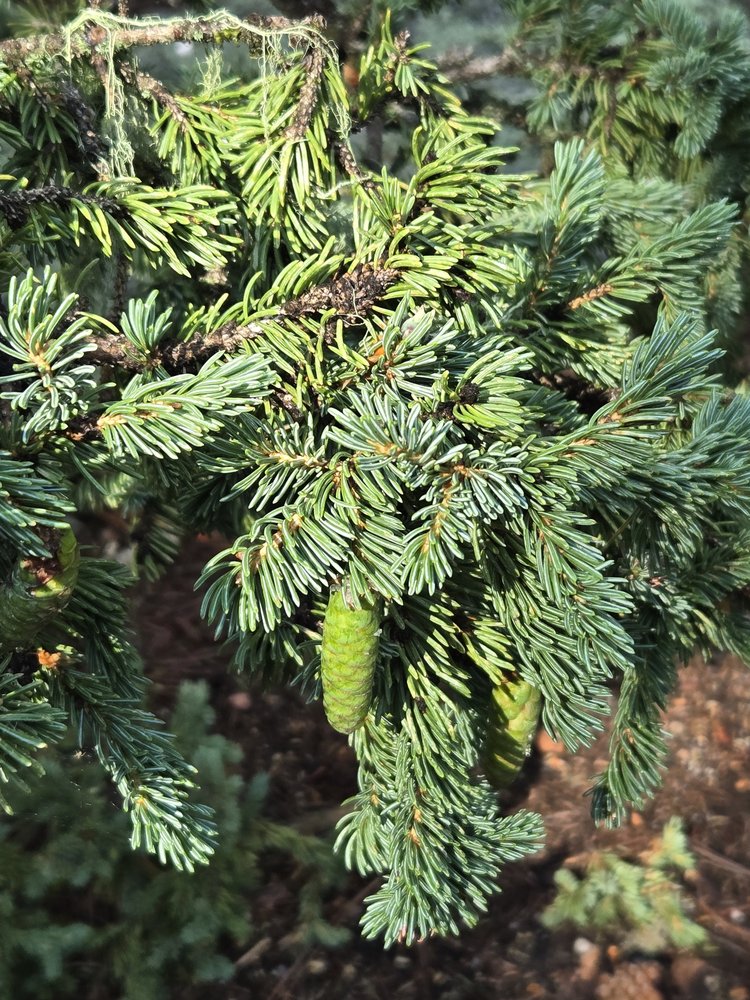
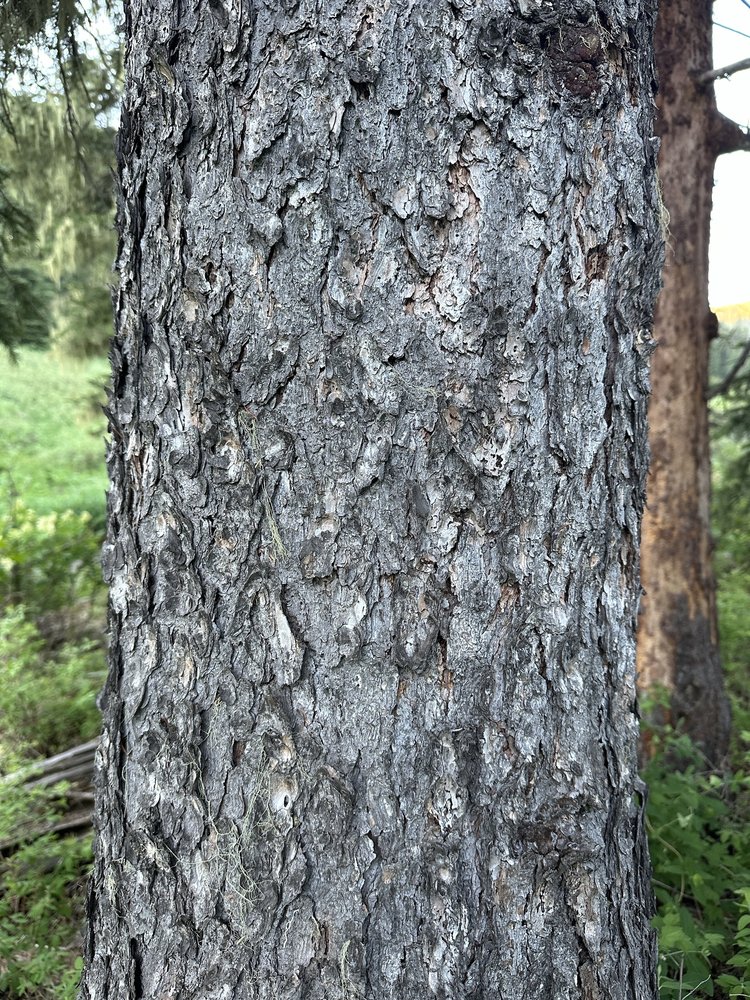
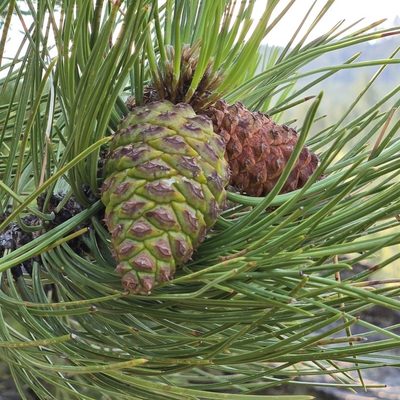
Roll a needle between your fingers: it is square in cross-section, 0.8–2.5 cm (⅓–1 in) long, and grows singly; fallen needles leave raised bumps, so bare twigs feel rough. The cones hang down, are 2.5–6 cm (1–2⅓ in) long, and have thin, flexible scales with smooth, rounded tips. The bark is thin, gray and finely scaly. Ponderosa Pine has long needles in bundles of two or three and hard, woody cones with a stiff spine on each scale. Blue Spruce, a Rocky Mountain tree widely planted in yards, has stiffer, sharper needles and longer cones, 6–11 cm (2⅓–4⅓ in), with unevenly toothed scale tips.
When does it bloom?
Pollen in May and June; cones ripen September into October.
Where does it grow?
Cool north-facing slopes, cool canyon bottoms and ravines along streams, and gentler slopes in the high country, mostly at 1,700–2,040 m (5,700–6,700 ft), with herbarium specimens from as low as about 1,080 m (3,540 ft). Specimens collected from 1895 to 2020 come from Lawrence, Pennington and Custer counties and from Crook and Weston counties in Wyoming, including Spearfish Canyon and Custer State Park. The National Park Service lists it at Wind Cave and Mount Rushmore, but it isn't on the 1986 Jewel Cave plant survey or the Devils Tower list. It is also widely planted in windbreaks and yards, so a spruce in town says nothing about a wild stand.
Other plants to compare
Sources: South Dakota Codified Laws 1-6-11, State tree (SL 1947, ch 266); South Dakota State Tree – SD Dept. of Agriculture & Natural Resources, Resource Conservation & Forestry; Reese, R.N. 2015. Pinaceae: Picea glauca. South Dakota Native Plant Research, SDSU Open PRAIRIE; Black Elk, L.S. & W.D. Flying By. 1998. Culturally Important Plants of the Lakota. Sitting Bull College (no. 226); NatureServe Explorer: Picea glauca Black Hills Forest Alliance (Black Hills White Spruce Forest), U.S. National Vegetation Classification unit 899681; Shepperd, W.D. & M.A. Battaglia. 2002. Ecology, Silviculture, and Management of Black Hills Ponderosa Pine. USDA Forest Service RMRS-GTR-97; USDA Forest Service Fire Effects Information System – Picea glauca; USDA NRCS Plant Guide – White Spruce, Picea glauca; Flora of North America treatment of Picea glauca (via SEINet); Kew Plants of the World Online – Picea glauca var. densata L.H.Bailey; Earle, C.J. The Gymnosperm Database – Picea glauca; Wells, P.V. & J.D. Stewart 1987, summarized in Quaternary Environments of Kansas, Kansas Geological Survey; Nebraska Forest Service – Spruce, White (Black Hills Spruce); University of Minnesota – Black Hills Spruce, Picea glauca 'Densata'; Utah State University Extension Tree Browser – Spruce, White or Blackhills; Minnesota Wildflowers – Picea glauca (White Spruce); Minnesota DNR – White spruce seed collection guide; Salas, S. 2015. Plant Propagation Protocol for Picea glauca, Univ. of Washington ESRM 412; USDA NRCS Plant Guide – Blue Spruce, Picea pungens (archived); University of Nebraska SNR Tree Identification – Ponderosa pine; Marriott, H. & R. Hartman. 1986. Vegetation of Jewel Cave National Monument (npshistory.com); GBIF occurrence search – Picea glauca, Black Hills; iNaturalist – Picea glauca var. densata (taxon 510170); NPSpecies checklist, Wind Cave National Park vascular plants; NPSpecies checklist, Mount Rushmore National Memorial vascular plants; NPSpecies checklist, Devils Tower National Monument vascular plants.