Ponderosa Pine
Pinus ponderosa var. scopulorum
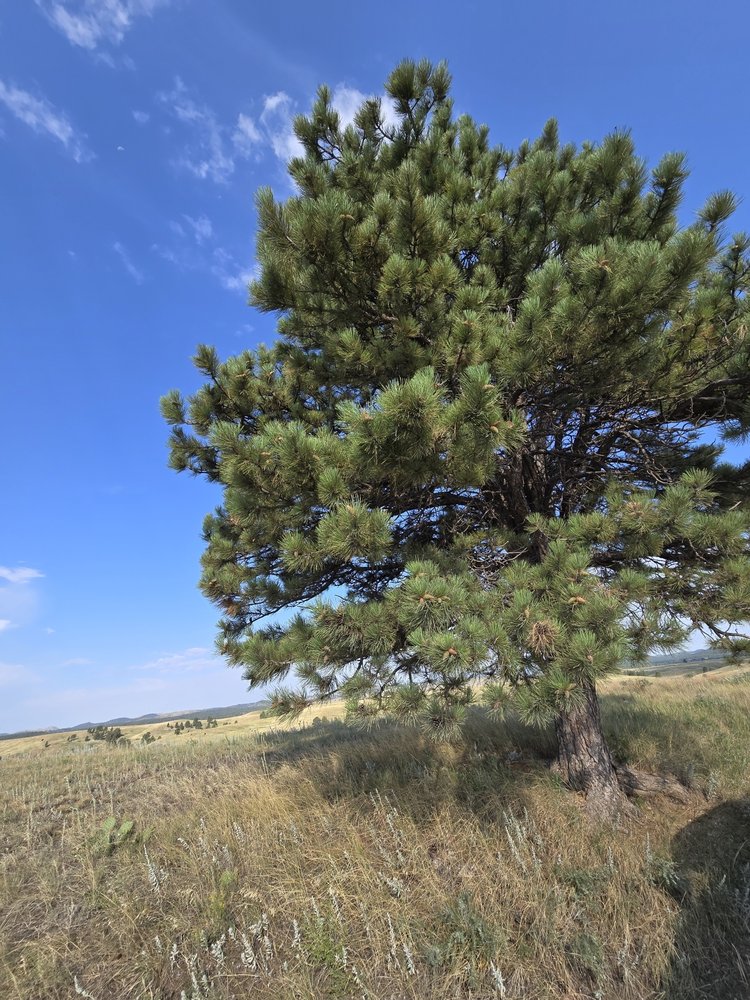
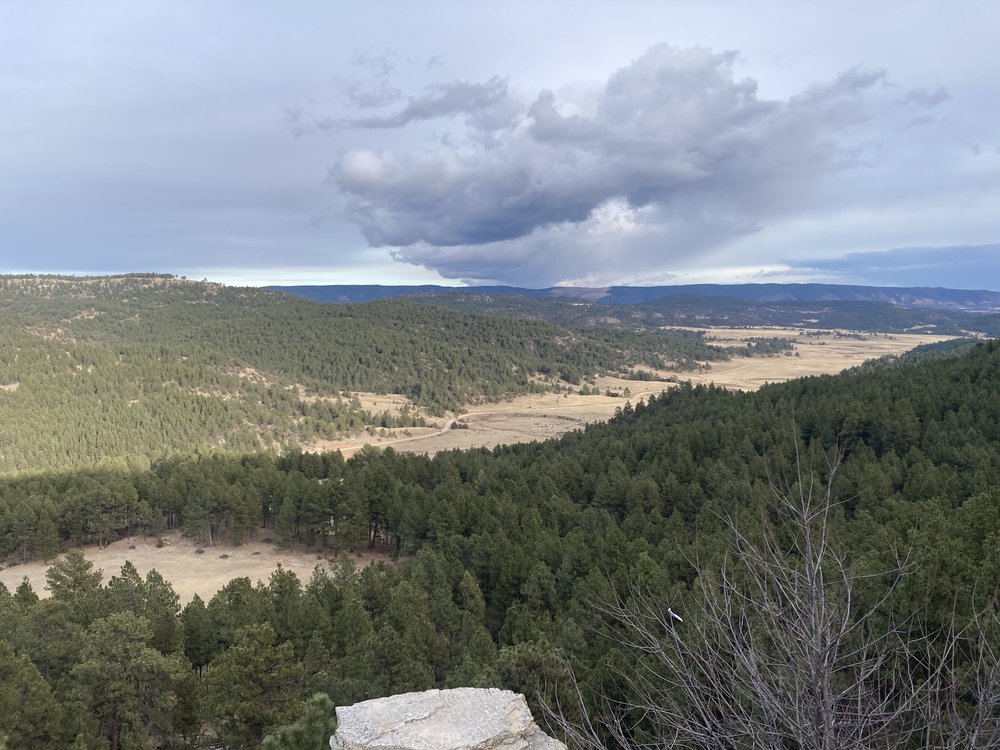
Ponderosa Pine (Pinus ponderosa var. scopulorum) is the native evergreen pine that covers most of the Black Hills and gives them their dark look from the plains. It sheds clouds of yellow pollen in late May and June, and its prickly cones ripen in the fall of their second year.
Free photos from other sources
| Family | Pinaceae · Pine |
|---|---|
| Status | Native tree |
| Blooms | Pollen late May into June; cones ripen in the second fall |
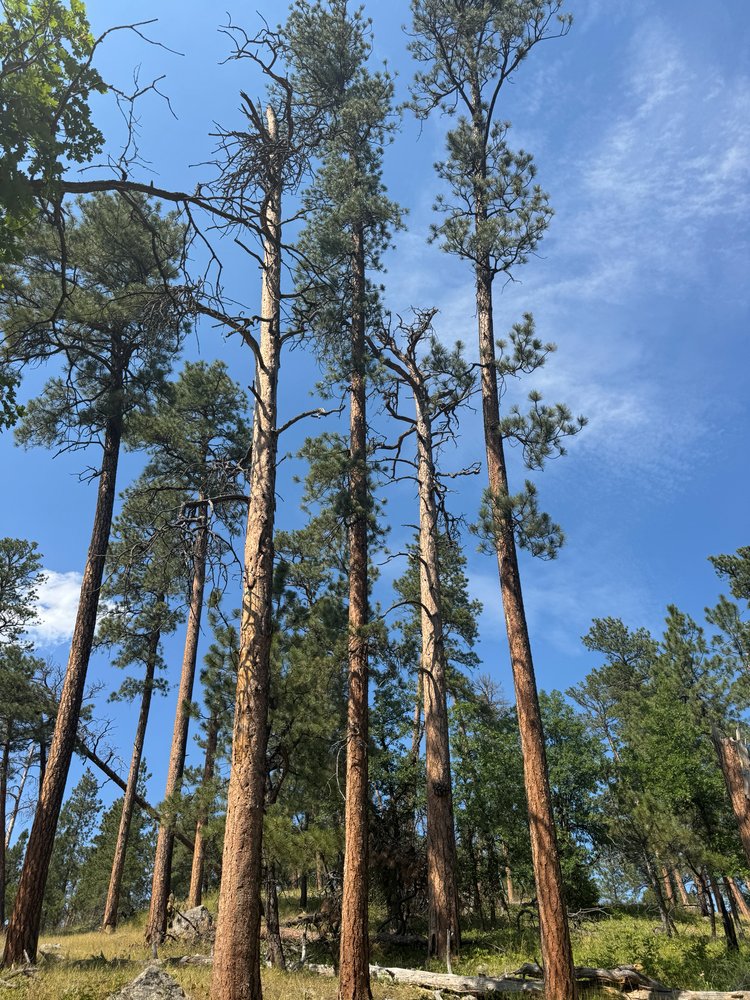
| Height | 15–30 m (50–100 ft) |
| Where | Almost everywhere, from dry foothills and open savanna to the high peaks |
| Also called | Rocky Mountain Ponderosa Pine, Black Hills Ponderosa Pine, Western Yellow Pine, Bull Pine, Blackjack Pine |
| Synonym | Pinus scopulorum, Pinus ponderosa |
| Toxicity | Pregnant cows that eat the green or dry needles from late fall to early spring can abort. |
| Traditional use | Sitting Bull College's 1998 Culturally Important Plants of the Lakota, in its lodgepole pine entry, says the pitch of all pines was used to make salves. The Gymnosperm Database says the Cheyenne used Rocky Mountain ponderosa pine pitch as a salve and to tune flutes and whistles. A National Park Service history study gives the Lakota name for the Black Hills as Paha Sapa or He Sapa, "hills that are black," a name that describes the pine-covered hillsides rising from the plains. |
Roots, seeds & germination
Root: Seedlings put down a long taproot fast, reaching moisture before the surface dries in summer. Older trees keep a deep anchor root and a wide spread of side roots. It doesn't resprout from the roots, so a tree killed by fire or beetles is gone.
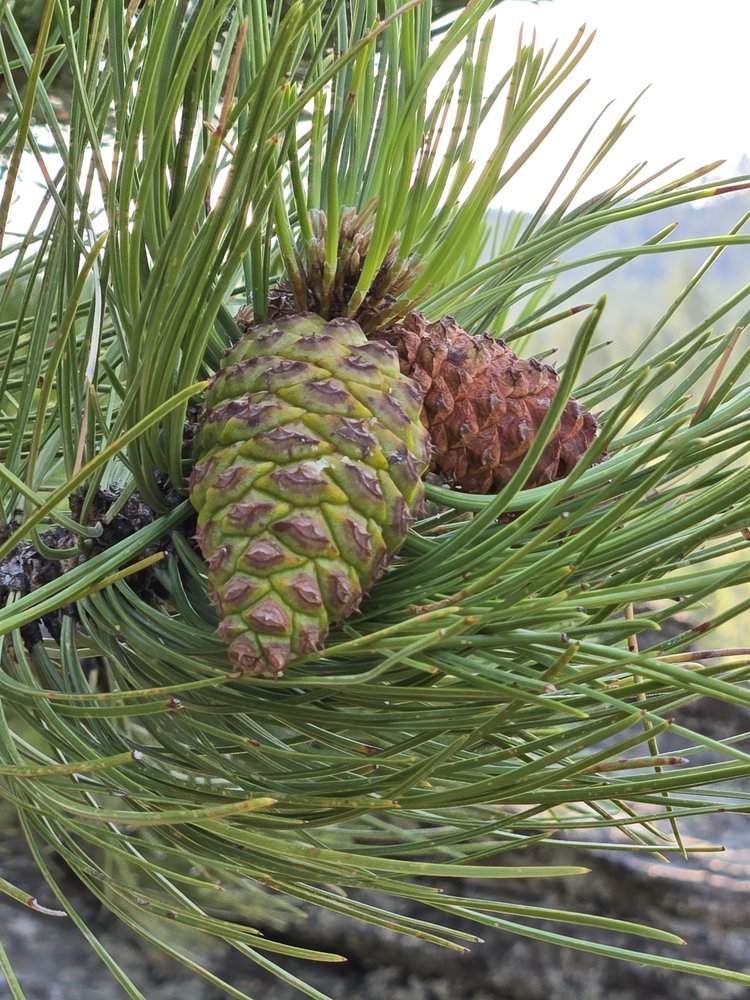
Seed: Cones take two summers to ripen and open mostly in September and October. Black Hills cones average 6.7 cm (2.6 in) and hold about 57 good seeds, each with a papery wing that carries it on the wind. Black Hills trees bear a good crop every 2–5 years.
Germination: Fresh seed from South Dakota trees has little dormancy and sprouts from fall or spring sowing; stored seed may need about 60 days of cold, moist treatment. In the field it needs bare mineral soil that stays warm and moist. The wet Black Hills spring makes this one of the best places in its range for young pines, which is why dense thickets of them are so common here.
How do you identify Ponderosa Pine?
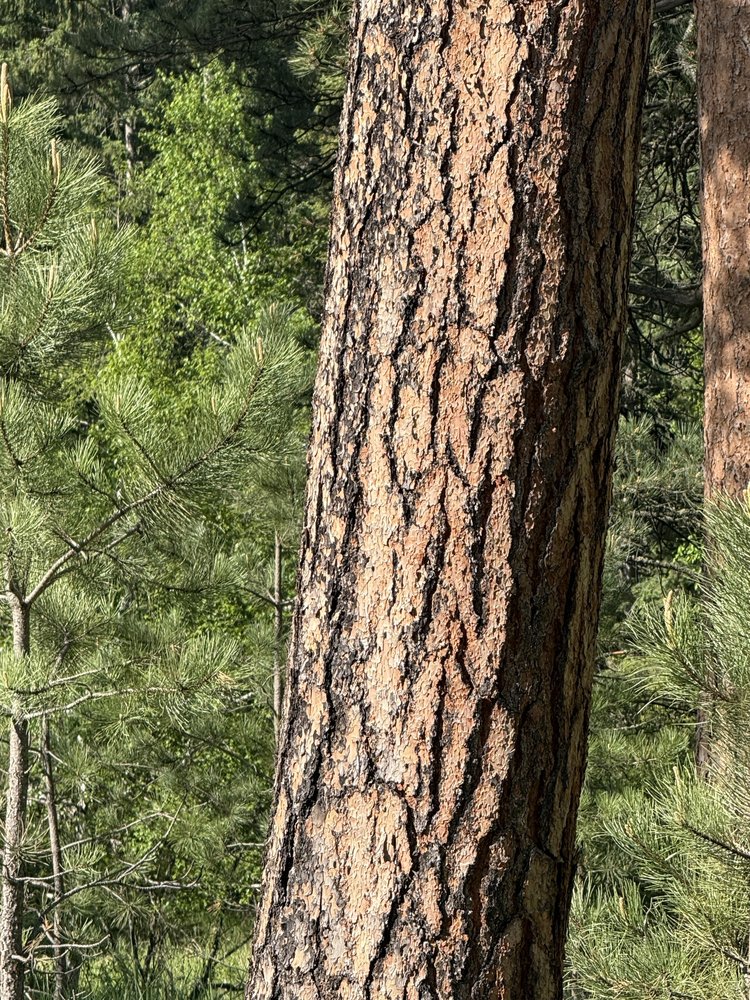
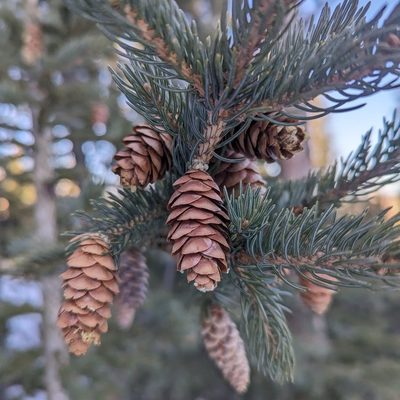
Look for long, stiff needles, 7–18 cm (3–7 in), in bundles of two or three, often both on the same tree, tufted near the twig tips. Young trees have dark, nearly black, furrowed bark, and older trees have thick orange to cinnamon plates that flake off like jigsaw pieces and smell of vanilla or butterscotch on a warm day. The egg-shaped cones are 5–10 cm (2–4 in) long, with a small sharp prickle on each scale. Black Hills Spruce has short needles growing singly, and Lodgepole Pine has short needles, 3–7 cm (1–3 in), always in twos, and thin, scaly bark.
When does it bloom?
Pollen late May into June; cones ripen in the second fall.
Where does it grow?
The main tree of the Black Hills, on nearly every landform from the dry foothills at about 1,000 m (3,300 ft) to the granite peaks near 2,200 m (7,200 ft). It forms dense forest on the limestone plateau and granite core, mixes with spruce in cool northern canyons and with Bur Oak lower in the north, and opens into pine savanna where the Hills meet the prairie. The 1986 Jewel Cave plant survey calls the monument extensively forested with it, and it is listed for Wind Cave, Mount Rushmore and Devils Tower. Its thick bark lets it survive low surface fires, but not crown fires.
Other plants to compare
Sources: Plants of the World Online (Kew): Pinus scopulorum (Engelm.) Lemmon; ITIS: Pinus ponderosa var. scopulorum Engelm. (TSN 529675); GBIF species match: Pinus ponderosa var. scopulorum (accepted) / Pinus scopulorum (synonym); VASCAN (Canadensys): Pinus scopulorum as synonym of P. ponderosa var. scopulorum, per Flora of North America; Willyard, A., et al. 2017. Pinus ponderosa: A checkered past obscured four species. American Journal of Botany 104(1). PubMed abstract; The Gymnosperm Database (Earle): Pinus scopulorum; The Gymnosperm Database (Earle): Pinus ponderosa; USDA ARS Poisonous Plant Research Laboratory: Ponderosa pine (Pinus ponderosa); Read, R.A. 1983. Ten-year performance of ponderosa pine provenances in the Great Plains of North America. USDA Forest Service RM-RP-250; USDA Forest Service Fire Effects Information System (FEIS): Pinus ponderosa var. scopulorum (Howard 2003); Shepperd, W.D. & Battaglia, M.A. 2002. Ecology, silviculture, and management of Black Hills ponderosa pine. USDA Forest Service RMRS-GTR-97; Reese, R.N. 2015. Pinaceae: Pinus ponderosa. South Dakota Native Plant Research, SDSU Open PRAIRIE; Reese, R.N. Pinaceae: Pinus contorta (lodgepole pine). South Dakota Native Plant Research, SDSU Open PRAIRIE; Ball, J., Leidholt, J., Morrison, A. & Prehn, B. 2025. Limber Pines of the Cathedral Spires. SDSU Extension P-00346; Wyoming State Forestry Division, Native Tree ID: Ponderosa pine; NPS Devils Tower National Monument: Trees and Shrubs; NPS Wind Cave National Park: Forests; Reed, P.S. & Wallace, E.B. 2016. Shrine of Democracy and Sacred Stone: Historic Resource Study, Mount Rushmore National Memorial (NPS); Nelson, E.M. 2021. "No Where to Be Found": Myth-Mapping, Empire, and Resistance in the Black Hills Country, 1800-1860. South Dakota History 51(2); Black Hills National Forest home page (2009 archive): name from Lakota Paha Sapa, "hills that are black"; Comparative Siouan Dictionary: "pine tree", Lakota wazí; Black Elk, L. & Flying By, W. 1998. Culturally Important Plants of the Lakota (entry 227, lodgepole pine, wazí čháŋ); Marriott, H. & Hartman, R.L. 1986. A Survey of the Vegetation of Jewel Cave National Monument; NPSpecies checklist, Wind Cave National Park vascular plants; NPSpecies checklist, Jewel Cave National Monument vascular plants; NPSpecies checklist, Mount Rushmore National Memorial vascular plants; NPSpecies checklist, Devils Tower National Monument vascular plants; GBIF occurrence search: Pinus ponderosa, preserved specimens, South Dakota; USDA Forest Service, Forest Health Protection: South Dakota Forest Health Highlights 2014; USDA Forest Service, Forest Health Protection: Wyoming Forest Health Highlights 2016; Associated Press (Washington Times), 27 Mar 2018: Beetles no longer epidemic in Black Hills National Forest; USDA Forest Service Region 6 (Flickr): 1902, Pioneer forest entomologists in the Black Hills (Hopkins and the Black Hills beetle outbreak); USGS National Land Imaging Program: Beetle Damage in the Black Hills (Landsat image); iNaturalist: Pinus scopulorum (taxon 1592845).