Plains Cottonwood Populus deltoides subsp. monilifera
Also called Eastern cottonwood, Common cottonwood, Plains poplar, čhaŋyáȟ'u (Lakota)
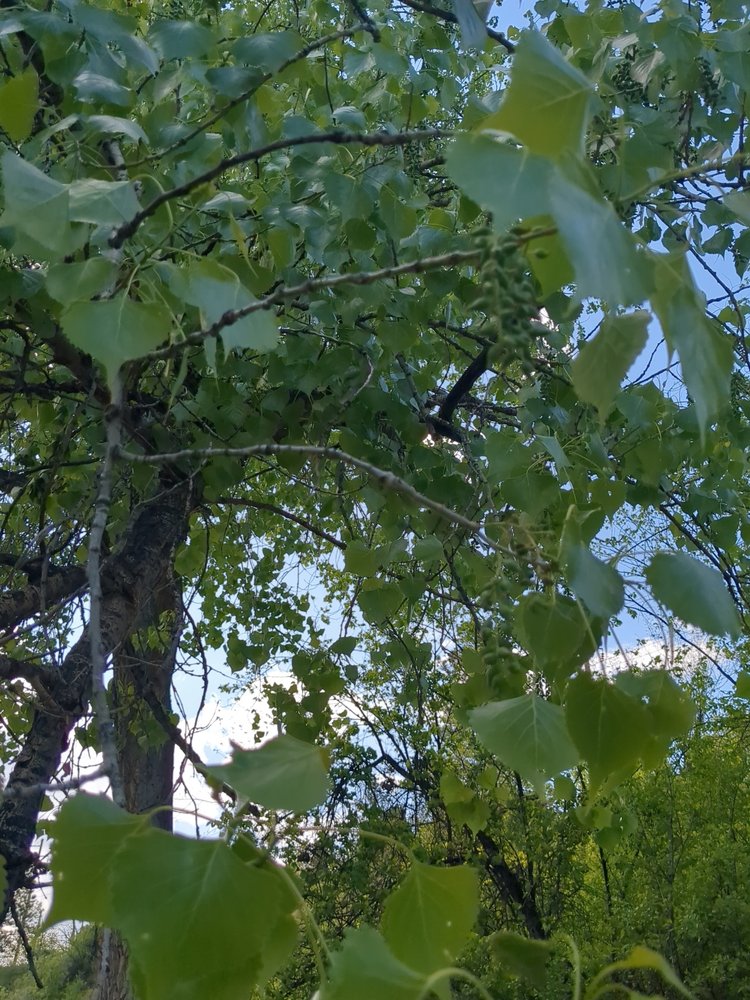
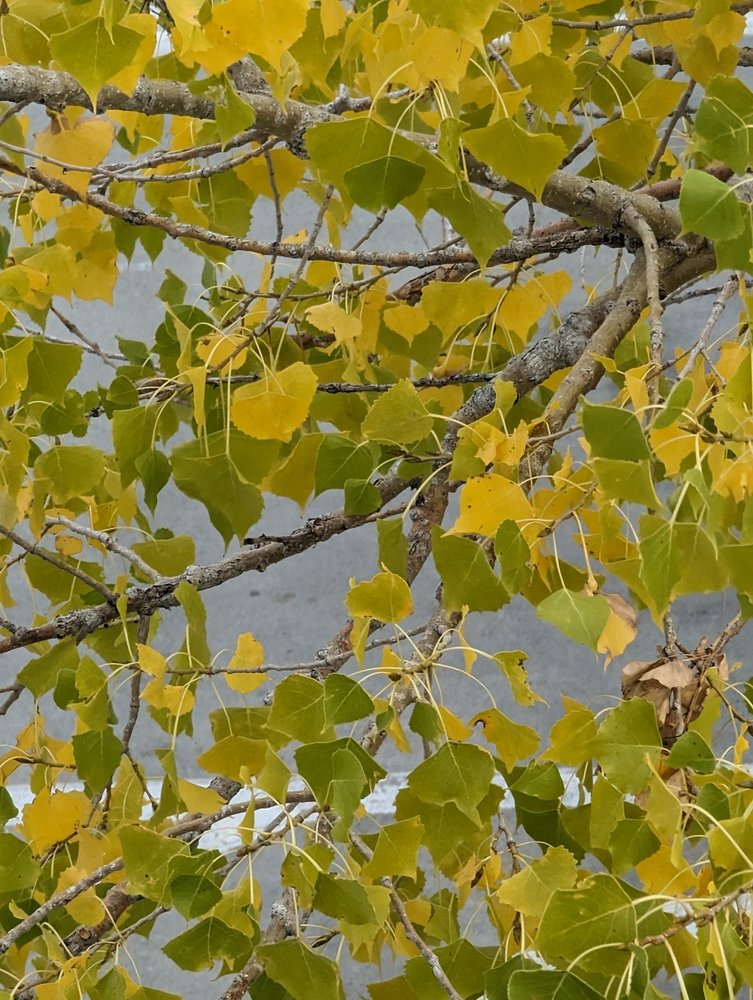
Plains Cottonwood (Populus deltoides subsp. monilifera) is the big native tree of creek bottoms and river floodplains, with broad triangular leaves on long, flattened stalks, large sticky buds, and bark that is smooth and pale on young trunks but thick and deeply furrowed on old ones. Its catkins open from March into May and its capsules release cottony seed in June and July, and in the Black Hills it grows along creeks and in canyons, where the Forest Service describes it as the pioneer tree beside the larger streams and the National Park Service lists it at Devils Tower and Mount Rushmore.
Free photos from other sources
| Family | Salicaceae · Willow |
|---|---|
| Status | Native deciduous tree |
| Blooms | Catkins from March into May; the cottony seed flies in June and July |
| Height | Up to 30 m (100 ft), sometimes 40 m (130 ft); the largest native tree in South Dakota |
| Where | Floodplains, creek and river bottoms, sandbars, lake shores and springs |
| Also called | Eastern cottonwood, Common cottonwood, Plains poplar, čhaŋyáȟ'u (Lakota) |
| Synonym | Populus sargentii, Populus deltoides var. occidentalis, Populus monilifera |
| Traditional use | Black Elk and Flying By (1998) record that the Lakota ate the inner bark in small pieces or ground into flour for soups and stews, ate the young shoots in early spring, fed the bark to horses in hard winters, framed Sun Dance lodges with the trunks, chewed the bark for toothache and drank a bark decoction for headaches, menstrual cramps and fevers, and made a yellow dye from the sticky buds. |
Roots, seeds & germination
Root: The roots average about 3 m (10 ft) deep, and the longest can reach about 23 m (75 ft). Sources disagree on sprouting: the Fire Effects Information System says plains cottonwood does not readily send up suckers or stem sprouts except shoots trained by floods, while SDSU says cottonwoods can form large groves through root sprouts.
Seed: The green egg-shaped capsules, about 1 cm long, hang in strings and split into 3 or 4 parts to release 7 to 10 seeds each, every seed riding a tuft of cotton that carries it on the wind in June and July. The seed is highly viable when it falls but lasts only about one to two weeks unless it lands on a suitable spot. Dry seed can be kept in a freezer.
Germination: The seed sprouts as soon as it lands on ground that is moist, bare of other plants and in full sun; bare soil matters because the seedlings compete poorly with taller plants. SDSU says the seeds are ready to germinate the moment they are released, and that direct sowing or pots kept moist give seedlings the first year.
How do you identify Plains Cottonwood?
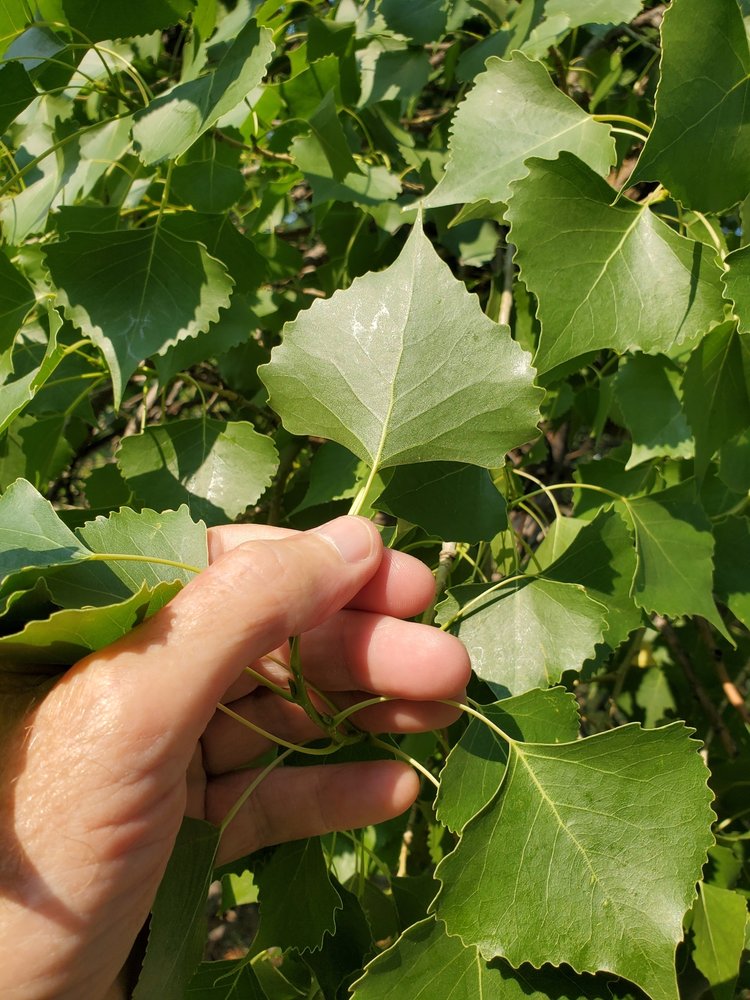
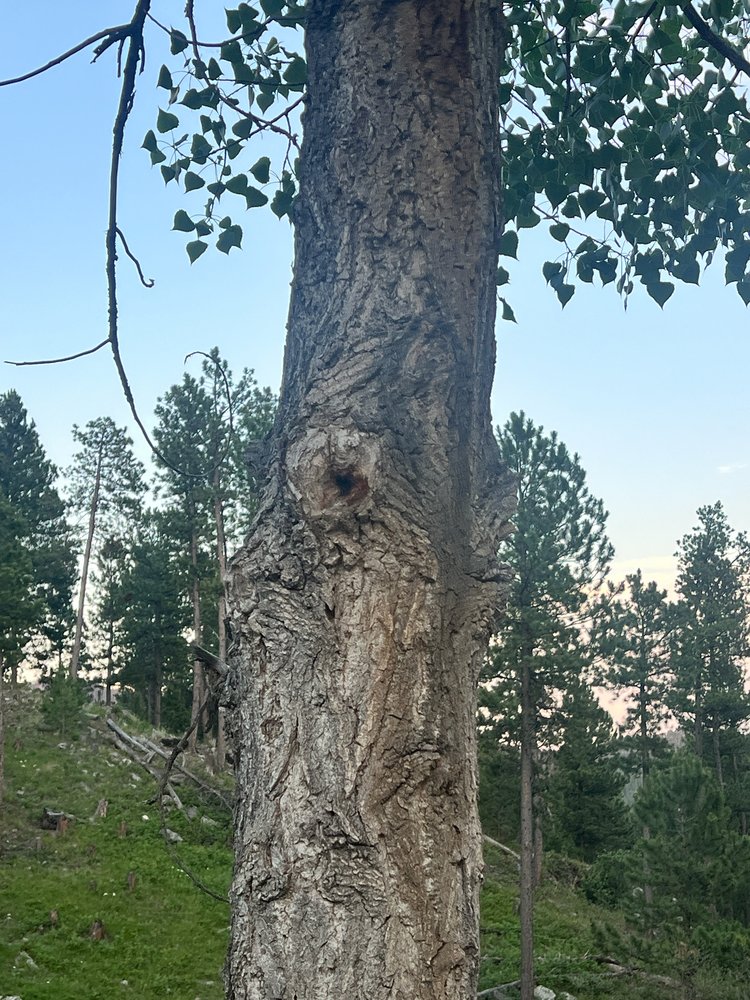
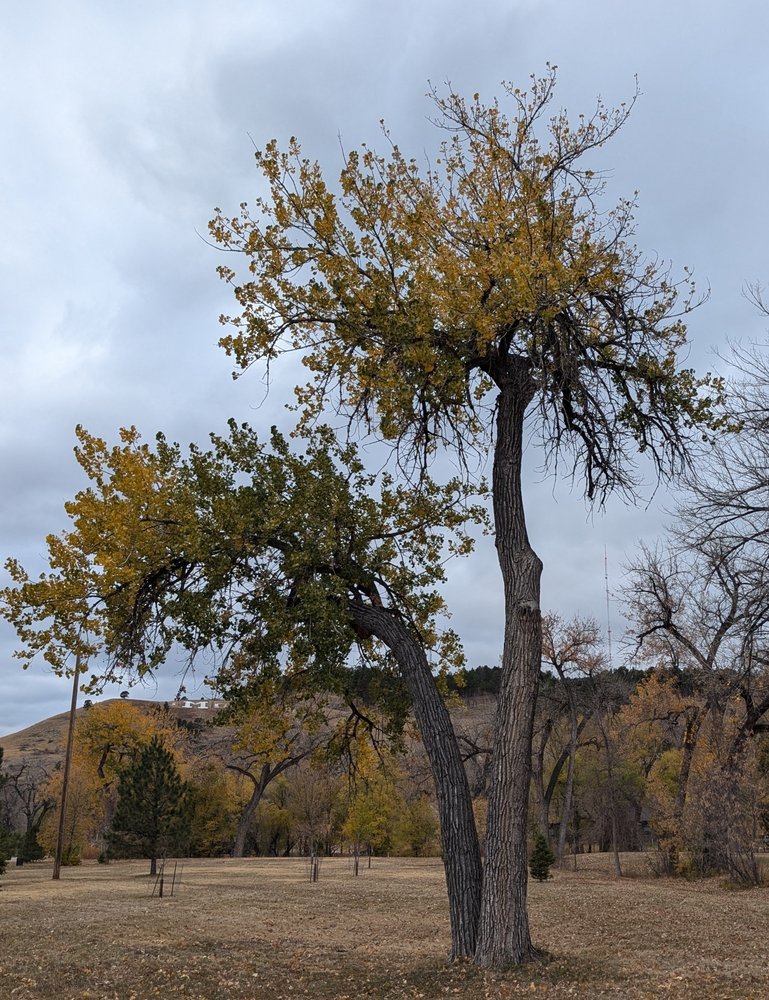
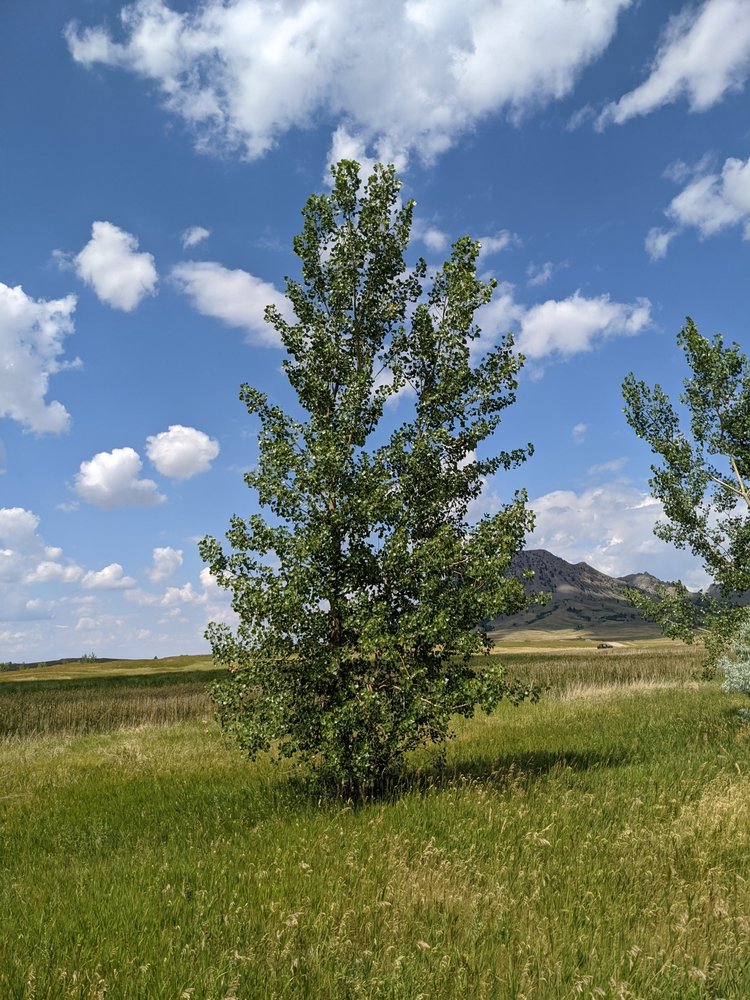
Start with the leaves: broadly triangular, 3–9 cm (1–3½ in) long and about as wide, with a flat to slightly heart-shaped base, coarse rounded teeth (usually 7 to 15 on each side), a pointed or long-tapering tip, and usually two small round glands where the blade meets the stalk. The stalk is about as long as the blade and flattened side to side. Winter buds are large, 1–2 cm (½–¾ in), egg-shaped and sharp-pointed, brown, shiny and sticky with resin. The bark is smooth, thin and creamy to greenish gray on young trunks and branches, and thick, tan to dark gray and deeply furrowed on old trunks; big trees often fork near the base under a very broad crown. Male and female catkins grow on separate trees, the males 5–13 cm (2–5 in) long with red stamens; the female catkins lengthen in fruit to hanging strings of green capsules about 1 cm long that split into 3 or 4 parts and release seeds on tufts of cotton in June and July. Quaking Aspen can be confused with it in winter, and Minnesota Wildflowers separates aspen by its small, shiny, hairless buds with no resin coating; Plains Cottonwood buds are large, hairy and sticky with resin. Aspen leaves are broadly oval to nearly round, 3–8 cm (1¼–3 in), with very short rounded teeth, its bark is thin, smooth and creamy greenish white, and it spreads by root suckers into stands; Minnesota Wildflowers says Plains Cottonwood, unlike most other poplars, does not spread by root suckers or form dense clonal groves.
When does it bloom?
Catkins from March into May; the cottony seed flies in June and July.
Where does it grow?
Floodplains, creek and river bottoms, sandbars, lake shores and springs, at about 965–1,715 m (3,200–5,600 ft) on herbarium labels. SDSU records it along streams, lakes and other moist places throughout South Dakota, and the Fire Effects Information System puts it on floodplains and sandbars where high water slows and beside springs that form ponds. The Forest Service's 1987 habitat-type classification of the Black Hills National Forest says that close to the larger streams Populus deltoides formed a pioneer community within the riparian forests of elm, ash, boxelder and hackberry, most of which no longer exist. The National Park Service lists it at Devils Tower National Monument and Mount Rushmore National Memorial, and as probably present at Wind Cave National Park. Herbarium specimens come from Lawrence, Pennington, Meade and Fall River counties in South Dakota and Crook County, Wyoming, from 1892 on, with labels describing canyons, creek banks, a gravelly terrace on a creek floodplain, a draw in the Bear Lodge Mountains, and a stand of cottonwood and ironwood.
Other aspens and cottonwoods in this guide
Willow family (Salicaceae): 4 other plants in this guide
Sources: SDSU Open PRAIRIE: Salicaceae: Populus deltoides ssp. monilifera; Flora of North America Vol. 7: Populus deltoides subsp. monilifera, eFloras; Flora of North America Vol. 7: Populus deltoides, eFloras; USDA Forest Service Fire Effects Information System: Populus deltoides (Taylor 2001); Minnesota Wildflowers: Populus deltoides (Plains Cottonwood); Minnesota Wildflowers: Populus tremuloides (Quaking Aspen); Hoffman and Alexander 1987, Forest Vegetation of the Black Hills National Forest: A Habitat Type Classification (USDA Forest Service RM-276); NPSpecies checklist, Devils Tower National Monument vascular plants; NPSpecies checklist, Mount Rushmore National Memorial vascular plants; ITIS: Populus deltoides ssp. monilifera, TSN 22447; GBIF occurrence search: Populus deltoides, South Dakota and Wyoming herbarium specimens; GBIF specimen 4975988741: Pennington County 2010, a cottonwood and ironwood stand; Black Elk and Flying By 1998, Culturally Important Plants of the Lakota (entry 239), filed with the South Dakota PUC.