Beaked Hazelnut
Corylus cornuta
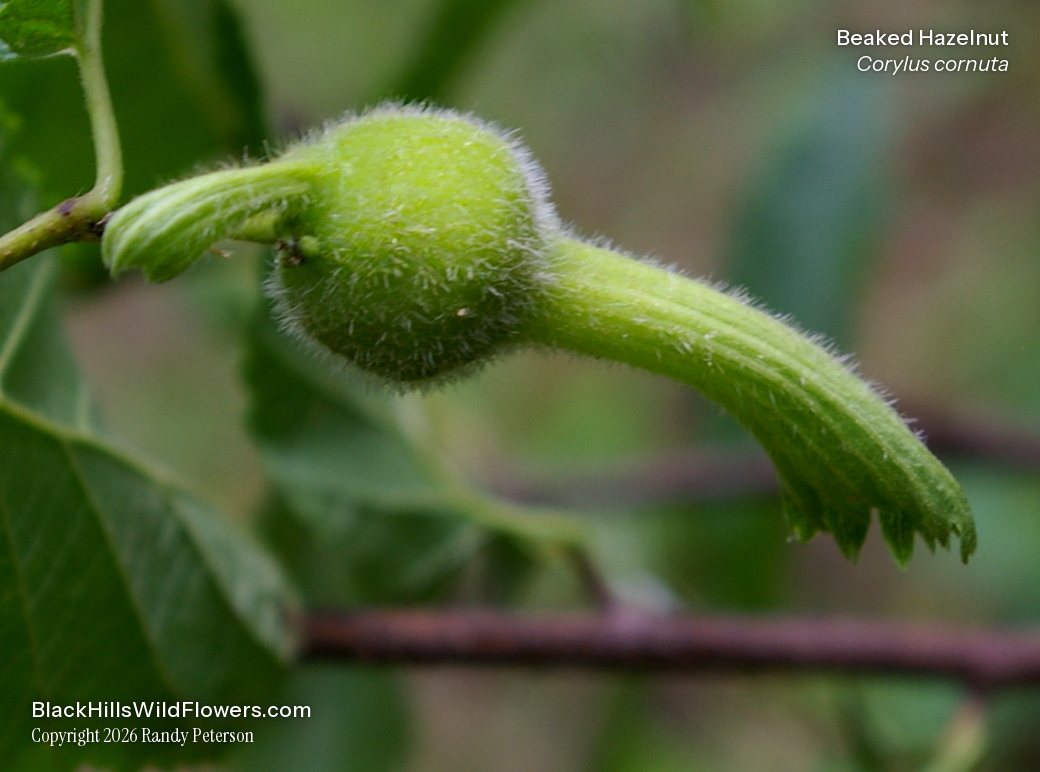
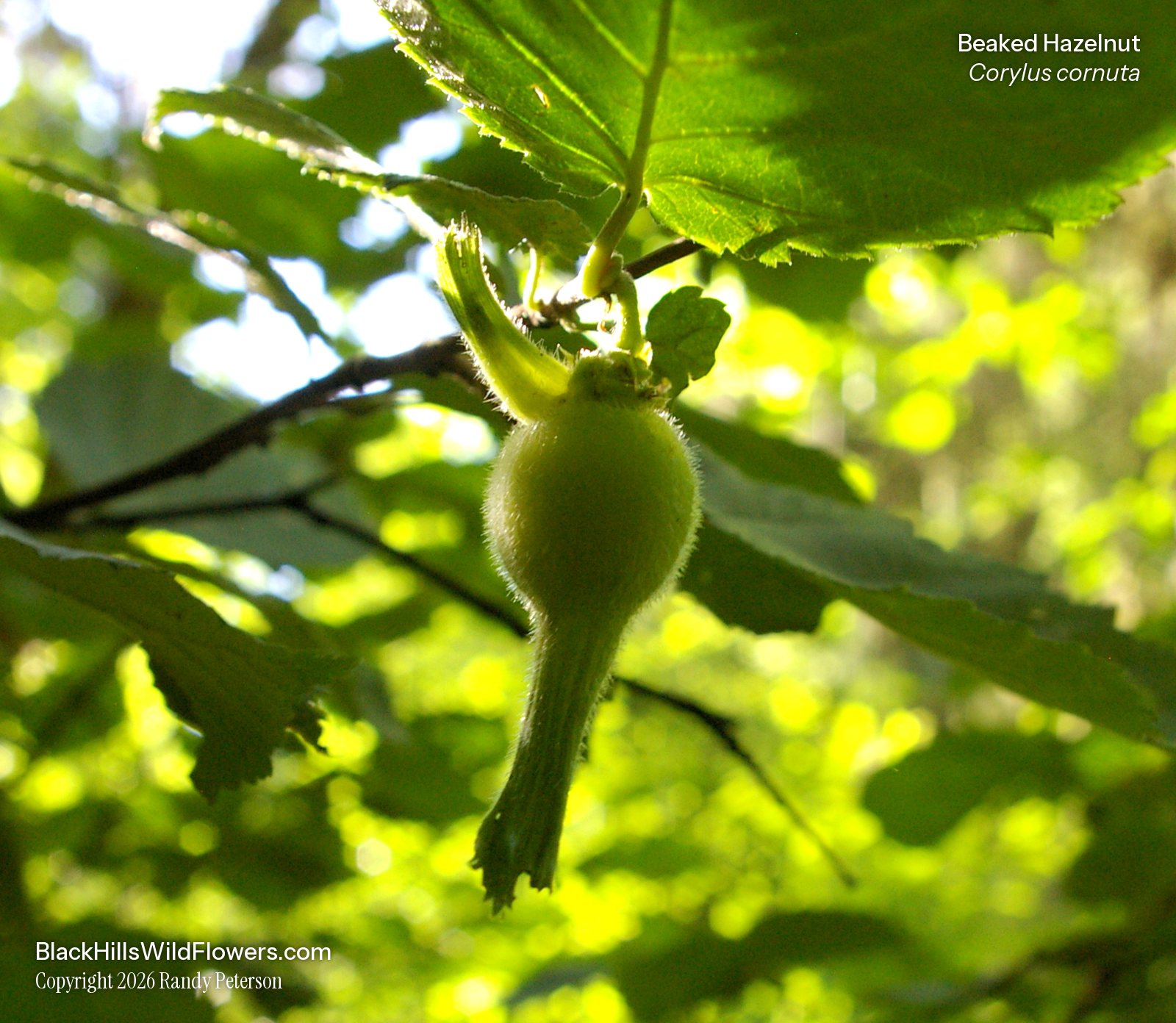
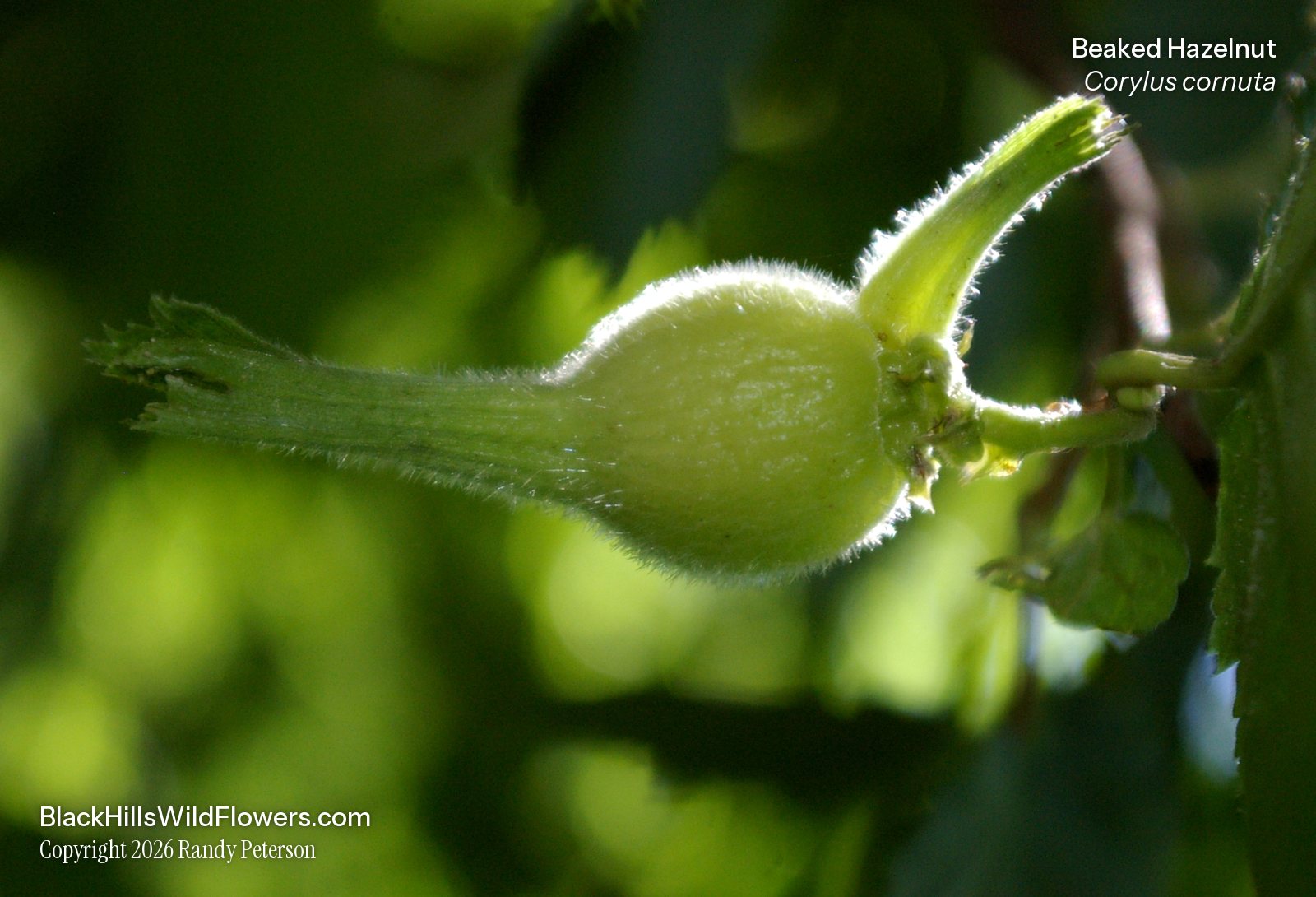
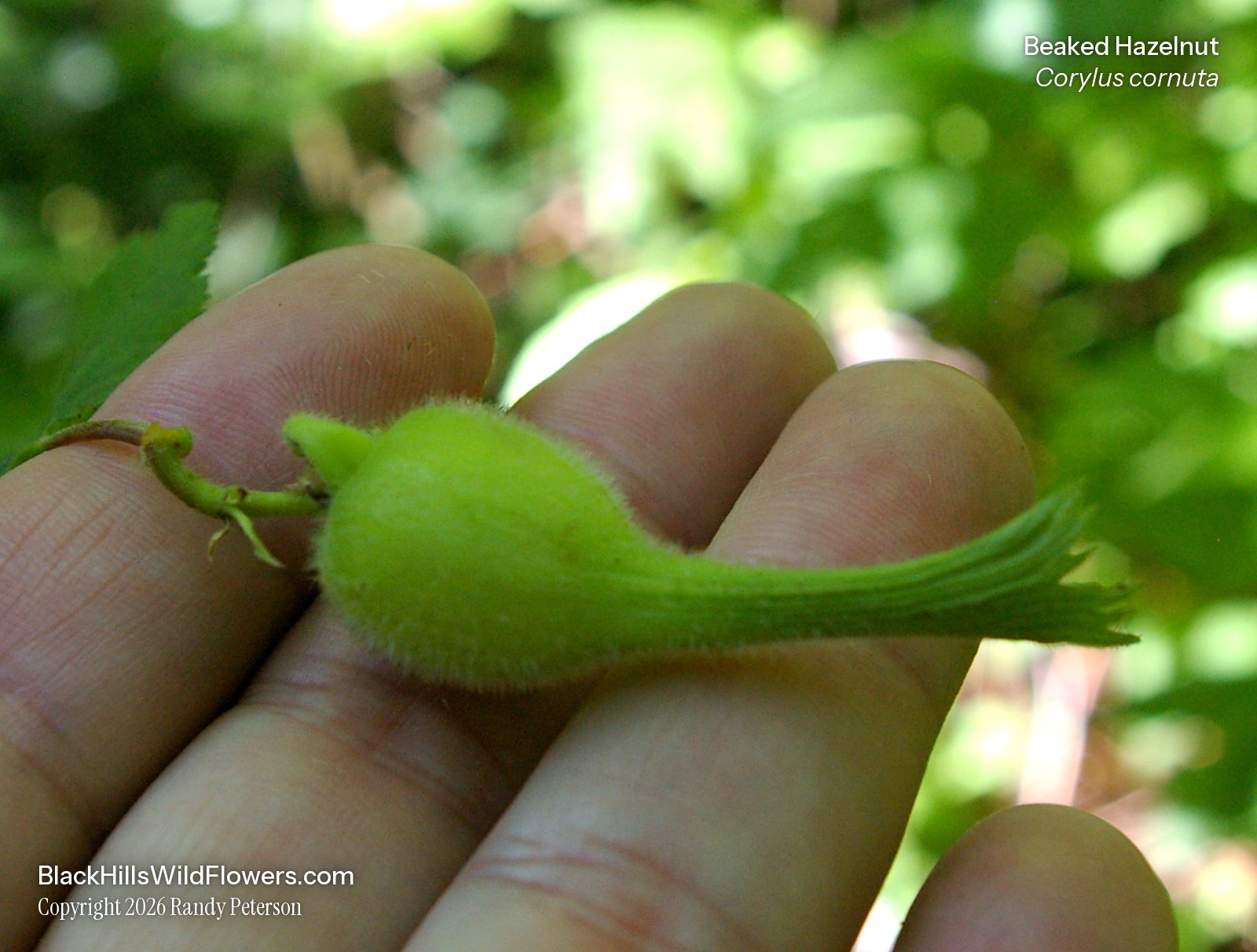
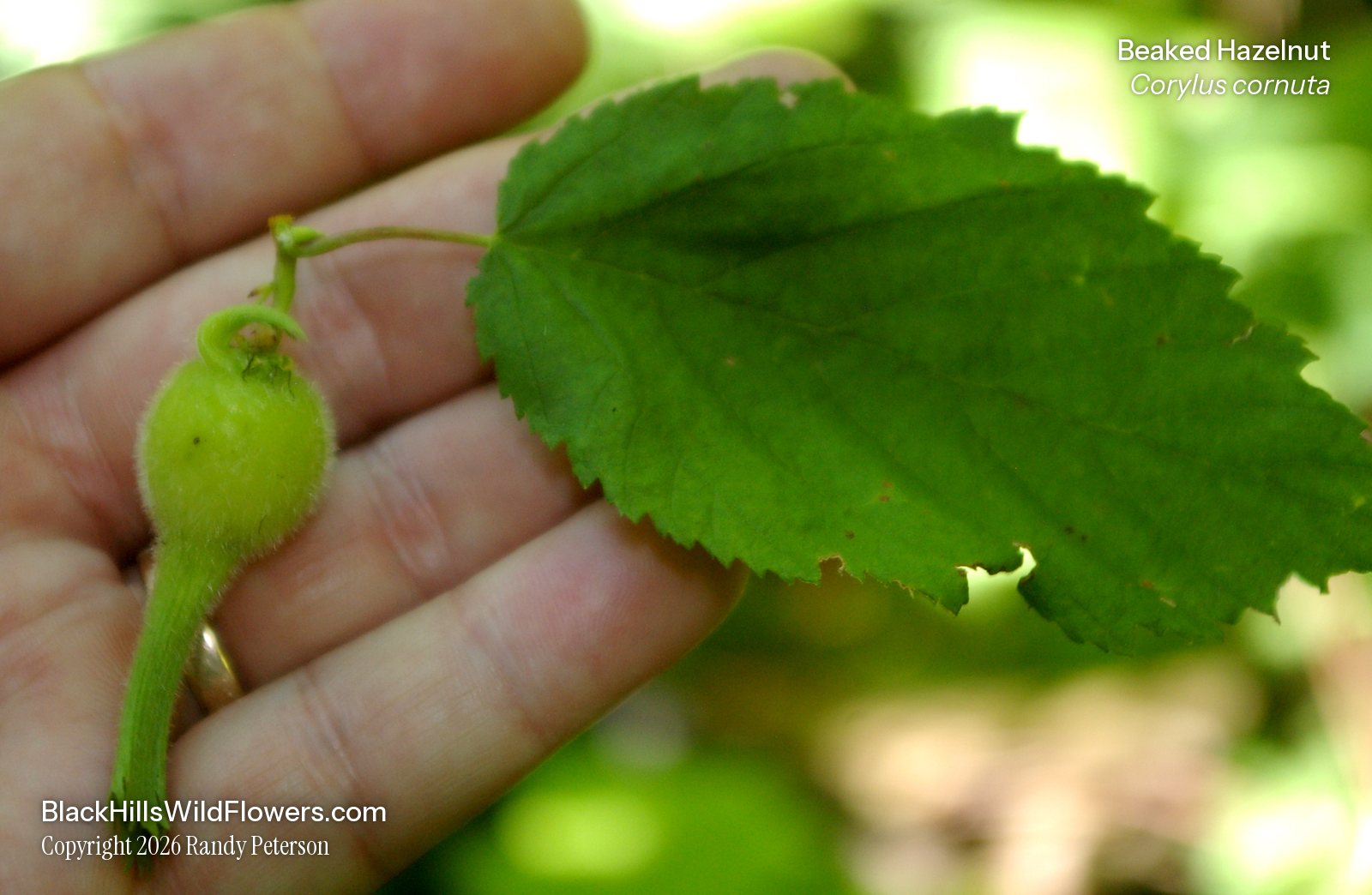
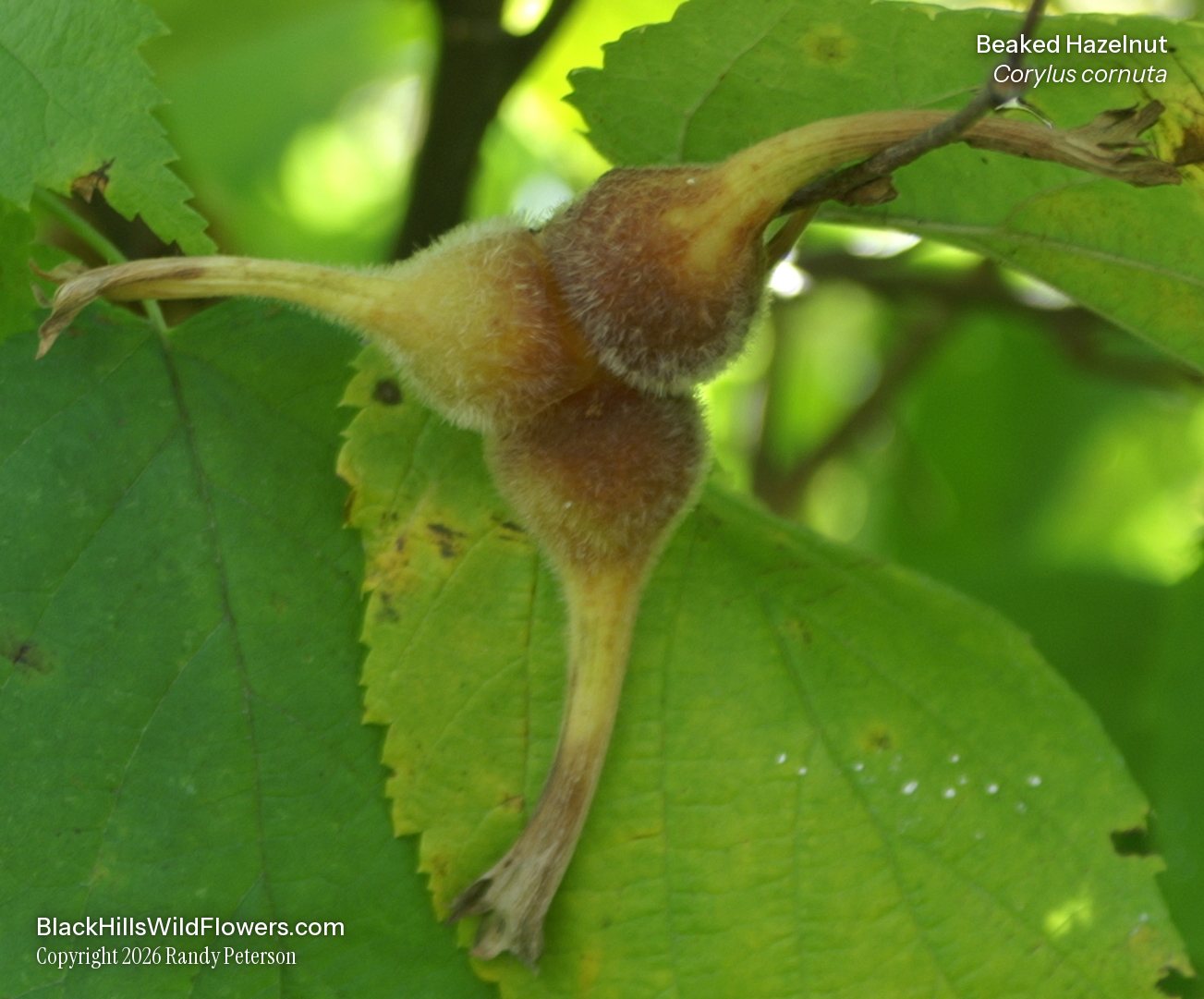
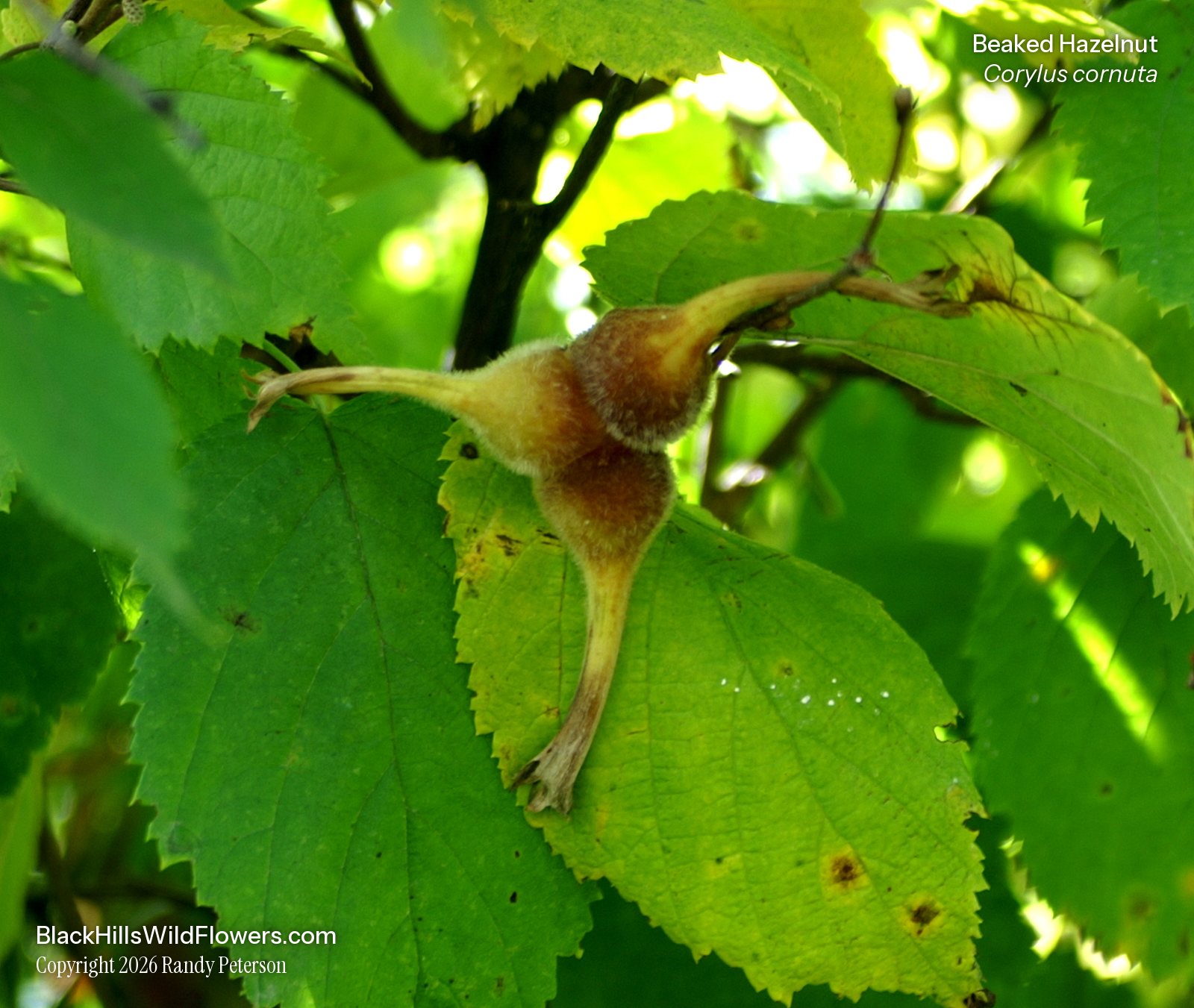
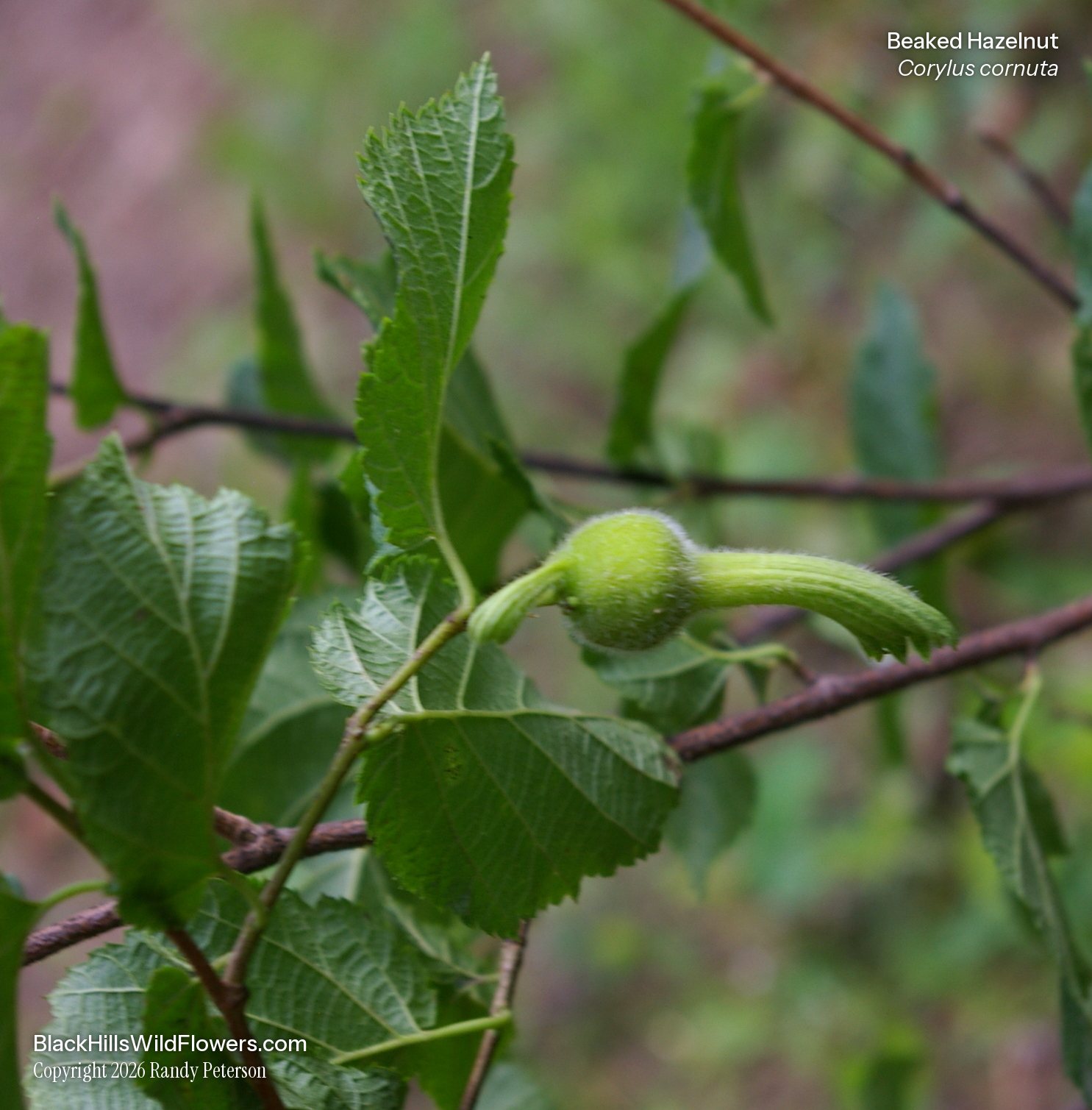
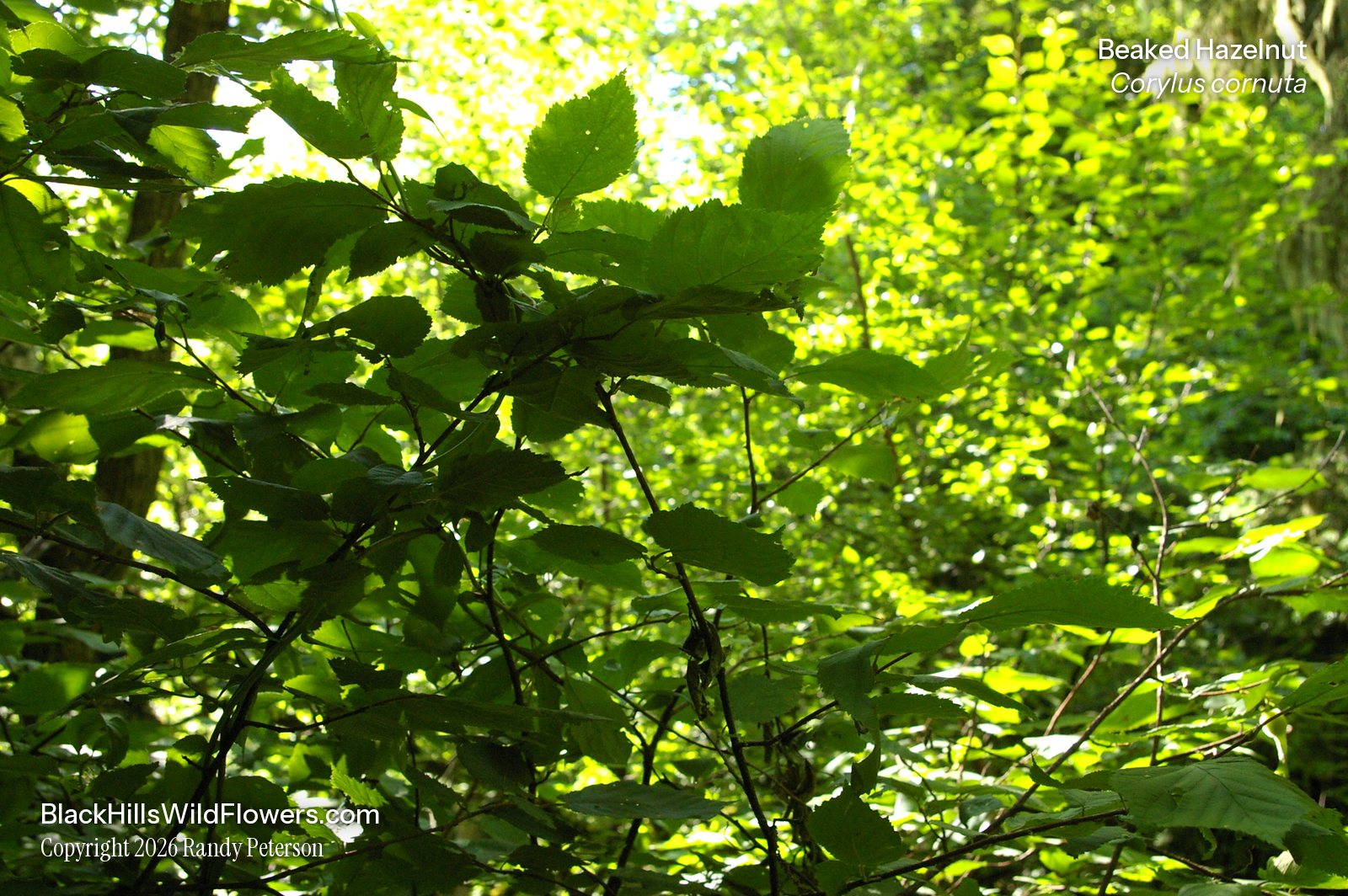
Beaked Hazelnut (Corylus cornuta) is a native shrub, 2.5–5 m tall, that forms thickets and bears nuts wrapped in a bristly green husk with a long, tubular beak. Its catkins open April into May, before the leaves, and in the Black Hills it forms dense shrub layers under aspen and grows with paper birch along small streams. Photographed in the Black Hills.
| Family | Betulaceae · Birch |
|---|---|
| Status | Native shrub |
| Blooms | April into May |
| Height | 2.5–5 m (8–16 ft) |
| Where | Upland forests, thickets and streamsides |
| Also called | Beaked Hazel |
Roots, seeds & germination
Root: A shallow, dense root system with a taproot and rhizomes, with over 90 percent of roots and rhizomes in the top 6 inches of soil. Rhizomes send up the suckers that form thickets.
Seed: Round nuts, 1/3–1/2 inch across, are collected in mid to late summer, when the husk edges start to turn brown. Seeds stay viable about 1 year, and squirrels favor them.
Germination: The hard shell and dormancy hold germination back, and 3 to 6 months of overwinter chilling breaks dormancy. Fall sowing gives seedlings in late spring, and scoring the seed with a file improves germination.
How do you identify Beaked Hazelnut?
Look for the husk: stiff, bristly and drawn out into a tube at least twice as long as the round nut, with up to 6 nuts per cluster. Leaves are 2½–4½ inches long and coarsely double-toothed. American Hazelnut has glandular hairs on its twigs, leaf stalks and husks, and its husks lack the long beak.
When does it bloom?
April into May.
Where does it grow?
Upland forests and thickets in western and northeastern South Dakota. In the Black Hills it is the main undergrowth in one aspen forest type, grows with paper birch along small streams, and occurs in ponderosa pine communities.
Sources: SDSU Open PRAIRIE: Corylus cornuta; Forest Service, Fire Effects Information System: Corylus cornuta; Minnesota Wildflowers: Beaked Hazelnut; Forest Service: Forest Vegetation of the Black Hills National Forest, A Habitat Type Classification (RM-276); Black Hills National Forest: At-Risk Species Assessment, October 2023; Thoreson 1988, A Comparative Study of Riparian Vegetation in Two Drainage Areas of the Black Hills (SDSU thesis).