Russian Olive Elaeagnus angustifolia
Also called Russian-olive, Oleaster
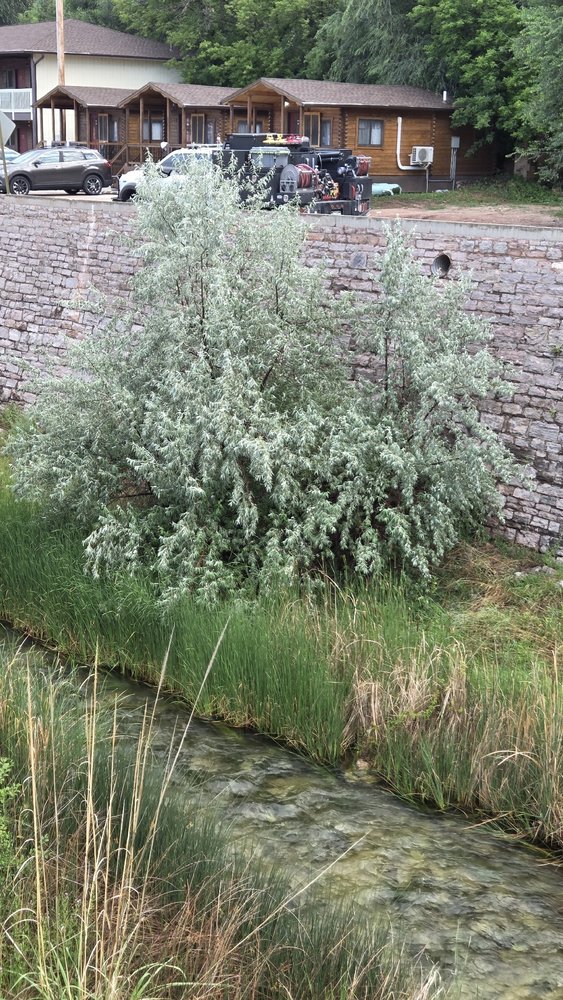
Russian Olive (Elaeagnus angustifolia) is an introduced tree from southern Europe and central Asia, usually 5–10 m (16–33 ft) tall, with narrow silvery leaves, thorny silver twigs, small fragrant yellow flowers in May and June and dry, mealy, olive-shaped fruits that ripen from August into fall. Planted across the plains for windbreaks, it now spreads on its own along creeks, roadsides and river bottoms, and Black Hills herbarium specimens come mostly from towns, creek bottoms, roadsides and windbreaks around the edges of the Hills; the National Park Service lists it at Wind Cave and Jewel Cave.
Free photos from other sources
| Family | Elaeagnaceae · Oleaster |
|---|---|
| Status | Introduced deciduous tree |
| Blooms | May into June; the dry olive-shaped fruits ripen from August into October |
| Height | 5–10 m (16–33 ft) |
| Where | Creek and river bottoms, roadsides, ditches, fence lines and old windbreaks, mostly at the edges of the Hills and in towns |
| Also called | Russian-olive, Oleaster |
| Listed | State designated noxious weed in Wyoming (Wyoming Weed & Pest Council list). Not on South Dakota's state noxious weed list or its locally noxious county list. |
| Note | Wyoming lists Russian Olive as a state designated noxious weed. South Dakota does not list it, but SDSU calls it invasive in the state. |
Roots, seeds & germination
Root: An extensive, deep root system with many side roots: a 25-year-old tree had roots as long as 12 m (39 ft), though few went below 1.2 m (4 ft). The roots sometimes host nitrogen-fixing bacteria, which help it take hold on nitrogen-poor soil, and it sprouts again from the trunk, root crown and roots after cutting or other damage, and from the roots and root crown after fire. Flora of North America notes that the trees are heavy water users that can lower the water table.
Seed: Each olive-like fruit holds one oblong seed. Birds eat the fruit through fall and winter and spread the seed; European starlings pass it unharmed, raccoons eat it too, and more than 50 kinds of birds and mammals are reported to eat it. Ripe fruits float for up to 48 hours, so rivers carry them downstream. Trees start fruiting at about 10 years old, and stored seed stays viable about 3 years.
Germination: The seed is dormant when it ripens and needs 2 to 3 months of cool, moist stratification at about 5 °C (41 °F). In one study, washing the seed for 6 days before chilling improved germination, and scarifying it may also help.
How do you identify Russian Olive?
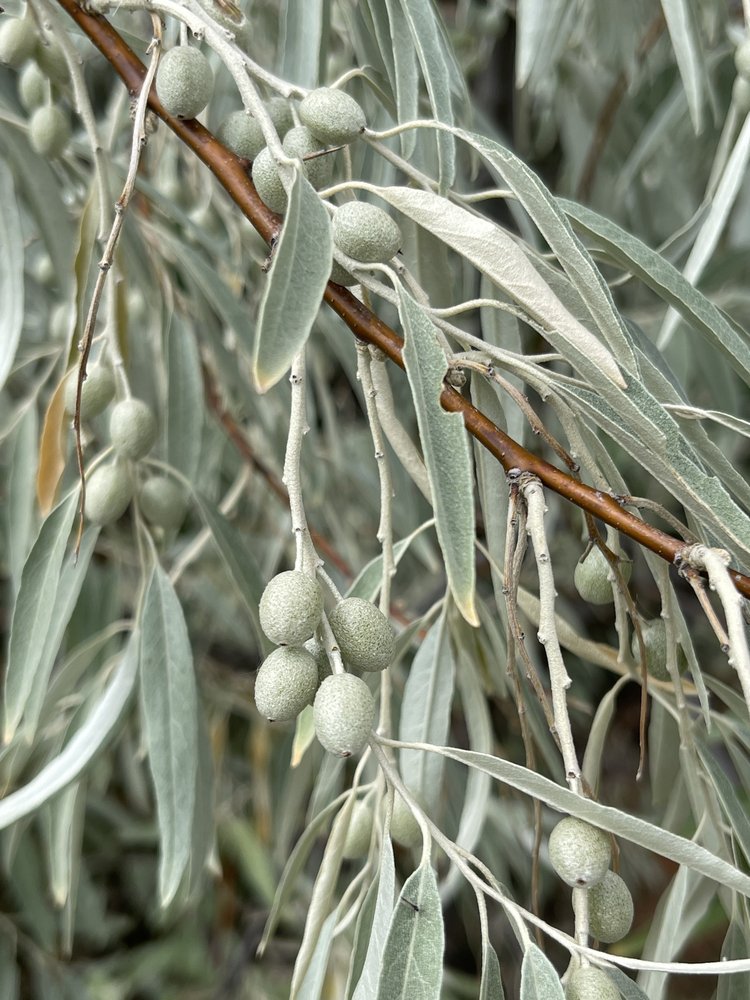
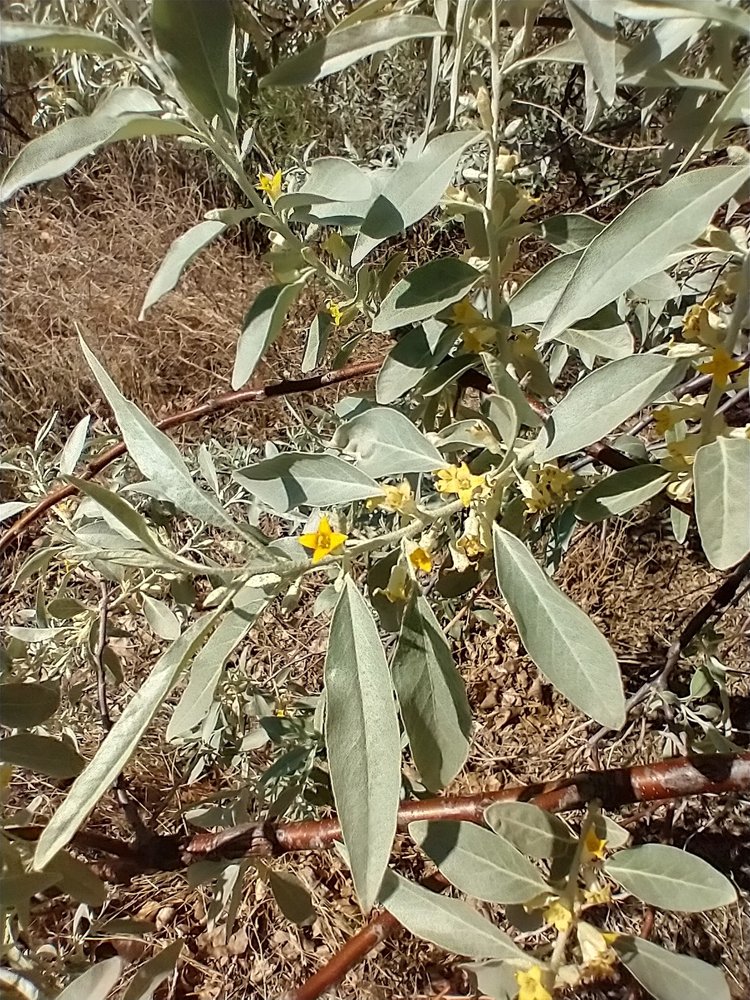
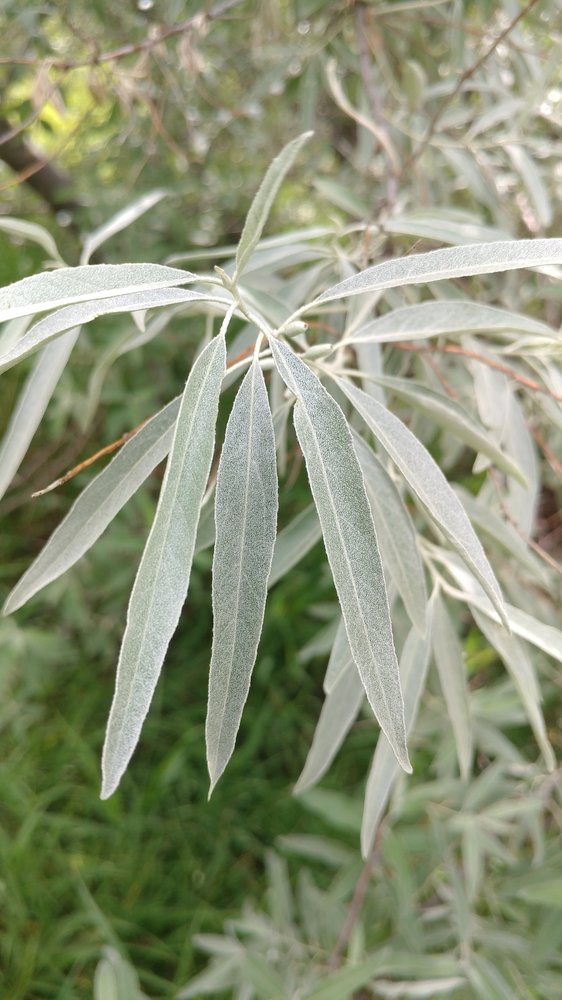
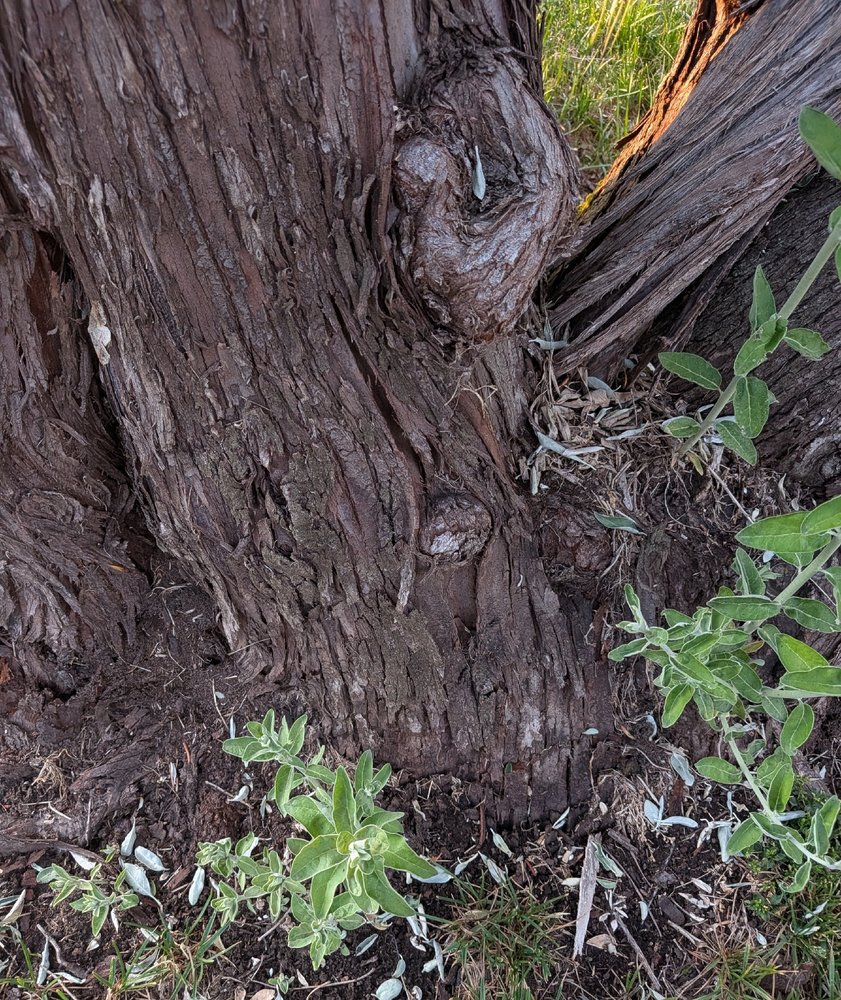
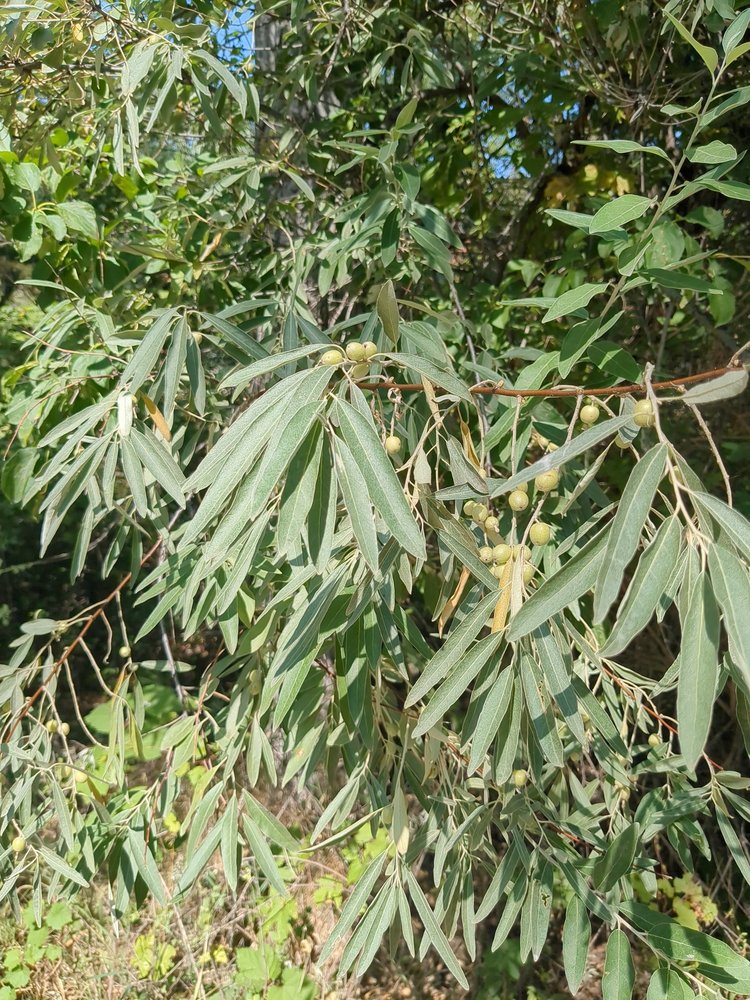
Look for a small tree or big shrub that shines silver from a distance: the leaves are alternate, narrow and lance-shaped, 3–8 cm (1–3 in) long but only 0.5–1.5 cm wide, coated on both sides with silvery scales and star-shaped hairs, and the young twigs are silvery too, turning reddish brown with age. The branches are flexible and carry coarse thorns, and many short side shoots end in a sharp spine. In May and June, 1 to 3 small fragrant funnel-shaped flowers sit in the leaf axils, about 12 mm long, with 4 spreading yellow petal-like lobes that are silvery on the outside and no true petals. The fruit looks like a small olive, 1–2 cm long, silvery-scaly and pale green, ripening dull yellow-orange, and dry and mealy inside. Bark on the trunk is gray-brown and scaly and sometimes shreds. The Montana Field Guide separates it from Silver Buffaloberry, a native shrub that is also silvery and thorny: buffaloberry's leaves grow in opposite pairs (Russian Olive's are alternate), it is a shrub rather than a small tree, and it bears juicy orange to red berries instead of dry, silvery-green fruit.
When does it bloom?
May into June; the dry olive-shaped fruits ripen from August into October.
Where does it grow?
Along streams and roadsides from the plains up to about 2,000 m (6,500 ft), where it escapes from plantings and forms dense thickets on creek and river bottoms, especially in the semiarid West. In the Black Hills, herbarium labels place it in valleys and towns rather than the forest: specimens from 1924 on come from Lawrence, Pennington, Custer, Fall River, Meade and Butte counties and from Crook County, Wyoming, with labels such as "along banks of river", "riparian woodland of elm, russian-olive and juniper", road ditches, fence lines, a city park by the creek and old windbreaks. The National Park Service lists it at Wind Cave and Jewel Cave, SDSU calls it invasive in South Dakota, and iNaturalist has 52 research-grade Black Hills records.
Other plants to compare
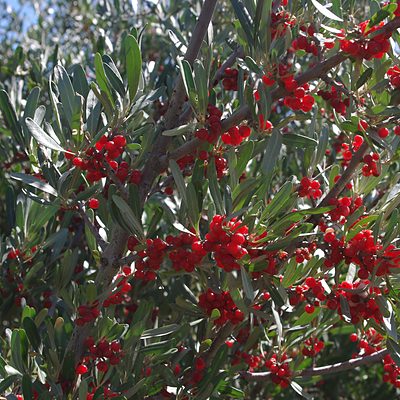
Oleaster family (Elaeagnaceae): 2 other plants in this guide
Sources: Flora of North America Vol. 10: Elaeagnus angustifolia — eFloras; Elaeagnus angustifolia, Russian olive (R. Neil Reese) — SDSU Open PRAIRIE, South Dakota Native Plant Research; Fire Effects Information System: Elaeagnus angustifolia (Zouhar 2005) — USDA Forest Service; Russian Olive, Elaeagnus angustifolia — Montana Field Guide; Plants as Pests: Russian Olive — University of Wyoming CAPS; Identify Noxious Weeds: State Designated Weed List — Wyoming Weed & Pest Council; State Noxious Weeds — South Dakota Department of Agriculture and Natural Resources; Locally Noxious Weed and Pest List, updated 2024 — South Dakota DANR; NPSpecies checklist, Wind Cave National Park vascular plants — National Park Service; NPSpecies checklist, Jewel Cave National Monument vascular plants — National Park Service; GBIF occurrence search: Elaeagnus angustifolia, South Dakota and Wyoming herbarium specimens — GBIF; Research-grade Russian Olive observations in the Black Hills — iNaturalist.