Russet Buffaloberry Shepherdia canadensis
Also called Canada buffaloberry, Canadian buffaloberry, Soapberry, Rabbitberry, Buffalo-berry
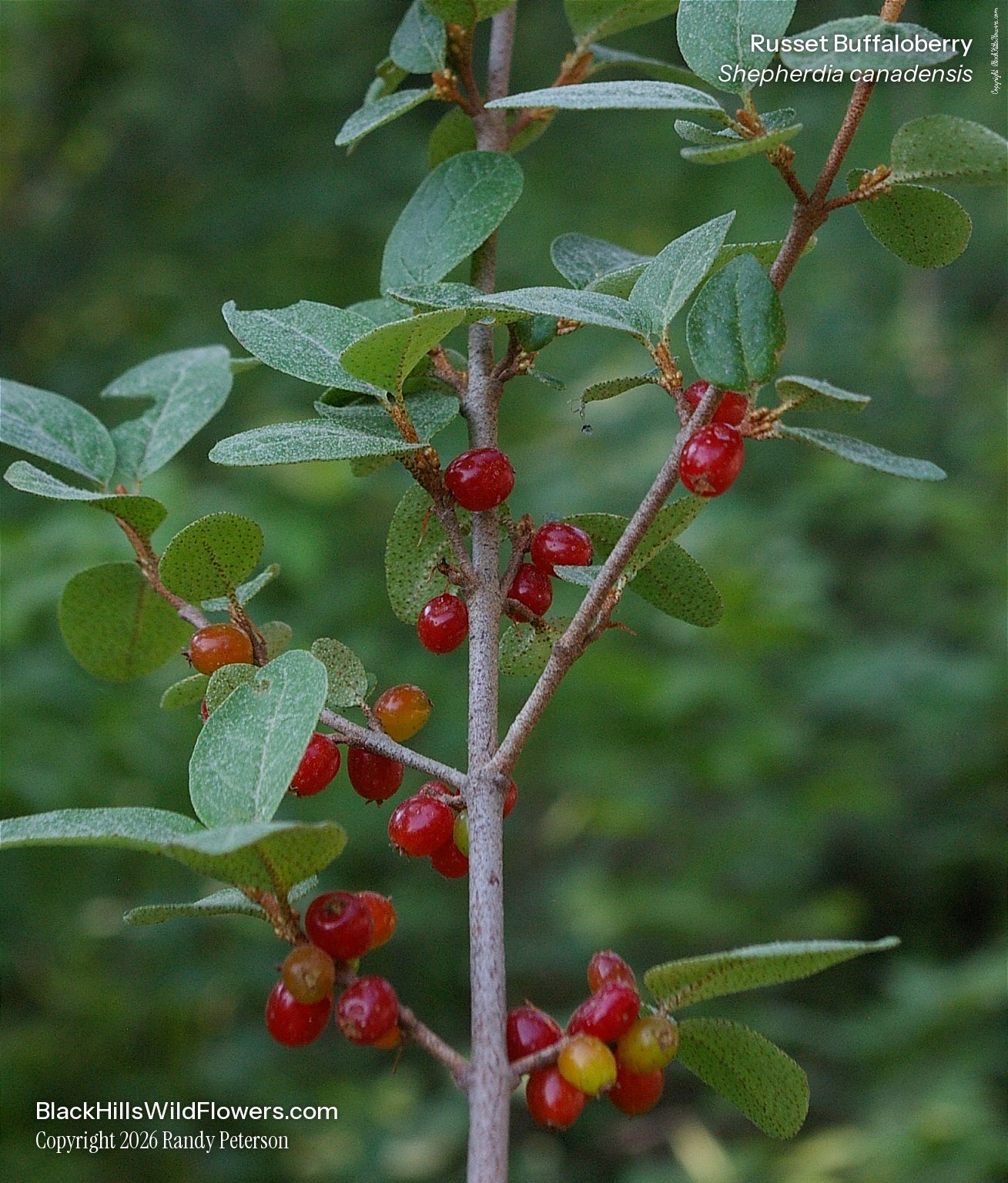
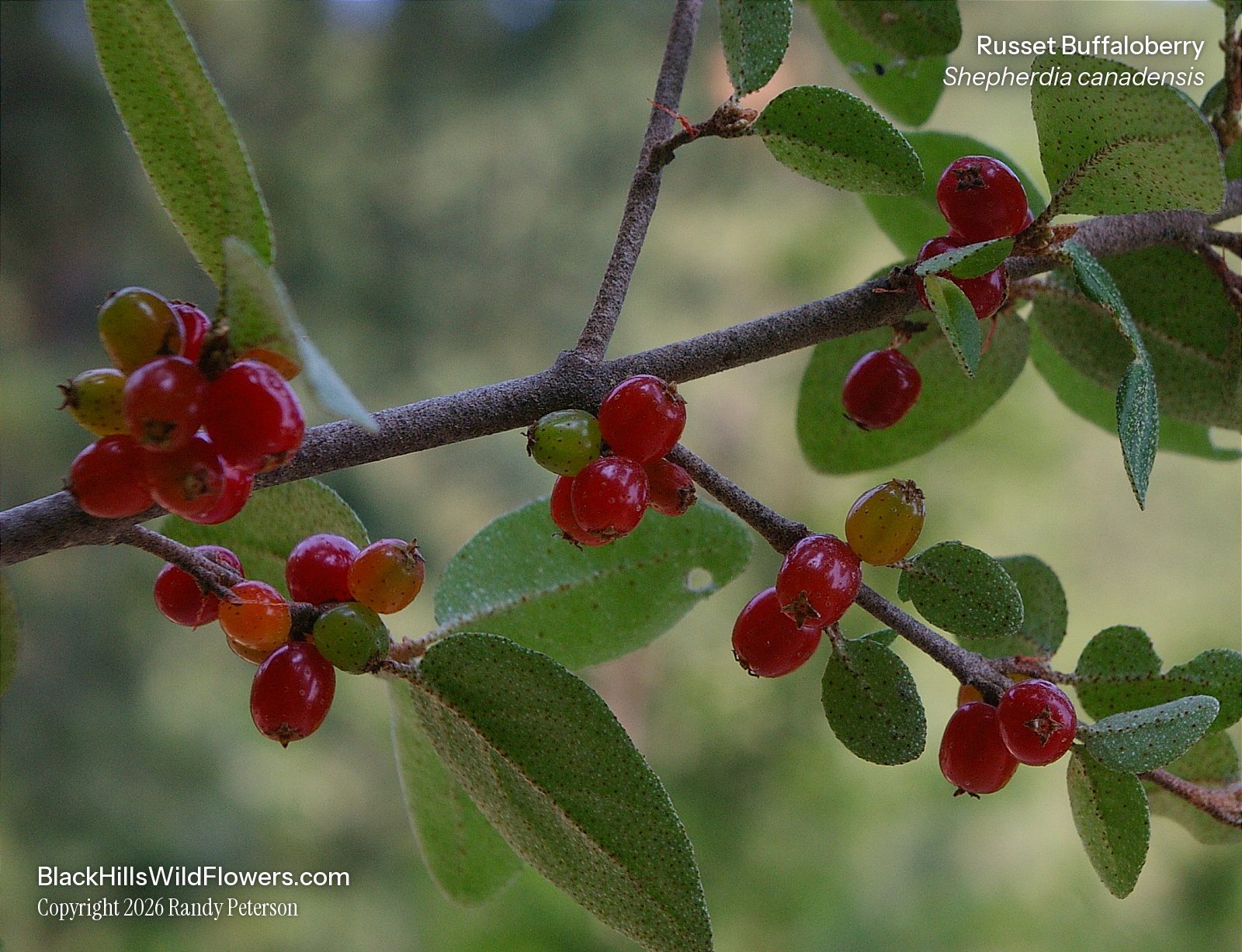
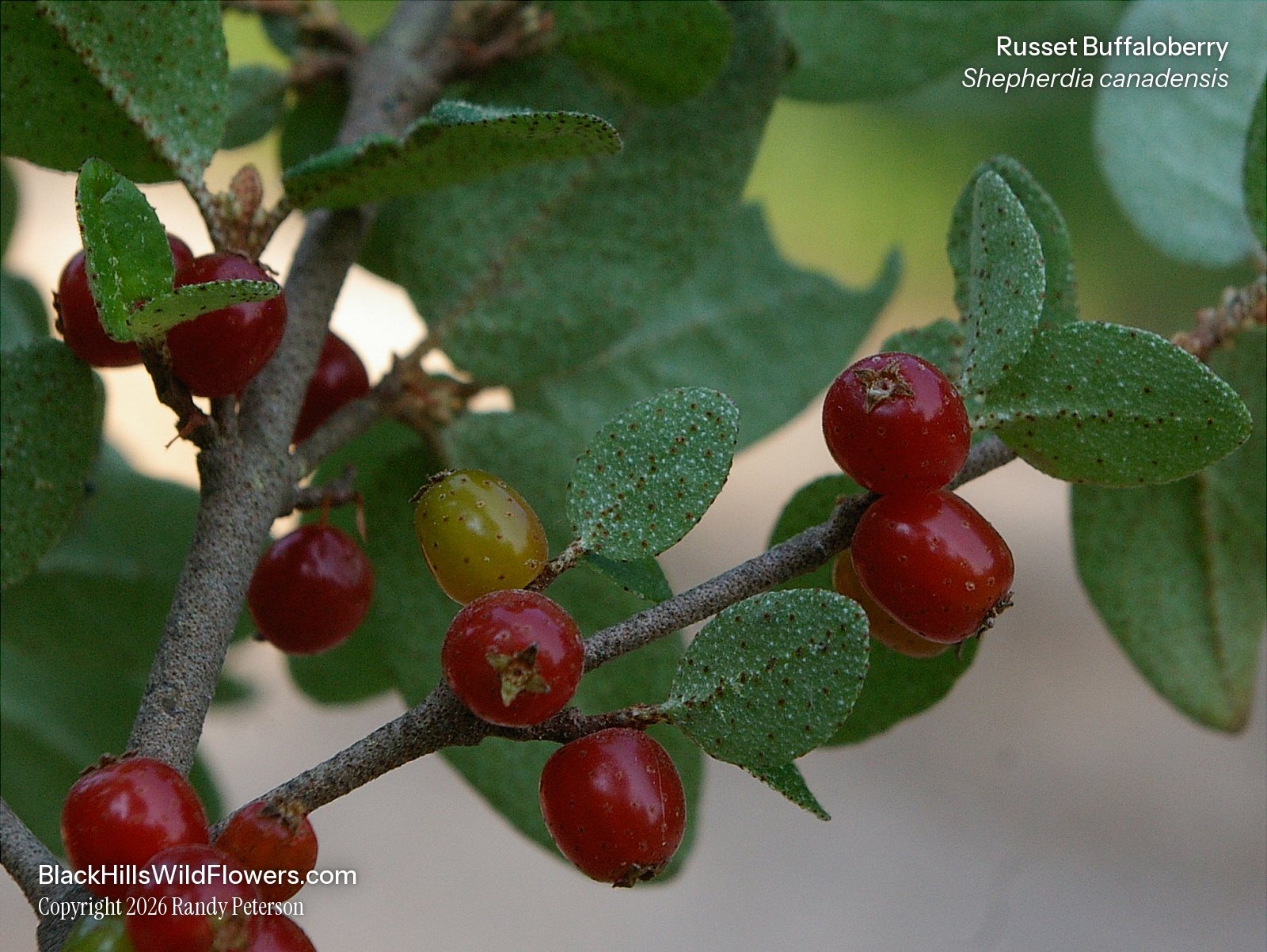
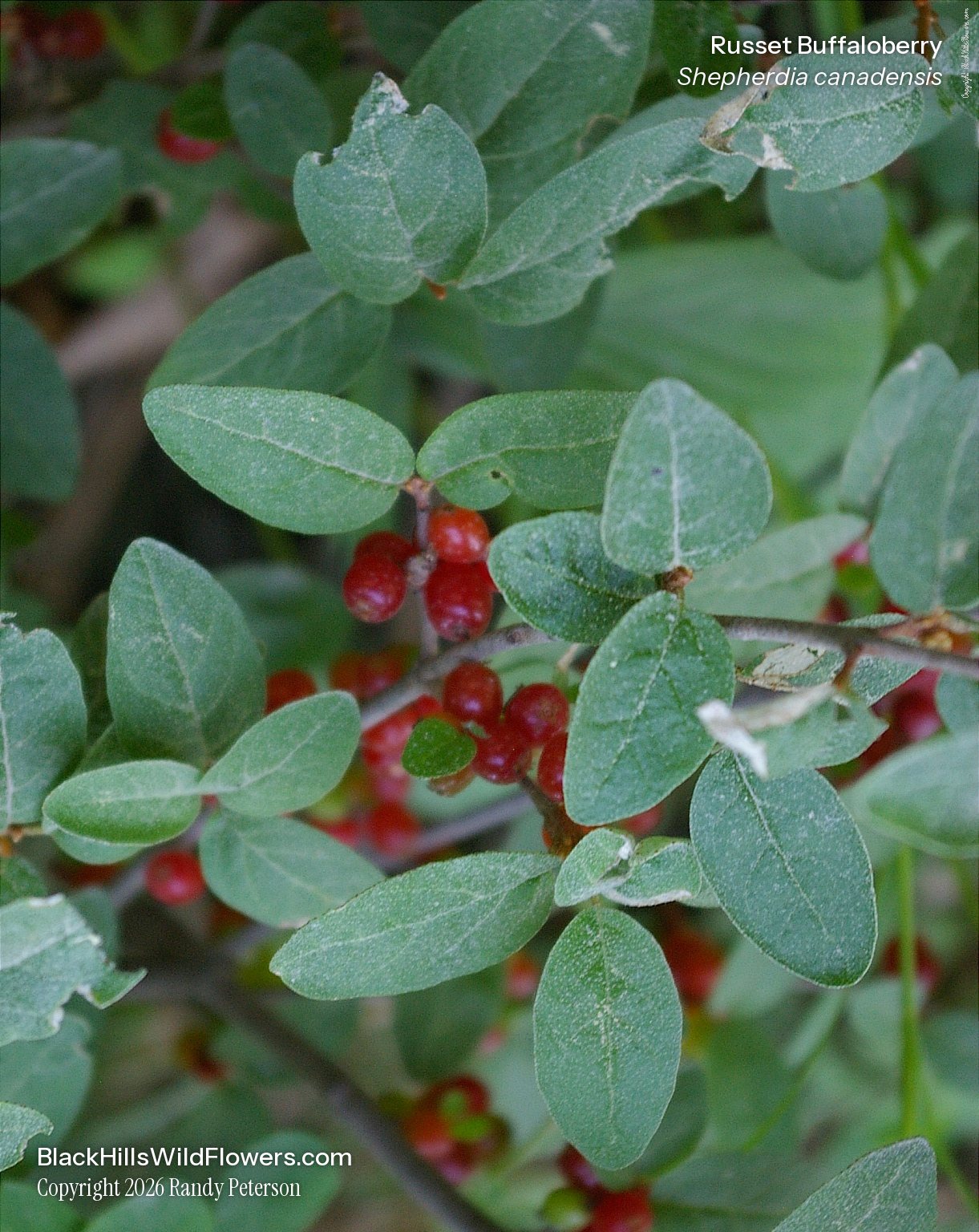
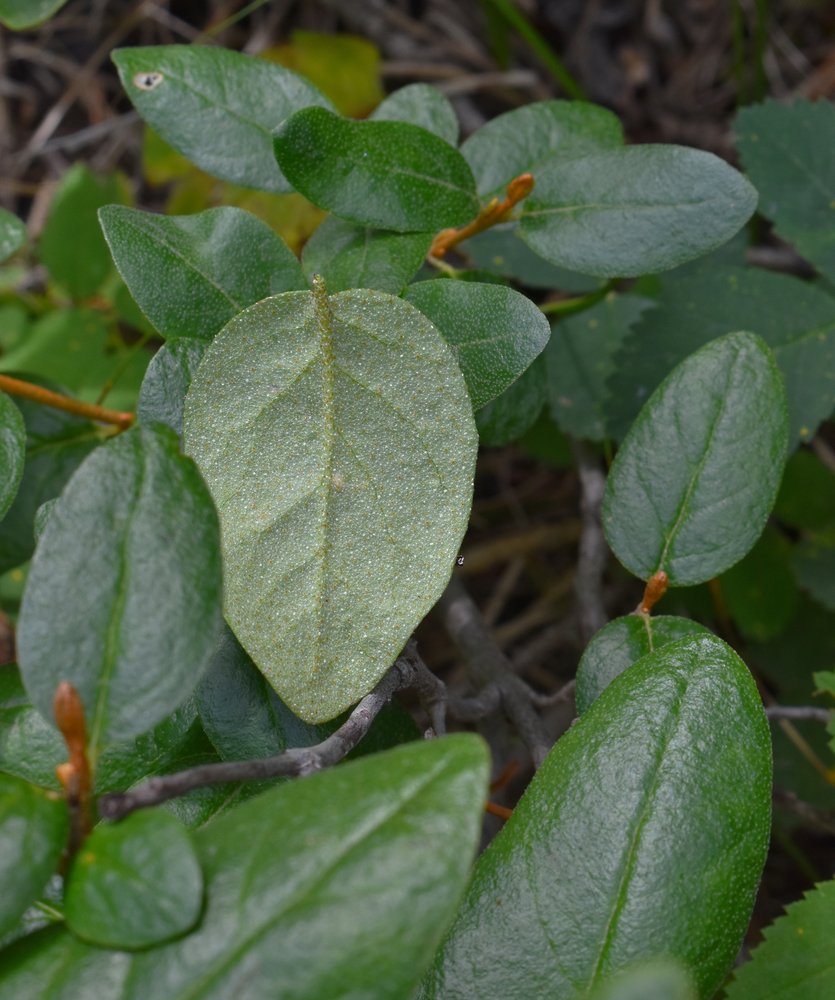
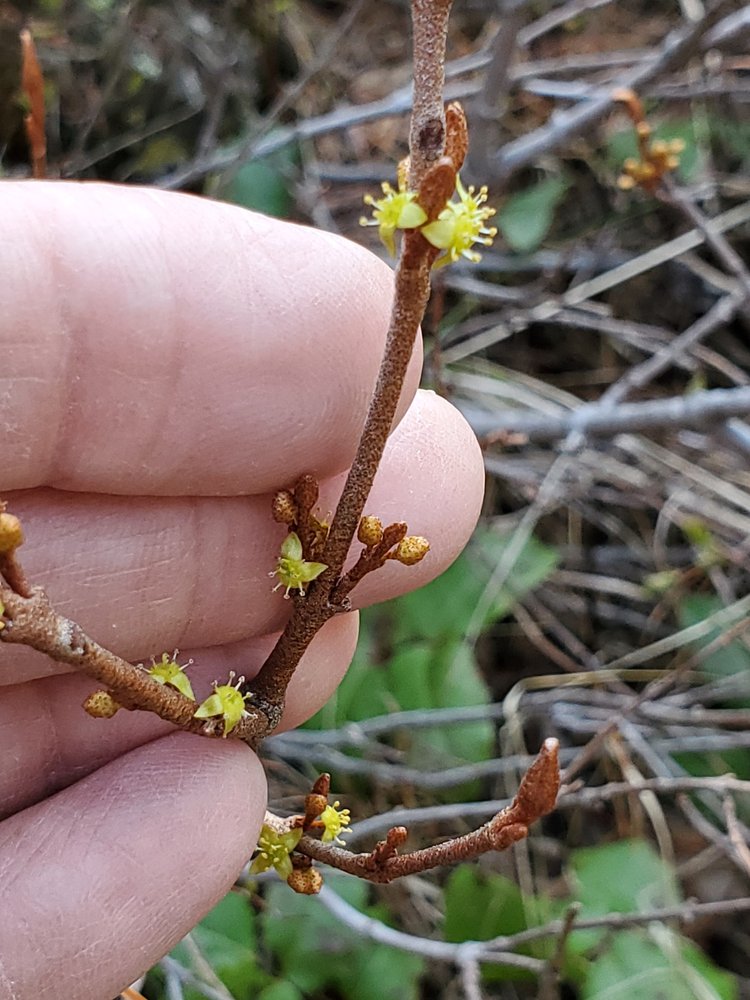
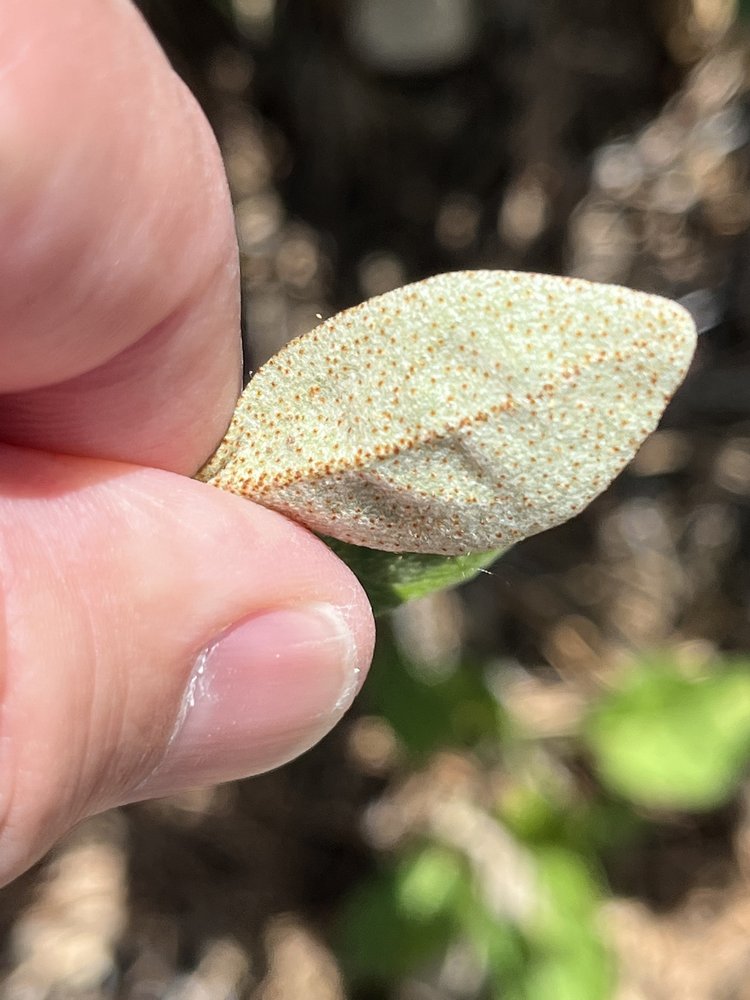
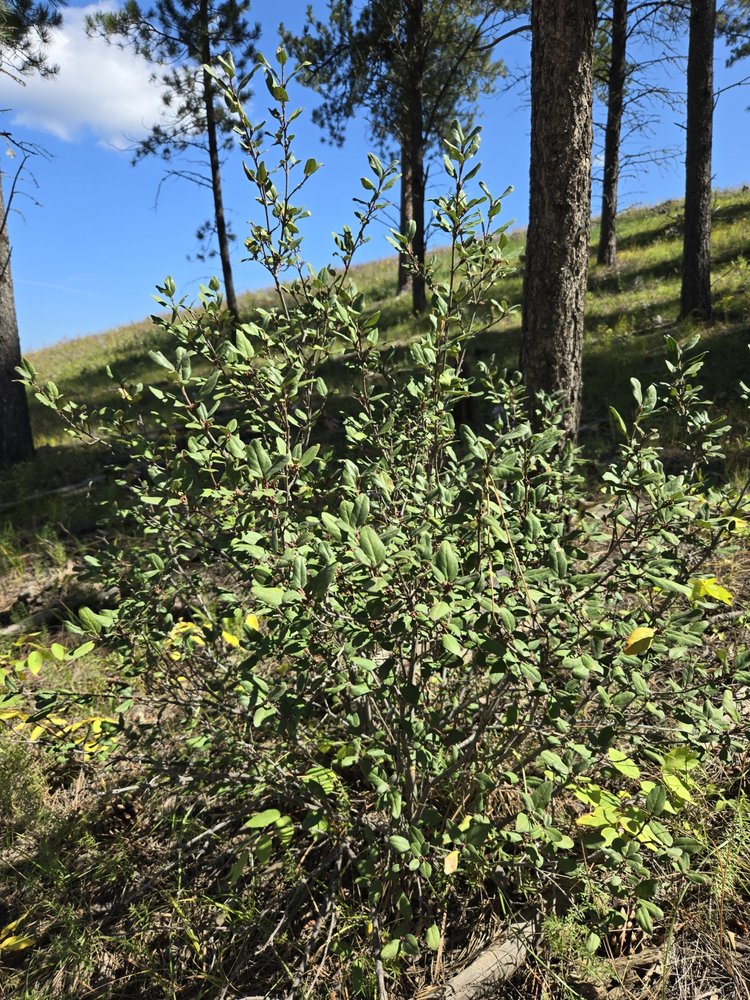
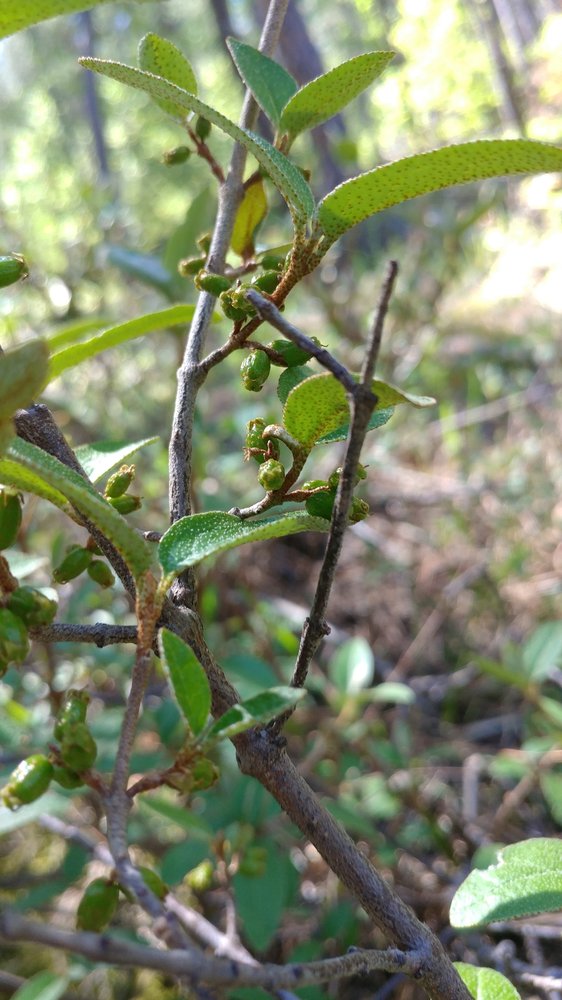
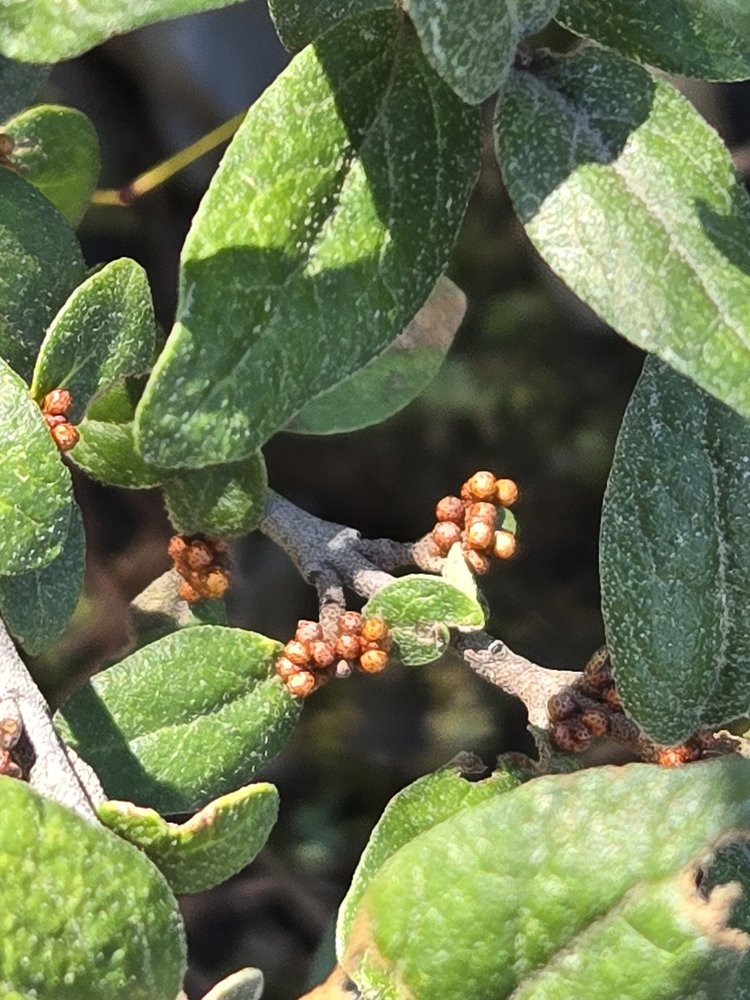
Russet Buffaloberry (Shepherdia canadensis) is a native, thornless shrub 0.3–3 m (1–10 ft) tall with opposite oval leaves that are green above and silvery below with rust-brown dots, tiny yellow-green petal-less flowers from April into June, and red berries 6–9 mm long that are bitter and soapy when crushed. In the Black Hills it grows in the understory of pine, spruce and birch forest, where the National Park Service lists it at Wind Cave, Jewel Cave and Mount Rushmore and herbarium specimens go back to 1891. Photographed in the Black Hills.
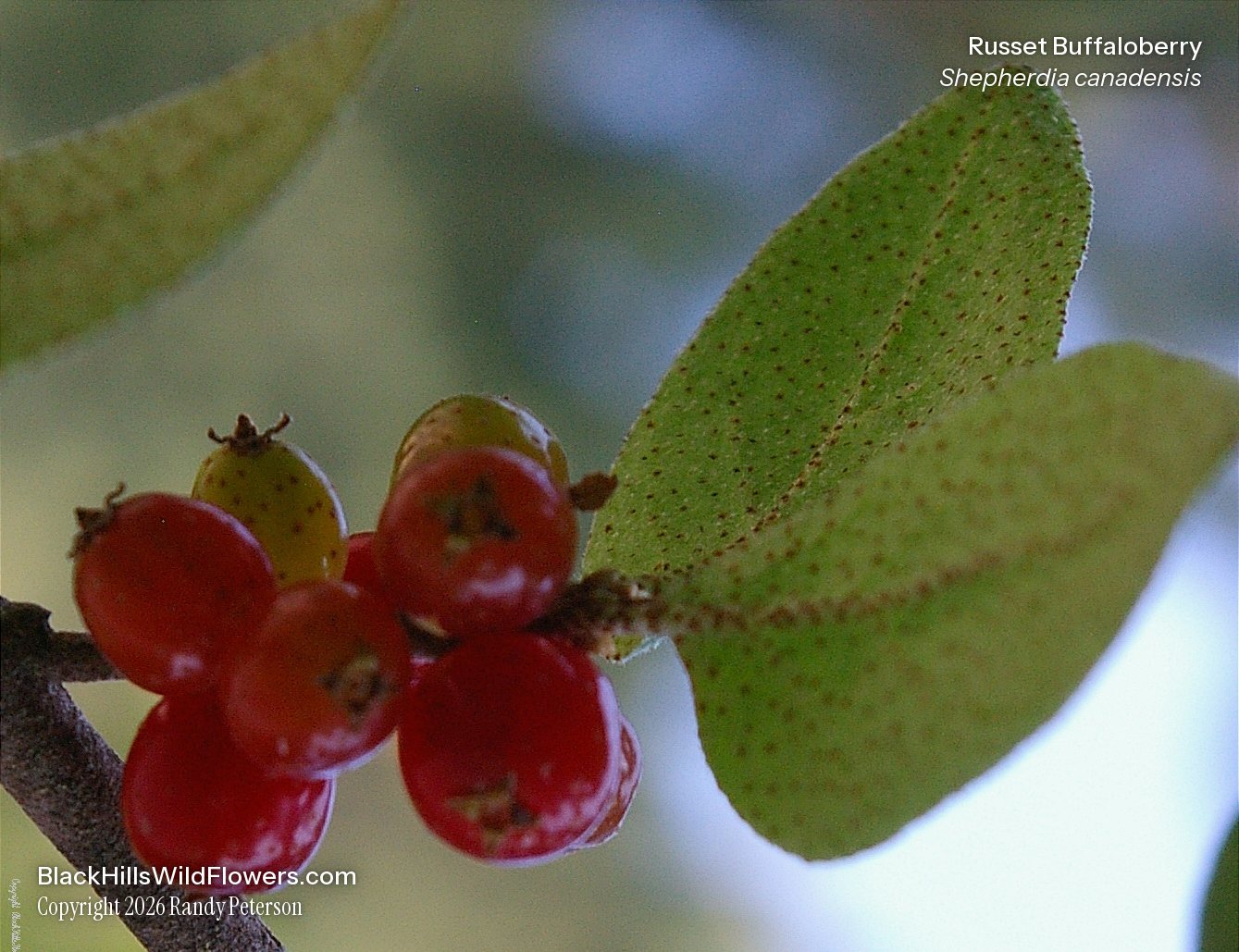
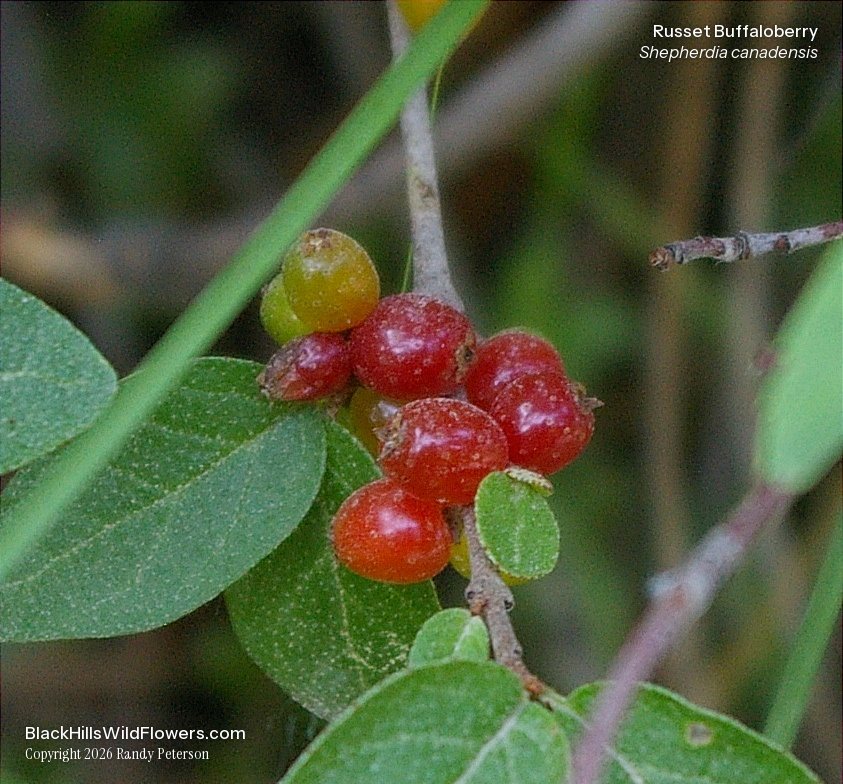
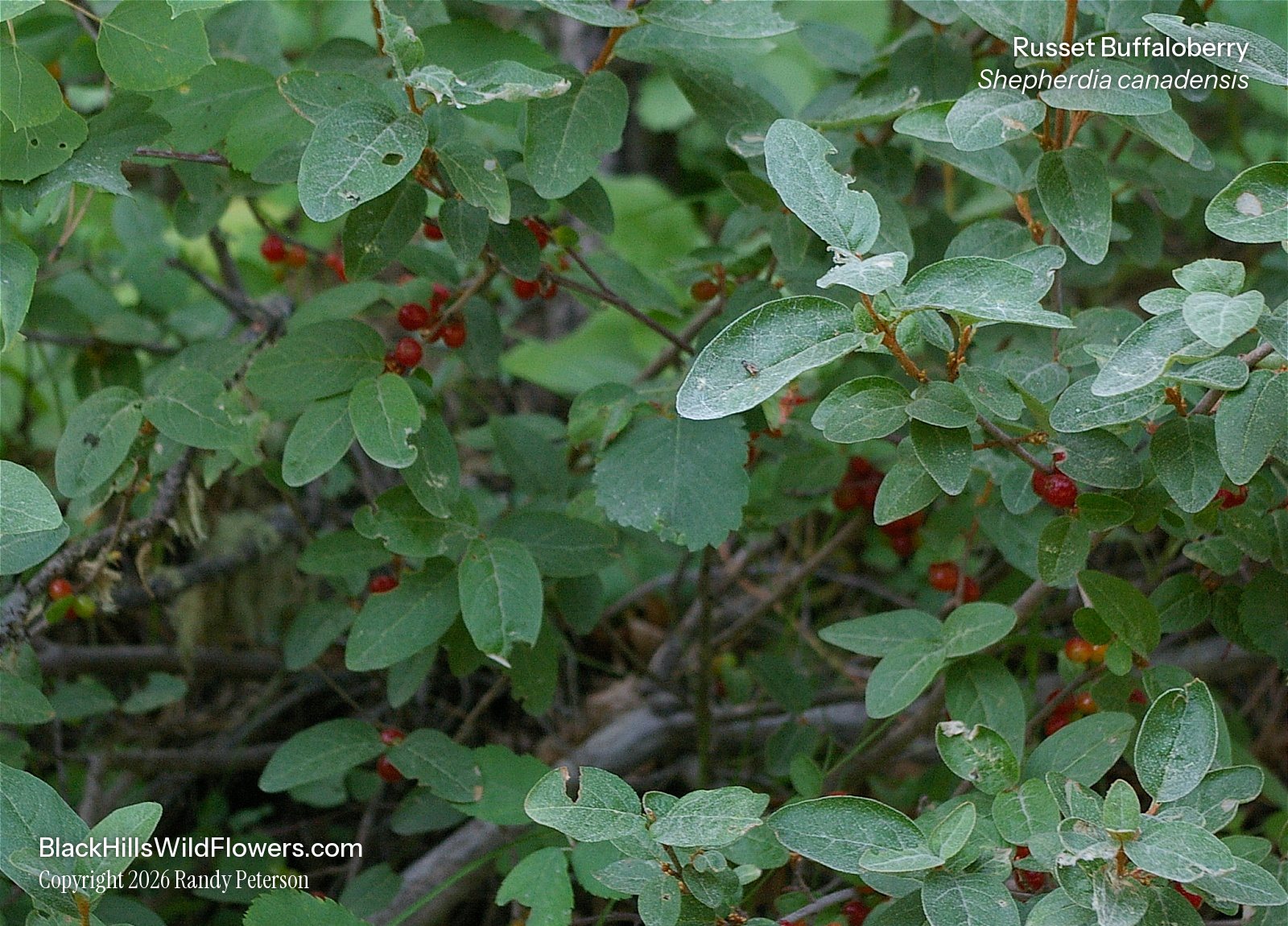
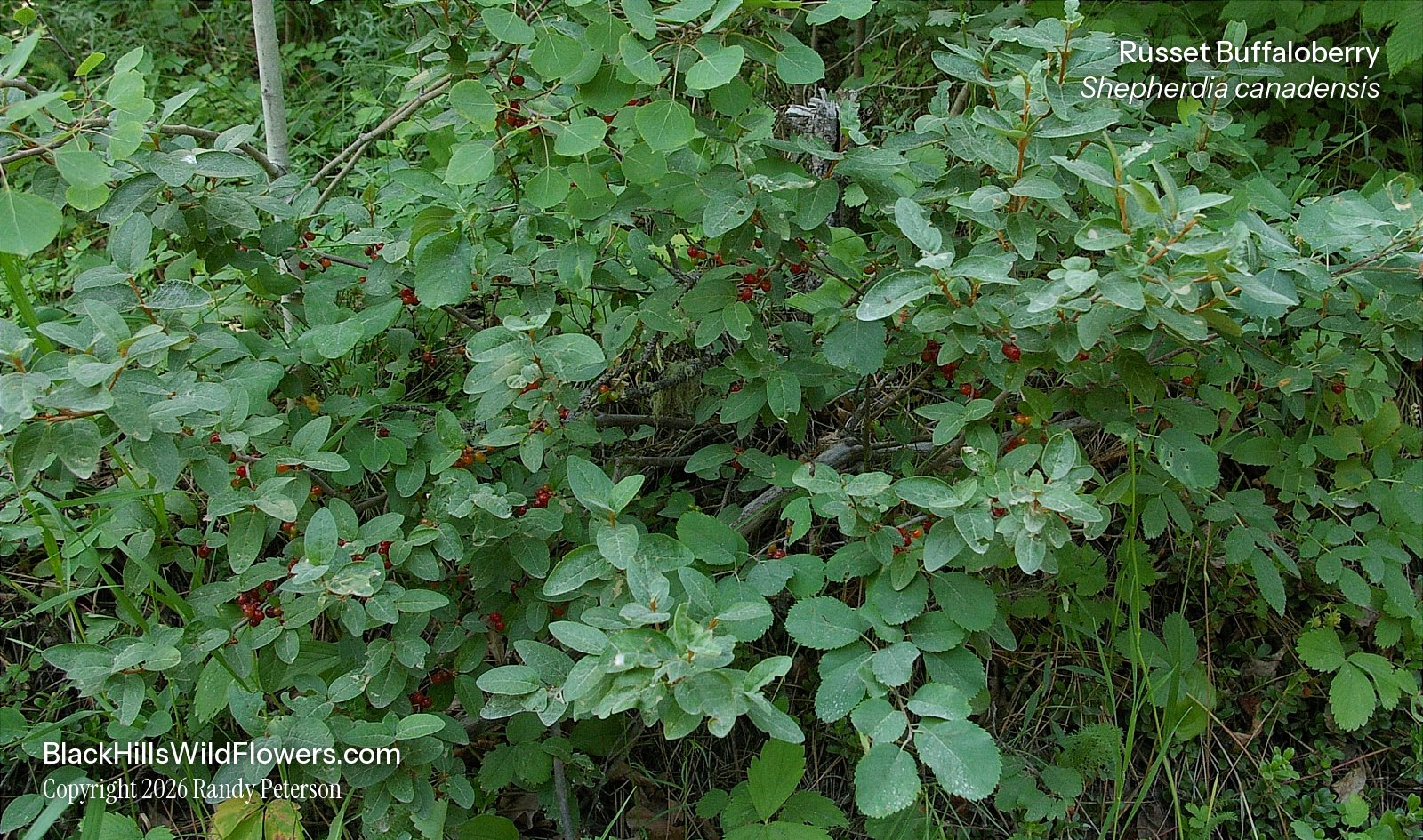
Free photos from other sources
| Family | Elaeagnaceae · Oleaster |
|---|---|
| Status | Native deciduous shrub |
| Blooms | April into June, as the leaves open; the red berries ripen in July and August |
| Height | 0.3–3 m (1–10 ft) |
| Where | Pine, spruce and birch forest understory, open rocky woods, dry slopes and moist north slopes, creek banks and rocky shores |
| Also called | Canada buffaloberry, Canadian buffaloberry, Soapberry, Rabbitberry, Buffalo-berry |
| Synonym | Hippophae canadensis, Elaeagnus canadensis, Lepargyrea canadensis |
| Toxicity | The fruit contains small amounts of saponin, a bitter compound that foams in water. |
Roots, seeds & germination
Root: Botanists disagree about the roots: the Fire Effects Information System reports them described as rhizomes with fairly deep underground parts, as fibrous and shallow, and as a taproot with no rhizomes. The shrub sprouts from surviving root crowns and from dormant buds on the taproot, but it is not an aggressive spreader: a Canadian study ranked it last of 20 shrubs and trees for aggressive ability. The roots carry nitrogen-fixing nodules, most abundant in poor sandy soils, which let it thrive on nutrient-poor ground.
Seed: Each oval berry holds one hard, dark brown to black seed 4–5 mm long. Plants begin to set seed at 4 to 6 years old and bear a good crop every year after that; the berries ripen from June to August across the range, in Montana between July 9 and 28. Animals and gravity spread the seed, and bears and grouse eat the berries.
Germination: The small, hard seed sprouts poorly, unevenly and late. The Fire Effects Information System says at least 60 days of cold, moist storage appears to be required for the embryo to develop, and that 20 to 30 minutes in sulfuric acid gave 72 to 80 percent germination. The USDA plant guide says to gather the seed in autumn and sow it at once in a cold frame without letting it dry out, and that acid treatment followed by 2 to 3 months of cold storage helps the embryo develop.
How do you identify Russet Buffaloberry?
Start with the leaves: they come in opposite pairs, egg-shaped to lance-elliptic, 3–5 cm (1¼–2 in) long, blunt at both ends and untoothed, dark green and nearly smooth on top but silvery underneath from a felt of star-shaped hairs sprinkled with rust-brown scales. Turn a leaf over and the rusty dots are the mark. The twigs have no thorns; new twigs are coated with rusty brown scales that fade to brownish gray, the leaf buds sit on short stalks, and the branches are limber and often arching. Male and female flowers grow on separate plants in the leaf axils of one-year-old twigs as the leaves open: yellow-green, about 3 mm (⅛ in) across, stalkless, with no petals, 4 triangular lobes and a rusty-scaly outside; the males have 8 stamens. The fruit is a bright red or sometimes yellow, oval berry 6–9 mm long with scattered brownish scales and one hard seed, extremely bitter and soapy when crushed, which is why it is also called Soapberry. Silver Buffaloberry is the one to rule out: the Montana Field Guide separates them by the twigs, brown-mealy and thornless in Russet Buffaloberry but white-mealy and thorny in Silver Buffaloberry, and by the leaves, brown-mealy below in Russet Buffaloberry but white-mealy below in Silver Buffaloberry; Flora of North America's key adds that Russet Buffaloberry's leaves are two-toned (green above) while Silver Buffaloberry's are silvery on both faces, and its species accounts give Russet Buffaloberry 0.3–3 m and not clonal, Silver Buffaloberry 1–5 m and densely clonal. Russian Olive is also silvery, but the Montana Field Guide notes its leaves are alternate, not opposite, and its fruit is silvery-green and dry rather than a red juicy berry.
When does it bloom?
April into June, as the leaves open; the red berries ripen in July and August.
Where does it grow?
Sandy, gravelly or rocky soils in the forest: the understory of ponderosa pine, white spruce and paper birch stands, open rocky woods, dry slopes and moist north slopes, creek banks and rocky shores. The Fire Effects Information System, citing a 1928 Black Hills study, says it dominates the drier sites here, and Black Hills deer studies it cites found it absent from the white-tailed deer diet and unpalatable to both deer species. The National Park Service lists it at Wind Cave National Park, Jewel Cave National Monument and Mount Rushmore National Memorial, and the 1986 Jewel Cave vegetation survey names it among the main shrubs of several of the monument's soil units. Herbarium labels from about 1,200 to 2,180 m (3,950 to 7,150 ft) describe ponderosa pine forest on north slopes, spruce, birch and aspen woods along creeks, lodgepole pine over granite, rocky outcrops and open woods near peaks, and pine forest on limestone. They come from all seven Black Hills counties, Lawrence, Pennington, Custer, Meade and Fall River in South Dakota and Crook and Weston in Wyoming, beginning in 1891. iNaturalist holds 107 research-grade Black Hills records.
Other plants to compare
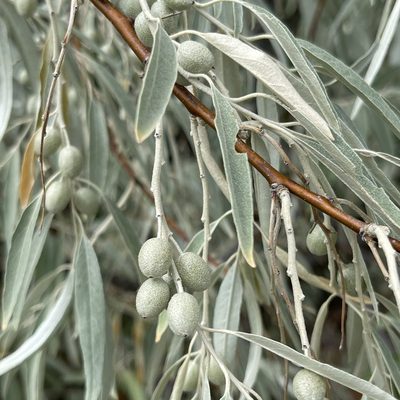
Other buffaloberries in this guide
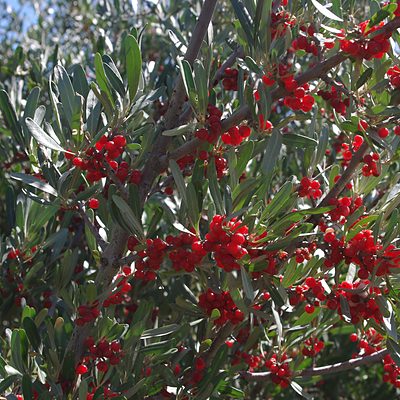
Oleaster family (Elaeagnaceae): 2 other plants in this guide
Sources: Flora of North America Vol. 10: Shepherdia canadensis, eFloras; Flora of North America Vol. 10: Shepherdia argentea, eFloras; Flora of North America Vol. 10: genus Shepherdia, key and discussion, eFloras; USDA Forest Service Fire Effects Information System: Shepherdia canadensis (Walkup 1991); USDA NRCS Plant Guide: Buffaloberry, Shepherdia canadensis (Favorite 2002); Montana Field Guide: Canada Buffaloberry, Shepherdia canadensis; Montana Field Guide: Silver Buffaloberry, Shepherdia argentea; Minnesota Wildflowers: Shepherdia canadensis (Canada Buffaloberry); NPSpecies checklist, Wind Cave National Park vascular plants; NPSpecies checklist, Jewel Cave National Monument vascular plants; NPSpecies checklist, Mount Rushmore National Memorial vascular plants; Marriott and Hartman 1986, A Survey of the Vegetation of Jewel Cave National Monument; GBIF occurrence search: Shepherdia canadensis, South Dakota and Wyoming herbarium specimens; GBIF specimen 2422406068: Pennington County, SD, 1998, "lodgepole pine forest over granitic rock"; GBIF specimen 5895819675: Meade County, SD, 1892, "Alt. 4000 Feet"; iNaturalist: research-grade Shepherdia canadensis observations in the Black Hills.