Rubber Rabbitbrush Ericameria nauseosa
Also called Gray Rabbitbrush, Golden Rabbitbrush, Chamiso Blanco, pȟeží ȟóta šičámna (Lakota)
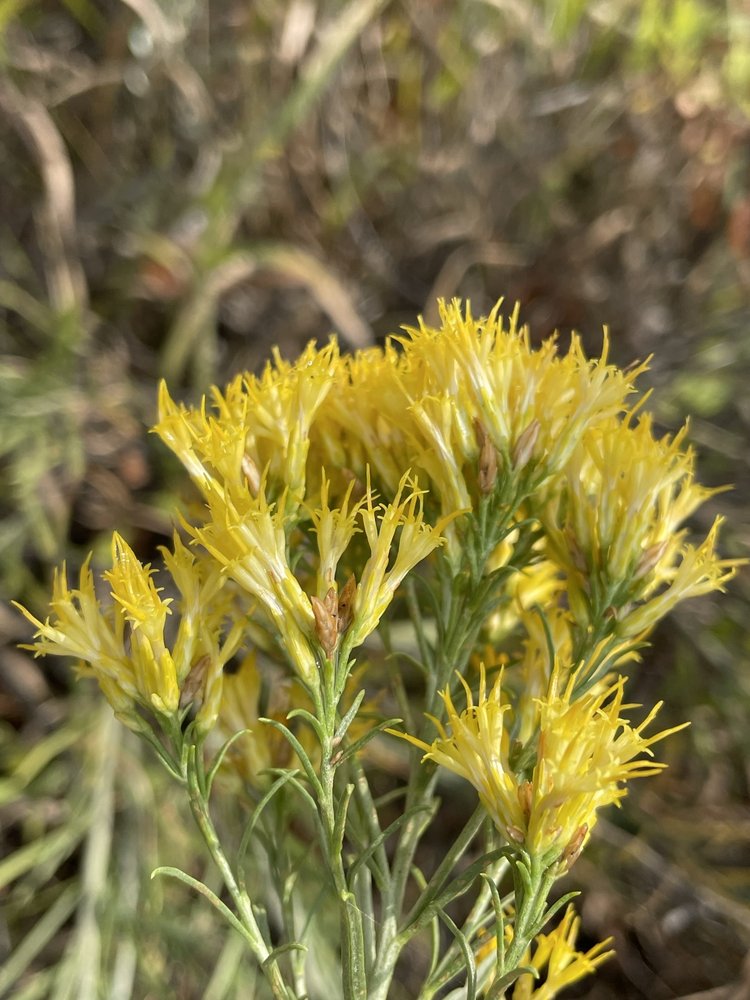
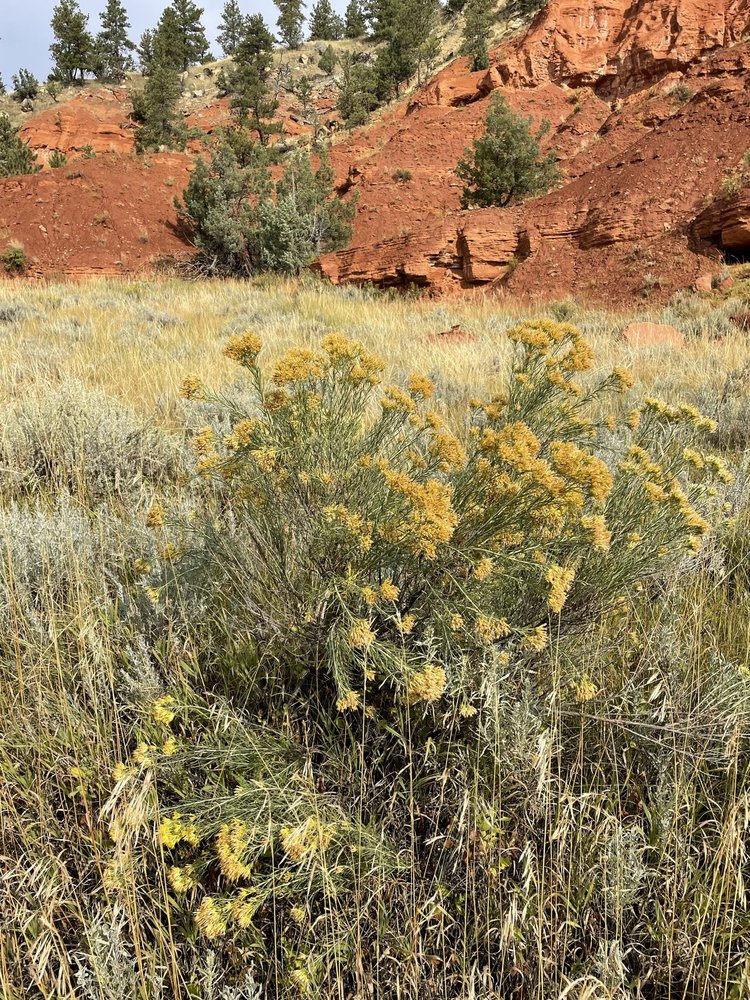
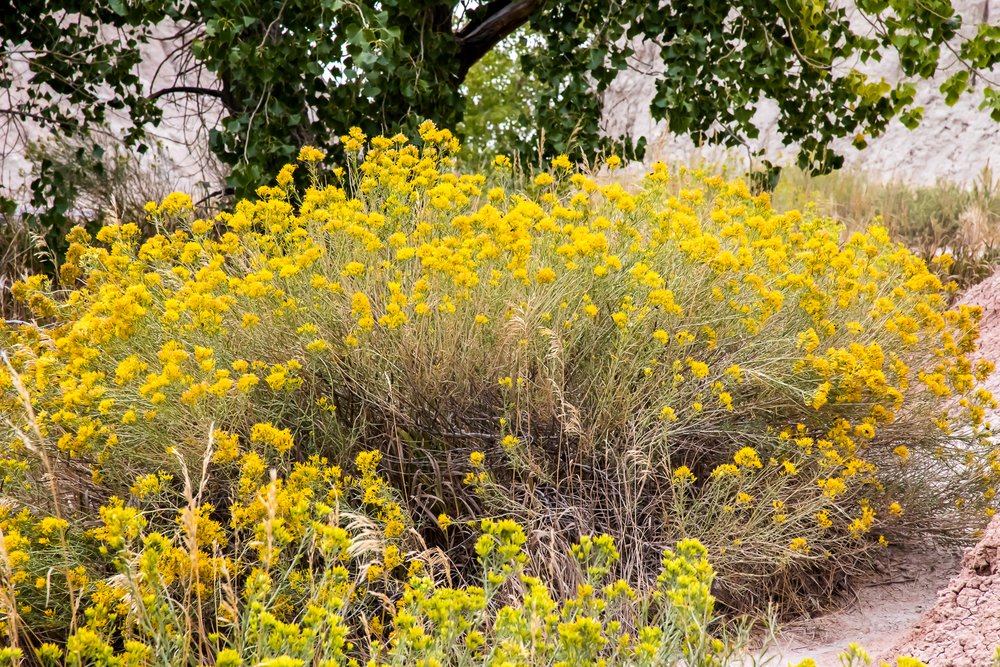
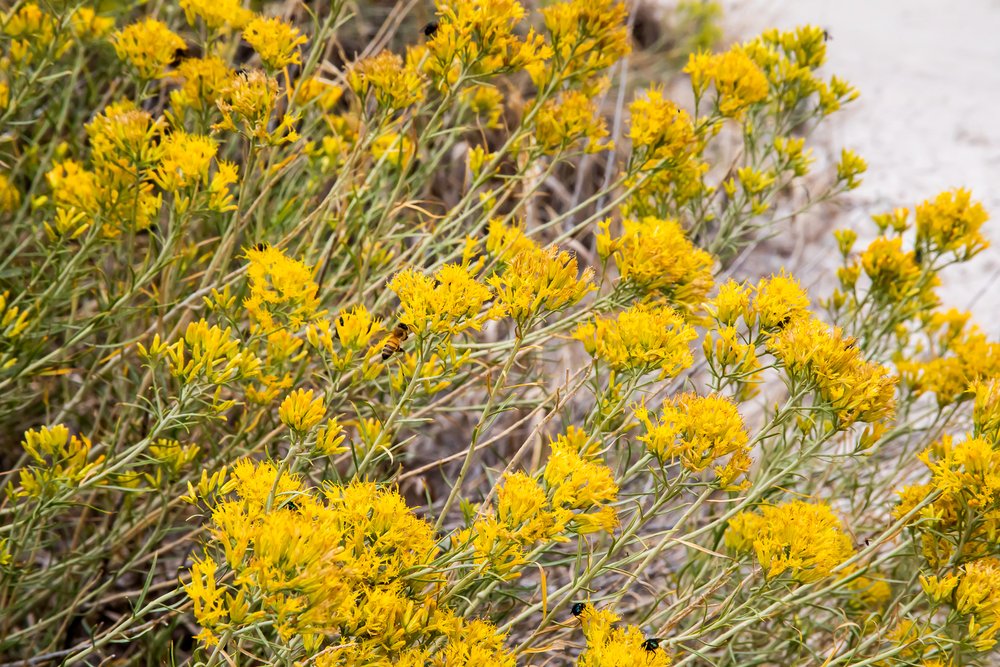
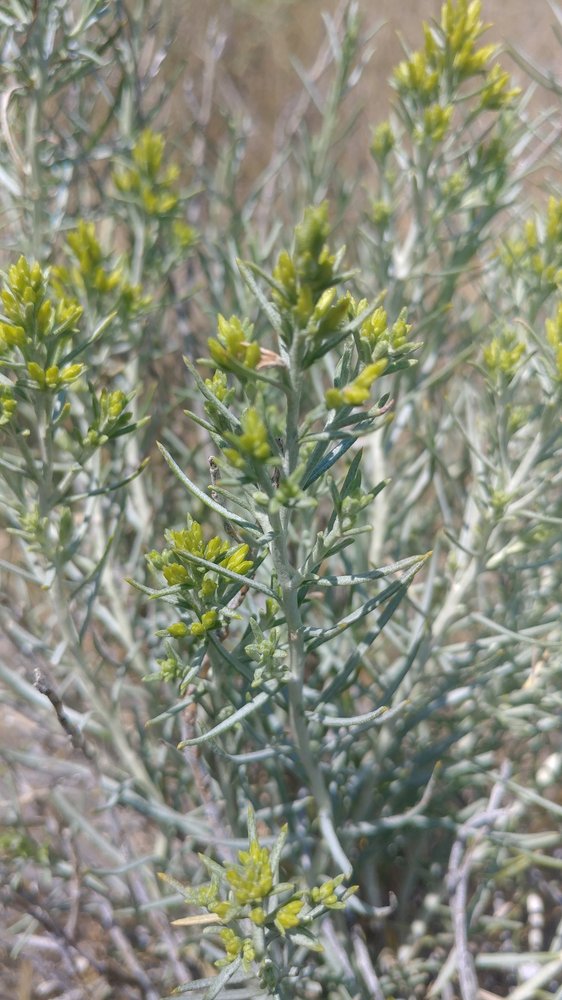
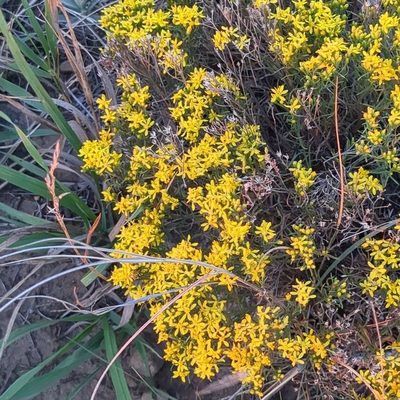
Rubber Rabbitbrush (Ericameria nauseosa) is a native rounded shrub, usually 30–230 cm (1–7½ ft) tall, with flexible gray-green stems covered in white felt and narrow thread-like leaves. From August into October it turns gold with flat-topped clusters of small yellow flower heads, when few other plants are in flower. In the Black Hills it grows in dry grasslands and the foothills on the western side, and the National Park Service lists it at Jewel Cave and Devils Tower.
Free photos from other sources
| Family | Asteraceae · Aster |
|---|---|
| Status | Native deciduous shrub |
| Blooms | August into October, when little else is in flower |
| Height | 30–230 cm (12–90 in) |
| Where | Dry, open, sunny ground: grasslands, foothills, badlands, eroded slopes and roadsides, mostly around the edges of the Black Hills |
| Also called | Gray Rabbitbrush, Golden Rabbitbrush, Chamiso Blanco, pȟeží ȟóta šičámna (Lakota) |
| Synonym | Chrysothamnus nauseosus, Chrysocoma nauseosa, Bigelovia nauseosa |
| Toxicity | Considered slightly toxic to livestock; Black Elk and Flying By (1998) note that it can be toxic in large quantities. |
| Traditional use | Black Elk and Flying By (1998) record that the Lakota chewed the leaves and stems as a gum, used a decoction of the twigs for toothaches, coughs and chest pains, and used an infusion of the flowering stems for colds. The USDA plant guide adds that the Hopi wove baskets from the stripped branches and the Navajo made a yellow dye from the flowers. |
Roots, seeds & germination
Root: A deep taproot with few side roots. The shrub spreads by root sprouts and resprouts from buds at its base, so the USDA plant guide says cultivating and burning typically make a stand thicker rather than remove it.
Seed: A small achene 3–8 mm long topped by a whitish pappus of bristles 3–13 mm long that carries it on the wind, up to about 150 m (500 ft). The seed ripens from late September into November, and crops are heavy most years, but the seed stays viable only about 3 years and doesn't build up in the soil. Plants start seeding at 2 years old and live 5 to 20 years.
Germination: The seed isn't dormant and needs no pretreatment: it sprouts 5 to 20 days after sowing, best at 20–30 °C (68–86 °F), with or without light. Cold, moist stratification speeds it up, and SDSU says sowing in fall usually succeeds.
How do you identify Rubber Rabbitbrush?
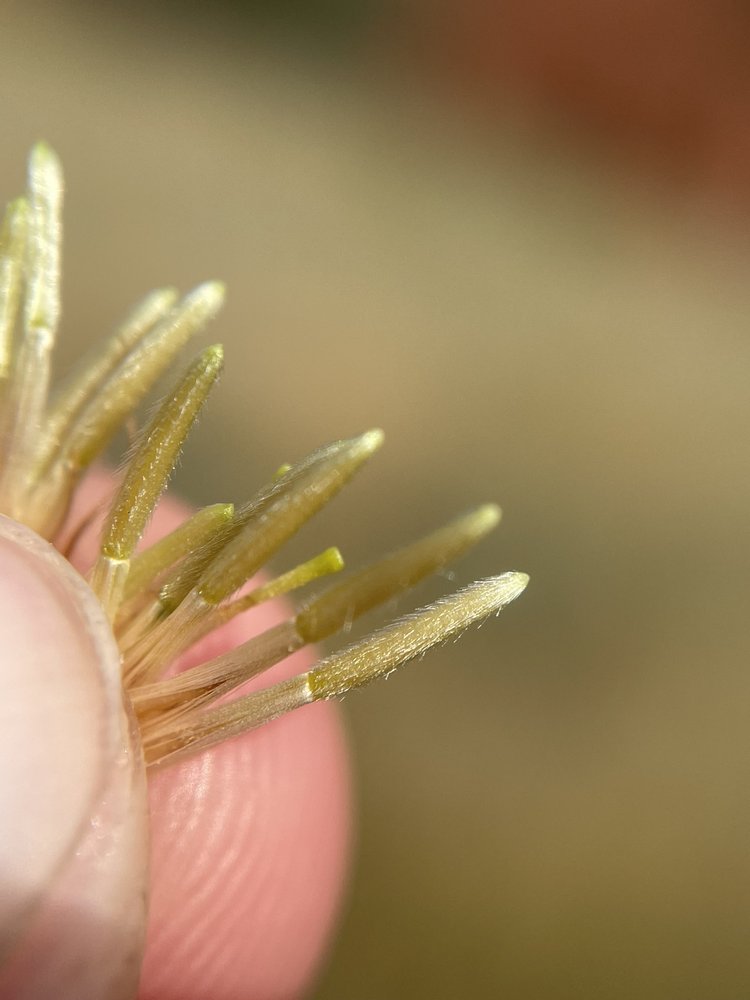
Look for a rounded, much-branched shrub with several flexible, rubbery stems from the base, coated in a dense felt of white or gray-green hairs, and alternate thread-like leaves 2–7.5 cm (1–3 in) long and only 0.5–3 mm wide. From August the branch tips carry rounded to flat-topped clusters up to 12 cm (5 in) wide of small golden-yellow heads; each head has only 4 to 6 tubular disk flowers 6–12 mm long and no petal-like rays, held in narrow, papery, keeled bracts stacked in 3 to 5 rows. The fluffy seed heads often stay on the shrub through winter. Utah State University notes that Broom Snakeweed is commonly confused with rabbitbrush: snakeweed is smaller, 20–70 cm (8–28 in), its small yellow heads have ray flowers, and its stems die back in winter, while rabbitbrush has no ray flowers and its stems don't die back.
When does it bloom?
August into October, when little else is in flower.
Where does it grow?
Dry, open, sunny ground on plains, valley bottoms, foothills and mountains, often on disturbed or eroded sites with sandy, gravelly or clay soil. SDSU lists it as native to mainly the western half of South Dakota on dry hills, high plains, open grasslands and badlands, and the Black Hills National Forest's native plants page places it in dry grasslands and the foothills of the western Black Hills. The National Park Service lists it at Jewel Cave and Devils Tower, and herbarium specimens from 1897 on come from Lawrence, Fall River, Custer and Meade counties and from Crook and Weston counties in Wyoming, with labels such as "dry clay, full sunlight," "roadside, dry grassy soil" and "on eroded soil."
Other plants to compare
Aster family (Asteraceae): 62 other plants in this guide
- Aromatic Aster
- Arrowleaf Balsamroot
- Arrowleaf Sweet Coltsfoot
- Bachelor's Button
- Balsam Ragwort
- Black-eyed Susan
- Blanket Flower
- Blue Lettuce
- Broom Snakeweed
- Bull Thistle
- Canada Hawkweed
- Canada Lettuce
- Canada Thistle
- Chicory
- Common Burdock
- Common Dandelion
- Common Sunflower
- Common Tansy
- Common Yarrow
- Curlycup Gumweed
- Cutleaf Coneflower
- Dotted Gayfeather
- Drummond's Thistle
- Easter Daisy
- False Boneset
- Fetid Marigold
- Field Pussytoes
- Fringed Sagewort
- Hairy Golden Aster
- Heart-leaved Arnica
- Hooker's Townsend Daisy
- Horseweed
- Jerusalem Artichoke
- Lambstongue Groundsel
- Maximilian Sunflower
- Missouri Goldenrod
- Mountain Dandelion
- Musk Thistle
- Oxeye Daisy
- Pearly Everlasting
- Pineapple Weed
- Prairie Coneflower
- Prairie False Dandelion
- Purple Coneflower
- Rocky Mountain Blazing Star
- Rosy Pussytoes
- Rush Skeletonplant
- Scotch Thistle
- Silver Sagebrush
- Smooth Blue Aster
- Spotted Joe-Pye Weed
- Stemless Four-nerve Daisy
- Stiff Goldenrod
- Stiff Sunflower
- Threenerve Fleabane
- Wavyleaf Thistle
- Western Ragweed
- White Hawkweed
- White Prairie Aster
- White Sagebrush
- Woolly Groundsel
- Yellow Salsify
Sources: Ericameria nauseosa, Rubber Rabbitbrush (R. Neil Reese) — SDSU Open PRAIRIE, South Dakota Native Plant Research; Flora of North America Vol. 20: Ericameria nauseosa — eFloras; Black Hills Native Plants — Black Hills National Forest, USDA Forest Service; Fire Effects Information System: Ericameria nauseosa (Tirmenstein 1999) — USDA Forest Service; Plant Guide: Rubber Rabbitbrush, Ericameria nauseosa — USDA NRCS Pullman Plant Materials Center; Range Plants of Utah: Broom Snakeweed — Utah State University Extension; NPSpecies checklist, Jewel Cave National Monument vascular plants — National Park Service; NPSpecies checklist, Devils Tower National Monument vascular plants — National Park Service; GBIF occurrence search: Ericameria nauseosa, South Dakota and Wyoming herbarium specimens — GBIF; Culturally Important Plants of the Lakota (Black Elk and Flying By, 1998) — Sitting Bull College, filed with the South Dakota PUC.