Black-eyed Susan
Rudbeckia hirta
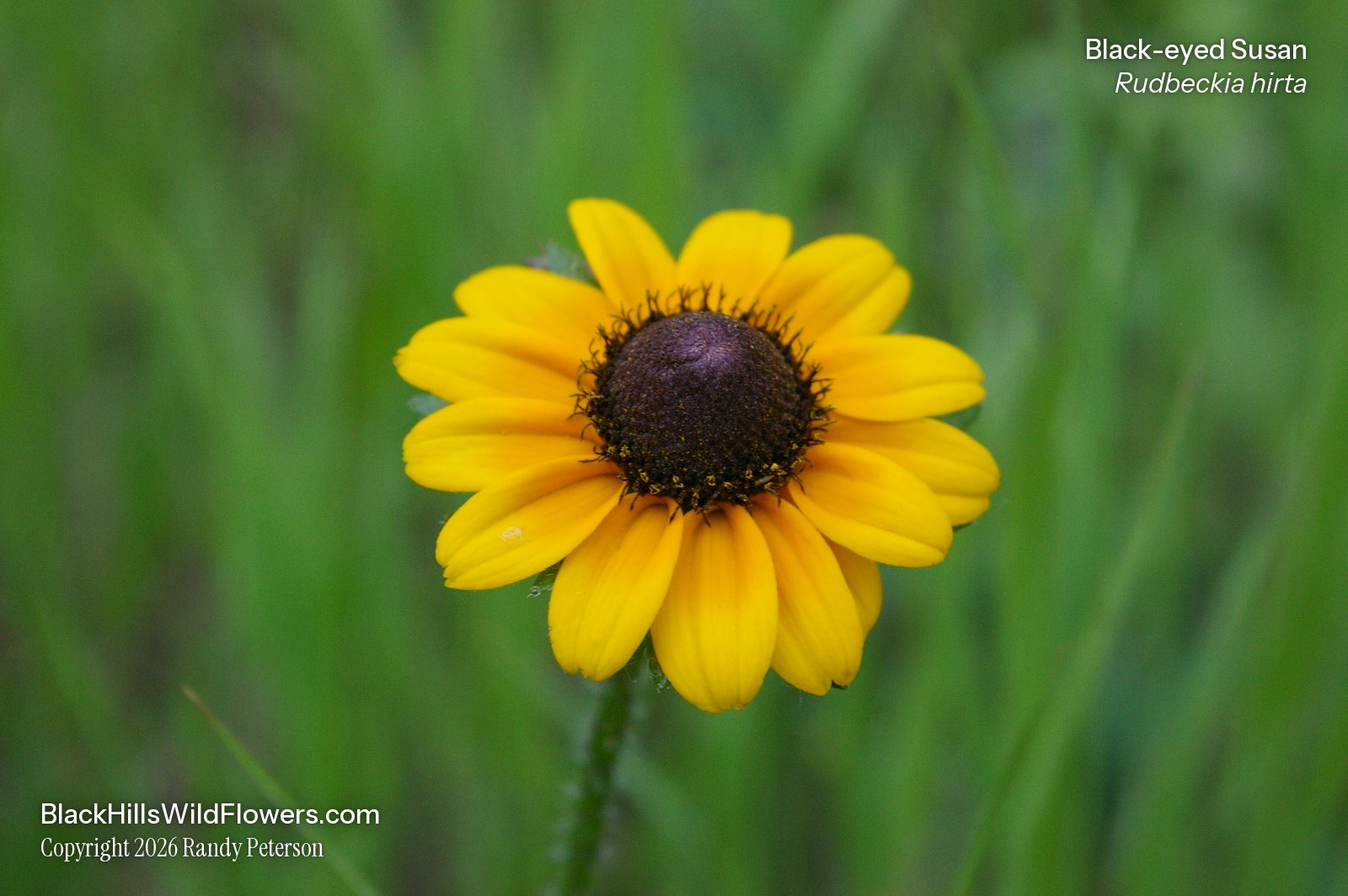
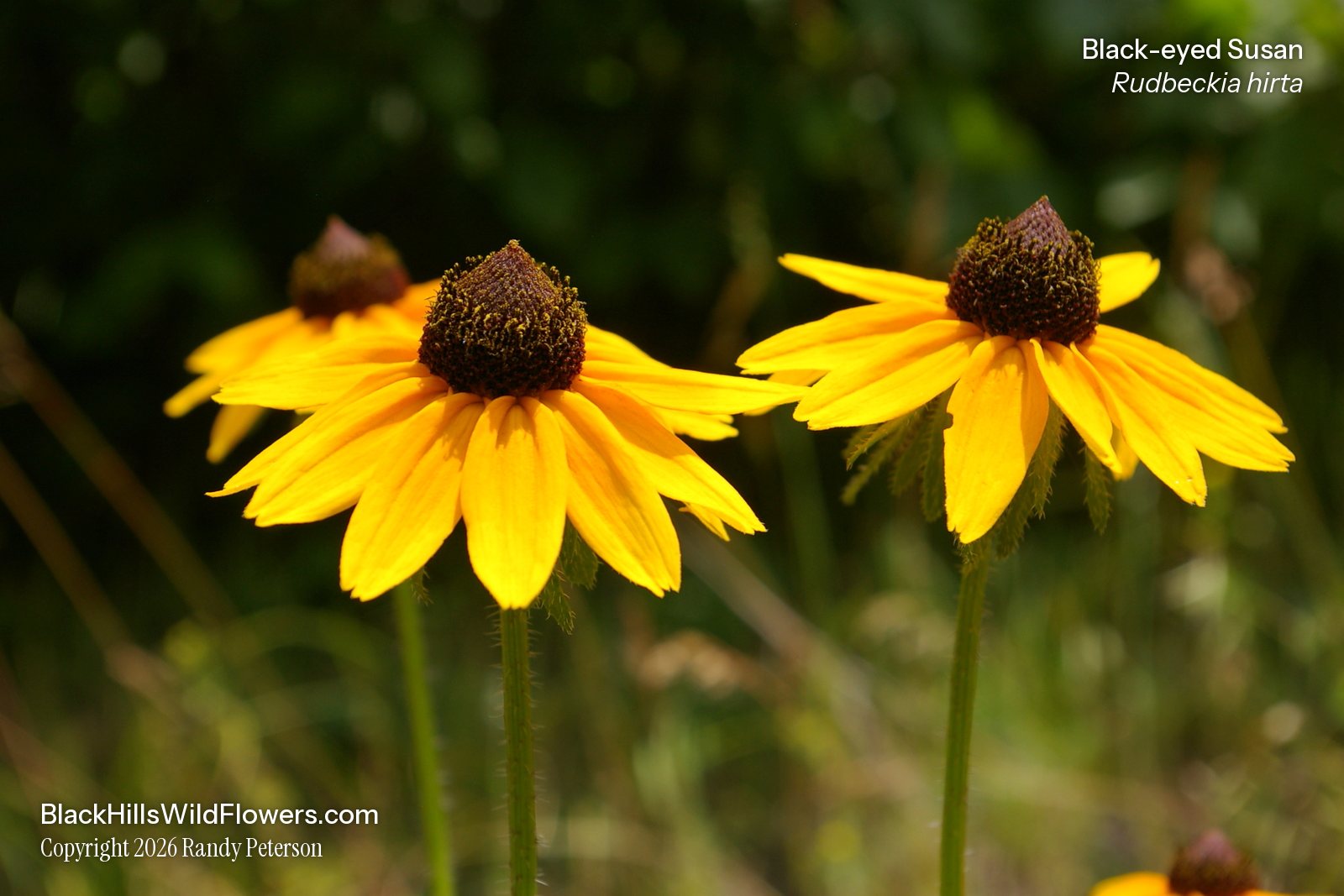
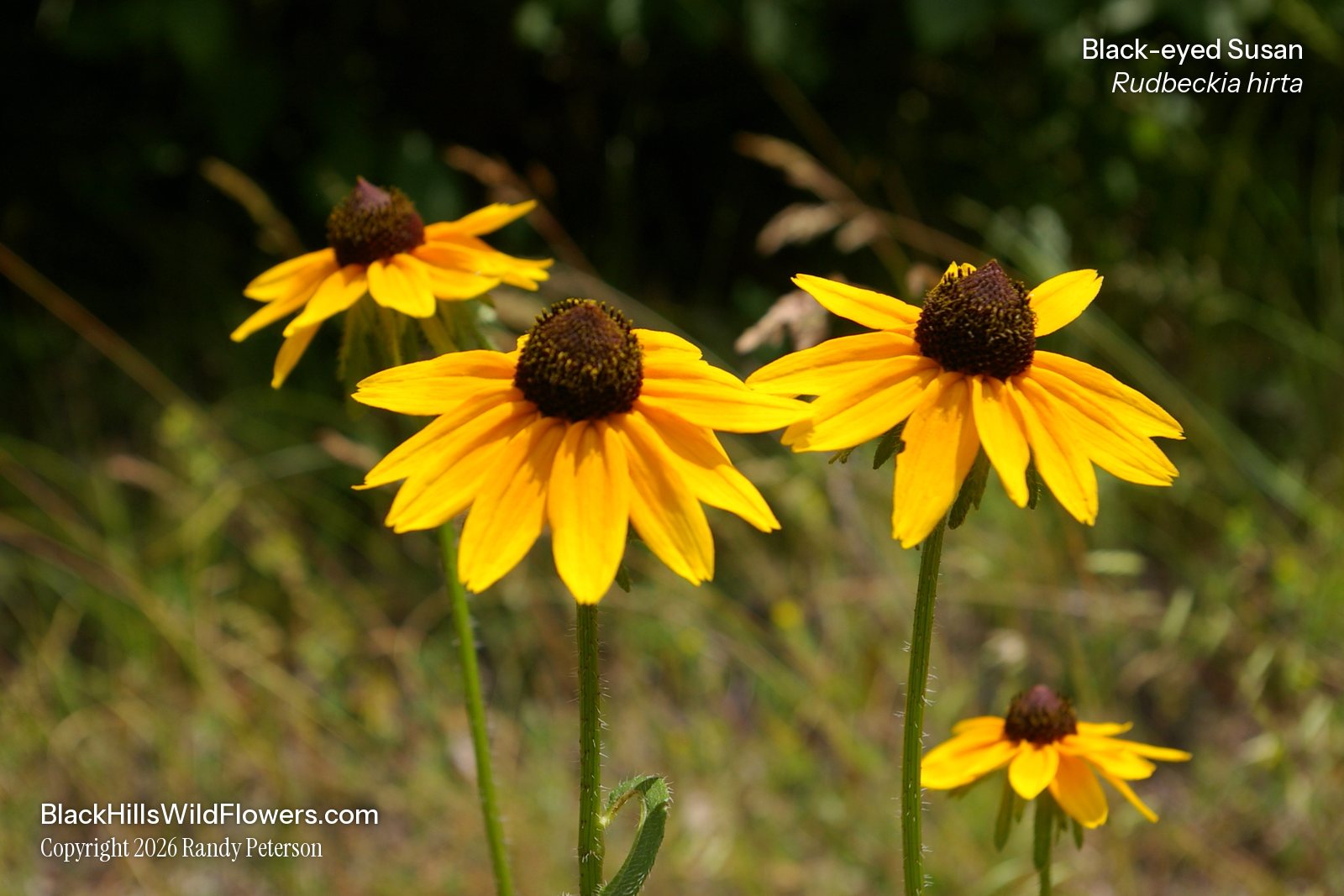
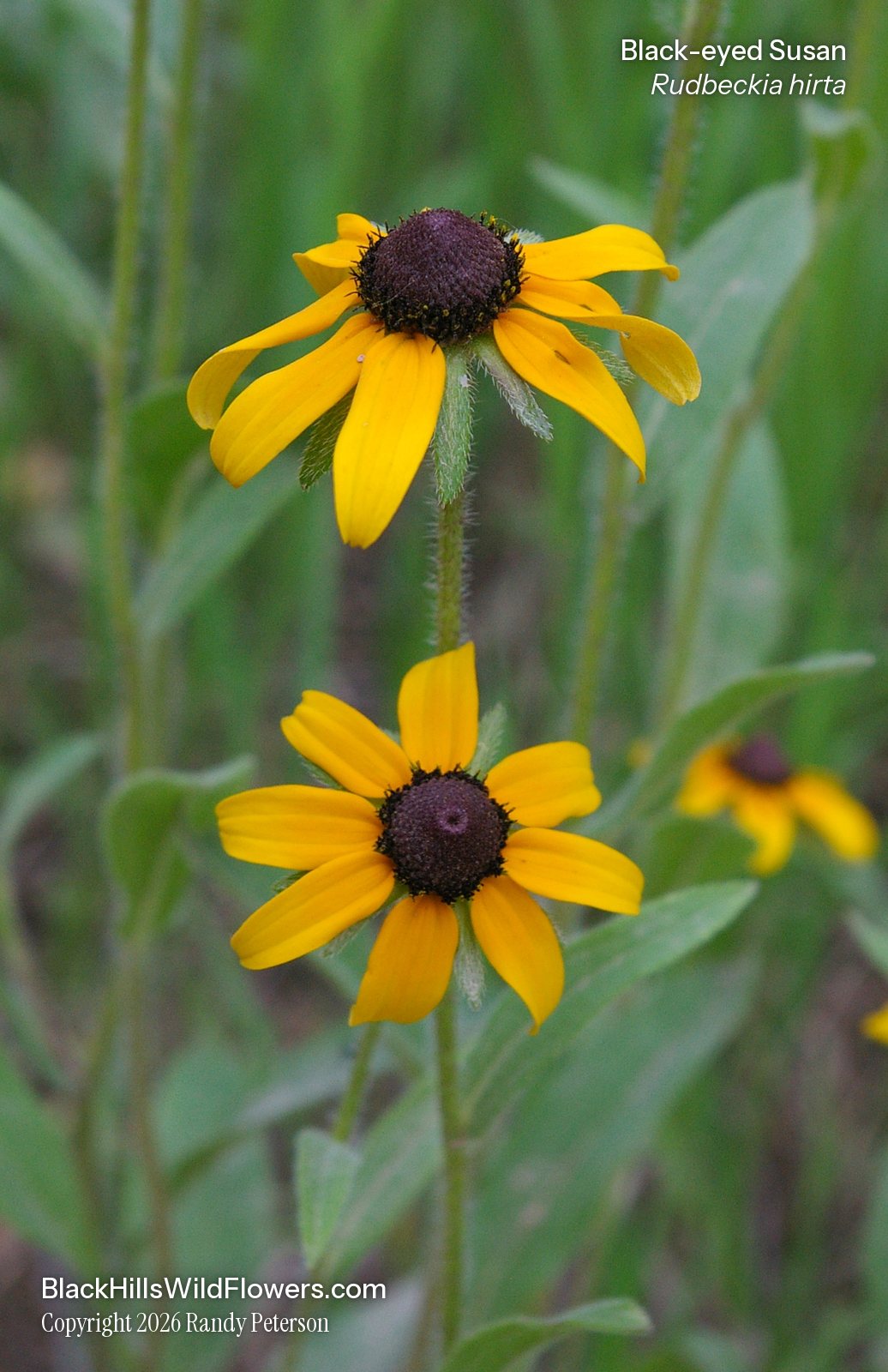
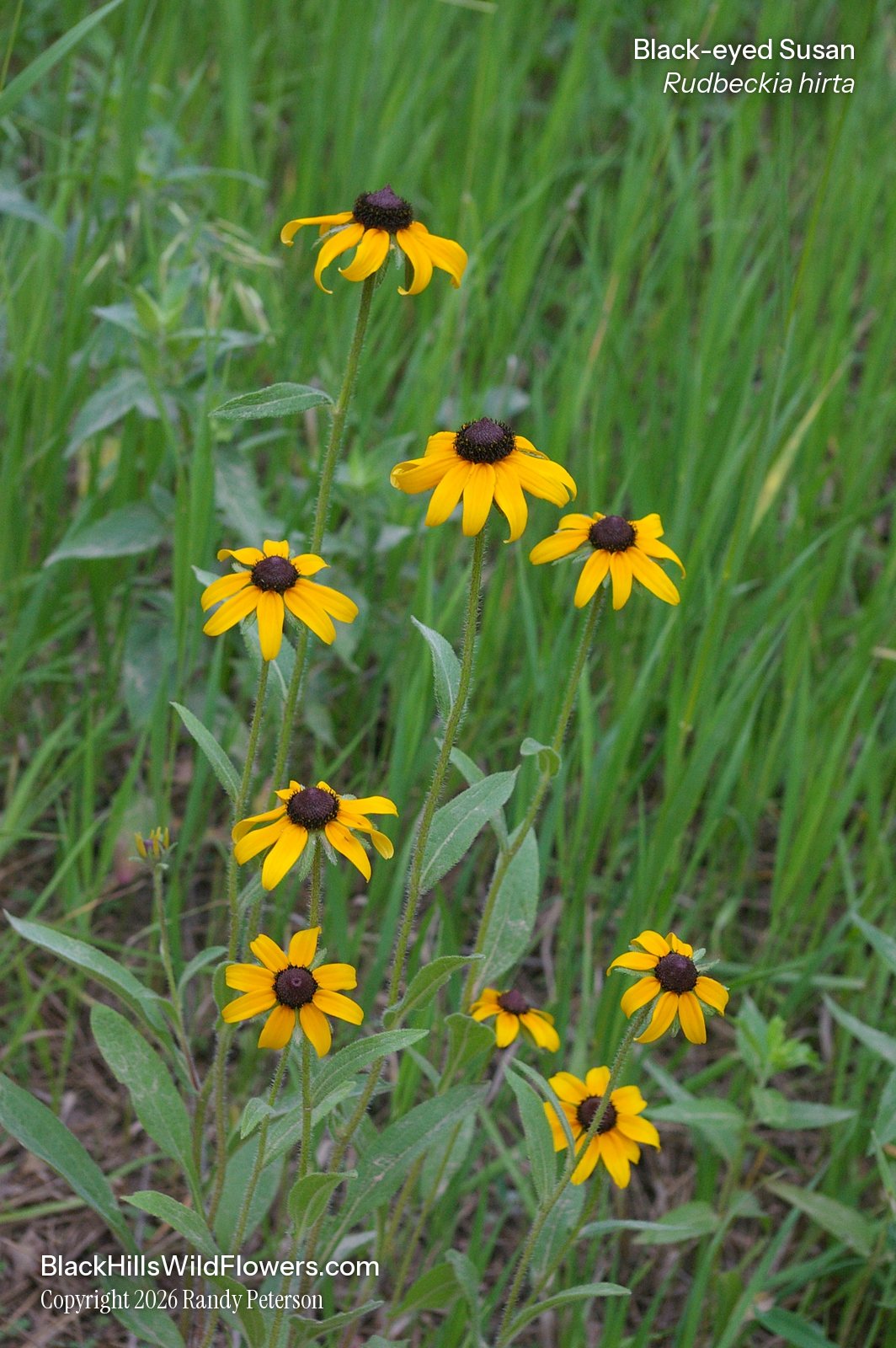
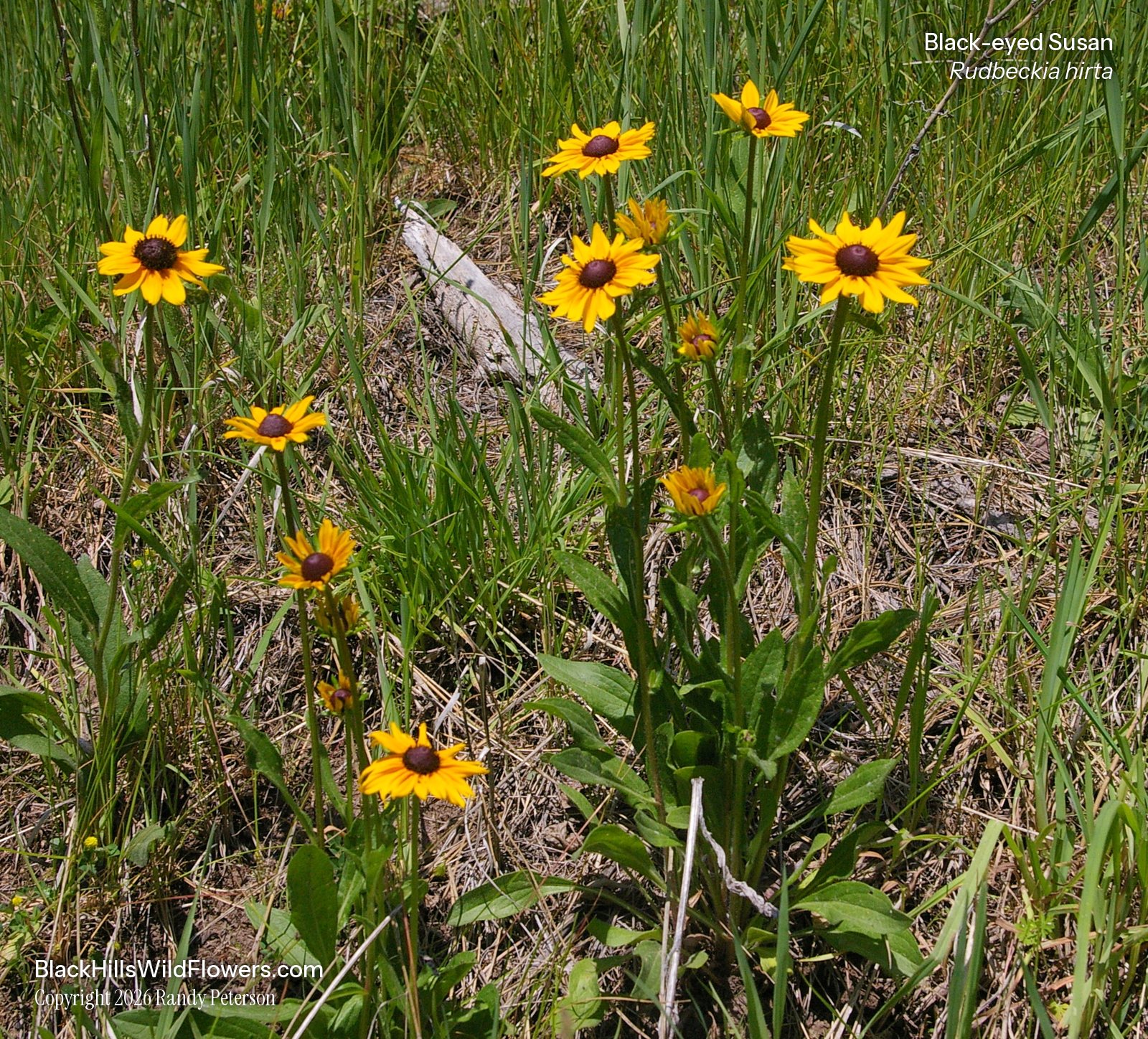
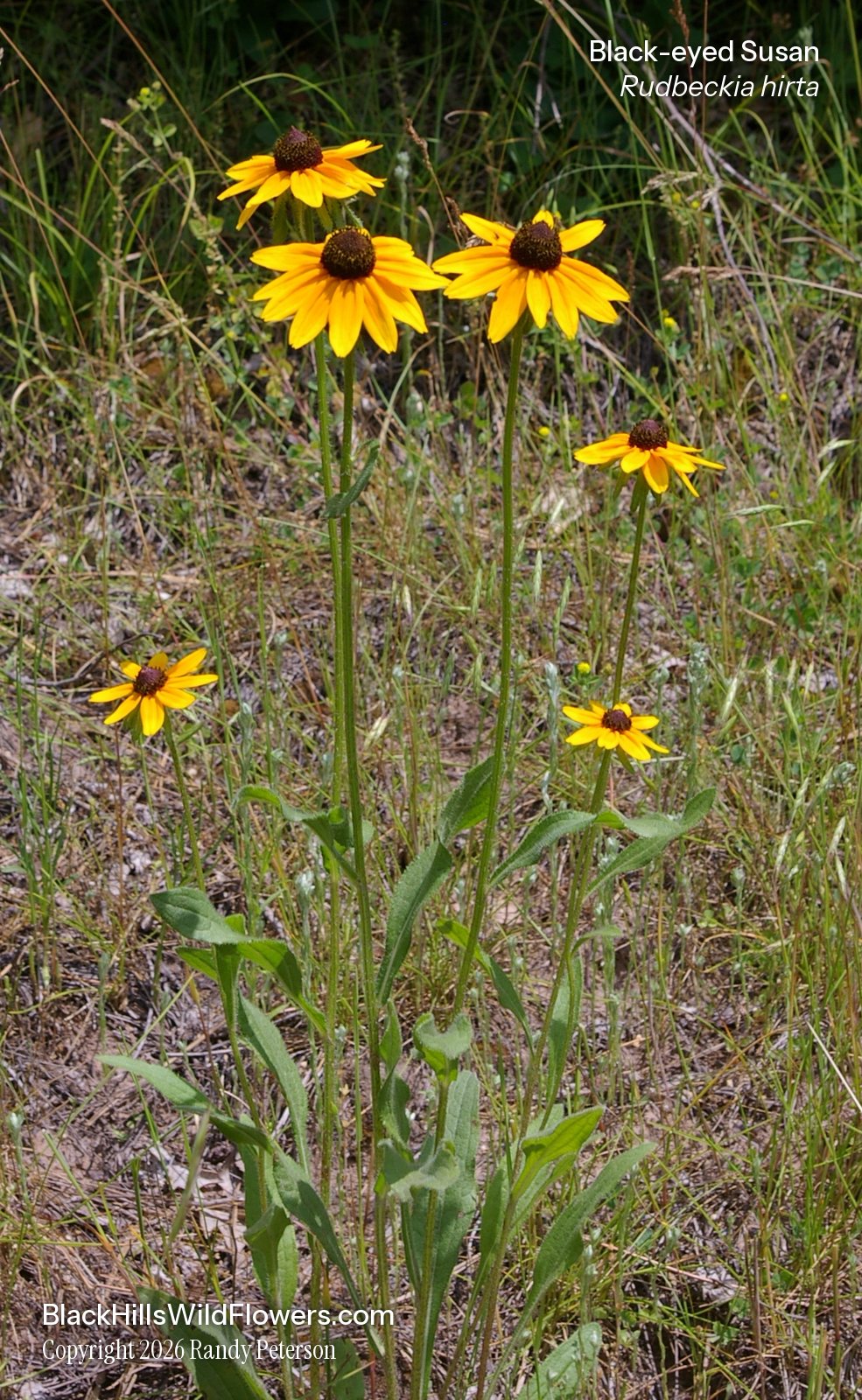
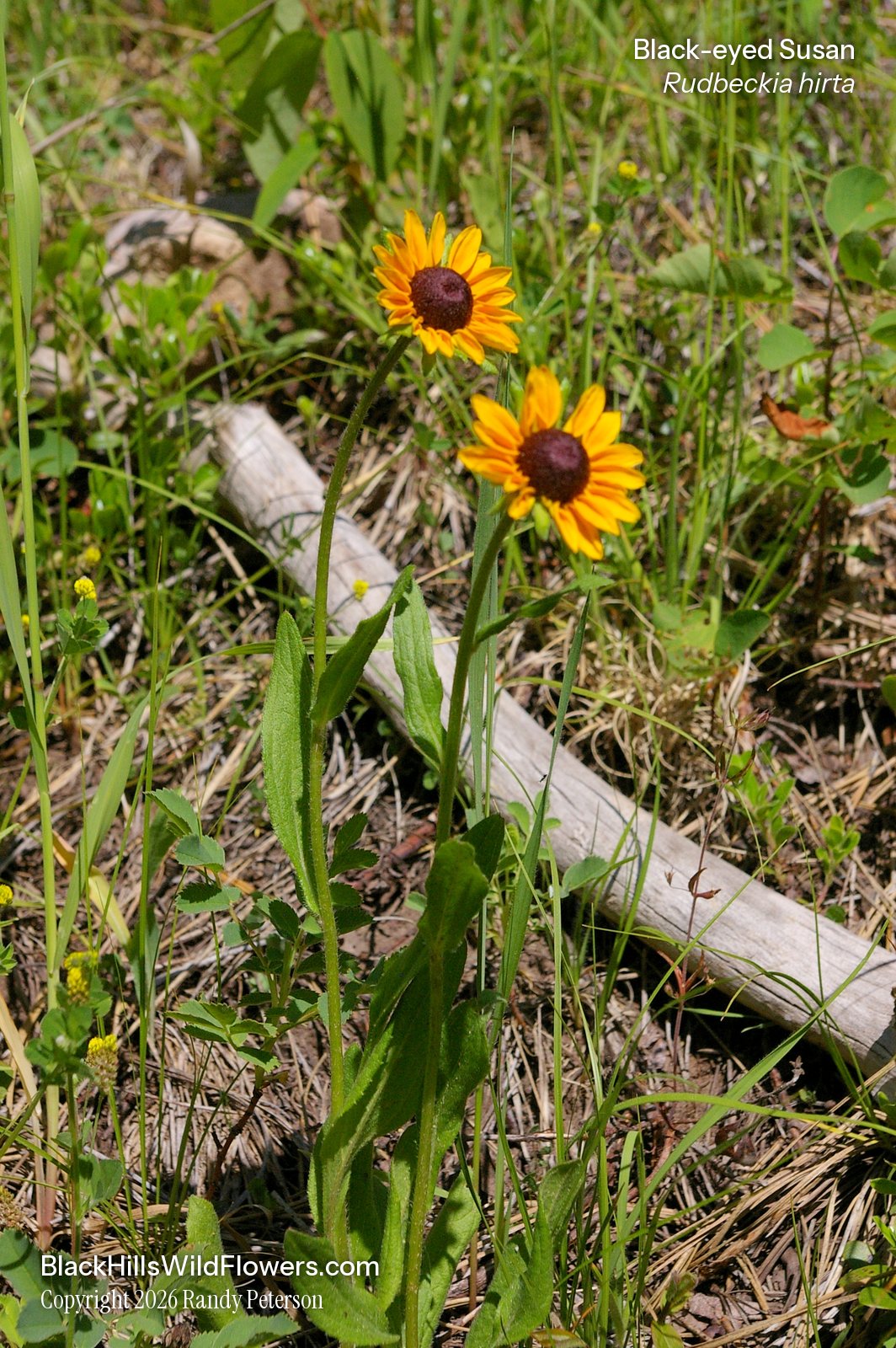
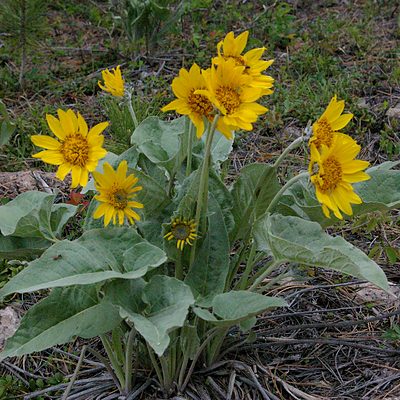
Black-eyed Susan (Rudbeckia hirta) is a native, hairy-stemmed plant with yellow to yellow-orange rays around a dark brown center. It is common throughout the Black Hills in moist meadows, open forests and roadsides, and it blooms mainly in midsummer. Photographed in the Black Hills.
| Family | Asteraceae · Aster |
|---|---|
| Status | Native annual |
| Blooms | May through September, mainly midsummer in the Black Hills |
| Height | 30–100 cm (12–39 in) |
| Where | Moist meadows, open forests, roadsides and disturbed prairie |
| Also called | Blackeyed Susan |
| Traditional use | The USDA plant guide records that the Cherokee, Iroquois and Potawatomi used leaf and root preparations for sores, earache, worms and colds. |
Roots, seeds & germination
Root: Grows from a taproot and doesn't tolerate root disturbance.
Seed: A black, four-sided achene (a dry one-seeded fruit), about 1.5–2 mm long, with no tuft of bristles. Collect it in mid to late summer. The plant reseeds itself readily, and several songbirds eat the seed.
Germination: Fall sowing is easy. Spring sowing gives only partial germination unless the seed gets about 30 days of cold treatment first.
How do you identify Black-eyed Susan?
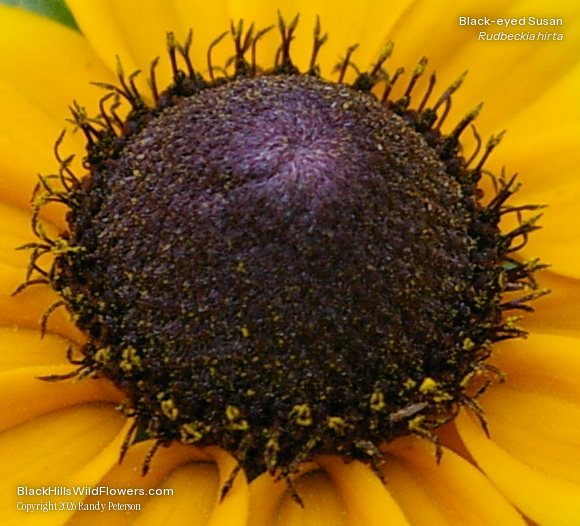
Look for long, stiff, spreading hairs on the stem and rough, hairy leaves with few or no teeth. The flower heads sit one to a few on long stalks, with yellow to yellow-orange rays, sometimes purplish at the base, around a dark brown to purplish-brown button or cone.
When does it bloom?
May through September, mainly midsummer in the Black Hills.
Where does it grow?
Common throughout the Black Hills in moist meadows, open forests and along roadsides. Elsewhere in South Dakota it grows mostly in disturbed prairie, roadsides and waste areas in the northeast and southwest.
Other flowers to compare
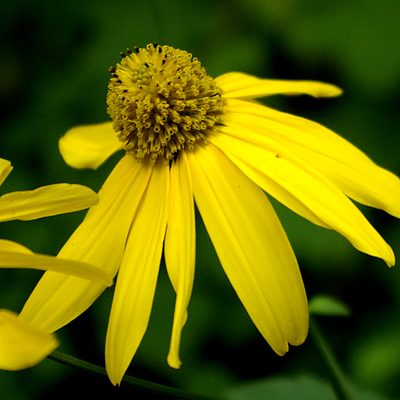
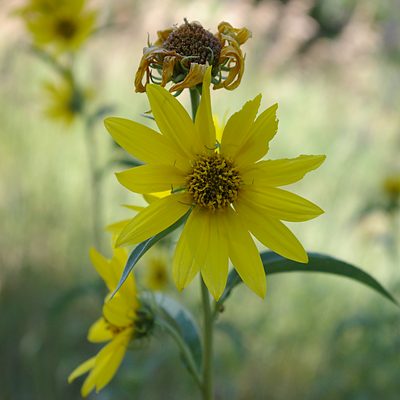
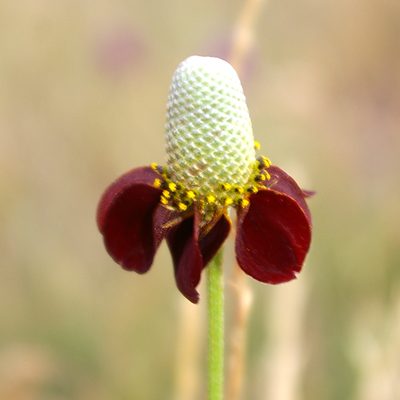
Sources: USDA Forest Service: Black Hills Native Plants; SDSU Open PRAIRIE: Rudbeckia hirta; Minnesota Wildflowers: Black-eyed Susan; USDA NRCS Plant Guide: Black-eyed Susan.