Arrowleaf Balsamroot
Balsamorhiza sagittata
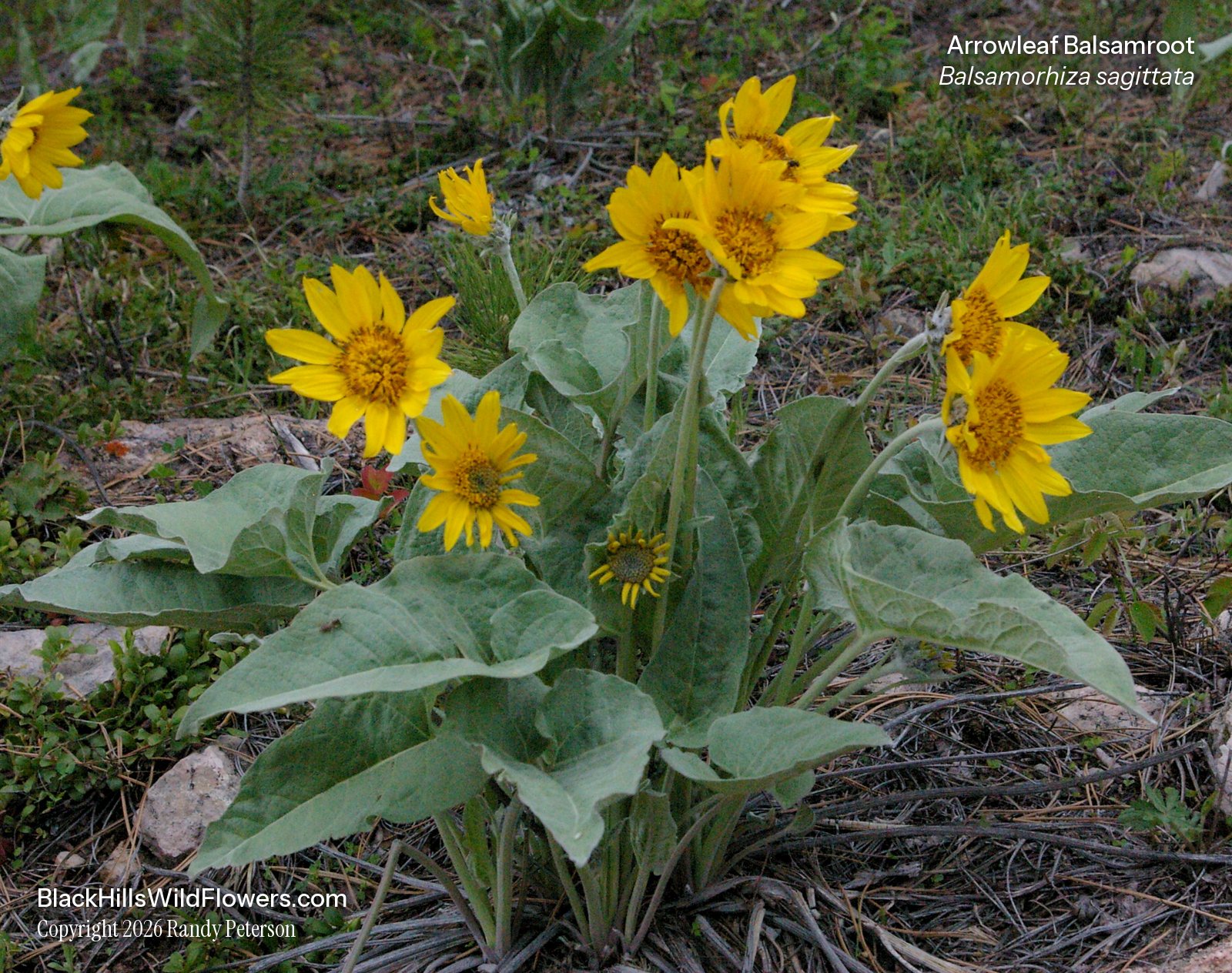
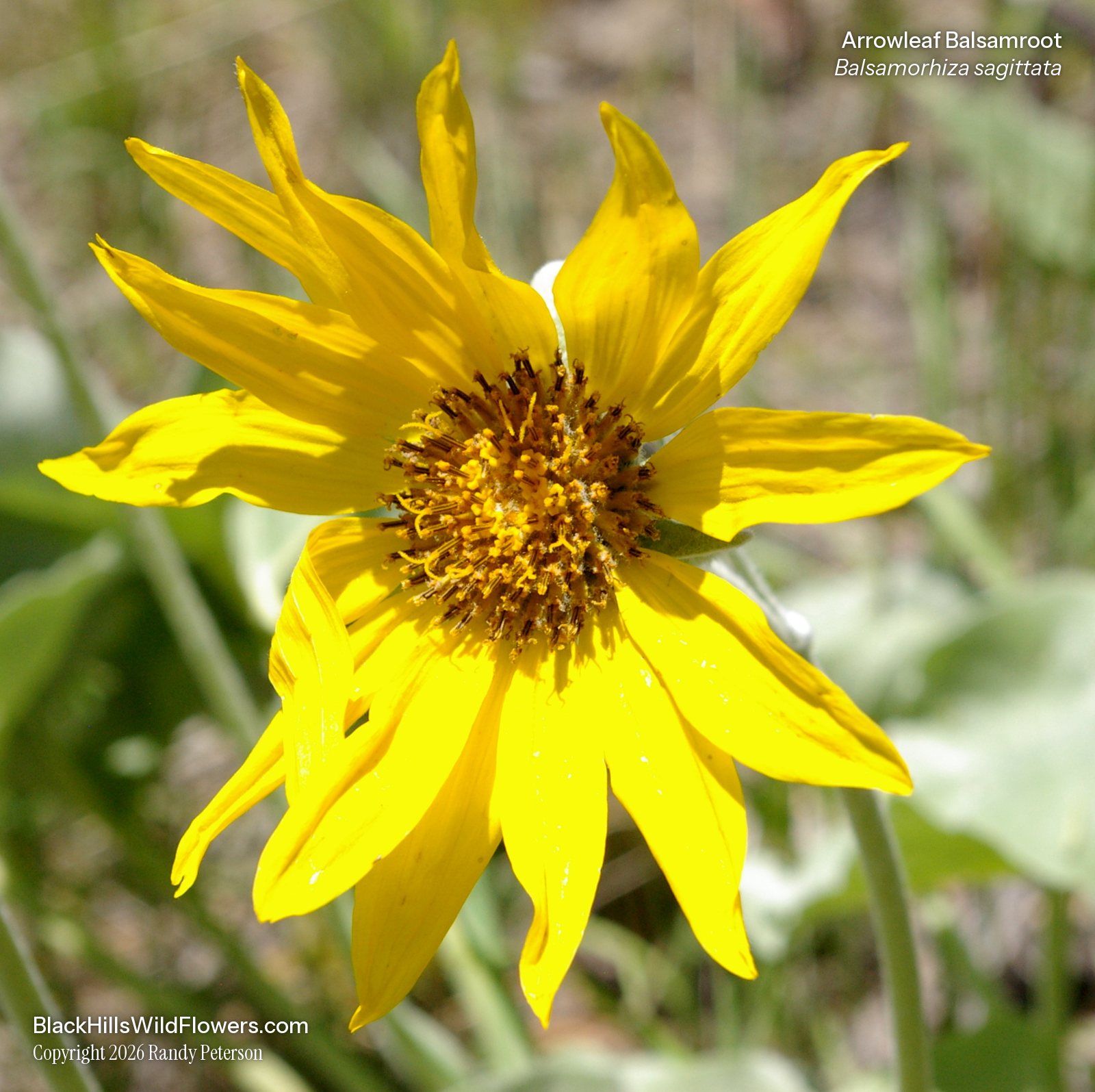
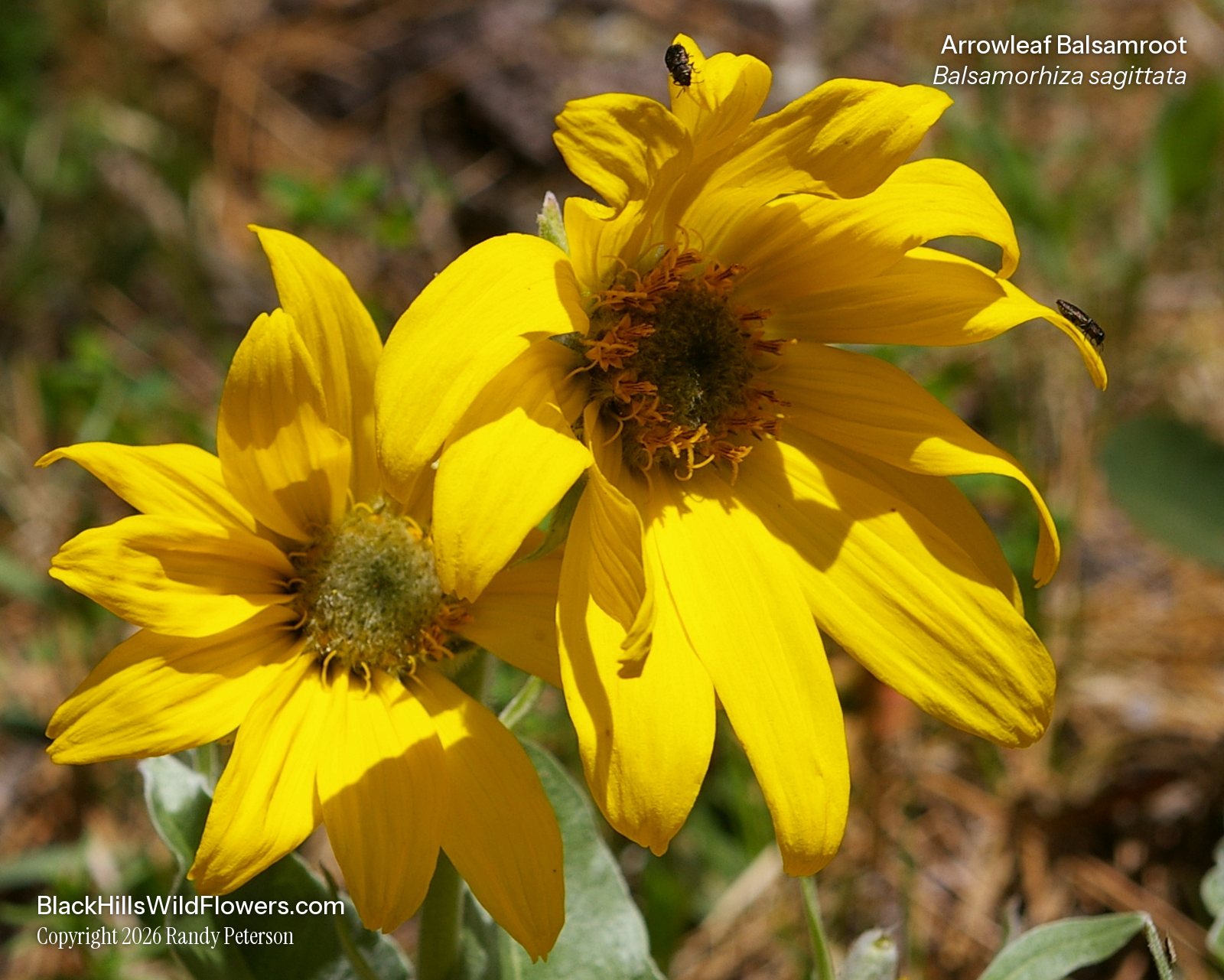
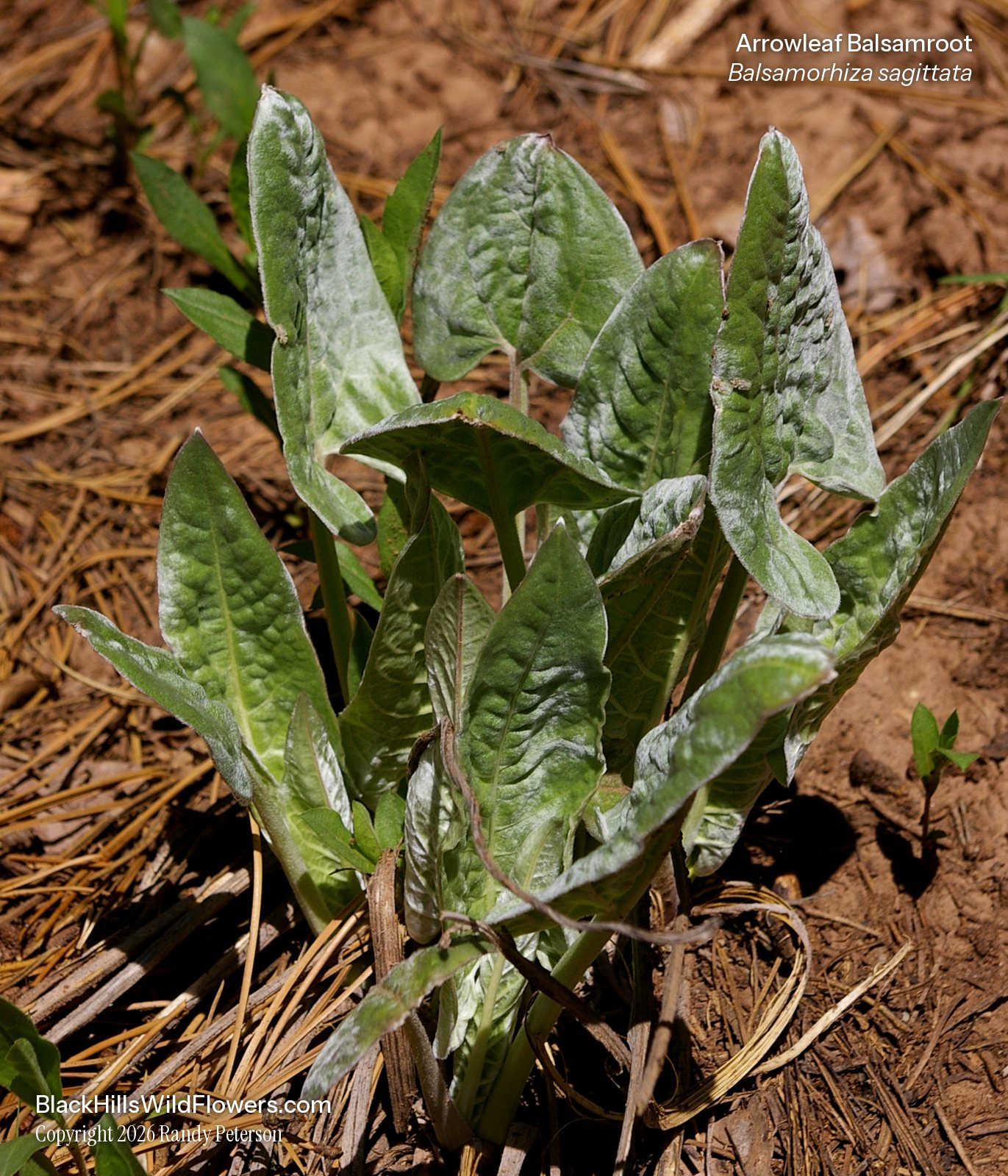
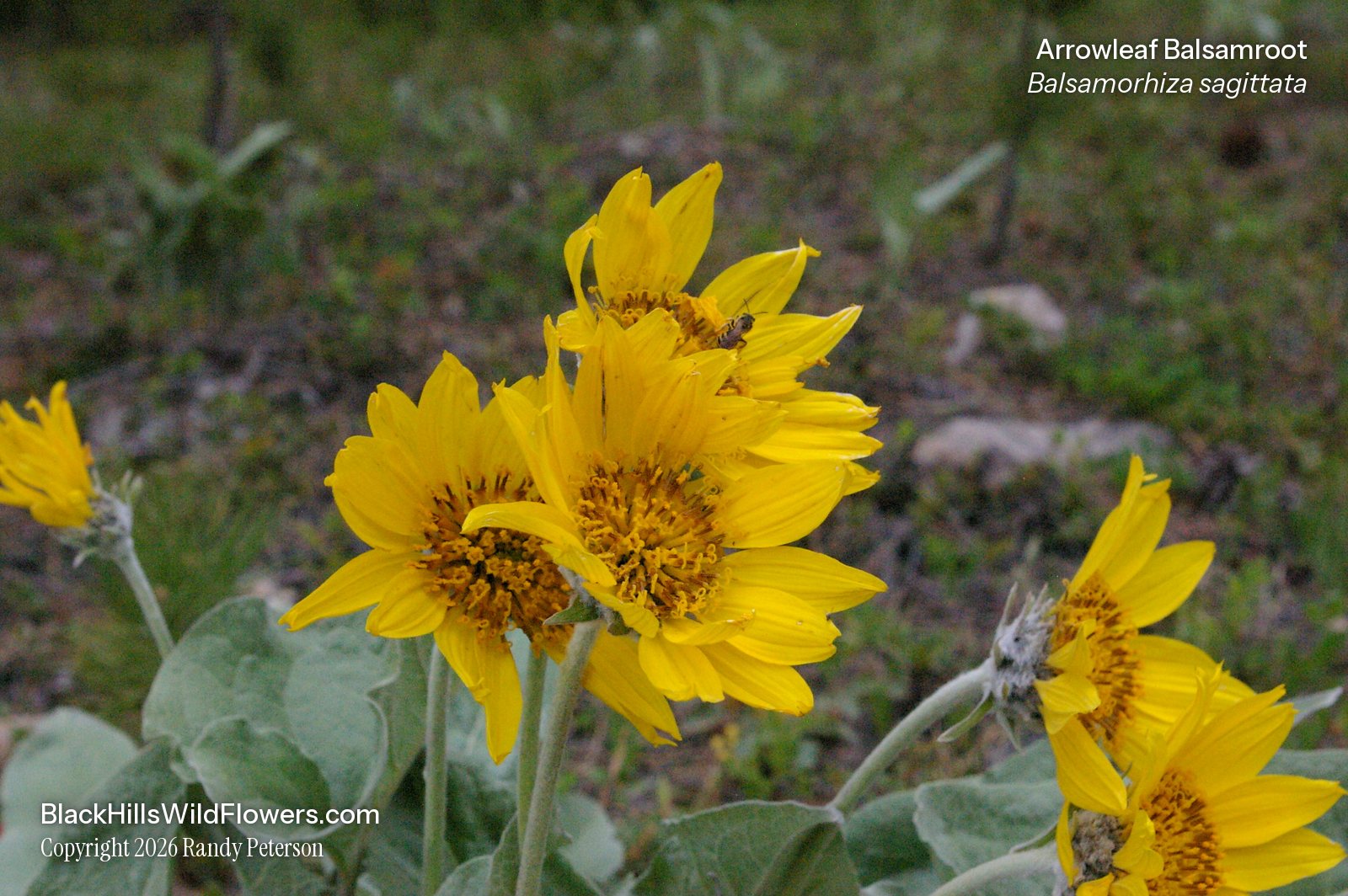
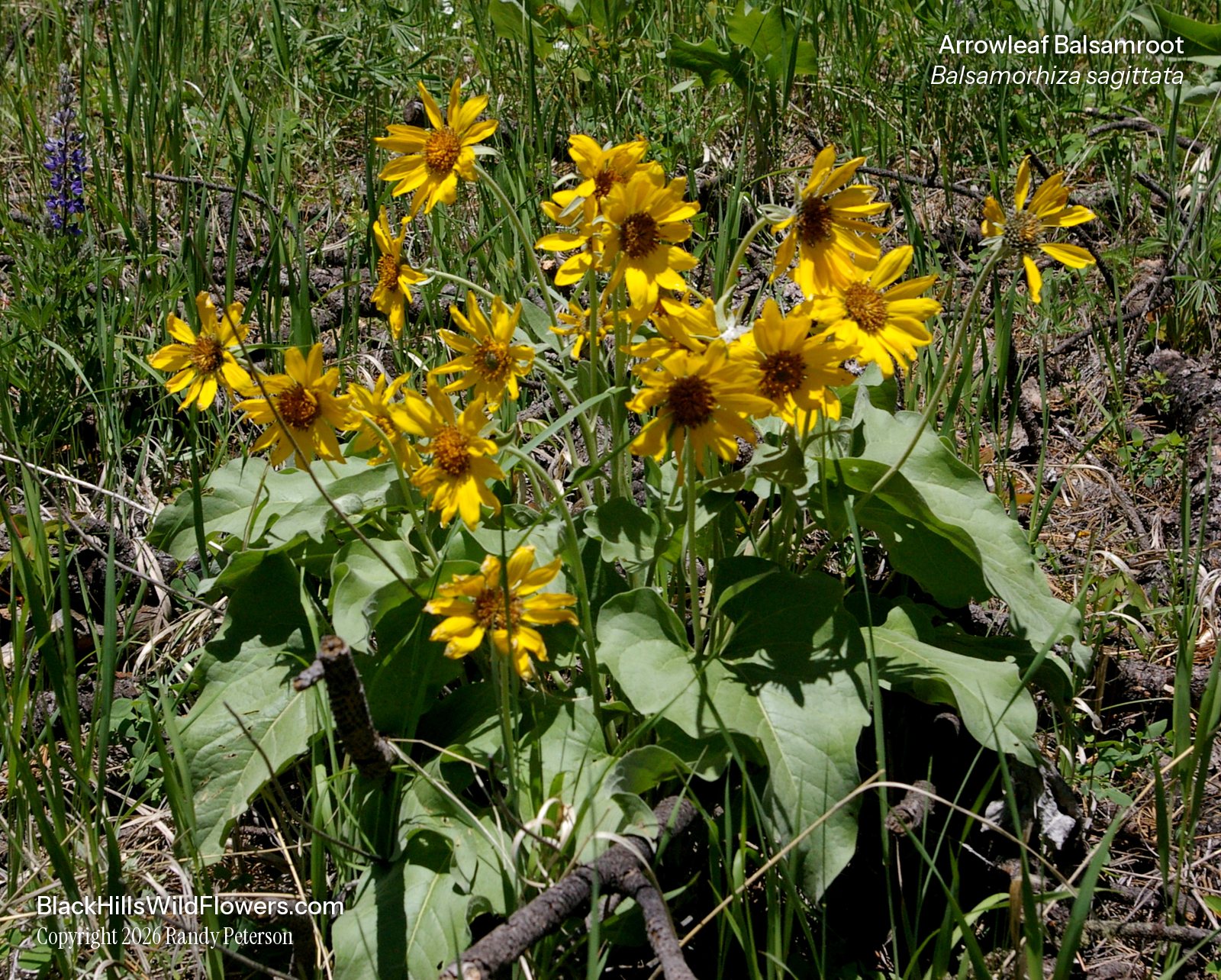
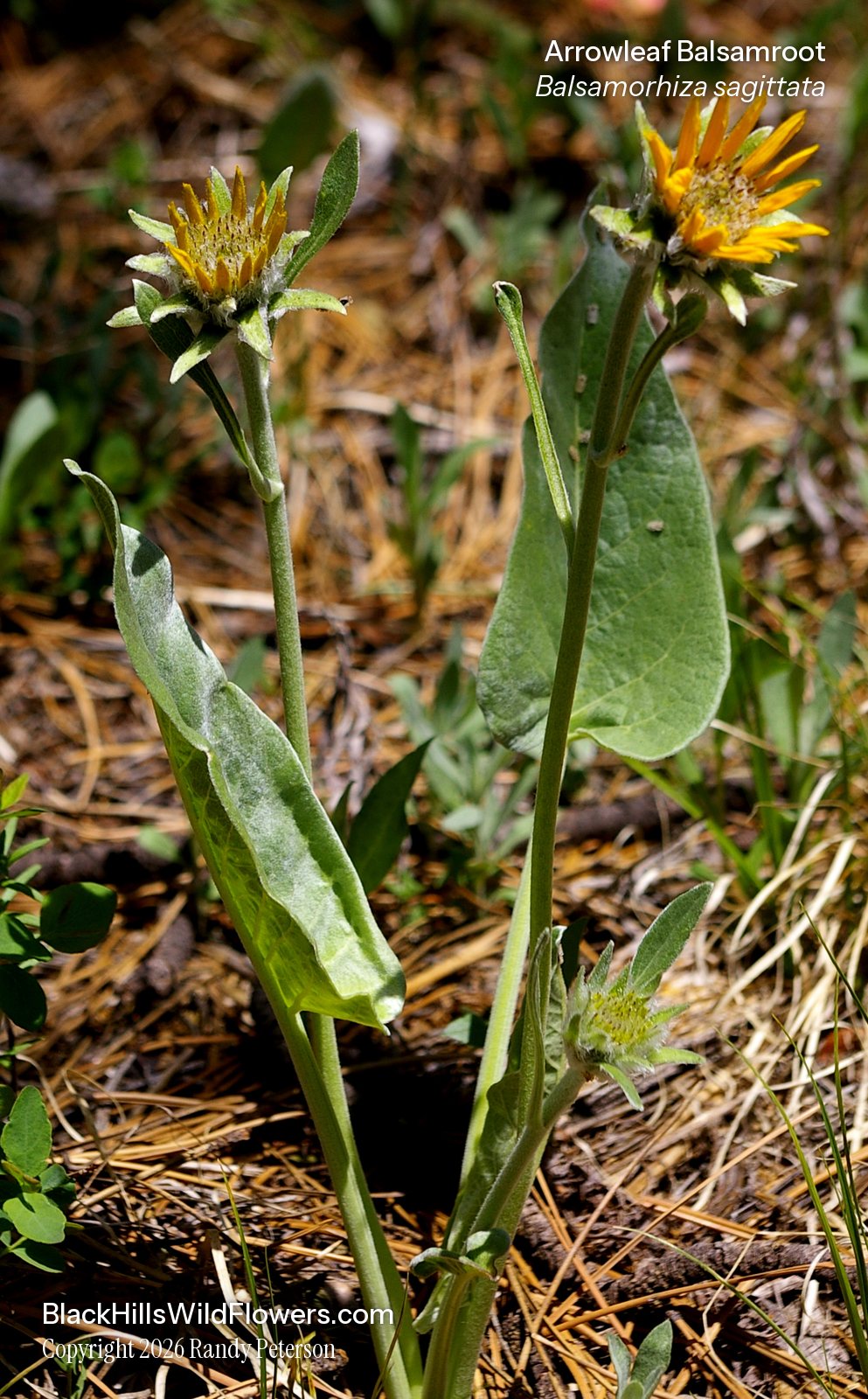
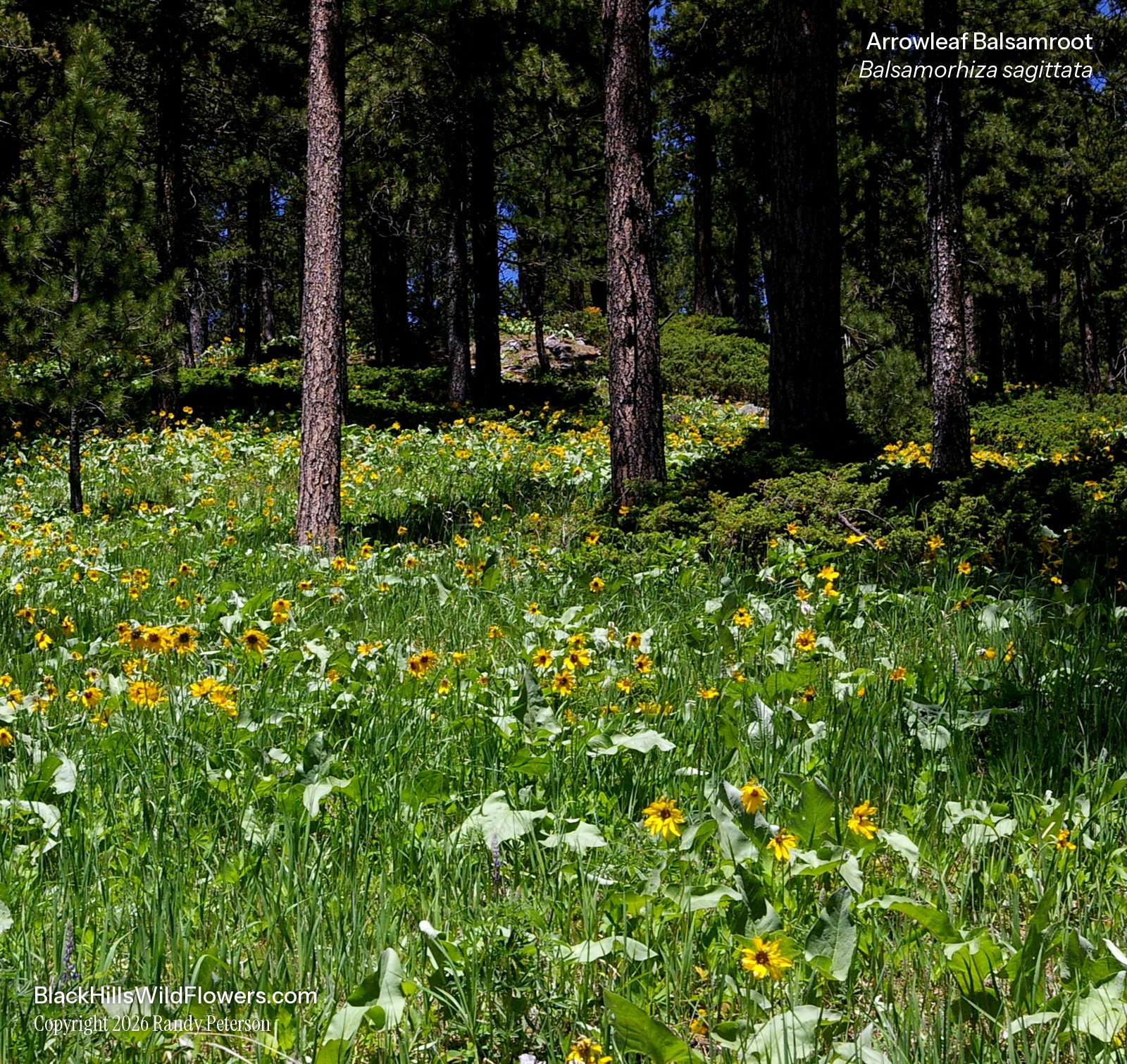
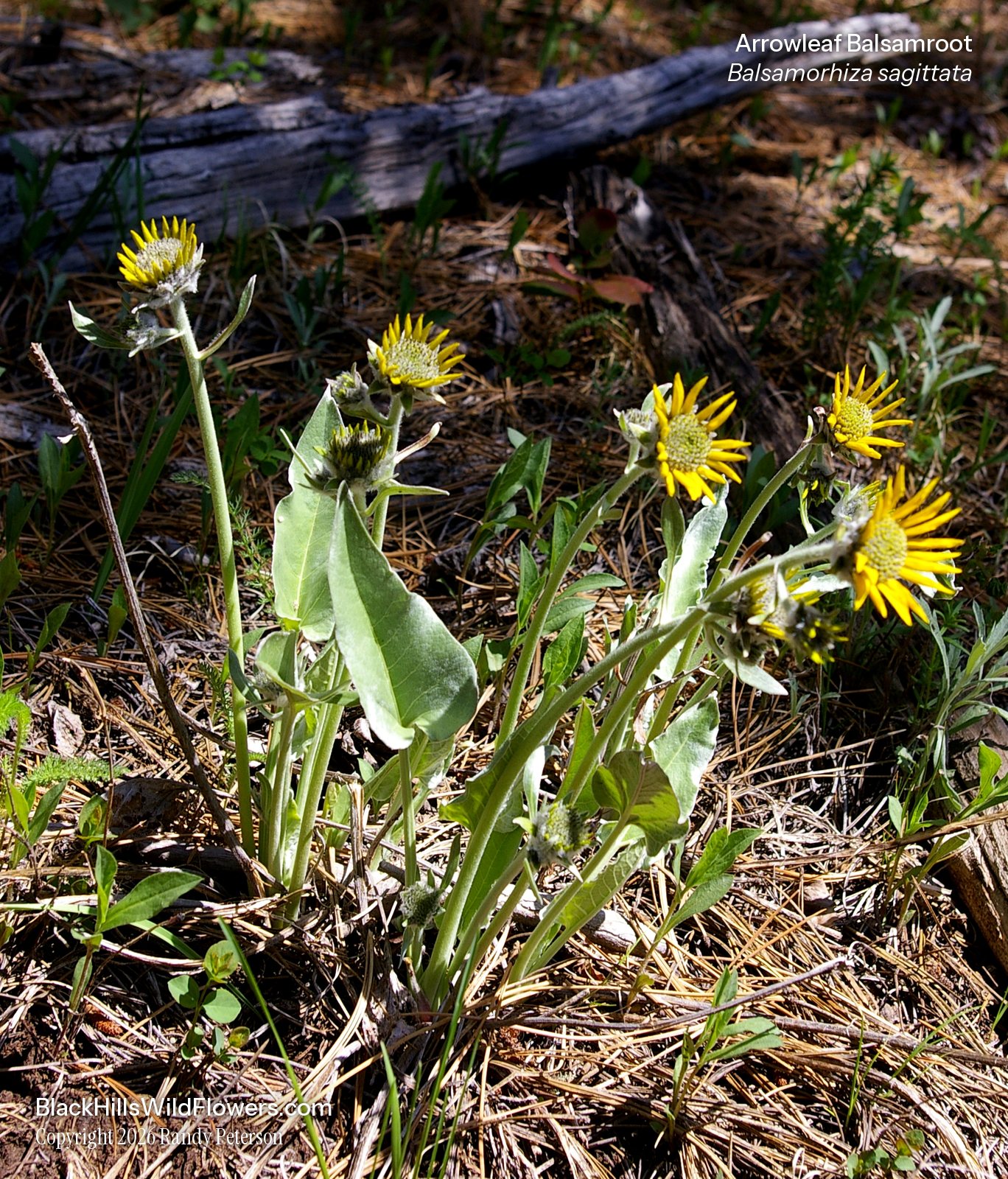
Arrowleaf Balsamroot (Balsamorhiza sagittata) is a native perennial with silvery, arrow-shaped leaves and large yellow, sunflower-like heads, usually one to a stem. It blooms from May into July and is locally abundant in the west and northwest Black Hills, especially on higher limestone slopes. Photographed in the Black Hills.
| Family | Asteraceae · Aster |
|---|---|
| Status | Native perennial |
| Blooms | May into July |
| Height | 30–80 cm (12–31 in) |
| Where | Open hillsides and valleys; higher limestone slopes in the west and northwest Black Hills |
| Also called | Arrowhead Balsamroot |
| Traditional use | The Fire Effects Information System records that the Salish, Kootenai and Nez Perce ate the peeled young flower stems, and that the Cheyenne boiled the roots, stems and leaves for stomach pain and headaches. |
Roots, seeds & germination
Root: A deep taproot with a branched crown. Measured taproots reached about 2.7 m (8.8 ft) deep and 10 cm (4 in) across.
Seed: A smooth, four-angled achene (a dry one-seeded fruit), 7–8 mm long, with no tuft of bristles. Seed matures June to early August, and the seedheads don't last long after that.
Germination: Seed is dormant when ripe and needs 60–90 days of cold, moist treatment. Sow in fall for spring germination. It doesn't transplant well, so start it from seed.
How do you identify Arrowleaf Balsamroot?
Look for big basal leaves shaped like arrowheads, 20–40 cm long with smooth edges and a silvery, velvety coat of hairs. Each stem usually carries one head with 13–25 yellow rays, and the stem leaves are much smaller than the basal ones.
When does it bloom?
May into July.
Where does it grow?
Open hillsides and valleys in western South Dakota. In the Black Hills it is locally abundant in the west and northwest, and it can put on quite a show on higher-elevation limestone slopes. It also grows in ponderosa pine forest there.
Other flowers to compare
Sources: USDA Forest Service: Black Hills Native Plants; SDSU Open PRAIRIE: Balsamorhiza sagittata; Fire Effects Information System: Balsamorhiza sagittata; USDA Forest Service: Arrowleaf Balsamroot (Western Forbs).