Prairie Coneflower
Ratibida columnifera
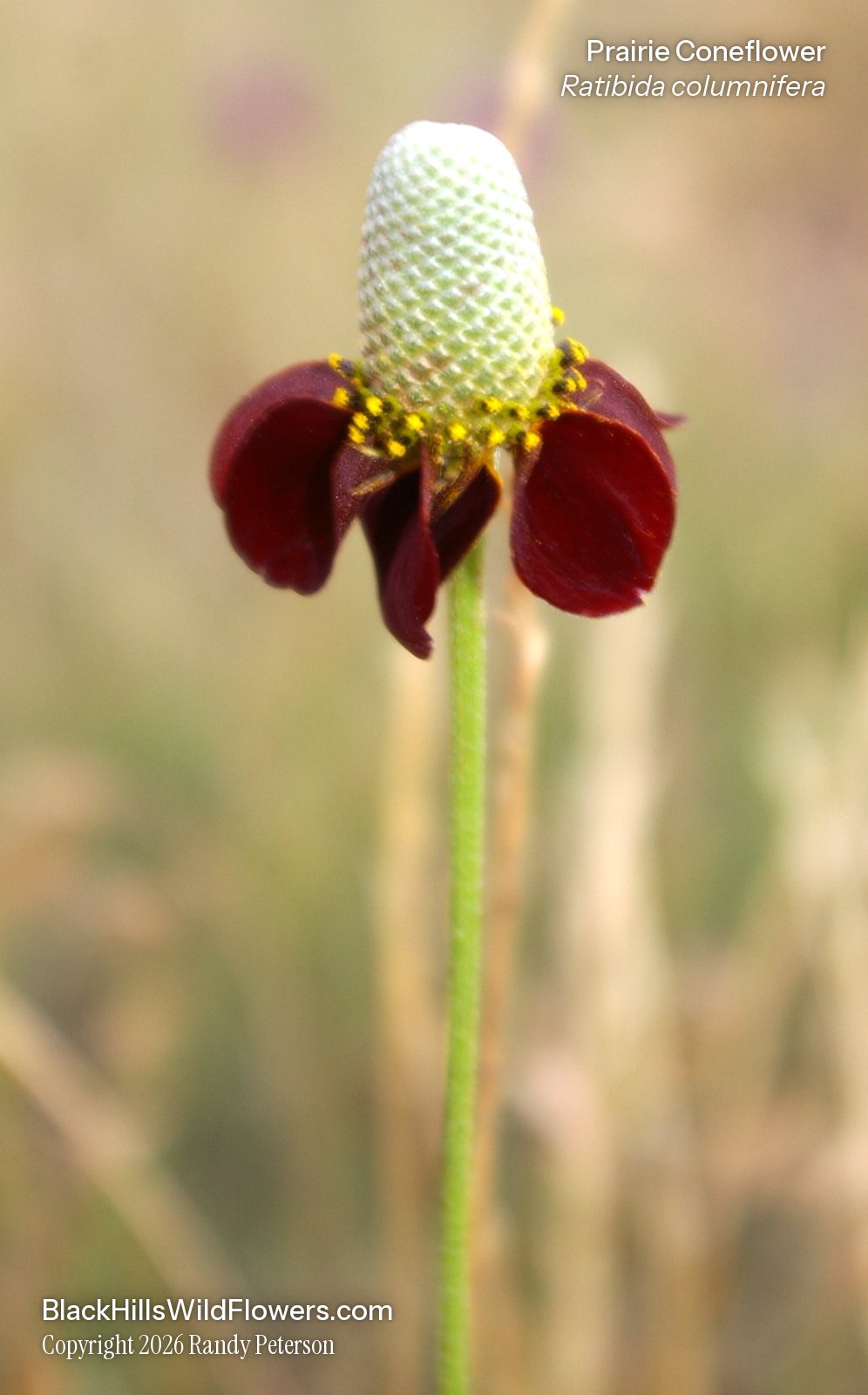
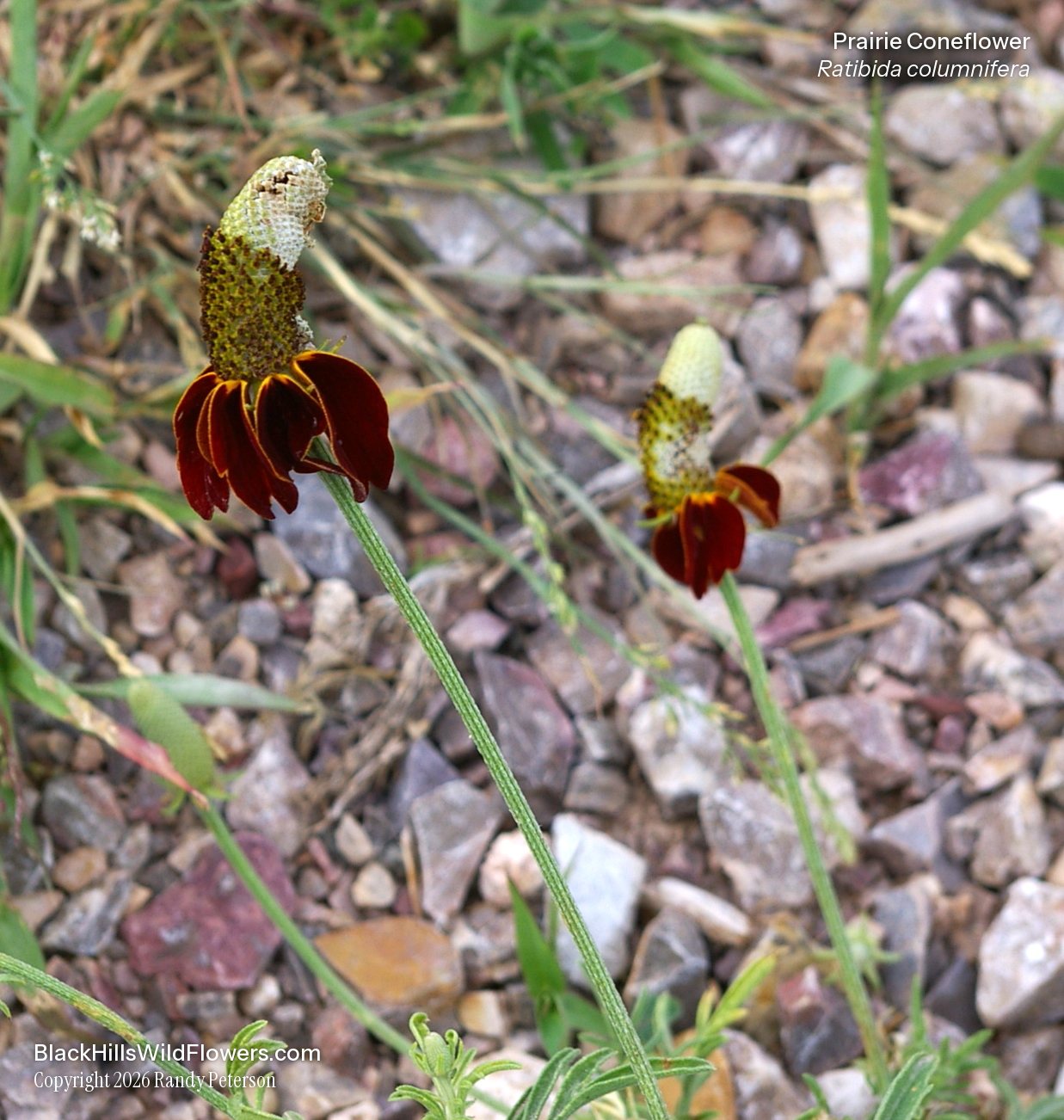
Prairie Coneflower (Ratibida columnifera) is a native perennial with 4 to 12 drooping yellow or maroon petals below an upright column of tiny purplish flowers up to 5 cm tall. It blooms June into September on prairies and roadsides. Jewel Cave National Monument in the Black Hills lists it along the Canyons Trail, in bloom in July and August. Photographed in the Black Hills.
Free photos from other sources
| Family | Asteraceae · Aster |
|---|---|
| Status | Native perennial |
| Blooms | June into September |
| Height | 30–100 cm (12–40 in) |
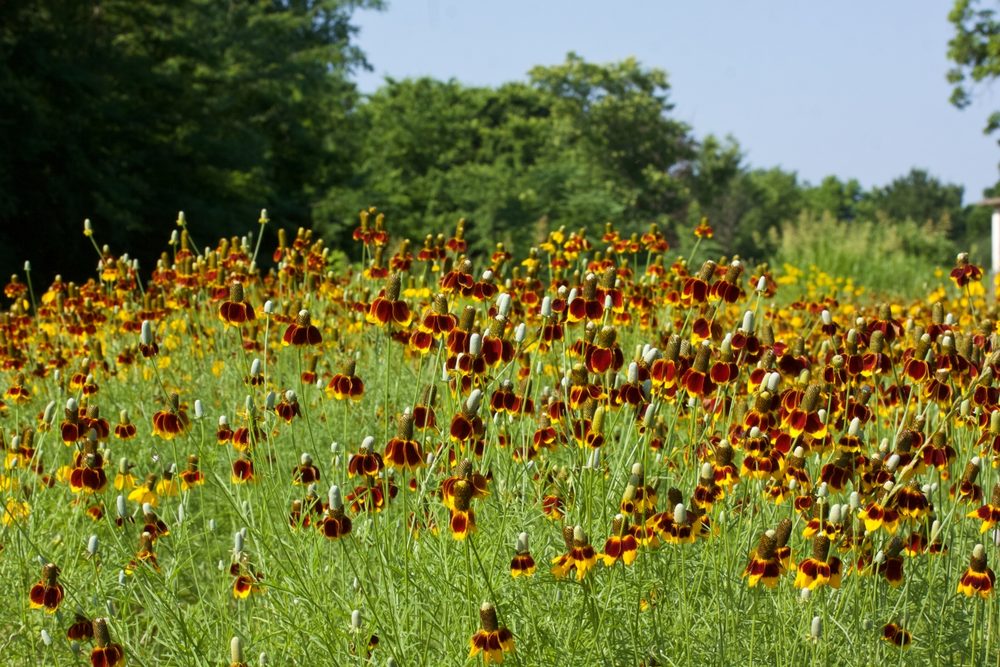
| Where | Roadsides, open prairies and disturbed fields |
| Also called | Mexican Hat, Columnar Prairie Coneflower, Upright Prairie Coneflower, Redspike Mexican-hat, Yellow Coneflower, asáŋpi iyátke (Lakota), wapȟóšta hú (Lakota), waȟčá zí čík’ala (Lakota) |
| Traditional use | Sitting Bull College's 1998 Culturally Important Plants of the Lakota records a flower infusion for chest pain and kidney ailments, a flower poultice for wounds, and a whole-plant wash for snakebite. Flowers and leaves also made a tea. |
Roots, seeds & germination
Root: A taproot.
Seed: Achenes (dry one-seeded fruits) 1.5–3 mm long with short hairs on the inner edge. Collect in mid to late summer.
Germination: Seeds are somewhat dormant. A 30-day cold treatment allows spring sowing, and fall sowing also works.
How do you identify Prairie Coneflower?
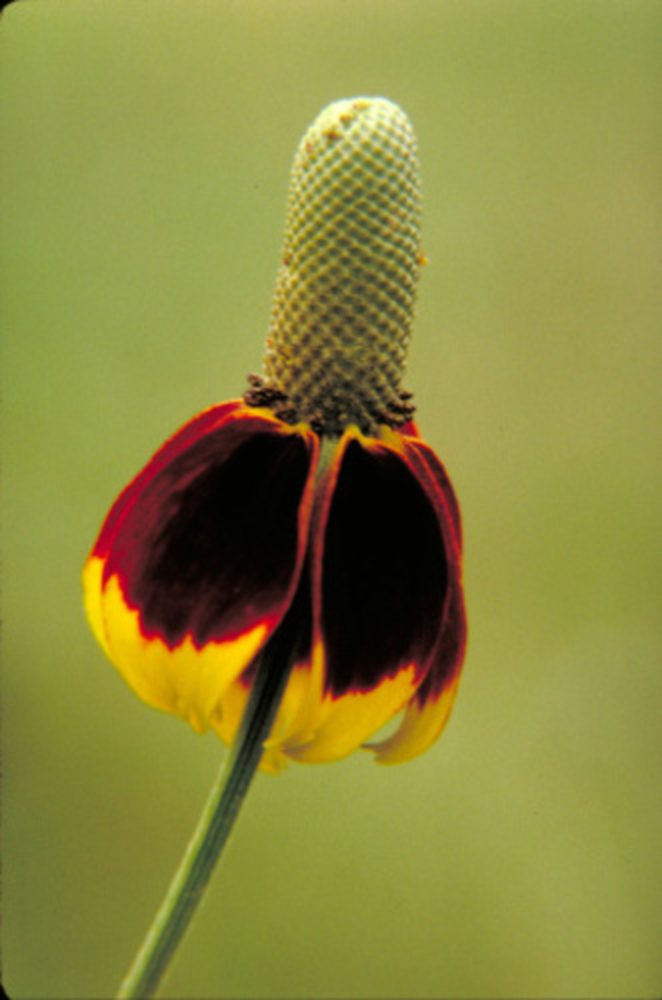
Look for a column up to 5 cm tall, covered in purplish disk florets that open from the base up, held well above the leaves on a long stalk, with 4 to 12 drooping petals at its base. Petals can be yellow, maroon or both. Leaves are hairy, gland-dotted and deeply cut into narrow lobes.
When does it bloom?
June into September.
Where does it grow?
Roadsides, open prairies and disturbed fields throughout South Dakota, in full sun on well-drained, usually limy soil. Jewel Cave lists it along the Canyons Trail, and Devils Tower National Monument lists it too.
Other flowers to compare
Sources: SDSU Open PRAIRIE: Ratibida columnifera; National Park Service, Jewel Cave National Monument: Wildflowers; National Park Service, Devils Tower National Monument: Native Plants; Flora of North America: Ratibida columnifera; Kansas Wildflowers: Ratibida columnifera; Marriott and Hartman 1986, A Survey of the Vegetation of Jewel Cave National Monument; Culturally Important Plants of the Lakota (Black Elk and Flying By, Sitting Bull College, 1998), filed with the South Dakota PUC.