Pearly Everlasting
Anaphalis margaritacea
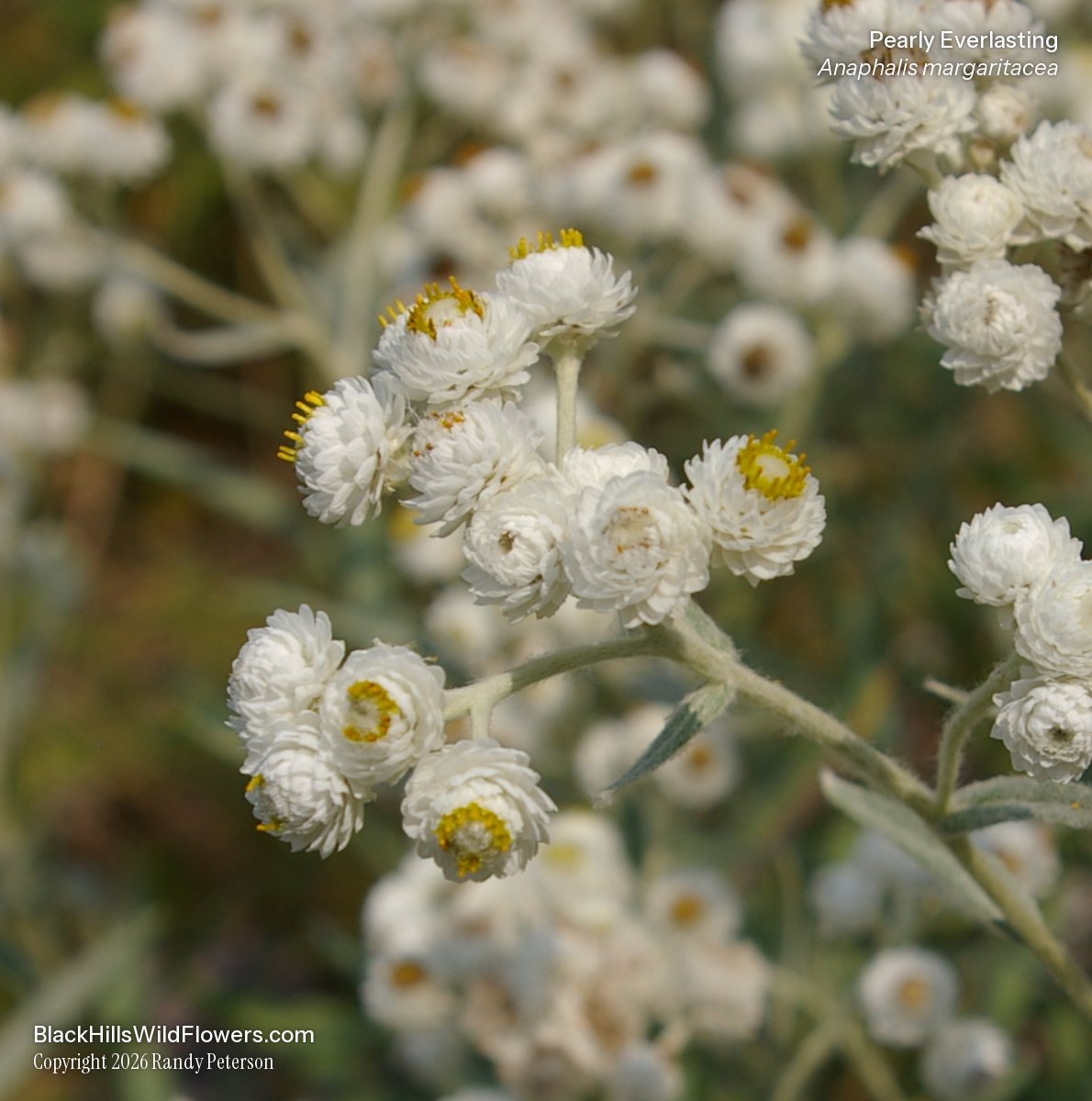
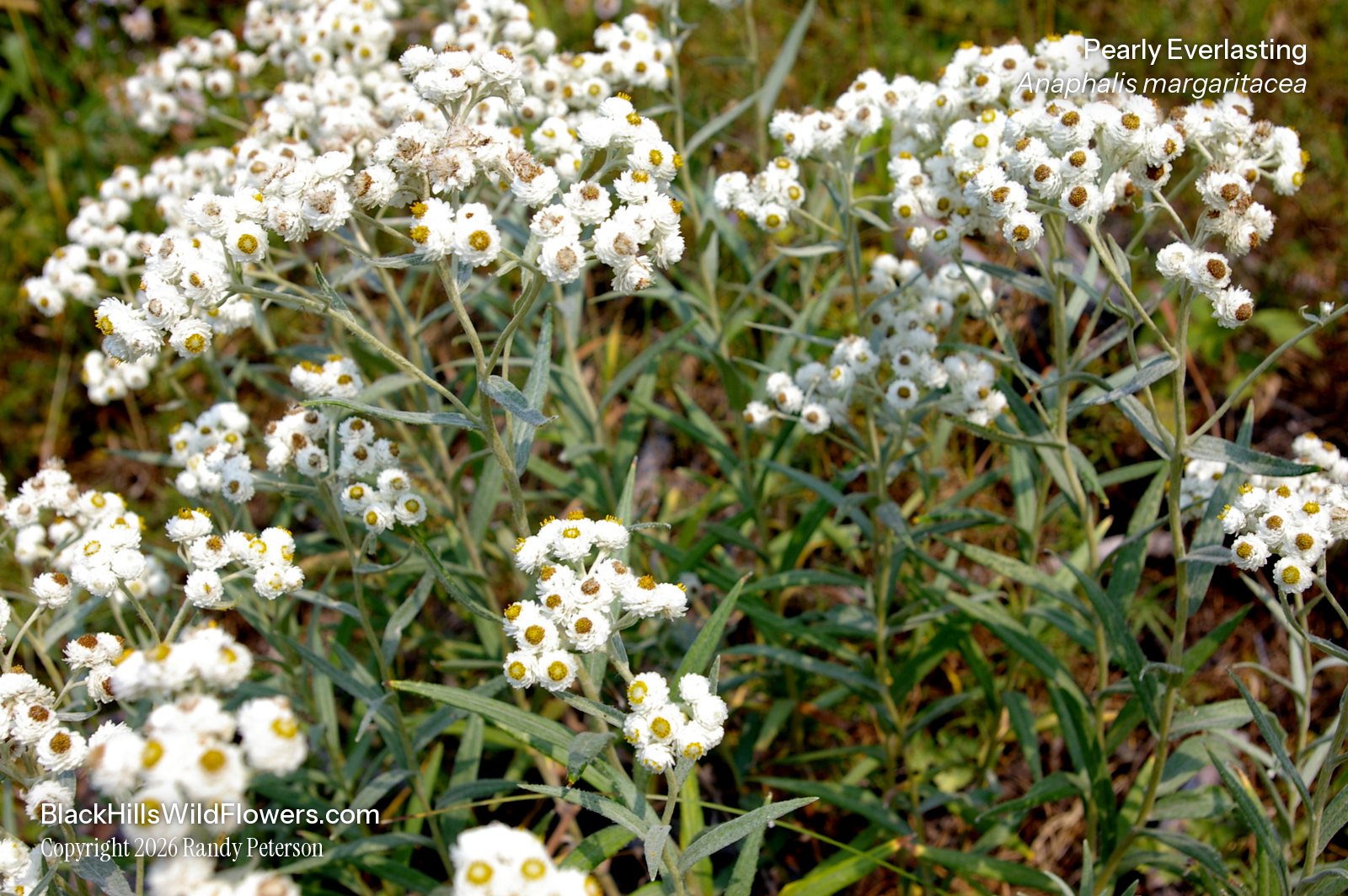
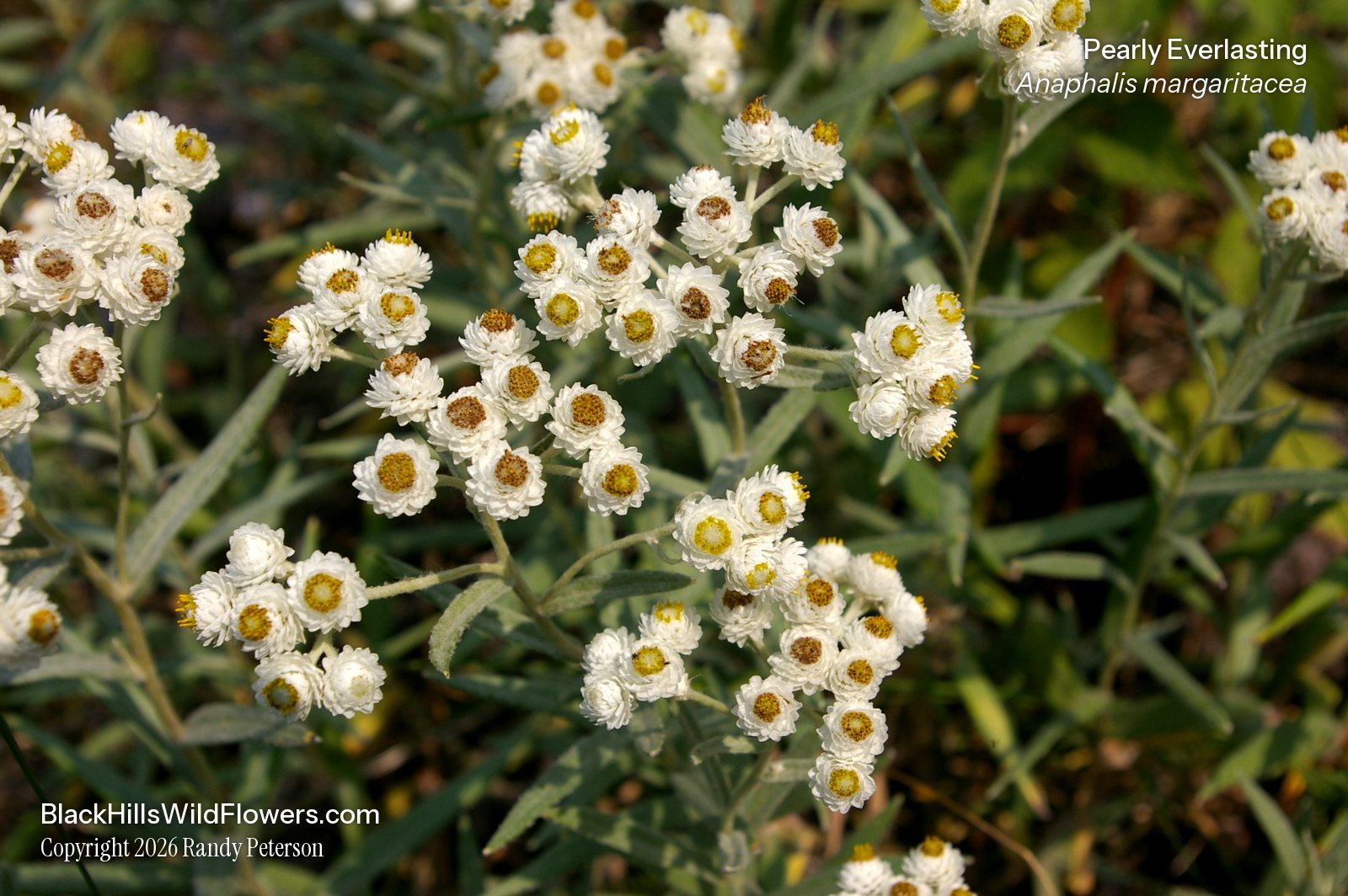
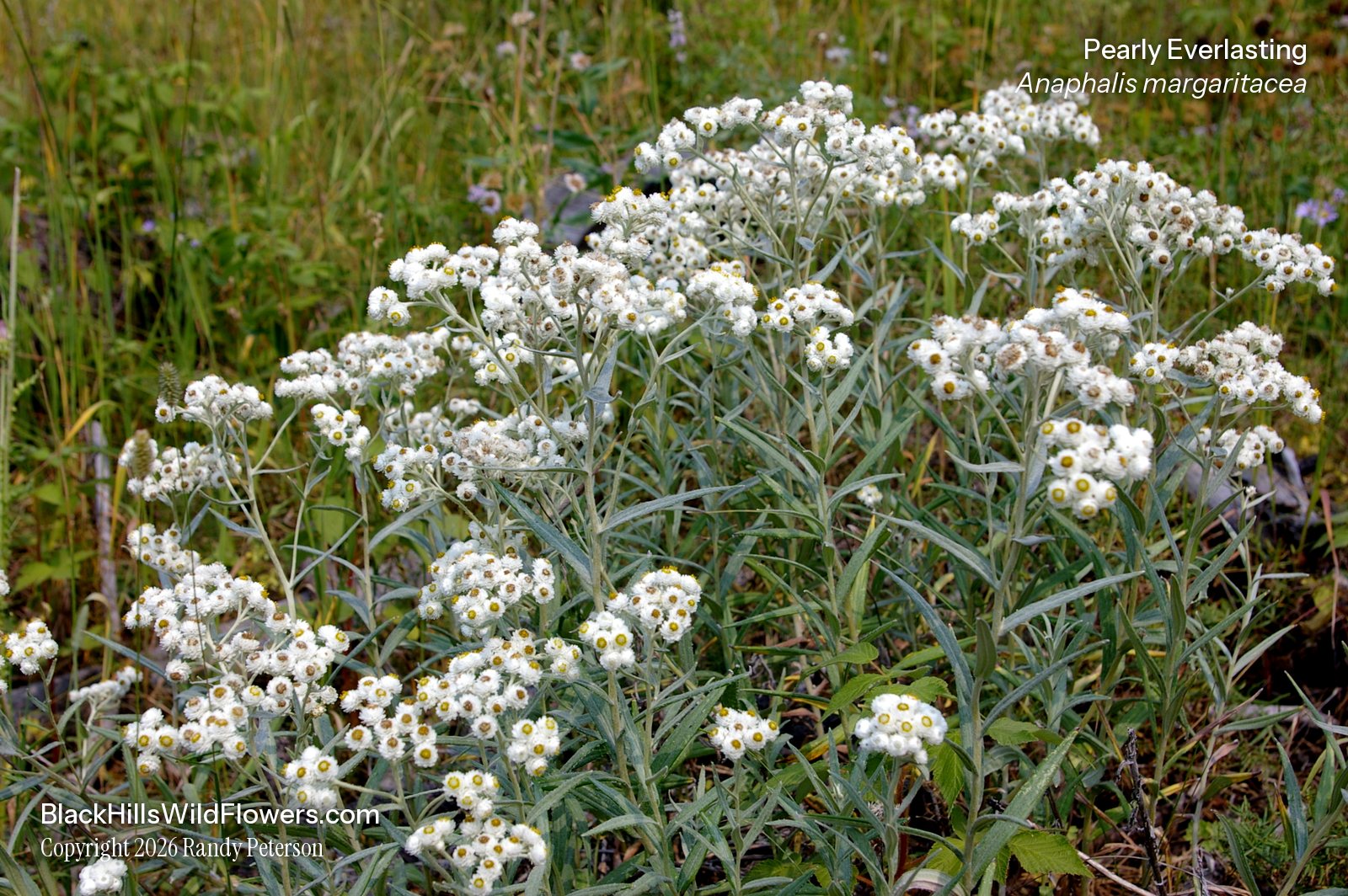
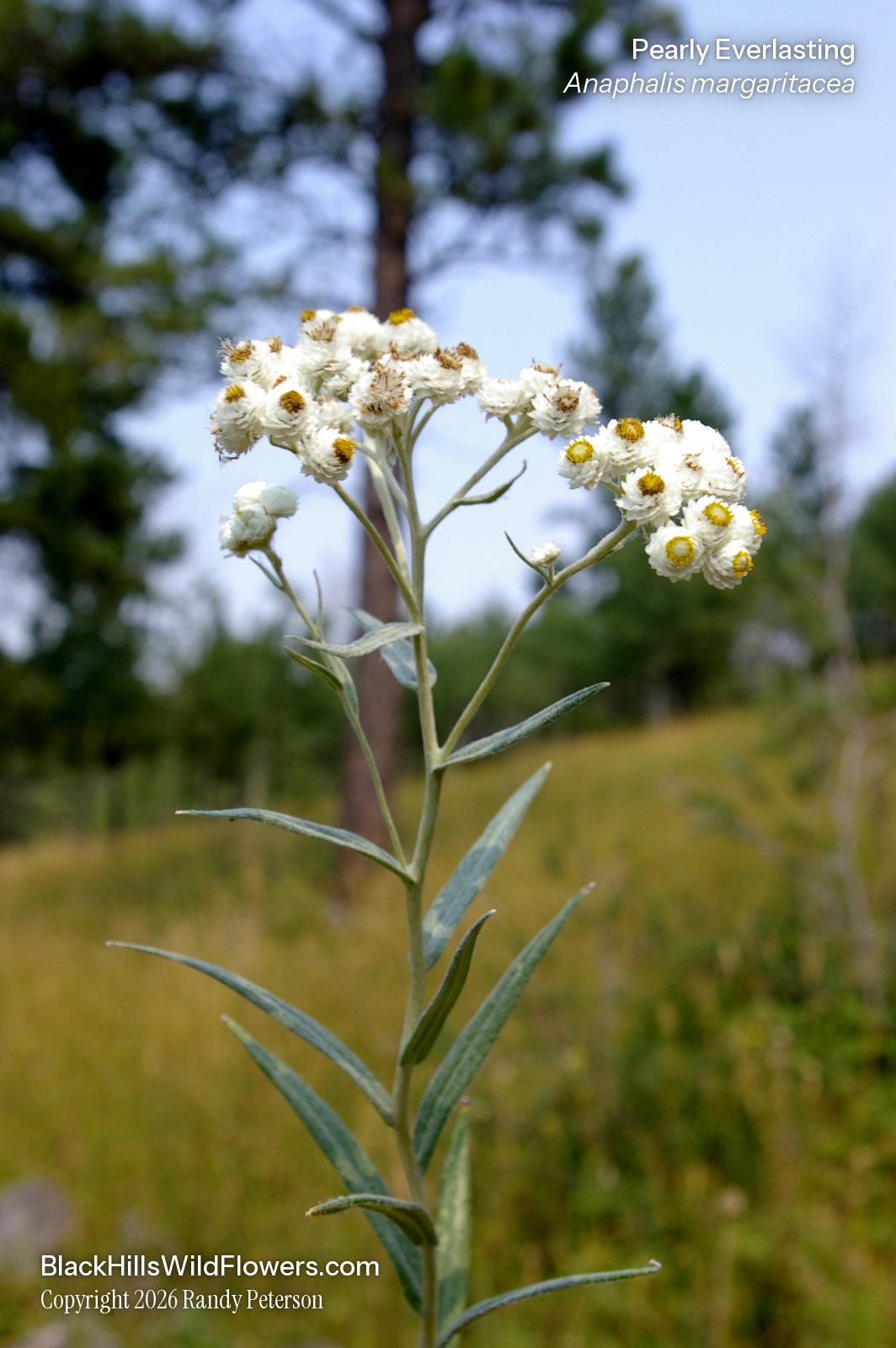
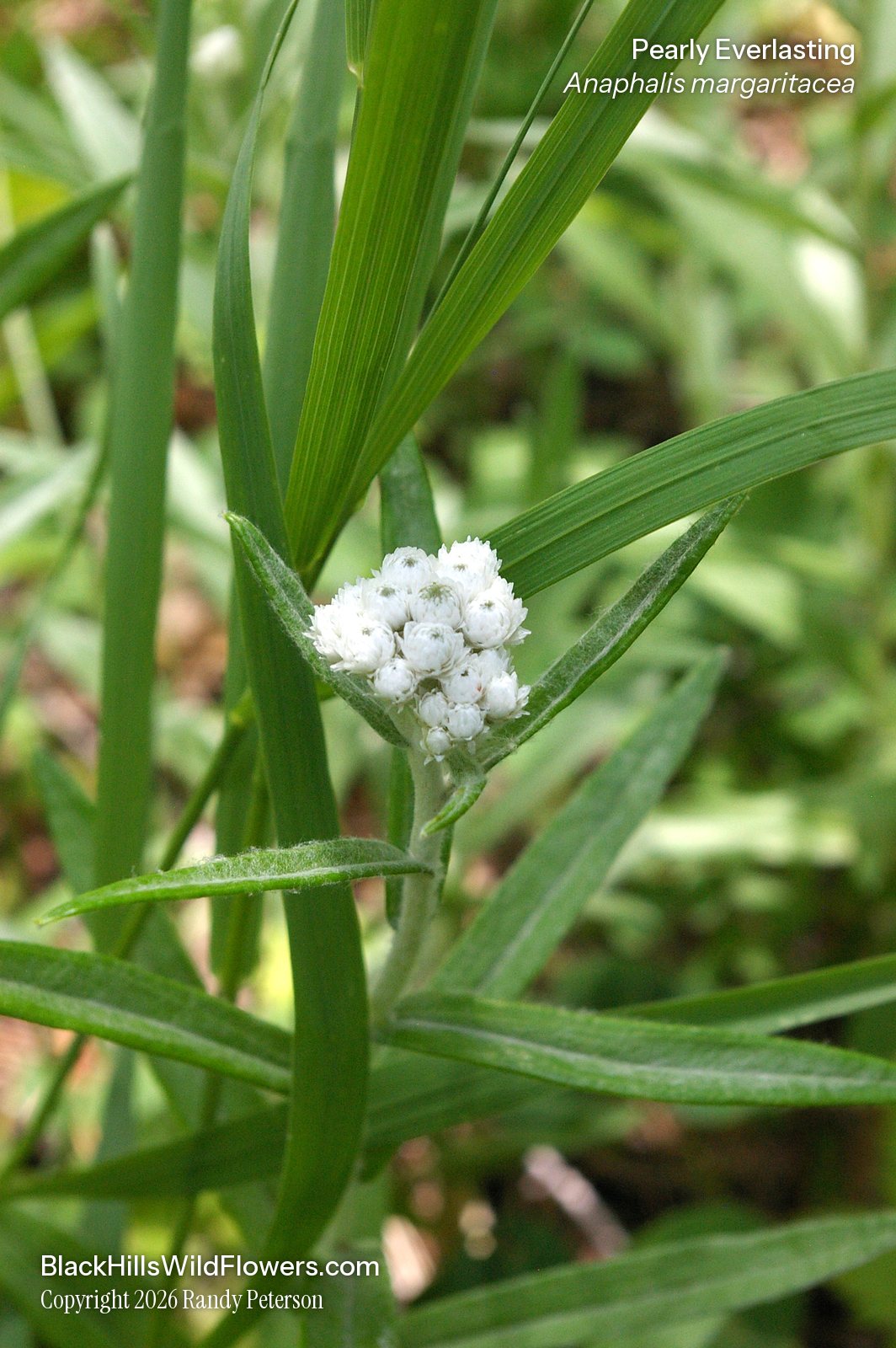
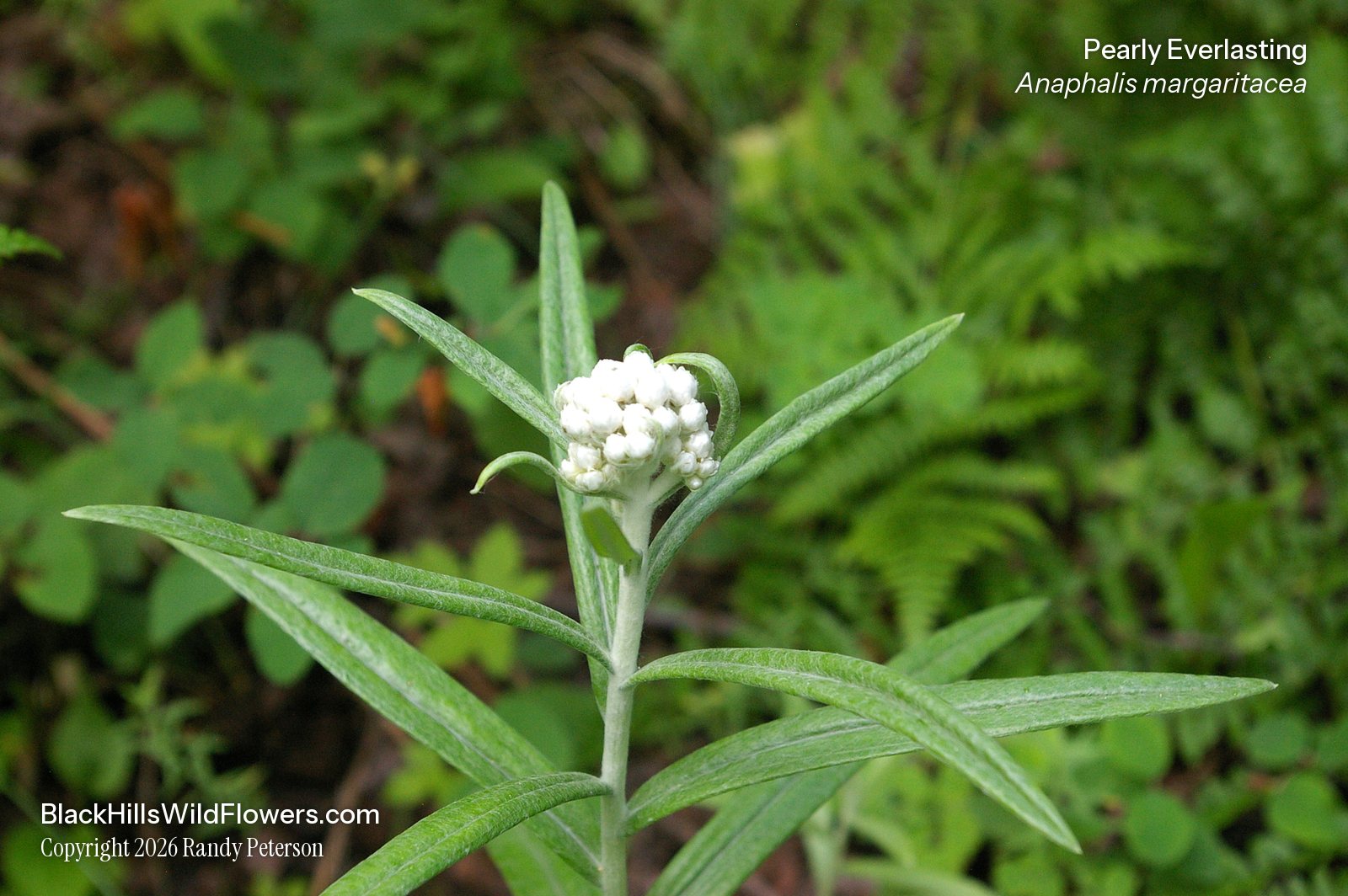
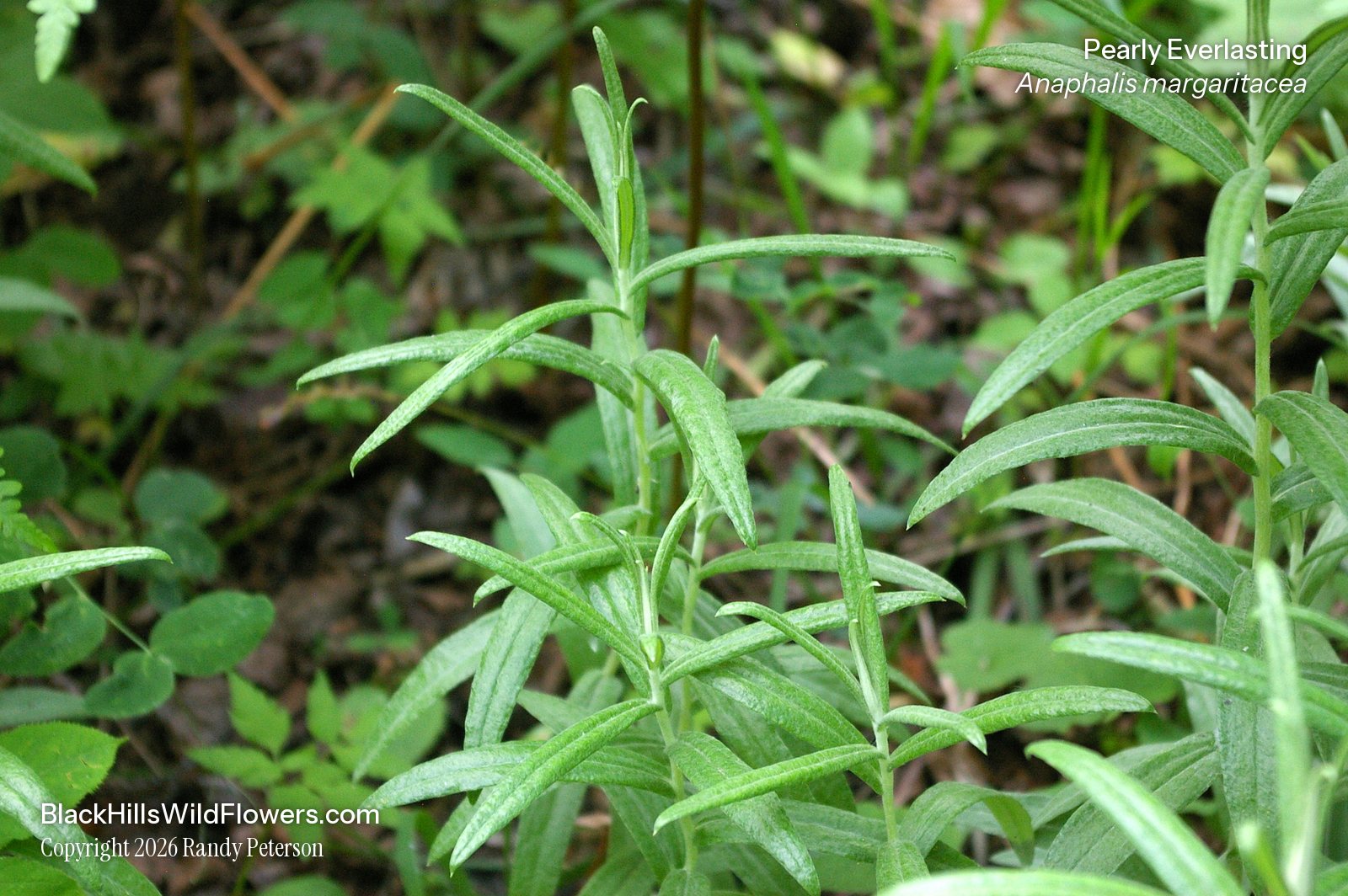
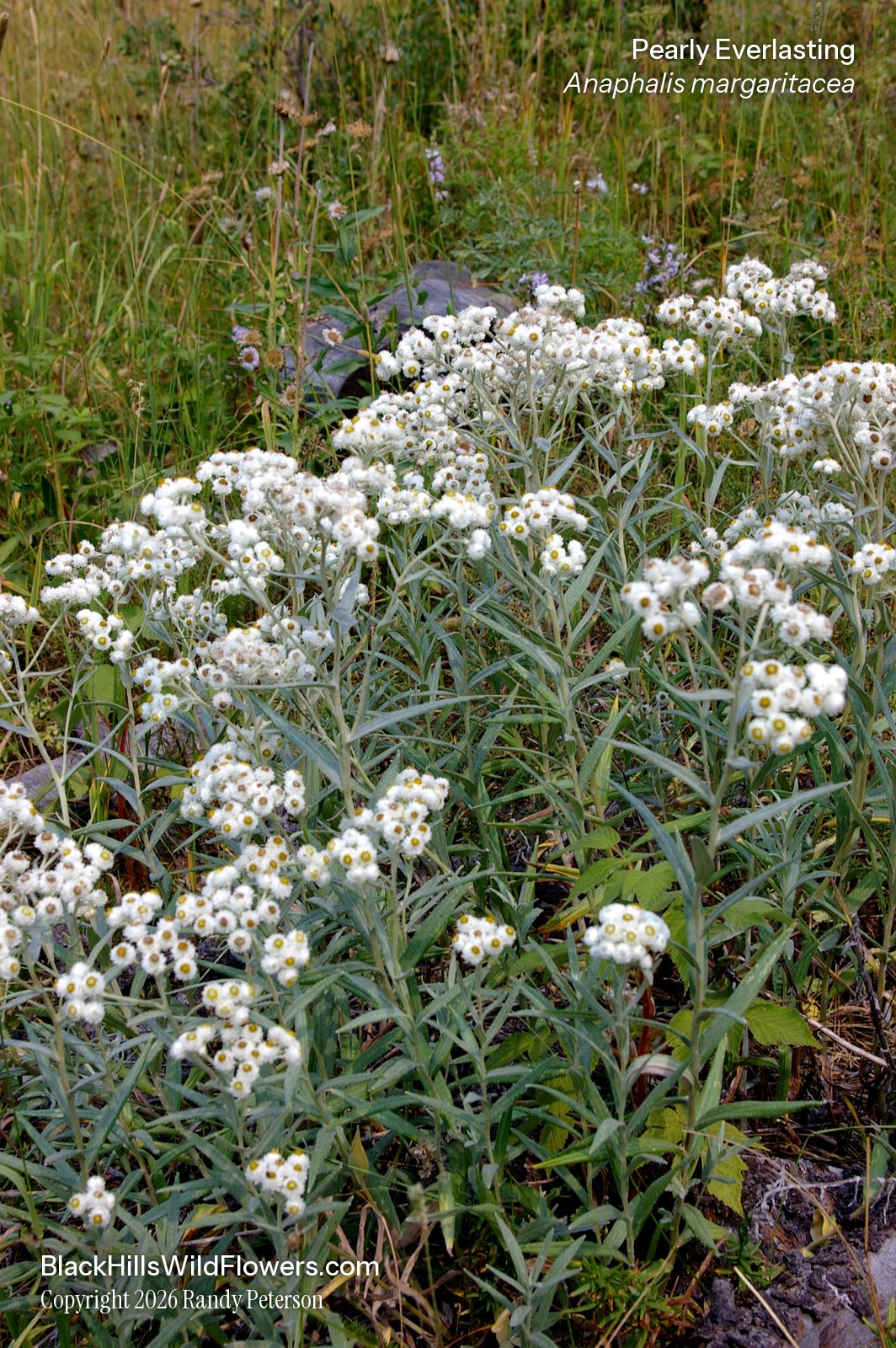
Pearly Everlasting (Anaphalis margaritacea) is a native perennial with white-woolly stems, narrow leaves that are green above and woolly white below, and flat-topped clusters of small heads ringed by papery, pearl-white bracts. In South Dakota it blooms in July and August. Across its range it grows in dry woods, on forest edges and along roadsides. Photographed in the Black Hills.
| Family | Asteraceae · Aster |
|---|---|
| Status | Native perennial |
| Blooms | July and August |
| Height | 20–60 cm (8–24 in) |
| Where | Dry woods, forest edges, mountain meadows, fields and roadsides |
| Also called | Western Pearly Everlasting |
Roots, seeds & germination
Root: Spreads by slender rhizomes (underground stems) and forms large patches.
Seed: A small brown achene (dry one-seeded fruit) with a tuft of white hairs that carries it on the wind. It ripens in fall.
Germination: Seed needs a cold treatment and can be sown outdoors in fall.
How do you identify Pearly Everlasting?
Look for white-woolly stems, narrow stalkless leaves that are green on top and woolly white underneath, and small round heads with papery, pearl-white bracts around a yellow center. The bracts look like petals and stay fresh long after the yellow flowers wilt. Male and female heads usually grow on separate plants.
When does it bloom?
July and August.
Where does it grow?
Dry woods, often with aspen or mixed conifers and hardwoods, plus forest edges and trails, mountain meadows, fields, roadsides and other open or disturbed ground. In South Dakota it prefers sandy or gravelly soil.
Other flowers to compare
Sources: SDSU Open PRAIRIE: Anaphalis margaritacea; Flora of North America: Anaphalis margaritacea; Minnesota Wildflowers: Pearly Everlasting; USDA Forest Service Plant of the Week: Pearly Everlasting.